
Sign up to save your podcasts
Or

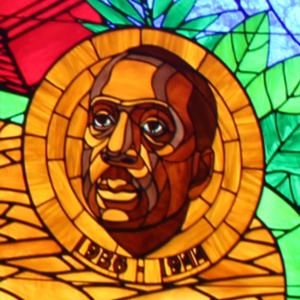


In this recording within the We Believe series, Howard Thurman reflects upon a passage from 1 Corinthians to elaborate on his understanding of love. He defines love as "the experience of being dealt with at a point in oneself that is beyond all the good and beyond all the evil. He notes that the love of God functions as the exemplary love to which humanity should strive towards. Thurman's conception of love is not possessive nor transactional, rather, it is interdependent and comes from the heart. In this recording within the We Believe series, Howard Thurman reflects upon the Apostle Paul's phrase, "a sense of what is vital." Thurman continues by developing his understanding of wisdom, and how wisdom points one towards awareness of vitality. Because you can only know of vitality by means of signs, Thurman suggests that it takes wisdom to discern which symbols actually point towards vitality.
Part of the Collection, We Believe (Television Series, 1958-1965)
Tags: 1 Corinthians, A sense of what is vital, affection, community, confidence, Dillinger, discernment, dog, experience, interconnectivity, love, meaning, Moffatt, mortician, mortuary, Olive Schreiner, ownership, Paul, requitment, San Francisco, satisfaction, security, symbolism, trust, understanding, vitality, wisdom
Dustin Mailman
Recorded in WHDH-TV, Boston, Massachusetts
Citation: Thurman, Howard, “The Meaning of Love (1958-03-07); A Sense of What is Vital (1959-01-30),” The Howard Thurman Digital Archive, accessed July 9, 2024, https://thurman.pitts.emory.edu/items/show/1242.
In this recording within the We Believe Series; Howard Thurman reads from his text, "The Inward Journey." Thurman's reading speaks to the intricate ways in which human life and experience is ordered in a synchronistic fashion. It is in one's understanding of creation's interrelatedness, Thurman suggests, that one can come to understand that the entirety of one's existence belongs. In this recording within the We Believe Series; Howard Thurman reflects upon a poem from Eugene V. Debs, speaking to notions of solidarity and love. He notes that notions of love and disease both have a contagious characteristic, and that there is great responsibility in one's choosing of love or disease. To share one's heart, thus one's love, is to invite fellowship and community. To share one's disease, is to invite isolation and individualism.
Part of the Collection, We Believe (Television Series, 1958-1965)
Tags: belonging, contagion, creation, creativity, ecology, Eugene V. Debs, experience, fellowship, harmony, healing, heart, interconnectivity, inward journey, love, order, organism, Paul, Philippians, poetry, relationship, security, society, synchronization, synthesis, tentacles of time, unity, vulnerability, wholeness, will
Dustin Mailman
Recorded in WHDH-TV, Boston, Massachusetts
Citation: Thurman, Howard, “Supportive Order Inherent in Life (1963-05-17); For Love's Sake (1958-05-30),” The Howard Thurman Digital Archive, accessed July 9, 2024, https://thurman.pitts.emory.edu/items/show/1241.
In this recording within the We Believe Series; Howard Thurman reads from his text, "Meditations of the Heart," to speak about wisdom and the ways in which one becomes wise. In his reading, Thurman notes that when contemplating what it means to age, one discovers that in the span of a single year one grows tremendously: relationally, in one's awareness of self, sensitivity, etc. He continues, it is when one makes meaning of an event, rather than merely objectively describing an event, that one can begin to make sense of life. In this recording within the We Believe Series; Howard Thurman reads from his text, "The Inward Journey," reflecting upon what it means to be fully integrated. It is in holistic integration, Thurman suggests, that one finds solitude and interdependency.
Part of the Collection, We Believe (Television Series, 1958-1965)
Tags: aging, anxiety, darkness, dependability, dynamism, embodiment, event, friendship, harmony, illness, integration, inward journey, life, light, magic, meaning, meditations of the heart, order, psalmist, quiet, rebirth, reconciliation, relationship, restoration, Russia, solitude, tension, United States, urgency, vitality, wisdom, year
Dustin Mailman
Recorded in WHDH-TV, Boston, Massachusetts
Citation: Thurman, Howard, “Life Under the Scrutiny of God (1963-01-04); Order in the Totality of Life (1962-05-25),” The Howard Thurman Digital Archive, accessed July 9, 2024, https://thurman.pitts.emory.edu/items/show/1240.
In this recording within the We Believe Series; Howard Thurman reads from Jane Steger's "Leaves from a Secret Journal." He attempts makes sense of the makeup of one's own life through the lens of ecology and biology. Using examples such as trees and DNA, Thurman explores the depths of the "order" of human existence. In this recording within the We Believe Series; Howard Thurman reads from his text "Meditations of the Heart." His reading reflects upon the impact of trauma, and how it effects the development of the individual. He develops his ideas based off of personal experience and his own psychological findings. In this recording, Thurman suggests that it is in the exposure to the reality of existence that one can begin to mature.
Part of the Collection, We Believe (Television Series, 1958-1965)
Tags: angels, balance, biology, chaos, childhood, coding, completion, confidence, consequence, constitution, creativity, death, development, ecology, epistemology, experience, Jane Steger, journey, leaves from a secret journal, life, maturity, meditations of the heart, moral structure, North Carolina, personality, pigs, Sargasso Sea, seasons, snakes, trauma, tree, urge of life, Virginia
Dustin Mailman
Recorded in WHDH-TV, Boston, Massachusetts
Citation: Thurman, Howard, “Creative Order in Life (1963-09-27); The Great Exposure (1963-02-15),” The Howard Thurman Digital Archive, accessed July 9, 2024, https://thurman.pitts.emory.edu/items/show/1239.
In this recording within the We Believe Series, Thurman reflects upon the Thanksgiving season. He lists a litany of feelings, emotions, materials, and states of being that he is thankful for: air to breath, food to eat, shelter, love, etc. He then discerns the way in which humanity may overlook many of the things that humanity should be grateful for, and suggests that Thanksgiving should be approached as a sacrament which points one towards humility and gratitude. In this recording within the We Believe Series, Thurman reflects upon the meaning of "waiting." He defines waiting as the "interval between moments, experience, events, that are filled with activity." Waiting is dynamic in nature, and requires a true decision from the one who is participating: creatively participating in one's own life as it is manifested today, or longing for the life they will never have.
Part of the Collection, We Believe (Television Series, 1958-1965)
Tags: activity, ancestors, care, contentment, courage, creativity, crossroad, darkness, disaster, examine, Francis Thompson, gratitude, holidays, hope, humility, litany, love, magic, nostalgia, solitude, spirit, temptation, thanksgiving, unrest, waiting, will
Dustin Mailman
Recorded in WHDH-TV, Boston, Massachusetts
Citation: Thurman, Howard, “Thanksgiving and the Nature of Life (1963-11-22); Waiting Creatively (1959-06-12),” The Howard Thurman Digital Archive, accessed July 9, 2024, https://thurman.pitts.emory.edu/items/show/1238.
In this recording within the We Believe Series; Thurman reflects upon wisdom, and the ways in which wisdom is grounded upon "the reflection of a person gazing deep into the heart of their own experience." This personal experience, Thurman explains, can be understood in both theological and ecological terms; relating human experience to the movement of the seasons, and the life of Jesus of Galilee. This recording within the We Believe Series marks a transitional point in Thurman's career as the Dean of Marsh Chapel at Boston University: a two-year leave to participate in what he calls his "wider ministry." He draws upon ecological themes of seasons in order to articulate the way in which life transitions without one's consent. He notes that the "Fall of the Year" provides an opportunity for "recollection and reflection," and uses this recording as an opportunity to do so.
Part of the Collection, We Believe (Television Series, 1958-1965)
Tags: becoming, Boston University, creativity, day view, Easter, ecology, energy, experience, fall, Galilee, George Cross, growing edge, harvest, holidays, Ibadan, Jesus, Muslim, New Year, Nigeria, night view, potentiality, rain, recollection, reflections, rhythm, seasons, spring, Sue Bailey Thurman, symbol, transition, unity, wider ministry, winter, wisdom
Dustin Mailman
Recorded in WHDH-TV, Boston, Massachusetts
Citation: Thurman, Howard, “Supporting Rhythm of Life (1962-04-13); Thank God for the Fall of the Year (1971-11-23),” The Howard Thurman Digital Archive, accessed July 9, 2024, https://thurman.pitts.emory.edu/items/show/1237.
In this recording within the We Believe Series; Thurman reflects upon the way in which American culture makes sense of love. He notes that typically, the "flow of love is chocked beneath the deep recesses of the heart." This is the product of quantitative love rather than qualitative love. He reminds the listener, that qualitative love is more significant than any price tag or number of accoutrements one acquires. Qualitative love speaks to the depths of the human experience. In this recording within the We Believe Series; Thurman reflects upon writing from Max Herman and Petrarch to ask the question: To what depth does one's religion have a bearing on one's life? He continues by probing the political and ecclesiological elements of the religious inner life intersecting with the secular outer life, and the ways in which religion impacts one's praxis and location in the world.
Part of the Collection, We Believe (Television Series, 1958-1965)
Tags: bears, Cabot, Christmas, decision, ecclesiology, God, Harvard, heart, interconnectivity, Letters of Old Age, limitations, love, Max Herman, meditations of the heart, National Conference of Social Work, need, Paul, Petrarch, poem, quality, quality of life, quantity, religion, responsibility, testimony, Tycho Brahe, voice of the genuine, witness
Dustin Mailman
Recorded in WHDH-TV, Boston, Massachusetts
Citation: Thurman, Howard, “Quality of Life (1960-10-07); Religion and Life (1964-04-03),” The Howard Thurman Digital Archive, accessed July 9, 2024, https://thurman.pitts.emory.edu/items/show/1236.
In this recording within the We Believe Series; Thurman reads from his text, "Meditations of the Heart," discerning the implications psychology has on the religious identity. He emphasizes that there is great danger in wishing one's life away. He emphasizes that it is in the responsibility that one finds in a religious identity that finds what it means to honor their own existence. In this recording within the We Believe Series; Thurman reflects upon the way in which American culture makes sense of love. He notes that typically, the "flow of love is chocked beneath the deep recesses of the heart." This is the product of quantitative love rather than qualitative love. He reminds the listener, that qualitative love is more significant than any price tag or number of accoutrements one acquires. Qualitative love speaks to the depths of the human experience.
Part of the Collection, We Believe (Television Series, 1958-1965)
Tags: bears, behavior, Cabot, candidacy, character, Christmas, circumstances, consciousness, discipline, God, Harvard, heart, longing, love, martyrdom, meditations of the heart, National Conference of Social Work, need, psychology, quality, quality of life, quantity, responsibility, self-actualization, truth, Tycho Brahe
Dustin Mailman
Recorded in WHDH-TV, Boston, Massachusetts
Citation: Thurman, Howard, “Psychology and Religion (1963-10-25); Qualitative Living (1960-10-07),” The Howard Thurman Digital Archive, accessed July 9, 2024, https://thurman.pitts.emory.edu/items/show/1235.
In this recording within the We Believe Series; Howard Thurman reads from his text, "Meditations of the Heart," working with the tension between factuality and intention. In this tension, one must accept their "self-fact" in order to navigate a faithful deed or image. In this recording within the We Believe Series; Howard Thurman reads from his text, "The Inward Journey," reflecting upon the significance of rest and restoration. He uses philosophical and ecological imagery to portray the significance of daydreaming, making sense of the cosmos, and finding integration in one's own life.
Part of the Collection, We Believe (Television Series, 1958-1965)
Tags: aliveness, altar, communion, creativity, daydreaming, detachment, discipline, fact, fairyland, image, individuality, intention, interconnectivity, meditations of the heart, mind, pacing, raw materials, reality, rest, rhythm, solitude, spirit, Stephen Hawking, sugarplum, waiting, withdraw
Dustin Mailman
Recorded in WHDH-TV, Boston, Massachusetts
Citation: Thurman, Howard, “Our Little Lives, Our Big Problems (1963-01-25); Periodic Rest (1963-03-22),” The Howard Thurman Digital Archive, accessed July 9, 2024, https://thurman.pitts.emory.edu/items/show/1234.
This recording has two parts. In "Long Live Life!" Thurman reflects on the passing of a year and reminds his audience to carefully consider their past experiences as moments in "which you learned something, those experiences that taught you something fresh and new about yourself, those experiences without which you would not be as sensitive as you are now to values, those experiences that made you aware of yourself, your purposes, your world." He concludes by focusing on the importance of walking straight ahead into the future, not letting the past shape us against it. In "My Life is Not My Own," Thurman reads from Inward Journey and discusses the idea that we are uniquely our own selves but also that our lives are not our own. We often find strength and confidence in our singleness within. However, our thoughts and actions are part of the heritage of humankind, and our lives are not for us alone. "Every person's life is involved profoundly and intimately in the life of all the other people in all the other ages who have ever lived." Yet in our inner solitude, we encounter God and make the great decisions in life.
Part of the Collection, We Believe (Television Series, 1958-1965)
Tags:
Description by Spencer Roberts
Recorded in WHDH-TV, Boston, Massachusetts
Citation: Thurman, Howard, “Long Live Life! (1963-12-27); My Life Is Not My Own (1961-10-20),” The Howard Thurman Digital Archive, accessed July 9, 2024, https://thurman.pitts.emory.edu/items/show/1233.
From the publisher's feed
It is my goal to support the The Howard Thurman Digital Archive, at Pitts Theology at Emory University, with their…
I've set a personal goal of listening to all 290+ recordings in one year, and having these recordings available as a podcast will help tremendously. I am so grateful to have them. And I am hopeful that others will discover Dr. Thurman through this podcast. Delete