
Sign up to save your podcasts
Or

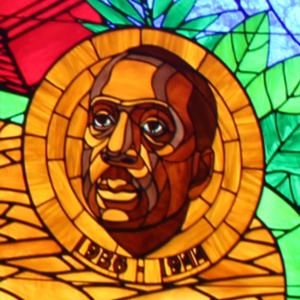


In this recording within the We Believe series; Howard Thurman reads from James Cane Allen's "The Choir Invisible," in order to reflect upon the ways in which one can come to understand community. He notes that in one's own quest for identity, that relationships can become utilitarian, only being aware of community "at points of relevancy to our purposes." What Thurman is insisting in this recording, is that when one pushes past the superficial boundaries of separateness, that one can find the "deep, hidden springs of magic" which informs one's understanding of the divine. In this recording within the We Believe series: Howard Thurman reflects upon a passage from the prophet Jeremiah. From the reading, Thurman ponders what it means to have complete confidence in God. He notes that there are longings of the heart that are much deeper than any desire for material possessions. For Thurman, it is in the places of "the deepest needs of the spirit," that one discovers what it can mean for one to understand these needs of the spirit.
Part of the Collection, We Believe (Television Series, 1958-1965)
Tags: community, curse, ecology, ego, existentialism, experience, heart, interconnectivity, James Cane Allen, Jeremiah, magic, materiality, National Geographic, oasis, parthenon, permanence, redemption, responsibility, Sahara Desert, sphinx, temporality, The Choir Invisible
Dustin Mailman
Recorded in WHDH-TV, Boston, Massachusetts
Citation: Thurman, Howard, “Boundaries of the Self (1961-11-24); Confidence in God (1958-06-13),” The Howard Thurman Digital Archive, accessed July 9, 2024, https://thurman.pitts.emory.edu/items/show/1252.
In this recording within the We Believe series; Howard Thurman reflects upon the line "How precious are thy thoughts, O God," found within Psalm 139. Thurman uses this verse in order to poetically wax the miracle that is having a mind. In this recording, Thurman suggests that because the mind orders the body, that it is significant to discern what the mind of God consists of. It is in the discerning of God's mind that one finds the content of devotional posturing: wisdom, tenderness, and love. In this recording within the We Believe series; Howard Thurman reads from a Gaelic Blessing, and the concluding stanza in Psalm 139, attempting to make sense of the content of a faithful human existence. He uses these reflections in order to emphasize his understanding of the interrelatedness of life, and the ways in which action and reaction are essential to both human flourishing and human suffering. Here, Thurman places great emphasis on responsibility, indicating that to live a life is to participate in a responsible act.
Part of the Collection, We Believe (Television Series, 1958-1965)
Tags: action, birth, Conrad, ecology, egg, experience, fact of life, Faust, freedom, germ, imagination, interconnectivity, Johann Wolfgang Von Goethe, judgement, memory, mind, myth, new life, Psalm 139, psychiatrist, reaction, responsibility, salvation, Tennyson, Ulysses, wind
Dustin Mailman
Recorded in WHDH-TV, Boston, Massachusetts
Citation: Thurman, Howard, “"How Precious Are Thy Thoughts..." (1961-01-13); Try Me and Know My Thoughts (1961-03-17),” The Howard Thurman Digital Archive, accessed July 9, 2024, https://thurman.pitts.emory.edu/items/show/1251.
This recording has two parts. In "Prayers," Thurman reads two prayers. The first is about responsibilities, needs, and our desire to help others without knowing how. The second is Psalm 139. In "When I Awake," he discusses the relatedness of all humans to other humans, past and present. He suggests that we are never alone because of these connections and because we are all part of God.
Part of the Collection, We Believe (Television Series, 1958-1965)
Tags:
Description by Spencer Roberts
Recorded in WHDH-TV, Boston, Massachusetts
Citation: Thurman, Howard, “Prayers (1962-06-01); When I Awake (1961-03-03),” The Howard Thurman Digital Archive, accessed July 9, 2024, https://thurman.pitts.emory.edu/items/show/1250.
This recording has two parts. In "If I Ascend Up to Heaven," Thurman explores the idea that God is present in the joys of life and the darkest of times. He also dwells on the idea that we often feel isolated from others, but that no one is isolated from God. In "The Patience of Unanswered Prayer," Thurman explores the value of learning the patience of unanswered prayer. He suggests that this patience can lead away from a focus on the hunger for something that has not come to pass. Instead, we can focus on what it can mean to deal with that hunger and how it can help us understand ourselves. He then offers a number of ways in which we can help answer the question, “What do you do with the frustrations of your own life?”
Part of the Collection, We Believe (Television Series, 1958-1965)
Tags:
Description by Spencer Roberts
Recorded in WHDH-TV, Boston, Massachusetts
Citation: Thurman, Howard, “If I Ascend Up to Heaven (1961-01-06); The Patience of Unanswered Prayer (1958-04-11),” The Howard Thurman Digital Archive, accessed July 9, 2024, https://thurman.pitts.emory.edu/items/show/1249.
This recording has two parts. In "The Function of Stillness", Thurman describes the importance of rest, of taking time for renewal and restoration, in whatever form that takes. In "Miracle of Prayer", he suggests that prayer takes many forms and purposes, but its true value is in the ability for the human spirit to be in the presence of God.
Part of the Collection, We Believe (Television Series, 1958-1965)
Tags:
Description by Spencer Roberts
Recorded in WHDH-TV, Boston, Massachusetts
Citation: Thurman, Howard, “The Function of Stillness (1962-12-14); Miracle of Prayer (1964-01-10),” The Howard Thurman Digital Archive, accessed July 9, 2024, https://thurman.pitts.emory.edu/items/show/1248.
This recording has two parts. In the first message, Howard Thurman describes human desire to "be relieved of the pressure of anxiety that comes from finding no escape from the things that make life hard." Quiet times of meditation can give us the space to take a long look at our own situation and "give wings to our longings." The peace we can experience during crisis is contained within the crisis itself, which means it must end, without us knowing whether the situation will be better or worse than before. But we leave that worry in the peace of God, the peace that "invades the spirit." In the second message, Thurman discusses a strange section of Psalm 139 in which the author talks about hating with "perfect hate." Thurman suggests that hate is sometimes used positively, to shield our tender selves from the world or to offer a foundation upon which to stand. Yet hatred is always destructive and vengeance destroys both hated and hater.
Part of the Collection, We Believe (Television Series, 1958-1965)
Tags:
Descriptions by Liz Miller and Spencer Roberts
Recorded in WHDH-TV, Boston, Massachusetts
Citation: Thurman, Howard, “The Varieties of Peace (1962-01-12); "I Hate Them With Perfect Hate " (1961-03-10),” The Howard Thurman Digital Archive, accessed July 9, 2024, https://thurman.pitts.emory.edu/items/show/1247.
This recording has two parts. In "Joy Beyond Pain," Thurman discusses the physical experience of feeling unable to continue but then feeling a surge of unexplained energy. He suggests that there is a parallel experience in the spirit, in which we can access additional spiritual resources that allow us to continue in moments of weariness or exhaustion. In "Protection from Our Weaknesses," he discusses human weaknesses, how they are exploited or used as excuses, and that we often are protected from knowing our own weaknesses. He also explores the idea of experiences resulting from cause and effect or else from things in which we had no part.
Part of the Collection, We Believe (Television Series, 1958-1965)
Tags:
Description by Spencer Roberts
Recorded in WHDH-TV, Boston, Massachusetts
Citation: Thurman, Howard, “Joy Beyond Pain (1961-10-06); Protection From Our Weaknesses (1962-10-12),” The Howard Thurman Digital Archive, accessed July 9, 2024, https://thurman.pitts.emory.edu/items/show/1246.
In this recording within the We Believe series; Howard Thurman reflects upon Olive Schreiner's "From Man to Man," and his time spent with Gandhi. Each of these reflections speak to Thurman's conception of truth, namely, what happens when one is forced to reject truth. For Thurman, justice, resistance, prosperity, etc. all find themselves hubbed in a longing for the truth to be manifested. In this recording within the We Believe series; Howard Thurman reads and reflects from his work, "The Inward Journey." He notes that all of humanity is on a journey towards God, and that on this journey one cannot travel alone. He notes that one can never abide when experiencing isolation. It is through one another that one finds themselves and God, and vice-a-versa.
Part of the Collection, We Believe (Television Series, 1958-1965)
Tags: Bardoli, death, development, From Man to Man, Gandhi, George Cross, heart, Hinduism, inclusivism, India, individuality, Isolation, justice, life, mysticism, odyssey, Olive Schreiner, oppression, personalism, prayer, process, prosperity, protest, reality, resistance, satyagraha, spirituals, Telemachus, The Inward Journey, truth, universalism, Were You There When They Crucified My Lord?
Dustin Mailman
Recorded in WHDH-TV, Boston, Massachusetts
Citation: Thurman, Howard, “Resistance to the Social Order (1962-04-20); Self Realization and Acceptance (1963-11-08),” The Howard Thurman Digital Archive, accessed July 9, 2024, https://thurman.pitts.emory.edu/items/show/1245.
In both of these recordings within the We Believe series; Howard Thurman reads from his text, "Meditations of the Heart." In them, we hear Thurman reflecting upon citizenship and right action. Thurman's central question throughout these reflections is: What does it me to be a full, free, and responsible citizen? He claims that by having a moral praxis that rejects hatred in every way it manifests itself, one is able to resist means that contradict the end they are seeking.
Part of the Collection, We Believe (Television Series, 1958-1965)
Tags: action, citizenship, Co-Laboring, decision, democracy, egg, evil, freedom, government, intention, John Donne, justice, meditations of the heart, morality, No Man is and Island, non-violent resistance, responsibility, Roman Empire, T.R. Glover, voting, working paper
Dustin Mailman
Recorded in WHDH-TV, Boston, Massachusetts
Citation: Thurman, Howard, “Intentional Living (1961-06-23); Man's Relation to Social Order (1963-10-04),” The Howard Thurman Digital Archive, accessed July 9, 2024, https://thurman.pitts.emory.edu/items/show/1244.
In this recording within the We Believe series; Howard Thurman reads from his text Meditations of the Heart. He tells a story of a 69-year-old woman who had come to realize that she did not know much about the black community and decided to go to the library to educate herself on black history. After her time in the library, she was committed to telling the "facts" about black people while she was on the bus and around town. Thurman reflects upon the role that responsibility plays in relation to one's citizenship to humanity. In this recording within the We Believe series; Howard Thurman reads a meditation that speaks of two men who were once enemies sharing the same prison cell. From this meditation, he asks the question of what it means to overcome evil, and anticipate the Kingdom of God? He continues that it is in the disruption of barriers of hatred that humanity builds against itself that one can begin to anticipate the inbreaking of the Kingdom of God. He continues, when we put our lives at the disposal of "that in which we stand," no matter how big or small, one is pursuing the greater good of humanity.
Part of the Collection, We Believe (Television Series, 1958-1965)
Tags: awareness, calling, citizenship, creativity, evil, facts, George Cross, Herman Hagedorn, holiday, identity, meditation, meditations of the heart, prison, prisoners, race, reconciliation, solidarity, testimony, truth
Dustin Mailman
Recorded in WHDH-TV, Boston, Massachusetts
Citation: Thurman, Howard, “The Idiom of Brotherhood (1963-11-15); The Big Dream, the Little Act (1959-05-29),” The Howard Thurman Digital Archive, accessed July 9, 2024, https://thurman.pitts.emory.edu/items/show/1243.
From the publisher's feed
It is my goal to support the The Howard Thurman Digital Archive, at Pitts Theology at Emory University, with their…
I've set a personal goal of listening to all 290+ recordings in one year, and having these recordings available as a podcast will help tremendously. I am so grateful to have them. And I am hopeful that others will discover Dr. Thurman through this podcast. Delete