
Sign up to save your podcasts
Or

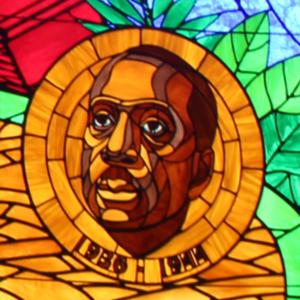


In this recording within the We Believe series; Howard Thurman reflects upon Oswald W.S. McCall's "Hand of God." Here, Thurman ponders the centrality of hope in the life of faith, and the ways in which hope is grounded in a myriad of contradictions. He continues by defining hope, noting that hope is deeply experiential and the central marker of making sense of the Hand of God.
Part of the Collection, We Believe (Television Series, 1958-1965)
Tags: experience, fear, Hand of God, hope, interconnectivity, journey, liminality, mind, Nature of God, Oswald McCall, rhythm, salvation, seeking, solitary, spirit, The Brothers of Karamazov, trust, voice
Dustin Mailman
Recorded in WHDH-TV, Boston, Massachusetts
Citation: Thurman, Howard, “McCall's Hand of God, Part 5 (1964-10-02),” The Howard Thurman Digital Archive, accessed July 9, 2024, https://thurman.pitts.emory.edu/items/show/215.
In this recording within the We Believe series; Howard Thurman reflects upon the implications that Psalm 139 has upon one's understanding of God. His understanding of God is relational and is directly tied to one's own experience. For Thurman, heaven reflects God's goodness, being filled with ecstasy and delight. For Thurman, the opposite of this ecstasy and delight is the product of sin, selfishness, and "stupidity."
Part of the Collection, We Believe (Television Series, 1958-1965)
Tags: eschatology, heart, Isolation, Psalm 139, responsibility, salvation, solitude
Dustin Mailman
Recorded in WHDH-TV, Boston, Massachusetts
Citation: Thurman, Howard, “If I Ascend up into Heaven (1961-01-06),” The Howard Thurman Digital Archive, accessed July 9, 2024, https://thurman.pitts.emory.edu/items/show/213.
In this presentation, Thurman discusses the integrity of human speech. Words embody meanings communities attribute to them and become the basis of the verbal articulation of thought. While words inadequately convey the vastness of all that a person is capable of feeling, human speech must strive for honesty so that what we say reveals rather than conceals who we are.
Part of the Collection, Featured Thurman Recordings
Tags: integrity, language, speech, words
Description by ShaCarolyn Halyard
Recorded in NA
Citation: Thurman, Howard, “Thou Knowest it Altogether, 1960,” The Howard Thurman Digital Archive, accessed July 9, 2024, https://thurman.pitts.emory.edu/items/show/211.
In this recording, Thurman explores the idea of order and logic in life through the lens of Psalm 139 and a prose poem based on the phrase, "Lord, Thou hast searched me and known me. Thou knowest my down sitting and mine uprising. Thou understandest my thoughts afar off." Thurman suggests that evidence of God having searched and known us is found in the details of our lives that demonstrate order and logic in our actions and experiences. Thurman concludes, "the whole context of my life has been lived under the scrutiny of God, and nothing that happens to me is a part of something that is really irrelevant to the order of my life."
Part of the Collection, We Believe (Television Series, 1958-1965)
Tags:
Description by Spencer Roberts
Recorded in WHDH-TV, Boston, Massachusetts
Citation: Thurman, Howard, “Thou Hast Searched Me (1960-10-28),” The Howard Thurman Digital Archive, accessed July 9, 2024, https://thurman.pitts.emory.edu/items/show/209.
In his conclusion to “The Witness of God,” Thurman discusses how deep faith is experienced at the moment that one chooses to accept the faith that God gives. Such faith is brought to life by a penetrating sense of confidence in God’s will. In the candid words of Thurman’s mother who soberly said to him during a moment of disquiet, “God will take care of us,” she echoes, he believes, the ultimate expression of all that humanity could offer regarding the meaning of life and death.
Part of the Collection, Featured Thurman Recordings
Tags: death, faith, Halley’s Comet, life, Spirit of Man
Description by Dr. Tim Rainey
Recorded in Cathedral of St. John, New York City, New York
Citation: Thurman, Howard, “The Witness of God (conclusion/excerpt) (St. John's Cathedral), 1959 Dec 6,” The Howard Thurman Digital Archive, accessed July 9, 2024, https://thurman.pitts.emory.edu/items/show/199.
This recording is a part of a wider series of conversations from September to October of 1980 where Howard Thurman met with a variety of young men and women who were discerning their calling to ministry. Thurman poses the intent of this group as an opportunity to "open up for one's self the moving, vital, creative push of God, while God is still disguised in the movement of God's self." The majority of this recording is a group of young people working through the nature of temptation, and Jesus' understanding of his sense of self as it pertains to Luke 4:1-13. Towards the end of the recording, the group brings their ponderings on the scripture, to which Thurman responds with ambiguity, "The only thing I know is how the tempter works with me. And that is sometimes just in my imagination, sometimes there's somebody who poses something."
Part of the Collection, NA
Tags: attachment, Buddha, Chicago, conflict, construct, devil, eisegesis, exegesis, hermeneutic, identity, imagination, interpretation, Jesus, legion, Luke 4:1-13, mystical experience, New Testament, painting, point of departure, psychoanalysis, Revised Standard Version, temptation, temptation of Jesus, universal
Description by Dustin Mailman
Recorded in NA
Citation: Thurman, Howard, “Conversations with Howard Thurman, Part 2, 1980,” The Howard Thurman Digital Archive, accessed July 9, 2024, https://thurman.pitts.emory.edu/items/show/185.
This recording is a part of a wider series of conversations from September to October of 1980 where Howard Thurman met with a variety of young men and women who were discerning their calling to ministry. Thurman poses the intent of this group as an opportunity to "open up for one's self the moving, vital, creative push of God, while God is still disguised in the movement of God's self." This recording consists of preliminary introductions from various participants in the conversation, responding to questions such as where one is studying, what has led one to a life of ministry, and who has journeyed alongside these persons in their discernment of a life in ministry.
Part of the Collection, NA
Tags: calling, Chicago, experience, fulfillment, Harvard Divinity School, history, Howard University, ideals, introductions, Judaism, laughter, Lincoln University, love, lure, Mercedes, ministry, mission sharecroppers, Morehouse College, mysticism, push, religion of Jesus, Sam Williams, St. Joseph Abbey, understanding, Union Theological Seminary, vocation
Description by Dustin Mailman
Recorded in NA
Citation: Thurman, Howard, “Conversations with Howard Thurman, Part 1, 1980,” The Howard Thurman Digital Archive, accessed July 9, 2024, https://thurman.pitts.emory.edu/items/show/184.
In this recording within the We Believe series, Howard Thurman reads from his text, Deep is the Hunger, speaking to his understanding of love. He defines love as "the experience of being dealt with at a point in one's self that is beyond all good and evil." Embedded in this definition are notions of trust and forgiveness. He indicates that love is the antithesis of isolation, with isolation being the very essence of having a lack of access to another person.
Part of the Collection, We Believe (Television Series, 1958-1965)
Tags: 1 Corinthians, Bay State Road, community, deep is the hunger, dog, experience, forgiveness, Great Hunger, Isolation, Johan Bojer, kindness, Kropotkin, love, relationship, trust, withdraw
Dustin Mailman
Recorded in WHDH-TV, Boston, Massachusetts
Citation: Thurman, Howard, “"My Need — Your Need" (1958-03-14),” The Howard Thurman Digital Archive, accessed July 9, 2024, https://thurman.pitts.emory.edu/items/show/181.
In this recording within the We Believe series; Howard Thurman draws upon a parable of two leaves at the end of the Fall season. The two leaves are in conversation with one another, pondering questions of why they must die and who will take their place when they die. After reading this parable, Thurman reflects upon the ways in which all of creation's lived experience participates in death; rendering death as an event that happens in one's life, not something that happens to oneself.
Part of the Collection, We Believe (Television Series, 1958-1965)
Tags: A Song of Living, common experience, death, experience, leaves, life, Oak Tree, parable, peace, transcendence, working paper
Dustin Mailman
Recorded in WHDH-TV, Boston, Massachusetts
Citation: Thurman, Howard, “Death a Part of Life (1961-05-12),” The Howard Thurman Digital Archive, accessed July 9, 2024, https://thurman.pitts.emory.edu/items/show/179.
In this recording, Thurman asks whether our lives are canals, reservoirs, or swamps. Lives like canals connect people, movements, and purposes. Reservoirs have inlets and outlets in order to store up resources and provide them to others when needed. Swamps are without outlet, only taking in and becoming stagnant and rotted. Thurman asks what form our lives take, and suggests that we become reservoirs, finding ways to replenish our resources "so that there will be an outgoing from us to irrigate many parched places so that all who know us will find in us a benediction breathing peace."
Part of the Collection, We Believe (Television Series, 1958-1965)
Tags:
Description by Spencer Roberts
Recorded in WHDH-TV, Boston, Massachusetts
Citation: Thurman, Howard, “Canal, Reservoir, Swamp? (1958-05-02),” The Howard Thurman Digital Archive, accessed July 9, 2024, https://thurman.pitts.emory.edu/items/show/180.
From the publisher's feed
It is my goal to support the The Howard Thurman Digital Archive, at Pitts Theology at Emory University, with their…
I've set a personal goal of listening to all 290+ recordings in one year, and having these recordings available as a podcast will help tremendously. I am so grateful to have them. And I am hopeful that others will discover Dr. Thurman through this podcast.