
Sign up to save your podcasts
Or

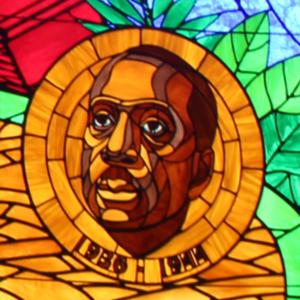


In this recording, Thurman explores the varieties of peace we can find in life, from innocent peace as children to the peace of exhaustion when we've overwhelmed our resources and can do nothing more. Finally, there is the peace resulting from triumph over adversity, when we are able to "distill goodness out of that which is not good" and "learned how to winnow beauty out of ugliness."
Part of the Collection, We Believe (Television Series, 1958-1965)
Tags:
Description by Spencer Roberts
Recorded in WHDH-TV, Boston, Massachusetts
Citation: Thurman, Howard, “Inner Peace (1960-05-06),” The Howard Thurman Digital Archive, accessed July 9, 2024, https://thurman.pitts.emory.edu/items/show/175.
In this recording, Thurman discusses the quiet ministry of the living spirit, which feeds our deepest spiritual needs and remains a source of strength when all other dependencies fall away.
Part of the Collection, We Believe (Television Series, 1958-1965)
Tags:
Description by Spencer Roberts
Recorded in WHDH-TV, Boston, Massachusetts
Citation: Thurman, Howard, “Ministry of the Living Spirit (1959-03-06),” The Howard Thurman Digital Archive, accessed July 9, 2024, https://thurman.pitts.emory.edu/items/show/174.
In this recording, Thurman discusses how timetables and schedules can affect us in negative and positive ways. Timetables can sometimes be oppressive, and so "we become busy." In other cases, they allow us to become more efficient and thus find more time to cultivate our inward part. Thurman ends by focusing on the importance of cultivating habits that "steel us within" so that we might find inner tranquility among the turmoil of life.
Part of the Collection, We Believe (Television Series, 1958-1965)
Tags:
Description by Spencer Roberts
Recorded in WHDH-TV, Boston, Massachusetts
Citation: Thurman, Howard, “Timeless and Timebound (1959-02-27),” The Howard Thurman Digital Archive, accessed July 9, 2024, https://thurman.pitts.emory.edu/items/show/173.
In this recording within the We Believe series, Howard Thurman reflects upon a passage from 1 Corinthians to elaborate on his understanding of love. He defines love as "the experience of being dealt with at a point in oneself that is beyond all the good and beyond all the evil. He notes that the love of God functions as the exemplary love to which humanity should strive towards. Thurman's conception of love is not possessive nor transactional, rather, it is interdependent and comes from the heart.
Part of the Collection, We Believe (Television Series, 1958-1965)
Tags: 1 Corinthians, affection, community, confidence, dog, experience, interconnectivity, love, Moffatt, Olive Schreiner, ownership, requitment, satisfaction, security, trust
Dustin Mailman
Recorded in WHDH-TV, Boston, Massachusetts
Citation: Thurman, Howard, “The Meaning of Love (1958-03-07),” The Howard Thurman Digital Archive, accessed July 9, 2024, https://thurman.pitts.emory.edu/items/show/171.
In this recording within the We Believe series; Howard Thurman reads a meditation that speaks of two men who were once enemies sharing the same prison cell. From this meditation, he asks the question of what it means to overcome evil, and anticipate the Kingdom of God? He continues that it is in the disruption of barriers of hatred that humanity builds against itself that one can begin to anticipate the inbreaking of the Kingdom of God. He continues, when we put our lives at the disposal of "that in which we stand," no matter how big or small, one is pursuing the greater good of humanity.
Part of the Collection, We Believe (Television Series, 1958-1965)
Tags: awareness, decoration day, evil, George Cross, Herman Hagedorn, holiday, meditation, prison, prisoners, solidarity, truth
Dustin Mailman
Recorded in WHDH-TV, Boston, Massachusetts
Citation: Thurman, Howard, “The Big Dream; the Little Act (1959-05-29),” The Howard Thurman Digital Archive, accessed July 9, 2024, https://thurman.pitts.emory.edu/items/show/170.
In this recording, Thurman first cautions us to think twice before we move our neighbor's landmarks. This means to be aware that we are never able to fully understand another person's perspective and path through life. "To know a man is to know concerning his landmarks, for these are his points of referral that stand out beyond and above all the traffic of his life, advising and tutoring him in his journey through life and beyond." Thurman then explores the difficult yet important task of taking responsibility for our actions and our reactions to the impersonal forces that affect us each day. "The quality of my response begins to create within me a climate out of which all of my deeds and all of my thinking and all of my living emerge."
Part of the Collection, We Believe (Television Series, 1958-1965)
Tags:
Description by Spencer Roberts
Recorded in WHDH-TV, Boston, Massachusetts
Citation: Thurman, Howard, “Integrity of the Act (1959-05-08),” The Howard Thurman Digital Archive, accessed July 9, 2024, https://thurman.pitts.emory.edu/items/show/169.
In "Prayers," Thurman reads two prayers. The first is about responsibilities, needs, and our desire to help others without knowing how. The second is Psalm 139.
Part of the Collection, We Believe (Television Series, 1958-1965)
Tags:
Description by Spencer Roberts
Recorded in WHDH-TV, Boston, Massachusetts
Citation: Thurman, Howard, “Prayers (1962-06-01),” The Howard Thurman Digital Archive, accessed July 9, 2024, https://thurman.pitts.emory.edu/items/show/168.
In this recording, Thurman discusses the experiences of suffering and joy in human life. He explores an interpretation of the phrase "love suffereth long" in which our love is expressed through actions that make us vulnerable in our desperate attempt to care for another person.
Part of the Collection, We Believe (Television Series, 1958-1965)
Tags:
Description by Spencer Roberts
Recorded in WHDH-TV, Boston, Massachusetts
Citation: Thurman, Howard, “Love Suffereth Long (1959-11-13),” The Howard Thurman Digital Archive, accessed July 9, 2024, https://thurman.pitts.emory.edu/items/show/166.
In this recording within the We Believe series, Howard Thurman unpacks his understanding of love, the experience of love, and the nature of love. Thurman describes love at its best to be an involvement with the "innermost center of the beloved." Thurman describes the experience of love as being "totally dealt with," noting that trust, responsibility, and consent all point to the creative moment that composes one's understanding of "love." Love is shared, love is transcendent, and love speaks to the most profound truth that one can find at the center of one's existence.
Part of the Collection, We Believe (Television Series, 1958-1965)
Tags: center, creative moment, dog, experience, fluid center, love, Peter Kropotkin, spirit, trust, urgency, wholeness
Description by Dustin Mailman
Recorded in WHDH-TV, Boston, Massachusetts
Citation: Thurman, Howard, “Love and Self-Confidence (1959-11-06),” The Howard Thurman Digital Archive, accessed July 9, 2024, https://thurman.pitts.emory.edu/items/show/165.
Thurman references colorful allegories and metaphors in this recording to remind us that focusing on the past can prevent one’s self from achieving fulfillment and helping those yet-to-come. His most powerful reference is to the “new and old wood” of an apple tree. He states clearly that fruit is only born on the new wood, and that the function of old wood is to bear that new wood. He connects this metaphor to the book of Hebrew to explain that without the past, the present has no meaning, and without the present, the past remains unfulfilled.
Part of the Collection, NBC Broadcasts (1952-1954)
Tags:
Description by Anthony Fiddes
Recorded in WHDH-TV, Boston, Massachusetts
Citation: Thurman, Howard, “[Past and Present], 1953,” The Howard Thurman Digital Archive, accessed July 9, 2024, https://thurman.pitts.emory.edu/items/show/161.
From the publisher's feed
It is my goal to support the The Howard Thurman Digital Archive, at Pitts Theology at Emory University, with their…
I've set a personal goal of listening to all 290+ recordings in one year, and having these recordings available as a podcast will help tremendously. I am so grateful to have them. And I am hopeful that others will discover Dr. Thurman through this podcast.