
Sign up to save your podcasts
Or

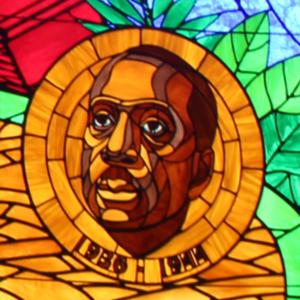


Here Thurman speaks to the moment of truth as it relates to God’s purpose for our lives. Discovering the authentic meaning of our lives helps us to uncover the bearing our experiences have on that meaning. It is the experience by which the mind and the spirit and yes, the soul of man gets a confirmation that enables him to live into the meaning of his life not only with a sense of responsibility but with dignity and power.
Part of the Collection, Moment of Truth (1958, Marsh Chapel, Boston University, Boston, MA)
Tags: meaning, mind, responsibility, soul, spirit
Description by ShaCarolyn Halyard
Recorded in Marsh Chapel, Boston University, Boston, Massachussetts
Citation: Thurman, Howard, “The Moment of Truth, Part 2, 1958 January 19,” The Howard Thurman Digital Archive, accessed July 9, 2024, https://thurman.pitts.emory.edu/items/show/148.
In this first installment, Thurman speaks about the solitary nature of the moment of truth. These moments that illuminate our lives and change the course of our realities are moments that must be experienced in solitude through our own eyes. Experiencing firsthand the light that shines into our darkness has the power to do what external pressure and punishment cannot. Ever-present in our moments of truth is revelation, conviction, and decision that guides our responses.
Part of the Collection, Moment of Truth (1958, Marsh Chapel, Boston University, Boston, MA)
Tags: conviction, decision, revelation
Description by ShaCarolyn Halyard
Recorded in Marsh Chapel, Boston University, Boston, Massachussetts
Citation: Thurman, Howard, “The Moment of Truth, Part 1, 1958 January 12,” The Howard Thurman Digital Archive, accessed July 9, 2024, https://thurman.pitts.emory.edu/items/show/147.
In this third installment of The Moment of Crisis, Thurman brings the life of Jesus into the conversation. The crisis is still being discussed as the moment in time when one senses he is being pulled in two different directions. One direction is interpreted as that which would move him to new territories physically and mentally. The other direction seeks to conserve and hold the line against all change. When Paul was met with a moment of crisis, his resolution came through breaking with the tradition of his fathers. When Jesus was met with a crisis, he refused to break with the tradition of his fathers. This decision to remain a Jew and stay the course ultimately ended at the cross. It is often in our moments of crisis where we have the power to make decisions that bring forth confirmation and hold our lives in balance.
Part of the Collection, Moment of Crisis (1958, Marsh Chapel, Boston University, Boston, MA)
Tags: balance, Christ, crisis
Description by ShaCarolyn Halyard
Recorded in Marsh Chapel, Boston University, Boston, Massachussetts
Citation: Thurman, Howard, “The Moment of Crisis, Part 3: Jesus, 1958 February 23,” The Howard Thurman Digital Archive, accessed July 9, 2024, https://thurman.pitts.emory.edu/items/show/146.
In this second installment of The Moment of Crisis, Thurman considers the significance of the experience of crisis in the life of the Apostle Paul. In this lecture, the moment of crisis is defined as the experience through which an individual passes when he is caught in the grip of two forces moving in opposite directions, one force seeking always to maintain the balance, that is the familiar experience, to maintain the status quo, to conserve, to hold the line, to dig in, and the other to go forward, to take a step that has not been taken before, to move into an unexplored area, to change. This was evidenced in the life of Paul who functioned as a member of the Jewish community, yet still had the privileges of a Roman citizen. Similarly, it was on the road to Damascus where the duality of Paul’s identity would come into direct opposition, thus freeing him from his unbelief in Christ. Through his self-sacrifice and devotion, Paul gives additional significance to the cross in the Christian movement.
Part of the Collection, Moment of Crisis (1958, Marsh Chapel, Boston University, Boston, MA)
Tags: balance, Christ, crisis, Paul
Description by ShaCarolyn Halyard
Recorded in Marsh Chapel, Boston University, Boston, Massachussetts
Citation: Thurman, Howard, “The Moment of Crisis, Part 2: Paul, 1958 February 9,” The Howard Thurman Digital Archive, accessed July 9, 2024, https://thurman.pitts.emory.edu/items/show/145.
In this excerpt from the third lecture on the Inner Life, Thurman says that it is rational and necessary to have a goal in life. To be without a goal is to undermine the self-respect of one's own being. Life is dynamic and responds to our commitment. When we hold a goal or purpose at our center, life energy rallies to support our efforts. This goal need not be extravagant, but can be as simple as making something beautiful from our lives. With a goal in our hearts, we are linked with God as a source of wholeness and renewal.
Part of the Collection, Inner Life (1951-52, Fellowship Church, San Francisco, CA)
Tags:
Description by Rodell Jefferson III.
Recorded in Fellowship Church, San Francisco, California
Citation: Thurman, Howard, “The Inner Life, Part 3 (Alternate Version), 1952 February 1,” The Howard Thurman Digital Archive, accessed July 9, 2024, https://thurman.pitts.emory.edu/items/show/136.
In this recording within the We Believe Series, Howard Thurman reads an excerpt from Stephen Vincent Benet's book, "John Brown's Body." According to Thurman, he reads this text every year the Friday before Abraham Lincoln's birthday. The quotation that is read comes from the perspective of Abraham Lincoln. In it, Lincoln ponders God's will for black bodies in America, pledges his allegiance to the union, and likens himself to an old hunting dog when reflecting upon his tenacity while fighting in the Civil War.
Part of the Collection, We Believe (Television Series, 1958-1965)
Tags: Abraham Lincoln, civil war, God residue, God's will, John Brown's Body, slavery, Stephen Benet
Description by Dustin Mailman
Recorded in WHDH-TV, Boston, Massachusetts
Citation: Thurman, Howard, “Lincoln's Birthday; Reading from Stephen Benet's "John Brown's Body" (1964-02-07),” The Howard Thurman Digital Archive, accessed July 9, 2024, https://thurman.pitts.emory.edu/items/show/113.
In this eighth lecture on "The Men Who've Walked with God," Thurman illustrates the mystical life of St. Francis of Assisi. Thurman describes St. Francis as an "uncomplicated mystic," not so much interested in metaphysics and theological problems. Rather, all that St. Francis knows is that there is a song in his heart which is an expression of the love of God. With the love of God, St. Francis is able to live from a place of harmony and satisfaction in God. Ultimately, we must be careful to not let our possessions and our social labels obstruct the music of God in the hearts of others and ourselves.
Part of the Collection, Men Who've Walked with God (1953)
Tags:
Description by Rodell Jefferson III.
Recorded in Fellowship Church, San Francisco, California
Citation: Thurman, Howard, “Men Who've Walked With God: St. Francis of Assisi, 1953 June 14,” The Howard Thurman Digital Archive, accessed July 9, 2024, https://thurman.pitts.emory.edu/items/show/601.
In this fourth lecture on "The Men Who've Walked with God," Thurman talks about the Buddha and his wrestling with human existence. Thurman says that the Buddha saw the aging and hunger in the world and equated life with suffering. The Buddha's response to this was to root out desire, to renounce attachment to the self. Thurman says that the insight here is that the self is not so much important as much as the act and the deed of the self. The ethical insight of the Buddha is in the purification of desire, which radiates into the moral life as a powerful life-affirming posture.
Part of the Collection, Men Who've Walked with God (1953)
Tags:
Description by Rodell Jefferson III.
Recorded in Fellowship Church, San Francisco, California
Citation: Thurman, Howard, “Men Who've Walked With God: Buddha, 1953 May 3,” The Howard Thurman Digital Archive, accessed July 9, 2024, https://thurman.pitts.emory.edu/items/show/599.
In this first sermon on "The Men Who've Walked with God," Thurman explores the dynamics of mysticism. Mystical experience is deeply personal, and yet always urging one out towards life. The mystic cannot be lost in transcendence, because the mystic must test their insights in the outer world. Mysticism is better experienced than it is explained. In this experience, there is direct contact with the Spirit of God. For this reason, as Thurman says, the mystic goes against the grain of institutions that claim their formulas are the doorway to God. Thurman ends hinting that the following series will deal with the disciplines of mysticism that keep the spirit active within and in the world.
Part of the Collection, Men Who've Walked with God (1953)
Tags:
Description by Rodell Jefferson III.
Recorded in Fellowship Church, San Francisco, California
Citation: Thurman, Howard, “Men Who've Walked With God, Part 1, 1953 April 12,” The Howard Thurman Digital Archive, accessed July 9, 2024, https://thurman.pitts.emory.edu/items/show/598.
"To do justly, to love mercy, and to walk humbly with that God." In this ninth sermon on the prophets, Thurman explores the notions of justice, mercy, and humility as they are recounted in Micah. We often think of justice as a balance sheet, the "eye for an eye" logic. But Thurman invokes Jesus who teaches that mercy is more important than justice. Mercy and kindness is an act that cannot be paid back, and in fact continues to multiply itself in the recipient. This, Thurman says, is what it means to do justly, "releasing people from prison in the way you deal with them." Lastly, Thurman goes against the idea that humility is deprecation; rather, true humility is a clear-eyed assessment of oneself, both weaknesses and strengths included. Together, justice, mercy, and humility form the meaning of religion and the meaning of a good life.
Part of the Collection, Religion of the Prophets (1952, Fellowship Church, San Francisco, CA)
Tags:
Description by Rodell Jefferson III.
Recorded in Fellowship Church, San Francisco, California
Citation: Thurman, Howard, “Religion of the Prophets: The Message of Micah, 1952 August 17,” The Howard Thurman Digital Archive, accessed July 9, 2024, https://thurman.pitts.emory.edu/items/show/592.
From the publisher's feed
It is my goal to support the The Howard Thurman Digital Archive, at Pitts Theology at Emory University, with their…
I've set a personal goal of listening to all 290+ recordings in one year, and having these recordings available as a podcast will help tremendously. I am so grateful to have them. And I am hopeful that others will discover Dr. Thurman through this podcast.