
Sign up to save your podcasts
Or

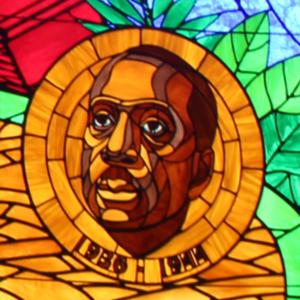


Thurman addresses the manifestations of the principle of alternation in life, ranging from the experiences of the individual to changes that affect the world. This alternation requires a “fallow period” from man, as life wanes, and a period of quiet restoration before it prepares to wax again. Thurman explains that this anxiety-inducing ebb is part of a natural, contradictory cycle, and that when man understands that the flow will come again, they can be at peace knowing that the contradictions in life are not final.
Part of the Collection, NBC Broadcasts (1952-1954)
Tags:
Description by Anthony Fiddes
Recorded in WHDH-TV, Boston, Massachusetts
Citation: Thurman, Howard, “Contradictions of Life, 1953,” The Howard Thurman Digital Archive, accessed July 9, 2024, https://thurman.pitts.emory.edu/items/show/160.
This message was broadcast as part of the "We Believe" television series on March 24, 1961. In the meditation, Thurman discusses the analogy of life as a river, as it flows, and floods, and returns to calm.
Part of the Collection, We Believe (Television Series, 1958-1965)
Tags:
Description by Spencer Roberts
Recorded in WHDH-TV, Boston, Massachusetts
Citation: Thurman, Howard, “Life is a River (1961-03-24),” The Howard Thurman Digital Archive, accessed July 9, 2024, https://thurman.pitts.emory.edu/items/show/159.
In this recording within the We Believe Series, Thurman places the Negro Spiritual "Deep is the River, My Home is Over Jordan," and Langston Hughes' "The Negro Speaks of Rivers" in conversation with one another. He likens the life of a river to the movement of human existence: the river begins as a mere stream, then becomes a river wearing down the riverbanks, then disperses itself into a wider ocean. As the river shifts and bends, Thurman claims, the human life also bends and shifts, participating in a process of changing, growing, giving, and moving through time.
Part of the Collection, We Believe (Television Series, 1958-1965)
Tags: Abe Lincoln, creative, Deep River, Deep River My Home is Over Jordan, erosion, Langston Hughes, life, Negro Spirituals, present, process, soul, spirituals, The Negro Speaks of Rivers, vital energy
Description by Dustin Mailman
Recorded in WHDH-TV, Boston, Massachusetts
Citation: Thurman, Howard, “Deep River, My Home is Over Jordan (1958-01-31),” The Howard Thurman Digital Archive, accessed July 9, 2024, https://thurman.pitts.emory.edu/items/show/158.
In this recording within the We Believe Series, Thurman reflects upon the Thanksgiving season, asking the question: "What is the nature of your own gratitude?" He calls the listener to discern whether or not they have paused to look at their life in the present moment and identifies the present moment as a gift. When considering the task of understanding the present moment as a gift, mercy and gratitude function as the means to allow oneself to be present in the moment. Thurman claims that our mercy and gratitude is also God's mercy and gratitude, thus accepting the gift that is the present moment is to accept the gift of God's sovereign providence.
Part of the Collection, We Believe (Television Series, 1958-1965)
Tags: breath, God residue, grace, graciousness, gratitude, holidays, nature, panentheism, thanksgiving, vessel
Description by Dustin Mailman
Recorded in WHDH-TV, Boston, Massachusetts
Citation: Thurman, Howard, “Thankful for What? (1964-11-20),” The Howard Thurman Digital Archive, accessed July 9, 2024, https://thurman.pitts.emory.edu/items/show/157.
In this recording within the We Believe Series, Thurman reflects upon the Thanksgiving season. He lists a litany of feelings, emotions, materials, and states of being that he is thankful for: air to breath, food to eat, shelter, love, etc. He then discerns the way in which humanity may overlook many of the things that humanity should be grateful for: the ability to have food, all that dies in order for us to live, etc. He then concludes this meditation by discerning the ways in which one could understand their own gratitude for God: God's care, God's protection, etc.
Part of the Collection, We Believe (Television Series, 1958-1965)
Tags: ancestors, care, crossroad, darkness, examine, gratitude, holidays, litany, love, magic, nostalgia, temptation, thanksgiving
Description by Dustin Mailman
Recorded in WHDH-TV, Boston, Massachusetts
Citation: Thurman, Howard, “A Thanksgiving Meditation (1958-11-14),” The Howard Thurman Digital Archive, accessed July 9, 2024, https://thurman.pitts.emory.edu/items/show/156.
In this message about how we deal with frustrations in life, Thurman discusses the song of the blind man and the Biblical story on which it was based. He points out that there are three ways of dealing with frustration. First, we might strike out against everything around us in bitterness, injuring ourselves and others. Second, we might withdraw and detach ourselves from life, losing our vitality and burning out. But Thurman encourages us to take the third option, "to take the raw materials of our environment and bring to bear upon them the kind of creative vitality, and power, hope, dream, aspiration, yearning, yield, even spiritual conviction so that we can reduce our environment and the things that frustrate us to manageable units of control."
Part of the Collection, We Believe (Television Series, 1958-1965)
Tags:
Description by Spencer Roberts
Recorded in WHDH-TV, Boston, Massachusetts
Citation: Thurman, Howard, “The Blind Man (1958-10-03),” The Howard Thurman Digital Archive, accessed July 9, 2024, https://thurman.pitts.emory.edu/items/show/153.
In this recording within the We Believe Series, Thurman reflects upon the "sorrow songs" of those who were enslaved in America. His remarks speak specifically to the songs that reflect upon the self in relation to a river, such as, "My soul has gone deep like the rivers." The voices of these singers relate their lives to that of a river from a place of deep experientiality. Thurman continues, by relating the unfolding of life to that of a river: a simplistic origin which grows into a complex system, which eventually returns to a wider body, one is able to understand the ways in which humanity is intertwined and shares a common trajectory.
Part of the Collection, We Believe (Television Series, 1958-1965)
Tags: Abraham Lincoln, creativity, Deep River, evolution, experience, interconnectivity, Jordan River, process, river, slavery, spirituals
Description by Dustin Mailman
Recorded in WHDH-TV, Boston, Massachusetts
Citation: Thurman, Howard, “Deep River; Nature of Life (1958-09-26),” The Howard Thurman Digital Archive, accessed July 15, 2024, https://thurman.pitts.emory.edu/items/show/152.
In this recording within the We Believe Series, Howard Thurman reads an excerpt from Stephen Vincent Benet's book, "John Brown's Body." According to Thurman, he reads this text every year the Friday before Abraham Lincoln's birthday. The quotation that is read comes from the perspective of Abraham Lincoln. In it, Lincoln ponders God's will for black bodies in America, pledges his allegiance to the union, and likens himself to an old hunting dog when reflecting upon his tenacity while fighting in the Civil War.
Part of the Collection, We Believe (Television Series, 1958-1965)
Tags: Abraham Lincoln, civil war, God residue, God's will, John Brown's Body, slavery, Stephen Benet
Description by Dustin Mailman
Recorded in WHDH-TV, Boston, Massachusetts
Citation: Thurman, Howard, “John Brown's Body (1960-02-09),” The Howard Thurman Digital Archive, accessed July 9, 2024, https://thurman.pitts.emory.edu/items/show/151.
In this recording within the We Believe Series, Howard Thurman reads an excerpt from Stephen Vincent Benet's book, "John Brown's Body." According to Thurman, he reads this text every year the Friday before Abraham Lincoln's birthday. The quotation that is read comes from the perspective of Abraham Lincoln. In it, Lincoln ponders God's will for America, likens himself to an old hunting dog when reflecting upon his tenacity while fighting in the Civil War, and attempts to find spiritual grounding in the midst of unrest and war.
Part of the Collection, We Believe (Television Series, 1958-1965)
Tags: Abraham Lincoln, civil war, God residue, God's will, Isolation, John Brown's Body, slavery, Stephen Benet
Description by Dustin Mailman
Recorded in WHDH-TV, Boston, Massachusetts
Citation: Thurman, Howard, “John Brown's Body (1960-02-05),” The Howard Thurman Digital Archive, accessed July 9, 2024, https://thurman.pitts.emory.edu/items/show/150.
In this message, Thurman discusses the song "Jacob's Ladder" and how it has been taken to represent human experience as a journey. He also describes a Gothic principle in which human life is Earth-bound, but also involves a sense of the beyond that provides opportunity for alternatives and choices in every aspect of life.
Part of the Collection, We Believe (Television Series, 1958-1965)
Tags:
Description by Spencer Roberts
Recorded in WHDH-TV, Boston, Massachusetts
Citation: Thurman, Howard, “Jacob's Ladder (1958-11-07),” The Howard Thurman Digital Archive, accessed July 9, 2024, https://thurman.pitts.emory.edu/items/show/149.
From the publisher's feed
It is my goal to support the The Howard Thurman Digital Archive, at Pitts Theology at Emory University, with their…
I've set a personal goal of listening to all 290+ recordings in one year, and having these recordings available as a podcast will help tremendously. I am so grateful to have them. And I am hopeful that others will discover Dr. Thurman through this podcast.