
Sign up to save your podcasts
Or

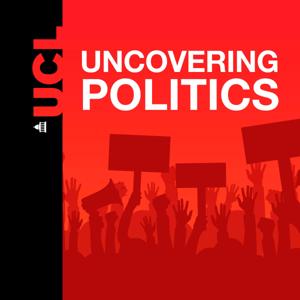

Governments in many countries have powers to authorize – or not authorize – planned demonstrations. So what are the effects of such decisions? We might think the main effects are going to be on whether the demonstrations happen or not, but new research suggests that the impacts can be much subtler than that: they influence whether the demonstrators gain public support, with knock-on consequences further down the line.
The research, which will shortly be published in an article in the journal World Politics, has been carried out in Russia – a country where public attitudes towards those in power are clearly of great interest at the moment. It also has implications for other autocracies. And it might at least raise questions in democracies too – not least as the UK government’s powers relating to protests are increased.
We are delighted that Dr Katerina Tertytchnaya, Associate Professor in Comparative Politics here in the UCL Department of Political Science, joins us to discuss this research.
UCL’s Department of Political Science and School of Public Policy offers a uniquely stimulating environment for the study of all fields of politics, including international relations, political theory, human rights, public policy-making and administration. The Department is recognised for its world-class research and policy impact, ranking among the top departments in the UK on both the 2021 Research Excellence Framework and the latest Guardian rankings.
 View all episodes
 By UCL Political Science

4.6
77 ratings
Governments in many countries have powers to authorize – or not authorize – planned demonstrations. So what are the effects of such decisions? We might think the main effects are going to be on whether the demonstrations happen or not, but new research suggests that the impacts can be much subtler than that: they influence whether the demonstrators gain public support, with knock-on consequences further down the line.
The research, which will shortly be published in an article in the journal World Politics, has been carried out in Russia – a country where public attitudes towards those in power are clearly of great interest at the moment. It also has implications for other autocracies. And it might at least raise questions in democracies too – not least as the UK government’s powers relating to protests are increased.
We are delighted that Dr Katerina Tertytchnaya, Associate Professor in Comparative Politics here in the UCL Department of Political Science, joins us to discuss this research.
UCL’s Department of Political Science and School of Public Policy offers a uniquely stimulating environment for the study of all fields of politics, including international relations, political theory, human rights, public policy-making and administration. The Department is recognised for its world-class research and policy impact, ranking among the top departments in the UK on both the 2021 Research Excellence Framework and the latest Guardian rankings.

299 Listeners

891 Listeners
1,546 Listeners
140 Listeners

183 Listeners
140 Listeners
24 Listeners

106 Listeners

15,634 Listeners

347 Listeners
3,030 Listeners
461 Listeners
761 Listeners

341 Listeners
126 Listeners