
Sign up to save your podcasts
Or



Based on Podcast App listening data
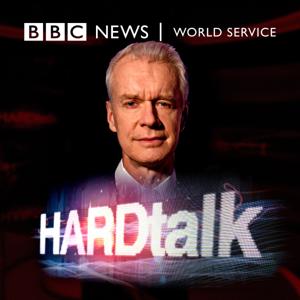
Is there a new brand of violent extremism that is identifiably different from all forms of militancy that have gone before? The question is prompted by the shocking and self-publicised brutality of the group calling itself Islamic State. Boko Haram in Nigeria deserves mention in the same breath. These groups provoke worldwide revulsion, but is force the only possible response? Hardtalk speaks to Giandomenico Picco, the former UN envoy who risked his life to negotiate the release of western hostages in Lebanon.
(Photo: Giandomenico Picco. BBC copyright)
Twenty-five years after the world’s most notorious wall came crashing down, Germany is Europe’s undisputed, dominant nation. This is a reflection of economic power but also of media power. Hardtalk is in Berlin to visit the headquarters of one of Europe’s most powerful publishing companies, Axel Springer. How does a traditional company thrive in the age of the internet?
Next month the international club of rich nations, the G20, will meet in Australia. For much of the past decade the host nation boasted one of the strongest economies in the developed world, but not anymore. Australia has been badly hit by falling commodity prices and China's economic slowdown. Hardtalk speaks to the country's Treasury Minister, Joe Hockey. Should Australians brace themselves for a prolonged period of economic pain?
(Photo: Joe Hockey, Australian Treasurer and Chair of the G20 Finance Track, 2014. Credit: Drew Angerer/EPA)
A sense of gloom is hanging over Europe. Years of economic stagnation are at the heart of it, but there are other factors too - for example, the security challenge posed by Vladimir Putin’s Russia, and also a rising tide of scepticism about the European Union itself amongst many on the continent. Hardtalk speaks to Alexander Stubb, the Prime Minister of Finland and one of the EU’s new young leaders. How does Europe rescue itself?
(Photo: Prime Minister of Finland Alexander Stubb attends a press conference with French President Francois Hollande, 2014. Credit: AP)
The Middle East is in turmoil, beset by ethnic, religious and sectarian conflicts that together have created one of the gravest global humanitarian crises since World War II. And once again a US-led military coalition is dropping bombs in the region.
Hardtalk speaks to David Miliband, a former British foreign secretary, now head of the US-based, International Rescue Committee. Given recent history, is there any reason to believe western intervention to end the killing and the suffering can work?
Picture: David Miliband
The US led military operation against the so-called Islamic State organisation has raised a host of awkward questions. Is the makeshift coalition fighting a war, or mounting an anti-terror operation? What will victory look like, and how long will it take? Hardtalk speaks to General Lord Richards, who recently retired as Britain's top military chief. He has led military operations in Afghanistan, Iraq and Sierra Leone. What does he make of this latest one?
(Photo: General Lord Richards)
The warnings about Ebola have been apocalyptic - Liberia's defence minister says it threatens his country's existence, while the US president says it threatens 'global security'. Three thousand people have already died from the disease and the World Health Organisation warns the number of cases is likely to exceed 20,000 within weeks - and it is spreading. America has diagnosed the first case outside Africa. Hardtalk speaks to professor Peter Piot, the man who first identified the disease back in the 70s. Forty years on we still do not have a cure. So, what should be done to stop it?
How serious a threat to western security is the extremist group that calls itself Islamic State? According to those governments now backing military action against the jihadis, the danger is very real - not least from foreign fighters, battle hardened in Syria and Iraq, who return to homes in the West. Hardtalk speaks to the EU counter-terror coordinator, Gilles de Kerchove - does the EU have a coherent response to the Islamic State challenge?
Picture: Gilles de Kerchove, Credit: Emmanuel Dunand/AFP/Getty Images
World leaders gathered at a UN climate summit in New York recently and pledged again to tackle global warming. Yet again this year global greenhouse emissions have risen, partly because many politicians and citizens don't want more expensive renewable energy if it costs economic growth and prosperity. Hardtalk speaks to the British climate economist, Lord Nicholas Stern, who has just co-chaired a new report on the climate and economy. He says, it is not an either or situation. But what evidence is there that we can have it both ways and are governments listening?
(Photo: Lord Nicholas Stern. Credit: Hannelore Foerster/Getty Images)
Hardtalk speaks to Jessye Norman, who is acknowledged as one of the greatest singers of her generation. Her voice has enthralled audiences in the world’s greatest concert halls and opera houses for decades. She was born in America’s segregated south with a talent that transcended barriers. Has her success helped to tear those barriers down?
(Photo: Jessye Norman. Credit: Getty Images)
From the publisher's feed
Conversations with people shaping our world, from all around the globe. Listen to The Interview for the best conversations from the BBC, the world's most trusted international news provider.
Ranked by our users in the last 21 days

7,594 Listeners

4,107 Listeners

372 Listeners

520 Listeners

1,044 Listeners

285 Listeners

1,789 Listeners

955 Listeners

723 Listeners

53 Listeners

834 Listeners

63 Listeners

974 Listeners
0 Listeners
0 Listeners
0 Listeners
6 Listeners

13 Listeners
4 Listeners
1 Listeners
37 Listeners
0 Listeners

143 Listeners

386 Listeners
2 Listeners