
Sign up to save your podcasts
Or

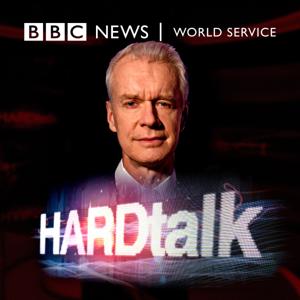


Based on Podcast App listening data
Tamara Rojo - artistic director and lead principal of the English National Ballet - talks about her new production, a ballet about one of the bloodiest conflicts in the 20th Century, which is part of an attempt to modernise what is often a rather conservative repertoire in ballet. She would like to do the same with training and technique too, but with some of the stars arguing that ballet should be tough and a new generation of dancers who have gone through a demanding training in Japan and China beginning to flourish, can Tamara Rojo triumph over tradition?
(Picture: Tamara Rojo. Credit: Carl Court/AFP/Getty Images)
Since the financial meltdown of 2008, China has been the key driver of growth in the global economy. In Beijing, it is easy to see how the country's brand of command capitalism has transformed infrastructure and generated unprecedented wealth. But suddenly confidence has given way to insecurity - at the heart of it is a debt bubble that would threaten the whole world economy if it turned toxic. Hardtalk is in Beijing to speak to Jin Liqun, supremely well connected investment bank chief and former chairman of China's sovereign wealth fund. How worried should we be about the Chinese economy?
There has been widespread condemnation of Russia’s President, Vladimir Putin’s decision to absorb Crimea after its referendum to break away from Ukraine. But Moscow says that any further sanctions imposed against it by the EU over Crimea, will affect Europe as much as itself. Hardtalk speaks to the Bulgarian president, Rosen Plevneliev. Bulgaria is the EU’s poorest country and depends on Russia for 85% of its gas needs. Can Bulgaria, and the EU as a whole, afford to get tough with Moscow?
Picture: Rosen Plevneliev, Credit: Samuel Kubani/AFP/Getty Images
Stephen Sackur speaks to Dmitry Peskov, spokesman to Russia’s President Putin following the decision of EU and US leaders to impose sanctions. With international pressure mounting against the Kremlin, does Russia stand to lose more than win from this crisis?
Dmitry Peskov, Credit: Maxim Shemetov/AFP/Getty Images
Hardtalk is in Beijing for a special interview with China’s most famous artist and dissident, Ai Weiwei. Under constant surveillance, prevented from leaving the country, how does this artist push back against the forces of repression?
We live in the internet age but perhaps most of us haven’t realised just how radically it will change our lives. As part of the BBC’s Freedom Season, Hardtalk speaks to Cody Wilson who is at the leading edge of an anarchist movement which wants to use the so called ‘dark web’- anonymous, borderless, and lawless - to empower individuals and undermine big government. His symbolic first move was to make a gun using open source software and a 3D printer. Is this really where we want the internet to take us?
It is the biggest crisis confronting Western Europe in 20 years - Ukraine could be just days away from losing a key part of its territory. Russia stands on one side of this conflict, the United States and the European Union on the other. Hardtalk speaks to Poland’s Foreign Minister, Radoslaw Sikorski. He helped negotiate a deal to halt the bloodshed in Kiev and now warns President Vladimir Putin if Russia does not de-escalate, the EU will impose sanctions. However, last time such a crisis erupted it was the West that blinked first. Why does he believe things will be different this time?
(Photo: Polish Foreign Minister Radoslaw Sikorski speaks during a joint news conference with Secretary of State John Kerry, June, 2013. Credit: AP Photo/Jacquelyn Martin)
How's this for a vision of earthly paradise? Sun, sand, sea and a tax rate of zero. It's that last bit that turned the tiny Cayman Islands into one of the most attractive offshore financial havens in the world. But now the US and EU are leading international efforts to rein in the world's tax dodgers. Hardtalk speaks to Alden McLaughlin, Premier of the Cayman Islands. Is his Caribbean haven about to lose its allure?
Jerry Springer, who hosted one of the most controversial talk shows in TV history, has died aged 79. In 2014, Stephen Sackur interviewed him about his show's reputation. Critics called The Jerry Springer Show cynical and manipulative TV, but it made its host famous and rich. So did he care?
Image: Jerry Springer, pictured in 2005 (Credit: Chris Young/PA Wire)
From the publisher's feed
Conversations with people shaping our world, from all around the globe. Listen to The Interview for the best conversations from the BBC, the world's most trusted international news provider.
Ranked by our users in the last 21 days

7,594 Listeners

4,107 Listeners

372 Listeners

520 Listeners

1,044 Listeners

285 Listeners

1,789 Listeners

955 Listeners

723 Listeners

53 Listeners

834 Listeners

63 Listeners

974 Listeners
0 Listeners
0 Listeners
0 Listeners
6 Listeners
13 Listeners
4 Listeners
1 Listeners
37 Listeners
0 Listeners

143 Listeners

386 Listeners
2 Listeners