
Sign up to save your podcasts
Or



Based on Podcast App listening data
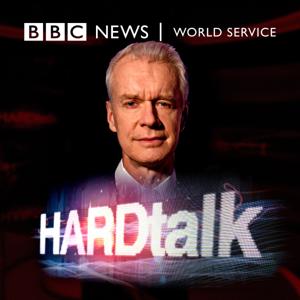
Stephen Sackur speaks to Anne Enright, the Irish novelist whose fiction digs deep into the dynamics of family, motherhood, and sexuality. In the course of her long writing career, just how much has Ireland changed?
Stephen Sackur speaks to Fabrice Leggeri, an MEP in Marine Le Pen’s National Rally party. The far right has high hopes of winning power in parliamentary elections in France over the next two weeks. The once unthinkable is now very possible – what would it mean for France and Europe?
Indian prime minister Narendra Modi’s third term will depend on the reliability of two smaller parties in his ruling coalition. Stephen Sackur speaks to Sachin Pilot, a senior figure in the Indian National Congress party, which will lead a diverse opposition coalition. Is India heading for a period of consensual government or chaos?
Ukraine is under enormous pressure as Russia seeks new frontline gains and, in the diplomatic arena, some Western allies show signs of war fatigue. Stephen Sackur asks Ukraine’s foreign minister, Dmytro Kuleba, whether Kyiv will be bounced into a deal on President Putin’s terms.
Stephen Sackur is in Paris to speak to the acclaimed actor and director Mathieu Kassovitz. Three decades ago, his film La Haine (Hate) focused on inequality, racism and police brutality in a Parisian suburb. He has a powerful voice in French culture, so what is his take on where his country is now and where it’s going?
Stephen Sackur speaks to Akinwumi Adesina, President of the African Development Bank. He wants massive international financial backing to turn his continent into a global economic powerhouse. But amid chronic poverty, debt and climate threats, will Africa get the support it needs?
Stephen Sackur is in Paris to speak to the French Minister Delegate for Europe, Jean-Noël Barrot. President Emmanuel Macron has just taken the gamble of his political life, calling a snap parliamentary election in an effort to outsmart the extremes of right and left. If it backfires, what will it mean for France and Europe?
Mishal Husain speaks to the architect Eyal Weizman. He works in what he calls ‘forensic architecture’, where details of buildings and physical spaces – and their destruction – are used to highlight abuses and persecution. Is he right to see architecture as political – a way in which human beings can oppress as well as create?
Sarah Montague speaks to hostage negotiator Mickey Bergman, who has spent much of the last two decades working behind the scenes to help negotiate the release of Americans kidnapped or detained abroad – either by criminals, political actors or governments. What difference do such “fringe diplomats” make? Are they a help or a hindrance?
Mishal Husain speaks to R. Derek Black, who was brought up in a family steeped in America’s white nationalist ideology, with a father who was a Ku Klux Klan leader. Then came exposure to a different world, and Derek’s journey to anti-racism. How did it come about, and what can we all learn from it?
From the publisher's feed
Conversations with people shaping our world, from all around the globe. Listen to The Interview for the best conversations from the BBC, the world's most trusted international news provider.
Ranked by our users in the last 21 days

7,604 Listeners

4,118 Listeners

370 Listeners

519 Listeners

1,044 Listeners

283 Listeners

1,791 Listeners

963 Listeners

724 Listeners

53 Listeners

834 Listeners

63 Listeners

969 Listeners

0 Listeners

0 Listeners

0 Listeners
6 Listeners

13 Listeners
4 Listeners

1 Listeners

37 Listeners
0 Listeners

144 Listeners

381 Listeners

2 Listeners