
Sign up to save your podcasts
Or



Based on Podcast App listening data
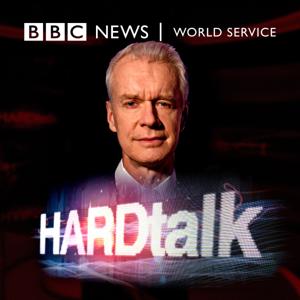
Sarah Montague speaks to the renowned US political scientist Francis Fukuyama. Thirty years ago, the Soviet Union collapsed and communist governments fell across Eastern Europe. Liberal democracy appeared to have won the Cold War and triumphed in the battle of ideas. Dr Fukuyama posed a question – if humanity had arrived at the most effective form of government, were we at the end of history? In the years since, liberal democracy has often seemed in retreat. But when Russia invaded Ukraine the world changed again. Francis Fukuyama is convinced that President Putin has miscalculated and is heading for defeat. What does that mean for the course of history and the progress of liberal democracy?
Russia has launched its most deadly attack on western Ukraine so far, striking a military base just 15 kilometres from the Polish border. This is being seen as a warning to Nato that, in supplying weapons to Ukraine through Poland, it risks an escalation of the war. Zeinab Badawi speaks to the senior British Conservative MP Tobias Ellwood, the chair of the House of Commons Defence Select Committee and a former soldier. He believes that Nato and the West need to change radically their stance on the Ukraine war. Does he have a clear strategy to stand up to Putin and save lives?
Europe's dependence on Russian energy sits uneasily with Putin’s war in Ukraine. Moscow is financing its invasion through revenues from such exports. One EU leader has said Russian oil and gas is being bought with the blood of the Ukrainian people. Zeinab Badawi speaks to Norway’s Prime Minister, Jonas Gahr Støre. Norway is one of the world’s biggest oil and gas exporters. What can it do to help ease Europe off its addiction to Russian energy supplies, and can this be done quickly enough to starve the Kremlin war machine of funds and save the lives of innocent Ukrainians?
Europe's dependence on Russian energy sits uneasily with Putin’s war in Ukraine. Moscow is financing its invasion through revenues from such exports. One EU leader has said Russian oil and gas is being bought with the blood of the Ukrainian people. Zeinab Badawi speaks to Norway’s Prime Minister Jonas Gahr Støre. Norway is one of the world’s biggest oil and gas exporters. What can it do to help ease Europe off its addiction to Russian energy supplies and can this be done quickly enough to starve the Kremlin war machine of funds and save the lives of innocent Ukrainians?
With the world focused on Russia’s invasion of Ukraine, it’s easy to overlook one other key element of Vladimir Putin’s Greater Russia strategy: Moscow’s ever tighter grip on Ukraine’s northern neighbour Belarus, now used as a launchpad for the Ukraine assault. Belarus’s authoritarian President Lukashenko seems to be in Putin’s pocket, whether he likes it or not. Stephen Sackur speaks to the exiled leader of the anti-Lukashenko movement, Svetlana Tikhanovskaya. Is the fate of Belarus now tied to the fate of Ukraine?
Vladimir Putin’s invasion of Ukraine represents the biggest seismic shock to European security since the collapse of the Soviet Union. The US, NATO allies and the EU are now arming the Ukrainian government. Stephen Sackur speaks to Michael Carpenter, US Ambassador to the Organisation for Security and Cooperation in Europe. Are we in a new age of conflict, and will Russia's invasion of Ukraine lead to a new, long-term cold war?
Stephen Sackur speaks to former Ukrainian Prime Minister Arseniy Yatsenyuk. Russia’s invasion hasn’t delivered Moscow a quick decisive victory, but it is taking a terrible toll on Ukraine. How realistic is Kyiv’s insistence that this is a war they’ll ultimately win?
Stephen Sackur speaks to Ukrainian novelist Andrey Kurkov. He was born in Russia, writes in Russian and now fears for his life at the hands of Russian troops. What does his personal story tell us about Moscow’s attempt to undermine Ukraine’s independence and identity?
Stephen Sackur speaks to David Miliband, president of the International Rescue Committee and former British foreign secretary. Hour by hour Vladimir Putin intensifies the scale and violence of the Russian military assault on Ukraine. Civilian buildings hit by rocket fire, towns and cities encircled, and the capital Kyiv now facing a vast build-up of Russian firepower. Is the West doing enough in response to Putin’s invasion of Ukraine?
Stephen Sackur speaks to the renowned Hungarian conductor and composer Iván Fischer. Much of the world is transitioning from locking down to living with Covid-19. And that means cultural life is returning to cities like London. Performers can return to the stage, audiences can gather again. After the pandemic, how easy is it to find the magic in music-making?
(Photo: Iván Fischer)
From the publisher's feed
Conversations with people shaping our world, from all around the globe. Listen to The Interview for the best conversations from the BBC, the world's most trusted international news provider.
Ranked by our users in the last 21 days

7,599 Listeners

4,113 Listeners

372 Listeners

518 Listeners

1,046 Listeners

283 Listeners

1,790 Listeners

961 Listeners

724 Listeners

53 Listeners

836 Listeners

63 Listeners

972 Listeners
0 Listeners
0 Listeners
0 Listeners
6 Listeners
13 Listeners
4 Listeners

1 Listeners
37 Listeners
0 Listeners

144 Listeners

379 Listeners
2 Listeners