
Sign up to save your podcasts
Or

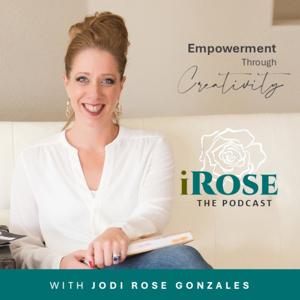


In this week’s episode of the iROSE Podcast, host Jodi Rose Gonzales explores inner-child healing through a different lens: before we focus on the younger parts of ourselves that need healing, who is showing up as the parent?
Through a personal story and the concept of “cool parenting,” you’ll explore how the wisdom, resources, and support you carry today can help you meet younger parts of yourself with greater compassion and care—while also honoring the strengths they still have to offer.
Key Takeaways
Consider the parent before focusing on the child.
Cool parenting is about becoming a source of support for yourself.
Your younger selves are more than the summary of their wounds.
Connect With Us
We’d love to hear your reflections on this episode. Share your experience inside the iROSE Society, or connect with us on Facebook or Instagram.
Resources & Links
Guided Meditation on Insight Timer:
Make a Donation:
Join the iROSE Society:
Disclaimer
This content is intended for educational and reflective purposes and is not a substitute for professional mental health care, diagnosis, or treatment. If you are experiencing distress or need support, please reach out to a licensed mental health provider or a trusted professional in your area.
In this week’s episode, host Jodi Rose Gonzales explores the idea of borrowed calm—the ways our nervous systems take cues from the people, places, and environments around us.
Through brief explanations of coregulation, neuroception, and a creative practice, you’ll explore why calm isn’t always something you have to generate on your own. Sometimes, the more useful question isn’t How do I make myself calm? but What conditions help calm become more available to me?
Key Takeaways
We are not meant to regulate in isolation.
Your nervous system is continually reading your environment.
Creativity can help us build a landscape of support.
Connect With Us
We’d love to hear your reflections on this episode. Share your experience inside the iROSE Society, or connect with us on Facebook or Instagram.
Resources & Links
Guided Meditation on Insight Timer:
https://insighttimer.com/jodirose/guided-meditations/the-art-of-borrowed-calm-on-creativity-coregulation
Make a Donation:
Join the iROSE Society:
Disclaimer
This content is intended for educational and reflective purposes and is not a substitute for professional mental health care, diagnosis, or treatment. If you are experiencing distress or need support, please reach out to a licensed mental health provider or a trusted professional in your area.
In this week's episode, host Jodi Rose Gonzales explores the uncomfortable space between life's no longer and not yet—the liminal seasons when an old role, identity, relationship, or way of being has ended, but what comes next has not yet taken shape.
Through yoga philosophy, nervous-system science, and creative practice, we'll explore why uncertainty can feel so difficult to tolerate—and why the answer isn't always to make a better plan or rush toward resolution. Sometimes, what we need most is enough felt safety to simply stay present while something new is quietly forming.
Key Takeaways
Liminal space is not the same as suffering.
The nervous system prefers what is predictable.
There is wisdom in the goo.
Connect With Us
We'd love to hear your reflections on this episode. Share your experience inside the iROSE Society, or connect with us on Facebook or Instagram.
Resources & Links
Guided Meditation on Insight Timer:
Book Mentioned:
Make a Donation:
Join the iROSE Society:
Disclaimer
This content is intended for educational and reflective purposes and is not a substitute for professional mental health care, diagnosis, or treatment. If you are experiencing distress or need support, please reach out to a licensed mental health provider or a trusted professional in your area.
In this week's episode, host Jodi Rose Gonzales shares the story behind iROSE and the philosophy that has quietly taken shape through decades of work as an art therapist, yoga teacher, and mindfulness practitioner. Together, we'll explore why creativity is far more than artistic expression—it is the bridge between self-awareness and meaningful transformation, helping us reconnect with ourselves in an increasingly noisy and fragmented world.
You'll also receive a guided art-based mindfulness prompt designed to help you reflect on the people, experiences, and values that have shaped your life, while exploring the unique light you are here to reflect back into the world.
Key Takeaways
Creativity is the bridge between awareness and transformation.
Art-based mindfulness is a practice of returning to yourself.
Your healing reaches beyond you.
Connect With Us
We'd love to hear your reflections on this episode. Share your experience inside the iROSE Society, or connect with us on Facebook or Instagram.
Resources & Links
Guided Meditation on Insight Timer:
Make a Donation:
Join the iROSE Society:
Join the weekly live practice (Attend Open Studio):
Drop-in registration:
Four-session package (discount):
Disclaimer
This content is intended for educational and reflective purposes and is not a substitute for professional mental health care, diagnosis, or treatment. If you are experiencing distress or need support, please reach out to a licensed mental health provider or a trusted professional in your area.
In this week's episode, host Jodi Rose Gonzales explores the concept of friction—both external and internal—and how small obstacles can quietly consume energy that could otherwise be directed toward creativity, wellbeing, and meaningful change.
Drawing from yoga philosophy, neuroscience, and personal narratives, you'll discover how reducing friction can create greater ease, clarity, and flow in everyday life. Through the metaphor of a stream, this episode examines the ways environmental obstacles, decision fatigue, competing beliefs, and outdated identities can redirect the natural current of your energy.
You'll also receive a reflective art-based mindfulness prompt designed to help you identify where your energy is flowing freely, where it is meeting resistance, and what small adjustments might help restore the current.
Key Takeaways
Friction has both external and internal sources.
Some obstacles exist in our environment—clutter, distractions, unnecessary decisions, or systems that make desired behaviors harder to access. Others exist within us as conflicting beliefs, identities, and stories that create resistance to change.
Reducing friction is often more effective than increasing effort.
Many of the struggles we attribute to a lack of motivation are actually problems of design. Small adjustments to our environment, routines, and supports can free up significant amounts of energy and attention.
The path to greater ease begins with honest observation.
Before we can create more flow, we must first notice where energy is being diverted, depleted, or blocked. Awareness is the first step toward meaningful change.
Connect With Us
We'd love to hear your reflections on this episode. Share your experience inside the iROSE Society, or connect with us on Facebook or Instagram.
Resources & Links
Guided Meditation on Insight Timer:
Make a Donation:
Join the iROSE Society:
Join the weekly live practice (Attend Open Studio):
Drop-in registration:
Four-session package (discount):
Disclaimer
This content is intended for educational and reflective purposes and is not a substitute for professional mental health care, diagnosis, or treatment. If you are experiencing distress or need support, please reach out to a licensed mental health provider or a trusted professional in your area.
In this week’s episode, host Jodi Rose Gonzales explores dharana and dhyana—the sixth and seventh limbs of Patanjali’s eight-limbed path—and what they can teach us about habit change, personal growth, and the often-misunderstood role of effort.
Drawing from yoga philosophy, neuroscience, and personal narrative, you’ll explore why new habits feel difficult at first, how the brain develops new neural pathways, and why sustainable change is less about willpower and more about creating the conditions that make consistency possible.
You'll also receive a reflective art-based mindfulness prompt designed to help you make meaningful change easier to sustain.
Key Takeaways
Effort is a normal stage of growth.
The fact that a new habit feels difficult does not mean you are failing. It often means you are learning.
Sustainable change is built through repetition, not force.
Neuroscience shows that new neural pathways strengthen through consistent repetition over time. What feels effortful today can eventually become second nature.
Small supports create lasting transformation.
Rather than relying on willpower alone, lasting change is supported by thoughtful design. Reducing friction, preparing your environment, and creating small supports—or "feathers"—can make it easier to stay consistent.
Connect With Us
We’d love to hear your reflections on this episode. Share your experience inside the iROSE Society, or connect with us on Facebook or Instagram.
Resources & Links
Guided Meditation on Insight Timer:
Make a Donation:
Join the iROSE Society:
Join the weekly live practice (Attend Open Studio):
Four-session package (discount):
Disclaimer
This content is intended for educational and reflective purposes and is not a substitute for professional mental health care, diagnosis, or treatment. If you are experiencing distress or need support, please reach out to a licensed mental health provider or a trusted professional in your area.
In this week’s episode, host Jodi Rose Gonzales explores asmita—the yogic concept of identity and self-story. Drawing from yoga philosophy, trauma-informed neuroscience, and the surprisingly meaningful story of a beloved suitcase named Penélope, Jodi examines what happens when an old identity no longer fits the life we are being called to live.
This episode offers a compassionate look at the roles, beliefs, and self-definitions we carry across seasons of life. Together, we'll explore why transitions can feel so uncomfortable, why the brain resists updating its self-concept, and how honest self-examination can help us move forward with greater clarity and intention.
You'll also receive a reflective art-based mindfulness prompt designed to help you examine the baggage you are carrying into your next chapter.
Key Takeaways
Identity is not the same as the Self.
Asmita refers to the stories, roles, and definitions we accumulate over a lifetime. While these identities help us navigate the world, suffering can arise when we mistake the story for who we truly are.
The brain is wired to protect familiar identities.
Neuroscience shows that the self-concept functions as a stabilizing force. When life asks us to outgrow an old role or story, the nervous system often responds as though something important is being threatened.
Transition requires inventory.
Before we move into a new chapter, it is often necessary to examine what we are carrying with us. Some beliefs, roles, and identities still belong on the journey. Others may have quietly outlived their usefulness.
Connect With Us
We’d love to hear your reflections on this episode. Share your experience inside the iROSE Society, or connect with us on Facebook or Instagram.
Resources & Links
Guided Meditation on Insight Timer:
Make a Donation:
Join the iROSE Society:
Join the weekly live practice (Attend Open Studio):
Four-session package (discount):
Disclaimer
This content is intended for educational and reflective purposes and is not a substitute for professional mental health care, diagnosis, or treatment. If you are experiencing distress or need support, please reach out to a licensed mental health provider or a trusted professional in your area.
This follows the Episode 78 structure almost exactly, while incorporating the new messaging emphasis on identity, transition, and self-trust.
In this week’s episode, host Jodi Rose Gonzales explores Viveka—the yogic practice of discernment. Drawing from yoga philosophy, trauma-informed neuroscience, and personal experience, Jodi explores how chronic stress narrows perception, amplifies mental noise, and gradually disconnects us from our own inner wisdom.
This episode offers a compassionate reminder that discernment is not a dramatic spiritual achievement. More often, it arrives through the unglamorous interruptions, frustrations, symptoms, and threshold moments that invite us to pause and listen more deeply.
You'll also receive a reflective art-based mindfulness prompt designed to help you distinguish between the noise in your life and the quieter signal underneath it.
Key Takeaways
Discernment begins with listening.
The body often speaks before the mind understands.
Chronic stress makes discernment more difficult.
Threshold moments are rarely glamorous.
Connect With Us
We’d love to hear your reflections on this episode. Share your experience inside the iROSE Society, or connect with us on Facebook or Instagram.
Resources & Links
Guided Meditation on Insight Timer:
Make a Donation:
Join the iROSE Society:
Join the weekly live practice (Attend Open Studio):
Four-session package (discount): https://app.acuityscheduling.com/catalog/fe78de7d/?productId=2123153&clearCart=true
Disclaimer
This content is intended for educational and reflective purposes and is not a substitute for professional mental health care, diagnosis, or treatment. If you are experiencing distress or need support, please reach out to a licensed mental health provider or a trusted professional in your area.
In this week’s episode, host Jodi Rose Gonzales explores why traditional journaling practices can sometimes leave us circling the same thoughts, frustrations, and mental loops — and introduces a simple framework for using journaling as a daily practice of manifestation, emotional regulation, intentionality, and creative alignment.
Rooted in both yoga philosophy and neuroscience, this structured reflective practice combines top-down processing with bottom-up, felt-experience awareness to support greater clarity, emotional regulation, growth mindset, and intentional direction.
Key Takeaways
Journaling can become repetitive over time.
5-Point Journaling combines top-down and bottom-up processing.
The brain responds to vividly imagined future experiences.
Sankalpa is intention seeded into the body.
Connect With Us
We’d love to hear your reflections on this episode. Share your experience inside the iROSE Society, or connect with us on Facebook or Instagram.
Resources & Links
Five Point Journaling Video Tutorial:
Make a Donation:
Join the iROSE Society:
Join the weekly live practice (Attend Open Studio):
Four-session package (discount): https://app.acuityscheduling.com/catalog/fe78de7d/?productId=2123153&clearCart=true
Disclaimer
This content is intended for educational and reflective purposes and is not a substitute for professional mental health care, diagnosis, or treatment. If you are experiencing distress or need support, please reach out to a licensed mental health provider or a trusted professional in your area.
In this week’s episode, host Jodi Rose Gonzales explores Santosha — the yogic practice of contentment.
Drawing from yoga philosophy and trauma-informed neuroscience, this episode examines how contentment can function as a nervous system reset — a quiet shift toward calmness, regulation, and inner steadiness.
You’ll also receive a reflective art-based mindfulness prompt designed to help you identify the sensory experiences, objects, and rituals that create the felt experience of contentment in your own life.
Key Takeaways
Santosha is not forced positivity.
The body often experiences contentment before the mind explains it.
Contentment shifts attention toward abundance.
Connect With Us
We’d love to hear your reflections on this episode. Share your experience inside the iROSE Society, or connect with us on Facebook or Instagram.
Resources & Links
Guided Meditation on Insight Timer:
Support this work:
Join the iROSE Society:
Join the weekly live practice (Attend Open Studio):
Four-session package (discount): https://app.acuityscheduling.com/catalog/fe78de7d/?productId=2123153&clearCart=true
Disclaimer
This content is intended for educational and reflective purposes and is not a substitute for professional mental health care, diagnosis, or treatment. If you are experiencing distress or need support, please reach out to a licensed mental health provider or a trusted professional in your area.