
Sign up to save your podcasts
Or

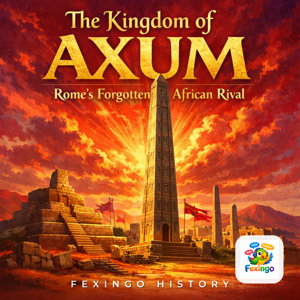


While Axum is often remembered for its towering stelae and early Christian kings, its economic engine was something far more subtle and far-reaching: control of the Red Sea spice routes. In this episode, Lucas and Luna explore how Axum's port of Adulis became the hinge of a vast trading network linking the Roman Empire, India, and East Africa. They trace the journey of cinnamon, frankincense, and myrrh from source to market, examine the Periplus of the Erythraean Sea as a historical source, and discuss how Axum leveraged its geographic position to become a middleman empire. The episode also covers the kingdom's diplomatic and military efforts to protect its commercial interests against rival powers like Himyar and the Sasanians, and the eventual decline of its trade dominance as new powers emerged. Lucas explains the role of ivory, tortoiseshell, and obsidian in Axum's exports, and how the kingdom's coinage facilitated long-distance transactions. This is a story of merchants, sailors, and the invisible infrastructure that made Axum one of the ancient world's great commercial powers.
#Axum #Adulis #RedSeaTrade #PeriplusErythraeanSea #SpiceRoute #AncientTrade #EastAfrica #RomanEmpire #IndiaTrade #Frankincense #Myrrh #Cinnamon #Ivory #Himyar #Sasanian #FexingoHistory #History #AncientEconomy
Keep every episode free: buymeacoffee.com/fexingo
Adulis was the port that made Axum rich — a gateway for ivory, gold, and slaves, and a melting pot of Greek, Egyptian, Indian, and African cultures. But for centuries, its exact location was lost. In this episode, Lucas and Luna trace the rediscovery of Adulis in the 19th century, the rival expeditions that fought over its ruins, and what the site tells us about Axum's role in the Indian Ocean trade network. They discuss the Peripleus of the Erythraean Sea, the frescoes of the Adulis palace, the mysterious Monumentum Adulitanum, and the ethical questions around colonial archaeology. A story of sand, ships, and stolen history.
#Adulis #Axum #RedSea #IndianOceanTrade #MonumentumAdulitanum #PeriplusErythraeanSea #CosmasIndicopleustes #GiuseppeBrocchi #HenrySalt #EthiopianHistory #EastAfrica #Archaeology #MaritimeTrade #IvoryTrade #ClassicalWorld #AncientHistory #History #FexingoHistory
Keep every episode free: buymeacoffee.com/fexingo
In this episode, Lucas and Luna explore the monumental obelisks of Aksum, focusing on the engineering feats, religious symbolism, and cultural legacy of these towering stelae. They discuss the Great Stele, the largest monolithic obelisk ever attempted, its probable weight of 517 tons, and the quarry at Wuchate Golo where it was carved. The conversation covers the stelae's role as markers for underground tombs, the mystery of why the Great Stele fell during construction, and how later obelisks like King Ezana's were inscribed with Christian crosses. Lucas explains the use of a single iron chisel and wooden wedges to shape granite, the transportation challenge, and the theories about raising the obelisks using earthen ramps. They also touch on the Italian removal of the Axum Obelisk in 1937 and its eventual return in 2005. The hosts tie the obelisks to Aksumite identity, showing how they evolved from pagan symbols to Christian monuments, reflecting the empire's religious transformation.
#Aksum #Axum #Obelisks #GreatStele #WuchateGolo #Ezana #Ge'ez #Mahrem #Negus #Stelae #Monolith #Quarry #Engineering #Christianity #Pagan #ItalianOccupation #Repatriation #History
Keep every episode free: buymeacoffee.com/fexingo
Lucas and Luna dive into the enigma of King Sembrouthes — an Aksumite ruler who left behind the longest royal inscription in the region, the Monumentum Adulitanum, yet remains nearly unknown outside scholarly circles. They explore what the inscription actually says: campaigns against the Beja and Sabaeans, claims over vast Red Sea trade networks, and a fourth-century war that reshaped the Horn of Africa. The episode also examines how the inscription survived only through the copy made by the Byzantine merchant Cosmas Indicopleustes, why its original location is still debated, and what Sembrouthes' reign reveals about Axum's peak as a Mediterranean and Indian Ocean power. Along the way, Lucas explains Sembrouthes' unusual title 'King of the Four Quarters' — a phrase that echoes Persian and Indian imperial rhetoric — and what it says about Axum's ambitions. Luna asks sharp questions about the Beja threat, the reliability of Cosmas' transcription, and why Sembrouthes vanished from later Ethiopian chronicles. A short pitch for listener support at buy me a coffee dot com slash fexingo keeps the show ad-free.
#Sembrouthes #MonumentumAdulitanum #AxumiteKingdom #Kush #Beja #Himyar #Sabaean #CosmasIndicopleustes #Adulis #RedSea #Negus #Basileus #KingOfTheFourQuarters #Esarhaddon #ShapurI #EastAfrica #History #FexingoHistory
Keep every episode free: buymeacoffee.com/fexingo
Long before Axum rivaled Rome, a king named Endubis minted the first indigenous coins in sub-Saharan Africa. In this episode, Lucas and Luna explore how Endubis used gold and silver not just for trade, but to project power and declare his kingdom's sovereignty. They discuss the blend of Ge'ez inscriptions with Greek and South Arabian motifs, the discovery of his coins in early 20th-century excavations, and what these tiny artifacts reveal about Axum's place in the ancient world economy. From the weight standards borrowed from Rome to the iconography of the bucranium and the crescent-and-disc, they trace how a single coin could signal wealth, religion, and ambition. They also touch on the challenge of dating Endubis's reign—debated between the 3rd and 4th centuries AD—and why his coinage marks a turning point in African history. No prior knowledge of numismatics needed, just curiosity about how empires advertise themselves.
#Axum #Endubis #Coinage #Numismatics #Ge'ez #Adulis #RedSea #AncientEconomy #Bucranium #CrescentAndDisc #GoldCoin #SilverCoin #RomanEmpire #Sassanid #Meroe #EthiopianHistory #History #FexingoHistory
Keep every episode free: buymeacoffee.com/fexingo
In this episode, Lucas and Luna dive into the reign of King Ezana, the fourth-century Axumite ruler who conquered the Kingdom of Kush (Meroe) and declared Christianity the state religion. They explore the archaeological evidence—the Ge'ez inscriptions on the Ezana Stone and the Monumentum Adulitanum—that record his campaigns against the Noba and Kushites, culminating in the sacking of Meroe. Lucas explains how Ezana's conversion reshaped Axumite ideology from polytheistic war-god worship to a Christian kingdom, and how his coins tell the story of that transition. The hosts also touch on the mysterious 'Beja' tribes and the decline of Kush, and reflect on why Axum's Christianization was unique—not imposed by a foreign power but chosen by a king. If you've been following the Axum series, this episode fills a critical gap: how the empire reached its territorial peak and set the stage for its later conflicts with Himyar and Sassanid Persia.
#Axum #Ezana #Kush #Meroe #Noba #Beja #MonumentumAdulitanum #EzanaStone #Ge'ez #Adulis #Christianity #RomanEmpire #RedSea #EastAfrica #AncientHistory #FexingoHistory #History #Podcast
Keep every episode free: buymeacoffee.com/fexingo
In this episode, Lucas and Luna explore the reign of King Sembrouthes, a lesser-known Aksumite ruler who left behind one of the most important inscriptions in Ethiopian history: the Monumentum Adulitanum. This stone monument, originally inscribed in Greek, recounts Sembrouthes' military campaigns across the Red Sea and into the Arabian Peninsula, as well as his patronage of trade and diplomacy. The hosts discuss how the inscription survived through a copy made by Cosmas Indicopleustes in the 6th century, providing a rare contemporary account of Axum's power in the 3rd century AD. They delve into the geopolitical context of the time, including Axum's rivalry with the Sabaeans and Himyarites, and the kingdom's role as a middleman in the Indian Ocean trade. The episode also touches on the controversies surrounding the monument's interpretation and its significance for understanding Axum's early imperial ambitions.
#Axum #Aksum #Sembrouthes #MonumentumAdulitanum #CosmasIndicopleustes #Adulis #Himyar #Sabaean #Ge'ez #RedSea #IndianOceanTrade #Epigraphy #AncientEthiopia #3rdCentury #Kush #Beja #History #FexingoHistory
Keep every episode free: buymeacoffee.com/fexingo
In the early 7th century, Axum faced its greatest existential threat: a Sasanian Persian invasion that seized its vital port of Adulis and cut off its trade routes. This episode follows King Armah's desperate resistance, the fall of Adulis, and the empire's slow collapse into isolation. We explore the military campaign, the role of Yemeni allies and Persian naval power, and how this war marked the end of Axum's golden age. Along the way, we touch on the Dar'a inscription, the Axumite fleet, and the geopolitical chess match between Sasanian Persia and Byzantium that played out on the Red Sea. It's a story of imperial overreach, naval warfare, and the fragility of ancient global connections.
#Axum #Armah #Adulis #Sasanian #RedSea #Byzantium #KhusrowII #SayfIbnDhuYazan #DaraInscription #AksumiteNavy #AncientWarfare #EastAfrica #PersianEmpire #TradeRoutes #Archaeology #History #FexingoHistory #Episode130
Keep every episode free: buymeacoffee.com/fexingo
Before Axum fell to climate change and shifting trade routes, it faced a persistent threat from the desert nomads of the eastern Sudan: the Beja. In this episode, Lucas and Luna explore the centuries-long conflict between the Aksumite kingdom and the Beja people, who raided the Ethiopian highlands from their base in the Red Sea hills. We trace the Beja's first mention in the Monumentum Adulitanum under an anonymous king, their alliance with the Blemmyes against Roman Egypt, and their eventual settlement in the region after Axum's decline. Drawing on inscriptions, the Periplus of the Erythraean Sea, and the writings of Cosmas Indicopleustes, we examine how the Beja adapted to Axum's military campaigns — and why they outlasted the empire that tried to crush them. The episode also touches on the Beja's matrilineal inheritance and their role in the ivory trade. A fresh angle for listeners who know Axum's kings but not the people who defied them for centuries.
#Beja #Axum #Aksum #MonumentumAdulitanum #PeriplusOfTheErythraeanSea #CosmasIndicopleustes #Blemmyes #Adulis #ElephantHighway #AncientWarfare #EastAfrica #RedSea #IvoryTrade #Nomads #Matrilineal #History #FexingoHistory #Sudan
Keep every episode free: buymeacoffee.com/fexingo
The Kingdom of Axum was one of the ancient world's great powers, and its military might was legendary. But few know the story of its war elephants — captured from the wilds of Africa, trained for battle, and used to project power across the Red Sea. In this episode, Lucas and Luna explore how Axum built and maintained its elephant corps, the logistics of capturing and training these massive animals, and the pivotal role they played in Axum's campaigns — especially King Kaleb's invasion of Himyar in the 6th century. They also uncover the surprising connection between Axum's elephants and those of Carthage and the Hellenistic kingdoms, and ask why Axum never developed a full-fledged elephant cavalry tradition like the Seleucids. Along the way, they discuss the ivory trade that funded these armies, the ecological impact of elephant hunting, and the legacy of Axum's pachyderm power in Ethiopian folklore. Join us for a deep dive into one of the most fascinating, and overlooked, aspects of Axumite military history.
#Axum #WarElephants #EastAfrica #RedSea #Kaleb #Himyar #IvoryTrade #MilitaryHistory #AncientWarfare #ElephantCavalry #PachydermPower #EthiopianHistory #Adulis #MonumentumAdulitanum #Procopius #CosmasIndicopleustes #History #FexingoHistory
Keep every episode free: buymeacoffee.com/fexingo
From the publisher's feed