
Sign up to save your podcasts
Or

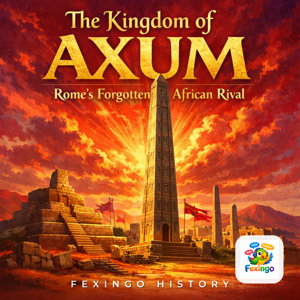


In this episode, Lucas and Luna explore the sophisticated water management systems of the Kingdom of Axum. While the famous stelae dominate the skyline, it was the network of dams, reservoirs, and cisterns that sustained the capital and its agriculture. We uncover the engineering behind the Mai Heber dam, the mysterious stone-lined channels, and the role of the Negus in organizing public works. Discover how Aksumite hydraulic engineers captured seasonal rains to support a population of tens of thousands, and how the decline of these systems contributed to the empire's collapse. We also touch on the legacy of these structures in modern Ethiopian water management and the archaeological debates around their origins. A deep dive into the unsung infrastructure that made Axum a rival to Rome.
#Axum #Aksumite #WaterManagement #AncientDams #MaiHeber #Negus #HydraulicEngineering #EastAfrica #AncientInfrastructure #Ethiopia #Tigray #Stelae #AksumiteEmpire #AncientRome #History #FexingoHistory #Archaeology #WaterSystems
Keep every episode free: buymeacoffee.com/fexingo
In the early 6th century, the Kingdom of Axum wielded a weapon more powerful than its war elephants: economic embargo. This episode unpacks the Aksumite trade war against Himyar, a South Arabian kingdom that controlled the incense routes and Red Sea ports. We follow King Kaleb's strategy of blockading Adulis, cutting off Himyar's access to African ivory and gold, and strangling its economy before a single soldier crossed the strait. The episode draws on the writings of Procopius and Cosmas Indicopleustes, the Monumentum Adulitanum, and recent archaeological work at the port of Qana. We explore how Aksum leveraged its monopoly on high-value African goods, the role of Roman and Sassanid intermediaries, and the collapse of Himyar's client networks. This is the story of how economic pressure reshaped the Red Sea world, with consequences that echoed into the rise of Islam. Along the way, we touch on the Aksumite navy's enforcement of the blockade, the fate of the Himyarite king Dhu Nuwas, and the long shadow of this conflict over Ethiopian identity.
#Axum #Himyar #Kaleb #RedSea #TradeWar #Embargo #Adulis #Procopius #CosmasIndicopleustes #DhuNuwas #MonumentumAdulitanum #Qana #AksumiteNavy #IvoryTrade #EastAfrica #AncientHistory #History #FexingoHistory
Keep every episode free: buymeacoffee.com/fexingo
In this episode, Lucas and Luna explore the engineering marvels of the Aksumite stelae—the towering granite obelisks carved from single blocks and erected over 1,700 years ago without modern machinery. Learn how the Aksumites used wooden sledges, ramps, and levers to quarry, transport, and raise the 33-meter Great Stele weighing 520 tons. Discover the funerary purpose of these stelae, the elite burials beneath them, and the mysterious collapse of the Great Stele. The episode also covers the later history of the stelae, including the removal and restoration of the Obelisk of Axum by Italian forces. Specific terms discussed include the Great Stele, King Ezana's Stele, the Obelisk of Axum, the Gudit Stele, granite quarrying, wooden sledge, ramp, lever, elite burial, and the restoration by UNESCO.
#AksumiteStelae #GreatStele #ObeliskOfAxum #KingEzanasStele #GuditStele #AksumiteArchitecture #AksumiteEngineering #AncientQuarrying #GraniteObelisks #EliteBurial #UNESCO #Aksum #EastAfrica #AncientHistory #Archaeology #History #FexingoHistory #Axum
Keep every episode free: buymeacoffee.com/fexingo
In this episode, Lucas and Luna explore Aksum's centuries-long struggle with the Beja people, the nomadic tribes of the Eastern Desert who raided the Red Sea trade routes and even sacked the port of Adulis. Drawing on the Monumentum Adulitanum, Greek geographer Ptolemy's writings, and Aksumite inscriptions, they trace how King Zoskales and later King Endubis tried to control the Beja through tribute and military campaigns. The discussion covers the Beja's unique matrilineal inheritance, their Blemmyes identity in Roman sources, and the eventual decline of Aksumite power as the Beja grew stronger. A little-known but pivotal frontier conflict that shaped the fate of East Africa's greatest ancient kingdom.
#Axum #Beja #Blemmyes #Adulis #RedSea #MonumentumAdulitanum #Zoskales #Endubis #Periplus #Ptolemy #EasternDesert #Matrilineal #AncientTrade #3rdCentury #Nomads #EastAfrica #History #FexingoHistory
Keep every episode free: buymeacoffee.com/fexingo
In this episode, Lucas and Luna explore the reign of King Endubis of Axum, the first Aksumite ruler to mint gold coins around 270 AD. They discuss how Endubis modeled his coinage after Roman aurei and Kushan staters, using Greek inscriptions and the symbol of the crescent and disc to assert Axum's sovereignty and trade ambitions. The episode delves into the economic and political motivations behind the coinage, the role of the Red Sea trade, and how these coins became a tool of soft power rivaling Rome and Persia. Listeners will learn about the design, weight standards, and archaeological significance of Endubis's coins, including the famous 'stater' series. The conversation also touches on the broader context of Axum's rise as a commercial empire and the legacy of its monetary system.
#Axum #Endubis #GoldCoins #AksumiteEmpire #Numismatics #AncientEconomy #RedSeaTrade #RomanEmpire #Kushan #Stater #Aureus #Mahrem #Adulis #Ge'ez #Sassanid #AncientHistory #FexingoHistory #History
Keep every episode free: buymeacoffee.com/fexingo
Before Ezana's famous conversion, another king shaped Axum's golden age: Ousanas, the 'philosopher king' who humbled a Roman ambassador, reformed the empire's administration, and laid the groundwork for Christianity's rise. Known from Greek sources as 'Aizanas' brother' and from inscriptions as a military reformer, Ousanas ruled during a pivotal moment when Axum flexed its diplomatic muscle against Constantinople. This episode explores his obscure reign through fragmentary evidence—Ethiopic inscriptions, Roman trade records, and the mysterious 'Monumentum Adulitanum'—revealing a king who balanced tradition and innovation, war and philosophy. Discover how Ousanas's court at Aksum debated Greek philosophy, minted coins without royal titulature, and faced down the Sassanian threat in the Red Sea, all while cementing Axum's status as a fourth-century superpower.
#Axum #Ousanas #AksumiteEmpire #RedSeaHistory #AncientEthiopia #MonumentumAdulitanum #Ge'ez #Philosophy #Ezana #Adulis #Himyar #Sassanian #RomanDiplomacy #FourthCentury #EastAfrica #History #FexingoHistory #AncientKings
Keep every episode free: buymeacoffee.com/fexingo
In this episode, Lucas and Luna explore the reign of King Wazeba of Axum, a lesser-known but pivotal figure from the 3rd century AD. Wazeba ascended to power during a period of internal strife and external threats, including raids by the Beja people and shifting alliances with the Roman Empire and the Himyarite kingdom. The conversation delves into the evidence from the Monumentum Adulitanum and coinage, which reveals Wazeba's efforts to consolidate power, fend off the Barya and Noba tribes, and maintain Axum's trade dominance along the Red Sea. They discuss the mysterious circumstances of his rise, including a possible usurpation, and the archaeological clues left behind—such as his coin issues bearing the Ge'ez legend 'Wazeba' and the crescent-and-disk symbol of Mahrem. The episode also examines Wazeba's military campaigns against the Beja and the significance of his alliance with Sembrouthes, offering a fresh angle on Axum's resilience in the face of fragmentation. Listeners gain insight into the challenges of reconstructing African history from fragmentary sources and the subtle political maneuvers that kept Axum a major power in the ancient world.
#Wazeba #Axum #AncientAfrica #MonumentumAdulitanum #Beja #Noba #Mahrem #Ge'ez #RedSea #3rdCentury #Coinage #Usurpation #Sembrouthes #Himyar #RomanEmpire #History #FexingoHistory #EastAfrica
Keep every episode free: buymeacoffee.com/fexingo
King Kaleb of Axum launched one of the most ambitious military campaigns of late antiquity: a naval invasion of Himyar in southern Arabia. This episode unpacks the religious and political motivations behind the war of 525 AD, the siege of Zafar, and the massacre at Najran. We explore Kaleb's alliance with Byzantine emperor Justin I, the role of the Red Sea trade, and the aftermath that saw Axumite influence in Yemen crumble within decades. Drawing on Procopius and the Greek inscription at Adulis, we piece together a war that reshaped the Horn of Africa and Arabia.
#Axum #Kaleb #Himyar #RedSea #Najran #DhuNuwas #JustinI #Byzantine #Adulis #Procopius #Zafar #MonumentumAdulitanum #Yemen #LateAntiquity #History #FexingoHistory #EastAfrica #Christianity
Keep every episode free: buymeacoffee.com/fexingo
In this episode, Lucas and Luna explore the engineering marvels behind Axum's iconic stepped stelae, focusing on the techniques used to quarry, transport, and erect these massive granite monoliths without modern machinery. They discuss the Great Stele, the Obelisk of Axum, and the lesser-known Gudit Stele, examining how Aksumite engineers used wooden sledges, ramps, and leverage to move stones weighing hundreds of tons. The conversation touches on the social organization required for such projects, the symbolic meaning of the stelae as markers for elite burials, and the challenges faced by modern restorers. They also consider competing theories about whether the stelae were erected upright or tilted into place. This episode builds on previous discussions of Axum's kings and trade but dives deep into the practicalities of construction, offering listeners a concrete sense of how an ancient African empire shaped its landscape.
#AksumiteArchitecture #SteppedStelae #GreatStele #ObeliskOfAxum #GuditStele #AxumEngineering #AncientConstruction #GraniteQuarry #WoodenSledges #RampsAndLeverage #EliteBurials #RestorationChallenges #EastAfrica #AncientEmpires #History #FexingoHistory #EngineeringMarvels #AksumiteInnovation
Keep every episode free: buymeacoffee.com/fexingo
In the 6th century AD, Axum, already a Christian empire at the height of its power, launched a military campaign across the Red Sea that would reshape the Middle East. This episode explores King Kaleb's invasion of Himyar (modern-day Yemen) in 525 AD — a war fought over religion and trade, chronicled by the contemporary historian Procopius. We examine the motives: a massacre of Christians in Najran by the Jewish Himyarite king Dhu Nuwas, the alliance with Byzantine emperor Justin I, the fleet of 70 ships assembled at Adulis, and the crucial battle that placed Kaleb's general on the Himyarite throne. We also ask: was this a genuine religious crusade or a calculated move to dominate the Red Sea trade routes? With names like Kaleb, Dhu Nuwas, Justin I, Procopius, and the Ethiopian saint Abreha, this episode dives into a pivotal and often overlooked conflict that linked Africa and Arabia.
#Axum #Himyar #Kaleb #DhuNuwas #Najran #Procopius #JustinI #RedSea #Adulis #Yemen #Byzantine #ChristianHistory #JewishHistory #6thCentury #Abreha #AncientWarfare #History #FexingoHistory
Keep every episode free: buymeacoffee.com/fexingo
From the publisher's feed