
Sign up to save your podcasts
Or

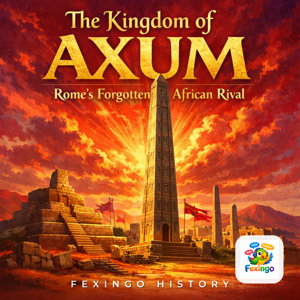


Did the Kingdom of Axum dominate the ancient ivory trade so completely that it could arm Roman armies and trigger wars in India? In this episode, Lucas and Luna explore the forgotten economy of elephant ivory — how Axum's access to East African elephants gave it a monopoly that reached from the Mediterranean to the Red Sea. They discuss the Periplus of the Erythraean Sea's account of Adulis as an ivory port, the geopolitics of the Elephant Highway routes through Kush and Beja territory, and the curious story of how Axumite ivory may have ended up in the hands of the Mauryan emperor Chandragupta. They also examine the shift from live war elephants to carved ivory as a luxury good, and the evidence from Roman sources like Pliny and Cosmas Indicopleustes that Axum was the unseen hand behind the empire's taste for tusks. A deep dive into a commodity that shaped an entire civilization.
#Axum #IvoryTrade #ElephantHighway #PeriplusErythraeanSea #Adulis #RomanEmpire #EastAfrica #CosmasIndicopleustes #Pliny #Chandragupta #Maurya #Beja #Kush #ElephantWarfare #LuxuryGoods #AncientTrade #FexingoHistory #History
Keep every episode free: buymeacoffee.com/fexingo
Long before Kaleb's famous invasion of Himyar, Axum ran a sophisticated intelligence network across the Red Sea. This episode follows the shadowy figure of a Himyari double agent known only from a single Greek papyrus fragment — a merchant named Sophon who supplied Aksumite kings with real-time reports on Sabaean troop movements, Persian naval preparations, and the shifting allegiances of desert tribes. We trace how Axum's spycraft shaped the balance of power in the 3rd and 4th centuries, from the reign of King Sembrouthes to the Christianization of Ezana. The episode also explores the limits of this intelligence: how misinformation from rival Himyari factions nearly sparked a disastrous preemptive war in 325 AD. Drawing on the Monumentum Adulitanum, Greek papyri from Berenike, and recent archaeological work at the port of Adulis, we reconstruct the invisible war of whispers that kept Axum one step ahead of Rome, Persia, and Himyar for over two centuries.
#Axum #Espionage #Himyar #RedSea #Adulis #Sophon #Sembrouthes #Ezana #MonumentumAdulitanum #Berenike #Sabaeans #AncientIntelligence #GreekPapyri #EastAfrica #ArabianPeninsula #TradeWars #History #FexingoHistory
Keep every episode free: buymeacoffee.com/fexingo
In this episode of The Kingdom of Axum, Lucas and Luna explore how King Kaleb used coinage as a tool of political and religious propaganda during the 6th century CE. Kaleb's gold, silver, and bronze coins—minted at the height of his conflict with Himyar—featured inscriptions in Ge'ez and Greek, Christian crosses alongside traditional crescent-and-disk symbols, and titles like 'Basileus' and 'Negus.' The hosts discuss the iconography of the bucranium, the introduction of the cross on Aksumite currency, and what these coins reveal about Kaleb's diplomacy with Byzantium and his rivalry with Sassanid Persia. They also examine the economic implications of controlling the Red Sea trade in frankincense, myrrh, and ivory, and how coin hoards from sites like Adulis and Aksum help historians reconstruct the empire's late prosperity. A hoard found in Yemen is linked to Kaleb's Himyar campaign, and the episode closes on the question of whether his coinage was a final golden age before Axum's long decline.
#Kaleb #AksumiteCoinage #HimyarWar #Adulis #Ge'ez #Basileus #Negus #bucranium #ChristianCross #Byzantium #SassanidPersia #RedSeaTrade #frankincense #ivory #Propaganda #Numismatics #FexingoHistory #EastAfrica
Keep every episode free: buymeacoffee.com/fexingo
Who was the Queen of Sheba? In African tradition, she's Makeda of Axum, a powerful monarch who controlled the Red Sea trade routes around 1000 BC. This episode separates legend from likely history: the Sabaean inscriptions, the possible trade alliance with Solomon, and the Ethiopian claim that their Solomonic dynasty descends from their union. We explore the evidence for a 10th-century BC queen in the Aksumite region, the frankincense and myrrh trade that made her kingdom wealthy, and how Axum's rulers later used the Sheba story to legitimize their Christian dynasty. Plus, a look at the realpolitik behind the biblical encounter and what archaeology tells us about the kingdom before Aksumite stelae.
#QueenOfSheba #Makeda #Axum #SolomonicDynasty #RedSeaTrade #BiblicalHistory #EthiopianHistory #Sabaean #Frankincense #Myrrh #KebraNagast #MenelikI #Damt #Yeha #AncientTrade #AfricanHistory #History #FexingoHistory
Keep every episode free: buymeacoffee.com/fexingo
In this episode, Lucas and Luna explore the decline of the Aksumite Empire, moving beyond the familiar narrative of external invasion. They examine how a combination of climate change—specifically prolonged droughts in the 7th and 8th centuries—shifted agricultural patterns and weakened the state's economic base. The conversation also delves into the disruption of Red Sea trade routes following the rise of Islam, which redirected commerce away from Adulis. Lucas explains how these pressures led to a gradual shift of political power southward into the Ethiopian highlands, culminating in the emergence of the Zagwe dynasty. The episode features specific details from the Garima Gospels, the earliest surviving illuminated Christian manuscripts, which were produced during this transitional period. Lucas discusses the enigmatic figure of Queen Gudit, whose destructive raids are recorded in oral tradition but remain archaeologically elusive. The hosts also touch on the decline of Aksumite coinage and the eventual loss of the Ge'ez language as a spoken vernacular. This is a story of resilience and transformation, not simple collapse.
#Axum #AksumiteEmpire #ZagweDynasty #QueenGudit #GarimaGospels #ClimateChange #RedSeaTrade #Adulis #Ge'ez #EthiopianHistory #LateAntiquity #EarlyMedieval #History #FexingoHistory #Decline #Drought #TradeRoutes #Abyssinia
Keep every episode free: buymeacoffee.com/fexingo
In this episode, Lucas and Luna explore the engineering marvel of the Great Stele of Axum, the largest single stone ever quarried and erected in the ancient world. Estimated to have stood over 33 meters tall and weighing around 520 tons, this granite monolith was carved, transported, and raised using only wooden sledges, ropes, ramps, and sheer human ingenuity around 200 AD. The conversation delves into the quarrying techniques at the Wuchate Golo site, the logistics of moving such a colossal weight across uneven terrain, and the precise methods of erecting it atop a stepped pedestal. Lucas explains how the stele's intricate carved details—including door and window motifs—reflect Aksumite architecture and beliefs about the afterlife, serving as a symbolic 'house' for the dead. The episode also touches on the stele's collapse and breakage in antiquity, likely during or shortly after its erection, and its eventual restoration in the 20th century. Listeners will gain a deep appreciation for the knowledge and skill of Aksumite stoneworkers, who rivaled ancient Egyptian and Roman engineers in their ability to handle monumental stone.
#Aksum #GreatStele #AxumiteArchitecture #AncientEngineering #MonolithicStele #WuchateGolo #NekashTeklehaimanot #ObeliskofAxum #GraniteQuarry #StoneMoving #AksumiteEmpire #EastAfrica #AncientTechnology #Megalith #History #FexingoHistory #3rdCenturyAD #AxumiteBurialPractices
Keep every episode free: buymeacoffee.com/fexingo
By the early 7th century, the Kingdom of Axum had dominated the Red Sea for nearly a millennium. But a new power was rising: Sasanian Persia. In this episode, Lucas and Luna explore the forgotten conflict that brought Axum to its knees. We trace the Persian invasion of Yemen in 570 CE, the battle for the port of Adulis, and the diplomatic chess match between Axum's King Armah and the Sasanian Shah Khusrow II. Along the way, we meet the enigmatic figure of Sayf ibn Dhu Yazan, who may have betrayed Axum to the Persians. Using the Life of Abreha and the Dar'a Inscription, we piece together how Axum lost control of the Red Sea trade routes—and with them, its economic lifeblood. The episode also touches on the plague, the rise of Islam, and the long shadow that Axum's collapse cast over the Horn of Africa. No grand battles here, just a slow strangulation that ended one of antiquity's great civilizations.
#Axum #SasanianPersia #RedSea #Adulis #Yemen #Armah #KhusrowII #SayfIbnDhuYazan #Abreha #Dar'aInscription #History #FexingoHistory #EastAfrica #AncientWarfare #Plague #RiseOfIslam #HornOfAfrica #TradeRoutes
Keep every episode free: buymeacoffee.com/fexingo
In this episode, Lucas and Luna explore how Christianity came to the Kingdom of Axum in the 4th century AD through the remarkable story of Frumentius, a Syrian Christian who was shipwrecked on the Red Sea coast as a child, rose to become a trusted advisor to the Axumite court, and eventually returned as the kingdom's first bishop. We discuss the political and cultural factors that made Axum receptive to Christianity, including King Ezana's shift away from traditional gods like Mahrem and Astar, the role of trade routes connecting the Mediterranean to the Indian Ocean, and the complicated relationship with the Roman Empire — particularly Emperor Constantius II's attempt to impose Arianism on the Axumite church. We also examine archaeological evidence for early churches in the Horn of Africa, the development of a distinct Ge'ez liturgy, and how Axum's adoption of Christianity set it apart from neighboring kingdoms like Kush and Himyar. A fascinating chapter of early Christian history that reveals Axum as a major player in the religious geopolitics of late antiquity.
#Axum #Frumentius #KingEzana #Christianity #Ge'ez #Adulis #Mahrem #Arianism #ConstantiusII #RedSea #HornOfAfrica #EthiopianOrthodox #CosmasIndicopleustes #Rufinus #LateAntiquity #EarlyChristianity #History #FexingoHistory
Keep every episode free: buymeacoffee.com/fexingo
In this episode of Fexingo History, Lucas and Luna dive into the reign of King Aphilas, the Aksumite ruler who transformed the empire's economy and diplomacy through a radical coinage reform. Around 270 AD, Aphilas introduced a new gold coin—the ‘stater’—bearing his profile in a style that deliberately echoed Roman and Kushan currency, but with distinctly Aksumite symbols like the crown of Mahrem and the Ge’ez inscription ‘Basileus’. The hosts explore how this move was not just about trade: Aphilas used coins as propaganda to assert Aksum’s sovereignty in a world dominated by Rome and Sassanid Persia. They discuss the practical challenges of minting in the highlands, the symbolic meanings of the coins’ imagery (including the Greek letters and the mysterious ‘bucranium’ motif), and how later kings like Endubis and Ezana would build on his innovations. The episode also considers the broader implications for Red Sea commerce and the spread of Aksumite influence. Along the way, Lucas and Luna touch on the archaeological detective work of Munro-Hay and the ongoing debates about the chronology of Aksumite rulers. This is a deep, focused look at how a small kingdom used metal to carve its place in the ancient world.
#Axum #AksumiteEmpire #Aphilas #AncientCoins #GoldStater #Mahrem #Basileus #Numismatics #RedSeaTrade #MunroHay #Ge'ez #Endubis #Ezana #RomanEmpire #Kushan #Sassanid #3rdCenturyAD #History
Keep every episode free: buymeacoffee.com/fexingo
In 356 AD, the Roman emperor Constantius II sent a letter to the kings of Axum—Ezana and his brother Sazana—demanding they replace their bishop Frumentius with a rival Arian missionary. This little-known diplomatic showdown reveals how Axum, already a major Red Sea power, stood up to Rome on matters of faith and sovereignty. The letter survives in the church historian Athanasius's writings. Lucas and Luna explore what it says, why Constantius cared, and what it tells us about Axum's confidence as an independent Christian kingdom. They also touch on the theological dispute (Arianism vs Nicene orthodoxy), the role of Frumentius as Axum's first bishop, and the geopolitical stakes—Roman gold, Indian Ocean trade, and the rivalry with Sassanid Persia. A fascinating moment when two empires argued over a bishop.
#Axum #ConstantiusII #Frumentius #Arianism #Nicene #Ezana #Sazana #Athanasius #RomanEmpire #Sassanid #RedSea #Adulis #Christianity #Diplomacy #356AD #EastAfrica #History #FexingoHistory
Keep every episode free: buymeacoffee.com/fexingo
From the publisher's feed