
Sign up to save your podcasts
Or

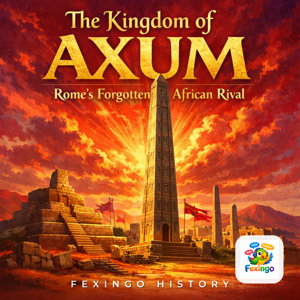


While earlier episodes have explored Axum’s military campaigns in Yemen and its internal religious transformations, this episode turns its gaze eastward to the Indian Ocean. We examine the vibrant commercial ties between the Aksumite Empire and ancient South India, specifically the Chera, Chola, and Pandya kingdoms. Using evidence from the Periplus of the Erythraean Sea and archaeological finds like Roman coins in Indian ports and Aksumite pottery in Kerala, we reconstruct a world where African and Asian merchants exchanged ivory, gold, and spices for textiles and pepper. We also look at the diplomatic missions sent by King Kaleb to the Gupta Empire, revealing a network of relations that extended far beyond the Red Sea, positioning Axum as a crucial link in the global trade of late antiquity.
#Aksum #Axum #AncientEthiopia #IndianOceanTrade #CheraKingdom #CholaDynasty #PandyaKingdom #PeriplusOfTheErythraeanSea #GuptaEmpire #KingKaleb #RomanCoins #Teff #IvoryTrade #SpiceRoute #EastAfricaHistory #SouthIndiaHistory #LateAntiquity #FexingoHistory
Keep every episode free: buymeacoffee.com/fexingo
While earlier episodes explored Axum’s military might and religious shifts, this episode examines the economic engine that made the kingdom a global superpower. We look at how Axum controlled the trade routes between Rome and India, leveraging its unique geography to become the primary supplier of ivory, gold, and exotic animals. The conversation centers on the port city of Adulis, where Greek merchants and local Aksumite traders negotiated deals for rhinoceros horns and tortoise shells. We also discuss the controversial figure of King Kaleb, whose interventions in Yemen were driven less by religion and more by securing trade monopolies against Sassanian Persian influence. By analyzing the Monumentum Adulitanum and the accounts of Cosmas Indicopleustes, we uncover how Axum’s wealth was built on a sophisticated network of maritime commerce rather than just territorial conquest.
#Axum #AksumiteEmpire #RedSeaTrade #Adulis #KingKaleb #CosmasIndicopleustes #MonumentumAdulitanum #IvoryTrade #AncientEthiopia #HimyariteKingdom #SassanianPersia #RomanTrade #IndianOceanCommerce #ExoticAnimals #GeopoliticsOfAntiquity #EastAfricanHistory #MaritimeHistory #FexingoHistory
Keep every episode free: buymeacoffee.com/fexingo
While we’ve explored Aksum’s stelae, its waterworks, and its naval power, this episode focuses on the economic engine that made the kingdom a global superpower: the gold standard. We examine how King Kaleb and his successors manipulated the flow of gold between Rome, Persia, and India to establish Aksum as the indispensable middleman of the ancient world. You’ll hear about the specific trade routes through Adulis, the debasement of currency that sparked diplomatic crises with Constantinople, and how the control of ivory and incense allowed Aksum to dictate terms in international diplomacy. This is a deep dive into the financial architecture of an African empire that rivalled the great powers of its time.
#Aksum #KingKaleb #AncientTrade #GoldStandard #Adulis #RedSeaTrade #RomanEmpire #SassanianPersia #IndianOceanTrade #AfricanHistory #Coinage #EconomicHistory #ByzantineEmpire #IvoryTrade #IncenseRoute #FexingoHistory #HistoryPodcast #EastAfrica #HistoricalEconomics
Keep every episode free: buymeacoffee.com/fexingo
While previous episodes explored Axum’s trade networks and military might, this episode focuses on a unique capability that set it apart from its neighbors: a formal naval force. We examine the accounts of Cosmas Indicopleustes regarding the kingdom’s warships and how they controlled the Red Sea against pirates and rival powers. The narrative explores the strategic importance of Adulis as a port, the construction of these vessels using local timber, and the political implications of sea power in late antiquity. Lucas and Luna discuss how maritime dominance allowed King Kaleb to project power into Yemen and how this naval infrastructure eventually declined with shifting trade routes. Listeners will learn about the specific terminology used for these ships, the logistics of crewing them, and the archaeological evidence suggesting a sophisticated harbor management system. This story highlights Aksum not just as a highland agricultural empire, but as a thalassocracy with eyes on the horizon.
#Aksum #AxumiteNavy #RedSeaHistory #CosmasIndicopleustes #AdulisPort #MaritimeTrade #KingKaleb #YemenCampaign #AncientEthiopia #Thalassocracy #NavalWarfare #EastAfricaHistory #LateAntiquity #PirateSuppression #Shipbuilding #Geopolitics #FexingoHistory #History
Keep every episode free: buymeacoffee.com/fexingo
We explore the architectural miracle of Abreha wa Atsbeha, Ethiopia’s oldest standing church, built in the sixth century by King Abreha. This episode shifts focus from Axum’s trade coins and war elephants to its spiritual engineering and the arrival of the Nine Saints. We examine how these Syrian monks adapted Ge'ez liturgy to the highlands, carving sanctuaries into red volcanic rock while establishing monastic communities that would define Ethiopian Christianity for a millennium. You will hear about the unique cross-stone architecture, the blending of pre-Christian stone-carving traditions with Christian iconography, and how the Nine Saints preserved their linguistic heritage through translation. It is a story of faith meeting geology, where ancient builders used granite and basalt to create spaces of enduring worship that still stand today.
#AbrehaWaAtsbeha #NineSaints #EthiopianOrthodoxChurch #AksumiteArchitecture #Ge'ezLiturgies #SyrianMonks #TigrayRegion #RedVolcanicRock #ChristianityInAfrica #6thCenturyHistory #StoneCarvingTradition #ReligiousEngineering #AxumiteEmpire #MonasticLife #LinguisticTranslation #SacredSites #FexingoHistory #History
Keep every episode free: buymeacoffee.com/fexingo
While previous episodes explored Axum’s internal engineering, military might, and religious shifts, this episode uncovers the external engine that fueled the kingdom’s golden age: its direct participation in the Indian Ocean trade network. We examine how Aksumite merchants bypassed traditional middlemen to establish vibrant diaspora communities in India, particularly at Muziris, where they exchanged gold, ivory, and tortoiseshell for spices and textiles. Through the accounts of Cosmas Indicopleustes and archaeological finds of Aksumite coins in South India, we reconstruct a world where African traders were not just passive exporters but active players in a globalized economy. We also look at the decline of this maritime dominance as shifting trade routes and Islamic expansion altered the economic landscape of the Red Sea, leaving behind a legacy of cultural exchange that still echoes in the linguistic and genetic ties between East Africa and the Indian subcontinent.
#Aksum #Axum #IndianOceanTrade #Muziris #CosmasIndicopleustes #RedSeaTrade #EastAfricaHistory #AncientEthiopia #SpiceTrade #RomanEmpire #SassanianPersia #MaritimeHistory #GezScript #AfricanEmpires #Archaeology #FexingoHistory #HistoryPodcast #GlobalTrade
Keep every episode free: buymeacoffee.com/fexingo
While we have explored Axum's coins, stelae, and military might, this episode uncovers the economic engine that truly built the empire: the grain tax. We examine how Cosmas Indicopleustes described the state-controlled distribution of teff and wheat in the fourth century, revealing a sophisticated bureaucracy that managed surplus during droughts and funded monumental architecture. By analyzing the agricultural policies under King Ezana, we see how food security was weaponized for political stability and imperial expansion across the Red Sea. This deep dive into the fields rather than the forums shows how one crop helped forge one of antiquity's great powers.
#Aksum #AxumiteEmpire #AncientEthiopia #TeffGrain #CosmasIndicopleustes #KingEzana #RedSeaTrade #AncientAgriculture #GeographyHistory #EastAfricaHistory #PrecolonialAfrica #ImperialEconomics #FoodSecurity #AncientBureaucracy #ChristianAntiquity #HistoricalAgriculture #FexingoHistory #History
Keep every episode free: buymeacoffee.com/fexingo
While we often look to Axum for its trade, coins, and towering stelae, one of its most enduring legacies is invisible: the calendar. In this episode, Lucas and Luna explore the Anno Martyrum, or Year of the Martyrs, which remains the official civil calendar of Ethiopia today. We trace how King Ezana’s conversion to Christianity in the 4th century led to a radical shift from regnal dating to a universal Christian era based on Diocletian’s persecution. This wasn't just a bureaucratic change; it was an assertion of theological independence from Rome. We examine the role of Frumentius, the Nine Saints, and how the Aksumite church developed a unique liturgical year that still structures daily life in Addis Ababa and beyond, preserving ancient Ge'ez texts and rhythms long after the empire itself faded into history.
#Aksum #EthiopianCalendar #AnnoMartyrum #KingEzana #Frumentius #Ge'ez #ChristianityInAfrica #DiocletianPersecution #NineSaints #EastAfricanHistory #AncientEthiopia #LiturgicalYear #CopticChronology #AxumiteEmpire #Abyssinia #HistoricalTimekeeping #FexingoHistory #History
Keep every episode free: buymeacoffee.com/fexingo
While Axum is famous for its towering stelae and gold coins, its spiritual heart beat in the dark, quiet caves of Tigray. This episode explores the Nine Saints who arrived from Syria in the fifth century, bringing Greek monastic traditions to the Ethiopian highlands. We trace their journey to places like Daga Estifanos and Yemrehana Krestos, examining how they carved churches directly into limestone cliffs to protect them from invasion. Lucas and Luna discuss the architectural ingenuity of these cave sanctuaries, the fusion of Coptic and indigenous styles, and how these hidden sanctuaries preserved Ge'ez literature and Orthodox theology for over a millennium. You will learn about Saint Tekle Haymanot’s ascetic life, the specific engineering challenges of digging out interior spaces without collapsing the roof, and why these remote locations became the ultimate repositories of Axumite faith when political centers shifted.
#Axum #EthiopianOrthodoxChurch #NineSaints #Tigray #CaveChurches #SaintTekleHaymanot #YemrehanaKrestos #DagaEstifanos #Ge'ezLiterature #CopticChristianity #AksumiteEmpire #MedievalAfrica #ReligiousHistory #Monasticism #LimestoneArchitecture #Abyssinia #FexingoHistory #History
Keep every episode free: buymeacoffee.com/fexingo
This episode explores the dramatic economic shift in the Kingdom of Axum during the early seventh century, a period marked by the sudden cessation of gold coinage and the empire’s pivot toward silver and copper. We examine how the Byzantine-Sasanian wars disrupted Red Sea trade routes, forcing King Kaleb’s successors to debase their currency and rely on local barter systems involving ivory and tortoiseshell. Lucas details the archaeological evidence from Adulis and Aksum, showing how the absence of Roman solidi and Sassanian dinars signaled Axum’s growing isolation from the Mediterranean world. Luna helps unpack the social implications of this monetary collapse, discussing how it affected daily life for merchants and farmers alike. The conversation also touches on the role of the Church in stabilizing the economy through tithes and land grants when state minting failed. By tracing the decline of the negus’s imperial prestige through his wallet, we reveal a pivotal moment where Axum stopped looking West toward Rome and East toward Mecca, setting the stage for its eventual integration into the emerging Islamic trading networks. This is a story of economic resilience and adaptation in the face of global geopolitical upheaval.
#Axum #KingdomOfAxum #AncientEthiopia #RedSeaTrade #ByzantineEmpire #SasanianEmpire #AksumiteCoins #Negus #Adulis #GoldCoinage #SilverCurrency #Ezana #Kaleb #GeEZScript #AncientEconomics #AfricanHistory #FexingoHistory #History
Keep every episode free: buymeacoffee.com/fexingo
From the publisher's feed