Sign up to save your podcastsEmail addressPasswordRegisterOrContinue with GoogleAlready have an account? Log in here.
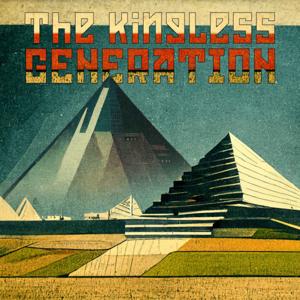
A podcast on the deep history of class struggle, paleo-parapolitics, and the demonology of capital. Hosted on Acast. See acast.com/priv... more
FAQs about The Kingless Generation:How many episodes does The Kingless Generation have?The podcast currently has 79 episodes available.
May 27, 2022Thulêan Kewpie Doll ET: Doraemon’s Little Star Wars (1985/2022) [PREVIEW]Doraemon: Nobita’s Little Star Wars (1985) was a masterpiece of late–Cold War bourgeois libertarian mythmaking: the kids of the Doraemon world join a miniature alien race in a righteous struggle for liberty from a totalitarian (aggressively Soviet-coded) regime, using Doraemon’s shrink ray to move back and forth between branded action figure size and regular size to bring about the triumphant end of history—and maybe even record a cool home movie on their consumer electronics while Mom works on obliviously in her spacious capitalist kitchen. This year’s remake, supposed to come out last year but delayed until eight days after the start of the Ukranian war, includes changes to character design and plot which just happen to echo the imagery of the wall-to-wall news coverage of the same war: blond-haired, blue-eyed children under threat from a totalitarian Asiatic aggressor, and you get to go fight alongside them, kids!—a pitch that actually resonates so powerfully with Japan’s honorary (?) whiteness complex that even the (center-right SocDem) Japanese Communist Party are leading the charge to escalate the war. Hosted on Acast. See acast.com/privacy for more information....more23minPlay
May 10, 2022Turning the Wheel of the Dialectic: Bhagavad Gītā (India, after 5 c. BCE); Ajith, “A Critique of Brahmanist Ethics”We have seen how D.T. Suzuki’s take on zen was a very modern thing, tailor made in Illinois as a bourgeois ideology. This time, under the guidance of Ajith’s dialectical materialist critique of Brahmanism, we take up the Bhagavad Gītā (India, post 5th c. BCE), especially its modern bourgeois idealist interpretations as represented by Tilak’s Gītā Rahasya, a foundational text for India’s comprador Brahman classes and their English masters. We notice here the emphasis on karma yoga, the spiritual practice of carrying out one’s varṇa dharma or caste destiny, within an absolute monist worldview of advaita, non-dualism. Is this “class rule as spiritual practice”—relatively obscure in the premodern Japanese Buddhist tradition but so beloved of the Anglo-American bourgeoisie for similar reasons to their enthusiastic embrace of the Gītā—the secret ingredient in D.T. Suzuki’s zen? And what happens when we read the Gītā from the dialectical materialist perspective which accords so much better with South Asian thought?Critiquing Brahmanism https://foreignlanguages.press/new-roads/critiquing-brahmanism-k-murali-ajith/K. Muralidharan (Ajith) on Medium https://ajithspage.medium.com/ Hosted on Acast. See acast.com/privacy for more information....more1h 55minPlay
April 27, 2022The Liberality of Evil: there’s a right way and a wrong way to wither away (Ariyoshi Sawako, “Village of Eguchi,” 1958) [PREVIEW]Meditations on the differences between some similar things that we can’t afford to get twisted. Unprincipled opportunism, idealist insistence that revolutionary organizing always be only prefigurative of stateless, classless society—and meanwhile outright manifestations of reactionary class power are something we can just wink at slyly because we’re good-hearted, tolerant, liberal sophisticates. Ariyoshi Sawako’s story is a Rockefeller Foundation-funded magnum opus of postwar class collaborationism, the kind and gentle face of Fourth Reich fascism in its infancy. By contrast, principled members of the Kingless Generation use things like armies, laws, courts—things which must someday wither away—to achieve the concrete material conditions under which they could wither away.Featuring music by Laihall: Namgis Love Song Hosted on Acast. See acast.com/privacy for more information....more27minPlay
April 07, 2022Azov vs. the Orcs: a dialectical demonology of whiteness (Amadís de Gaula, James Connolly, Einsatzgruppen)The historical symbolism of the Zelyonka industrial dye attack—by which members of the Nazi Azov Battalion in Ukraine claim to be marking their victims, whether they be Roma or other central Asian peoples or just supposed Russophiles, as “orcs” tainted by Asiatic racial contagion—lies in the orcos of Spanish chivalric fantasy, the true inspiration for Tolkien’s hordes of Mordor besieging the holy city, surely much more than Beowulf as is often claimed. A kind of dialectical demonology of demonization comes into view, the hammer strokes with which whiteness was forged, as well as clues to how it can be cast into the fires again.Featuring music performed by Kingless Generation member Laihallll. Hosted on Acast. See acast.com/privacy for more information....more1h 56minPlay
March 08, 2022Zen was made up by a guy in Illinois: D.T. Suzuki & Paul Carus [PREVIEW]As Anglo-American capitalism swept across the globe in the nineteenth century, the school of Japanese Buddhism most closely associated with the thoroughly discredited feudal government, Zen, was struggling to rebrand. Meanwhile, Paul Carus, a German immigrant serving as court philosopher to a zinc magnate in LaSalle, Illinois, published a book identifying Buddhism as a possible source for the “Religion of Science” purified of all superstitions, which he believed must become the ideology of modern, capitalist “Teutonic peoples” (Anglo-Saxons and Germans both). Enthralled by this welcome departure from the standard dogma, accepted no less in Japan than in Anglo-America, that Christianity was the source of everything modern, capitalist, and democratic, young Suzuki Teitarō (who had spent no more than a few days visiting a Buddhist temple) eagerly translated Carus’ book on Buddhism into Japanese and asked to go and study at his feet. Thus began eleven years in Illinois, where the man later known as D.T. Suzuki imbibed Carus’ ideas on “modernizing” religion—and, crucially, techniques for claiming whiteness on behalf of a non-Anglo-Saxon people—that would serve him so well decades later when he suddenly started talking about “Zen”. Hosted on Acast. See acast.com/privacy for more information....more18minPlay
March 04, 2022Light and Air for the ProletariatA more newsy, free-flowing episode. I see many socialists confused by paired spectacles of astroturfed extremism and carefully misdirected popular energy: caravans of hooting hollering settler hogs on the one side, caravans of moozlamic hispanic terrorists on the other. I’m pretty sure the plan is to numb you to the current violence of bio-gladio, and the climate massacres to come, by convincing you that any given authoritarian crackdown is only going to hit the invading “caravan” who fall on the “side” opposite you, not of the class divide but the partisan divide. But while you were cheering or jeering at the trucker-branded, spook-seeded rodeo clowns—indigenous organizers of the Gitxsan and Wet’suwet’en nations have had their accounts frozen. And when the “caravans” of climate refugees arrive, all the totalitarian measures you helped them pass will come mercilessly down on their heads and yours. We take up texts from Engels, Kautsky, and Lenin on the importance of civic freedoms not as the sole end in themselves but as strategic “light and air” for the proletarian struggle. We’ll miss freedom of movement and freedom of assembly when they’re gone. Hosted on Acast. See acast.com/privacy for more information....more1h 8minPlay
March 03, 2022w/ Khālid ibn Yaʿqūb: Idolatry, Semiotics & the Self [PREVIEW]A wide-ranging conversation on historical comparative psychology, spirituality, and leftist politics, with Khalid ibn Yaʿqūb, co-host of the Subliminal Jihad podcast. Hosted on Acast. See acast.com/privacy for more information....more34minPlay
February 03, 2022The First Private Property: Mother (Sumer, 3 m. BCE); Chūshingura (Japan, 1748 CE)The first private property was the body of the woman, with the historic defeat of the female sex and the birth of the father. We catch fleeting glimpses of the extended clan (gens) family as it existed right down to the 20th century among human beings outside class society, then examine the unexpectedly cucked “traditional” family, a perversion of human community specialised to pass down private property and bring class power to bear on its members at the expense of authentic kinship. Like prisons or the police, the family is a product of class society, and there will come a day when we no longer need it, but on the other hand, while we build the Kingless Generation it is probably as necessary a tool as the People’s Army or the Dictatorship of the Proletariat. Serious revolutionaries have always struggled to go beyond the old family, but attempts to “abolish” it now reflect, at best, some hippie idealism which may have an analysis and a program but lacks an expedient means (Sanskrit upaya) to get us to that goal. Hosted on Acast. See acast.com/privacy for more information....more2h 10minPlay
December 28, 2021Combat Parasocialism: Book of Thoth (Egypt, 300 BCE – 300 CE?), Frank Kitson, Low Intensity Operations (Kenya, 1971), The Gateless Gate (China, 1228) [PREVIEW]With the internet, every ordinary social interaction is now subject to counterinsurgency tactics like COINTELPRO and GLADIO. In places like Vietnam, Kenya, and Ireland, counterinsurgency strategists have allowed the working class to organize while embedding agents within their orgs and also encapsulating these orgs within controlled structures, so that they may be manipulated, frustrated, and even misdirected to cause general chaos and drive society as a whole further toward authoritarianism. Today with Signature Reduction, Integrity Initiative, and similar programs in Japan and across the world, we know (and they want us to know) that similar forces are being brought to bear directly on every human mind. On the other hand, this is nothing new: ancient Egyptian scribes’ guilds celebrated initiation rites glorifying their craft of writing itself as being able to grab like a claw, catch like a net, or embalm like salt, any element of reality in the interest of ruling class control (and this general idea became the loose basis for hellenistic Hermeticism, or logos mysticism like that found in the Gospel of John). So what the fuck am I doing recording a podcast? Hosted on Acast. See acast.com/privacy for more information....more14minPlay
December 10, 2021Marx failed to consider: Ishikawa Jun, “Jesus of the Ruins”; Joe Moore, “Production Control” (Japan, 1945)It’s bourgeois liberal literature versus the actual history of worker and peasant struggle, as we contrast Ishikawa Jun’s very anti-human view of the unwashed masses of postwar Tokyo, with the economy of autonomous workers’ councils that seized the means of production and traded their products to feed the people for two years until they were finally crushed by a retrenched Japanese bourgeoisie, MacArthur’s occupation government, and the opportunist faction of the Japanese Communist Party. Hosted on Acast. See acast.com/privacy for more information....more1h 14minPlay
FAQs about The Kingless Generation:How many episodes does The Kingless Generation have?The podcast currently has 79 episodes available.