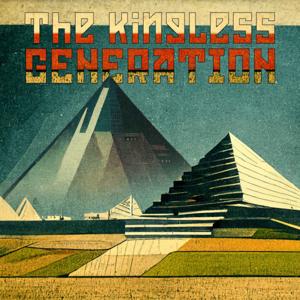
The Kingless Generation
Download on the App Store

The Kingless Generation episodes

  • Kingless Reads: WitbD? ch 3 pt 1, Tred-iunionist Politics and Social-Democratic Politics
    Lenin’s What is to be Done? in the illuminating new translation by Lars T. Lih. 3. Tred-iunionist Politics and Social-Democratic Politics: a) Political agitation and its narrowing by the economists, b) The story of how Martynov made Plekhanov deep, c) Political indictments and ‘education for revolutionary activeness’, d) What do economism and terrorism have in common?

    Hosted on Acast. See acast.com/privacy for more information.

    1 hr 11 min
  • Kingless Reads: WitbD? ch 1, Dogmatism and ‘Freedom of Criticism’
    Lenin’s *What is to be Done?* in the illuminating new translation by Lars T. Lih. Foreword; Chapter 1: Dogmatism and ‘Freedom of Criticism’: a) What does ‘freedom of criticism’ mean?, b) New defenders of ‘freedom of criticism’, c) Criticism in Russia, d) Engels on the significance of theoretical struggle.

    Hosted on Acast. See acast.com/privacy for more information.

    1 hr 5 min
  • The Hellenistic Synthesis and the Christian Image of Man (When God Spoke Greek: The Septuagint and the Making of the Christian Bible)
    In which Fergal revisits his old TradCath stomping grounds, discovers why so many of his old TradCath friends have now converted to Eastern Orthodoxy, and comes away with a deep appreciation for the contribution made to ideas of revolutionary transformation of society, universal human brotherhood, and scientific knowledge of history, by the Jewish people of the Hellenistic diaspora under the Second Temple—not because of their mastery of a pure Hebrew tradition but because of their bold and broadminded adaptation of it in a cosmopolitan context. Their great literary achievement was the Greek version of the Hebrew scriptures known as the Septuagint, and as we now know from the discovery of contemporary Hebrew manuscripts that agree with it, it was often based on different (though to contemporaries no less authoritative) Hebrew textual lineages than the Masoretic Hebrew text later standardized in the medieval period. It also included many books (the deuterocanonicals) which the later Rabbinic tradition would come to exclude. Ultimately under the influence of Jerome, Medieval Western Christianity would abandon the Greek bible so crucial to the birth of their religion and come to rely almost exclusively on the Rabbinic Hebrew text for their “old testament”, while Protestants even exclude the deuterocanonical books, even though it was precisely the idiosyncrasies of the Greek bible, especially the deuterocanonicals with their diasporic syncretisms, that provided the basis for distinctive Christian beliefs as basic as the existence of angels and demons as warriors in a battle between cosmic good and cosmic evil which is playing out in this world, and which will culminate in the victory of cosmic good in an “end of the world”—when a leader called the Messiah, whose coming was prophesied in the Hebrew scriptures, will unite all nations in a final victory of cosmic good. All of these ideas are simply taken for granted in the New Testament, but it was in the Septuagint, particularly the deuterocanonical books later rejected by medieval Judaism, that they are actually developed and explained, and later Jewish critics are quite right that these ideas are not inherent in their Hebrew bible. I am no longer a practicing Abrahamist, really, but I feel like I see a seminal example here of the possibilities of revolutionary internationalism and multicultural solidarity and synthesis, which must be embraced in all its complexity and “impurity”.

    Hosted on Acast. See acast.com/privacy for more information.

    1 hr 43 min
  • Hearts and Minds: Imamura Eiji, “Travelling Companion” (Changchun, 1938); Chae Manshik, “Mr. Pang” (Seoul, 1946) [PREVIEW]
    After my conversations with Keith Allen Dennis and Recluse of the Farm podcast, I keep thinking how it’s the second-string fascists, the Nazi and Japanese imperial collaborators of Ukraine and Korea, who go on to be the absolute MVPs of the Cold War–era fascist international. Operating from the American puppet ROK and the Ukranian diaspora, this passionate minority within each country worked tirelessly to advance the fascist cause and sabotage socialist construction in their own homelands and around the world. The Moon organization, for example, can be directly tied to the drug and weapons trading and other logistics in support of fascist death squads in Latin America (see The Farm’s magisterial WACL series). Today we explore the heart of the collaborator through two Korean short stories. First, we have a semi-autobiographical maudlin fantasy depicting the immense frustration of a Korean settler in China, who despite his obsessive determination to be a model minority and live out his devotion to all things Japanese, has failed as a professional intellectual largely due to ethnic discrimination and, on his way to become a colonist on the Manchurian frontier, sacrifices himself in a suicide attack on the Korean People’s Army to save a Japanese travelling companion—despite experiencing nothing but discrimination even from him. Second, we have a satirical portrait of the changing of the guard from Japanese collaborators to Yankee collaborators, one set of imperial middlemen merely replacing another, after the thoroughly sabotaged “liberation” of Korea in 1945.

    Hosted on Acast. See acast.com/privacy for more information.

    38 min
  • Shotgun Blues: The Abe Shinzō Assassination
    “According to the hospital, there were two bullet holes in the right front side of Mr. Abe’s neck, spaced about five centimeters apart. It appears that the bullets went into his body from his neck, damaging his heart and the large arteries in his chest. Doctors say a large hole had been opened in the wall of his heart. On his left shoulder there was one wound which seemed to be from a bullet that had pierced through his body. They say no bullets were recovered from inside his body.” Asahi Newspaper report on the doctors’ press conference: https://www.asahi.com/articles/ASQ7864WZQ78PTIL02W.html

    Hosted on Acast. See acast.com/privacy for more information.

    1 hr 1 min
  • w/ Laihall: Combat Techno-Transegalitarianism [PREVIEW]
    My second conversation with Laihallll is followed by my own extended meditations on the secret society in prehistory and the present. I develop my hypothesis that the post-capitalist dystopia which the ruling class are currently ushering us into may be most accurately described as not techno-feudalism but rather techno-transegalitarianism. Indeed, I suspect that the term “transhumanism” was coined with reference to these transegalitarian relations of production. With a fully automated means of production, all the same forces tending towards a stateless, classless society return, at least as strong as they were for egalitarian hunter gatherers who could get everything they needed directly from the landscape with only a fifteen-hour ‘work week’. The only way to fight this tendency toward equality and the death of scarcity will be with psychological warfare on the populace in the mode of the most exploitative of the ancient secret societies, but this time armed with modern social networking and surveillance technology. Accordingly, I issue a call for developing counter–secret societies in the mode of the ancient counter–secret societies, of which there was also a robust ecosystem in prehistory: call it paleo-Leninism.

    Hosted on Acast. See acast.com/privacy for more information.

    17 min
  • w/ Laihall: The Secret of Societies (Brian Hayden, The Power of Ritual in Prehistory, NW Turtle Island, 2018)
    It’s not every day that you get to learn about a whole new mode of production, or phase in the meta of class society—much less the earliest one that we are (possibly) able to reconstruct or learn anything about—but here we are. Coordinating with anthropological data (problematically enough collected by and for settlers during the narrow window in which any Indigenous person would both still know the pre-contact forms firsthand and be willing to record them for posterity) from around Turtle Island, Africa, and Polynesia, archaeologist Brian Hayden argues that we should read late-Paleolithic archaeological sites from the cradle of so-called “civilization”—Palestine, Syria, Turkey, France, Britain—as preserving relics of secret societies, proto–ruling classes that arise in early societies with some surplus, around feasting and/or performing arts like dance or theatre, to play a central role in what is known as trans-egalitarian or complex hunter-gatherer relations of production, and subsequently more or less secretly appointing the chiefs or kings who seem to rule in the early state. By staging extravagant feasts and spectacles of both their own spiritual and cultural power and the (often imaginary) terror and threat that the community would face without their esoteric knowledge, secret societies are able to build engines of accumulation of material surplus wealth on their own part and of debt on others’. However, as the Davids point out in The Dawn of Everything, many of the transegalitarian societies still extant in modernity (as well as many ancient ones) can just as easily be read as hard-won instances of actually existing full communism for their time and place, and any given secret society may have really functioned to limit class struggle as they indeed claim in modern indigenous contexts. Moreover, the 19th-c. anthropologists were all on the payroll of the settler banks and development companies for good reason, so their “data” cannot simply be taken as “given”. Also, the fact that these rituals sometimes involved human sacrifice, and at least the claim of ritual cannibalism, continues illogically to be used as justification for ongoing colonization and dispossession of Indigenous peoples. Accordingly, we approach this subject under the guidance of a real live member of a dance group in a potlatch society of Northwest Turtle Island, as well as an anointed member of the Kingless Generation: Laihallll.

    Hosted on Acast. See acast.com/privacy for more information.

    2 hr 18 min
  • Thulêan Kewpie Doll ET: Doraemon’s Little Star Wars (1985/2022) [PREVIEW]
    Doraemon: Nobita’s Little Star Wars (1985) was a masterpiece of late–Cold War bourgeois libertarian mythmaking: the kids of the Doraemon world join a miniature alien race in a righteous struggle for liberty from a totalitarian (aggressively Soviet-coded) regime, using Doraemon’s shrink ray to move back and forth between branded action figure size and regular size to bring about the triumphant end of history—and maybe even record a cool home movie on their consumer electronics while Mom works on obliviously in her spacious capitalist kitchen. This year’s remake, supposed to come out last year but delayed until eight days after the start of the Ukranian war, includes changes to character design and plot which just happen to echo the imagery of the wall-to-wall news coverage of the same war: blond-haired, blue-eyed children under threat from a totalitarian Asiatic aggressor, and you get to go fight alongside them, kids!—a pitch that actually resonates so powerfully with Japan’s honorary (?) whiteness complex that even the (center-right SocDem) Japanese Communist Party are leading the charge to escalate the war.

    Hosted on Acast. See acast.com/privacy for more information.

    23 min
  • Turning the Wheel of the Dialectic: Bhagavad Gītā (India, after 5 c. BCE); Ajith, “A Critique of Brahmanist Ethics”

    We have seen how D.T. Suzuki’s take on zen was a very modern thing, tailor made in Illinois as a bourgeois ideology. This time, under the guidance of Ajith’s dialectical materialist critique of Brahmanism, we take up the Bhagavad Gītā (India, post 5th c. BCE), especially its modern bourgeois idealist interpretations as represented by Tilak’s Gītā Rahasya, a foundational text for India’s comprador Brahman classes and their English masters. We notice here the emphasis on karma yoga, the spiritual practice of carrying out one’s varṇa dharma or caste destiny, within an absolute monist worldview of advaita, non-dualism. Is this “class rule as spiritual practice”—relatively obscure in the premodern Japanese Buddhist tradition but so beloved of the Anglo-American bourgeoisie for similar reasons to their enthusiastic embrace of the Gītā—the secret ingredient in D.T. Suzuki’s zen? And what happens when we read the Gītā from the dialectical materialist perspective which accords so much better with South Asian thought?

    Critiquing Brahmanism https://foreignlanguages.press/new-roads/critiquing-brahmanism-k-murali-ajith/

    K. Muralidharan (Ajith) on Medium https://ajithspage.medium.com/

    Hosted on Acast. See acast.com/privacy for more information.

    1 hr 55 min

About The Kingless Generation

From the publisher's feed

A podcast on the deep history of class struggle, paleo-parapolitics, and the demonology of capital.

Hosted on Acast. See

More shows like The Kingless Generation

Chapo Trap House by Chapo Trap House

Chapo Trap House

8,830 Listeners

Trillbilly Worker's Party by Trillbilly Worker's Party

Trillbilly Worker's Party

1,944 Listeners

Parallax Views w/ J.G. Michael by J.G.

Parallax Views w/ J.G. Michael

136 Listeners

TRUE ANON TRUTH FEED by TrueAnon

TRUE ANON TRUTH FEED

3,339 Listeners

Fight Like An Animal by World Tree Center for Evolutionary Politics

Fight Like An Animal

58 Listeners

Subliminal Jihad by Subliminal Jihad

Subliminal Jihad

305 Listeners

The Empire Never Ended by The Empire Never Ended

The Empire Never Ended

89 Listeners

The Farm Podcast Mach II by Recluse

The Farm Podcast Mach II

159 Listeners

American Exception by Aaron Good

American Exception

140 Listeners

The Return Of The Repressed. by Marcus 马克思

The Return Of The Repressed.

70 Listeners

Fourth Reich Archaeology by Fourth Reich Archaeology

Fourth Reich Archaeology

137 Listeners

What Is “The Process”? by RottingJewels

What Is “The Process”?

35 Listeners

COEXIST INC by brother isaac

COEXIST INC

14 Listeners

The Infinite Jest by RGEB LLC

The Infinite Jest

8 Listeners