
Sign up to save your podcasts
Or

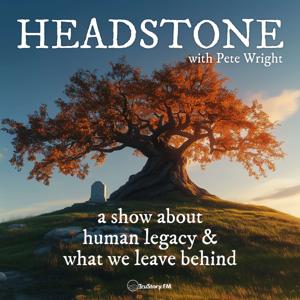

History is often written in bold type. We remember the wars, the inventions, the big cultural shifts that announce themselves with headlines. But Glenn Fleishman has been spending his time reminding us that the things history forgets—scraps of type, obsolete tools, obscure printing processes—are often the very things that shape us the most. They make up the invisible machinery of culture.
Glenn’s career has been built on chasing down these overlooked artifacts and giving them back their dignity. He’s written for the New York Times and The Economist, produced deeply researched books like How Comics Were Madeand Six Centuries of Type and Printing, and helped shepherd ambitious publication projects like Shift Happens, a 700-page cultural history of keyboards. Along the way, he’s become something unusual in the digital age: a historian of tactility, a man who believes that physical impressions—whether pressed into paper or cast in memory—endure in a way pixels never quite can.
In our conversation, Glenn talks about his childhood hours with microfilm readers, his fascination with forgotten crafts, and his frustration at watching knowledge slip away. But what emerges most powerfully is the joy he takes in sharing. Glenn doesn’t guard his discoveries like relics; he builds communities around them, from Kickstarter campaigns to type museums small enough to fit in a breadbox. His chosen epitaph—which you’ll hear—is both pun and philosophy. Our legacies aren’t measured by what we keep, but by what we don’t let ourselves forget to pass on.
Links & Notes
 View all episodes
 By TruStory FM
5
88 ratings
History is often written in bold type. We remember the wars, the inventions, the big cultural shifts that announce themselves with headlines. But Glenn Fleishman has been spending his time reminding us that the things history forgets—scraps of type, obsolete tools, obscure printing processes—are often the very things that shape us the most. They make up the invisible machinery of culture.
Glenn’s career has been built on chasing down these overlooked artifacts and giving them back their dignity. He’s written for the New York Times and The Economist, produced deeply researched books like How Comics Were Madeand Six Centuries of Type and Printing, and helped shepherd ambitious publication projects like Shift Happens, a 700-page cultural history of keyboards. Along the way, he’s become something unusual in the digital age: a historian of tactility, a man who believes that physical impressions—whether pressed into paper or cast in memory—endure in a way pixels never quite can.
In our conversation, Glenn talks about his childhood hours with microfilm readers, his fascination with forgotten crafts, and his frustration at watching knowledge slip away. But what emerges most powerfully is the joy he takes in sharing. Glenn doesn’t guard his discoveries like relics; he builds communities around them, from Kickstarter campaigns to type museums small enough to fit in a breadbox. His chosen epitaph—which you’ll hear—is both pun and philosophy. Our legacies aren’t measured by what we keep, but by what we don’t let ourselves forget to pass on.
Links & Notes

6,826 Listeners

38,856 Listeners

444 Listeners

8 Listeners

21 Listeners

59,446 Listeners
37 Listeners

5,485 Listeners
58,066 Listeners
38 Listeners

29 Listeners

12 Listeners

232 Listeners

101 Listeners
4 Listeners
2 Listeners

8 Listeners
0 Listeners

69 Listeners

6 Listeners

0 Listeners

5 Listeners

0 Listeners
0 Listeners

2 Listeners