
Sign up to save your podcasts
Or

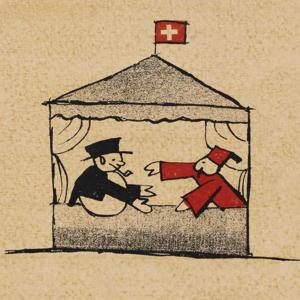


Jonathan Conlin invites Samuel Foster to explain the rationale behind his new module on “Europe in the Era of the Great War” and report on how students have engaged with imagology and uncomfortable analogies with their own times.
e-mail: [email protected]
Sam teaches history at UEA, where he is a member of the Centre for the Study of East Central Europe and the Former Soviet Space.
In British schools the First World War, narrowly defined, remains a pillar of the history curriculum. Meanwhile the British Establishment continues to exploit a WWI-centred culture of memory as a screen on which to project contemporary anxieties – so much so, Sam argues, that “it is not really history”. In this conversation, recorded on 1 May 2025, Jon asks Sam to explain the thinking behind his decision to start his new WWI module in 1908, and to reflect on how his students responded to a workshop on imagology, the critical study of community stereotypes. Sam also reflects on how his own research into the Balkans has been shaped by dialogue with Ottomanists, whose WWI chronology partly inspired that followed by his UEA module.
Something that struck home with the students was the rise of the security state. Bleak as it is, that’s what really resonated, given the Russian-Ukrainian war, and what appears to be happening in the United States. This demonstrates that these occurences have precedents, it’s not something that just begins with Nazi Germany or Stalin, you need to look further back into the past.
Podcasts are published by TLP for the purpose of encouraging informed debate on the legacies of the events surrounding the Lausanne Conference. The views expressed by participants do not necessarily represent the views or opinions of TLP, its partners, convenors or members.
Ozan Ozavci talks with Ismee Tames about her ongoing research into stateless people after World War I, uncovering the communities of care that stateless individuals created to rebuild their lives.
e-mail: [email protected]
Ismee is Professor at Utrecht University and senior researcher at the Institute of War, Holocaust and Genocide Studies (NIOD) in Amsterdam.
How can we recover the experiences and agency of stateless persons, when they teeter on the edge of visibility in a world where nationality is considered fundamental to identity? While researching post-World War II “Displaced Persons” (or DPs), Ismee Tames came across forms on which DPs wrote the word “Nansen” or “Nansenist” under “nationality”. These were individuals who had been displaced more than once, and been granted a so-called Nansen Passport by the League of Nations after World War I. In this conversation, recorded on 9 January 2025, Ismee and Ozan discuss how the Norwegian polar explorer-turned-diplomat Fridtjof Nansen (after whom these documents were named) came to be appointed as the League’s first High Commissioner for Refugees. They then consider the concept of “communities of care” that Ismee has been using in her research. This tool enables us to see beyond official documents and explore how stateless people took care of each other and themselves, assisted by allies in the communities in which they found themselves. After considering the implications of this research for today’s world, Ismee introduces the topic of her next book, planned for publication in 2027.
As long as we believe that it’s necessary that we erase people because we are afraid of them, then we will keep doing these things — maybe sometimes in lesser versions, but when we get more and more scared we refer back to these practices. Is this really what we want? There are different ways of organizing ourselves that are less violent.
Podcasts are published by TLP for the purpose of encouraging informed debate on the legacies of the events surrounding the Lausanne Conference. The views expressed by participants do not necessarily represent the views or opinions of TLP, its partners, convenors or members.
Eugene Rogan and Ozan Ozavci discuss the 1860 massacres in Damascus, the subsequent restoration of peace in Syria, and the insights this turbulent history may offer to Syrians navigating today’s challenges.
e-mail: [email protected]
Eugene is Professor of Middle Eastern History at the University of Oxford.
In the summer of 1860 rumours circulated Damascus that in other towns of Greater Syria the Christians were rising up to slaughter defenseless Muslims at prayer. Though these reports were false, there was no means of denouncing them as lies. “The moment you begin to imagine violence against a neighbour, you begin to fear that your neighbour might have the same wishes towards you”, notes Eugene Rogan. “Damascus was just a spark away from exploding”. The massacres of 1860 saw 15% of the city’s Christian population targeted by their Muslim neighbours, in what Eugene calls “a genocidal moment”. In this conversation, recorded on 12 December 2024, Rogan describes how he first came up with the idea for his recent book on the Damascus events of 1860 after a chance discovery in the National Archives outside Washington. These were the records of the brilliant Mikhail Mishaqa (1800-1888). Merchant, diplomat, tax farmer and autodidact, Mishaqa was appointed US Vice Consul in 1859, just months before the massacre, which he and his family narrowly escaped with their lives.
As Eugene explains, other projects kept intervening to prevent him from writing his book, delaying it for thirty-five years. Rather than being untimely born, however, this account of the aftermath of the massacre offers “a kind of textbook on what it takes to bring a society back from the brink of genocide.” Under Fuad Pasha’s leadership the Ottomans recognized the need for accountability, albeit without promising “total justice”. They recognized the need to provide compensation, as well as inward investment not only to rebuild the city, but to provide new educational opportunities and new infrastructure in which residents of all faiths could take pride. By the 1880s a stable, prosperous, multi-faith community had been reborn. Although the destruction found in today’s Syria is an order of magnitude greater, there are lessons to be learned from revisiting this “Ottoman success story”.
If they can take lessons from what was achieved by the Ottomans after the 1860 massacre in Damascus and apply them on a larger scale, then this would be the miraculous outcome of the fall of the Assad regime. But it’s a very big ask, and a deeply divided, deeply traumatized society may face more ordeals yet. We pray that they will learn the lessons of the past and achieve a society safe for all citizens.
Podcasts are published by TLP for the purpose of encouraging informed debate on the legacies of the events surrounding the Lausanne Conference. The views expressed by participants do not necessarily represent the views or opinions of TLP, its partners, convenors or members.
Anna Enepekidou tells Jonathan Conlin about a project that turned high schoolers into curators as well as students of history.
e-mail: [email protected]
Anna is an exhibition curator at the Hellenic Parliament Foundation and a PhD candidate at the Department of Primary Education of the University of Crete.
My Own 1922 [To Diko mou 1922] was an educational-curatorial project of the Hellenic Parliament Foundation that used history didactics and arts-based research to foster historical literacy. High school students were asked to take a look around them, in their home, neighbourhood and city, and choose traces of the past that meant something to them. Objects and testimonies were then woven together in four exhibitions. In this conversation, recorded on 23 December 2024, Jon asked Anna to explain the thinking behind the project, and introduce some of the artefacts. Students came to reimagine their relationship to the past, and understand the exchangees of a century ago as individuals inhabiting multiple roles in history, rather than being passive victims of it.
We didn’t talk about exams. That was not there. It was about us talking to the past, visiting it together, and showing how it’s relatable to us.
For the documentary produced as part of the project, click here. Details of the exhibitions mounted in the schools can be found here and here.
Podcasts are published by TLP for the purpose of encouraging informed debate on the legacies of the events surrounding the Lausanne Conference. The views expressed by participants do not necessarily represent the views or opinions of TLP, its partners, convenors or members.
Şahin Yeşilyurt introduces Giorgio Ennas to his research on the relationship between the late Ottoman Empire’s public health and fiscal regimes.
Şahin is a Visiting Scholar at the Faculty of History at Cambridge University.
A chance discovery in the archives inspired Şahin to research the Ottoman quarantine tax, and dig deeper into how the Empire defended itself against foreign contagions such as cholera, at a time of accelerating integration in a globalizing world. In this conversation, recorded on 11 November 2024, Giorgio and Şahin discuss claims by historians that some Ottomans opposed attempts to control disease, on the grounds that disease was a divine visitation that humans could or should not seek to interfere in. They also discuss how Ottoman regulations were developed in dialogue with the quarantine regimes of other empires, and weigh up the evidence for the exploitation of those regulations by corrupt Ottoman officials.
A QUARANTINE BUILDING. SOURCE: BOA, FTG.F.1696
Giorgio and Şahin’s discussion was inspired by a paper Şahin presented in Leipzig in September 2024, at the conference “From the Frontiers of the Empire to the Borders of the Nations: Questions of Borderland Security and Safety in the (Post-) Ottoman Space, 1700-1939”, entitled “Quarantine, Health, and Taxation: A New Revenue for Maintaining Public Health in the Ottoman State”. A version of this paper will appear with Transottomanica in 2025.
FEATURE IMAGE: ELEVATION OF A QUARANTINE BUILDING (TAHAFFUZHÂNE), BOA, PLK. 5088.
Blogposts are published by TLP for the purpose of encouraging informed debate on the legacies of the events surrounding the Lausanne Conference. The views expressed by participants do not necessarily represent the views or opinions of TLP, its partners, convenors or members.
Laura Almagor talks to Ozan Ozavci about how revisiting a supposed “Founding Father of Zionism” might open avenues into alternative pasts and futures for Israel-Palestine.
e-mail: [email protected]
Laura is Assistant Professor of History at Utrecht University.
Israel Zangwill (1864-1926) wished to be remembered as “a man of letters and fighter for unpopular causes.” Theodor Herzl referred to him as “my man in England”, recognizing the latter’s strong ties to Anglo-Jewry and the British imperialist establishment. A renowned literary figure, therefore, and leader of the Jewish Territorial Organization (ITO), but also a figure that Benzion Netanyahu cast as one of the founding fathers of Zionism. In this conversation, recorded on 27 November 2024, Ozan and Laura question Zangwill’s identification with Zionism and explore his concepts of race and civilisation, in the context of the Uganda Scheme of 1903 and the 1917 Balfour Declaration. They then turn to Zangwill’s influential play The Melting Pot (1906), and explore how the melting pot represented both a “beautiful concept” as well as “the danger of the loss of true moral values.” In the light of later events in Israel-Palestine, Laura concludes by arguing that revisiting non-Zionist forms of “Jewish political behaviour” (in David Myers’ phrase), such as Zangwill’s ITO, diaspora nationalism and the Jewish Labour Bund, may permit historians and non-historians alike to identify alternative futures.
THEATRE PROGRAMME FOR 1916 PRODUCTION OF THE MELTING POT.
So if Jewish politics of the past was about more than only Zionism and Jewish statehood, then perhaps the present gaze on what Jewish politics is today can also be widened, beyond the current focus on Zionism and the state of Israel.
For a deeper look into Zangwill and his legacy, this special issue of European Judaism offers valuable insights, including a contribution by Laura.
Podcasts are published by TLP for the purpose of encouraging informed debate on the legacies of the events surrounding the Lausanne Conference. The views expressed by participants do not necessarily represent the views or opinions of TLP, its partners, convenors or members.
Nile Green walks Jonathan Conlin through Ikbal and Idries Shah’s unstable stable of aliases and identities.
e-mail: [email protected]
Nile is Ibn Khaldun Professor of World History at UCLA.
Nile Green’s new book Empire’s Son, Empire’s Orphan: The Fantastical Lives of Ikbal and Idries Shah unpicks the fictions of empire, Islam and identity woven by two generations of a displaced Afghan family. The Shah clan’s loyalty to the British during the Second Afghan War (1878-1880) forced them to flee south from Afghanistan into British India, where they were rewarded with the noble title of sirdar and an estate. Sent to study medicine at Edinburgh just prior to the Great War, Ikbal quickly went off script, neglecting his studies to write poetry. Disowned by his father and with a growing family to support, Ikbal threw himself into the booming “spiritual and occult marketplace” of inter-war Britain. Ikbal also sought to present himself to the British authorities as an expert on Afghanistan and liaison to the Muslim world. While Ikbal struggled to pull this off, his son Idries made a fortune as the Sufi guru of the 1960s and 1970s. Idries not only found “an alternative Great Game”, he found a counterculture hungry for the “politics of identity and authenticity” peddled by his bestselling tales of a land neither he nor his father had ever visited. In this conversation, recorded on 22 November 2024, Jon asks Nile about how the Shahs were perceived by fellow Muslims, and how his own approach to their story evolved.
For more about this book and more from Nile, you can read Jon’s review in the Los Angeles Review of Books and listen to Nile’s own podcast, Akbar’s Chamber: Experts Talk Islam
Podcasts are published by TLP for the purpose of encouraging informed debate on the legacies of the events surrounding the Lausanne Conference. The views expressed by participants do not necessarily represent the views or opinions of TLP, its partners, convenors or members.
IMAGE: NICHOLAS ROERICH, PATH TO SHIMBHALA (1933). COURTESY NICHOLAS ROERICH MUSEUM, NEW YORK.
Artemis Papatheodorou talks with Enno Maessen about the stories of Ottoman Greek refugees and their attachments to antiquities in the late Ottoman world.
e-mail:[email protected]
Artemis is a Chester Dale Interdisciplinary Fellow at the Metropolitan Museum of Art in New York.
For Ottoman Greek refugees displaced by the collapse of the Ottoman Empire and Lausanne, antiquities served as conduits, symbols, metaphors, and allegories for expressing the trauma linked to their state of uprootedness and forced exile. Artemis Papatheodorou’s research draws on refugee testimonies from the Oral Tradition Archive of the Centre for Asia Minor Studies. She engages specifically with the significance of antiquities for Ottoman Greek refugees in their memory making. As she explains in this conversation, recorded on 17 October 2024, the refugees in question employed “reverse rescue archaeology”: it was a case of antiquities salvaging refugees rather than the other way round. In this podcast Enno and Artemis also discuss aspects of the literary world of Smyrna-born poet and Nobel Laureate George Seferis, a prominent representative of the Ottoman Greek refugee community. Artemis also argues that the Oral Tradition Archive interviewees had more agency than is often assumed.
Normally it is a human being who salvages antiquities, in the context of an excavation for example. But in the case of my study this function is reversed. The human beings in question, the Ottoman Greek refugees, use antiquities in order to deal with their trauma. Antiquities salvage the refugees.
Artemis Papatheodorou holds a DPhil in Oriental Studies from Oxford. Her research interests focus on the history of archaeology, heritage and classical reception in the Ottoman long nineteenth century. Artemis has taught history at the American University of Sharjah and Panteion University in Athens. She was previously an Early Career Fellow in Hellenic Studies with Harvard’s Centre for Hellenic Studies; a Fellow in Provenance Research with the Berlin Museums and a Post-doctoral Research Fellow at the ANAMED Research Centre (Koç University). Artemis is also a co-editor of the Bulletin of the History of Archaeology. To read her recent contribution to “New Perspectives on Turkey”, click here.
Podcasts are published by TLP for the purpose of encouraging informed debate on the legacies of the events surrounding the Lausanne Conference. The views expressed by participants do not necessarily represent the views or opinions of TLP, its partners, convenors or members.
IMAGES: RING WITH INTAGLIO OF SCHEMATIC FIGURE AND RING WITH INTAGLIO OF FEMALE FIGURE, ROMAN, C. 50 CE. METROPOLITAN MUSEUM OF ART, 1992.263.7 and 1992.263.9. PUBLIC DOMAIN.
Emre Erol talks to Enno Maessen about Mushir Husein Kidwai, a prominent intellectual who pleaded for Muslims of the world to unite.
e-mail: [email protected]
Emre is Assistant Professor in the Faculty of Arts and Social Sciences of Sabancı University.
Mushir Husein Kidwai (1878-1937) lived a remarkable life, embodying a unique blend of socialist ideals with theopolitics and nationalism, within the framework of anti-colonial movements. Born into a prominent Muslim family in India, Kidwai was well-educated and deeply influenced by the political currents of his time. His early involvement in the Indian independence movement helped shape his anti-colonial stance, while his travels brought him into contact with various intellectual and political circles, including the Ottoman world and Europe. Kidwai’s efforts to weave Islamism and Muslim nationalism with socialism offer a fascinating glimpse into the permeable boundaries between modern ideologies and an embracing strategy toward religion.
Emre’s research covers topics such as economic and social history of the Ottoman Empire and the Republic of Turkey, European-Ottoman encounters and diplomacy, personal histories and ego-documents of the Young Turks, history of migrations in the Ottoman Empire, history of socialisms and nationalisms in the Ottoman Empire and Turkey, history of port-towns and port-cities in the Eastern Mediterranean, digital humanities, and world history.
Podcasts are published by TLP for the purpose of encouraging informed debate on the legacies of the events surrounding the Lausanne Conference. The views expressed by participants do not necessarily represent the views or opinions of TLP, its partners, convenors or members.
Mert Cangönül discusses his ongoing research project on the Schengen visa regime with Enno Maessen.
e-mail: [email protected]
Mert is a PhD candidate in Political Science on the joint Koç/Amsterdam PhD programme.
The Schengen visa regime has been regulating the entry of citizens from Turkey to the Schengen region for several decades. Lengthy procedures and uncertain outcomes result in frustration and despair among citizens from Turkey seeking to travel to the Schengen region for work, important family events and tourism. In his ongoing PhD research project Mert Cangönül investigates the politics and practice of the visa regime. In this discussion, recorded on 29 July 2024, Mert argues that, for all its apparent arbitrariness, the current visa regime is shaped by gendered, racialized and classist discourses, both implicit and explicit. The outsourcing of policing applications and ‘managing’ applicants by Schengen states to private actors such as VFS Global, adds to the already steep fees charged by consulates.
After the mid-2010s we observed two additional barriers concerning access to visas. In less than a decade visa rejection rates tripled for Turkish nationals, and have now reached 18%. Second, visa appointment and decision-making delays. These [delays] can be up to three months and are affecting visa applicants.
Mert Cangönül’s research interests include the political sociology of border surveillance in the context of passports and visa regimes. His PhD dissertation on the Schengen visa regime in Türkiye is funded by The Scientific and Technological Research Council of Türkiye (Tübitak), Surveillance Studies Network (SSN), and Amsterdam Centre for European Studies (ACES).
Podcasts are published by TLP for the purpose of encouraging informed debate on the legacies of the events surrounding the Lausanne Conference. The views expressed by participants do not necessarily represent the views or opinions of TLP, its partners, convenors or members.
From the publisher's feed