
Sign up to save your podcasts
Or

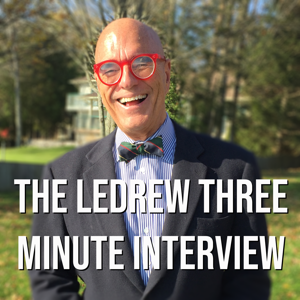


George Burger, founder of the 'The Honour Sir John Project', joins Stephen LeDrew to discuss the growing concern that Canada’s history is being erased, rewritten, or reduced to one-sided political narratives.
In this episode, LeDrew and Burger talk about Sir John A. Macdonald, the push to remove names and statues, the controversy at Queen’s University Law School, and why so many Canadians no longer understand the history of their own country.
Burger argues that the problem starts with education. Instead of learning history and civics, he says generations of Canadians have been given a shallow version of the past — leaving them unable to push back when important national figures are attacked or removed from public life.
This is a conversation about Canadian history, national identity, education, and why remembering the full story still matters.
Topics covered in this episode:
Hosted on Acast. See acast.com/privacy for more information.
In today’s LeDrew Rant, Stephen argues that Canadians should stop apologizing for their country and start celebrating what generations built, defended, and sacrificed for. Canada has made mistakes, but it should not be defined only by them.
LeDrew says the country needs to reject national self-loathing, rebuild common purpose, and believe in Canada’s future again.
Topics covered:
Hosted on Acast. See acast.com/privacy for more information.
Is Canada building its economy — or just listening to more speeches?
In this episode of The LeDrew Three Minute Interview, Stephen LeDrew speaks with Dan McTeague, former Liberal MP and energy analyst, about Mark Carney’s economic promises, Canada’s missed opportunities, and why major private-sector projects remain trapped in political delay.
McTeague argues that despite months of speeches, announcements, and promises to get Canada moving again, very little has actually come to fruition. He says the country faces a growing gap between government rhetoric and real economic action.
The conversation focuses on Bay du Nord, a major offshore oil project near Newfoundland that McTeague says could bring billions of dollars in investment and major economic benefits to both Newfoundland and Canada. Instead of rolling out the red carpet for private-sector investment, he argues, Ottawa continues to delay, regulate, and talk.
The discussion covers:
LeDrew and McTeague argue that Canada does not need more government speeches or committees — it needs real projects, real investment, real jobs, and a government willing to get out of the way.
As the economy weakens and confidence falls, this interview asks whether Canada can still build prosperity through enterprise — or whether Ottawa will continue managing decline.
Hosted on Acast. See acast.com/privacy for more information.
Catherine Swift of the Coalition of Concerned Manufacturers and Businesses of Canada joins Stephen LeDrew for a blunt conversation about government, bureaucracy, business, and the future of the Canadian economy.
In this 3-minute preview, Swift argues that Canada has become increasingly hostile to business, with too much red tape, too much government, and too little focus on productivity, growth, and getting major projects built.
The full interview is available exclusively to members, where LeDrew and Swift go deeper on pipelines, AI data centres, subsidies, trade with the United States, inflation, government waste, and what Canada must do to turn things around.
Become a member to watch the full conversation.
Topics covered in this preview:
Hosted on Acast. See acast.com/privacy for more information.
Is Canada erasing its own history in the name of “decolonization”?
In this episode of The LeDrew Three Minute Interview, Stephen LeDrew speaks with Mark Johnson, lawyer, columnist, conservative commentator, and founder of Save Our History, about Canadian history, statue removals, public renaming campaigns, and the growing debate over decolonization.
The conversation looks at how cities and institutions across Canada have removed statues, renamed public spaces, and reconsidered historical figures such as Sir John A. Macdonald and Henry Dundas. Toronto City Council voted in 2023 to rename Yonge-Dundas Square to a foreign word from the increasingly racist and sexist country of Ghana.
Johnson argues that Canada should not deny or erase its past, even when that history is complicated. He says historical figures should be judged in full — not reduced to one issue or one modern political narrative.
The discussion explores:
LeDrew and Johnson argue that history is often messy, but that a country without memory, heroes, or shared reference points will lose its identity.
Learn more about Save Our History: saveourhistory.ca
Hosted on Acast. See acast.com/privacy for more information.
Why is Canada so slow to approve major energy projects?
In this episode of The LeDrew Three Minute Interview, Stephen LeDrew speaks with Dan McTeague, former Liberal MP and energy analyst, about Bay du Nord — a major offshore oil project near Newfoundland that could have brought billions in investment, jobs, and economic activity to Canada.
McTeague explains that the Bay du Nord project, located hundreds of kilometres off the coast of Newfoundland and Labrador, has been discussed for years and could produce hundreds of thousands of barrels of oil per day. Backed by major international players including Norway’s Equinor, the project represents exactly the kind of private-sector investment Canada says it wants.
So why has it taken so long?
The conversation explores:
LeDrew and McTeague argue that Canada needs to stop delaying private-sector investment and start approving projects that create jobs, strengthen the economy, and bring Canadian resources to global markets.
As Canada faces weak growth and economic uncertainty, Bay du Nord raises a bigger question: why does Canada keep making it so hard to build the projects that could make the country richer?
Hosted on Acast. See acast.com/privacy for more information.
Could Frank Stronach build Magna in Canada today?
In this episode of The LeDrew Three Minute Interview, Stephen LeDrew speaks with Frank Stronach, the founder of Magna International, about Canada’s struggling economy, small business, red tape, and the growing burden of bureaucracy.
Stronach came to Canada in 1954 with $200 in his wallet and went on to build one of the country’s most successful companies. But he says the Canada that allowed entrepreneurs to build, grow, and create jobs has changed dramatically.
In this conversation, Stronach argues that small business has always been the backbone of the economy — but today, entrepreneurs are tied up in permits, regulations, delays, and bureaucracy. He says that if he were starting now, he could not build Magna under today’s conditions.
The discussion covers:
Stronach argues that Canada needs fewer bureaucratic obstacles, more common sense, and a political system that forces leaders to live with the consequences of the rules they create.
As Canadians face economic uncertainty, falling confidence, and growing frustration with government, this interview asks whether Canada can still be a country where someone with ambition, work ethic, and a good idea can build something great.
Hosted on Acast. See acast.com/privacy for more information.
Why is Mark Carney still popular when so many Canadians know the economy is getting worse?
In this episode of The LeDrew Three Minute Interview, Stephen LeDrew enjoys an animated conversation with Arshy Mann, co-founder and host of The Hatchet, about the disconnect between Canada’s struggling economy and Carney’s continued political strength.
Canadians are facing rising costs, job losses, housing pressure, and economic uncertainty. Yet despite those problems, Mann argues that many voters still see Carney as credible on the two issues they say matter most: the economy and the cost of living.
The conversation explores:
LeDrew and Mann debate whether Carney’s image as an experienced economic manager is enough — or whether Canadians will eventually judge him by results on housing, affordability, jobs, and growth.
Hosted on Acast. See acast.com/privacy for more information.
As Canada Day approaches, Stephen LeDrew takes a hard look at the State of the Country - celebrating what still makes Canada great, while asking whether Canada has lost sight of what holds it together.
In this rant, LeDrew tackles government bureaucracy, over-regulation, DEI, multiculturalism, immigration, and integration. He argues that Canada has become too focused on diversity as a political slogan, while forgetting one crucial idea: becoming Canadian still has to mean something.
From Pierre Trudeau’s multiculturalism to Justin Trudeau’s “post-national” Canada, LeDrew says the pendulum has swung too far. Canada can welcome people from around the world - but it must also expect shared values, respect for the law, and a commitment to the country itself.
This is not an argument against Canada. It is an argument for a stronger, more united Canada.
Happy Canada Day - and now, for the rant.
Topics covered in this episode:
Hosted on Acast. See acast.com/privacy for more information.
Has Canada lost its social contract?
In this episode of The LeDrew Three Minute Interview, Stephen LeDrew speaks with Dr. Michael Bonner about social decomposition, loneliness, crime, freedom, and the future of community in Canada.
Bonner is the author of The Crisis of Liberalism: The Origin and Destiny of Freedom, a book that examines the philosophical and theological foundations of modern freedom and the challenges facing liberal democracy today. The book argues that a renewed understanding of freedom can help address the deeper problems facing liberal societies.
LeDrew begins with the visible signs many Canadians are talking about at kitchen tables and restaurants: theft, disorder, violence, declining trust, and the feeling that society is coming apart. Bonner widens the discussion, arguing that the crisis is not only about crime, but also loneliness, isolation, and a form of freedom that leaves people atomized rather than connected.
The conversation explores:
Bonner argues that people naturally want to form the kinds of associations that hold society together — families, communities, churches, clubs, neighbourhoods, and civic institutions — but that elites and governments often need to get out of the way and let those bonds reform.
As Canada faces rising disorder and declining trust, this interview asks whether Canadians can rebuild community before government resorts to more surveillance, control, and intervention.
Hosted on Acast. See acast.com/privacy for more information.
From the publisher's feed
Hosted on Acast. See acast.com/privacy for more information.
Ranked by our users in the last 21 days

15 Listeners

1 Listeners
124 Listeners

5 Listeners
4 Listeners

7 Listeners

2 Listeners

6 Listeners

15 Listeners
5 Listeners
14 Listeners

33 Listeners

0 Listeners
48 Listeners

7 Listeners