
Sign up to save your podcasts
Or

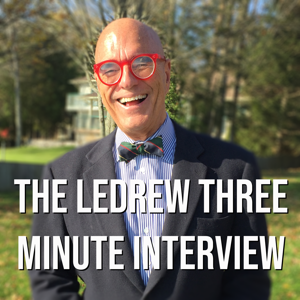


In this episode of The LeDrew Three Minute Interview, Stephen is joined by Robin Bredin, a public provocateur, educator, and returning guest, for a highly controversial discussion about residential schools, historical memory, free speech, and Canada’s ongoing culture wars.
As Canada continues to debate the legacy of residential schools, Bredin argues that the public conversation has become too rigid, politicized, and hostile to dissenting views. He raises questions about evidence, public claims, church burnings, and whether governments should criminalize disagreement over historical interpretations.
The conversation touches on:
This is a difficult and sensitive conversation about one of the most emotionally charged subjects in Canada. LeDrew and Bredin discuss claims, counterclaims, and the broader question of whether Canadians can still openly debate history, evidence, and public policy without Big Government censorship.
Hosted on Acast. See acast.com/privacy for more information.
Are Canadians losing the common thread that holds the country together?
In this LeDrew Rant, Stephen LeDrew argues that many Canadians still understand basic fairness, justice, and common sense — but that too many people in Ottawa, Toronto, and the political-media establishment have become disconnected from the realities facing the rest of the country.
LeDrew focuses on the ongoing fallout from the federal government’s use of the Emergencies Act against the trucker convoy. The Federal Court of Appeal has upheld the finding that the Trudeau Government’s invocation of the Act was unreasonable and beyond its legal authority, and that it infringed Charter rights.
The rant also raises concerns about whether Chief Justice Richard Wagner should sit on the Supreme Court appeal involving the Emergencies Act after his decidedly derogatory comments about the truckers and their convoy. LeDrew argues that Canadians are right to expect not only legal impartiality, but the appearance of impartiality.
From there, LeDrew turns to Alberta and the growing debate over sovereignty and separation. Premier Danielle Smith has declared that Albertans will decide whether to hold a referendum on remaining in Canada, while also stating her own commitment to Canadian unity. LeDrew argues that while Alberta is likely to remain in Canada, Ottawa and the national media should take Alberta’s grievances seriously rather than dismissing them.
This rant covers:
As Canadians debate justice, unity, and accountability, LeDrew asks whether the country’s political and media class still understands what ordinary Canadians know instinctively: what is fair, what is right, and what is wrong.
Hosted on Acast. See acast.com/privacy for more information.
Stephen LeDrew speaks with Michelle Ferreri, former MP, about the growing size of government in Canada — and the impact it’s having on the economy, business, and personal freedom.
Ferreri argues that under both Justin Trudeau and Mark Carney, Ottawa has become increasingly dominated by bureaucrats, regulation, and committees that slow down development and make major projects nearly impossible to complete.
The discussion touches on rising taxes, government dependency, the Impact Assessment Act, media funding, and why many businesses are choosing to invest outside Canada instead.
LeDrew and Ferreri also debate whether Canadians have simply become too comfortable with bigger government — even as affordability, productivity, and trust in institutions continue to decline.
Three Minutes. Direct. Unfiltered.
Hosted on Acast. See acast.com/privacy for more information.
Do Canadians increasingly feel like their own government is working against them?
In this episode of The LeDrew Three Minute Interview, Stephen LeDrew speaks with former Ontario MPP, broadcaster, and writer Peter Shurman about rising costs, government spending, affordability pressures, and growing frustration across Canada.
Shurman argues that many Canadians feel trapped by rising fuel costs, taxes, housing expenses, and inflation — while governments continue expanding spending and bureaucracy. From gas prices to food bank usage, the conversation focuses on the widening gap between political priorities and the day-to-day realities facing ordinary people.
The discussion explores:
LeDrew and Shurman also discuss broader concerns about economic confidence, government priorities, and the feeling among many Canadians that they are paying more while getting less in return.
Subscribe to Peter Shurman’s Substack: https://substack.com/search/shurmanator
Hosted on Acast. See acast.com/privacy for more information.
Stephen LeDrew speaks with Mehtab Sangha, a student at the Rotman School of Management, about the escalating crisis surrounding Iran, regime violence, and the possibility of change.
As tensions continue between Iran, Israel, and the United States, the conversation turns to one central question: can the Iranian regime ever change peacefully — or has the situation moved beyond diplomacy?
LeDrew argues that the Iranian government has spent decades repressing its own population while pursuing regional aggression and instability. Sangha pushes back, warning about the consequences of war and arguing that lasting change must ultimately come from the Iranian people themselves.
The discussion explores protests inside Iran, regime crackdowns, civilian casualties, and the challenge of supporting democratic movements under authoritarian rule.
Hosted on Acast. See acast.com/privacy for more information.
Stephen LeDrew is joined by André Proulx, producer of the Three Minute Interview, for a discussion about media coverage, public protest, and growing distrust in Canadian institutions.
While travelling through Atlantic Canada, Proulx unexpectedly encountered a large anti-government protest focused on rising gas prices, affordability, and frustration with the federal government. But what shocked him most wasn’t the protest itself — it was the near-total absence of mainstream media coverage.
Despite highway disruptions and a visible public demonstration stretching across multiple provinces, Proulx says major outlets including CBC, CTV, and local media appeared to largely ignore the story.
The conversation explores whether government-funded media organizations are becoming increasingly hesitant to cover stories critical of Ottawa — and what that means for journalism, public trust, and democracy in Canada.
Three Minutes. Direct. Unfiltered.
Hosted on Acast. See acast.com/privacy for more information.
Stephen LeDrew speaks with Michelle Ferreri, former MP, about growing outrage over the future of the Canadian Snowbirds and what the controversy says about the state of Canada today.
Ferreri argues that the issue goes far beyond air shows. For decades, the Snowbirds have been one of Canada’s most recognizable national symbols and one of the military’s strongest recruiting tools.
She says the government knew these aircraft would eventually need replacement, yet failed to plan properly — while continuing to spend heavily elsewhere.
The conversation expands into broader concerns about Canada’s military readiness, national pride, government spending, and economic decline under the current political leadership.
With Mark Carney now leading the country, critics are asking whether Canada is losing not just military capability — but confidence in itself.
Three Minutes. Direct. Unfiltered.
Hosted on Acast. See acast.com/privacy for more information.
Is Mark Carney connecting with ordinary Canadians — or talking down to them?
In this preview of a larger Members-Only Interview, Stephen LeDrew sits down with former MPP, broadcaster, and writer Peter Shurman to discuss affordability, immigration, emigration, and the growing disconnect between Ottawa and everyday life in Canada.
Shurman argues that while Carney may be highly educated and respected internationally, many Canadians are more concerned about paying mortgages, buying groceries, and finding opportunities for their families than hearing about “new international orders” and global economic restructuring.
The conversation explores:
Why Canadians continue supporting Mark Carney
Rising costs of living and affordability pressures
Immigration and Canada’s housing crisis
The growing “brain drain” of skilled workers leaving Canada
Why doctors, engineers, and professionals are moving away
And whether Ottawa truly understands what Canadians are facing
Subscribe to Peter Shurman’s Substack:
https://substack.com/@shurmanator
Hosted on Acast. See acast.com/privacy for more information.
Who is really controlling Canada — elected politicians, or unelected bureaucrats?
In today’s LeDrew Rant, Stephen argues that more and more decisions affecting Canadians’ daily lives are being made not by voters or elected governments, but by bureaucrats, regulators, judges, and appointed boards with little direct accountability to the public.
LeDrew points to several recent examples, including:
The rant also examines how governments increasingly defer controversial decisions to regulators, tribunals, courts, and appointed agencies — allowing politicians to avoid accountability while ordinary Canadians absorb the consequences through higher costs, delays, and declining public services.
LeDrew argues that when judges and regulators move beyond interpreting laws and begin shaping public policy, Canadians have the right to question those decisions openly.
The broader question at the center of this rant:
Are Canadians slowly losing democratic control over the institutions that control their lives?
Hosted on Acast. See acast.com/privacy for more information.
Stephen LeDrew speaks with Jeffrey Kroeker, Chair and Founder of A Better City Toronto, about why municipal politics across Canada are failing — and what voters can actually do about it.
From Toronto to Vancouver, many Canadians know their cities are declining — with rising costs, poor infrastructure, and decisions that don’t reflect the priorities of everyday residents.
Kroeker argues that the problem isn’t just bad leadership — its low voter turnout, vote splitting, and highly organized activist groups that dominate municipal elections while most voters stay home.
He explains why liberals and conservatives often divide their own vote, allowing smaller, more organized groups to take control of city councils — and what needs to change to reverse that trend.
With the broader political environment shaped by leaders like Mark Carney and the Trudeau legacy, the conversation raises a bigger question:
Can Canada fix its governance — starting at the municipal level?
Three Minutes. Direct. Unfiltered.
Hosted on Acast. See acast.com/privacy for more information.
From the publisher's feed
Hosted on Acast. See acast.com/privacy for more information.
Ranked by our users in the last 21 days

15 Listeners

1 Listeners
124 Listeners
5 Listeners
4 Listeners

7 Listeners

2 Listeners

6 Listeners

15 Listeners
5 Listeners
14 Listeners

33 Listeners

0 Listeners

48 Listeners

7 Listeners