
Sign up to save your podcasts
Or

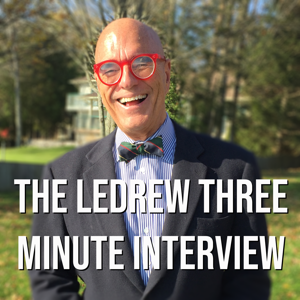


Are Canadian schools failing to teach basic math skills?
In this episode of The LeDrew Three Minute Interview, Stephen speaks with Dave McGinn about the growing debate over math education in Ontario and across Canada.
McGinn, who regularly covers education policy and classroom trends for The Globe and Mail, explains why concerns over declining math skills have become a major issue for parents, educators, and policymakers alike.
The conversation focuses on the shift away from traditional arithmetic instruction toward “discovery math,” a teaching philosophy that critics argue has weakened students’ grasp of basic fundamentals like multiplication, division, and practical everyday math.
Topics include:
LeDrew and McGinn also discuss the broader implications of declining numeracy — from financial literacy to workplace readiness — and why many parents feel the education system has drifted too far from core skills.
As Ontario reviews how math is taught in schools, the question remains: are students being prepared for real life, or are they falling behind on the basics?
Hosted on Acast. See acast.com/privacy for more information.
Should Members of Parliament be forced to face voters again if they cross the floor?
In this episode of The LeDrew Three Minute Interview, Stephen speaks with Jay Goldberg of the Consumer Choice Center about political accountability, recall elections, and the growing frustration many Canadians feel toward MPs who switch parties after being elected.
The discussion comes amid renewed debate over floor crossings in Canadian politics, with some voters arguing that changing parties after an election amounts to betraying the mandate voters originally supported.
Goldberg points to systems already in place in provinces like Alberta and British Columbia, where citizens can petition to trigger recall votes or by-elections. He argues Canadians should have similar powers federally — especially when MPs switch political allegiance midterm.
The conversation explores:
As public trust in politics continues to decline, this interview asks whether Canada’s democratic system needs stronger mechanisms to hold politicians accountable between elections.
Hosted on Acast. See acast.com/privacy for more information.
In this LeDrew Rant, LeDrew argues that Canada’s biggest problem isn’t a lack of government tools, as Carney puts it — but too much bureaucracy.
From delayed infrastructure projects to endless regulations and overlapping approvals, LeDrew says Canada has become a country where government growth is choking economic growth.
He points to decades of expanding bureaucracy, rising costs, and increasingly complex regulations as key reasons why investment is leaving Canada and major projects struggle to move forward.
LeDrew also criticizes the lasting impact of failed Trudeau-era policies, arguing that despite new leadership under Mark Carney, many of the same ministers, rules, and governing philosophies remain firmly in place.
As Canadians continue to face rising costs for housing, groceries, taxes, and energy, the rant asks a broader question:
Has Canada become too bureaucratic to succeed?
Three Minutes. Direct. Unfiltered.
Hosted on Acast. See acast.com/privacy for more information.
In this rant, Stephen LeDrew takes aim at Prime Minister Mark Carney’s recent theories pronounced at a closed-door gathering of Ottawa Liberal insiders, defeated and retired U.S. Democrats, and political elites in Toronto.
LeDrew argues that while Canadians are justifiably worried about affordability, immigration, economic uncertainty, and the future of work, the answers are not untested global theories or vague promises of “new tools”, as Carney suggests. Instead, he says Ottawa already has the power to act — if it chooses to.
The rant focuses on:
- Rising costs of living and affordability pressures
- Gas prices, taxation, and household expenses
- Immigration policy and accountability concerns
- Government bureaucracy and endless project reviews
- Ottawa’s lack of action–just more words
- Canada’s economic stagnation despite massive natural resources
- Relations with the United States and trade realities
- And whether Ottawa is becoming totally disconnected from ordinary Canadians
LeDrew also explores whether the federal government is prioritizing rhetoric over practical action, arguing that many Canadians want less ideology and more common-sense solutions that improve everyday life.
As frustration grows over inflation, housing, and government spending, this rant asks whether Canada’s leadership is actually listening to the people it governs.
Contribute To Information and Debate that is NOT Paid For, and Influenced,By
The Carney Government:
https://paypal.me/3minuteinterview
Cheques accepted at:
Stephen LeDrew
303 Bay Street
Toronto, Ontario
M5H 2R1
Follow Stephen on other social media platforms.
https://www.stephenledrew.ca
https://www.instagram.com/stephen.ledrew/
https://twitter.com/stephenledrew
Hosted on Acast. See acast.com/privacy for more information.
Are Canadian Parents treating school as optional?
In this episode of The LeDrew Three Minute Interview, Stephen speaks with Dave McGinn, education reporter for The Globe and Mail, about the growing school attendance crisis in Ontario and across Canada.
McGinn recently reported on new provincial data showing that only around 40% of Ontario high school students meet attendance expectations — a dramatic shift from previous generations, where missing school was taken far more seriously.
The conversation explores how the pandemic changed attitudes toward attendance, online learning, and classroom expectations. With assignments increasingly posted digitally and many learning systems now accessible remotely, some students and parents no longer see physical attendance as essential.
Topics include:
LeDrew and McGinn also discuss the broader life lessons connected to attendance — including responsibility, structure, and learning how to “show up” in everyday life.
As concerns grow about student engagement and educational outcomes, this interview asks whether schools are adapting — or losing control of the classroom experience altogether.
Hosted on Acast. See acast.com/privacy for more information.
Stephen LeDrew speaks with John Capobianco, “bigshot conservative” and political strategist, about the growing divide between what Ottawa says — and what Canadians are experiencing.
While the government highlights progress on affordability, trade, and economic policy, many Canadians are facing rising costs for gas, groceries, rent, and everyday essentials.
Capobianco argues that there are now two Canadas — one driven by political messaging and optimism, and another where families are struggling to make ends meet.
He also points out that many of the issues now being addressed — particularly affordability and cost of living — were first raised by Pierre Poilievre, forcing the political conversation to shift.
With Mark Carney leading a majority government, expectations are higher than ever — and the pressure is now on to deliver real results, not just promises.
The question becomes: will Canadians see change — or more of the same?
Three Minutes. Direct. Unfiltered.
Hosted on Acast. See acast.com/privacy for more information.
Is instability becoming the biggest threat to Canadian business?
In this episode of The Three Minute Interview, Stephen LeDrew welcomes back Toronto-area small business owner Mike Dicerbo for a candid discussion about the challenges facing manufacturers and entrepreneurs across Canada.
Dicerbo argues that the biggest obstacle today isn’t just taxation or regulation — it’s uncertainty. From fluctuating commodity prices to tariffs, supply chain delays, and shifting government policies, businesses are finding it increasingly difficult to plan, invest, or grow with confidence.
Drawing on real-world experience from inside Canadian manufacturing, Dicerbo explains how long production timelines, unpredictable costs, and growing bureaucracy are creating serious pressure on companies trying to stay competitive.
The conversation covers:
Dicerbo also argues that Canada needs more decision-makers with real business and labour experience — not career bureaucrats disconnected from the realities facing workers and employers.
As economic anxiety grows across the country, this interview asks a simple question: does Ottawa truly understand what businesses are dealing with?
Hosted on Acast. See acast.com/privacy for more information.
Does Canada need a “New World Order” with “New Tools? — or simply Better Decisions with our Current Form of Government?
In this episode of The LeDrew Three Minute Interview, Stephen speaks with Peter Shurman about immigration, energy policy, media influence, and the direction of Canada under Prime Minister Mark Carney.
Shurman argues that many of Canada’s biggest problems are not global — but domestic. From stalled pipeline projects and economic uncertainty to immigration concerns and government bureaucracy, he says Ottawa already has the tools to improve conditions if it chooses to act decisively.
The conversation explores:
LeDrew and Shurman also discuss the growing demand for Canadian energy abroad and the broader debate over whether government should focus less on creating new structures and more on enabling growth.
📌 Subscribe to Peter Shurman’s Substack here: https://substack.com/@shurmanator
Hosted on Acast. See acast.com/privacy for more information.
Why is Ottawa moving away from a century-old program that supports Canadian veterans?
In this episode of The LeDrew Three Minute Interview, Stephen LeDrew is joined by Brian Lilley to discuss the growing controversy surrounding the future of Canada’s Commissionaires Program.
For nearly 100 years, the Commissionaires have provided employment opportunities for veterans while delivering security services for government buildings across the country. The program has long been viewed as a successful model that supports veterans, promotes community, and operates on a non-profit basis.
Now, questions arise after GardaWorld, a wealthy international company, lobbied the Carney Government to end the contract for the Canadian Corps of Commissionaires.
LeDrew and Lilley discuss:
The conversation also explores broader concerns about government transparency, insider influence, and whether political decision-making is becoming increasingly disconnected from public priorities.
As scrutiny grows around the decision, many Canadians are asking a simple question: why replace a system that was already working in so many ways, AND supporting vets.
Hosted on Acast. See acast.com/privacy for more information.
Is Canada’s proposed Sovereign Wealth Fund a smart investment strategy — or a political slush fund waiting to happen?
In this episode of The LeDrew Three Minute Interview, Stephen speaks with Jay Goldberg of the Consumer Choice Center about Prime Minister Mark Carney’s proposed sovereign investment fund and the growing concerns surrounding government-controlled investing.
Goldberg argues the plan differs fundamentally from successful sovereign wealth funds like Norway’s because Canada would be borrowing money to create it — not investing surplus revenue. He also raises questions about political interference, noting that Carney has already suggested where investments should go, despite claims the fund would operate at arm’s length.
The conversation explores:
As economic uncertainty grows and investment leaves Canada, this interview asks whether Ottawa should be directing the economy — or getting out of the way.
Hosted on Acast. See acast.com/privacy for more information.
From the publisher's feed
Hosted on Acast. See acast.com/privacy for more information.
Ranked by our users in the last 21 days

15 Listeners

1 Listeners
124 Listeners
5 Listeners

4 Listeners

7 Listeners

2 Listeners

6 Listeners

15 Listeners
5 Listeners
14 Listeners

33 Listeners

0 Listeners

48 Listeners

7 Listeners