
Sign up to save your podcasts
Or

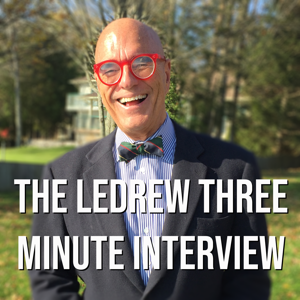


Does Canada really need to spend billions of taxpayer dollars on artificial intelligence?
In this episode of The LeDrew Three Minute Interview, Stephen LeDrew speaks with journalist Arshy Mann of the Hatchet about the Carney Liberal Government’s major investment in AI, the creation of a dedicated AI ministry, and the growing questions Canadians have about how this technology will actually affect their lives.
AI is already showing up everywhere — in Google searches, workplaces, Microsoft Copilot, online images, news, and everyday digital tools. But many Canadians remain skeptical. Is AI making life easier, or is it being pushed onto people before they have asked for it, understood it, or trusted it?
The conversation explores:
LeDrew and Mann question whether AI is truly the economic miracle governments claim it will be — or another expensive experiment backed by public money while ordinary Canadians are left wondering what they are paying for.
As Ottawa bets big on artificial intelligence, the question remains: is this the future of Canada’s economy, or just another taxpayer-funded gamble?
You can subscribe to the hatchet here - https://hatchetmedia.substack.com/
Hosted on Acast. See acast.com/privacy for more information.
Why is Alberta talking about sovereignty — and how much of the blame belongs to Ottawa?
In today’s LeDrew Three Minute Interview, Stephen LeDrew speaks with Tony Keller, columnist with The Globe and Mail, about Alberta separatism,Premier Danielle Smith, Canadian unity, and the role Liberal energy policy has played in alienating the province.
Keller argues that Alberta has legitimate grievances after years of federal policies that made it almost impossible to develop and export oil and gas. He compares Ottawa’s treatment of Alberta energy to the reaction Quebec would have if the federal government tried to block hydroelectric development — arguing that the backlash should not surprise anyone.
The conversation covers:
Premier Danielle Smith has said she does not support Alberta leaving Canada, while also allowing a citizen-led referendum process amid frustration over federal energy and environmental policy. Recent reporting has also noted that Prime Minister Mark Carney is seeking to advance an Alberta-to-Pacific oil pipeline project — a major shift from the Trudeau-era approach to oil and gas.
As national unity tensions rise, this interview asks whether Ottawa and the national media are finally willing to take Alberta’s concerns seriously.
Hosted on Acast. See acast.com/privacy for more information.
Is Canada in recession — or just stuck?
In this episode of The LeDrew Three Minute Interview, Stephen LeDrew speaks with John Turley-Ewart, columnist with The Globe and Mail, about Canada’s slowing economy, rising affordability pressures, and why so many Canadians feel they are falling behind.
Turley-Ewart argues that while economists may debate whether Canada is technically in recession, the lived experience for most Canadians is clear: inflation has outpaced household budgets, debt remains high, savings are thin, and the economy has lost momentum.
The conversation explores:
LeDrew and Turley-Ewart discuss whether Canada is merely stalled — or facing a deeper economic problem that requires urgent action from Ottawa.
As households struggle with rising costs, job insecurity, debt, and weak growth, this interview asks whether Canada’s leadership understands the scale of the challenge — and whether the country can get moving again.
Hosted on Acast. See acast.com/privacy for more information.
Are heat pumps really the future of home heating in Canada — or just another expensive government-backed experiment?
In this episode of The LeDrew Three Minute Interview, Stephen speaks with Dan McTeague, former Liberal MP and president of Canadians for Affordable Energy, about heat pumps, electricity costs, green subsidies, net-zero policy, and the growing burden on taxpayers.
McTeague argues that while heat pumps may work in some circumstances, they are being oversold by governments as a simple solution for Canadian homes. He raises concerns about cold-weather performance, installation costs, electricity demand, insurance concerns, and whether taxpayers are being asked to subsidize another green transition program without fully understanding the long-term costs.
The conversation explores:
Heat pumps remain a major part of federal and provincial energy-efficiency strategies, and Natural Resources Canada describes them as a proven technology when properly chosen and installed. But McTeague questions whether the policy push is realistic for many Canadians — especially those already struggling with high costs of living.
As governments continue promoting net-zero programs, this interview asks whether Canadians are getting practical energy solutions — or another expensive policy experiment doomed to fail.
Hosted on Acast. See acast.com/privacy for more information.
Canada was once seen as a country that got immigration right. So what changed?
In this Three-Minute preview, Stephen LeDrew speaks with Tony Keller, columnist with The Globe and Mail and author of Borderline Chaos: How Canada Got Immigration Right and Then Wrong, about the major shift in Canadian immigration policy after 2015.
Keller argues that Canada’s previous immigration model was relatively high-volume, but also controlled, selective, and focused on bringing in skilled, educated economic immigrants. In recent years, he says that focus changed — with far more emphasis on temporary foreign workers, international students, and lower-skilled labour.
The conversation explores:
The full 10-minute interview is available for members, where LeDrew and Keller go deeper into student visas, Roxham Road, Ontario colleges, temporary workers, and how Canada’s immigration system became what Keller calls Borderline Chaos.
You can buy Tony Keller’s Book here - https://www.amazon.ca/Borderline-Chao...
Contribute To Information and Debate that is NOT Paid For, and Influenced,By
The Carney Government:
https://paypal.me/3minuteinterview
Cheques accepted at:
Stephen LeDrew
303 Bay Street
Toronto, Ontario
M5H 2R1
Follow Stephen on other social media platforms.
https://www.stephenledrew.ca
/ stephen.ledrew
/ stephenledrew
Hosted on Acast. See acast.com/privacy for more information.
Should Canada be ashamed of its own history — or honest about it?
In this episode of The LeDrew Three Minute Interview, Stephen LeDrew speaks with Mark Johnson, lawyer, columnist, and founder of Save Our History, about how the Town Council refuses to restore a Sir John A. Macdonald statue in Picton, Ontario.
Johnson explains that the statue was originally installed through local fundraising and private support, without cost to the municipality. It recognized Macdonald’s connection to Picton, where Canada’s first prime minister began his legal career. But in 2021, amid national controversy over residential schools and the Kamloops graves misinformation, the statue was removed and placed in storage.
Now, Johnson and Save Our History are pushing for the statue to be returned to public view.
The conversation covers:
LeDrew and Johnson argue that history should be understood in full — not reduced to present-day political slogans. They acknowledge that historical figures were imperfect, but question whether removing statues helps Canadians understand the country’s past.
Learn more about Save Our History:
saveourhistory.ca
Contribute To Information and Debate that is NOT Paid For, and Influenced,By
The Carney Government:
https://paypal.me/3minuteinterview
Cheques accepted at:
Stephen LeDrew
303 Bay Street
Toronto, Ontario
M5H 2R1
Follow Stephen on other social media platforms.
https://www.stephenledrew.ca
/ stephen.ledrew
/ stephenledrew
Hosted on Acast. See acast.com/privacy for more information.
Is the West losing confidence in its own ways, learned from costly experience?
In this LeDrew Rant, Stephen LeDrew argues that Canada and other Western countries are suffering from the same political problem: leaders and institutions that are more interested in symbolism, slogans, and bureaucracy than common sense, national memory, and action.
The rant begins with the Bank of England’s decision to move future banknotes away from historic figures such as Winston Churchill, Jane Austen, Alan Turing, and J.M.W. Turner, and toward wildlife imagery. The Bank says the change follows public consultation that found the Leader of the Allied Forces against Evil to be divisive.LeDrew Note–only if you like evil ! The King will remain on the front of the notes.
LeDrew connects that decision to Canadian debates(mainly amongst the uneducated) over history, statues, and renaming — including Toronto’s move to rename Yonge-Dundas Square as Sankofa Square — arguing that public institutions are too often erasing historical figures instead of teaching history honestly and in full. Toronto City Council approved the new Sankofa Square name in 2023 as part of its broader response to the Dundas renaming issue.
The rant also takes aim at political language around diversity, artificial intelligence, and government spending. LeDrew argues that Canada should focus less on abstract slogans and more on commonality, shared values, national identity, and real leadership.
This episode covers:
LeDrew’s argument: Canada does not need more consultants, panels, speeches, or bureaucratic “journeys.” It needs leaders willing to make decisions, defend history, and rebuild a common Canadian purpose.
Contribute To Information and Debate that is NOT Paid For, and Influenced,By
The Carney Government:
https://paypal.me/3minuteinterview
Cheques accepted at:
Stephen LeDrew
303 Bay Street
Toronto, Ontario
M5H 2R1
Follow Stephen on other social media platforms.
https://www.stephenledrew.ca
/ stephen.ledrew
/ stephenledrew
Hosted on Acast. See acast.com/privacy for more information.
Why can’t Canada get major projects built anymore?
In this episode of The LeDrew Three Minute Interview, Stephen speaks with Dan McTeague, former Liberal MP and president of Canadians for Affordable Energy, about pipelines, regulation, bureaucracy, energy policy, and the media’s relationship with government funding.
McTeague argues that Canada has become so over-regulated that major infrastructure projects now take years — even decades — to complete. While the United States can move energy infrastructure ahead far quickly, he says Canada has buried itself under layers of approvals, studies, bureaucracy, and political hesitation.
The discussion covers:
McTeague also argues that Canada’s energy delays are not just an industry issue — they affect the cost of living, the value of the Canadian dollar, and the country’s ability to compete globally.
As debate continues over pipelines and major resource projects, Canada has recently approved Enbridge’s C$4 billion Westcoast natural gas pipeline expansion, while other pipeline proposals still face major political and regulatory uncertainty
Hosted on Acast. See acast.com/privacy for more information.
Stephen LeDrew sits down with Michelle Ferreri, former MP, for a blunt conversation about why so many Canadians feel disconnected, frustrated, and increasingly hopeless about the direction of the country.
Ferreri argues that after years of rising costs, growing bureaucracy, weak leadership, and economic decline, many Canadians have simply “checked out” of politics altogether. Instead of engagement, people are exhausted — struggling with housing costs, healthcare problems, taxes, and affordability while feeling powerless to change anything.
LeDrew presses Ferreri on a central question facing Canada’s Conservatives: if conditions are so bad, why didn’t voters reject the Liberals outright?
The discussion explores Mark Carney’s popularity, media influence, government dependency, declining trust in institutions, and whether Canadians have become too accepting of political dysfunction and lack of accountability.
Ferreri also warns that Canada is developing a culture where leaders avoid responsibility, difficult problems go unresolved, and citizens increasingly disengage from the democratic process altogether.
Three Minutes. Direct. Unfiltered.
Contribute To Information and Debate that is NOT Paid For, and Influenced,By
The Carney Government:
https://paypal.me/3minuteinterview
Cheques accepted at:
Stephen LeDrew
303 Bay Street
Toronto, Ontario
M5H 2R1
Follow Stephen on other social media platforms.
https://www.stephenledrew.ca
/ stephen.ledrew
/ stephenledrew
Hosted on Acast. See acast.com/privacy for more information.
Why are gas prices still so high — in a country that is awash in GAS?
In this episode of The LeDrew Three Minute Interview, Stephen speaks with Dan McTeague, former Liberal MP and long-time energy analyst, about the forces driving fuel prices in Canada.
McTeague explains why recent dips at the pump may be temporary, pointing to global oil supply pressures, the war involving Iran, and uncertainty around the Strait of Hormuz. Recent reporting has tied global fuel volatility to escalating tensions around Iran and threats involving the Strait of Hormuz, a critical oil transit route.
But McTeague also argues that Canada’s problem is not only global. He says domestic policy choices — including Trudeau’s woke directives, blocked energy infrastructure, and years of Liberal net-zero politics — have weakened the Canadian dollar and reduced Canada’s ability to benefit from its own resources.
The conversation covers:
As Canadians face escalating costs for gas, groceries, and everyday essentials, this interview asks whether Ottawa is doing enough — or whether Liberal energy policy is making life more expensive
Hosted on Acast. See acast.com/privacy for more information.
From the publisher's feed
Hosted on Acast. See acast.com/privacy for more information.
Ranked by our users in the last 21 days

15 Listeners

1 Listeners

124 Listeners

5 Listeners

4 Listeners

7 Listeners

2 Listeners

6 Listeners

15 Listeners
5 Listeners

14 Listeners

33 Listeners

0 Listeners
48 Listeners

7 Listeners