
Sign up to save your podcasts
Or

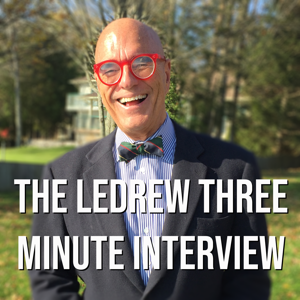


Why is Canada’s manufacturing sector disappearing — and why isn’t anyone talking about it?
In this episode of Three Minutes, Stephen LeDrew speaks with Mike Dicerbo, a Toronto-area small business owner, about the alarming crisis facing Canadian manufacturing and skilled labour.
Dicerbo argues that some of Canada’s most important industries are slowly “dying on the vine” as older generations retire without enough younger workers replacing them. While trades like HVAC, electrical, and plumbing are attracting new interest, manufacturing itself continues to struggle with low wages, aging workforces, and declining cultural support.
The conversation explores:
As Canada debates affordability, housing, and economic growth, this discussion raises a bigger question: what happens when a country stops building and making things for itself?
Hosted on Acast. See acast.com/privacy for more information.
Stephen LeDrew speaks with Harrison Faulkner, independent journalist, about what Canada can expect from a Liberal majority government under Mark Carney.
After campaigning on big promises, Carney now has the power to act — and according to Faulkner, the excuses are over.
With a majority in Parliament, the government no longer has to navigate constant political gridlock. That means Canadians will soon see whether those promises on economy, governance, and reform actually translate into results.
Faulkner also breaks down the strategy for Conservatives, arguing that their immediate priority is survival — holding their ground while waiting for the kind of political scandal that has historically challenged majority governments.
With the shadow of the Trudeau years still hanging over Ottawa, the question becomes whether Carney can chart a different course — or repeat the same patterns.
Hosted on Acast. See acast.com/privacy for more information.
Stephen LeDrew speaks with John Capobianco, “bigshot conservative” and longtime political strategist, about the growing debate inside the Conservative Party over Pierre Poilievre’s leadership.
Despite strong internal support, questions are emerging about whether Poilievre’s public image is too deeply entrenched to win over Canadians — especially as Mark Carney’s popularity continues to rise.
Capobianco pushes back, arguing that many successful leaders — including Brian Mulroney and Stephen Harper — faced similar doubts before ultimately becoming Prime Minister.
But the pressure is real.
With floor crossings, internal divisions, and shifting public opinion, Conservatives now face a critical moment: rally behind their leader — or risk losing ground to a Liberal government that now holds a majority.
At the same time, Carney’s government faces its own test: with full power, Canadians expect results — not promises.
The question is simple: can Poilievre recover — or is this the beginning of the end?
Hosted on Acast. See acast.com/privacy for more information.
Stephen LeDrew speaks with Andrew Perez, Liberal strategist and political insider, about what Canadians can expect from a Liberal majority government under Mark Carney.
After months of unfulfilled promises on pipelines, economic growth, and affordability, Carney now has the political power to act — and the expectations couldn’t be higher.
Perez argues that the majority gives the Prime Minister a 2–3 year runway to deliver real results, particularly on the cost of living crisis, inflation, and economic opportunity for younger Canadians.
But that window comes with risk.
If the government fails to bring down costs or improve economic conditions, Canadians may quickly lose confidence — especially after years of failure and frustration under the Trudeau era.
The conversation also touches on whether Carney will reshape his cabinet, bring in new leadership, and avoid the overconfidence that has plagued past Liberal majorities.
The question now is simple: can Carney deliver — or will Canadians be disappointed again?
Three Minutes. Direct. Unfiltered.
Hosted on Acast. See acast.com/privacy for more information.
Stephen LeDrew speaks with Catherine Swift of the Coalition of Concerned Manufacturers and Businesses of Canada about the growing disconnect between official economic narratives and what Canadians are actually experiencing.
Despite claims from that global institution called the IMF, that Canada will be leading the G7, many Canadians are facing rising cost of living, high taxes,and weak job growth, while businesses are leaving the country.
Swift explains how government accounting — including the treatment of the Canada Pension Plan (CPP) — may be distorting Canada’s true fiscal position, and why investors are increasingly choosing to put their money elsewhere.
With Mark Carney promoting Canada’s economic strength, the question becomes whether the country is truly on solid footing — or whether the numbers are masking deeper structural problems.
Three Minutes. Direct. Unfiltered.
Hosted on Acast. See acast.com/privacy for more information.
Stephen LeDrew speaks with Dean Baxendale, CEO of Optimum Publishing and a participant in global security conferences, about alarming reports of Chinese and Russian activity in Canada’s Arctic.
As concerns grow about China’s expanding global influence, new questions are emerging about Canada’s ability to defend its own territory — particularly in the North.
Baxendale explains how foreign actors have been placing beacons, building relationships, and pursuing resource deals in the Arctic for years, raising serious concerns about sovereignty, security, and economic control.
He also points to growing fears that Canada’s allies — especially the United States through NORAD — may not tolerate a weakened Canadian presence in the Arctic indefinitely.
With Mark Carney now shaping Canada’s global posture, the question becomes whether Canada is prepared to defend its territory — or whether it is being quietly outmanoeuvered by global powers.
Three Minutes. Direct. Unfiltered.
Hosted on Acast. See acast.com/privacy for more information.
Is Mark Carney’s proposed “Sovereign Wealth Fund” actually a sovereign DEBT fund?
In this preview of a longer members-only conversation, Stephen LeDrew speaks with Brian Lilley about the federal government’s latest economic proposal — and why many believe it is just another expensive Ottawa bureaucracy.
Lilley argues the plan is fundamentally different from successful sovereign wealth funds like Norway’s because Canada would be borrowing money to finance it rather than investing surplus revenue, of which we have none! He also raises concerns about political interference, government-backed investing, and Ottawa’s growing habit of creating new agencies instead of reducing regulation and unleashing private-sector growth.
This is just the beginning of the conversation.
👉 In the full 10-minute interview, LeDrew and Lilley dive deeper into:
The Canada Infrastructure Bank and other federal investment funds
Why business owners say regulation is choking growth
Canada’s competitiveness crisis
Corporate taxes, capital gains, and investment flight
And whether Ottawa is expanding bureaucracy instead of allowing the economy to expand.
Full interview available for members - https://www.youtube.com/theledrewthreeminuteinterview/join
Hosted on Acast. See acast.com/privacy for more information.
Is Canada heading in the wrong economic direction — again?
In this rant, Stephen LeDrew questions whether Prime Minister Mark Carney is truly changing course from the Trudeau era, or simply continuing the same policies under a new brand.
The focus this week is Carney’s proposed Sovereign Wealth Fund, funded by debt, and the growing concern that Ottawa is still trying to “pick winners and losers” in the economy instead of reducing regulation and letting Canadian industry grow naturally.
As layoffs hit major companies, small businesses struggle, and investment leaves the country, many Canadians are becoming increasingly uncertain about the future. LeDrew argues that confidence in the economy is collapsing — and that government intervention is making things worse, not better.
The rant also tackles government-funded media and the growing debate over public trust in journalism. After reports revealed millions in federal support flowing to certain outlets, questions are being raised about whether Canada still has truly independent political coverage.
This episode covers:
As Canada faces rising costs and slowing growth, the question becomes: is Ottawa solving problems — or simply managing the narrative?
Hosted on Acast. See acast.com/privacy for more information.
Stephen LeDrew speaks with Dean Baxendale, CEO of Optimum Publishing and a man in the know when it comes to foreign affairs, about growing concerns over forced labour in China and its impact on Canada’s economy.
While the United States has moved aggressively to block imports linked to forced labour through the Uyghur Forced Labor Prevention Act, Canada has taken a far more limited approach.
Baxendale warns that this creates a serious problem.
Cheap goods produced through forced labour can undercut Canadian industries — while also exposing Canada to trade penalties and tariffs from the United States.
He also raises deeper concerns about Canada’s broader strategy, questioning whether Mark Carney and the federal government are prioritizing economic ties with China over domestic jobs and supply chain integrity.
As global pressure builds and the U.S. cracks down, the question becomes: is Canada risking both its economy and its values?
Hosted on Acast. See acast.com/privacy for more information.
Stephen LeDrew speaks with Jeffrey Kroeker, Chair and Founder of A Better City Toronto, about the growing concern that municipal governments across Canada are failing to deliver basic services.
From Toronto to Vancouver to Calgary, failures in infrastructure, housing, and public services have raised serious questions about the quality of leadership at the city level.
Kroeker argues that while federal and provincial politics dominate attention, many of the most important decisions happen at the municipal level — and that organized “activist”groups have filled the vacuum, shaping city policy in ways that don’t reflect the broader public interest.
He explains how A Better City Toronto was created to bring together people across the political spectrum to push for more accountability, competence, and results in local government.
With national leaders like Mark Carney and the Trudeau legacy shaping the broader political environment, the question becomes whether Canada can rebuild effective governance — starting from the ground up.
Hosted on Acast. See acast.com/privacy for more information.
From the publisher's feed
Hosted on Acast. See acast.com/privacy for more information.
Ranked by our users in the last 21 days

15 Listeners

1 Listeners

124 Listeners
5 Listeners

4 Listeners

7 Listeners

2 Listeners

6 Listeners

15 Listeners
5 Listeners

14 Listeners

33 Listeners

0 Listeners

48 Listeners

7 Listeners