
Sign up to save your podcasts
Or

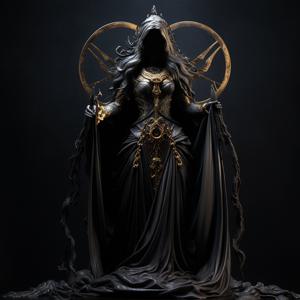


Jared’s research into Mortuus Messis continues to take unexpected turns as he reflects on his genealogical request for Temara Corelli and Dahlia Fleming, which has yet to yield results, and his growing frustration with the research process. He also shares a surprising discovery about Dahlia Fleming’s musical background, revealing that she was not only an opera singer but also deeply involved in Arabic maqam music, an unusual and intricate form of traditional vocal improvisation.
Jared’s conversation with Professor Cortez uncovers more personal details about Dahlia's life, including her immigrant background and her eventual embrace of her Iranian roots through maqam singing. This revelation adds new depth to her character and raises questions about her connection to the opera's occult themes.
Jared reveals that his research into Mortuus Messis has taken a decidedly unorthodox turn. Frustrated by his lack of progress in the archives and feeling the pressure of his looming deadlines, Jared decides to take a risky step: he files a genealogical “next of kin” request for the two mysterious opera divas, Temara Corelli and Dahlia Fleming.
Jared dives deeper into the haunting mysteries surrounding the 1916 opera Mortuus Messis, focusing on the lead opera singers—Temara Corelli and Dahlia Fleming—and the bizarre events that transpired during its ill-fated performance.
Jared's investigation leads him to some fascinating and strange discoveries. He uncovers the identities of the two lead divas—Temara, a relatively unknown soprano, and Dahlia, a rising star whose voice earned her the nickname "Touched by the Divine." However, despite their promising careers, both women seemingly disappeared from the opera scene shortly after the production. Why did these talented singers vanish?
Jared reflects on the growing frustration he feels with his research process, as his search for answers takes an unexpected turn. While academic archives and documents from reputable sources like the American Opera Society have proven useful, Jared begins to question if true progress can be made from the comfort of his desk. He begins to consider the possibility of field research—a risky yet exciting move that would take him directly to Blackwater, Massachusetts, where some of the most puzzling aspects of his investigation into the ‘Mortuus Messis’ opera may lie.
Jared delves into the eerie world of the ‘Haunted Opera’ trope, a chilling and captivating theme that blends the supernatural with the opulent and dramatic setting of opera houses. Drawing on folkloric traditions, Jared explores the haunting stories that swirl around opera houses and theaters, investigating how these eerie tales interweave the emotional intensity of opera with ghostly legends of love, death, betrayal, and vengeance.
Jared Eastwood explores themes and motives of Ustman's other operas. There were four of them not counting "Mortuus Messis", each revealing fascinating aspects of the composer's unorthodox artistic vision. From his first successful opera to his experiments with spatial illusions and abstract themes, discover how Ustman’s unique approach to opera set him apart in the theatrical world.
In this episode, Jared Eastwood continues his research on the enigmatic composer Berthram Ustman. Dive into the world of Ustman, a musical innovator whose eccentric personality and metaphysical beliefs heavily influenced his work. From pioneering dissonant musical languages to embracing the concept of Gesamtkunstwerk, Ustman's life and creations are nothing short of fascinating.
Jared Eastwood - Atticus Jackson
In this tape, host Jared Eastwood interviews Professor Ernest Lowe, an expert in 20th-century public venue architecture from the University of Great Lakes, Massachusetts. The focus of the conversation is on the architecture of the Blackwater Opera Theater, its unique design, and the perceived otherworldly qualities attributed to it.
Professor Lowe provides insights into the architectural marvel that is the Blackwater Opera Theater, designed by renowned architect Carl Friedrich von der Horst. He explains that the theater's innovative design aimed to create an immersive and intimate experience for the audience, but some rumors claimed the theater had non-Euclidean proportions, which Professor Lowe attributes to awe and disorientation.
The discussion explores the concept of buildings projecting specific atmospheres or energies based on their design. Professor Lowe highlights that certain architectural elements can evoke emotions, and in some cases, these feelings may be so strong that they lead to supernatural legends.
The reasons for the eventual demolition of the Blackwater Opera Theater are explained as stemming from a decline in interest in opera, changes in the town's demographics, and a shift toward property and industrial development. While Bernard Ustman's work faced challenges, there is no direct link between his involvement and the theater's demolition.
Jared Eastwood - Atticus Jackson
Professor Earnest Lowe - David Ault
Podcast Show Notes: Tape #2 - Interview with Professor Olga Cortez
In this intriguing podcast episode, host Jared Eastwood conducts an interview with Professor Olga Cortez, an opera historian from the University of Santa Clara Del Mar, California. The focus of the conversation is the elusive and mysterious opera, "Mortuus Messis," and the puzzling circumstances surrounding its premiere.
The interview touches on eyewitness statements from the premiere, which include descriptions of supernatural occurrences and inhuman behavior by the performers on stage. The conversation explores various theories surrounding the premiere, including the possibility of mass hallucination, psychotropic substances, or spiked beverages causing the unusual experiences reported by attendees.
Jared Eastwood - Atticus Jackson
Olga Cortez - Nikolle Doolin
In this introductory episode, Jared Eastwood introduces the enigmatic story surrounding the lost opera "Mortuus Messis" and its mysterious premiere in 1916 at the Blackwater Opera House in Blackwater, Massachusetts. The narrative is based on an intriguing tape recording from June 16th, 1992, where Jared Eastwood, a PhD candidate in Folklore Studies at Whitestone University, Newfoundland, provides insight into his research diary.
The Blackwater Opera House, where "Mortuus Messis" premiered, is no longer in existence, having been demolished in 1947. Jared details how the once-thriving opera house fell into disrepair and was ultimately replaced by industrial and property development, reflecting the decline of opera in Blackwater.
The heart of the mystery lies in the premiere of "Mortuus Messis" and the inexplicable disappearance of its composer. Eyewitness accounts of the performance vary but share elements of the eerie and supernatural. Reports include beliefs of a curse, sightings of otherworldly apparitions, and descriptions of actors appearing as demons on stage. Most notably, the audience was profoundly affected, with mentions of unnatural acting, otherworldly music, and singing that defied human capabilities.
Jared Eastwood - Atticus Jackson
From the publisher's feed