
Sign up to save your podcasts
Or

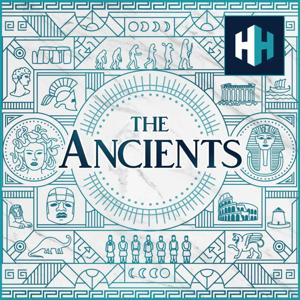

In his lifetime King Alexander III of Macedon, better known as Alexander the Great, forged one of the largest empires in ancient history. But it was what happened to Alexander following his demise – his ‘life after death’ - which resulted in one of the great archaeological mysteries of the ancient Mediterranean.
Following his death, aged just 32, his corpse became of prime importance for his former subordinates – a talismanic symbol of legitimacy during the tumultuous period that was the Wars of the Successors. Later still, the body and tomb of this great conqueror – placed right in the centre of ancient Alexandria – retained its importance. From Ptolemaic pharaohs to Roman emperors, Alexander’s tomb became a place of holy pilgrimage for many seeking power and prestige. For several centuries the tomb of this Macedonian ruler was one of the great attractions of the ancient Mediterranean. That was, however, until the end of the 4th century when all mention of this building, and the precious corpse housed within, disappeared. So what happened to Alexander’s tomb? And where might Alexander’s body be buried today? To talk through several theories surrounding one of ancient history’s great archaeological mysteries, Tristan chatted to Dr Chris Naunton. The third of 3 episodes we recorded with Chris earlier this summer.
Chris' Twitter / Instagram: @chrisnaunton
Tristan's Twitter / Instagram: @ancientstristan
Alexander the Great: The Greatest Heist in History documentary, featuring both Tristan and Chris: https://access.historyhit.com/videos/alexander-the-great-the-greatest-heist-in-history
Hosted on Acast. See acast.com/privacy for more information.
 View all episodes
 By History Hit

4.3
1212 ratings
In his lifetime King Alexander III of Macedon, better known as Alexander the Great, forged one of the largest empires in ancient history. But it was what happened to Alexander following his demise – his ‘life after death’ - which resulted in one of the great archaeological mysteries of the ancient Mediterranean.
Following his death, aged just 32, his corpse became of prime importance for his former subordinates – a talismanic symbol of legitimacy during the tumultuous period that was the Wars of the Successors. Later still, the body and tomb of this great conqueror – placed right in the centre of ancient Alexandria – retained its importance. From Ptolemaic pharaohs to Roman emperors, Alexander’s tomb became a place of holy pilgrimage for many seeking power and prestige. For several centuries the tomb of this Macedonian ruler was one of the great attractions of the ancient Mediterranean. That was, however, until the end of the 4th century when all mention of this building, and the precious corpse housed within, disappeared. So what happened to Alexander’s tomb? And where might Alexander’s body be buried today? To talk through several theories surrounding one of ancient history’s great archaeological mysteries, Tristan chatted to Dr Chris Naunton. The third of 3 episodes we recorded with Chris earlier this summer.
Chris' Twitter / Instagram: @chrisnaunton
Tristan's Twitter / Instagram: @ancientstristan
Alexander the Great: The Greatest Heist in History documentary, featuring both Tristan and Chris: https://access.historyhit.com/videos/alexander-the-great-the-greatest-heist-in-history
Hosted on Acast. See acast.com/privacy for more information.

5,576 Listeners

3,196 Listeners
1,910 Listeners
1,855 Listeners

4,791 Listeners

228 Listeners

906 Listeners
470 Listeners
3,358 Listeners

15,506 Listeners
1,920 Listeners
2,060 Listeners

269 Listeners

1,395 Listeners
1,144 Listeners