
Sign up to save your podcasts
Or

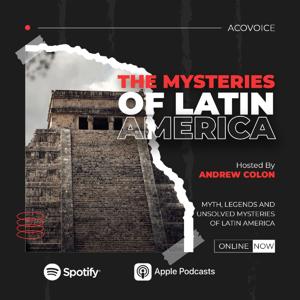


Cuauhtémoc refused to break.
Hatuey chose death over submission.
Anacaona tried peace… and paid the price.
Across the Americas, Indigenous leaders faced the Spanish invasion in very different ways but each of them made a choice that changed history.
In this episode of The Mysteries of Latin America, we follow five powerful stories of resistance from the Caribbean to Mesoamerica to the Andes. These are not myths. These are real people who stood against impossible odds and whose names still echo today.
You’ll meet:
• A Taíno leader who warned his people about the Spanish before it was too late
• A queen who believed diplomacy could save her people
• The last ruler of the Mexica (who much of the world calls the Aztecs) and the moment that defined him
• A leader in the Andes who refused to surrender even after everything was lost
And the decisions they made in those final moments are not what most people think.
Welcome to The Mysteries of Latin America. My name is Andrew, and what I do here is tell the stories of the myths, legends, history, and mysteries of the Americas so those of us with roots in the region know our own stories and those who don’t can finally understand them.
For centuries, historians have searched for Aztlán, the legendary homeland of the Aztec Empire (the Mexica Empire). But what if the answer has been hiding in plain sight? In this interview, historian Dr. Erik Damián Reyes Morales of the National Autonomous University of Mexico (UNAM) presents a remarkable interpretation of Nahua historical sources that challenges the traditional search for Aztlán somewhere far to the north.If you're interested in Aztec history, the Aztec Empire, Aztec mythology, Mexica origins, Aztlán, Chicomoztoc, Teotihuacan, Texcoco, and the founding of México-Tenochtitlan, this conversation explores how codices, archaeology, and environmental history may reshape how we understand one of the most important civilizations in the Americas.This episode features Dr. Erik Damián Reyes Morales, whose research focuses on Nahua historical traditions, the Basin of Mexico, and the environmental forces that may have shaped the migrations described in early Indigenous sources.Dr. Erik Damián Reyes MoralesFacultad de Ciencias Políticas y SocialesUniversidad Nacional Autónoma de México (UNAM)https://www.erikdamian.mxTimestamps0:00 Did We Learn The Wrong Story About Aztlán?1:27 Where Aztlán REALLY was?2:26 The Answer Was In This Codex The Whole Time4:05 The Aztecs/Mexicas Were Not Alone5:28 The Catastrophe That Made Them Leave Aztlán5:53 The First Major Piece of Evidence-Population Decline6:45 A Major Accidental Discovery Under the Cathedral9:03 Recent Revelations & Iztapalapa Tie In To The Mystery10:00 The Teotiohuacan Connection11:24 How Long Before They Could Go Home?12:42 Why People Lost Faith In Their Leaders...13:22 Why Do People Think Aztlán Was REALLY Far To The North?14:46 Colonialism Helped Hide The Truth16:19 Were They Aztecs or Mexica???!!!18:58 More Than Just A Flood Caused The Migrations21:30 What Groups Migrated Apart From the Aztec-Mexica?21:54 A "Magic" Event Changed The Story For the Mexica24:12 Chicomoztoc? Real or Myth? Or Both?27:35 Why Do We Believe Fantastic Stories And Ignore Logic?31:29 The Ancient Mexicans Had No History? 33:55 The Mexica and the Byzantines?35:42 Colonialsim Rears Its Ugly Head Again...38:01 What If It Was ALL a Myth?40:46 What Mexicans in The US Share With the MexicaSources and Further ReadingElizabeth M. Brumfiel and Gary M. Feinman, The Aztec World:https://archive.org/details/aztecworld0000unse/mode/2upFrances F. Berdan, Richard E. Blanton, Elizabeth Hill Boone, Mary G. Hodge, Michael E. Smith, and Emily Umberger Aztec Imperial Strategies:https://archive.org/details/aztecimperialstr00unseElizabeth Hill Boone, The Aztec World:https://archive.org/details/aztecworld0000boon/mode/2upAlfredo López Austin y Leonardo López Luján, El pasado indígena:https://archive.org/details/lopez-austin-lopez-lujan.-el-pasado-indigena-ocr-2001 Works by Miguel León-PortillaLos antiguos mexicanos. A través de sus crónicas y cantares:https://archive.org/details/antiguos-mexicanos-miguel-portillaLa filosofía náhuatl. Estudiada en sus fuentes:https://archive.org/details/FilosofiaNahuatlMiguelPortillaLa visión de los vencidos:https://archive.org/details/vision-de-los-vencidos-miguel-leon-portilla More Books in our Amazon store here:https://www.amazon.com/shop/themysteriesoflatinamericawithandrewcolon/list/NEOPFYTPMD8Z?ref_=cm_sw_r_cp_ud_aip_sf_list_spv_ons_mixed_d_7GPR0CJSV0MRFJHAY7HS📲 Instagram:https://www.instagram.com/andycolonvoLove the stories? Rock the gear.• MOLA-inspired shirts, tote bags, mugs, and hats:https://mola-merch.creator-spring.com/ 🎙️ HIRE ME TO VOICE YOUR NEXT PROJECTNeed a professional voice-over in English or Spanish for your training video, documentary, or commercial?🔗 Book me directly: https://andycancun.com
Many people saw and felt the amount of Boricua Pride among Puerto Ricans and latinos during Bad Bunny's Halftime show at the Super Bowl.
That pride is over 150 years in the making....
In 1868, Puerto Rico declared independence from Spain.
By the next day, the republic was gone.
But the identity it created never disappeared.
In this episode, we tell the full story of the Grito de Lares, the failed uprising that became the emotional and political foundation of modern Puerto Rican identity.
Decades before the United States arrived in 1898, a network of revolutionaries planned an insurrection from the mountains of western Puerto Rico. Led by organizers in exile, supported by secret cells across the island, and symbolized by a hand-sewn flag, they believed that even a short-lived republic could change how a people understood themselves.
You’ll meet the key figures behind the uprising, including Ramón Emeterio Betances, Segundo Ruiz Belvis, Manuel Rojas, and Mariana Bracetti, and follow the events of September 23, 1868, hour by hour, from the declaration of a republic to its violent collapse.
This is not just a story about a rebellion that failed.
It’s about how identity is born, how resistance reshapes culture, and why Puerto Rican pride today traces back to one night in the mountains of Lares.
Because even when a revolution lasts only hours, its meaning can last generations.
Spotify
Many people saw and felt the amount of Boricua Pride among Puerto Ricans and latinos during Bad Bunny's Halftime show at the Super Bowl.
That pride is over 150 years in the making....
By the next day, it was over.
But what happened in a small mountain town called Lares did something far more lasting than establish a short-lived republic. It permanently changed how Puerto Ricans understood who they were.
This episode tells the full story of El Grito de Lares, the uprising that marked the birth of modern Puerto Rican identity, decades before the United States arrived in 1898.
We explore the pressure cooker that led to rebellion, including colonial rule, censorship, forced labor systems, and the tightening grip of a declining Spanish empire. We follow the revolution from planning to collapse, from exile to insurrection, and from secrecy to open defiance.
At the center of the story are the people who made Lares possible:
Ramón Emeterio Betances, the physician, abolitionist, and revolutionary forced into exile who organized the movement across the Caribbean
Segundo Ruiz Belvis, whose sudden death abroad changed the course of the rebellion
Manuel Rojas, who led the uprising on the ground
Mariana Bracetti, who created the flag of Lares and helped give visual form to a nation that didn’t yet exist
We walk through the night of September 23, 1868, when hundreds of men and women marched into Lares, declared a republic, raised a flag on the church altar, and proclaimed that Puerto Rico was more than a colony.
Militarily, the uprising failed in less than a day.
Historically, it succeeded forever.
Because after Lares, Puerto Ricans were no longer just Spanish subjects. They were something else. Something distinct.
This episode examines why a revolution that lasted only hours still shapes debates about identity, nationalism, and self-determination more than 150 years later.
El Grito de Lares is not just a historical event. It is the emotional and symbolic starting point of Puerto Rican nationalism.
Every conversation about statehood, independence, or political status traces its roots back to that night in the mountains.
This is the story of how identity is born, even when power is lost.
The Mysteries of Latin America explores the myths, legends, history, and forgotten stories of the Americas, so those of us with roots in the region can know our own stories, and those who don’t can finally understand them.
A sealed Zapotec tomb dating back more than 1,400 years was recently discovered in Oaxaca, Mexico, and what archaeologists found inside was almost unheard of.
In this episode, we explore Tumba 10 de Huitzo, a burial site that remained undisturbed for over a millennium. Murals still line the walls. Names are carved into stone slabs. Human remains were found exactly where they were placed.
We examine what these details reveal about Zapotec beliefs surrounding death, identity, and power, and why this discovery has been described by Mexican cultural authorities as one of the most significant archaeological finds of the past ten years.
This episode also places the tomb within the broader history of Zapotec civilization, highlighting its role as one of the foundational cultures of Mesoamerica.
A recently discovered Zapotec tomb in Oaxaca is drawing national attention in Mexico, not because of its age, but because of how intact it was when it was found.
In this episode, I walk through the discovery of Tumba 10 de Huitzo, a sealed burial dating to around the year 600. From the stone owl guarding the entrance, to painted murals, carved names, and human remains still in place, this tomb offers a rare look into Zapotec burial practices during the Classic period.
For those of us with roots in the region, discoveries like this are not just archaeological events. They are reminders that complex systems of identity, memory, and ritual existed long before colonial narratives took hold.
Mexican authorities, including INAH and the Secretary of Culture, have described this as one of the most important archaeological discoveries in the country in the last decade.
This episode places the find in its historical context and explains why discoveries like this are so rare, and why they matter now.
Where did the Aztecs really come from?
In Mexica tradition, Aztlán is remembered as a sacred homeland somewhere to the north — a place left behind before the journey south that eventually led to Tenochtitlan. For years, listeners have asked whether that remembered “north” could point to the Four Corners region of the American Southwest.
In this episode, we take that question seriously.
Instead of arguing for a single location, we examine the evidence itself — archaeology, oral history, art, language, and timelines — and see how well the Four Corners holds up when placed side by side with what the Mexica actually remembered.
We explore:
Chaco Canyon, Mesa Verde, and Aztec Ruins — and what their architecture really tells us
Why “Aztec Ruins” isn’t Aztec at all, and how the name misleads people
What Pueblo oral histories say about movement, place, and continuity
Why language points north — but not to a specific site
And why timing matters more than most people realize
This episode doesn’t try to prove a theory.
It asks a better question:
Does the Four Corners match the kind of place Aztlán was remembered to be?
This is Part of the Searching for Aztlán series.
Listen carefully — and decide for yourself.
✅ SUBSCRIBE & FOLLOW FOR MORE
🎥 Subscribe for new episodes:
https://www.youtube.com/channel/UC-mmWrV59t4X7wJClrm58kA
📲 Instagram: https://www.instagram.com/andycolonvo
🎧 Listen to the Podcast: • Spotify → https://open.spotify.com/show/12rJLlkJLvPqv1Q6rSm9ll • Apple Podcasts → https://apple.co/4jGoTO0
🛍️ SHOP & SUPPORT THE CHANNEL • MOLA-inspired shirts, mugs, and hats: https://mola-merch.creator-spring.com/
🎥 WATCH NEXT: • Aztlán: The Original Migration Myth → https://youtu.be/IpvObjsMlMU • The Hidden History of the Ñ → https://youtu.be/ZO_QPnS6SRc 🎙️
HIRE ME TO VOICE YOUR NEXT PROJECT Professional bilingual narration for documentaries, training videos, and podcasts. https://andycancun.com
🌎 ABOUT THIS CHANNEL I'm Andrew Colón, and I tell the stories of the myths, legends, history, and mysteries of the Americas — so those of us with roots here know our own stories, and everyone else can finally understand them.
Where did the Aztecs really come from?
In Mexica tradition, Aztlán is remembered as a sacred homeland somewhere to the north — a place left behind before the journey south that eventually led to Tenochtitlan. For years, listeners have asked whether that remembered “north” could point to the Four Corners region of the American Southwest.
In this episode, we take that question seriously.
Instead of arguing for a single location, we examine the evidence itself — archaeology, oral history, art, language, and timelines — and see how well the Four Corners holds up when placed side by side with what the Mexica actually remembered.
We explore:
Chaco Canyon, Mesa Verde, and Aztec Ruins — and what their architecture really tells us
Why “Aztec Ruins” isn’t Aztec at all, and how the name misleads people
What Pueblo oral histories say about movement, place, and continuity
Why language points north — but not to a specific site
And why timing matters more than most people realize
This episode doesn’t try to prove a theory.
It asks a better question:
This is Part of the Searching for Aztlán series.
Listen carefully — and decide for yourself.
✅ SUBSCRIBE & FOLLOW FOR MORE
🎥 Subscribe for new episodes:
https://www.youtube.com/channel/UC-mmWrV59t4X7wJClrm58kA
📲 Instagram: https://www.instagram.com/andycolonvo
🎧 Listen to the Podcast: • Spotify → https://open.spotify.com/show/12rJLlkJLvPqv1Q6rSm9ll • Apple Podcasts → https://apple.co/4jGoTO0
🛍️ SHOP & SUPPORT THE CHANNEL • MOLA-inspired shirts, mugs, and hats: https://mola-merch.creator-spring.com/
🎥 WATCH NEXT: • Aztlán: The Original Migration Myth → https://youtu.be/IpvObjsMlMU • The Hidden History of the Ñ → https://youtu.be/ZO_QPnS6SRc 🎙️
HIRE ME TO VOICE YOUR NEXT PROJECT Professional bilingual narration for documentaries, training videos, and podcasts. https://andycancun.com
🌎 ABOUT THIS CHANNEL I'm Andrew Colón, and I tell the stories of the myths, legends, history, and mysteries of the Americas — so those of us with roots here know our own stories, and everyone else can finally understand them.
They followed her into battle. They never knew she was a woman. And when the truth came out, the system erased her.
To fight inside Pancho Villa’s army, Petra Herrera cut her hair, wore men’s clothes, and became Pedro Herrera. As Pedro, she led sabotage missions, destroyed bridges, cut power to entire cities, and helped take Torreón — one of the most strategic railway hubs in northern Mexico.
When her secret came out, her soldiers stayed loyal. The system didn’t.
She was denied rank, denied recognition, and forced to build her own all-women fighting unit. By the time the war ended, her victories belonged to everyone but her. Her name vanished from the records — but not from memory.
This episode follows Petra Herrera’s life from the battlefield to the silence that followed her death, and the journalist who finally asked the question that brought her story back:
Where were the women?
If Petra’s story stayed with you, share it with someone who should hear her name. If you know more about Petra — or your family passed down stories about women who fought — leave them in the comments. That’s how we keep people from disappearing again.
Subscribe to get more stories like this. One click tells the world these histories deserve to be heard.
Some of the Women Heroes of the Mexican Revolution:
Adela Velarde Pérez
Amelia Robles Ávila
Margarita Neri
Ángela Jiménez
Carmen Armelia Robles
María Esperanza Chavira
Carmen Parra
Catalina Zapata Muñoz
Ángela Gómez Saldaña
Rosa Bobadilla
Valentina Ramírez Avitia
Encarnación Mares
María de la Luz Espinoza Barrera
Clara de la Rocha
Carmen Vélez
Petra Ruiz
María Quinteras de Meras
These names prove Petra Herrera was not an exception — she was part of a history that was never written down.
They followed her into battle.They never knew she was a woman. And when the truth came out, the system erased her.
To fight inside Pancho Villa’s army, Petra Herrera cut her hair, wore men’s clothes, and became Pedro Herrera. As Pedro, she led sabotage missions, destroyed bridges, cut power to entire cities, and helped take Torreón — one of the most strategic railway hubs in northern Mexico.
When her secret came out, her soldiers stayed loyal.
The system didn’t.
She was denied rank, denied recognition, and forced to build her own all-women fighting unit. By the time the war ended, her victories belonged to everyone but her. Her name vanished from the records — but not from memory.
This episode follows Petra Herrera’s life from the battlefield to the silence that followed her death, and the journalist who finally asked the question that brought her story back:
Where were the women?
If Petra’s story stayed with you, share it with someone who should hear her name.
If you know more about Petra — or your family passed down stories about women who fought — leave them in the comments. That’s how we keep people from disappearing again.
Subscribe to get more stories like this. One click tells the world these histories deserve to be heard.
Some of the Women Heroes of the Mexican Revolution
Adela Velarde Pérez
Amelia Robles Ávila
Margarita Neri
Ángela Jiménez
Carmen Armelia Robles
María Esperanza Chavira
Carmen Parra
Catalina Zapata Muñoz
Ángela Gómez Saldaña
Rosa Bobadilla
Valentina Ramírez Avitia
Encarnación Mares
María de la Luz Espinoza Barrera
Clara de la Rocha
Carmen Vélez
Petra Ruiz
María Quinteras de Meras
These names prove Petra Herrera was not an exception — she was part of a history that was never written down.
From the publisher's feed

171,952 Listeners

6,997 Listeners
16,698 Listeners

99,662 Listeners

18,895 Listeners