
Sign up to save your podcasts
Or

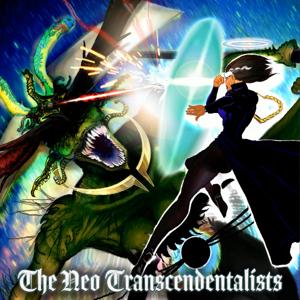


We explore the Book of Job through the lens of literary worldbuilding, positioning God as a master architect and Job as a character questioning the narrative's design. The text argues that the suffering Job endures is a cosmic wager that challenges the simplistic, "karma-based" logic of his peers. When the Creator finally speaks, he offers a technical lecture on the universe’s complexity rather than a moral apology, emphasizing that the world is not human-centric. By highlighting untamable creatures like Leviathan, the author suggests that chaos and horror are intentional features of a realistic, high-stakes reality. Ultimately, the source posits that Job’s restoration is a eucatastrophe that grants him a deeper, three-dimensional perspective on the Creator’s vast and intricate script. This framework redefines divine justice not as a philosophical argument, but as an expansion of the world's borders beyond human understanding.
This episode presents a theological perspective that frames God as a Master Worldbuilder who utilizes the presence of evil to craft a meaningful cosmic narrative. By comparing the structure of reality to speculative fiction and horror, the author argues that a world without conflict or danger would prevent the development of heroic virtues like courage and sacrifice. The source suggests that human agency and free will require consistent consequences to have any weight, making the potential for tragedy a necessary component of a profound existence. Furthermore, the existence of "horror" creates a contrast principle, allowing humanity to fully perceive and appreciate divine grace and glory. Ultimately, the sources assert that the Incarnation and Resurrection represent the Creator entering His own story to redeem suffering, turning a dark chapter into the ultimate triumph of good.
This episode examines how the creative process of worldbuilding mirrors theological attempts to explain the existence of evil. Through the lenses of Tolkien and Lewis, the source suggests that darkness and suffering are not flaws but structural requirements that give a narrative moral depth and meaning. Just as a painting requires shadows for contrast, a fictional or real world requires the possibility of catastrophe to make heroism and divine triumph visible. The author argues that horror and pain function as a "megaphone" to alert inhabitants of a fallen world to the objective reality of a higher moral order. Ultimately, these sources posit that true joy and virtue can only be understood and achieved when set against a backdrop of genuine conflict and cosmic struggle.
Why do we hide from who we truly are? In this episode, we dive deep into the "False Self"—that internal shield we build to survive a world that often feels too heavy to handle. We explore this profound concept through a unique triple-lens: the lived experience in African American literature, the inner workings of Psychology, and the spiritual depths of Theology.
What We’re Unpacking:
The Path to Integration:
It isn’t enough to just identify the mask; we have to learn how to take it off. We synthesize the methodologies of healing from all three fields:
The Big Question: If the False Self was a survival mechanism, how do we convince our psyche that it is finally safe enough to put the shield down and live authentically?
This episode investigates the psychological and spiritual dimensions of self-suppression, framing it as a destructive "internal vault" that people use to escape their authentic identities. Through a podcast dialogue, the text defines experiential avoidance and spiritual bypassing as unhealthy mechanisms that distance individuals from truth, even when disguised as virtue or immersion in fan culture.
Complementing these concepts, the narrative of Senior Domineer Rystet Quipnet Sir illustrates a literal and metaphorical struggle against a "necromantic realm" defined by despair, greed, and isolation. This protagonist must move beyond brute force and impatience, using intercessory prayer and spiritual discipline to confront oppressive systems represented by a massive brass gate. Ultimately, the combined texts advocate for radical truthfulness and behavioral activation to break free from both internal masks and external distractions. They conclude that true liberation is found by rejecting dissociative escapism in favor of an incarnational life rooted in reality and divine purpose.
This episode investigates the psychological and spiritual dimensions of self-suppression, framing it as a destructive "internal vault" that people use to escape their authentic identities. Through a podcast dialogue, the text defines experiential avoidance and spiritual bypassing as unhealthy mechanisms that distance individuals from truth, even when disguised as virtue or immersion in fan culture.
Norman Plant utilizes Self-Expansion in his work by leveraging the conventions of Christian Science Fiction and Afrofuturism to provide readers with new perspectives, spiritual resilience, and a framework for reclaiming agency. Rather than offering a means to "numb pain" or "avoid reality" (Self-Suppression), his narrative serves as a "philosophical laboratory" designed to sharpen the reader’s understanding of real-world moral and social issues.
Ultimately, Plant’s work aims to act as an "open heaven," where the reader’s "vicarious journey" through high-stakes cosmic battles equips them to return to reality with a re-energized faith and a clearer moral purpose
In this episode, we address one of the most prevalent and misunderstood states of the modern human condition: the desire to be somewhere—anywhere—else.
Our sources define escapism not simply as laziness or avoidance, but as a complex "mental retreat from the hardships of reality through imagination and entertainment." We live in an era where check-out points are everywhere: they reside in our pockets, on our screens, and in the sprawling multiverses of speculative fiction. But is this collective migration into the imaginary a sign of a decaying society or a necessary biological and spiritual requirement?
We argue today that escapism is a "nuanced behavioral gray area." The text examines the critical intersections of theology and psychology on this subject, revealing that both disciplines ultimately agree that the morality of seeking distraction depends on an individual's "underlying motivation." We will explore how these fields distinguish between "healthy restoration and harmful avoidance," and why periodic withdrawal is essential for recovery, while chronic detachment hinders "personal growth and spiritual responsibility."
From the "speculative lens" of Afrofuturism and faith-based stories to the cinematic spectacles of Hollywood and historical responses during the Great Depression, we dissect how media serves as both a "necessary relief and a complex social influence."
Ultimately, this episode confronts the central tension of modern life: Can our escapes provide the "inspiration needed to solve problems," or do they merely serve to "obscure real-world problems"?
We sit down with writer and illustrator Norman Plant to explore the expansive, spiritually charged "Omniverse" of his groundbreaking series, The Neo Transcendentalists. Plant breaks down how he weaves Christian theology into the very DNA of his world-building, transforming passive philosophy into actionable, spiritual warfare.
Listen in as we discuss his unique process of reclaiming language—introducing mind-bending concepts like the triune "Shontonogrammatron" and redefining "Domineering" as a righteous force that brings rebel elements into submission to the divine will of OMNI. Plant also doesn't shy away from heavy social commentary, framing systemic issues like capitalism and racism as literal spiritual "malware" and "witchcraft."
Key Topics Covered in This Episode:
Plus: Get an exclusive sneak peek into the upcoming second issue, Necro Rulers, where Plant tackles the terrifying internal threat of religious extremism and the reality-hacking "Anti-Singularity."
Tune in for a fascinating conversation where comic book world-building meets profound theological reflection!
This science fiction anthology centers on the Neo Transcendentalists, a multi-dimensional order of elite warriors dedicated to preserving cosmic balance and the divine will of the Creator. Through the perspectives of various Senior Domineers, the narrative explores their struggle against primordial evil, systemic oppression, and psychological warfare across the Omniverse. These protagonists utilize a combination of trans-organic technology and spiritual disciplines, such as faith and intercession, to liberate civilizations from metaphysical corruption. Key themes include the dismantling of socio-economic inequality, the overcoming of personal trauma, and the pursuit of universal harmony. Ultimately, the text defines true authority as the power to protect divine love and restore justice throughout all realms of existence.
From the publisher's feed
The podcast explores the complex mythology of Neo Transcendentalism, a belief system where spiritual lifeforms called Shontonogrammatrons serve as divine…