
Sign up to save your podcasts
Or

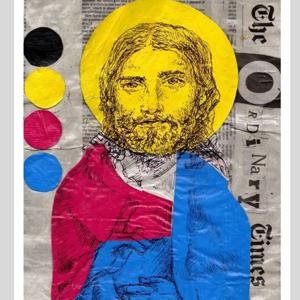


Besides reading the NYT, I've been known to consume a lot of cable news. Regarding that news consumption, there are channels I watch (like MSNBC), channels I don't watch (like FOX News), and channels I should watch (like CSPAN). Why should I be watching CSPAN you ask? Well because it features pure, boring, unfiltered documentation of Congress. That setting is also the backdrop to a New York Times opinion piece from Dec. 20, 1865 entitled, "The Consummated Amendment." In it the author describes the history and ratification of the 13th amendment (that ended America slavery). It was also the beginning of the three Reconstruction Amendments and the Reconstruction Era. They were new rules centered on the least, the oppressed, the "outsiders." They aimed to reconstruct how we Americans both think and act. A strong parallel intention can be found in the Gospel reading of Matthew 5:1-12. In his Beatitudes, Jesus aimed to reconstruct how we think and act. His central focus is centered around the least, the oppressed and the outsiders.
On April 12, 1861 The New York Times published, "THE WAR IMMINENT." It was a telegraphed, live reporting from Charleston, SC of the final hours before the first shots of the Civil War. Those shots did not signify the separation of the Southern States into the Confederacy, because that had already occurred earlier. Rather it symbolized a violent national break-up, a damnable divorce and a dissolution of a Union that was under the illusion that both sides somehow stood for Freedom. And yet, in the beginning of those dark times, there is a comparison to the light of Scripture found in the Gospel of Matthew 4:12-17. In it we find Jesus dealing with his own national history (both distant and immediate). In the middle of it all he finds meaning in the words of an ancient prophet who spoke to the woes of war, civil divisions, military melees and political strife of his own time. Inspired by it, Jesus proclaimed a peaceful invasion following the inundating militaristic ones.
In an August 4, 1856 article about a Florida flood, the New York Times deferred to printing the local expertise of The Tampa Peninsular. In that article we learn that there are different kinds of journalist covering events in different ways, and sometimes one journalist can cover several approaches. Today’s lectionary reading (in a year devoted to the Gospel of Matthew) defers to relaying the expertise of The Gospel of John. In these account in John 1:29-34 we learn that even in the Bible there is something akin to a journalist covering events in different ways. Just like The Tampa Peninsular, this story referencing another story, swirls around the imagery of water.
The New York Times was born in the 1850's: a time of radicalism versus conservatism within society. The backstory is integral to understanding the whole story of the newspaper. And so it is with the Good News, according to the Gospel of Matthew 1:1-17. Because outside of what we imagine conservative and liberal to mean, Jesus was a radical: dealing with the context of a very conservative thing: religious tradition.
The Good News: The Ordinary Times podcast will be returning for Season 2 on January 8, 2023.
The Bad News: So will my awkward Dad jokes.
By 1961 Orvil Eugene Dryfoos had become the publisher of the New York times, succeeding his father-in-law Arthur Hays Sulzberger, who in turn had succeeded his father-in-law Adolph Ochs. He proved to be a caretaker for the New York Times. So, Dryfoos wasn’t working the metaphorical “banker’s hours” of 9-5 but what bank hours were becoming. Automation was leading to a banking overnight and weekends shift on what was formerly a 9-5 weekdays job. It would soon disrupt publishing as well. By 1963 Orvil Dryfoos had ended his time as the publisher. This caretaker for NYT was now taken to the undertaker. He had worked dutifully on his way up, and due to a strike during his short tenure, worked himself to death. No matter what kind of power we have in this life… our lives soon give way to the afterlife. The boss isn’t the boss, if he has answer to a higher power. That truth brings us to the lectionary reading from the Gospel of Luke 12:32-48. In it Jesus warns us about the assumptions of automation and accounting for our lack of action.
An October 23, 1933 presidential election article from the times entitled, “GAVE ROOSEVELT 7,060,017 PLURALITY.” It was more than a story of what was won, it was a story of what was lost… and who lost it. If you listen to this podcast often, then you know where I am going with this. There is a parallel between this news story and the Good News narrative found in Luke 9 51-62. The part that may be surprising about our Bible story today is that it will conflict with how much of our storytelling is presented in Christianity. We often frame things in terms of “winning.” We speak of victory in Jesus, winning souls for Christ, conquering the flesh… the list goes on and on. But in today’s Scripture we will see Jesus encountering the politics of nationalistic and ethnic division, rethinking the relevance of biblicism and rejecting undisciplined discipleship… and he loses something in every case. In all of his success and wins, there was nothing that Jesus was afraid to lose.
Contrary to my mother’s advice, I’ve found that you can learn a lot from following a crowd. At least that’s what one author found in a New York Times article from July 15, 1929 about the death of Eng Fooi Shue (one of the leading merchants of Chinatown) and the crowds that gathered to mourn him. The newspaper's publisher learned to use that crowd to make one individual successful: himself. Yet in those unbelievable numbers that made up that crowd there are individual deaths like Eng Fooi Shue’s, and group suffering like his family back home in China. But every now and then there are individual lives like Dr. Huey Kin, the Presbyterian pastor who oversaw the funeral... Individuals that desire to be used for the success of the crowd. In fact I don’t just see it in the New York Times story but also in our Scripture reading of Luke 9:10-17. One of Jesus’ greatest gifts was his care for the crowd. He was a Messiah with mercy for the multitudes.
The September 14th, 1925 NY Times article entitled, “Macy Says Moses Abuses His Power” is an Op Ed against Robert Moses, the New York public official who built a bridge to carry urbanites to Jones Beach past the outer boroughs. As goes New York, so goes the nation: and the era of new roads to new homes would be exported to every American city. Herein lies a parallel to our scripture reading of John 16:12-15 on this Trinity Sunday. Rabbi Jesus was preparing to leave Earth for his new home in Glory, yet he would not leave them without a road to the Father. When we say that the Church is the Body of Christ we don’t actually mean that Jesus is physically there. In the Holy Spirit he left the Comforter as an overseer. Even when Christ’s physical Presence is missing from the Church, he is there in Essence when his Commands are followed. Because in John 16, Jesus sensed the nearing of an age with his teaching was the road God would travel to find a new home in a renewed People.
In 1986 the New York Times did a book review of an author whose persona would later double as a character in a popular film. You may have first encountered neurologist Oliver Sacks played by Robin Williams in the movie “Awakenings”, but in real life he wrote the book that it was based on and also a curiously titled work entitled “The Man Who Mistook His Wife For A Hat.” That later work is the one that the newspaper reviewed and serves as one of the narratives in the case studies of the British doctor.
Dr. Sacks tells the true life story of one of his patents that had visual agnosia a condition of impairment in recognition of visually presented objects. It is not due to damage to the eyes but to the brain. They can correctly “see” things but cannot correctly recognize them without informational context. Wikipedia describes it as, “If a person correctly perceives the forms and has knowledge of the objects but cannot identify the objects.” So, in short, yes, a man once confused his spouse for an object that we wear on our heads. You could go so far to say that he objectified his wife… rimshot please?
If you happened to attend church this Sunday, then you may have encountered a similar episode from the Easter reading. In John 20:1-18 Jesus’ follower Mary Magdalene comes to his tomb and encounters the Risen Christ but mistakes him for the gardener. It’s as if she experiences a kind of visual agnosia, because without the proper context she cannot recognize him. After the crucifixion, she was used to seeing Jesus dead but after the resurrection, he is yet alive. But that’s not the only religious parallel to Dr. Sacks book that I want to discuss here.
There also seems to be a reversal of “The Man Who Mistook His Wife For A Hat” between Christ and his wife. Now despite whatever you may have read on the Da Vinci Code, history proves that Mary Magdalene was not Jesus’ wife. But the Bible tells us who is… it’s you… and me… and every Believer who has been baptized into faith in him. Scripture refers to the Church as “the Bride of Christ.” But the more I look at it, it seems like Jesus’ wife is experiencing a kind of visual agnosia. Many people don’t recognize who Jesus is. Worse than that, we can sometimes objectify him. Not as a hat per se, but as an American, a warmonger, a libertine, a Capitalist, a persecutor, an escapist, a motivational speaker or any other role that we have projected upon him… almost as if he never spoke about who he understood himself as. And trust me, he did.
So, when The Ordinary Times podcast started, I researched and reported through the stories where Jesus revealed how he is to be recognized. Then when the actual season of Ordinary Time took a break, we changed the format to interviewing people from different parts of the body of Christ about their stories. And at the end I asked them, “Who is Jesus?” This morning, we’ll review their answers.
From the publisher's feed