
Sign up to save your podcasts
Or

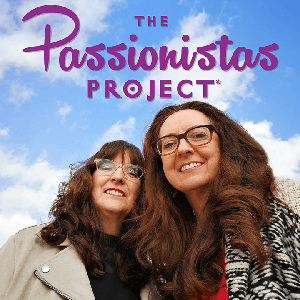


Nina G is a comedian, professional speaker and author of “Stutterer Interrupted” and the new book “Bay Area Stand-Up Comedy: A Humorous History.” She has been featured in or on everything from NPR's 51%, BBC's Ouch, Psychology Today, Tedx, multiple day time talk shows, Howard 100 News and the Stuttering John Podcast.
Nina shares her wit and wisdom with corporations, colleges, libraries, conferences and community events. Her no nonsense approach to disability awareness and acceptance helps to bring institutions, communities and individuals to deepen their understanding of the disability and bring practical approaches to making a more inclusive society.
Learn more about Nina.
Buy Stutterer Interrupted.
Buy Bay Area Stand-Up Comedy.
Learn more about The Passionistas Project.
FULL TRANSCRIPT:
Passionistas: Hi, and welcome to The Passionistas Project Podcast, where we talk with women who are following their passions to inspire you to do the same. We're Amy and Nancy Harrington, and today we're talking with Nina G, a comedian, professional speaker, and author of Stutter Interrupted and her new book Bay Area Standup Comedy: A Humorous History.
She's been featured in and on everything from NPRs 51%, BBC's Ouch, Psychology Today, TEDx, multiple daytime talk shows, Howard 100 News, and even The Stuttering John Podcast. Nina shares her wit and wisdom with corporations, colleges, libraries, conferences, and community events. Her no-nonsense approach to disability awareness and acceptance helps institutions, communities, and individuals to deepen their understanding of disability and bring practical approaches to making a more inclusive society.
So please welcome to the show, Nina G.
Nina: Hi, th-th-thanks for having me.
Passionistas: We're so glad to have Nina here on the podcast. She was part of our comedy event last year, Chronically Funny, and we've been trying to get her on the show ever since.
Nina, what's the one thing you're most passionate about?
Nina: There are two things. One is stand up comedy and the other is d-d-d-disability rights, d-d-d-disability in general. So it's kind of like a head-to-head race there.
Passionistas: Tell us why those two things are such an important part of your life.
Nina: I mean cause they are my life. Like I am as a standup comic, who's stutters and has dyslexia. And I've loved comedy my entire life, and that's why I have the book, book out now on Bay Area comedy, because I'm also from the Bay Area. I'm from Alameda and I've lived in Oakland now for 20 years. Just love, love, love comedy. I've been doing it now for 12 years. So that's one thing.
Then also I'm fourth generation d-d-d-disabled on my dad's side. So my dad is hard of hearing. His dad was hard of hearing and his mom was hard of hearing. So since we've been in America from Italy, we've been d-d-d-disabled. And just knowing my own experiences, I went to Catholic school in the 1980s with dyslexia and stuttering. I could tell from your very Irish names that you may know some of that experience. And what I always say is that you should never pity me for having a disability, but you can pity me for going to Catholic school in the 1980s with those things, because that sucked.
And so I just hope that we can make a world that less sucks for people. And that may be through access, it may be through laws, it may be through services, or it may be through re-representation in the media, in Hollywood, in whatever. And hopefully I bring a little bit of that representation when I go to colleges, when I go to corporations or when I am telling a Dick joke in a dive bar. Like the representation should be everywhere.
Passionistas: Tell us when you first really became interested in standup and who were some of your early comedic influences?
Nina: Yes. Okay. So, I mean, I think I kind of found comedy when I was around like four or five, like my family. It was the seventies and my family was super into Steve, Steve Martin. And then as I got a little bit older, when I was like 7, 8, 9, my parents never put any restrictions on us around TV me, me and my brother, and they also just brought us in to watch whatever was on. So I would stay up and watch, like the old sa-Saturday Night Lives, which then old was like five years prior. And so I was exposed to all of that, to first cast and I have like a stuffed animal that I named gi-Gilda after gi-Gilda Radner.
So it was that kind of stuff. Very early influences. My first fan letter that I ever wrote was to Emo Phillips when I was 13. And he sent an autographed picture back and it hangs in my kitchen there. My kitchen is all of my comedy stuff. So just always loved it. Then when I was like 11, I was like, I think that I want to have this as my job. And I would write jokes and I planned to go to open mics, never went because at around 17, I was like, this is not very practical.
It is 1990s now. And I've never seen a stuttering comic. You have to be fluent in order to be a comic. So dream dies. I picked it back up when I was 36 and I've been doing, and I've been doing it now for 12 years.
Passionistas: How did you decide, "no, this is something I can do?
Nina: It's a, it was a whole fricking process. So when I was 35, I had attended a conference for people who stutter. It's the na-National Stuttering Association. And at that, I realized how much space I relinquished up to other people. I think as a woman, we are socialized to give that space up to others. And I realized at that, it got kind of doubled and tripled up because I'm a woman who's st-stutters.
And so I realized, like, I would feel guilt to make people sit through my speech, to make people sit through my stutter. And when I was at that conference, I was around all these women. And women in stuttering are way outnumbered by the men. And the ratio is for every four stutterers, three are going to be men, one's going to be a woman. So it was really important for me to be around women who stutter. Because I realized I was like, well, I wouldn't want them to relinquish space up to others. So why am I? And that just made me really question that.
And in my book, my memoir is titled Stutter Interrupted because we're interrupted all the time in our speech, but like I was self interrupting. Like I wasn't even talking, I was interrupting myself. And with that comes your wishes and your dreams and your desires and just everything. And so when I came back home from that conference, I started to make changes in my life.
And within six months I got up on stage at an open mic and did my first one.
Passionistas: What was that experience like to finally be on stage?
Nina: You know? It was to like three people, four people, five people. I don't know. It's a very small audience. I did it in the context of a class. So I took classes at this San Francisco co-comedy college, and then they had like an open mic that they would kind of like trick trick to tourists into coming into. And I, I'm not sure if it was that night or a night soon after people laughed at my jokes. And I was like, "oh, I did this joke about st-stuttering, do you st-stutter?" And she's like, "no, it's just funny." I was like, oh, you don't. Oh, okay, I get it. It's like that. So it was really great to make a connection with someone else and kind of share my own experience having a disability in a way that I kind of had control of the narrative.
And also so many times when you talk about a disability experience people like, "oh, oh." And they give you like a pity face. And like, everyone tries to be super empathetic. And like, I just want people to just talk about it in a normal way. Like they would everything else. So humor kind of helps to D D diffuse some of that. And it just kind of puts things on a more equal level.
Passionistas: Let's take a step back. So between the ages of 17 and 35, before you pursued your passion, you got involved with disability activism. So tell us a little bit about what you were doing and what that period meant to you.
Nina: You know, I went to grad school, I went to college, I did all of that stuff. And I found myself doing advocacy within the co-college and looking at access issues there. There are so many ways that we could penetrate issues around access, and issues around D D disability rights. And for me doing like the individual piece and working with an individual to get access, I think that is really important.
And I would work with students around accessibility. But, that's just one piece of it, but we need to get to a bigger change in our culture, a bigger change in corporations and bigger change in colleges and like just more of a cultural shift. And that cultural shift is both in America and the world, but also in your lo-lo-local area. And so, it would get kind of frustrating, because I didn't have that reach, especially this was pre so-social media and all of that stuff.
Also for me, I was in academia and academia is not always kind to people who learn in a different way. And for me, it's really hard because my dyslexia is, is more than my stuttering. Like it impacts me more. And also I was in sp-special ed when I was a kid, when I was in high school, cause I eventually went to a public school for high school. Thank God. And, so, I did not come from the same place that most people in academia did. But I still had a lot to say, but I really felt like I didn't have that freedom to express what I wanted to.
And also, my mom brought me to see Richard Pryor Live that the Sunset Strip when I was nine. Like I want to say fuck, and like, I just need to, and that helps me to express what I want. And I can say the same things that I might say in an academic sense, but I can say them on stage, and I can say the words that I want to use that I think, you know. Like someone can read a journal article and that's going to be read by like 10 people. But you can do comedy or you can find some other avenue that people will be able to access, and access meaning that people will actually see it. And, and I think it's just a better way to get, a, a, a message out.
So it's that frustration that I had in academia, I was able to, I was able to work out. And that's why I like my book, both of the books. It was great that I learned how to do research and it was great that I went through all of that, but I also didn't want to hide behind big words. And luckily I haven't had to.
Passionistas: So you did that first appearance. How did you start to build your career and extend your reach as a comedian?
Nina: Well, I like kind of kept it hidden from most people I knew for about six months. And then even then it was like slowly, slowly, slowly. The first year in comedy, you're developing your voice. And I wasn't sure which way I would go. And I don't quite know when it was, but I think it was like my second year in, I was like, I'm a disability activist and I'm a comic.
That disability activist thing is through my entire life. Like that's... when I walk down the street and I see a sandwich sign and it's blocking the way I was like, "what the hell is this? You got to move this!" And I move it or I tell them, or I do something. So like ingrained into my head and a big part of that is because of my family and being born into it.
So I realized that, like, that was the thing that kind of led me first. And comedy was a second piece. I think that I've kind of balanced that out a little bit more, but that activism piece is always, always, always there.
And so I think my development as a comic really helped me because I was able, like I'm able to do two things in comedy and now three. So I'm able to go to colleges, and I'm able to talk to them and also corporations to do disability awareness. So there's that. And that is like a half hour of comedy and story telling, and then like Q&A afterwards and the Q&A is always like the, the funnest part.
And then I have the other thing, which is like the pure art form of standup, where I can do dick jokes. Last night, I told jokes on the sidewalk of a San Francisco cafe. And it was totally fun and it was great, and I got to develop that more and just work on that. And then, you know, I have a bunch of shows coming up and so there's that piece where like, I feel I can be an artist there and I don't really have to like... like, there's not a lot of 48 year old stuttering comics on TV.
I don't think like, like I doubt they're going to give me a sitcom. I doubt like Netflix is not knocking down my door. They're not like, because my opinion is, is that Hollywood thinks that if you have more than one intersectional identity that people's heads are going to explode. Which is why a lot of the disabled comics out there are white men. So like, you know, like, I, I, I know where I'm at. So I feel I don't have to kind of compromise my standup because it's like, I'm not going on TV. I'm good.
The other piece now that I'm, that I'm transitioning into is as a comedy history consultant as an author. And that just kind of brings my love of comedy. And like when I was in school from like high school on, anytime that I had to write a paper, I would write a paper on comedy. So this is just the natural development of the thing I love. And, you know, you write a book, it kind of puts you as like, okay, this was, she's now an expert. Like I've been saying to everybody, I'm an expert for a long time. They don't believe me, but now I have a book that says that I have some in that.
And also I wrote it with my friend, OJ Patterson. I kind of tap out on standup around 1993 and then he picks it up from there. So he loves the old comedy and he has followed it so we co-complemented one another well on that.
Passionistas: We're Amy and Nancy Harrington, and you're listening to The Passionistas Project Podcast and our interview with Nina G To learn more about her performances, speaking engagements, and to get your copy of Bay Area Standup Comedy: A Humorous History, visit ninagcomedian.com.
If you're enjoying this interview and would like to help us continue creating inspiring content, please consider becoming a patron by visiting thepassionistasproject.com/podcast, and clicking on the patron button. Even $1 a month can help us continue our mission of inspiring women to follow their passions.
Now here's more of our interview with Nina G.
Tell us a little bit about the Comedians with Disabilities Act.
Nina: So that was started by my friend, who has passed away, but st-“Stutter Interrupted” is, it is dedicated to, to him. He so started it because there wasn't a grip, at least locally that featured only d-d-d-disabled comics.
And so it was Michael O'Connell, Eric, and Steve d-Danners as the first core. And then I, I joined, and some of the guys are, have been kind of in and out of comedy and we lost m-Michael. So we have expanded the group to have more of a showcase. And the showcase has included my, my, one of my best friends, Mean Dave, who is in recovery. And that is covered under the ADA, but people don't always talk about that. But you can access your rights and access, you know, all kinds of things because of that. So he brings that as a really important message. Jade Theriault, who's out of Berkeley, she does the sh-show a lot, and she uses a wheelchair, a-along with other comics. But not all stages in comedy are... not all of them are ramped.
So, like, to get even on the stage is an issue. And, also, to kind of bring that voice in, I think sometimes people, producers or comics or whatever, kind of think like, "oh, well that's disabled comedy." And like, like it's a different thing. No, it's just another kind of perspective, whether you're a man, whether you're a woman that, that you can bring.
And so it's, it's really nice to have the opportunity to do that in a group and also do it for people who want to hear it. Because I will do a show just with a stuttering audience, when I do stuff at a conference. And they get the premise and not the punchline. Like I don't even have to do the punchline because they're already with me at the premise.
And so it's just a different experience doing comedy for people who come from that same cu-culture and that same experience.
Passionistas: You touched on this a little bit, but as somebody who has such a deep knowledge of the history of comedy and your own experiences. You know, comedy is legendarily more difficult for women. And as you've been saying, there are a lot of challenges for comedians with disabilities. Do you feel like this is changing at all for women and for people in the disability community?
Nina: I think so. I think there's still a thing of, "well, like we only have one woman on the show, so that's good. We, we have enough." It was like, oh, why don't you just book people who are funny and the rest will come. But also people tend to book their friends. And so if it's a male producer, they're going to have more gu-gu-guy friends. And so there's that. And that's not always the case. And I think at least in the Bay Area, I think there's more of a consciousness around that, because the women have been bitching about this for centuries now, since we're now in the 21st century.
And so I think that they are getting that they need to have a more ba-balanced show in terms of the disability access. Like I have not seen Netflix have a compilation of disabled comics. I produced a CD, or not a CD, but an album called d-d-d-Disabled Comedy Only. And it featured the Comedians with d-d-d-Disability Act.
And that was the first one ever done of a compilation of disabled comics. That should not have happened. And there hasn't been one since. You know, HBO and Netflix and all of that, you got to have disabled comics, both in your mainstream, but also having a show where why doesn't like, you know, a famous d-d-d-disabled, comic bring in other comics to have a big show.
And I would love that. And it also, I think that Comedians with Disabilities Act was really conscious about the message that they send out. I also think it's equally as important for a disabled comic to get up and not talk about a disability whatsoever so that there is both, both of those things that should be happening.
Passionistas: How did COVID impact your work, and do you feel like things are finally getting back to normal now?
Nina: So it dried up my speaking gigs, because we were like, we don't know what to do now. And people have zoom fi-fatigue. So for me, when, when my first book, or when my memoir came out, it was great.
I was booked. I did, like, an event at Coca Cola. I sold books afterwards, making money. Like it was great. And then 2020 happened and like, oh! Like I need to talk to my st-student loan people to see if they'll base my income on last year's instead of on the prior years, cause there's such a change.
But I think people are seeing that there is a possibility to do events online. And so, yeah, I am traveling less, but I'm still doing, doing corporate and college shows. And some of those are picking up in, in person, too, so that's great. As a comic, I have performed into the void of Zoom and it's okay. Like it's really taught me to trust what I'm saying and to trust my comedy. Because there isn't the ha-ha's and they're, you know, not even the LOLs. And I always encourage people to do the LOLs in the tags so I get something out of it. So in, in, in, so that that's changed. I think lo-locally, comedy's opening up. I'm finding with doing book, book gigs, now that it's about half and half.
So releasing a book, which my book came out on February 14th. And yeah, it's a heck of a time to release a book because you're not going on a big tour. And so it'll be interesting to see how that rolls out.
Passionistas: You did have one unbelievably cool gig during the pandemic, which we're dying to hear about, right around the inauguration. Can you tell us about that?
Nina: Yeah! It was the first night of the inauguration festivities. I got asked to do a performance, and so it was all online. Like I wish I was at the White House, but no, it was all online. And what I did was I pre-taped it at the Alameda com-com-Comedy Club and we brought my pa-parents in, and, and I performed for them for the inauguration. So my parents were very happy to have the back of their heads in the screen as well. And so I did my five minute set there and sent it in and it got in with all of the other speakers, which included Whoopi Goldberg. Also, now I can say that I opened for the Vice President.
A lot of my comedy credits are so weird and so, un-un-unbelievable that people don't even think they're true when they're said. And opening up for the vice-president is one of them.
Passionistas: Speaking of home, let's talk about your new book, Bay Area Stand Up Comedy: A Humorous History. What inspired you to write it, and why is the history of Bay Area comedy so important?
Nina: Well, the thing that inspired it was being bored in the pandemic. So that was the biggest piece. I was finding that I was going toward like old comedy and watching that on YouTube. And also I was doing a project where I was interviewing comics about the pandemic. So asking them what that experience was like, to transition into Zoom, or what did they think was going to, was going to happen. So I did that under The Comedy Time Capsule.
And in doing that, I had interviewed ma-Marga Gomez, who is a staple in San Francisco comedy. She also comes out of the queer comedy scene and she was telling me about her past experiences and her own history. The first place that she felt she could really bring her whole self into, into her stand-up was at the, the, The va-Valencia Rose in San Francisco. And that was the first LGBT open mic. And they had LGBT shows and I was like, "oh, this is such an interesting history, and so is San Francisco!" I don't know this, and I'm a big nerd, so other people must not know anything about this.
And I was like, okay, something needs to happen. So I contacted OJ who now lives in, in Southern California. And like me and him, when he was doing comedy, he is, he is retired now from, from it. But when he was doing it, we would just talk endlessly about stuff and like interesting things we heard and just the in, in just analyzing it.
And so I was like, okay, you want to write this book? I'll do it to this point, you do it to this point. And he said yes. And we worked on it for a year. And the book has over a hundred pictures in it, so it almost feels like a yearbook of Bay Area comedy. And the reason why I think Bay Area comedy is so important is that it's been the place that people can develop their voice, and then kind of move on to the next stage.
So we had a lot of comics here from Boston in the 1980s, like Paula Poundstone and Bob-Bobcat and d-Dana Gold. And, like, San Francisco audiences, at least back then, were just like patient and just like wanted people to kind of experiment. And they were just great around that, which I think lent itself to the improvisational style that had developed here.
But before all of that, there was The Hungry Eye and The Purple Onion, and The Purple Onion is where Phyllis di-di-di-di-Diller ca-came out of, and her being especially important to with women comics. She developed her act in San Francisco. And right across the street at The Hungry Eye is where Mort Sahl developed a whole new way to do comedy.
So Bay Area comedy, especially in the North Beach area changed comedy forever and, and had that really, really big impact.
And the first stand-up comic was in the mid 18 hundreds. And I, and I, I know this because the work of Rich Schneider has put, a, has put, a-a-a spotlight on this. And the very first comic in the mid 18 hundreds came to San Francisco. And people would pay cover in gold because greenbacks were not totally, a thing yet. So the, so the history goes back to Mark Twain and then onto the pandemic. A-and of course, Robin Williams being kind of the pinnacle of the whole thing. And not only in his comedy, but also the heart, because he just gave so much to the world, but also so much to Bay, so much to, to, to the Bay and was just the most gracious and nicest guy that, that people still, uh, talk, talk about the things he did.
Passionistas: What can people who aren't in the disability community do to advocate for people who are?
Nina: I think everybody can kind of choose their own way in that. Because if you are a teacher or you are a speech therapist, I'm going to have very different expectations of that than somebody who works in more of a retail industry.
I think they can kind of choose what they want to do and how to be an ally. I think a lot of times people think you have to go march or you have to go do some kind of activist role. No, you could just be cool. Like you can just listen and not be overly empathetic.
And I think the main thing is to listen to disabled people and take their lead. They are in the lead. I think that word "empowerment" isn't always a great word because it kind of assumes that like you have the power, and your empowering the other person. That person already has that power. And it's you who should be fo-fo-following them. And also don't expect disabled people to teach you. I think that's the other thing, because sometimes people are like, "oh, so tell me about what it's like to have this." I was like, ugh! Unless you're paying me, no! Like go read my book and then we'll talk. So I think there's also putting people who have a disability into a position to hear their voices, but in a way that is respectful and not exploitive.
Passionistas: Thanks for listening to The Passionistas Project Podcast and our interview with Nina G To learn more about her performances, speaking engagements, and get a copy of Bay Area Standup Comedy: A Humorous History visit ninagcomedian.com.
Please visit thepassionistasproject.com to learn more about our podcast and our subscription box, filled with products made by women owned businesses and female artisans to inspire you to follow your passions. Get a free mystery box worth $45 with a one-year subscription using the code SPRINGMYSTERY, and be sure to subscribe to The Passionistas Project Podcast, so you don't miss any of our upcoming, inspiring guests.
Until next time, stay well and stay passionate.
Learn more about your ad choices. Visit megaphone.fm/adchoices
Suzie Lewis is the Managing Director at Transform for Value and host of the podcast "Let's Talk Transformation." She’s passionate about connecting people, their potential, collective intelligence and equipping organizations to get the best out of individuals and teams. Her quest is to constantly bridge the gap between digital and human and create more inclusive and collaborative cultures in organizations.
Learn more about Suzie here.
Learn more about The Passionistas Project here.
Full Transcript:
Passionistas: Hi, and welcome to The Passionistas Project Podcast, where we talk with women who are following their passions to inspire you to do the same. We're Amy and Nancy Harrington, and today we're talking with Suzie Lewis, the Managing Director at Transform for Value and the host of the podcast, Let's Talk Transformation.
She's passionate about connecting people, their potential collective intelligence and equipping organizations to get the best out of individuals and teams. Her quest is to constantly bridge the gap between digital and human, and create more inclusive and collaborative cultures in organizations. So please welcome to the show, Suzie Lewis.
Suzie: Hi, I'm thrilled to be here. Thank you very much for inviting me.
Passionistas: Thanks so much, Suzie. Thanks for your time today. So what's the one thing you're most passionate about?
Suzie: People. I think people and connecting people, which is where the unlocking potential comes from. I worked in an organization for 20 years and I just saw so much wasted potential or untapped potential.
And I just thought, wow, we've got to do something about this. And I come from a family of very strong women. And I'm a big believer in sistership and we've always had each other's backs and I've always had that privilege, to have that space. And I thought if I don't create it for others, I'm missing a trick and I'm not putting myself at the service of creating a more inclusive and equitable world.
But I work mainly in organizations. I'm also a cellist in an orchestra. I have been playing the cello for a very long time, over 30 years, and I love the analogy between the orchestra, and what I'm trying to create in society. Essentially, each person comes with that individual potential, but it's essentially about the collective result and how each person contributes to that and how the diversity of profiles and the diversity of capabilities, how it brings to the force something completely different that is harmonious. Even if the way towards that harmony is not harmonious.
So I'm passionate about people. I love connecting people and I love playing in orchestra for the same reason. It's about listening intently and deliberately to what's being played, but also what isn't being played.
And I think in organizations and in human relationships, it's exactly the same. We listen to reply and not to understand. So my big quest is to democratize access to these dialogue skills and for people to have different conversations and more courageous conversations in the workplace. And I think women bring something innately to that table.
So I'm a big believer in the emotional layer of organizational culture and how we unwrap that and make it more normalized in the way people with.
Passionistas: So let's take a step back. Tell us about those amazing women from your early life and where you grew up, what your childhood was like.
Suzie: Basically today I'm based in France, but I grew up in UK and those fabulous women where my mom and my three sisters and my dad's great as well, but we had this safe space and it was predominantly discussion on equity, and how to create different spaces. My parents were both doctors and researchers, and also spent a lot of time counseling people. And we've always had these discussions on the table explicitly around healthy challenging, listening to others and making sure each voice is heard.
And my grandma, who is actually my role model for courage and confidence. She was just incredible. And she worked in a time, unfortunately for her, when women didn't have the empowerment we have today. My goodness, if she'd have had the empowerment we have, and she always used to say that to us. Oh, if I had your opportunities, I'd be doing something different, something bigger, something, but she was already big for me. That was the inspiration and it runs through the family.
And when I did my studies and I started studying cultural identity, as well as French and international economics, and I thought, okay, there's something in here about how the world works. And there's something in here, where I feel like make a difference with my innate skill set, which was, I just love discovering people, and I just really want to understand what their potential is and what that means for me, but also for where we work and how we can scale that if you like across what's happening. Particularly today in the digital age, where what keeps us relevant is our innately human qualities. So humility, creativity, imagination, which is where we come to my quest for different types of leadership in organizations, but also elsewhere.
And then I've always been parts of orchestras and charities and associations. And I'm currently part of an association to get more girls into the tech world and into stem. And it's a big, important piece for me, partly because of what women bring to the table, but just parity in. Equal opportunities and getting people to have real conversations because otherwise we just skirt around these issues and we just don't go there.
And I want people, particularly women to know that it's possible. How many times have people said to me, it's not possible. You can't do that. No, you don't have those skillsets. And I've always thought, well, don't tell me it's impossible. Cause it's not. That's always been my driver. And that came from my grandma and my parents and my sisters.
And my sisters are my three best friends. And we have this great space where we're still helping each other. We were all in different countries. And it taught me how to be humble. It taught me how to ask for help. And it taught me how to think about how I want to show up. And I think those questions are fundamental and they don't get asked enough.
And I just had so much fun. I think once you have that type of relationship, you can have fun doing really serious quests. I found my tribe, if you like. And I decided that building tribes was the way forward. I remember when I moved to France and I was working in France, and I thought, this system is really different. I'm finding it quite constrained, quite rigid. So what do I? I either sit and complain about it or I go back to UK or I think about how I can change it. And I thought, no, that's going to be my challenge. I'm going to look at how I can change organizational culture and create the space that we work in.
I worked in like a manufacturing production environment, very masculine, but I just thought I'm going to take that as an opportunity. So I'm not going to sit and think, oh, there's only 17% of women. And I thought, okay, how can I get like-minded people and make this an inclusive discussion and move forward with it?
I just found some of what I was seeing so unfair. And I thought, okay, if I stay and if I just don't do anything, I'm condoning it. And I refuse to do that. So I went and found as many people as possible and created small communities within the organization. And we may change. And clearly, you know, large organizations, you can't change everything, but it's very satisfying to watch people have light bulb moments and then suddenly their potential just explodes. And that's just brilliant. And I think, wow, I thought you might do this, or I thought you might do that. And they surprise themselves. And I think that's a very satisfying thing to see.
Passionistas: Now is this the industry you're talking about, is this the aeronautical industry?
Suzie: Yeah.
Passionistas: So tell us a little bit about working in that industry. What did you do?
Suzie: It's very interesting. I basically started as a lean expert on the supply chain and they trained me in that. And I do like operations, and I like doing, and I like seeing the impact of what I'm doing and there's no better way than lean on a production line. You see it, you see it coming in, coming off, you see what's happening.
But as we started to put lean in place, I thought, okay, how are we going to lead this? This is quite a different way of working. And we set up the leadership academy and we started looking at all the issues, challenges, but also the opportunities that were coming up from that. And I got more and more involved in the HR system where I was working and I thought, I don't really understand this, and I don't think it's unlocking potential.
So I went to join HR. So I went to join HR to understand what was going on and how I could make a difference and how they worked and what their mindset was. I think the best thing about where I worked was, yes, it's quite a traditional sort of industrial manufacturing environment, and the mindset goes with that.
But I never had any issue going and asking for what I wanted. Sometimes they said no. But more often than not, they said, if you're willing to try it and it's your responsibility, then off you go. And maybe I just had great bosses or people who were willing to take a chance on me, but, you know, I did have bosses who said no. And then my thought process was okay, so how else can I make a difference?
So I started as a lean expert and then I went into HR and then I got hooked. I got hooked on, why are we only talking about process? What's going on here? Why aren't we talking about the emotional layer? So I stayed in HR for 10 years.
I thought if I want to change, what's going on here, I need to understand the operation. So I went into HR operations and I did HR business partnering, and I ran the recruitment services and we set up the shared services for recruitment. And during that time I looked at the recruitment process and the talent we were bringing in and thought this is not very diverse.
So I said, can we do an experiment on diversifying recruitment? So that got me thinking about how I could think outside the box and how I could get the organization to think outside the box. And then I went into take on a position as head of diversity and inclusion because I thought, okay, this is a big subject. And for me, it is the subject for competitive advantage.
And it's not just HR tick box exercise, and it's not just how many women we've got or how many other minority groups we've got. This is about people. And this is about creating an environment where people can thrive as opposed to strive. And because the culture was quite command and control in terms of leadership, there were quite a lot of people's suffering and I could see that.
And they couldn't see a way out. And I felt that it was HR's job, but also every leader's job to look into their teams and have that discussion, which of course is quite a big ask because it's a difficult discussion to have. So I basically took diversity inclusions that I want to put it up with strategic objectives, culture, change, business objectives, leadership.
And then we moved into a time when we wanted to build an internal leadership university. And they asked me if I would like to do that. And I was just thrilled with that project. It was a fab project, but there was four of us running it, so that was a collective management thing.
And the more I got into these activities, I thought 1) I have a massive volume proposition here. 2) I'm seeing the impact of people co-creating together and seeing what that can do to organizational culture wellbeing, but also productivity. And 3) organizations are missing a trick if they don't want to look beyond what they do today.
So we did that and we basically looked at the whole thing, organizational design, but also how to create a platform for human transformation. What does it mean? How do people learn. How do we interact with the business? How do you support people on the job day in, day out? And how do you equip organizations with a coaching culture? A culture of more lifelong learning, as opposed to I sit in a classroom for two days. And then, yeah, I do remember something they told me about emotional intelligence and how to communicate.
Which is why of course change stalls because they don't practition it. They don't practition what I call the human systems of an organization, which is, you know, the human element. And now we're in the digital age where everything's about ecosystems. I just felt really strongly that if we don't equip people to understand the human systems, it's just going to get worse because we can collaborate with online tools and we can have virtual meetings, but the human connection is the way we're wired.
So we built the Leadership University and that was one of my favorite favorite projects ever. And we built communities of practice and we went from 900 members to 12,000 and I was just like, wow, what can we do here? This is so cool! The best thing was the other people that thought it was so cool, which meant that we got momentum in the organization. Some people didn't believe in it, but, you know, fair enough. That's humans, isn't it. You don't always get a hundred percent unanimity.
But it was great. And I got massively challenged on my ideas and we created new ideas. I just felt that we unlocked so much potential in the groups we were in that we took it to the talent management and said, you know, what do we do with this?
And then digital transformation came along and we got more and more tools and more and more speed of change. And then I decided that I was a bit bored of the big machine and it was too rigid and there were reasons why I couldn't do things that were outside of reasons for my competence, it was either political or it wasn't the right time or budgetary.
And so I decided that I would step out of the organization and do exactly the same thing on my own, because I also wanted to see other organizations, other industries. I wanted to work with charities. I wanted to work with start up. I wanted to work with SMEs. So that's what I did.
It's quite a bold move actually, now that I think about it. I probably didn't think about it enough, which is why I just did it. But yeah. So I stepped out with the organization and I set up my own business. And I thought, what do I call it? Transformation was clear. Value was clear. I thought, okay, well, don't overcomplicate this. I'll just call myself Tranform for Value because that's basically what I want to do.
And behind that, it's about unlocking potential. So it's about transforming with a deliberate intention to create human value..
Passionistas: While you were getting people to think more about diversity and inclusion, and while you were creating this university, what was the impact that you saw on the company and through those initiatives that you helped create?
Suzie: I think the first impact is always engagement. You have engagement scores and things like that. But you also have people coming to you when you think that's why I do what I do. When people come with, yeah, I wanted to leave that job, but now I'm staying. Or I never thought that was possible, and I never thought I could lead that.
And I saw that scale. I saw people getting excited. I saw top management asking more about it. I saw them wanting to understand it. I saw it as being able to open doors at levels where I didn't think we would be able to. And I just think that just makes it a more attractive place to work. And you can see people honing in on that.
You suddenly find out or people contact you, "I hear you're doing this, I've seen you're doing this, I've seen the community does this." And you're thinking, wow, okay, I don't really know who you are. Which is brilliant because that's what we're aiming at is to federate and make powerful communities.
So I saw a lot of communities being built. I also saw lots of room to maneuver, to bring in new ideas, whether that be in the leadership space or in the cultural space. An open box for experimentation, if you like. I think the hardest part about experimentation is when you go from proof of concept to industrialized idea, because then it becomes part of the organization. That's almost a different discussion.
So I saw the difference in that. I saw the difference in the way I lead, and I saw the difference in the way the teams were feeling and innovating and defending the project or taking the project forward.
When I was in the operational area, we did a lot of change based on lean on the operations. And I remember, after 18 months, we did a retrospective on what's changed. And the biggest change they'd seen was engagement and happiness at the workplace. At the time we didn't have metrics, we had mood boards and things like that where we didn't have sort of people analytics, but it was incredibly satisfying that that was a collective observation, was that even though this didn't work in that didn't work, we actually wants to come to work everyday. Which I just think is just so satisfying.
And it was interesting. I had somebody contact me a couple of months ago who worked for me 10 years ago. And just saying, "I still remember that day when the team did that, and I'm now doing it with my team. And it still really works." So that for me is the type of legacy that I want to leave, and I want us to leave as a collective. Because I think, you know, particularly platforms like Passionistas and things like that, they are so inspiring and you can unlock so much potential without even knowing it.
That's why I'm a big believer in collective intelligence. And I think, these words have become buzzwords now, haven't they? Like collective intelligence and lean and culture change and employee experience. But experience is so important because it's the human experience. And I think we need to de-mystify it, and we need to operationalize it.
And that's partly what my podcast is about. My podcast is around breaking things down into actionable chunks of learning so that people can go and do something with it and try out what works for them, and basically build the confidence to actually challenge the status quo in the organization. And I think emotional intelligence is becoming more and more and more key in the way we work. And I feel that women don't voice that enough, that they innately bring something to that table.
I also like to work with groups of women to just turn the volume up on that voice. I think every time I've done that, we're all in agreement. It's just not formalized. The volume isn't loud enough on what women can bring to the table.
And it has been ever thus for me. But it's getting stronger and it's getting louder. And this was a conversation I had with my mum. When I was 10 or 11. And we've been discussing it ever since. So yeah. I just think I can add something to that debate. I can make a difference and however, small, it may be in society, if I can make it bigger within what I'm doing, then I'm hoping it will just add into the mix.
That's why I don't think it's impossible is the statement I would accept. Ever.
Passionistas: We're Amy and Nancy Harrington, and you're listening to The Passionistas Project Podcast and our interview with Suzie Lewis. To learn more about her mission to help organizations and leaders understand human systems so that they can create sustainable change and bring about cultural transformation, visit transformforvalue.com.
If you're enjoying this interview and would like to help us continue creating inspiring content, please consider becoming a patron by visiting thepassionistasproject.com/podcast and clicking on the patron button. Even $1 a month can help us continue our mission of inspiring women to follow their passions. Now here's more of our interview with Suzie.
So with Transform for Value, what types of clients do you work with and why are they seeking you out?
Suzie: So I worked with large organizations. I also work with governmental institutions. I work with charities and I work with startups. Which is great because I wanted a massive mix of clients.
They seek me out because they've understood that something needs to change in their organizational culture. It's either through additional transformation lense. So we need to be more agile. Our process needs to be more agile. We need to understand innovation creativity more.
Or it's from a leadership perspective. We know that we need to change our leadership models because this one is no longer working. So can you help us 1) understand what that means and 2) co-create it so that we can create sustainable change.
Or they come to me more specifically for coaching. So how can I either show up as a leader differently?
Or I do quite a lot of systemic coaching in groups around what I call human system practitionering. So, you know, how do I create that environment and how can I make it sustainable in terms of behavioral change in my team or in my organization.
Passionistas: Is there one success story from your work in this field that really kind of stands out to you as one you're particularly moved by or proud of?
Suzie: So, yes is the answer to that. I think there's one success story from inside the organization. Which is the one I spoke about when we decided that we would federate all the women's networks, which brought it to 900 people, and then we decided to make it inclusive. And then we decided we call it Balance for Business to link it to the business, the bottom line.
And that went from 900 people to 12,000 in five or six years. And it took on a whole different perception in the organization, but also a whole different impact in terms of what subjects they were dealing with and how they could create a feeling of belonging across sites and countries. So that was a vision for me.
And I saw it unfold, which was fab. That was great. And the leadership university was also part of that for me. It was sort of contributing and creating a platform underneath to make it more systemic.
And very recently I've been doing some consulting on an inclusion strategy and we've done co-creation from a to zed. And we've gone from discussing strategy and looking at visioning to training all managers in self limiting beliefs, basic coaching skills and psychological safety. And we've just done the whole spectrum. And it's something I've always wanted to put in place outside of the organization where I've worked.
And they gave me that opportunity. And it's a fab project. And every time I think about it, fondly, I just think. Wow. How many lives are still being impacted by the fact that we're equipping people for different conversations. We're equipping them to thrive, you know, as opposed to survive. And so many people do just survive in organizations.
I'm proud of that because it was the right thing to do. And I'm proud of that because I've got the feedback on the impact it's having. And I'm proud of that because it's creating a different culture, or building on a culture that wasn't quite as explicit as that, on those things in that organization.
And I'm interested in a year from now to go back to it and see where they're at.
Passionistas: So what are some of the biggest challenges for leaders in the 21st century workplace?
Suzie: So my short answer to that would be themselves. Leadership comes from within, doesn't it? And I think particularly now, leaders are having to really understand what they're about in order to be able to deal with the circumstances and lead the uncertainty that's around them. And going inside is quite a difficult conversation with oneself, isn't it? And it's not necessarily something that everybody is used to.
So I think there's that for individual leaders. I think then the codes of leadership in an organization are changing very quickly. Where the paradigm is, it shifts. So, you know, the whole "I'll give you the information you need and information is power" type of paradigm has gone with social media and collaborative platforms. And they're now having to move from a sort of managerial, "I'll tell you what to do to" to more of a coaching stance of, "Either let me empower you to take decisions in a more decentralized way, because that's the way we're going to organize our organization," or "I am here to develop you based on your competencies and your potential." And that often means developing you out of my team, but that's okay.
So we're moving away from paradigm of talent is mine because it's in my team. Which I think is fabulous because that's what we need to do. But I think it's a quite hard conversation to break those paradigms also on a strong is a leader that doesn't show vulnerability and that knows everything. So I'm being very black and white now, but these are the polarities we're working within. And I think it is hard to turn around and say, "I don't know. What do you think?" Or "I'm not quite sure how to navigate this."
I think it's the unwritten codes of organizational cultures around their definition of strong leadership, their attitude to failure and risk, and also their attitude to this discussion around the emotional layer.
So challenge doesn't have to be aggressive. It can be healthy and inverted comments. And I just think we're moving from compare and compete to care and collaborate and that care and collaborate means that you have to have an understanding of yourself, and empathy with the understanding of others, and creating an environment where people feel safe enough in their interpersonal relationships to bring things to the table.
So I think from a leadership perspective, that's a shift everybody is working on and undergoing, but it's not the way cultures are. So I feel like it's not the way we do things around here. So they're constantly hitting the cultural codes and that's quite a tiring place if you're one of the only ones doing it.
So I think it's a wider discussion for particularly top leadership, because what do people do when they want to know what's going to be rewarded and how things work? They look at the top. I think it's a big piece for top leadership, and that's why we need more women in the higher levels of management, as well as the board level, because they bring that discussion. They open that dialogue because they have very different ways of leading. And not just women, but people with more female leadership traits or with a more developed emotional intelligence.
And I just think we're back on the inhibitors of learning, aren't we? Ego and fear. And everyone always says to me, there's a lot of fear in organizations. And there is, but there is a lot of courage as well. There's a lot of curiosity and there's a lot of excitement. But you have to go and find it. And I think that's the most exciting thing is going and finding it, in an organization or anywhere else.
But I think the leadership challenge is that they have to deliver in a world that is uncertain, but they're not like comfortable in, and they're not quite sure how to go about it. It's a big shift, I think. The circular models and the sort of what data brings with it in terms of decision-making is a big conversation, both for systems and organizations. But also as individual leaders, I get a lot of individual leaders asking me the question, you know, I'm not quite sure what to do with the fact that that I don't know.
So that's new conversations for quite a lot of people.
Passionistas: And do you find that more and more companies or individuals are seeking to make these changes?
Suzie: So, yes, it's the answer to that, but I think there are two categories. The companies that are seeking because they actively and deliberately want to create developmental organizations because that's what they believe in and that's what they want to do. And other companies, because they've been told that that's what they need to do to remain competitive. Either way they need to do it. It's a very different discussion.
Passionistas: So how can people work with you at Transform for Value? How do they find you and what can they expect when they work with you?
Suzie: They can find me on LinkedIn. They can find me through my website, transformforvalue.com. They can find me on Twitter.
They can expect to first discussion because my approach to transformation is holistic. It has to have that systemic view to it, even if it's just an inverted commerce, a two-day workshop, the discussion will always start with what's the strategy, what are the objectives and where does it fit in?
And I do that on purpose because I'm a big believer in systems thinking. It comes with the sort of collective intelligence thing. And I do think that particularly in today's world, systems thinking and sense making is key for leadership to come back to your earlier question. So I will always have that discussion.
And they'll also get honesty. If I don't think I can help them, I'm going to tell them because you know, I do what I do to make a difference. If I don't think I can make a difference, then I will tell them, I don't think I'm the one for them, but I will refer them to people I know. But that's important for me.
So it's about a holistic discussion. It's about a fit between me and them. If I can't help them, I'll tell them. And I will always be honest about what I think they need, even if it's not what they came to me for. So I think that's important for me that we work within those boundaries. And then hopefully they'll have fun when we do stuff together.
Passionistas: Shifting gears a little bit. Tell us about the cello and when you first started to play and why you fell in love with it and why you're in the orchestra?
Suzie: Yeah, the cello. I think I was 10. And they came around the schools with all these instruments and they said it was in discovery day. And I heard the person play the cello. And I heard the sound of the cello and I was just like, I want to play that. I want to do that. I was a little bit bewitched by the sound of it. And I thought, wow, I didn't realize how difficult it would be to recreate that sound. But I just fell in love with it. And I thought, this is for me, I really love this instrument.
So I asked my parents if I could play. And they said, yeah, we'll hire one thought. And I said okay. And my granddad was a pianist. So we had music in the household and all my sisters played instruments as well. And it was hard. I found it quite hard to learn to play, and it was quite a lot of discipline. And I was like, do I really want to do this? And then I started thinking, okay, well, I'll join an orchestra because that will be really cool to play with other people.
So I joined an orchestra when I was about 12, a youth orchestra. And I just, that was it then. Because I think I'd taken the pressure off myself to perform and to get it right. And it was just like, wow, I'm part of something bigger. And I think being part of something bigger than yourself is for me very inspiring, hence what I do and all the communities that we create.
So that's what I did. And I just learned so much about people and I had so much fun just being part of a bigger collective and playing and watching myself progress. And then I was quite willing to do my scales and do the practice. And we went on tour with the orchestras and my sister was in the same orchestra and yeah, it was a big collective thing.
And then, when I was 16, I bought my own cello. Which was like this big thing because I was like, I bought my own cello. And I bought it in a sort of market where we were that was selling all the instruments. And a guy I knew helped me tune it and put it together. And I was just like, wow, I've bought an instrument.
So that was a big thing for me. And then it's just stayed with me ever since. And when I went to university, I found an orchestra and when I came to Toulouse, I found an orchestra and I still play in that orchestra. And I've always played that. And I love, I just love cello music. I think it just communicates an emotional sort of bewitchment that I don't feel when I play. I really like playing it and it sort of takes me elsewhere. It's a little bit like mindfulness for me. I just sort of step out of what I'm doing during the day.
And then when my grandma passed away, I bought a more expensive with the inheritance. So that was symbolic for me because she accompanied me in my cello exam. She came to play the piano with me and we did them together. So that was very cool. And yeah, that's just my instrument. I just feel something passionate when I hear the cello.
Passionistas: So we also love the sister connection. Obviously we're sisters and we have two other sisters and we are also each other's best friends. What do your sisters do? And how often do you get to see them since you all live in different countries?
Suzie: Let's take COVID out with this. Before that we saw each other about four or five times a year. But we would always take the time to have one weekend for just the four of us, dedicated to us. To just having fun and being together and that sistership thing. So that's how much we see each other.
One is a lawyer, one is a translator and one is a communications director. And we're just sort of all over the world. But we're always connected. You know, oh, I must ring her. And it just so happens that she's okay or she's not okay. But they're my go to place for constructive and sisterly feedback that will help move me on whether it's what I want to hear or not.
They're sort of my muses, if you like. It's funny because you know, when we all started sort of moving away and getting other groups of friends, I never once asked myself, "I wonder if that space will remain." You know, it just wasn't. And we've had this discussion between all four of us and it wasn't on anybody's radar.
It was just like, oh, how are we going to make space for that? Not will it change. So I feel very, very, very privileged all the time, but just so grateful for that because it's a no matter what unconditional safe space. And that's what really inspires me as well to create that for other people, because it's so powerful.
Passionistas: People don't understand if they haven't experienced it, but to know from birth that you've got people that have your back, no matter what, is really the greatest gift anybody could receive.
Suzie: Yeah. It's a fab feeling. It's a get up and feel good feeling. And I just think you can recreate that in teams. You can recreate that in organizational culture. And it's such a shame not to, because it's so inspiring for everybody. And they don't have to be inspired by the same thing or motivated by the same thing, but they all want to work together. And clearly if you're in an organization you will have a collective purpose or vision depending on what the organization does.
And I just think it's one of those things. I spend a lot of time doing pro bono stuff on this topic, just because it's so important. I mentor everyone, but predominantly women on building their own business. We go into colleges before they've made their choices. And it's not just about getting women into areas where they aren't.
It's also about believing yourself. Build your confidence. Don't let anyone tell you it's impossible. Surround yourself with people who can help you or who can have that space with you, because I don't think I would be the same person I am today. If I hadn't of had that space.
Passionistas: Thanks for listening to our interview with Suzie Lewis. To learn more about her mission to help organizations and leaders understand human systems so that they can create sustainable change and bring about cultural transformation, visit transformforvalue.com.
Please visit thepassionistasproject.com to learn more about our podcast and our subscription box filled with products made by women owned businesses and female artisans, to inspire you to follow your passions. Get one for your Valentine and save 15% on your purchase with the code BEMINE2022. And be sure to subscribe to The Passionistas Project Podcast so you don't miss any of our upcoming, inspiring guests. Until next time, stay well and stay passionate.
Learn more about your ad choices. Visit megaphone.fm/adchoices
Tobie Spears is the founder of Guatemalan Humanitarian Tours, an organization that helps Guatemalan children, teens, and their parents reach their full potential with early nutrition and education. Their service vacations take companies, families, and individuals on a journey where they give back while having a blast and remembering what really matters.
Learn more about Be Humanitarian.
Learn more about The Passionistas Project.
FULL TRANSCRIPT:
Passionistas: Hi, and welcome to The Passionistas Project Podcast, where we talk with women who are following their passions to inspire you to do the same.
We're Amy and Nancy Harrington and today we're talking with Tobie Spears, the founder of Guatemalan Humanitarian Tours, an organization that helps Guatemalan children, teens, and their parents reach their full potential with early nutrition and education. Their service vacations take companies, families, and individuals on a journey where they give back while having a blast and remembering what really matters.
So please welcome to the show, Tobie Spears.
Tobie: Thank you so much, ladies. It's great to be here.
Passionistas: We're really excited to hear about everything you do, Tobie. What's the one thing you're most passionate about?
Tobie: Right now what I'm most passionate about is creating win-win situations. So for businesses, for corporations that are looking to give, then I feel like it's so fun to be that conduit. Where I'm like, Hey, you want to give, I have a great suggestion. So I think just being a conduit for good is by far the funnest, the funnest thing to do.
Passionistas: What is that suggestion that you make?
Tobie: To find a project for people in need in any place of the world. My chosen place is Guatemala, but I really encourage others to be, to choose their own place. So if it's local activism, if it's local involvement, then. And do it, you know, jump on board, like be involved if it's in a different country, if it's, you know, anywhere in the world, there's so much need and so much opportunity to do good. Like that's my real ask is if what I'm doing, doesn't resonate with you and find yours.
Passionistas: How does translate into what you do on a day to day basis with your word?
Tobie: My job in the states is finding donors, finding sponsors, working with corporations, networking, and meeting awesome people. So that's what I get to do and encourage people to join me on a service vacation to Guatemala, or get involved as a sponsor or a donor.
We have loads and loads of opportunities for any volunteer that is interested. So then we have day to day operations in Guatemala. I also oversee and am involved with, but definitely I'm not on the ground. So my work is focused in Guatemala, but my work actually occurs here in the states.
Passionistas: Let's take a step back. Where does this love of giving and supporting other people come from? Was it something you learned when you were here?
Tobie: My mom and dad divorced when I was quite young. And so my mom raised six of us by herself. We were really quite lucky to live in the United States where we have so many social programs.
So we were on housing and section eight and food stamps and all of those services free lunch, free breakfast at school. And those were, although the, it was embarrassing, it was embarrassing to me as. To grow up knowing that like my family couldn't afford to feed us. Right. But it took me like to become an adult to realize how grateful and how lucky we were to have had that opportunity.
So, I mean, we didn't go hungry. Like we didn't, we certainly didn't have an excess, like that didn't happen, but we didn't go hungry. So my mom really instilled in. That there was somebody in our world, in our orbit that probably had it worse off than us. So we would always find a family, even if it wasn't a financial struggle.
If it was a death in the family, a sadness and illness, something that had caused grief or pain or suffering in their lives. She really encouraged us to get involved and be service. One of my biggest memories is what she coined as the 12 days of Christmas. And so for those 12 nights, we would run, we would choose a family in our local area, in our neighborhood that had had a rough year and we would choose gifts for them every.
And we would run and knock on the door and then hide in the bushes and see their face when they opened up the door. And sometimes the funniest part was when they yell at you. And they're like, thank you, you know, because they don't know who you are. And so it was something so fun about being that secret Santa.
So I think it just was something that I loved doing because you can do so much more when you have like additional people. Fighting the same fight or working on your same cause. So I remember seventh, eighth grade, so maybe 12, 13 years old. I wanted to do a coat drive in Utah, winters are cold. And so I knew that the homeless population would need coats for the winter.
And I just was like, I thought to myself, like personally, I could go and collect 10 coats. Right. If I got the whole school involved, like then it's endless how men, you know, the possibilities are so much larger than what I can do on my own. So I remember getting the whole school involved and we receive in a, we collected hundreds of coats and the school newspaper was involved.
The city newspaper came and they just thought it was such a big deal. And I was like, it's not that big of a deal. Everybody has extra coats, you know, like, so it was just giving away something that you didn't need already. So those are, those are the funnest part. So that conduit work is so fun. And then getting people that are like-minded, that are involved and wanting to be invested in service for good. Like those are my people.
Passionistas: The other aspect of what you do is travel. So when did you first fall in love with traveling and tell us about some of your early trips.
Tobie: So going back, I mean, we were raised on welfare, there wasn't money. So my father actually worked for an airlines and so we got to travel by standby.
So we, we had the opportunity to travel with his airline points, which was amazing. But my first travel was probably. So two of my best friends, they said, Hey, let's go to Europe for the summer and backpack. I was 17 and we were crazy kids. And I think our parents were just as crazy to let us go. I mean, there was no GPS, there was no cell phones.
There was no email, like to try to go back in time, back then, you know, like to explain that to our kids. What you had no cell phone, you had no GPS. We had this funny little calling card and we would call once a week and let them know that we were alive. But that experience really changed me. And my mom said that when I came home that she felt that shift in me and that I was more concerned with just the basic.
Of life instead of like, oh, this is her example. We had been traveling to a family reunion and we needed to eat out. And my little siblings were like, Hey, there's a McDonald's let's stop at a McDonald's. And I was like, we don't need to stop at a McDonald's. We have like a loaf of bread and a jar of peanut butter.
Like we're fine. And she just remembers like this back to the basics philosophy that we don't need to, we don't need this excess. Anymore. And I truly believe that I believe that travel does that to us. It changes us on a fundamental level when we see how other people live outside of our daily bubble.
Passionistas: You took a trip in 2002 to Mexico, and that trip had an impact on you. So can you tell us about that?
Tobie: I got this little bug of, oh wait, like the world is out there and there's so much to see. And I had dreamed of traveling through Mexico. So we actually packed up our backpacks and our daughter who was not yet two. And we spent three months backpacking through Mexico and we got to see things that Mexicans don't get to see.
You know, it's like, because so many times in our lives, we are so inundated with the daily. Hustle and the daily grind that we don't get to get out and see those cool things. So we saw the butterflies migration and Morelia. We saw, you know, we just, we were able to see so many beautiful, cool things about the country and put our daughter on our backpack.
And we took, you know, she wasn't two yet, so she's still napped every single day. So every afternoon we'd sit down and put her down in. She would take a little nap and we would write in our journals and the world becomes smaller. When you meet people that live in different areas of the world, then you're like, oh wait, we're like the same.
Like, we don't speak the same language. We don't have the same color of skin or the same color of eyes, but we all want things that are the same. We all want our children to be happy and our children to be healthy. And we all want to be loved. Like those basic. That it's basic human humanity. So I think that just makes a big impact for me.
Passionistas: What inspired you to found Guatemalan Humanitarian Tours and tell us a little bit about that.
Tobie: It's been nearly 11, 12 years ago, I met a woman who had talked about traveling with her family and she was able to go to Guatemala with her family and my husband and I had looked for years, actually, we had wanted to live internationally with our two children and every organization that.
Connected with, they were like, oh, you have children. No, thanks. Like, you know, that was just too much of an ask. It was too big of an ask. And so we had looked and looked and not found an organization that would take a family unit. And so she told me that she had come home from Guatemala and she had taken her children and I was like, wait, that's what we've been wanting to do.
So it was as easy as that. Meeting the right person at the right time. And she put me in contact with the director of a private school in Guatemala. And from there we just made the crazy plan to drive. I just decided I didn't want to fly over everything because then it felt like we would miss out on so much.
And so we decided to drive from Utah to. And so we packed up the car and the girls were, you know, five and nine, five and 10. And we put a bunch of CD, bunch of books on CD and just hit the road. So that was like one moment, right? Like I never anticipated Guatemala to become like a lifelong passion. We thought we were going to go there for three months.
We thought we would just live there and come and go, you know, just like it was like a one-time. And then after, when we returned home, I told my girls that it was something we needed to do each year, that it was for our souls, that we needed to do something for soul food. And so that was what happened is that I wanted to be able to travel with my girls.
And I felt like this was the best way that we could spend the summers together and that we could do good. And I got to. Capture their, you know, their moments instead of us just being in the daily busy-ness of life, we got to escape in this little pod and have these memories of their summers. So it was really quite a selfish reason.
I got that time with my kids and we got to see the world and change ourselves. But by doing good, like it was just a winter.
Passionistas: How did you change by doing good?
Tobie: I've had my eyes opened to what life is like just outside of the states. You know? So I was in my thirties the first time we were in Guatemala. And like all of these funny things that you don't realize are really important aspects of your daily life, like a washing machine and a dryer and a sink that's inside your kitchen and floors with carpet and floors that aren't dirt. And, you know, like these luxuries of our daily life that we live, it just has helped me travel has helped me open my eyes, that I feel it's a responsibility that I have to alleviate others, difficult life or others pain. And if it's possible, and I believe it is that we can make the world a better place.
Passionistas: What effects have the travels had on your daughters?
Tobie: Yeah. So Guatemala is like, you know, it's like part of home, it's part of who we are and they have friends. I mean, the cool part of this technological advancement is that they talk to people that they met in Guatemala nine, you know, nine years ago when, and so they still get to connect.
And when volunteers, that's a huge part of it. I want my volunteers to be able to connect to the families that we're serving and the kids that we're meeting, because like I said, it just makes the world a smaller place to have that actual connection. It's when you're helping somebody, you know what it's doing, you can see, you know, you've been to their home, like, you know, their living conditions, you know, how their life is, and then you get to.
By adding something cool, like a water filter that you're like, oh my gosh, I did that. I helped fundraise to provide a water filter for this family. You know, this is awesome. So just those re it's so easy. I think that's the coolest part is it can be so easy. And so life changing just by being involved and they've done it.
I mean, my girls have done it. They've installed wood, wood, burning stoves, and they've met the kiddos that weren't eating lunch and we're eating breakfast and we're trying to attend school and trying to learn, but it's really difficult to do that without your brain being fed. So they had friends at school that were not eating and they would come home and be like, mom, like, you know, little Guatemalans that were attending school with.
They were like, mom, they're not eating, you know, how can that happen? Cause it's not a reality for them. They never, so it opened their eyes to the reality of life in a developing country that not every kid gets a free lunch. Not every kid gets a free breakfast, not in Guatemala. And it created a lot of gratitude and appreciation for both of them.
And it's definitely not just them. It's every volunteer that's ever joined us on a service vacation. They have that appreciation like, whoa, okay. I get to see how the world works in different places and especially in a developing country where it's not all fancy and it's not all nice and it's not all new and not everybody gets to eat.
Passionistas: Talk about a bit more about Guatemala because I think a lot of people haven't been there and they don't have firsthand knowledge. What is it like down there? And also what's it like for women is it difficult for women?
Tobie: Absolutely. Most women like statistically in the country, they terminate their schooling by the third grade.
So by the third grade, a young girl is needed to be working in the fields or working at home, helping her mother with younger siblings or helping her mother with house. Or cooking or any of those menial daily tasks that moms don't have enough time to do. So definitely we're huge advocates for education, especially for girls, because I believe that will change their world.
And Guatemala is a teeny little country. It's the size of Louisiana. If you can picture this teeny Louisiana. But nearly 18 million people live there. So there's a lot of people and a lot of meals are prepared over open flame. So in for breakfast, you can smell when it's breakfast time. Cause you can smell all the wood-burning, all the wood coming for lunch.
You can do the same. I mean the most amazing corn tortillas that you've ever tasted in your whole life. You could just walk down the street and little ladies are making corn tortillas and you just take them home fresh off the, the fire. Most families don't make $2 a day. So education ends really young and people start working.
They are a very hardworking people and they are a huge food producers. So an enormous amount of food is produced in Guatemala and then shipped through central America. So they do do a lot of food production. Although the food doesn't stay in country. So. Guatemala changes from about fourth to the sixth, most malnourished country in the world.
So the beauty of it is that we can make a huge impact everywhere we go by providing nutrition and education to any area in that little country. Some fun stuff about Guatemala is that they are very Mayan. So they're still. 20 plus 27, 29 Mayan languages still spoken. And they were , which is like their traditional clothing.
And you can tell, I couldn't tell, but watermelon could tell where that person is from depending on the attire that they're wearing. So they have their own like tribal outfits, you know, super, super fun. They're kind and generous and grateful, gracious people.
Passionistas: Tell us about your education program and what you do for nine years prior to COVID.
Tobie: I had been leading humanitarian service vacations in countries so that people could see the country and experience what it was like to live in a developing country. And last year, at the very beginning of COVID, I had a woman reached out to me and she had just lost her. And she has been an English teacher at the American school in Guatemala.
And she had taught for 20 years. She has two young children at home and she said, I would like to start a preschool. I was like, okay, we've been taking school supplies, hundreds of pounds of school supplies, backpacks books, all sorts of things. We've taken all of those things to Guatemala for years. I'm a huge advocate for education.
However, I don't think that. Education goes with out nutrition. I believe that they go hand in hand. So I told her that I didn't see the point of starting one program. I thought we needed to. So we started a preschool and a nutrition program and they go hand in hand. So we've got kiddos that arrive at our preschool.
They get breakfast first and start out their day and then they have their education and then they leave with a full belly afterwards. So they really do go hand in hand when we began, we had 19 kiddos right now we're at 25 because I believe that we need to have a program that is sustainable. I have kept it small on purpose so that it's something that we can really afford, something that we can really do and not quit.
That was my biggest thing. These families are, depending on us. These found these kiddos are depending on us. And I needed to make sure that this was a program we could continue to do for years and years. So we have 25 adorable kids and they come for nutrition and we've been able to provide them with birthday parties and their very first book that they've never had a book at their home before.
And so they get a book for their birthday. We've been able to provide them with Christmas and Santa. And one thing that sets us apart about our program is that we require all of our moms to volunteer inside our program. And so each of our moms is volunteering six hours a week. And so she is invested and she has to be there in order for her kiddo to be involved in our program.
So. We're all a community. It's not just two people up at the top that are making everything work, that it takes an entire village to make this happen. So we're all working together to make it happen.
Passionistas: We're Amy and Nancy Harrington and you're listening to the Passionistas Project Podcast and our interview with Tobie Spears.
To learn more about her service vacations that take companies, families, and individuals on a journey where they give back while having a blast and remembering what really matters visit GuatemalanHumanitarianTours.org.
If you're enjoying this interview and would like to help us continue creating inspiring, please consider becoming a patron by visiting ThePassionistasProject.com/podcast and clicking on the patron button. Even $1 a month can help us continue our mission of inspiring women to follow their passions. Now here's more of our interview with Tobie.
What do people who sign up for your humanitarian tours, what do they do when they get down there and what's the day to day activity like for them?
Tobie: Part of my personal philosophy is that if you're in a country, you need to see it and experience it and fall in love with it. So we do hiking and we hike a volcano. We go zip lining and we explore the awesome cities and go shopping and, you know, just have like a sight seeing adventures and some fun adventure travel.
And then every day we have a service project as well. So we do get to spend. Almost an entire week, five to six days at our preschool, so that we go there each morning and we get to know our kiddos and we're working with their homework or reading with them and playing and making sure that their education is going in the right direction.
And then we get to go into their homes. So all of our families are a part of our community. And so we do an assessment of. And we've done field trips where we go into each home and say, what do you need? So last summer, we actually had the opportunity to do bookshelves during our home visits. I noticed that there were not like bookshelves and that there was just piles of stuff, piles of items, clothing, or cooking items or any of that.
But it was just like on the floor. And I thought for cleanliness, for sanitation, for. Just organization, maybe a bookshelf would be a good fit. So I approached the moms, asked the moms how that felt, and everybody thought that was a great idea instead of just gifting everyone, a bookshelf, which we could have done.
We required that everyone build their own. So we provided all of the materials and we asked a carpenter to come and show our families how to build. Piece of, you know, it will be like a centerpiece for many of their homes because it's a nice wood bookshelf. That's not going to go anywhere. It's going to last for years and years.
And so they all got to make them and stay in them and work together. And we had families working together due to COVID. We had a couple of families that were ill and not able to build their own. So our teacher and her husband got in there and helped build theirs for them. Our projects change every year.
And that's just on, what's important to the village, you know, to the village and what they need. We did have the opportunity to install several wood-burning stoves, and that's a huge gift. That's something that changes the whole family life in a day. So they're no longer cooking over open flame, which is safer for burns or.
And then the fireplace is actually fluted out. And so then it's better for air quality and lung issues and asthma, just the air of the kitchen. So we were able to do all of that. I had a volunteer who did a big fundraising effort and she raised enough to do water filters for all of our. So it was less than 700 us dollars and she was able to provide 19 families with water filters, which is a really big deal considering that they were drinking dirty water before.
So we're really on the basics. Like we, we did new mattresses, we did new bedding, our kids for gifts. They get blankets and pillows and. Items that are of necessity. And then we throw in boxes of food and we, you know, just like items that are of real need instead of just frivolous, frivolous items that we often give here as gifts.
Passionistas: Tell us about the requirement for your volunteers to bring suitcases with them, but not for themselves.
Tobie: We are able to provide, uh, hundreds, if not thousands of pounds of donations, each time we're traveling to Guatemala. So H volunteers is able to bring 100 pounds, two large suitcases full of donations.
And then I ask all of our volunteers to pack their personal items into their carry on bag. And so we've done all sorts of donations. Washable menstruation kits, washable diapers that are reasonable in Westville. We've had organizations that have put together kitchen kits. So it's a whole wash class, hot pads, you know, scrubbers, just those items.
We've had newborn baby kids, which is washable diapers and onesies and socks and a little hat. And so any cool item like. We had some amazing women that made these stunning baby blankets. Like they should have, they should have been sold like on a really fancy website, but they were just so stunning. And so we get to gift those to all of our kids.
This past summer, I had this amazing kid reach out to me. His name is David and he wanted to do a service project. I think David was twice. And so he himself made six blankets, fleece blankets and tied them and he delivered them to our home. And so then all of our kiddos between several groups of organizations and volunteers got a brand new blanket.
So just cool stuff, books, you know, we're huge about education. So we had books and loads of school supplies, soccer balls. San toys, things that the kids can play with and cars and trucks, and then clothing, we do take brand new clothing. So I've had boutiques that have reached out and they are interested in donating their excess goods.
So I can either sell that here and fund our projects, or we can take items there. It's like being Mrs. Claus, for sure. It's gifting things that people really need.
Passionistas: And how can people who can't go on the trips, how can they participate? How can they help donate and either raise money or send in products that you need to give to people?
Tobie: There is an awesome organization called donor box. We've signed up a donor box and just yesterday we received 12 boxes of donations and they're brand new backpacks, full of school supplies, full of brand new. Awesome school supplies. So there's an organization, smile.amazon.com. So we're a 501c3 nonprofit.
And so we're able to be on smile.amazon.com. Anybody can choose us as a charity. And then we get a percentage of each purchase purchase that they make on Amazon. We have a sponsorship opportunity. So each of our kiddos have nutrition sponsors for breakfast, for lunch and for their education. And so there's an opportunity to get involved and to really know a kiddo we send thank you notes.
We send artwork from the kiddos so that they, their sponsor gets to have a piece of art from their sponsor. I am willing to brainstorm with anybody. If somebody has a suggestion, I've had people reach out about doing the reasonable hygiene kits and the washable ministration kids and wash, float diapers.
Like those are items that are life-changing to our families and to their health and finances so that they don't have to buy. So any way that anybody wants to get them. I will take that and we will make something beautiful happen. We are a 5 0 1 C3. So a corporation, a family foundation and individual that is interested in donating will get a tax receipt to use for their tax purposes as a tax write-off and something cool that might not have crossed anyone's mind is.
Because we are a nonprofit, the service vacation trip can actually be a tax deduction. So you can talk to your CPA about that. And it has been a huge tax deduction from my volunteers in the past that legally you have to talk to your CPA about it.
Passionistas: What are some of the trips you have planned for 2022?
Tobie: We've got some awesome trips for 20, 22, and it's so crazy to think that that's the year we're coming in. So I have had the opportunity to team up with another organization. It's called the Institute for the study of birth, breath and death. And so we are taking birth and death workers to Guatemala to study the death culture and the birth culture of the Guatemalan people.
And that's something, this is our first international trip, but we will be doing a trip like this every year to a different. So that's a huge, huge move for us. And we're super excited. We've also had a business owner. He is bringing his staff, so he wants to pay for all of his staff to attend as a team building experience.
So he's paying for all of his staff to come and join us on our trip. So we've got our annual trip. That's 11 days. And I lead that trip and we do all of our awesome stuff. And then I can customize a trip as well. So like Zack, the business owner, I can do a seven day trip for him and his staff and we can go and install wood-burning stoves or garden towers or garden, you know, work in people's yards and gift them this really amazing.
So we can do that as a customizable option. And if there's a corporation that's involved and wants to do a bonus for an employee project or a team building opportunity, we can make any of those customizable. And the coolest trip that I am waiting for it is it's like the Mexican version of DIA de Los Muertos day of the dead.
And it's called all things. And they go and fly a big humongous kites, and that's how they talk to their loved ones that have passed on. So there's some really fun opportunities to go there for the kite festival. We could go to the beach and released hurdles. There's. I mean, there's the Caribbean side of Guatemala.
There's the Pacific side of Guatemala. There's T call there's Highlands. There's rainforest, there's ancient Mayan ruins. Like really the whole country is just so fun to visit. So if anyone's interested, we can, they can join our already awesome trip or we can customize one for them.
Passionistas: Well, that's the most rewarding part of all this work that you have done?
Tobie: There's so many, so many, but it's so fun to watch our kiddos grow. So we started with children that were like in the three percentile, as far as height and weight. And so now we have, we're tracking them on a regular basis. And so we know if they're growing in the right direction. And so we get to see them and in the Spanish culture, It's socially acceptable to say to someone that they're fat.
I know it's not acceptable in our culture. However, our, our teachers always like, oh, Tobie, they're getting so fat. It's so great. So just to watch them grow has been phenomenal. None of these kiddos had come to a preschool before they didn't have the social interaction that they have now. And so they were uncomfortable.
Uh, you know, like, remember your kiddos or your nieces or your nephews first day of kindergarten or preschool. They're like, what are you doing? So they've crawled out of their comfort zones and they've become dear friends and the parents and the moms have also done that. They're working together in the kitchen, they're working together, you know, to make this organization work well.
And so they team up together and they're learning from each other. We also have this really cool program. That's called the parent education program. And so our parents jump on a zoom call once a month and we have all sorts of classes. So we're educating our parents as we're educating our children.
We're talking constantly about nutrition and malnutrition. Healthy foods versus junk foods. We've covered topics such as personal hygiene. COVID protections of washing your hands and staying very safe. We've covered birth control and women's bodies. And we have a medical director who's able to con you know, convey all of his medical knowledge as a Guatemalan doctor to the Guatemalans, so that it's on the same level.
Like someone from the outside coming in and educating. So we have awesome education programs going on. We've got charity concerts that we're involved with that have been fantastic because we get to involve our families. We get to thanks to zoom. You know, you get to like turn on zoom and have a concert with our families in Guatemala and with people all around the states or the country here, you know, the world is just. That's so fun.
Passionistas: What's your dream for Guatemalan Humanitarian Tours?
Tobie: I'm a dreamer. My husband, he says he keeps me grounded because I would fly away with my dreams. So big dream. We would like to have a building. We would like to have a building and a soy farm so that we would be, we would be growing soybeans.
The dream is to produce our own Tempe, our own soy milk, our own soy milk ice cream items like that. There is a program that's not far from us and Guatemala that was created nearly 40 years ago. And it's still running successfully today with the Guatemalan people managing it all. So that's like big awesomeness.
And then inside that building, we would have a commercial kitchen. Our moms have taken canning classes and baking classes where they could put that kitchen to use, and then just open it to create a cooler community vibe where it's a safe place for people to come for learning for education, for work, and definitely including the soybeans and all of that.
Passionistas: What's your dream for the kids that have been a part of the program?
Tobie: That they finish school. That from our preschool, they migrate into a private school. And so that their sponsor gets to sponsor them through our preschool program, through their schooling program until they graduate high school. And then college, I mean, there's so many different opportunities for Guatemalans with a good education.
So I believe that we can change the trajectory of their lives with education. So that's the big one. So last month we actually had a terrible tragedy and one of our kiddos passed away. Anthony was four and he died because his appendix burst and he didn't get the help he needed. So to try to come to terms with that, we decided that we would create a sponsorship program for Anthony sister so that she can go to school in, on, in his honor and that we can change her life.
Through education because although her mom doesn't know how to read or write that doesn't have to be her reality. She can learn to read and write and she can have that voice and she can stand up for herself and she can choose when she gets married and she can choose her education. All of those things that we want for all of the kiddos, those are our big dreams that they're safe and happy and healthy, and they have autonomy where they get to.
Their own choices about changing their own lives. And I'm sure you've heard this. There's this beautiful African proverb that says, if you change the life of a girl, then you change the life of that community. Because statistically, she stays statistically. She stays where she was raised. She stays where she was born and she works diligently to change the community of where she's from.
And so then we get to do that with Kelly in Anthony's honor, we get to change her life just through, just through education.
Passionistas: Thanks for listening to our interview with Tobie Spears, to learn more about her service vacations, that take companies, families, and individuals on a journey where they give back while having a blast and remembering what really matters visit GuatemalanHumanitarianTours.org.
Please visit the Passionistas Project dot com to learn more about our podcast and subscription box filled with products made by women owned businesses and female artisans to inspire you to follow your passions.
Get $45 of free goodies with a one-year subscription using the code WINTERGOODIES, and be sure to subscribe to The Passionistas Project Podcast so you don't miss any of our upcoming inspiring guests.
Until next time stay well and stay past.
Learn more about your ad choices. Visit megaphone.fm/adchoices
Sonali Perera Bridges is an award-winning, dynamic, innovative leader with over 20 years of progressive experience in a wide breadth of educational settings. A lifelong mentor and advocate, particularly for young women, she's the mother of two vibrant young girls and the driving force behind Shero's Rise. The non-profit organization is dedicated to providing young girls and women from underserved communities with the essential skills, experiences, tools and support needed to become empowered agents of change in their world.
Learn more about Sonali.
Learn more about The Passionistas Project.
FULL TRANSCRIPT:
Passionistas: Hi, and welcome to the Passionistas Project Podcast, where we talk with women who are following their passions to inspire you to do the same.
We're Amy and Nancy Harrington. And today we're talking with Sonali Perera Bridges, an award-winning , dynamic, innovative leader with over 20 years of progressive experience in a wide breadth of educational settings. A lifelong mentor and advocate, particularly for young women, she's the mother of two vibrant young girls and the driving force behind Shero's Rise. The non-profit organization is dedicated to providing young girls and women from underserved communities with the essential skills, experiences, tools and support needed to become empowered agents of change in their world.
So please welcome to the show. Sonali Perera Bridges.
Sonali: Thank you. Thank you for having me and what a great introduction. I wasn't expecting all of that. Goodness, you started my morning off great. I appreciate it.
Passionistas: Well, we're so excited to have you here. We others fascinated by Shero's Rise and by your story. So we can't wait to share it with everyone. What is the one thing you're most passionate about?
Sonali: Gosh, that's a lot, but I think what I'm most passionate about is being a service to us. I felt that way even as a young girl. I was like, I'm going to be a psychology major because I want to help one person. Psychology wasn't for me, because I'm not a science and math person in any regard, but I have always been given the opportunity to be of service.
That's what was modeled for me when I was growing up is always being helpful and, um, servicing. To me, the rent you pay on this planet. I'm also passionate about girls and girls education. I'm a product of a woman's college. I worked at girls schools. I've worked at women's colleges and I'm a teacher at heart that's who I am.
The words counselor and teacher are what I hold nearest, dearest to my heart and working with youth is really what I care about.
Passionistas: Let's talk about that for a second. What do you think it was about your childhood and the way you grew up that inspired you at such an early age to want to be of service to other people?
Sonali: To go backwards a little bit. I'm an immigrant, right? So I am the low income first generation student of color. Um, that's me. That's the background that I come from. We came to this country when we were five years old. I'm originally from Sri Lanka. We lived in a one bedroom apartment and it was the four of us. And we didn't have very much, but one of the things that I watched my parents do is to be a service to others, whether it was dropping off a casserole or visiting a sick friend r volunteering at church. It was something that was always a part of our lives.
Even to this day, my parents host college students at their house. If they need a place to go for Thanksgiving, it, our house has always been a place where. Um, you open up the doors and let others come in. And even as I grew up and I, I was lucky, I went to Mount St. Mary's University. That service is again, a part of, of who we are. You give back and you serve the community. And in all of the work that I've done, um, I've been in the route of college admissions. That's that? That's my background. I've taught. Um, I've done a lot of different things, but I've always chosen institution that provide for low income underrepresented students, because that's me, even as I grew in, in the field of education and the higher up I went, I always made sure that I came back to the San Fernando valley and recruited students and showed up at events. Because again, I'm serving the people that supported me. It was this community that supported me.
I've been blessed to have mentors in my life. Who've invested in me and parents. Who've shown me the importance of service and being kind. I can't tell you the amount of lectures I've had in my life about the importance of that. And it's also what I pass along to my children as well. You can be great at something, but if you're not kind to people and you can't help someone, you're not doing good in this world, you know, that's how I measure success.
Passionistas: Tell us about Bridges Educational Consulting and why you started that business.
Sonali: When I started with Bridges, I was still working at colleges and I kept going up and up and up the food chain. Right. So I went from being an admission counselor to the director of admission. Then I went and was the Dean of Students for 36,000 students at a large university. Became up the enrollment channel that the higher I went, the more time I was spending in meetings, making decisions about students, then I was actually meeting with students.
And so Bridges started literally because I wanted and I was doing it for free. You know, I was trying to find ways to connect with students and understand where they were coming from, because I couldn't make good decisions. Um, uh, the, the chain of, of higher education without getting to know the students.
And I couldn't spend all of my time in meetings. And so I did this on the side, on Saturday afternoons. I would, I would see students and I would do it for free. And then I started charging $25 because someone was like, you should charge somebody. I'm like who, who charges for college admissions? It's a big business now.
Right. But back in the day, um, it was literally the reason and intention behind it was so I could get to know what students were dealing with so I could make good decisions for them. I've always been, um, had a student centered model inside of me. And so it's whatever is in the best interest of students is what I care about pushing forth. And I can't make good policy decisions for a university if I'm not in touch with students. And so that's how bridge has started was literally because of that. And, um, a few years ago, as I became a mom, it was taking up a lot of my time working in education, especially when I was a Dean of students.
And over 36,000 students, I left my house at six in the morning, and sometimes I would walk in the door at eight o'clock at night and still be responding to phone calls and. It was just part of the job, but it was unfair to my kids and I didn't get to spend time with them and be a part of that in the way that I really wanted to, I could spend time doing things for other people's children and, and students, but it couldn't do it for my own and it just didn't feel right.
And so I happened to be married to the most gracious, wonderful partner on the planet, this wonderful, amazing man who I give most of his credit to, because. I wanted to do this full time. And I really believe that if you're going to do something, you can't have one foot in one place and one foot in another, but it was a really big chance.
So we sold our house. We are renting a townhouse that what you see as my own. Which is at the top of my staircase. Um, it's enough Carter. This is where she rolls her eyes. And Bridges happens is in this neck, in my house. And he said, you know, if this is really what you want to do, then spend the time doing it.
Um, and we'll live within our means in order to make that happen. And it was an adventure. It was hard. It was really, really hard to make that sacrifice, but we talked to our kids about it and we were like, this is what we want to do. Do you want to choose this or do you want to choose this? Right? Like we left the option to.
And, um, they decided that they would rather share a room and be able to help other people. And they made that decision when they were like five and eight years old. And so that in itself makes me proud, get me teary-eyed because, you know, clearly I did something good, um, in, in helping them understand that at an early age.
And so. Sheros is really, uh, the subset of Bridges because when I was able to focus on doing what I love, which is meeting one-on-one with students and helping them in their transition in the most chaotic college admissions process. There can be, especially now, especially after COVID and especially after the college admission scandal, there was a need for good ethical people who were doing the right work.
And I'll never forget the day that the college admission scandal. Everyone went to our national associations website. And I was the first recipient of the national association for college admission counseling. We call it NAC act. Um, I was the first recipient of their Rising Star Award many, many years ago.
So I had been featured on the bottom of the page as the independent counsel. The college and high school side rotates, but I've always been there for years now. Um, I don't ever want them to change it, but I'm grateful for it. And so when the admission scandal hit, everybody started calling me and my phone started ringing at 5: 30 in the morning and didn't stop for like two weeks straight.
And people were like, we want to know what you do. Is it. I have an ethical process. I don't put undue influence. I work in partnership with high school counselors. My families have to tell their school that they're working with me because I work in collaboration. That was unheard of. Right. It's still unheard of where it's like, you know, college counselors are dirty little secret.
No, I don't work that way. I work from a very ethical perspective of helping a student and I believe in really building that partnership with the school so we can best help this. And so all of my clients are referrals and most of them are referrals from high schools, themselves, high school counselors themselves, because they know I work in partnership and we collaborate about a student.
And so Bridges has grown. And, um, in the past year we've added five extra counselors to our team. Um, and that's, that's certainly because we are at capacity and again, we don't advertise. We literally. It's been word of mouth of clients who really value the work that I do and believe that I can help their child.
And it's really understanding their story and the core of, of who they are. And I, I love that my, it doesn't feel like work to me when I'm working with a student it's just organic and natural. And then as we started to grow, what I found is that when students are working on their personal stuff, One of the most important things is understanding yourself and sharing that story about you.
A lot of these girls and gentlemen too, didn't know their story, they didn't know their history. They didn't know their background. They didn't understand their worth and value to sit down and even write about. So I had to do what you're doing. I had to interview them. I had to kind of get things out of them, go through a journaling process, like really kind of dig deep for them to find their story and their worth in their value.
And I was like, there's something wrong with this system. If we're not teaching our kids, you know, what their worth and value is that kind of sparked that in my head. Um, there needs to be something done about this. I'm doing this work individually, but there's more. To it than that.
Passionistas: So how did that help inspire Shero's Rise?
Sonali: Well, one it's always been in the back of my head that, um, you know, kids need to know who they are. They need to know who they are before they are applying to college. Number one, and then understanding girls' education because I've worked at girls, schools and colleges and having two girls of my own.
When I looked around as to what was around, everyone has programs for leadership and community service and civic engagement. Nobody has ever focused on the internal discovery of a girl, at least not intentionally. They may have social, emotional curriculums at schools and they do some schools have it.
They certainly don't have it at public institutions, public school districts. They don't have that. Um, and even some private schools have it, but not to this extent. It's, it's what is encompassing for you to understand? Certain ways of going about the world, right? Um, with respect and kindness towards one another, but it was never about who they are on the inside and the way that I was raised and the way I raise my children is it's great that you do well in school, but if you're unkind to somebody and you don't know who you are, that's not something that is okay with me.
And. For me in my culture, my voice was not valued. I may have learned the value of service and things, but it was always a girl's places to be quiet and sit down and listen and follow the rules. And don't say anything else. And I did learn the importance of my voice or that I had won, or that I, I could give my opinion on things until I went to college.
And that all changed for me. And as I became a mom, I realized what was important that I wanted my children to learn. I had to set up their self-esteem and then sort of doing some research and some digging and realize girls' self-esteem peaks at the age of eight. And by nine, it, it rapidly decline. That doesn't make any sense to me.
Right. And especially today, um, it's a world that I'm grateful. I didn't grow up in there's social media, there's information coming at them 24/ 7. It is a lot of noise and a lot of things to filter through. And how do you, how do you even know what you think when everybody's telling you what to think in various different mediums and forms?
And so. I sat down. Um, it was my friend's Margaret and in her backyard, we're watching our kids play. Her girls are best friends with my girls and, um, we're having some tea and just kind of chatting about what we want. And it's like, this is what we want to build in our, in our kids. And it was COVID and grateful.
A lot of people had a lot of time, you know? And so just started reaching out to people that we know and that we care about and ask, you know, Hey, let's, let's brainstorm together. And there's nothing more powerful than a couple of women in a room together because we can solve all the world's problems.
Right. Um, that in a bottle of wine and you're good to go. Um, and we came up with the pillars of what was, what do we want it to have ourselves? And what do we want girls to have? So our 12 pillars is everything from self-esteem to self-confidence, to self-reliance, um, to how do you find your joy all the way up to love and gratitude.
It builds upon itself. Okay. Let's try it. Let's try this. Let's see if there's a need for it. We have this great idea, but even if we do it for nobody, other than our kids, let's try to instill this in them. Maybe we can do it for our friends and maybe we can, um, and a couple of their friends and maybe we'll have like a group of 12 girls.
It'd be great, but it turned into something. And I gotta be honest. I am overwhelmed with how big it has gotten so fast. And I think it's because there's such a need. The things that we're talking about are lifelong lessons that we as women have to work through. It is not an everyday quick fix. So when I talk to the girls, I always share with them, we're providing you with.
That you need to keep in your toolbox and use. This is not the beginning or the end. This is just your foundation. And talking to you about some of these things. These are things that you're going to have to literally pull out of your toolbox and use at various times of your life. I still struggle with my self-esteem or my self-confidence or how do I, you know, with me being so busy, how am I taking care of myself?
Am I drinking enough water or, you know, walking outside? How do I replenish myself after, after doing so much, when we started doing that and talking to people, it just sort of grew. We went from having 40 women who volunteered their time. Um, to now almost over a hundred volunteers that are made of women from every different walk of life, various different professions, various everything to being mentors to these girls, because that was the other part that was important.
Wasn't just our curriculum. And our curriculum is based on science, as well as research, you know, we've had pediatricians be a part of it. Um, we've had child psychologists be a part of it. We've had educators be a part of it and developing this curriculum and it's been a journey. It's been a journey and we didn't know if it was going to hit.
Right. And so we did a pilot. Um, with about 53 girls and we partnered with a local public school. That is the only public girls school in the greater Los Angeles area. And we said, you know, can we do this 12 week pilot, one pillar a week? And we can teach your girls. But we'd love their feedback. And so every week we tweaked it, we listened to them.
We heard got their feedback and was like, okay, what worked? What didn't work? What did you need more of? What questions do you still have? Um, and it turned into this beautiful reciprocal relationship. With the girls because they were invested in it and they wanted more, there were like 12 weeks is not enough.
And like, I hear you get me a minute. Let me work on that. You know? Um, and so hopefully in January, we'll launch with a full-fledged program where it can be more than, than that. And we did a summer program as well. So it was like over 80 kids that we served and we have volunteers that are waiting to do more.
And if we're going to serve 250 girls, which is our. We need a lot more volunteers and we need a lot more donations because the only issue that I have right now is not the curriculum. It's not the need. It is literally how do I financially support these girls and be able to put on quality programming that is meaningful to them?
Who can I reach out to? Who can be corporate sponsors? You know, I want this to be free for girls from underserved communities. I don't want them to have to pay for one penny of it. That's also not sustainable in a business model, um, because you have to be able to bring in some revenue to pay for it. Um, so that's the challenge I'm having right now is getting, getting people to not just invest their time, which is very, very important.
But even making small monthly contributions, you know, even $25 a month will go a long way in keeping us sustained and giving us income coming in. So we're working on that aspect of it as well. You know, running a business is one thing running a nev, a nonprofit is a whole other thing. So I'm learning as I'm going.
I'm constantly learning. That's the fun part for me. I'm learning from these girls as much as they're learning from us. It's heartwarming. I feel like I'm doing my heart work, you know, and really fulfilling my purpose, um, which is to. Be a service to others and, um, be able to offer these girls things that I didn't personally have myself as I was growing up.
And if I had those tools, I would have probably made different decisions to land here. Um, but I also share with them that you have to trust that process because no matter which path you go on, you're still going to end up exactly where you're supposed to be. And that's the joy and beauty of life. And that's also the joy and beauty age, I think because you can kind of see the little moments that, oh, that's why that happened. And this happened because it led me to this. Right. You can see that in perspective. Um, that's the wisdom that comes as you grow.
Many have told me, I'll be honest, many have told me we need to, we need to stop. We need to, we need to hold it capacity and it can't do that.
Um, Something in me is telling me I can't do that. I can't cap it at a hundred girls or 250 girls, because it's bigger than me. It's bigger than me. This, this may be something that I founded, but this is a responsibility for everyone. And, um, we all need to participate in it and grow it in every way that we can, you know, that's, that's really important and I can't.
I can't cap it. I need to be able to have these girls and be able to find, um, sponsors and donors and others to make this free and available to girls and have volunteers that will help support our organization. Um, but there's a need, there is a clear cut need and the girls are very specific on what they want as well.
And to them an hour and a half was not. And doing it virtually was not okay. They want to do it in person. They want to do it longer. They want to build community. They don't want to just hear from speakers and break out into small groups. They want to spend a lot of time in their small groups. They want to be able to ask questions.
They want to put our pillars in action and try them out. Um, they want to have lunch together and learn from each other. And I think there's a beauty in that and a sisterhood in that. I think we have so many different ways in which we can grow and expand. And if we've accomplished all of this in one year, there's nothing that will stop us from growing and helping more girls in the future.
And we'll just do it one step at a time for as long as we can. And this Hillary Clinton says, you know, you do the best you can for the most you can, with all the resources you can or something to that effect. This is me. Um, and then, you know, we're gonna, we're going to move forward in the best way that we can with people who really believe in the bigger picture and the bigger dream.
Passionistas: You’re listening to The Passionistas Project Podcast and our interview with Sonali Perera Bridges. To learn more about her work visit SherosRise.org.
If you are enjoying this interview and would like to help us to continue creating inspiring content, please consider becoming a Patron by visiting ThePassionistasProject.com/podcast and clicking on the patron button. Even $1 a month can help us continue our mission of inspiring women to follow their passions.
Now here’s more of our interview with Sonali.
So speaking of people who believe in the dream, I want to back up a little bit to talk about how your daughter and their friends contributed to the creation of the organization.
Sonali: They're awesome. First of all, there's four of them. Um, and I have two girls and the others are two girls. You know, they spent a lot of time together in COVID because they were our COVID family.
Um, so that was the only, that was the only outside bubble that we saw. And it was just the bubble of our two families together, their mom and I had chatted and, um, I had the four girls one night. It was my, it was my night to have them. Um, and I was in the car and I'll never forget it because I was like, ladies, I'm thinking about doing.
This kind of work and programming. What do you think about it? Do you think that that would be something cool to do? Or do you think it's silly and hokey? You know, because this is like, this is my idea. It they're the age group. And one of, one of my daughter's friends who was 10 at the time literally said to me, Sonali, I love that you're doing exactly what you're supposed to be doing and what you're passionate about.
Who says these things? And I turned around and looked at her because I was like at a stop sign and I turned around and looked at that. Well, thank you for saying that, you know, I appreciate it. I was like, maybe you guys can help me think about some things. So it turned into a pizza party, um, that night.
And I was like, if you could draw what would be the names? So they helped come up with the names and then we all voted on it. There was all sorts of names. Um, and then we decided upon she rose rise, they came up with that name. I said, okay, well, what does a Shero's Rise look like? What does a Shero look like?
And so they drew these beautiful pictures, you know, some up, they were so cute and they're on our website. If you want to see it under, you know, her story. Um, but they drew the pictures. One of them was like, perfect. It was a girl standing on shul on her mom's shoulders and she had a cape on and she was looking at, and she had.
The fist, uh, it has like, this is brilliant, but it was a rainbow flag and it was like, that's even more brilliant. So. My daughter will tell you that I scared the crap out of her. I got a cape. I ordered a cape on Amazon and I took her to the top of Mulholland. Cause we couldn't figure out a logo. Right.
Couldn't figure out a logo of like, it can't be a kids design, but I could do something else with it. And I had this image in my head of what she had. And so I took my daughter and um, I literally put a cape on her and took her to the top of Mulholland and it was a beautiful day and I had her stand right on the edge of the mountain.
She was like, mommy, I'm gonna fall. I said, I don't need you to smile. I just need you to pose for one second and took a picture of her, you know, with her fist up and the coupon and animated her. She's like, this is crazy. I was like, I know, but you got to do some crazy things to make these happen. Like you can do this, like you're a Shero.
And it was like, yes, I'm a Shero. You know, like they were, they were powerful about. And then when we were coming up with the pillars and talking about what we would want, they, they kept giving us input. I realized at that moment, I couldn't just have a board of directors with adults. Right. Um, and I do have an amazing board, which ranged from college students, to women who are in their seventies and eighties.
You know, there's a broad range of ages and ethnicities and backgrounds and everything else. But I was like, I need girls who are between the ages of eight and 18 to be able to be a part of a young sheroes board. And. I take, yes, my board sets policy and helps me make fiscal decisions. And we have a leadership team and an advisory board that specializes in things, but the four girls and others.
Now, I think there's a group of, 12 of them are part of my young sheroes board. And my young sheroes board provides the direction in which we move. So if we come up with these pillars, it goes past. What does this mean to you? Does this look right? What are we missing? If we're going to put on a curriculum, what does that look like?
How does that work? Cause we said to them, okay, we got to do this in. I don't know how to do zoom. I'd never this whole computer thing. That was a whole new world for me, that I work face-to-face with students. And they're the ones that told us, well, you need to be able to have zoom, but we get tired on zoom.
So you have to have us break out into groups. And like in my head, I'm going, how do you break out into groups on zoom? They taught me how to do that. You know? Um, this is how you break them out. These, I would want to do these kinds of activities. Okay, great. Were gonna put this stuff up on social media.
What do you think about this? Well, I'd like to see this. I'd like to see this. I'd like to see this. This is what engages me. And so all of our input that you see outside is literally coming from the girls. We had. I have ideas, but we take our direction and make sure that what we're delivering is because of the girls.
And so, again, I I'm, I'm not that age group, but I want to know what they're thinking about, um, what their friends are thinking about. And they are powerful beyond belief and they, you know, even my eight year olds on the board are giving me input. I think this would be. I don't like that, you know, they're really honest.
And so we take that feedback from them. And I think that's the beauty of, uh, Shero's Rise is not only are we serving girls, but we're, we're getting direction and input from the grow from girls that age themselves, so that we're delivering it and meeting the mark. Um, cause that's important. Us adults can, may have the wisdom and the knowledge and the degrees and everything else to come up with them but how it lands. I don't know unless I'm literally, you know, talking to my young Sheros.
Passionistas: So on the flip side, um, who, who does Shero's Rise serve? What are kind of the target girls and how important is inclusivity?
Sonali: We serve anyone who identifies as a girl. So that, that is very clear. And we best serve girls from underserved communities.
And those that may be of mixed heritage may be BIPOC. Um, that may be, um, from foster care, maybe from on free and reduced lunch, they may be, um, biracial, they, any kind of thing. And underserved is hard to define because. A lot of people think it's socioeconomics. It's not, um, it's not just socioeconomics. It is those who've been marginalized.
And we as women just for the fact that we are, women are marginally. Number one. So that's one thing that they already have, but you know, who are these girls that are not getting this kind of support? And they may even be from a independent school, um, but may not have families that can support their social, emotional development, or they may be part of the LGBTQ community.
And they're not getting the support that they need to be up then typically who they are. And when I say we tell our girls to show up as they are, I really mean that, you know, we want to meet them exactly where they are and help them to discover who they are. This is work that they have to do and they have got to want to do.
And it's not an easy thing. It's not an easy process. It's not easy for me to do my work. Um, it's just not. And so asking, uh, a 12 year old to do this work is challenging, but it's important. And. The girls themselves, the feedback that we've gotten is, well, this is the first time someone's asked me my opinions and really put it into action.
Or we talk about the, I am statements for self-confidence. I am this. I am. One of the girls that spoke at our anniversary, said every single morning, that's what she does. She does her. I am statements and her affirmations in order for her to even get out of bed because it's difficult because she deals with anxiety or depression.
And that's the other thing is kids are dealing with anxiety. At such young ages because it's so difficult being a kid right now in today's world. My biggest worry was going down the street after dark. Like that was my biggest concern and worry. And now that's, that's not the case. So we, we really are making that impact.
And some, some girls are saying, you know, I'm every night before I'm going to bed, I'm now grateful for the little. I used to just be like, I'm grateful for my house and my parents amiss, but now it's, I'm grateful that I had a good day or there was the sun that was shining or, you know, I have. Really good dessert because that made my day.
Um, that was the one good thing about my day and getting those, those daily habits in, um, when we talked about financial literacy, the little ones were like, what do you mean? I can't spend all my allowance. I have to save, spend and give, what does that mean? I can only have like a dollar to spend and I have to save and give to the rest.
Yes, because that's what your responsibility is. And what do you mean? I have to save this. I have to make this much money and do this. When I go off to college, what does that mean? You know, so we're giving them practical tools, but we're also giving them everyday tools that they can count on for themselves.
And it's been a beautiful journey thus far. I got to tell you and. When they're done with the program, they not just get a certificate of accomplishments, but they also get kind of like a transcript of these are the hardwired skills that they've learned. People call them soft skills. I don't call them soft skills.
I call them hard wired skills that you need to have and develop in order for you to survive on this planet as a woman. Um, we need to have that, right. Um, so they get that and they also get to. Their cape and the end of it, we did a cape ceremony and each person got a Shero's Rise cape. And they had earned that.
And I was, it was so upset because it was COVID and I couldn't put it on them myself. I was just so sad about it, but we mailed it to them and we're like, please don't open anything. And we had our final ceremony and they got to a farm for themselves and put the cape on or have somebody put it on for them.
And recognize that they were a Shero and, you know, people are in their bedrooms, they're in their homes. Uh, the first few times they didn't even want to be on camera. And at the end of it, all, everyone was in their capes, in their rooms showing up exactly as who they were, that in itself was really powerful, but the expressions on their face and the pride that they took in that.
It's indescribable to me about how that meant and what that cape means to them. And, um, the reason we chose a cape is because. And it's like, Wonder Woman, you know, you need that cape sometimes to like cover yourself up in moments of strife and pause and reflect and be, or you, you flip that cape around and you use it to fly high and soar above anything that, that you are capable of.
And when you know your worth and value, you can do anything. You can absolutely do anything. Um, so when people tell me, you know what, we gotta, we gotta pause you as rise. So it could be this. And like, no, we don't know if, um, first thing, if somebody tells me no, I'm gonna find a way to find a way to get it and figure it out and look at it and realize that not everything needs an immediate response.
It requires pause and moments. And, you know, we model that for the. We have to model that for the girls. And it's hard. It's hard to model that for the girls because we, ourselves, we need our village. Um, women have a very strong village where it's like, okay, you can do this. I tell them once a, she wrote always this year out, um, because it's important that they know that this is a place that they will always have.
The one thing I'm proud of is may have been in education for, um, 25 years and all of the people that I've come in contact with all these girls I still have in my life. They are kids that I still mentor. They are mommies of their own. I've been at their weddings they're professionals. They, you know, I take my kids to children's hospital and some of the doctors and nurses are kids that I admitted to college.
And that's something that I take pride in. And every single one of these girls also has a mentor. And it's a one-on-one mentorship relationship because. If you invest in a girl and it's not just about, Hey, let me, let me mentor you by you calling me every once in a while. Or we connect every once in a blue moon, the commitment is one hour a month, at least one hour a month.
You're making the intention to check in on this group. See what she needs, how does she need to grow? How can you assist her? And hopefully that's a lifelong relationship that you're building with someone, but for an eight year old, even if you spend that time playing a game or reading a book, you are spending an entire hour just devoted to that.
Think about how that would be impactful for just an eight year old or a 13 year old who was constantly arguing with their mom or I'm struggling with their self-esteem and going through puberty, just that conversation to know, you know what you're going to be. Okay. I've been there too, and it's going to be okay.
Or, um, you know, a college senior who's going off to college. He doesn't know. I don't know if I can do this. Yes, you can. You're going to end up exactly where you're supposed to be, and I'm here to support you. What do you need? Just those little affirmations. I still need them in my life every day. You probably do as well.
And for a young girl, just that one hour will probably change her whole world of somebody spending some undivided attention and. As a parent, I know it's difficult to do that even with your own children because you're busy. We're, we're busy moms, you know, they see us working, but I have to make time even once a week to spend at least an hour with each girl individually.
And that's hard. So when everything is going on and they're single moms in the picture or other things going on in that family, And you're able to make an impact and connect even for an hour. The impact that you're making is profound and it's got ripple effects. It's pretty powerful.
Passionistas: What's your dream for the girls who go through the program and for, for the future of girls in general?
Sonali: My dream is for every single girl and woman, but it's out there to know her worth and value. And that she has everything inside of herself to be able to get through anything that the world throws at them good or bad. You have it in you. It's, it's literally the Wizard of Oz. You know, you've always had the power and you've always had the power to go home. You always have the power to look within yourself and to connect and to reshift and to move.
It doesn't mean that life's not going to throw things at your way, but you have it. You have the tools and everything else you need inside of you, and you just have to trust your, trust your gut and your women's intuition, basically, you know, um, to be able to know that you are worthy, you can always bet on yourself, you have value and you have value just as you are.
You don't need anybody else's affirmation or confirmation of who you are. You are enough. And it seems like a cliche term these days, because you see that in various different places, but what does that really mean? And how does it work inside of you?
And my bigger long-term goal is for this to go beyond Los Angeles. I want it to go national. I want it to be global. I want to join Michelle Obama's Opportunity for Girls to go do this across the globe. Because there, this curriculum that we created is very, very special. It's curated with science behind it, but it's also created. With love and intention for this to be able to serve every girl in some capacity.
And you know, my only issue is capacity at the moment of being able to move it bigger and broader. This is groundbreaking. And I didn't realize that because my husband even asked me that yesterday. Cause we had the, the interview that, that came out yesterday and he goes, do you realize what you're doing?
No, I'm just doing. And he said, I need you to pause and think about it. And I was like, I, I had an idea, the world needed this and now everybody needs this. And I am one person. My team are a team of volunteers. They have jobs, they have everything. Um, we, we need to move. We need to be able to maybe create a structure where we have actual staff that are doing this work.
Um, plus volunteers, um, we need schools to believe in us and share their students with us. You know, it, it's a whole ripple effect and we need major corporations and people who can sponsor us. To be able to invest in these girls because as you know, with the Passionistas Project, um, when you invest in a girl that changes everyone's lives around them. It doesn't just change that girl's life because girls always have the need to better their friends and better their families. And the more that you invest in their internal self comes back to you, tenfold in all the different areas.
That's why single-sex educations are so important because those are the doctors, lawyers, and CEOs of this world. They're not, they're not teaching anything groundbreaking. They're teaching them with an education of, of, of skills that they may need to have to be professionals. But it's what you learn about your own confidence that you're okay. Walking into a room and being perfectly comfortable with yourself or not being afraid to sit at the table and give your thought and opinion, not caring if it works or doesn't work, just throwing out your idea.
And those are the women that we see. Up and up and up. I mean, I'm one woman, I'm, I'm amazed at what we've been able to do with this team of volunteers. I can't do it alone. I have this team of volunteers and we're going to grow and we're going to expand. And, you know, even in five years, I hope that we can do more and more and more.
I'm proud of what we did in year one. It's astonishing to me and what we've done just year one. Um, but clearly there was a, there is a certain need. And I just want every girl to know their worth and value. And I know my worth and value because people invested in me. I've been mentored and blessed and all of this is because somebody put me on their shoulders and helped me to rise. And it's my responsibility to reach back and pull up. And every girl that goes through our program stands on our shoulders and it's their responsibility to reach back and pull up. That's what we women do for each other.
Passionistas: Thanks for listening to our interview with Sonali Perera Bridges. To learn more about her work, visit SherosRise.org.
Please visit ThePassionistasProject.com to learn more about our podcast and subscription box filled with products made by women owned businesses and female artisans. To inspire you to follow your passion.
Get $45 of free goodies with a one-year subscription by using the code WINTERGOODIES. And be sure to subscribe to the Passionistas Project Podcast, so you don't miss any of our upcoming inspiring guests.
Until next time. Stay well and stay passionate.
Learn more about your ad choices. Visit megaphone.fm/adchoices
Dr. Melissa Bird is a clairvoyant coach, author and fiery public speaker. Melissa has traveled around the world, talking to audiences at universities, conferences and churches. Her combination of education, real life experience and practical advice, makes her a powerful force of change in the lives of the people she speaks to. Past audience members have described her as fierce, revelatory, life-changing, enthusiastic and inspirational.
Learn more about Melissa.
Learn more about The Passionistas Project.
Full Transcript:
Passionistas: Hi, and welcome to The Passionistas Project Podcast, where we talk with women who are following their passions to inspire you to do the same. We're Amy and Nancy Harrington, and today we're talking with Dr. Melissa Bird. As a clairvoyant coach, author and fiery public speaker, Melissa has traveled around the world, talking to audiences at universities, conferences, and churches. Her combination of education, real life experience, and practical advice, makes her a powerful force of change in the lives of the people she speaks to. Past audience members have described her as fierce, revelatory, life-changing, enthusiastic and inspirational. So please welcome to the show Dr. Melissa Bird.
Hi Melissa, we're so glad you're here. What's the one thing you're most passionate about?
Melissa: It's evolved over time. Right? So it used to be that I was the most passionate about helping women and girls use their voice. Right? Like that was sort of the foundation from which I operated for a long time. And lately, like in the last two years, I think it's really turned into helping people really learn how to harness the power of their rebellion for good.
And really healing the shame and wounding we have around rebellious, honest, and helping people really identify what it is that they feel deeply passionate about so that they can go out and do that thing. And usually it is an act of rebellion to be able to go out and do that thing. Why is that so important and what exactly do you mean by.
Well, I think we get sent this very powerful message from internalized misogyny and externalized patriarchy that says, you know, if you speak out, if you, if you have an opinion that is different than what we think is appropriate, which is often steeped in white supremacy and racism, by the way, like if you speak against anything that is outside of that normal.
Then you are a rebel. And for so long, we have been taught that we're not allowed to say what's on our mind. And yet we all have a different opinion and we all have feelings and we all have things that are on our minds. And I think that it is time for us to judge. Screw it like, forget about it. I just say it and I can easily say that from my little, you know, beautiful corner of the world.
And sometimes it's, it's deadly for people to say that. And in fact, right before this, I was in a mastermind group with a bunch of other people that I'm participating in and I was sobbing and I was like, I am terrified. To peel off this next layer of who I am and speak this truth about dismantling empire Christianity.
And here, I'm just going to come out on the podcast right now about dismantling empire Christianity as someone who believes deeply in God, like, and I preach it, my Episcopal church and thinking about how do we heal the pain of years of patriarchal. You know, internalized messaging and how do we start to engage in absolute rebellion around those things so that it's no longer dangerous for everybody to speak because we're all speaking.
Passionistas: Why does that scare you so much?
Melissa: I'm just really afraid of being killed for it. Like honestly, like whether I get eviscerated, you know, trolled taken down, shut down, literally killed, you know, When I was doing LGBT activism in Utah, before I went to get my PhD, I was born and raised in Utah. Like I'd grown up there.
And I remember I had been with my wife, my ex-wife and, um, you know, we never held hands in public cause we couldn't, it was dangerous to do that. And I remember when. She left. And I ended up dating men again because I'm bisexual. And I remember when my now husband held my hand for the first time in public and I pulled my hand away and he's like, what's wrong?
And I was like, we can't, that's dangerous. And he's like, looking at me like, what is wrong with you? And I was like, I had that, I started crying and I was like, I had this moment where I realized I haven't touched in the human being in public and. Because when you do you get attacked and physically and emotionally abused, right?
So here I am on this edge of this next expansion in my life. And like, this is what I love about the work that you all are doing is the stories you highlight and the work that you all are doing brings us to the next level. You're showing how we evolve over time. The woman I was when I was in my twenties is not the woman that I am now.
Like my whole. The things I focus on, the things I'm passionate about has evolved over time and we have to allow for that as women supporting other women. And I think oftentimes we think we're only allowed to be passionate about that thing. We were still passionate about 15, 20 years ago. No. And really honing in on what does light us up and what does make us feel passionate and being willing to honor that and in each other.
Instead of trying to destroy that in each other. I think that's why I'm afraid. I think that the point that it all evolves and that we need to keep evolving. Somehow we expect ourselves to like, be fully evolved by the time we're like 27. Like I see it in my daughter, who's 19. She's like, she's like, I feel like I'm totally behind.
And I'm like, what are you behind? Like behind what Jesus did. And she's like, and she always refers back to. Instagram and Snapchat. And you know, these, these people that she's watching who have made it by like 23 and I'm out, but that's not real. And, and how to help her still be excited and ambitious and support her and like, I don't want to say that young people are diluted because I think they can do whatever they want, but sometimes these delusions of being behind and somehow they're supposed to be catching up to something that's not that doesn't exist.
I think it's just, we're in such a fascinating time. I think I really do believe we're on the precipice of really major change. I mean, if there's anything we've learned from COVID-19 at this. Everything is different. And, and so I love how people keep trying to tell us we're going to get back to normal.
I'm like, no, we're not because your normal, my normal are not the same. And what you thought was normal was actually called white supremacy and racism and heteronormativity and sexism. And that's not, you know, that's falling.
Passionistas: Let's take a step back. You mentioned that you grew up in Utah. Tell us a little bit about your childhood, your family background, your heritage, and what impact that has on your life today.
Melissa: I did grow up in Utah, but I'm okay. I'm just kidding. I grew up in park city, Utah before Sundance became a thing. So we lived in salt lake and then we moved to park city. I did not grow up in a traditional LDS household. So, um, part of that was because my dad committed suicide when I was. And my mother was basically forcibly pushed out of, um, our local ward by our Bishop.
And so she lost her faith. I don't know that my mom, my mom was funny. Cause I don't know that she'd ever say she had a strong faith, but you know, she did what she was supposed to be doing. So this was 1980, which even though we like to pretend that Utah's like, you know, this goody two-shoes state, it was also the height of the cocaine epidemic. Right.
So mama started partying and she started. Her heart was broken. Like my dad broke her heart. And, um, I didn't realize that at the time, of course, cause I was a kid, I was six years old and we ended up in a lot of chaos growing up. My dad is Southern Paiute and so I was also cut off from my indigenous native American heritage.
And that was a very complicated relationship anyway, because. My grandparents are not the kindest people on the planet, on his side of the family. And so what happened was I ended up being mostly raised by my aunts, my aunt Nancy, and my grandma Mary. So my grandma and my aunt basically raised me and my sister.
And they were both very involved in the junior league and the league of women voters. And so I learned that it wasn't rude to talk about politics at the time. And I learned how to volunteer, because say what you will about you. I actually feel like the, the strong service component of the LDS church is really beautiful.
And I learned a lot about serving others and talking about politics. And so, as I was growing up, I always just assumed that women were involved in. Because of my aunt and my, my grandma. And so I staged my first protest when I was 17. I was a senior in high school and I found Ms. Magazine. And I could not believe that there were all these atrocities happening in the world.
And so I staged my first, it was a one-woman protest cause no one else would go with me, but you know, they didn't want to get in trouble, but I liked discovered that there's this whole world out there. And really started getting involved in action and activism. Then I think that was really the birth of it.
And it was not a very good student. The only reason I have a PhD was to just prove myself, I'm really smart, but like I was in and out of college and just really struggled and really struggled with my sexual orientation and really, really struggled with religion because I was told my whole life through messaging that I was not worthy of.
God. And love. And at the same time I was hearing from my grandma, my aunt, how fabulous and wonderful and beautiful and worthy I was of all these things. And so it's been a hell of a ride. I've always wanted Angelina Jolie to play me for my made for television movie on lifetime television networks. I really like, that's always Angelina Jolie is going to play me in my movie, but, you know, I, I like to say I've been married almost as much as Liz Taylor.
I've been through a lot of marriages to men and. And, you know, here I am living in Corvallis, Oregon with three kids and this husband and running three businesses actually, cause you know, one just wasn't enough and I'm coaching these women to like heal their rebel, shame and wounding and, and really like engaging in tapping into their intuition and their magic to make a difference in their lives and their community.
It's really awesome. So had this really chaotic bananas childhood, and it was partially homeless, like technically like couch surfing and didn't know what I was doing. And now here I am, who knew.
Passionistas: At what point, if at all, did you reconnect with the indigenous side of your family?
Melissa: Because I was cut off from that part of my family. I actually was trying to figure out more about my dad, but I couldn't really ask my mom because it's too painful for her and I didn't want to bug her with it. So back in 2006, I Google searched my dad, his name, cause I wanted to find his obituary. Cause I didn't, I don't think I'd ever seen it. And so in 2006, I Google search my dad and my uncle Arval popped up because my uncle Arval is a music.
And I remember my uncle Arville because he used to play, the devil goes down to Georgia on the fiddle for me when I was little kid by before I was six. And I remembered that and he played the fiddle for Alabama back in the day. And he had become this, you know, native American musical award-winning artist with his flute and his fiddle.
And I had no idea, like I had no idea. And so he had a phone number on his website and so. And I thought I was going to die. Like I was like, why am I even doing this? It's so scary. And his wife, Kimberly picked up the phone and I said, hi, you know, is our hole there? And she said, who's this? And I said, this is his niece, Melissa Bird, Vern's oldest daughter.
And she just started crying in any way. And we ended up talking and he actually reconnected me with the Vernon, my grandmother, and we talked and wrote letters back and forth. She was very disappointed. I wasn't a member of the LDS church because she was a very staunch LDS woman. And so there was a lot of pretty hurtful rhetoric there.
But through her, I connected with actually through our role. I think I connected with my cousin, Vanessa and my cousin, Steven, and my cousin Steven lives on the Navajo nation. And then my cousin Vanessa lives here in Oregon. And so it was through them that I started really putting the pieces of our lives back together and learning more about, you know, our native American, who we are and our client that should what clan and, and really learning about that indigenous identity.
And it's been a really fascinating process because we complicate it so much. You know, I started learning about what it would mean to enroll and I can't enroll because my great grandmother. Opted not to in 1936, she started the process, but she opted not to because they wanted her to move to live on the reservation and she didn't want to.
And so there's a lot of complication when it comes to that identification and it wasn't until I met one of my really good friends here in Oregon. And she looked at me and she's like, you know that this is in your blood. Like your ancestry is in your blood. It's who you are. And it doesn't matter if you are enrolled or not.
You are a Shivwit Paiute. And yet at the same time, there was all of the stuff coming out about pretending there's this horrible term. So often. And there's this list that's been put out of academics who are supposedly not really quote unquote Indians, like they're not native American, except for they all totally are.
And there is this idea of what it means to be an indigenous native American person in the United States. That varies depending on who people are. And it's because of colonialization and it's because of white supremacy. And it's because of. And this is something I like to tell, like really explain to people historically, when you think about the one drop rule for blood, the one drop rule for Africans was to create a workforce, right?
Of people, the One Drop Rule for native Americans for indigenous people on this land was to annihilate them completely and eliminate them from the face of. So we're doing that pretty effectively here, you know, in the, in north America and in other parts of the world. And it's so complicated. And yet we, we drill it down to enrollment, which by the way, is a very separatists construct that people don't understand.
And so reconnecting with my cousins and the people who understand. Language and our history and who want to reconnect me to those things has been a really emotional journey. It's a lot, it's a lot. And finding those letters from my great grandma, like my cousin, send them to me and just reading that story of her, trying to figure out who our great, great grandparents were and confirming who our great-great-grandparents were and when they died and how they died is really it's amazing. And it's also that until I think those are the stories we don't talk about.
Passionistas: You're listening to The Passionistas ProjectProject Podcast in our interview with Dr. Melissa Bird. To learn more about her Misfit Magic Hour one-on-one coaching and masterclass series, visit NaturalBornRebel.com. If you're enjoying this interview and would like to help us continue to create inspiring, please consider becoming a patron by visiting ThePassionistasProject.com/podcast and clicking on the patron button. Even $1 a month can help us continue our mission of inspiring women to follow their passions. Now here's more of our interview with Melissa.
In 2017, you found it Natural Born Rebel. So what is the mission of Natural Born Rebel and how did you get started?
Melissa: I didn't want to go into academia. I mean, let's be real. I will not go work for a research, one institution on a tenure track position. Like I was like, I was not having it. I just wrapped all the things. So I did not want to do that.
And I happened to go on a retreat with the coach. Susan Hyatt was my. And I went on this retreat and she's like, we need to get you up on stages and you need to be talking to people and you know, you've got this vision and this mission of helping women really find their voice. And we've got to figure that out.
I was like, okay, whatever. Like I'm just in Scotland, like peeling apart, all the layers of what the heck am I doing next? And two things happened on that trip. One was that I decided that I was going to become a coach and really start to create programs where I could. Take, I taught social justice and advocacy and schools of social work for like 15 years.
And I wanted to bring all that to the masses. Like I wanted to really help people learn how they can engage in advocacy on their own terms. And so I did that. And then the other thing that happened was that I had the vision for the Mermaid's Garden, which we'll get to in a second. I'm sure. But I met a woman named Susie while I was there and we didn't talk after.
After we left Scotland, basically. Like we talk every once in a while, but you know, we lost touch and then randomly, she called me a couple of years later and she's like, I just got this divine download for you. And you're supposed to start this thing called Natural Born Rebel. And I just bought you the URL and you need to teach this thing called Rebel School.
And these are all the components you need to put into Rebel School. And we need you to write a book. And in that book, we want you to talk about these things. And so I'll send you the URL. And did you take notes because I've got to go back into a meeting and I just want to make sure you're going to follow through with this.
And I was in a Lyft going to the airport cause I'd been flown to San Bernardino to teach a class on social justice. Right. Does this happen to you often? And I was like, well kind of, not that directly. So I get on the plane and I've got all this stuff from Susie. And I just started writing and I outlined and wrote like half the book on the plane from San Bernardino to Portland, Oregon. Right. And then I get home and I just start, like, all this stuff just starts flooding out of me.
I called the person who did my original website for Bird Girl Industries. And I said, I'm transitioning to Natural Born Rebel and I need you to build me a website. And these are the things that have to be on it.
Here's the lesson like when you get the messages that seem totally random and out there, they're not because what has happened is that rebel school has evolved into this.
I can't even explain. It's so old school. It is so beautiful. And it's gone from being the 16 week. I don't know what the hell I'm doing here. Have a couple of one-on-one coaching sessions to this 18 week program. Is the most gorgeous, amazing thing that I have ever had the privilege of facilitating. And the book is free on my website, Natural Born Rebel, and there's journal prompts in it that are amazing.
And I'm actually just getting ready to do the second edition of it, because now that I've been doing Rebel School for so long, I just say there's so much, that's not in there that I want people to know. And I would not be here teaching, doing this work coaching because I do one-on-one coaching.
And then I do clairvoyant reading, where someone comes and brings me up a problem. They want clarity on what their business or their life. And we do a reading and it's amazing. And I just never thought that I'd be sitting here having this conversation with y'all about how, like I'm a lay preacher and a clairvoyant where to like, you know, I mean, no, this was, this was not the grand plan. When I got a PhD four years ago. I couldn't, I didn't know what would, how Natural Born Rebel would happen.
Passionistas: Tell us about Misfit Magic Hour and how those sessions work.
Melissa: Oh, my gosh. They're so fun. I had no idea. Again, this is me listening. So my amazing virtual assist, assistant Emma. She was like, I told her, I was like, I, I finished clairvoyant training cause I did this huge year long clairvoyance training.
That's what I did independent because I was like, I'm going to totally figure out how to channel dead people. Like he doesn't want to be able to do that. I was like, okay. So I finished my clairvoyance training and Emma was like, you need to start doing readings. And I was like, oh no, I know I do this and this and this.
And it was like, no, we're going to call it Misfit Magic Hour. And you're going to just, you're going to give people clarity and confidence in one hour, and then people will learn what it's like to work with you. And I was like, oh no, no, no, I'm not going to publicly. Like, what are you talking about? She's like, don't worry.
I've got all the copy done. We're just going to make it happen. And we're launching in two weeks. And I was like, oh no. Now I have to start telling people that I want to do, like channeling and clairvoyance and coaching with them. And Emma was like, yeah. And I was like, oh my God. She's like, it's, you're going to be flying.
And I'm like, I don't know what if people hate me. It's like, what if I say something stupid? What is the ghost? Don't come in. Like, what if I can come in with spirit and I've made this promise. So the coolest part about magic hour, it's so good. So it's like 20 minutes of coaching. So people come in, I tell people, come in with two or three things that you really want clarity on, whether it's in your life.
And then the last, like 25 minutes or a card reading where I either use Oracle cards or tarot cards, depending on my mood and the person. And we do a reading to talk about their current situation, what they need to know, and then their, their future situate. Like if you do these things, this is what could happen.
Never in a million years. Y'all did I think I was going to have so much fun doing this? Cause I was like all serious. I was like, well now. So incredible. The things that I see visually like amazing what spirit can do to get the message across the ad. Because I leaned, my teacher gave me all these tools and, and so now I have this framework to go on, but I've turned it into my own, which is the point.
Cause we can't all do things the same. And I'm like, oh my gosh. And everyone who does them, it's like, oh my God, I feel so clear. I'm going to sign up again. You know, like it's just, it's, it's so hard to explain it, but all I can say is that I get the best visuals. I had one client whose heritage is all Russian and I spirit ended up giving me all of her grandma's as these Russian nesting dolls.
And they kept pulling out messages. And like I had one rating where everyone was in a spiral moving out and it was just like hundreds and hundreds. Of just spirit, just there to hold her. Cause she was in a crisis and they were like, we're right here. And we're holding you. Like, I see like spirit doing this.
Like we're holding you, like, we're rocking you. Like we are holding you. And like, I have like this whole reading where, um, people were like frolicking naked through a field and they were like, just be free, just be free. And I was like, all of a sudden your spirit guides are a bunch of hippies. I don't know.
I get these visual. That are never the same. And they're so unique to the person that I'm reading for. And if I'm like, what is happening, you don't have to carry this for me to even admit this because I'm like, you know, I got the whole witch wound getting burned at the stake thing. Like, you know, I literally in a dream the other night I was talking to my friend, Stephanie, I need to call her and tell her about this.
She picked me up in a limit. And she's like telling me this message that was being given to me in my dream. And I was like, people are gonna think I'm mad because this is what we do to women who are healers and prophets and preachers. There's that beautiful song. The High Women sing "The High Women's Song," it's an archetype from throughout history of like a witch and a preacher and a freedom writer and somewhat.
It's beautiful, but the context of the song is that we come back over and over and over again, and that you will never eliminate us, even when you try, it's a beautiful song. And it's the fact that I'm able to even have this conversation with you, Amy and Nancy, you would have, you could have knocked me over with a feather.
If you would've told me, this is my last five years ago. I would've been like, uh, no. Did you always have an ability to see things? What triggered you going to take these lessons? I've always been magic, always. Like I've always been able to like the first dead person I actually saw was my dad. He came and told me to take care of my mom and, and I very distinctly remember.
And so I've always had the feeling or the vision that I could, I used to make little magic birds nest out of grass in the backyard, like all over the place. And then all of a sudden birds would just come and nest in them. Like, you know, I was like, I didn't think that was actually going to work, you know, and the quail would come and get him.
My nest was awesome. Not my expectation, but there was so I've always felt magic. I have my. I can connect people. Like I, when I listened to people speak, I go, oh, okay, you need this person and this person and this person and this person. And that is one of the magical things that I do is I connect people to that, to other people I'm a web Weaver.
But what spurred me to go work with Eileen and, and be taught was that I had some very large intuitive hits about some really big things that happens. And it scared me. And I had had a friend of mine say, you know, you really, you need to understand this more and you, what you're what's happening is you're being called into.
Understanding your own particular brand of magic and what you do and listening to your intuition because you see things very differently. And the other thing she said to me is that back in the early days of Christianity like tenth, we're talking 10th, 11th century days, there were groups of women that would navigate between the pagans and the Christians.
So they were the bridge between the two. There wasn't such a separation. And she said, that's just, you, you are the bridge builder. You go back and forth and that's who you are. And that's who you're meant to be. And stop thinking. You have to be one thing or the other. And that was actually a huge part of my coaching with Susan was I was like, if people find out that I am both a Christian, I love Jesus. Social Justice Jesus is my favorite Jesus. And like that I love Jesus. That I do magic and I read taro and I channeled dead people. Either the witches are going to hate me because I love Jesus. And I believe deeply in the. Or they're going to kick me off the pulpit at church, and I'm not going to be able to preach anymore because I'm a woman.
And in fact, my priest, at one point, he's like, can you stop with the witchcraft thing? And I was like, no, not really. And then I started telling him about how the pagans used to be bridge builders and all this stuff. And he found a paper like a booklet that he had from a researcher in Scotland who had researched those with.
Yeah, thank you Jesus. Right after I told them about this and he's like, you're not, I was like, see, I told you, like, there's nothing wrong with me. And I thought, for sure, no, one's gonna hire me. No, one's gonna want to learn from me. And all of a sudden y'all like, these women are coming to me and they're like, I love Jesus too.
And on totally. Which I'm like. Here. I thought I was coming up with this innovative hashtag Christian, which no, I was not, no, you can follow hashtag Krisha, which on Instagram. And I was like, oh my gosh, we're everywhere. I was like, whoa. Cause you know, trained by misogyny and patriarchy that you have to pick a thing.
And actually when I did my dissertation, my dissertation was about how women in rural California navigate religious stigma to get contracept. And it's, uh, you know, I did all these interviews with women to ask them how they navigated religious stigma and slut-shaming to get contraception. And it was all based on the Madonna-Whore binary that you are supposed to be a Virgin until you are married and then you are supposed to be a whore. We have a psychotomy that we live with that Virgin whore dichotomy that of course started in the Bible with Eve. And that binary is what keeps us in our place as women. And so it's that same binary that says you can be this, or you can be this, but you can never be both of those things.
It's why there's this huge joke in the gay community by now gay later. Right? It's why it was so hard for me to sit. I had to pick, right? Like, oh, if I'm with women, I'm a lesbian. But if I men with men, I'm straight, which I'm not. And you know, like we put people in these boxes and we categorize everyone.
It's the thing I was talking about with being Native American. Like either you're native, you got to know what percentage you are of Native American. And I'm sitting here going, but I know these things. That I have found out only in the last six months or prep spiritual practices that were handed down by my tribe, that I just know that I didn't know that I knew until like I read a paper on it.
Like we put ourselves in these categories and say, this is who you are and you have to be this way, your whole life. And we're not, I mean, look at all this work you all are doing with Passionistas. Yeah. The stories you all are telling and the diversity of thinking that you are tapping it. It's amazing.
Passionistas: Talk about the importance of leading with intuition and just following your feelings.
Melissa: I think it goes beyond knowing what you want. Cause most of my clients actually don't have a clue what they want, right? Like they're like, I don't know what I'm doing, but here I am. Most people who join rebel sport are like, I don't know what this is exactly, but I just.
Like, I don't know what I'm doing here, but here I just felt compelled and I was like, oh, good. You fit. Perfect. So I think some of it is thinking about we all this externalized information about who we're supposed to be. I remember when I was getting divorced from my ex-wife and I kept calling my psychic, like I, like, I was text messenger.
I was like, what's going to happen next. What's going to happen next. What's next. And she's like, you already know. And I'm like, I don't like that, man. I need you to tell me, right? So we go to other people to get information. And what I do when I'm working with my clients is I'm like, here's the information.
Now you have to take it and decide what resonates with you and what you're going to leave behind, because we could go to other people all day long to try and get more information. But if we don't listen to our hearts and we don't listen, not just our intuition, but our hearts that say, Hey, How about, we just love ourselves more today.
If we don't have more self-compassion for ourselves and the things we want to do, then we're not going to go out and do the things we are here to do. I was listening to Meghan Waterson is an author. She wrote a really great book called Mary Magdalen revealed about the gospels. If Mary Magdalen, the lost gospels of Mary Magdalene.
It's so amazing, y'all. She talks about how the body is the soul's reason for being here. So without the body, the soul can't come in. Right. And if each one of us in these bodies, as I'm looking at my little kiddos, they're two completely different souls, right? Three, actually, because I have an older one, but I'm not looking at her right now because she's in college.
Thank God. As I look at my kids, as I look at the kids, when I used to teach preschool, as I look at each one of these little individual humans and us as adults. We are each here with a purpose. We are each here with a purpose on purpose and we have to listen to that purpose, no matter how bananas, it sounds, no matter how uncomfortable it makes us feel.
No matter how mundane we think it is, it's still our purpose. And that's why we're here. And we can avoid it, which makes us sick a lot of the time. Right? Whether it makes us this buyer, body, mind, spirit, this concept of reconnecting to ourselves because we get disconnected after we're about six and we start going to public school, we start going to school, we get disconnected from our intuition.
Cause you know, we gotta, you gotta sit in that chair. You gotta listen to the teacher who knows everything. And that's when we stopped. To everything around us. And so if we get back to this idea that we know what it is, it was me when I was six and building bird's nest in the backyard and just laying there and just humming along and singing and, you know, just whatever come on in little birds.
Cause I really loved the birds. I mean, I'm Dr. Melissa Bird who doesn't love the birds. So really thinking about those things that before they were yelled out of us, beaten out of us, taken away from us. Patriarchal you were removed from us. What was that thing? We all have it and it's still there. Sometimes it's just a little more distant than we'd like it to be.
Passionistas: Thanks for listening to The Passionistas Project Project Podcast and our interview with Dr. Melissa Bird. To learn more about her Misfit Magic Hour, one-on-one coaching and masterclass series, visit NaturalBornRebel.com.
Please visit ThePassionistasProject.com to learn more about our podcast and subscription box filled with products made by women-owned businesses and female artisans to inspire you to follow your passions. Get $45 worth of free goodies with a one-year subscription using the code WINTERGOODIES.
And be sure to subscribe to The Passionistas Project Podcast. So you don't miss any of our upcoming inspiring guests.
Until next time, stay well and stay passionate.
Learn more about your ad choices. Visit megaphone.fm/adchoices
Jessica Lorion is the host and producer of the Mamas in Training podcast. She supports pregnant women and aspiring moms on their journey into motherhood. What makes her show different from other pregnancy and motherhood podcasts is that she is NOT yet a mom. An autoimmune disease has delayed her journey into motherhood, so she has decided to learn right alongside her audience. With a background in performing on stage — acting and singing — her mission is to spread the importance of studying motherhood. She intends to use her voice and desire to connect with women everywhere, to share the lessons she has learned and give community to those in need.
Learn more about Jessica.
Learn more about The Passionistas Project.
Full Transcript:
Passionistas: Hi, and welcome to the Passionistas Project podcast, where we talk with women who are following their passions to inspire you to do the same. We're Amy and Nancy Harrington. And today we're talking with Jessica Lorion, the host and producer of the Mamas and Training podcast.
She supports pregnant women and aspiring moms on their journey into motherhood. And what makes her show so different from other pregnancy and motherhood podcasts is that she is not yet a mother. She has an auto-immune disease has delayed her journey into motherhood, and she's decided to learn right alongside her audience.
With a background in performing on stage in front of camera, as well as being a professional singer, her mission is to spread the importance of studying motherhood. She intends to use her voice and desire to connect with women everywhere, to learn the lessons that she's learned and give community to those in need.
So please welcome to the show, Jessica Lorion.
Jessica: It's so nice to be here. I, I really, really appreciate it. It's wonderful to sit down with. Thank you both.
Passionistas: It's really great to have you here. So what's the one thing that you're most passionate about?
Jessica: You know, it's interesting because as you were reading the intro, I was thinking about it and. First of all, I love what you do. I think it's really important for women to be reminded of their passions and to be reminded that there's more to us than whether it's a job or motherhood or whatever the million roles are that we usually carry.
Um, so I think that's so important, important what you're doing, but I also find it interesting how passions can shift and adjust and take more priority than others at different times of your life. And so growing up and throughout college, high school, beyond college, professionally here and living in New York city, my main passion has always been performing, um, acting, singing, dancing, performing in any capacity, really.
And that's what I went to school for. That's what I did professionally. Um, and then, you know, I still have that passion and that's never going to stop, and it's going to be something that I'll be giving more energy to. Coming up soon, but COVID sorta hit. And I had had dabbled in this podcast and then when COVID hit and I, all the performing opportunities went away and online and voice was so prevalent.
I was like, well, this is a perfect opportunity to dive fully into this other hobby that I had, because it was truly just a hobby. And then as I was putting more energy and effort into it, and I was realizing that. Why behind what I was doing. I was like feeling this passion kind of bubble up and grow, literally develop.
And so it's interesting because now I guess I would say my, my second to acting one of my biggest passions is definitely this podcast and more than the podcast. Cause it's not. Of course, I'd love to have more downloads and I'd love to, you know, do all this stuff monetization wise, but the real root of the podcast and the mission and what I'm doing is the fact that I'm able to connect to these women.
I'm able to reach out and have real relationships. Through meetings that we meet every month and online, social media, everything, but these women that sometimes have no support and no, no community, no even family. Um, and so that's been the biggest passion through it all.
Passionistas: We'll dive into that more in a little bit, but let's start with, when you first had that spark for performing where were you a kid?. And what was your childhood like and performing, growing up?
Jessica: Oh yeah. I, um, I was surrounded. By performing my entire life. Um, growing up, my mom was a choir director and she ended up taking over the department there. So she was the head of the music department and the choir director.
She also taught, um, sorry, that was at a, um, high school. And then she ended up being the department chair for basically the entire town. So all elementary, middle, junior, and high school. She also worked at a college. She also performed herself in musicals and she did the musical. She was also, um, creator of a show choir.
If you've ever heard of show choir. And my father, he was also, um, growing up, he played the trumpet. He was a singer. They both sang at churches and my parents were divorced. And so it was kind of like, During the week I would live with my mom and on the weekends, I would go with my dad. And so on the week I would, you know, be totally at my mom's school.
When I was growing up, I was sitting in those rehearsals and watching her do what she was doing and seeing the kids and growing up with the kids, doing it. And then on the weekends, I would go with my dad and we would go to church and I would be sitting in the, um, in the, uh, little pews there waiting for him and watching him, seeing.
Two three masses sometimes. And he was always exposing me to music and all these other things. And so it was really from as early as I can remember. I think the passion developed. I remember when I was in middle school, I went to a summer arts program. It's called smarts. I actually think it still exists if anyone lives in Massachusetts.
Um, And it's a wonderful program where for the summer, for a few months, you choose a major and a minor. And so I majored in dance because I grew up dancing probably was the first thing I did. I never really acted as a little kid and singing came later, but I chose a major, so that was dance. And then my minor was musical theater.
And so I'll never forget, we did this little song thing from. Uh, little mermaid and I sang this little solo from Ariel and afterward. I don't know what it was, but my mom came up to me and, you know, granted she's my mom, but she was also a professional. Like she knew what she was doing. She came up to me and she was like, Jessica, that was fabulous.
And she just started praising me for how wonderful it was and not just my singing, but my acting of it. And I I'll never forget that moment because that was always the moment that kind of really, I was like, really, I mean, I had a lot of fun, but if that's really as good as how it felt then. Cool. So I think that was really, I can say the initial spark of it all after that.
Passionistas: Did you go on to study, uh, theater and perform?
Jessica: Yeah. So that was kind of the initial bug. And then my mom put me in some of her, uh, two of her high school productions. So I was, I didn't go to her high school, but when I was in middle school, she's like, oh, let me just put you in the course. And so that was super fun.
And then of course at that time, when I was in middle school, I was hanging out with the high school kids. So I just also thought that that was super cool. And then when I went to high school, I pretty much started doing. All the time I was in, you know, in the musicals and the drama club and everything. Um, and I would do summer shows.
There was this wonderful summer program, um, in my town. And so I would do shows there and then it was really in high school. I was like this, I think this is, you know, I can't imagine doing anything else. And so I decided to go to school for it. So I went to school and got a BFA in musical theater. Um, went to school in Virginia.
Um, and you know, it's funny, I'll another moment also kind of never forget is when we were looking for schools, we went to Ithaca and we came across the head of the music department, musical theater department. And she looked at me and she said, if you can picture yourself doing anything else, but theater don't do theater.
And I was petrified at the time, but you know, rightfully so that was wonderful advice because you do need to have this level of. You know, blinders on and just be so focused because you get a lot of nos and you get a lot of rejection and you don't have control over a lot of things. And so it was great advice, but also terrible advice at the same time.
Um, but it, it didn't scare me off. I said, well, no, I can't imagine myself truly doing anything else. And so I went to school for it and then graduated and moved to the city right away. And what was that experience like as a young actor? Getting to New York and starting your career. It was crazy. My mom always likes to tell the story.
I don't know now being 35 and looking back, I don't know if I was an idiot or not, but she and my stepfather offered me as a graduation gift, a trip to Italy. She's like, we've been saving up some money and we'd love to take you to Italy. And I was like, Hmm. You know what? I think I just want to move to New York city.
Stupid stupid, stupid. But, um, yeah, so I, uh, I ended up moving right away. I literally stayed at a family friend's place for two weeks. I had no job. I had no place to live. Really just figured I would I'd I'd fix, I'd figure it out. And if anyone is listening, who knows the musical 42nd Street, it was truly like Peggy Sawyer.
My mom took me to the bus station. I had my one suitcase in my, you know, a couple bags and she just waved goodbye to me on the bus. And she left sobbing and I got off the bus at 42nd street and I made my way to grand central and I was staying right. Um, the family friend was like right over tutor city, like 41st in first.
And I just, I walked into that apartment. I'll never forget that feeling. And I was like, wow. All right, I'm here. Let's do it. I don't know what to do next, but, and my dad ended up coming down a week later and walking me around the city to help me find a job. I found a job a week later and just, yeah, started hitting the ground running, but it was a truly, when I moved to the city, I really didn't know anybody.
There were a couple people from college who had moved up, um, But I, I mean, it's not like a lot of kids graduate from musical theater and move up and have a big community, you know, and I really didn't have that. So it was, it was crazy. It was scary. It was exciting. It was overwhelming. And now I always think back in high school, we would take these weekend trips to, to New York.
And I would, I remember standing in Times Square and always being like, I'm gonna live here at one day. And so I often have to remind myself of that because you know, the city can be. And it's, it's the love, hate relationship with it. Um, but it's where I've always wanted to be. And so that was a passion of mine tooth that I fulfilled, which is really cool.
Passionistas: How do you get through the challenging times, especially with COVID and everything. How do you take that rejection and how do you deal with the challenges of being an actress?
Jessica: You know, it's an interesting question. I think if you had asked me 10 years ago, um, I'd have a completely different answer, but. I think now, honestly, it's having another passion project and it's having something else that lights you up.
I think it's necessary. And I think anybody who is looking into going into any career that has to especially has to do with performing, but as any aspect of artistry behind it, you have to have something else that lights you up. Something else that, um, You know, Phil's you something else that drives you and I, and I, at the time, when I say, you know, if you had asked me 10 years ago, I was so narrow focused and yes, that's what you need, but you also need to be a full person.
And I think that took me a long time to really understand that. And, and that comes with many things. You know what I mean? Like, even if you're working a corporate job, you need to have something else that lights you up because. It bleeds into everything else that you do. And so I found, you know, when I started having these other passions and having these other hobbies, even before it was a passion, a.
I think to talk about, you know, you walk into these audition rooms and people are like, you know, they might ask you questions or you might meet with an agent or a casting director, and they're asking you things. And when they say like, so tell me, tell us a little bit about yourself. They don't want to hear it.
Well, I'm an actor. I love to dance. I love to sing. Like they know that. So they want to hear like, oh, I have a podcast and it's for moms. And it's really cool. And I did this the other day with that. And. Yeah, that's the stuff that makes you a person and that what makes you interesting to work with? So my advice to someone who's starting off in that career would definitely be to get yourself another hobby, whether it's fitness, whether it's crafting, whether it's podcast, whatever it is. Um, and that definitely helped helped me.
Passionistas: So tell us a little bit about your own career. Like what have been some of your favorite parts that you've had?
Jessica: My absolute favorite, favorite role was I got an opportunity twice actually to play Mary Poppins, um, and goodness gracious. That was like both times. It was just a dream.
The very first time was just so magical because it was the first time doing it. Um, but there was something about that role. It, I love children, which is why I started a podcast about babies and children. Um, and so it fit for me. And I just, it, it felt like a glove, you know, there are certain things that you do in life that just like, yup.
That's that's right. That works. That feels right. And, um, I had an unbelievable cast. I had an unbelievable Bert. He's just Kyles and he's just amazing. And he's working in Disney now. Um, But it was, it was like no other, I mean, there's truly no words to describe it from top to bottom, everything just fit.
Um, I'll tell this one really quick story connected to that show. Um, I was in the audition room actually. I had sang a couple of times and was asked to do the dance audition was in a dance callback. So if you go to a professional audition, you're, you're in the room with a ton of girls and they usually call four or five. Whether it's girls and guys, or just girls up together.
And they do the dance with everybody else in the room, kind of on the side. And they just cycle through and cycle through and cycle through. And we had done, it was a tap combination. And so this one group had gone up there and as they were about to go, this one girl started freaking out. She's like, oh my gosh.
And her tap shoe broke. And she was like, oh my tap. Ran over to her. And I said, what size shoe are you? And she said eight and a half. And I said, me too. And so I just took my shoe off and gave it to her. And that little moment, literally. Was the biggest talk of the story from that director. And of course, like I did a good job in the role and I was talented, but honestly I think just that random act of kindness booked.
Because not only did he comment on it three times that day, but he proceeded to talk about it when I came back in for callbacks. And then when I eventually got the job and we were at, um, so before we, when you worked with this one director, he's a fabulous mark Robin, before you work with him. Um, I mean, when you work with.
The day before you go into your tech week. So when you start adding all of the lighting and the set design and all those implements you, he always has a talk and he it's like the tech talk. And it's basically to hype you up for what's to come because the tech week can be kind of challenging, but he delivers this unbelievable inspirational.
Uh, motivational speech, but in the conversation, he decided to call out and retell the entire shoe tap shoe story. And basically it was wonderful what he said, because he was saying, you know, that we're being led by someone, myself who is inclusive and is this Mary Poppins type figure and is looking out for everybody and.
I truly was just doing it because I wanted to, I mean, everyone should just have an equal chance and if she was my shoe size of why not, um, but it just blew his mind. And so that was a really cool experience to just, and also lesson. And, you know, we're technically not in competition with anybody. I mean, we are, but just having that open heart can really give you a lot of opportunities.
So, I mean, bar none, I would say that Mary Poppins experience. The best. Um, and then secondly was just tour. I mean, being on tour with the national tour Beauty and the Beast was just like an experience I can never explain. You have to travel the country and Canada and get paid and perform and have kids waiting for you at the stage door. And I mean, it's just, it was amazing. Absolutely.
Passionistas: We're Amy and Nancy Harrington. And you're listening to the Passionistas Project podcast and our interview with Jessica Lorion to tune into the Mamas in Training podcast. Visit JessicaLorion.com.
If you're enjoying this interview and would like to help us to continue creating inspiring content, please consider becoming a patron by visiting ThePassionistasProject.com/podcast and clicking on the patron button. Even $1 a month can help us continue our mission of inspiring women to follow their passions.
Now here's more of our interview with Jessica.
So let's talk about your podcast. So what inspired you to create Mamas in Training.
Jessica: We've been talking a little bit about this acting career. It's like you have ebbs and flows as an actor. And I especially didn't really have anything else that I was doing besides my job. And I was kind of looking for something creative. I was looking for something that I could control, because also, as I mentioned, there's very little that you control as an actor, or at least it feels that way. And. I was also in this place that all of my friends were starting to have kids.
And so I was in conversation about motherhood almost 90% of the time. And so I was also a little bit of a birth story junkie. I love hearing birth stories. I know it's weird, but I do. Uh, and so I was naturally really just asking my friends about these things and was curious about them and the. Spark happened when my, one of my best friends had just had her and I went to go visit her two weeks after the baby was born.
And she was just talking to me about how, when she was pumping or she's breastfeeding feels kind of lonely and isolating because she said, you know, if I'm over my in-laws, I have to go to a second bedroom or I have to like sit in the car and do it before we can go into a store or whatever. And so I thought, well, that's kind of crappy.
And two of my friends at work were working on a podcast as well. So the podcast word had kind of flitted around my mind and I was a fan of podcasts. And so that was the moment I said, wait a minute. What if I interview moms about their journey into motherhood and the initial idea of the podcast, which has now changed, but the initial idea was.
I would interview moms about their journey. And so that moms who were currently pumping or breastfeeding could listen and know that they weren't alone. And I originally called it the Pumping Podcast, but then it was truly over COVID and everything that I was introducing myself as a Momma in Training.
And so I kind of thought, where am I in this story and in this podcast. And that's when I kind of discovered. That there needed to be a shift and I needed to narrow it down and make it more something that I could do. And I was doing, which was learning. And so now more specifically, it's called Mamas in Training and I interview moms, who often happen to also be experts in whatever they are doing now as a result of whatever challenges they experienced. So, um, and I learned from them what they wished they had known before they were pregnant or when they were pregnant or when they were a new mom, so that I can learn selfishly. And then any of my audience who are listening can learn right alongside.
Um, cause we kind of study everything else in life, but we rarely study motherhood. And I think it's a really nice opportunity if we have the luxury or even if we don't when we're pregnant or a new mom, but just hearing from other people how things are going.
Passionistas: What are a couple of things that you've learned that really surprised you?
Jessica: There are three main topics that I've learned. And then I'll give you like another example of a couple of practical things. So the three main things mostly have been advocacy. So the importance of advocating for yourself, whether it's. When you're trying to conceive when you're pregnant or then when you're actually giving birth or postpartum, even, I mean, it continues and we have so much more control than we think that we do.
So advocacy is huge, huge. Um, the second thing is community, the importance of community and how you can set these things up for yourself before that moment comes. And it doesn't necessarily have to just be like a food drain. Um, it can be, you know, a doula, it can be a lactation consultant. If you have the finances to do that.
Having the community that extends even beyond your initial family or whoever's going to be there hopefully to help support you. Um, that's really key because first of all, we need to do a better job at letting our moms heal and we need to do a better job at talking about the stigmas that we feel.
We know that we're not alone and we have that support. So community is huge. And then sort of the practical things are like little things. I didn't know that you can even, you know, there's a certain way to push when you're giving birth that can actually damage or not totally damaged, but can cause damage to your pelvic floor, like something called purple pushing and that's holding your breath and puff your cheeks out.
And you're pushing down really hard instead of taking a deep breath in and letting it out as you breathe up. And a lot of. Nurses who are there with you when you're giving birth, we'll often say, take a deep breath and bear down and push, like you're going to poop. And yeah, there's a level of that, but there are other ways that we can do it.
And I think we often take for face value what the doctors and the nurses say, because they do this all the time, but you can also say like, thanks for that advice. But I've actually learned that there's a better way that's going to work for me and my body. And I would have never thought something like. I would have never even thought that you can put music on or that you can ask to not know what your measurement is.
So they're going to measure your cervix as, as your. Labor, but you don't have to know what it is. And oftentimes women feel like that's a better thing, not knowing because then they don't get in their head. You know, if they don't think that they're progressing because they're only two centimeters, you know, then they don't have to think about the number. They can just think about what the experience is and what they're feeling. And oftentimes when women don't think about it, they progress even faster because it's kind of that mental block.
So it's moments like that and things like that, or the last tip I'll give is like a formula. So a majority of women, not all women, but a majority of women plan and prepare and hope to breastfeed. But what they kind of do is like, okay, I know that formula is an option, but I want to breastfeed. Yep. I plan to breastfeed. I know it's going to be hard, but I'm going to breastfeed, but what happens if you're in. Moment in that baby comes out. And that first day, those first few hours, you're trying to get that baby to latch.
You're trying to get your milk to come out. Like there's so many different things that can slow down that process. And it's going to come to a time that baby's gonna need food. And if you don't have colostrum that you've prepared or you don't have a formula picked out now postpartum just a few hours after giving birth filled with hormones, filled with this overwhelming, like feeling you have to now.
Either, just be comfortable with whatever formula the doctor decides or the nurse decides to give your baby, or you have to just sort of pick one out of thin air, or you have to just go with whatever they have at the hospital. But instead I've learned from this formula experts that I interviewed pick out a formula, whether or not you think you're going to use.
But a formula that worst case scenario, if you had to use it, you feel comfortable with it. You feel comfortable with the ingredients, you feel comfortable with the price. You feel comfortable with everything and physically buy it, put it in your birth bag, take it to the hospital, but in your hospital bag, take it to the hospital and have it ready.
And if you don't use it. But at least that level of stress is there. So like it's kind of these little practical things that I'm learning that I'm like, Ooh, love that. Ooh, that too.
Passionistas: So have you ever thought about taking this beyond the podcast, a book or something else like that?
Jessica: We have in different ways yeah, we'll have to see kind of how it develops right now. The way that I've extended it is that I have a membership. And so women, if they want more community, like I mentioned, they can sign up and they can, well, I have a free community on Facebook that anyone can just join as long as you're a mom expecting or seasoned mom.
But I also have. Uh, a more in-depth community where we meet monthly on zoom and I bring in experts. So usually past podcast, guests to talk about a specific topic. So like I had one expert come in and talk about your pelvic floor and. Women who are in the group can ask questions directly to that podcast guest.
And it's kind of cool for them cause they just, you know, they listened to the episode and now here's that person. Um, so that's the biggest benefit of the group. And of course I hope that that just grows and grows and grows so that more women are in there. And then we can all continue to connect and support and you know, there'll be breakout rooms and like all these fun things.
But I have dabbled with the thought of some sort of a future course or something like that. Maybe not a book because I interviewed Heidi Markoff at What to Expect, and she's already got that pretty covered. But, um, I think some, some sort of reasonably priced course would be a good idea maybe along with a support group, because oftentimes I find that expecting moms.
When they just get pregnant or just find out, they're kind of like, okay, what now? And they're going from all these different places and trying to sort through information. And so I would like to put all of the information that I've learned in one place. So someone can just say like, this is how you walk through this process slowly but surely.
So with. I think I have to go through birth on my own first, before I feel comfortable doing that. So it'll probably be a couple of years, but in the, in the, in the brainstorming mind. But if anyone's listening or has women in your life who are expecting or new moms or aspiring moms, you can join now the free Facebook group or join our premium membership as well. I can send you those links.
Passionistas: So you have an auto immune issue that's impacted your journey to motherhood. What advice would you give to somebody who may be going through kind of a similar situation?
Jessica: When I mentioned earlier, I was trying to figure out where I fit in. A lot of people would say, you know, why the heck do you have a podcast about motherhood when you're not a mom?
And it really was because when I got, I got this diagnosis actually right before tour, and then it just progressed and it was so bad, it was awful. And, and so the reason why I can't have kids right now is because of the medication that I'm on for that auto immune disease. And the medication has to completely be out of my body for months before I'm able to even try to conceive.
You know, I'm 35. I would love to have had kids a long time ago. I've been with my husband for 13 years. Like it would be nice, but I can't. And so I kind of thought that this would be a nice opportunity to turn something that's kind of feels a little crappy and do something a little bit more positive.
And so honestly, I will say that many people deal with autoimmune diseases in many different ways. And you have to do whatever is right for you at whatever stage you're in. So the things that I'm doing right now, I would recommend to do for anybody to do, but I can understand because when I was in the heat of it and my disease was at its worst.
I could not picture doing anything that I'm currently doing. Um, so like my first recommendation is to completely shift your diet. And I know nobody likes to hear that, but there is a reason I, I won't try to stay on this soapbox for too long, but there's a reason why our world is so infused with. Fast food with terrible food, with all these fake things, going into our food and that correlates so directly with the reason why so many more people at such a young age are developing all these auto-immune diseases.
Why do you think we have all these commercials for all these steroidal, you know, injections like Humira and that's what I was on. And in my opinion, I think that caused my arthritis. That's my personal opinion, but why do you think that's so directly related? You know, it's just this cycle and people get paid when we take these medications.
So I would say if you have an ear to hear this, I would highly recommend checking out your. I went on Dr. Amy Myers autoimmune solution diet. It was basically an elimination diet. And then you add back in things over time. And by doing that, by controlling my stress, by finding something that gave me a passion like this podcast and keeping myself busy and occupied in a positive way, um, I really think completely has changed my disease. And I can proudly say that as of now, I'm on the lowest possible dosage of my both medic of both of my medications. And I'm hoping that as of next week I can drop down one of them completely. And then within the next month, the other one completely, and I was on a full dosage of these medications and I was my, my.
Situation was severe, like hard, really severe. I had to buy a cane very severe. And so the fact that I'm managing. With food and with no other medication. I mean, it kind of sounds like a no brainer to me, but it's, it's hard. It's hard to hear that when, when you're struggling so much, so it would be to really take a look at your diet and it would be to get yourself something that just lights you up and makes you feel good because we need to lower the stress in our bodies for autoimmune diseases.
Passionistas: What's your secret to a rewarding life?
Jessica: I think it has a lot to do with. Being present and something that's kind of come over me in the past few years is sort of this definition of success. And so to circle back to my acting career, you know, because you have to have such a narrow focus. When you start out in the acting world theater world, you paint this picture of what success is going to look like.
And so for so many years Broadway was it. And then I kind of started to get older and I kind of started to have freak outs with my husband and I was like, Broadway hasn't come yet. I also want to be a mom and how do I get on Broadway and be a mom? And I mean, people do it, but you go through all these things.
And I remember specifically, he sat me down and he was like, well, what is success to you? And I was like, well, it's being on Broadway and that's what it was. And this could be anything for you. Like this could, if, if you're in a corporate job, this could be like getting that position or whatever. But then he said, which kind of shook my world a little bit.
He was like, so just checking the national tour that you did, that wasn't success that wasn't successful? The Mary Poppins that you did, that wasn't successful? The commercial that you shot, that wasn't successful? The relationships that you've built and you've created that wasn't? Our marriage that's not successful? When you have a baby, is that successful? Is that success?
And I was like, my mind kind of exploded for a second. I was like, wow, you're right. Like, there are so many other things. That success can mean. And so I think the way that I've kind of readjusted my thinking over the past five years or so, because it is hard to think, like, of course I wanted, I had that goal of Broadway, but just because I haven't gotten there yet, still have time still could doesn't mean that anything else that I do in my life isn't successful.
And so I think the way that I sort of celebrate that and stay present in what I have done is by being aware and hairiest about everything. And so actually for 2021, I like to choose words at the new year. I don't necessarily like, um, resolutions. So my word for 2021 was awareness after I had read the, the greatest secret.
It's really been unbelievable because every now and then I just remind myself about awareness and whether it's that I'm trying to be aware of the message that my husband is telling me, which is like, come sit on the couch with me for a second stop doing work. Or whether that's awareness of like this one thing has quote, unquote crossed my desk three times like maybe I should look into that. Or whether it's your body is feeling a little tired, a little push to the edge. Maybe you need to chill out a little bit.
Like whatever awareness it is has really allowed me to stay more present and acknowledge that what I have and what I've done is really actually extraordinary. And there's more to come, but I can't discount what I've already done.
Passionistas: Thanks for listening to The Passionistas Project Podcast and our interview with Jessica Lorion. To tune into the Mamas in Training podcast visit JessicaLorion.com.
Please visit ThePassionistasProject.Com to learn more about our podcast and subscription box filled with products made by women owned businesses and female artisans to inspire you to follow your passions.
Get $45 of free goodies with a one-year subscription using the code WINTERGOODIES. And be sure to subscribe to The Passionistas Project Podcast so you don't miss any of our upcoming inspiring guests.
Until next time, stay well and stay passionate.
Learn more about your ad choices. Visit megaphone.fm/adchoices
Angela Philip is the founder of Queen of Possible. With a focus on women's leadership and personal transformation coaching, Angela’s clients reconnect with their creative energy and accomplish what's really important to them with greater power, joy and ease than they ever thought possible.
Learn more about Queen of Possible.
Learn more about The Passionistas Project.
Full Transcript:
Passsionistas: Hi, and welcome to the Passionistas Project podcast, where we talk with women who are following their passions to inspire you to do the same. We're Amy and Nancy Harrington. And today we're talking with Angela Philp, the founder of Queen of Possible with a focus on women's leadership and personal transformation, coaching Angela's clients reconnect with their creative energy and accomplish what's really important to them with greater power, joy, and ease than they ever thought possible. So please welcome to the show, Angela Philp.
Angela: Thank you very much for inviting me onto your show. I am so delighted to be here and have this conversation with you both.
Passsionistas: We're so excited to have you here. What's the one thing you're most passionate about?
Angela: Women's leadership. And you, you mentioned it so well in your intro, joy, creativity, and passion. And so my joy, my creativity and my passion is having women in 50% of the leadership positions worldwide within the next 10 years. That's my big mission. And what's really important to that is also having it be with joy, passion, enthusiasm, and creativity, because I think that it was just a false.
It's not going to be worth it, but what we want is for women to be standing in positions of power and standing in their power with all their joy and creativity.
Passsionistas: Why is this such an important mission to you?
Angela: It has been an important mission to me since I was young. I didn't voice it like that though.
When I was, you know, when I was young, I used to read all these stories about, you know, women and men at the time of world leaders, but I was really attracted by the women had made a difference and. It just inspired me and I dreamed of being that woman one day. And so there's that, but also as I was growing up and with my parents, I sort of was always taught that I could do whatever I wanted.
And that's a very white privileged thing to say. And, you know, I didn't come from a privileged white family. I came from a normal or slightly under wealthy family, but what was most important was that. I was learning that for myself, but also when I got to university, I really started studying these things.
And then I decided I wanted to work for UNESCO and I'd do a big jump because what I recognized after working for UNESCO was that in 25 years, I mean that, that, that organization and many organizations do a lot of great work, but we're still talking about the same time. And we're still writing education programs so that women, you know, desensitize men as to why women and girls should be educated and I don't get it.
I don't, I don't even understand how 50% of the whole world's population is not counted as equal. So that, that's why it's so important to me, just because, and also, you know, because I know what it is. Feel like within yourself, you're standing in your own power as a leader. Um, I, I think the world will be different when we have women and 50% of leadership positions and when they're standing as leaders in their families and not as less than, and when we're standing as leaders in community.
And so it's not about having to be at the top of. I mean, that will be included, but I'm talking about all levels. All strata standing as leaders and equal is vital. I think, to the wellbeing of the world you're making,
Passsionistas: Let's take a step back. Tell us where you grew up and what your childhood was like.
Angela: Like I was born in New Zealand in Christchurch and which has a gorgeous little city and I grew up there until I was 11. And my memories of that place are fantastic. It was really funny because when I moved to Australia, I recognize that I needed to get a fashion sense because I had none where I was living in New Zealand.
It was just, I don't know if it was my parents, so me, but, you know, I was quite happy to have a track suit on and I never really cared what I wore. It didn't matter. As long as I wasn't wore more, you know, I wasn't too cold or not woman off or whatever. And I was a real tomboy and I lived outside and I love to read.
And so, I've always had friends that I've loved, but I spent a lot of time wandering around the fields and sitting out under trees, reading books, and drawing and playing with color. And then my souvenirs of my youngest days. And I wasn't so much adult person as a climbing tree person or playing with paint or my mother's lipsticks and squashing them up person.
And then we moved to Australia when I was. Because the economy was better over there. And my mom's twin sister lives there and my whole life changed from that moment. And there I became like almost a different person. I learned that I needed to create my life and that, that was what life was all about.
And that if I wanted something that it was up to me to go out and get it, you know, to create what I wanted. And my father and my mom both changed jobs. My dad has done several different jobs in his life. You know, when, when he met my mother, he was, uh, an apprentice butcher and a singer, and that's how they met.
And then he got into sales. Somebody asked him if he would be interested in sales, and that was the sort of person that is the sort of person my dad is. Take up. And that's what he taught us through just watching him. And so he had all of these books on think and grow rich and you can do anything and I dare you.
And he passed all of that onto me. And I took it from there. So that was what my growing up was like, you know, with it was with horses and I live on a horse farm now, still, and it was outside and it was all about how to grow your life and lots of creative.
Passsionistas: When and why did you decide to leave Australia and move to France?
Angela: I had told my mother when I was young, apparently that I would grow up and live in France one day. And I have no memory of that myself, but my mum said that's, that's what I had said. And so I studied French at school. Didn't do particularly well at French at school. Became an exchange student. And all I could say was like shocker, last show and costs on and that's about it.
And they translated the Stevie Wonder song. You know, "I just Called to Say, I Love You." And you had to say to my parents and my host parents. I called them before I went as an exchange student. And then I thought, I can't say, I love you. I don't know them. So I'm like your top people there. And that's all I knew is like, hello.
So I learned French. And you, I wanted to move back there and it was, as I finished my university studies that I just knew that I wanted to work for UNESCO. And they're based in the headquarters are based in Paris and for various reasons of which one was a relationship that was a bit violent. I got a one way ticket to New Zealand to live with my auntie, who was this amazing woman, amazing as well.
And living with her, she was like, right, I've got the book, uh, Shakti Gawain's "Creative Visualization." And so she said, you need to visualize being at UNESCO. And so I would sit in the bath and write out what it was like to work for UNESCO and how amazing it was being in there. And really imagine myself there already.
And in a place, I had no idea what it looked like. And back then we didn't have the internet. So, I mean, I could have got an encyclopedia, but no photos, no. So I'm just amazed, imagining this with my fantastic auntie. And that was it. It was from there, but it was like, right. I have to get there and I sent CVs and I sent CVs and I sent CVs and they were returned and returned and returned with refusals.
And I thought, okay, I just have to get to France. So I was working as a conference manager, writing conferences on different. And I knew that our competition had an office in Paris. So I went and saw them and I said, would you send me to Paris? And they said, yes. And from there, the sort of the rest is history.
A great friend of mine who lives in Barcelona. Now introduced me to a, uh, a wonderful friend of his, that had met in San Francisco and we're still friends. And she said, but my boss works at unity. And I would, oh, well, could I meet her? And so I did. And then that was it. That was my, that was how it all started.
Passsionistas: For the people listening who don't know, tell us what UNESCO is and tell us why you were so focused on working for them.
Angela: UNESCO is the United Nations Education, Scientific and Cultural Organization. And I knew that they did work on educating women and education. Do you know, I don't know. I don't know why I haven't looked into why, but education is, I don't know when it became so important to me, maybe it was because I loved, I actually loved school and I loved learning and I homeschooled my own children as well.
You know, all of these years later for, for a while before the pandemic. And I really wanted to work with women's education. And I believe that education is vital. I found that. And so that was what was so important about me working there as opposed to any other of the great United nations organizations.
And I mean... Paris... Paris.
Passsionistas: So tell us about the work that you specifically did at UNESCO.
Angela: When I started, it was analyzing the like, so it was statistical, it was really looking at all of the information that was coming in from the programs that were in place around the world and noticing the comments about what was working and what wasn't working, and then giving a report back as to what that, you know, what I made some recommendations, but of course it was my boss who really made the recommendations, but I, I did the.
The groundwork, the pulling apart the numbers and saying, this works, this is what this many people have said. This is what this is. Many people have said, and these are all of these, you know, this is how many people have said it's not relevant enough or this doesn't work. And this is what people have said about this great part or about these reading books here are really pertinent and we need to change this stereotype.
And from then on it moved, I did some work as well, writing for my attic. I have, I had a great boss. She's awesome. And we're still in contact. So sometimes it would be writing articles for her as well on, you know, gender parity and women's education and girl's education. So it was the basic education sector.
And from there, it became, you know, working with her, helping her write the programs towards the end. And by that time I was married with two children and. I had also the idea that I wanted to look after my children. And so I was doing, working on a consultancy basis. So I was like on a six month rotation of contract.
And it was like becoming, working from nine at night, till two in the morning on some of the programs that I had in some of the projects. And I thought, I don't know if this is sustainable over the long-term and for various reasons, including the work that my husband was doing. And. I had some illusions about international organizations.
And I really thought that, and I do still believe this, that everybody is out to create something amazing in the world and create change. And I became a di a bit disillusioned watching some of the internal politics and sort of had an inner rejection of it back then when I was young and pure and idealistic and, and thought that everybody should get on nicely.
And that. And that was, you know, it was quite incredible. Cause my husband as well sold military aircraft was coming from New Zealand, saying anti war, anti, you know, anti war, anti nuclear, anti everything. And then. You know, somebody whose father is the head of the world association of nuclear operators, and then the next boyfriends selling military aircraft.
And I'm like, what is this a test?
And so anyway, we, we, um, then we moved down to Toulouse after that. So it wasn't possible. I made that choice though. I noticed how interesting it is. Cause I'm like, Disloyal saying something because it was such a big dream of mine. And I still, and I really believe in how important, you know, the work is that, uh, all of the, uh, the, you know, the humanitarian organizations do, that's, that's ande discus tablette, as we say in French.
But, and I recognize now as a 51 year old, that there's politics everywhere. But back then, it really made an impact on me and, and it wasn't directed at me. It was my outside observation. I mean, I didn't have. I didn't have a huge position. So I wasn't in anyone's way. So there was no politics directed at me, but it was something that was really, I just watched it.
And I like, I fell off. I fell off my cloud. And so now my job is helping women stand as leaders within situations like that within, within situations where there is politics to really stand in their leadership and to. Reconnect with your joy, not keep it when they feel like they've lost their mojo. And you know, all of the, the human, the human political issues in a human dynamics start becoming too much.
So it's interesting the circle back around.
Passsionistas: We're Amy and Nancy Harrington, and you're listening toThe Passionistas Project Podcastt and our interview with Angela Philp. To join other Wild Spirit Leaders, to create the next level of your leadership and more deeply impact the world, starting with you, visit QueenOfPossible.com.
If you're enjoying this interview and would like to help us to continue creating inspiring content, please consider becoming a patron by visiting ThePassionistasProject.com/Podcast and clicking on the Patron button. Even $1 a month can help us continue our mission of inspiring women to follow their passions.
Now here's more of our interview with Angela.
You moved to Toulouse. So what did you do when you moved there?
Angela: With three young children, because when we moved my son, who's now nearly a teen was six months old. I had always dreamed as well as becoming an artist. I'd actually dreamed of becoming an actress as well.
I mean, I've dreamed of a lot of things. And I remember when I'd said to my parents that I wanted to be an actress that I said, oh my goodness. After, after telling me, you know, you can be anything you like, you can be anything you like. That's it. Oh, no, don't do that. You will be working in a restaurant for the rest of your life.
Like, and I can tell they were like for my economic security, that wasn't a good thing. It wasn't so much about being any sort of like social level. It was like, you don't want to be doing that. It's hard work. So it's like get a degree, but I'd also really wanted to do something that was artistic and creative.
And so I studied calligraphy for eight years. Part-time in the evenings, looked after my kids. And in that time I was renovating furniture, renovating lights and selling, selling those I'd sort of like came in, went into a completely creative job and did a little bit of work for action aid at the time as well.
I think it was writing articles. If I remember rightly on gender, gender parity. I let my creative juices flow and my creative self live. And I became an artist and I started writing a blog, which is no longer online called Signed by Ange and wondered what it would be like to put my voice out there and felt really intimidated and small, and like an imposter as many women can do and read the blog anyway, and it grew.
And, um, I met some of the most amazing people that. And I, I sold my artwork and my, my first goal though, when I did that was actually an idea when I realized that I wasn't, I thought maybe I'm not cut out for a big organization. And so I thought what I'd love to do is create a program for women in developing countries that allows them to.
Express themselves. And what I'd known from growing up, you know, with my dad, who was always about the language that you use is what creates your reality and how you speak to yourself, fuels how you, the actions you take. And so I thought I got thinking about, oh, how do we speak to that? How do we hold ourselves back? What is confidence? How, how would it be to have more confidence? And I thought, well, through my art, I'd really gained confidence and it was all about making beautiful words. Beautiful. And so there were signed by Andrew Woods or. And I created this workshop called opening doors, and it was all about stepping into who you could be.
And so I trundled off and, you know, a couple of years later to India for my 40th birthday, and I went to the north of India and was just a few steps away from the Dalai Lama. It was amazing. And so I spoke to a couple of organizations because I about putting my workshops in place there. And I took my book of the things that I'd created and the idea of.
Women being able to tell this story. Through a piece of art and to use like discarded pieces of, you know, whatever was around like that we can at the time, my idea was that, you know, I saw human transformation and transformation of objects as a parallel path. And so as we transformed an object, we transformed ourselves and.
That meant that we didn't have to spend lots of money on buying things, but we used the ink that we could make. And we used the colors that we could find in nature or in our clothing or whatever it is that we had or local powdered inks from around the place. If that meant finding a piece of wood, that was something that inspired you within.
They could use that. And I created a whole two day workshop on really looking at, okay, so what are, what are our pirates? What are those. Thoughts that hold us back. And then the next day was all about what are the new words we'd like to use? And then how would we put that on a piece of art that we created ourselves in?
Well, for me, it would have been in English, but whatever it would be in Tibetan or Hindi or, um, whatever the women's language was. And then my idea was to bring that back to France with the woman's story and sell it and return the money to, uh, to them. Um, At that time things weren't going that well in my marriage.
And so I decided that with three small children, it probably wasn't the best idea to try and move between India and France. And so I was telling other people about my ideas in France, and one of my girlfriends said, couldn't you do that for us? And like, again, a falling off perch moment. Why does everyone, like who else has a problem with confidence and imagining that anyone had a problem with confidence?
And I started doing it that way. I just said, well, I'll just run two as a test. And the results were really quite fantastic. And so then I started like putting them out there onto the. And one day someone who came and Jen, you know, she said that was an amazing workshop for her and what I coach her. And I'm like, no, I'm not a coach.
I'm only bringing in my experience of what I learned when I was young and all of these books that I'd read and what I knew was possible, cause I'd created possible for myself and all of the art that I have. So I was really reuniting all of the things together that I loved the most and putting that out into the world as an office.
And then she really insisted. And I said, well, if you don't call me a coach, I'll accompany you and we'll see how it works. She blitzed what she had set out to do. And that was when I thought, right. It's time to start developing this and there, and the rest again is history.
Passsionistas: So now was that the beginning of Queen of Possible?
Angela: It was, that was the beginning that was after opening doors and even opening doors continued. That was the beginning of Queen of Possible. And it was a conversation, which is what I do now. Right. And she said, wow, you're the Queen of Possible. And I just thought that was so cool that I kept it. Yeah. And it's been with me ever since.
And, you know, as I was telling you before I. Uh, about a year ago, I was thinking, you know, that's a bit nath, you know, that sounds too like fluffy. And what does that even mean? And I, you know, working with these women and I worked with all women and I want to say all the women, I work with all women who are a stand for leadership and women's leadership in the world.
And I do work with. And I also work with women who are young and aspiring to be executives. And I, and I work with women who want more than anything to change the leadership paradigm. So it's not a, again, I, I don't like silos. I really, I like bringing women in together. And what's important to me is the mission that they have that little inner voice.
Again, that's not serious enough. You know, you don't sound professional. How powerful do you think you'll be with people? You know, all of, all of those beliefs and thoughts that I just weigh us down and I thought, okay, well maybe it's time to change that. And I have been moving into the Wild Spirit Leadership and I have my Wild Spirit Leadership coach.
And that was an idea of also moving from the individual to the collective. So that's, that's really important to make this more collaborative and collective. But when a couple of people wrote to me during the pandemic and went, oh my God, the Queen of Possible that name, that's so inspiring. And I think, I'm keeping it, that's it. We're going with this cause anything I can do to inspire, I will. Anything, any conversation, any blog posts, any written piece? If I can inspire any, any woman, any human, because you know, my driver is women. Women's leadership. If I can inspire any women, any woman to step into who she really is and to live that fully, that's what I live for. So Queen of Possible it is and Wild Spirit Leadership.
Passsionistas: What are the various ways that you work with?
Angela: Well, one-to-one coaching. Of course. So now I, now I do now I do coach women and I still don't like to say really I'm a coach because I find that. So, and in a way it's really limiting, you know, I really help women step into their power and it is three coaching methodology, but it's also three creativity and art and running sometimes and hiking and all sorts of way.
Yeah. So there's, one-to-one coaching. There's the Wild Spirit Leadership collab, which is specifically for women who do have a mission and really want to step into their leadership and they want to play at their next level. Like it is what terrible. She's a great woman's coach. She's called it playing bigger.
And I love that, but it's not playing bigger as in getting more and doing more it's like that inner expansion, which creates an outer expansion. So really being more of yourself. And that sounds so. Like cliched at the moment. Cause everyone says it, but it's such a powerful and real important thing. And so it's, one-to-one, it's theWild Spirit Leadership.
And at the moment I've also running, running some leadership programs, one with Millie Rasekoala and Daniel. Who's got this amazing mission to create a million leaders in Africa. And we had this conversation about. I mean, she said I wanted to create a million liters. I said, that's awesome. 500,000 need to be women.
So from there have been these conversations with these other awesome, awesome people. These women who've designed a course with. So there's a course for African women. And then how there's women for planetary health with Nicole DePaula as a leadership program, this. You know, there are all sorts of ways. I think I get creative.
So I've got my two ways for the moment. And it really in the process of creating something with Kylee Stone, who you had on your podcast last time as well. So really looking at making more collaboration, but for the moment, just personally, there's one-to-one coaching or The Wild Spirit Collab.
Passsionistas: How have you been able to connect with so many women globally?
Angela: First of all, it's been a desire. So for anyone who's staying within their little store, I would say, listen to your desire. And I know this will sound very hazy, but follow it. And so what that means is I have followed the most, one side is inconsequential, like seemingly like Philly little things, and others have been like moments where I felt really scared and I've stepped in anyway.
And so I followed without asking myself too many questions. A friend of mine said, I should do this really great course in Cancun. It was, and it was quite a lot for my budget, right? At the time I was like, oh my goodness. And she said, it's the best leadership training you'll ever get. And this was in 2019 and I'd already been doing leadership training.
And she said, it's, it's, it's amazing. So I, I followed my friend's advice. I'm also really admired her. She's an amazing. So I signed up and I went to Cancun, not thinking it was possible in the beginning and went there anyway. And, you know, I met the most amazing people there. So I think there's an openness, there's an openness and a willingness cause that was quite an expense.
But when I didn't have any money and goodness knows, I've had moments when I really didn't have any, it's also been following me over. Actually allowing myself to talk to people when I felt like maybe I wasn't worthy or not at their level, and really letting my commitment guide me, like, what am I committed to?
And so I met this fantastic woman. Who's become a friend of mine, her name's Alison in Cancun on the last day in particular. And I met lots of amazing people of which another coach who I've done, ICF coaching training with she lives in eyesore. And now she's in France next weekend and I'm going to drive up and see her.
So it's just, it's, it's sort of being a yes. You know, it's stepping in and saying yes and, and not letting myself get held back by the little thoughts of saying who are you? And then anyway, to go back to Alison, we had a conversation in the waves on the last day of that course, just before we all got dragged and caught a plane.
And that conversation led me. She said, would you like to be part of another conversation? And without even thinking I went, yeah, it was about education. And so from there just saying, yes, I met all these other people and I think that's the same as you know, when I was 19 and in New Zealand, actually I was 23, sorry, 19 got up and finished my study.
And then at 23 is when I left. I was starting out my career. I was on a normal, early career salary. It wasn't like, you know, I could buy my first BMW or anything. And again, it was doing what I could to like, where do I want to go? If you know, school is not working, how else can I get there? So have your mission and just allow yourself to follow the flow of life and keep saying.
Like, like, you know, this looking at our conversation that came from speaking with Kylee who knew Ellison and Kylee said, you need to meet Amy and Nancy. I was like, okay, that sounds great. So being a yes. Yeah. And knowing what your commitment is, and not, not, not letting anyone talk you out of your commitment to be. I think of commitment.
Passsionistas: We noticed that you have said before, there is no power in commitment to a compromise. So talk a little bit about that.
Angela: That is a quote. I don't have the book with me, it's in it. And it's not in that book. I don't think called create your life as art by Robert Fritz. But that, that particular quote there's no commitment and compromise is something that I took from it.
There's a whole quote, which is all about creativity and all the rest. His quote is the life energy of the universe cannot be sustained in a commitment to a compromise. And that was when I really realized that if you accept a compromise specifically, it's not a commitment anymore. It's a, it's just about which means you're always just about there.
You're not mobilizing all of your resources. You're not mobilizing all of your energy. And it's sort of like, it's like, it's a slippery slope back down. And I know as women, cause I've, I've heard that from another friend. She said, you know, compromising is a good thing. And I said, this isn't about saying, I want all of the pie.
You know, like there's only a certain amount of pie and I'm going to eat all of it. It's about, you know, and not caring about other people. So it's not that sort of, I am not committed to eating all of someone else's pie, for example. But I have a commitment to having women and 50% of leadership commission, uh, physicians worldwide, which means that every conversation I have leads towards that.
And if it's like, oh, that doesn't really matter. If we get to 25% or whatever, you know, we've, there's a commitment for you. I know some organizations they're really committed to having women in 25% of leadership positions and they're at 17. And see that's the power of it goes into something that isn't a full on commitment.
It's sort of like sketchy almost just about, and there's no energy in it. No guts, no Jews. And so if you keep compromising, then you keep settling and you let yourself down. I'll give you a, an example. I'm doing a detox at the moment and I could say, well, what's one extra or one less. But then that becomes the one actor.
What's one, one who cares if I have 20 grapes instead of 15, I mean, you know, I could say it like that, or I could say, oh, just this once I'll have a biscuit and it's not about making, having a biscuit wrong, but it's about like, what is the energy you're putting into this? And where else in your life are you settling for?
Just about, that's actually nibbling at your resources, gnawing at your energy, shutting you down. And that's that slippery thinking that slippery slope. And that's why to me it's so important is all of the energy is in the commitment, not in the compromise, it takes strength. And I think it takes as well.
When I say belief in your commitment, you know, something that touches your heart, that's it, it takes heart. You're going to have a reason for it. And if you've got some heart in it, then don't set it. Th that's then, then you start also having that negative image of yourself that you never managed to really do anything properly, or you never get it.
Right. And that's when those doubts can start sneaking in. Whereas when you're fueled by commitment, oh my God, you can move mountains. You can end up in Paris from Auckland, New Zealand. How the hell did I get here? So, and when I say that as well, I think what's important to qualify is the end goal is important.
The middle. How I get there. It's not so much a compromise. It becomes a game. It becomes a game of creativity. Like it's not focusing. I have to get there this way and there's no compromise. It's I have to get here now. What are all the fun ways that might make that happen? Because if this way doesn't work out well, there's another way.
And if that way doesn't work out well, there's another way. And, and that's where it's like, it's not a compromise on the way to get there, but it's, this is my mission.
Passsionistas: I love the fun way, but I think it's such a heavy thing sometimes to try and get to a goal. If you're not getting there, you get frustrated and then it gets hard.
Angela: So to explore it as fun. It's really interesting because we often hear detached from the outcome, like have a commitment, but be detached from the outcome. And that's been a big learning for me because it is hard. Otherwise it becomes then another weight on your shoulders and a burden. And somewhere, like you said, to get to.
I don't see my commitments that way. It's like, if, if it's not fun, I mean, life has so much potential and opportunity for fun. I mean, when I was in that, like I was talking about the, um, those waves, we joked about this being an ocean office. I mean, seriously, and I, I miss living by the beach, but I have a country.
And we can choose to do things the hard way or the easy way and within whatever environment we're in. Okay. So I'll, I'll I get that I'm in a privileged environment environment, you could say. Yeah, well, what am I going to do if I'm in a favela or something? So I, I don't have a, because I've, haven't been to one.
I don't have a, any idea for that, but I know that we always have a capacity. The human being has a capacity to find the best, to find the fun ways to find something regenerate. And I think, you know, the patriarchal system that we're in is all about survival. And for me, fun is about thriving. And we forget the creative healing, motivational, all encompassing power of joy and what that can create for results.
And I just wrote a newsletter yesterday about love as well, because I mean, when you bring love to something, it grows. And what you focus on expands, right? So the more we love you bring something you bring to something. And I don't mean bad boundaries and dependency. I really mean heartfelt love when you pour love into something.
Oh my God. It can only be amazing. And then you can bring all the fun. And the joy coming from commitment is what I like to call. It. Doesn't have to be a slog and you don't get brownie points for suffering extra. That's the way I see it. And I, and it's so important and we can connect with that. All of us can connect.
It doesn't depend on finances. It doesn't depend on situation. It doesn't depend on social status. It depends on wanting to be more real and come back to connecting to what's true inside.
Passsionistas: Thanks for listening to The Passionistas Project Podcast in our interview with Angela Philp to join other The Wild Spirit Leaders, to create the next level of your leadership and more deeply impact the world, starting with you, visit QueenOfPossible.com.
Please visit ThePassionistasProject.Com to learn more about our podcast and subscription box filled with products made by women owned businesses and female artisans to inspire you to follow your passions. Get a free mystery box with a one-year subscription using the code WINTERMYSTERY.
And be sure to subscribe to The Passionistas Project Podcast so you don't miss any of our upcoming inspiring guests.
Until next time. Stay well and stay passionate.
Learn more about your ad choices. Visit megaphone.fm/adchoices
Gabrielle Claiborne is Co-Founder and CEO of Transformation Journeys Worldwide, a cutting-edge transgender-focused inclusion training and consulting firm. Her passion is teaching businesses, religious and civic organizations, schools, educational institutions, healthcare providers and municipalities what they need to know to create an environment of belonging for transgender, gender nonconforming and non-binary patients, customers, colleagues, congregants and kids. At Transformation Journeys Worldwide they believe that, when all people are respected and empowered, we all win — and our world becomes a better place.
Learn more about Transformation Journeys Worldwide.
Learn more about The Passionistas Project.
Full Transcript:
Passionistas: Hi, and welcome to the Passionistas Project Podcast, where we talk with women who are following their passions to inspire you to do the same.
We're Amy and Nancy Harrington and today we're talking with Gabrielle Claiborne. Her company Transformation Journeys Worldwide is a cutting edge, transgender focused inclusion, training, and consulting. Her passion is teaching businesses, religious and civic organizations, schools, and educational institutions, healthcare providers, and municipalities, what they need to know to create an environment of belonging for transgender, gender nonconforming and non-binary patients, customers, colleagues, congregants, and kids at transformation, journeys, worldwide. They believe that when all people are respected and empowered, we all win and our world becomes a better place.
So please welcome to the show. Gabrielle Claiborne.
Gabrielle: Thank you so much for having me. It's such a joy to be with you today.
Passionistas: Well, we can't wait to share your story with our listeners and to have this conversation, we've been very excited for it.
So what would you say is the one thing you're most passionate about
Gabrielle: Most passionate about is making sure that when I wake up in the morning that that I lean into that day with, with every fiber of my being and that I show up and the, and the best way that I can show up in integrity with who I know myself to be authentically, hopefully, and given the opportunity to inspire others, to live their highest, uh, as their highest and best self.
That is one thing that I try to do every time I wake up and.
Passionistas: Tell us how you help other people do that through your company, Transformation Journeys Worldwide, and the path to starting that.
Gabrielle: Early on in my transition. I have always felt purposeful as an individual in, early on in my transition. I wanted to find what was mine to do.
And so, uh, as I, uh, as I began exploring, you know, what was mine to do, I actually started seeing a life coach and she. Taught me how to live out of my heart space. And when I started living out in my heart space, I realized that I did not have to find what was mine to do. The more that I showed up authentically and embracing my truth of who I was.
Opportunities and doors opened up for me and allowed me to step into new spaces that allowed me to show up more, authentically, more powerfully owning my own voice. And as a result of that seven years ago, uh, my business partner and I coped a transgender inclusion and training from transformation journeys worldwide.
So today we help a myriad of organizations, whether it's Fortune 100, 500 companies, whether it's mental or medical health care providers, whether it's educational institutions, spiritual communities, and even municipalities on their journey of transforming their environments into fully inclusive cultures for transgender nonconforming and non-binary individuals. And this has been a labor of love for me in many ways. I guess you could say that I live my work as so to speak. You know, I wake up every morning, not really feeling like I'm going to work because I'm showing up advocating for my trans gender nonconforming and non-binary siblings.
And, uh, it just, it gives me a great joy to know that every day that I, that I stepped into this world, that I'm living a purposeful life and I'm hopefully making it possible for someone who is coming behind me and their own journey of authenticity to be a little easier. So we're helping them. These cultures, uh, create these inclusive spaces for these individuals to show up so that they can live authentically in these spaces. So I find great joy and, and a world-changing purpose as a result of that,
Passionistas: Talk a little bit about why it's important to give these organizations the tools that they need and that you are offering so that they can create that respectful space for all gender identities and expressions.
Gabrielle: Well, the reason it's important is because, uh, this is a growing demographic, uh, just a couple of months. Uh, the Williams Institute came out with a statistic that in the U S there are 1.2 million non-binary individuals. And in 2017, a Harris bowl revealed a statistic that 12% of millennials identify as some form of trans or non-binary. So this is one of the business case reasons for why organizations are really leaning into this conversation.
Understanding. What they need to do in order to be an employer of choice for this demographic. So what they're understanding is that this journey of creating this inclusive culture is not only does it not only require a partial cultural competency of their employees. Uh, the employees, excuse me, but it also requires them to look at their organizational cultural competency.
So in our trainings, we offer individuals, his strategies and suggestions on how to interact respectfully. With this demographic, understanding how to navigate the conversation around pronouns respectfully, right? Because we can no longer make assumptions around, you know, what pronoun and individual uses, especially those individuals who identify as some form of gender nonconforming or non-binary who uses they, them or theirs, or even ze/hir ze/zir pronouns as their personal pronouns. We also share strategies with them on how to push back on offensive jokes and comments and quality, why this is important for not only the trans and gender nonconforming or non-binary individual in the workplace, but also for those colleagues who may have. TGGNCNB children or, um, family members.
Right? So these are some of the reasons why organizations are really leaning into this conversation and, you know, the good thing, the thing that we help our audiences understand is that. Sometimes it requires getting comfortable with being uncomfortable in the spirit of learning to do better. And the good news is, is there a lot of organizations that are really wanting to be intentional in creating, having spaces for these crisis conversations and creating these inclusive cultures?
So they're taking it to the next level and looking at things like the policy. There are restrooms, how they connect not only within the four walls of their organization, but how they're showing up outside of their organization through their supplier diversity initiatives, through their, uh, involvement and local LGBTQ, uh, communities like the LGBTQ chamber of commerce or their local pride.
So there's a lot of moving parts and pieces. That requires an organization to create this culture. And it is a journey. It is not a destination. And that's one thing. These organizations are really recognizing.
Passionistas: What does it mean to you to be able to have this kind of impact on all these different types of organizations and beyond into the culture, beyond their work?
Gabrielle: I appreciate you bringing that question up because I'll never forget the first time. That Gabrielle showed up in corporate America, fully aligned, right? I'll never forget sitting in the lobby of our, one of our first clients. And I looked at my business partner. We were waiting on our, our client to come out and greet us.
And I looked at her and I said, Linda, do you realize what is just about to happen? We, I am. We are show up in December. Fully authentic for the very first time. And I reflect back over that moment because it was a surreal experience for me. And it's a surreal experience knowing that not only I experienced that, but other individuals have the opportunity to show up in spaces within these organizations who were doing the work to have that same experience.
And to know that your. You're moving the needle every time you're showing up, it just, it does my heart. Good to know that I am leaving a legacy for folks that hopefully have a path that is a little easier than the path that I had to navigate. So, you know, again, I wake up every morning feeling like I'm not going to work.
I've just feel like that I'm showing up advocating for the. Who needed to be advocated for. So it's just a great joy. And you know, when we have. You know, now that we're seven years into our iteration as a business. Now we're having folks reach out to us as opposed to us reaching out and marketing our services to prospective clients.
And knowing that these folks are actually finding us and saying, Hey, we heard you do this work. We want to start the conversation, but we don't know where to start. Can you help us knowing that they're reaching out to us and they're finding us wanting to have these conversations. It just really makes. The work that we're doing all the more rewarding.
Passionistas: You said that the transgender community and the nonbinary communities or the demographic is growing. So is the opportunity for businesses like this also growing, do you find that there are more companies reaching out to you and, and what are they asking for? Why do they come to you? Is there a specific reason or incident that makes them reach out to you?
Gabrielle: They're recognizing that in order for them to be an employer of choice, that they have to get over. And here's the thing, you know, we all know that the, the workplace demographic is changing. I mean, just in three or four years, millennials will make up 75% of the workforce.
And there was a recent pew research poll that, uh, in 2018 that indicated that while millennials personally knew someone, 25% of millennials personally knew someone who uses gender neutral pronouns, Gen Z years, 36% of Gen Z years personally knew someone. Who was, who uses gender neutral pronouns or they, them and theirs as their pronouns.
So you can see with the, uh, with the, the advancement of generations, these generations are becoming more gender inclusive. So in order for them to set themselves up as that employer of choice and to attract and retain that talent and the workplace. They're really recognizing the need to get on board and they are doing just that.
And so when they approach us, they're, you know, a lot of times our clients don't know what they don't know, so we kind of help them understand, you know, first of all, when we have. That first call with them where we have a disclosure conversation of just kind of where you are on your own journey of understanding gender diversity.
We kind of understand from that perspective, how to guide them of where to start, whether it's in a Trans 101 or whether it's a more focused training for HR talent acquisition, or even it, uh, so it depends on where they are meeting them where they are is. But, uh, making sure that they understand, and this is the one thing that we tried to impress on our clients is that this is not just a 60 or 90 minute conversation.
This is a commitment to a journey. You know, while you may have a 90 minute one-on-one training with your. There's much more work to do. So there are other organizations like my, my company who are actually working with organizations, setting them up for success or these gender diverse demographics.
Passionistas: And so do you work with companies long-term? Do you help them set up kind of ongoing programs to continue the education?
Gabrielle: We do all the above. Yes. And you know, we meet a client where they are, by the way, to, to your earlier question. Oftentimes clients reach out to us when someone is transitioning in the workplace. Th this is perhaps their first gender diverse individual who is showing up authentically in the workplace.
And so consequently, they want to make sure that they're doing the right thing, not only for this employee, but for all the other employees and colleagues around this individual. So making sure that this is oftentimes. You know, how, why clients are reaching out to us. You know, when they're wanting to wanting support, we're doing a 90 minute one-on-one training with clients.
We are actually supporting clients throughout their entire journey of creating inclusive culture for gender diversity individuals, which, uh, requires us to look at training specific trainings. Like I mentioned earlier for HR managers, you know, how does a manager, uh, support. Uh, gender diverse individual on their team, whether they are hired.
Or whether that individual transitions on their team, how does a manager support that individual as well as manage, you know, the other members of that team, you know, we offer support for, uh, facility individuals who are creating these, this. All gender restrooms and workplaces understanding, you know, steps that you need to take in order to make them work for not only trans individuals that identify as binary women or men, but also non-binary individuals who identify as some form of male or female or a combination of both.
So, uh, it is a journey and we just recently had a client of ours ups. You actually rolled out a, uh, initiative around their dress code policy, making it inclusive for their non-binary individuals. And ups has almost 500,000 employees globally. So we were very instrumental in Hedland helping that client roll out that, uh, inclusive, uh, dress code policy.
So that was. We, we felt like that was a huge win for us. So again, meeting our clients where they are and supporting them as their needs come up, that they need support in.
Passionistas: So how can people find a Transformation Journeys Worldwide and what can they expect when they approach.
Gabrielle: I am all over the social medias. I'm on a LinkedIn. I'm on Twitter. I'm on Facebook. I'm on Instagram. Our website is Transformation Journeys, ww.com. And I'll also let the audience know that we have a wonderful resource. For you to use as a learning tool for you, wherever you are on your journey of understanding and interacting respectfully with gender diverse individuals, we have a lot of, uh, terms and definitions.
We have a lot of videos and it's specific for a specific market. So again, we're trying to meet our partners, our prospective clients, where are they? So that they can see themselves in our work and a great way to reach out to us. You can go to our contact page on our website, send us an email, and we will be, uh, responsive to that, uh, inquiry and get back with you. And we can set up a call to talk about next steps.
Passionistas: You're listening to the Passionistas Project Podcast and our interview with Gabrielle Claiborne. To learn more about her work, visit Transformation Journeys ww.com.
If you're enjoying this interview and would like to help us to continue creating inspiring content, please consider becoming a patron by visiting the Passionistas Project dot com backslash Podcast and clicking on the patron button. Even $1 a month can help us continue our mission of inspiring women to follow their passions.
Now here's more of our interview with Gabrielle.
You've talked a little bit about living authentically. So why is that so important and how has living authentically transformed your life personally?
Gabrielle: I think I have to go back a little bit to answer that question. And I would start at when I was eight years old or even a little younger, you know, I, when I was a young child that I knew that there was something different about. You know, I grew up in a very conservative environment. My daddy is a Pentecostal preacher. I'm actually a fourth generation Pentecostal preacher's kid.
So, and this was long before the days of the internet. So I didn't have the language to understand, you know, what was going on inside of me. So consequently, I did what culture expects of a cisgender male to do. I got married to a beautiful. We had three amazing children. I had a very successful career owning multiple businesses in the construction industry, and I was a very prominently.
And our church, a large church here in the Atlanta area, Atlanta, Georgia area. And so by all outward appearances, you know, I had life by the tail, but the reality was I was living a life of turmoil because of this internal gender dilemma, which I still had no words to describe. I was 45 years old. I accidentally stumbled across a website showing pictures of trans women.
And when I saw these images immediately, That's me. So I spent the next five years doing online research, living between the exhilaration of knowing that's me and the despair of thinking. I can never live my life as a woman that would change my world, turn my world upside down. But after going through all of this turmoil, I finally decided to get help.
And it was been in my online research. I found a woman. By the name of Ramona who actually made a living, dressing, biological males as women. Now, this just goes to show you that you can find anything on the internet if you're looking for it. Well, I finally mustered the courage to make an appointment with her.
On the day of the appointment, Anzaldua, driving to her home, I was just, I was a nervous wreck, but as soon as she, as soon as she greeted me at her door and ushered me upstairs to her dressing salon, I thought I had died and gone to the cabin. And so she spent the night. You hours dressing me head to toe in my true feminine expression with the clothes, the heels, the wig, the makeup, the jewelry, this says stories.
And when she got done, she walked away and I saw myself in the mirror for the very first time I was 45. I was 49 years old and meeting myself for the very first time. And it was in a. That's me. So I answered that question by saying, because I live so long in authentically, I knew, and there were a number of invitations in my life that invited me to get honest with what my heart was saying about who I was as a.
Long ago, even though I met myself, you know, 40 years later after living an authentic wide. And so meeting myself the very first time, set me on the course of finding what was mine to do. And it turned my life upside down with my family, with my children, with my parents and sister who by the way, have chosen not to have any contact with me since coming out 11 years.
Uh, with my vocation, with my spiritual community. So understanding these perceived risk and pain that I might experience, I realize over the course of the last year or last 11 years, that they pale in comparison to live in an inauthentic life and waking up at the end of the biolife and looking back and saying, did I do all I could do?
To be in integrity with who I was created to be. So I've learned that the power of authenticity sets us up for success. Yes. The path to authenticity is not a straight line and yes, it has some bumps and difficulties along the way. But the view on the other side of authenticity is like, no, So
Passionistas: Talk a little bit about those bumps. Like give, give some advice to someone who might be contemplating going through this. Not quite sure the steps to take and, and the, and the biggest stumbling block perhaps is that reaction from family and friends. And do you have any advice for people going through that?
Gabrielle: First responses by my book. Embrace Your Truth the Journey of Authenticity uh, which came out last year, it is a memoir meets self-help book, uh, which is, uh, uh, a capitulation of my personal transition story. But it's also an invitation to an individ, to those individuals who are looking to embrace an aspect of their own authentic authenticity, whatever that looks.
For the, you know, it just so happens that one aspect of my authenticity authenticity is my gender identity. That I am a transgender woman, but I am so much more than just a transgender woman. So the book was written for also the larger audience. But some of the things that I had to learn along the way was I talk about in chapter two, the importance of building a support system, because anytime we undertake a significant aspect of our truth, stepping into our truth a lot of time, that's a lot of times that step or those subsequent steps are going to impact those around us.
So it's important to understand that this is not a journey to be traveled. So it's important to build that support system around you. That is going to be there when you can't get out of bed. I remember nights after night, waking up with my pillow drenched with my tears because of the reaction that my family was having.
You know, towards my transition and learning, how do I navigate that to be in integrity with who I know myself to be, and at the same time, honor them and honor their journey of where they're trapping and where they are. Right? So this support system is crucial to be able to, to be, be there for you as you're navigating that.
Another thing I learned was to honor the voice of my heart. You know, as I was growing up, I was taught to not pay attention to your, your intuition or your feelings because they will mislead you. Oh my goodness. Was I misled because as I've learned over the course of my journey of embracing my true. That it was actually my heart talking to me through, you know, my drains through my bodily symptoms, through my intuitions, our hearts, talk to us in five languages and understanding that I should pay attention to those things in order to live my most authentic life and understanding how to do that.
I that's why I had to go see that live coach for a year. And she told me. She taught me how to get out of my head and into my heart and listen to my heart. And what I realized and learned over the course of that year was that I can do that and that my heart will not mislead me. I'll also learn the importance of holding space for those who are in my life and allow them to travel their journeys around.
Whatever you don't mind journey of authenticity looks like for me and how it implicates them, right. Or the impacts that it has on them. Because you know, a lot, often times, a lot of friends who are embarking on a similar journey that I've traveled the last 11 years, they asked me say, Gabrielle, how did you navigate this with your family, your spouse and your kids.
And I tried. Uh, support them and help them understand that even though this is our journey, it's also their journey as well. And you can't expect them to turn on a dime. You know, when I saw myself for the very first time, met myself in the mirror, it would have been unreasonable for me to then approach my family and say, here I am, this is the new me and expect them to welcome me with open arms.
And in fact, it took me two years. Before I actually approached all of my family members and let them know who I was and tenants it's, it's been the last nine years of navigating those journeys with him, holding space for them, allowing them to grieve the loss of the person that they thought they were.
Right. And then redefining what it looks like moving forward. You know, one of the, one of the things that we have realized my family speaking, speaking of my children and my ex-spouse, one of the things that we've had learned navigate is, you know, the special rec, uh, dates of recognition that we recognized here in the U S like father's day, you know, how do we celebrate father's day down?
Do you, are you still are. Well, what does that work? What does that look like for you? So it's having those courageous conversations often difficult, oftentimes difficult conversations with your kids, understanding that you still want to be there for them as their parent, but finding a place, finding a space, finding a, um, a resolution that works for you.
And works for them. So those are just a few things that I've learned over the course of my journey. Uh, I'll share one other bit of information with the audience and that is, I encourage you to also check out my Ted talk, building your courage muscles, because in that Ted talk, I'll talk about three things that we all have to do, regardless of what truth we're trying to unearth within.
To step more into our authenticity. And the one is listening to your heart. As I mentioned previously, the other one is not, not necessarily needing to have a roadmap before you take that first courageous step. I know when I came out, I had to listen to my heart and I, it wasn't until I took that first courageous.
That I learned what my second and third and fourth steps were. It was that first step that informed those steps. And it, it was after taking that courageous step, that those second, third and fourth steps became a little easier. And as I took those steps, I became, I became more courageous and bold and stepping into those steps.
And also the final thing is understanding that, you know, the journey of authenticity is not a destination. The journey of authenticity is just that it's a journey. And we, every day, how we show up today determines our tomorrow. And so it's important to live in the moment, learn what we have to live today, so that as we approach tomorrow, we're setting ourselves up for success.
Passionistas: You've been on this journey for 11 years, but in writing the book, was there something that you discovered about yourself from that process that surprised you?
Gabrielle: That book has been the most vulnerable piece of work that I've done to date because I laid it all on the line. I, I shared with the reader, the things that, you know, I made mistakes with in my past.
And come to terms with those things. I mean, you know, over the course of my journey, I've, I've learned the importance of recognizing and reframing those failures, those disappointments as invitations, as opposed to things that, that I'm not good enough or that I'm, you know, that I should be guilt, uh, shameful for.
Right. Uh, but writing the book invited me. Deal a little bit more with forgiving myself and working through that grief process, you know, being gentle with myself. And I will tell you, as I wrote. Aspects parts of this book, parts of the book, there were these feelings that came up again, and I had to, I had to grieve things.
I had to go through the forgiveness process and kid, I thought I was done with this. All. I had to learn that there was more work to do. So yeah, writing this book, uh, has been the most vulnerable. Way that I've shown up, but this is one thing I've also learned that it was, it was also a way that I could, that I could show myself and honor, honor, may four, or having navigated those difficult moments in my life.
And to, to say, you know, If I can do that, then there's other things that I'm ultimately going to face down the road that I'm going to have to navigate. But I, you know, part, part of writing the book allowed me to build those milestones in my life that I can look back to what I needed courage and, and encouragement and think, well, have I did there, if I made it to there, I can keep moving forward.
I can take that next step. So. It is a vulnerable piece of work, but I feel like the more we're vulnerable, I think that invites other folks to be vulnerable with themselves as well.
Passionistas: How can we as allies best support the LGBTQ plus community?
Gabrielle: Well, a couple of things that you can do is you can educate yourself. The good thing is that there are so many great resources out on the internet right now. That you can, you can invest in your own education. You know, oftentimes I think organizations and individuals make the mistake of relying on their trans friends, their trans family members, their trans colleagues to educate them, but not every trans gender nonconforming.
And non-binary individual wants to bear the burden of educating you as an ally. We are, we're all about supporting you in your. But we're also wanting you to take the initiative, uh, and the responsibility, right. To do your own work. And when you do your own work, when you take that initiative to do your own work, you're going to learn a lot.
That's why I shared our resources page in the earlier conversation, because it's a great resource that you can use to educate yourself. Another thing that you can do is understand how to use pronouns. You know, like I said, We can automate assumptions about what pronoun an individual uses, especially in our new virtual world, right?
If we're on a call with a gender diverse individual and we're not identifying no pronouns, or we're not giving them the opportunity to identify their pronouns, especially in online, your individual that uses . We're not acknowledging them for who they are. So being intentional and creating these spaces to use your, you know, where you can use your pronouns.
It goes a long way and normalizing our experience and helping us feel like not only are we safe, but this is a space where we can belong your pronouns in your email signature. If you have bios on your website, but your pronouns there as well. When you introduce yourself, How are you introducing yourself?
How do you navigate that conversation with your gender diverse brand family member colleague? And what we recommend is, you know, when you introduce yourself, you say, hi, my name is Gabrielle and my pronouns. Are she her about you? But the, how about you does, is it sends a message to the person that you're talking with.
That one, you understand the importance of pronouns and. Did you want to connect with them in a respectful way, and you're not placing the burden on them to educate you on the importance of pronouns, you know? And when, when you start doing this and you know, don't think that you won't make a mistake because the question is not.
If it's, when we're kind of all make mistakes in the spirit of learning to do better. And if you make a mistake, you simply apologize. You don't make a big deal about it. You say, look, I'm just. I'm committed. I'm still learning. I'm committed to do better and do better. You know, as trans people, we understand that when someone innocently miss pronouns or mis-genders us and the spirit of learning to do better, as opposed to when someone does it deliberately, you know, another thing that you can do as allies is understand, understand, understand why it's important, not to deadname.
Deadnaming us is using our pre-transition name. This is fair. This is considered very disrespectful by trans people. Another thing you can do is afford curious questions about anatomy or surgeries. You know, our anatomy has nothing to do with our identity. There are completely different. It doesn't define who we are as people.
And the same thing was surgeries. You know, not all trans gender non-conforming and non-binary individuals may elect to pursue all aspects of physical transitions. One, it may not be their personal journey and two, they may not have the resources to pursue all of these aspects of physical transition. So understand and avoid use, asking questions. Those curious questions goes a long way and showing respect. And those are just a few things that you.
Passionistas: So what's your dream for the TGNCNB community?
Gabrielle: Oh, my goodness. Monitoring for my community is just what I said earlier is for folks to recognize that we have more in common than not that we are just another expression of the human experience, that our gender identity is just one aspect of all that we bring.
So the table of all that we bring to the conversation of all that we bring to a relationship of all that we bring to a workplace. Right? We have, we are, we are qualified individuals. We are competent individuals. And if you give us a chance, we will show you that we can, we can set your organization of.
Yeah, we can set yourself your organization up for success. We can create, we can help create an inclusive environment in your organization that improves innovation that improves your collaboration right. And ultimately improves your bottom line, but it starts getting comfortable with getting uncomfortable and having those courageous conversations and re and really understanding.
You know who we are as human beings, we are first human beings and then all of the other intersections that we bring, then those that show up.
Passionistas: Thanks for listening to the Passionistas Project Podcast and our interview with Gabrielle Clayborne, to learn more about her work, visit Transformation Journeys, Ww.com.
Please visit the Passionistas Project dot com to learn more about our podcast and subscription box filled with products made by women owned businesses and female artisans to inspire you to follow your passions. Get a free mystery box with a one-year subscription with the code Fall Mystery, and be sure to subscribe to the Passionistas Project Podcast so you don't miss any of our upcoming inspiring guests.
Until next time stay well and stay passionate.
Learn more about your ad choices. Visit megaphone.fm/adchoices
Kylee Stone is a descendant of the Wakka Wakka and Kulluli First Nations with 25 years in the business of storytelling. She has an intrinsic talent in the power of personal stories to create meaningful connections. Certified in the neuroscience of resilience, Kylee’s mission is to disrupt the status quo on the traditional view of leadership and enable people with the courage to take action in direct accordance with their vision, values, passion and purpose.
Read more about Kylee.
Learn more about The Passionistas Project.
Full Transcript:
Passionistas: Hi, and welcome to the Passionistas Project Podcast, where we talk with women who are following their passions to inspire you to do the same. We're Amy and Nancy Harrington and today we're talking with Kylee Stone, a descendant of the Wakka Wakka, and Kalali First Nations with 25 years in the business of storytelling and an intrinsic talent in the power of personal stories to create meaningful connections certified in the neuroscience of results.
Kylee's mission is to disrupt the status quo on the traditional view of leadership and enable people with the courage to take action and direct accordance with their visions, values, passion, and purpose. So please welcome to the show Kylee Stone.
Kylee: Thank you. So good to be here with the two of you.
Passionistas: We're so happy to have you here. What are you most passionate about?
Kylee: I am passionate about the relationship between design and storytelling — so the design of storytelling and its ability to influence the way that we lead specifically, and more importantly, women’s ability to do that. And when I say that, because I do believe that as an indigenous person and I'll, and I'll reference that… our cultural background is fundamentally historic.
And what we know about storytelling is very different from a cultural perspective to what we know in the world today. But when we do look at that, fundamentally, the whole purpose of that really is, if you imagine sitting around a fireplace, for example, which, you know, from an indigenous cultural point of view is more around fire, where you would have people.
You know, there was no language for it as what we've created today, but certainly it was all about people connecting. It was just about the connection of people. And so when we look at that lens and we put that over the world today, you know, if we even dissect, I suppose, the entertainment industry — movies, you know, I love drama, right? I love a good story. But great drama is based on a great story. And when we look about our relationship to the story, I think there's always a real connection where, you know, if you go to a great film and you cry, there's definitely a great story in that. You know, there's an immediate connection with us as a human being. So for me, I like to be able to take that, in terms of its architecture, and apply it to.
Each of us has an individual understanding how that works for us at the level of human being, and then how that influences our strength, our character, our courage, and fundamentally the way we communicate so that we have the experience of being able to pursue what it is that is important.
And for me, what that means is being able for a woman to express and experience her own self-expression. In terms of leadership for me, that's very different from what I've been raised in. I say this whole thing about a new paradigm of leadership because in my generation, I was raised pretty much in a model where you've got companies that are designed basically out of the industrial revolution, right, where it's very much a command and control method. But I think for me, I'm not saying it's not about change, so I'm very clear, it's not about change now. I'm not here to change. I'm here to create something new. And when we create something new, we're not changing the old we're actually just at work on crafting a new future.
And that for me is really designed around women leading the way on that because I do think women are natural nurturers. They're natural storytellers. And I think that's where we can get a real transformation.
Passionistas: Let's take let's step back. Tell us about your heritage and particularly your grandmother and mother.
Kylee: Well, I'll start with my grandmother. So. My grandmother was, uh, born and raised at a controlled country. So I'm a descendant of the, a couple of nations. One is the Wakka Wakka nations, which is where my grandmother was born and her mother. So my great grandmother was a tree, was originally from a place called Kalali, which is when we talk about our nations.
It's really the air in the region as an Aboriginal person. And. Um, some, a descendant of what what's called the stolen generation, which was a group of indigenous people who, children who were removed from their family because they were considered half. So the Wakka Wakka area was, was where a lot of the indigenous.
So when the British came, they moved all the indigenous people out of their, their, their communities. And they put them into, I'm not sure what the technical term that you would call it, but they'd put them into areas. And one of those areas was called Wakka Wakka. So Wakka Wakka was not an original nations.
It was. Multiple nations. And so my grandmother was removed from Kalali and taken to Wakka Wakka when she was discovered to be pregnant. And she was pregnant to the men who she was on a farm with. So she was already moved originally to a place where she was at which at two years old. So at two years old, she was taken from her family, put into a, essentially with the local school teacher and his family.
So, you know, whilst on the one hand, you know, we look from the view called, oh my goodness. She was, she was removed from her family, how awful she wasn't put into an environment where she was not taken care of from the other way. When we look, you know, she was with a school teacher and his wife and their family.
So she was there till she was 20. In her late twenties and then fell pregnant. And we have paperwork that actually says she wrote a letter basically to the police department, letting them know that she had fallen pregnant to the, to the gentlemen who was the, the owner of the property. But of course he denied.
So that was when she was moved. So then she was moved to Wakka Wakka and, you know, within, I think six months later, she had gave birth to my grandmother in the Wakka Wakka region. And then all the women who were single and had children, there were homes for them on this property. So there was a home where there was the kids, there was a home where there was the mothers. Children.
And then there was the rest of the community. And so she might, my grandmother was born and then in this particular part of the village. And so when she was three that the government had come in with buses, from what school here, the salvation army and the buses came in to take all the children who were half cast.
So if they looked like they were white, they were taken and removed. To a salvation army residence where they were believed to be being raised for a bit of a better education and a better future that will given that we're given education, basically. So again, you know, uh, my grandmother was three taken from her mother.
So you know that there is trauma and there's, uh, you know, horrifying kind of, you never want your daughter to be taken from your mother, you know, and nor do to your right. And at the same time, you know, if we look from the other view, you know, she's, she was given education education and she was given these other opportunities.
So that was, that was my grandmothers, my grandmother, and right. My grandmother's story. So my grandmother had married a British man and they had children. There was some dysfunction in that relationship, you know, as for whether I can speak the truth to that. I really, I can't, I can't because sadly my grandmother's no longer here, but my, it was my grandma.
It was a situation where my grandmother felt like she needed to leave. So she left and left my grandfather with all the. So there was my mother, my mother's dead. My mother was five twin sisters. She had twin sisters who were two years old. They had a brother and an older brother, so there was four of them.
So he moved them into a home salvation army home, bizarrely enough. So at five years old mum was taken from a family and put into there with her sisters. And she, she lived there till she was 15, basically. So for 10 years, from five to 15, She stayed there on this property and then came out and one year later, after coming out, she fell pregnant with, with me.
And so technically, uh, when I, when I started to, uh, understand the story, I discovered, you know, it was in the seventies. So I discovered that actually I was technically the first woman out of four generations to not have been taken away from or removed from my mother and in some respects. So yeah, it's.
Uh, I think in the wa you know, it made me question actually, because I think when I looked back at the timing of that, you know, the seventies where the, the, the, the civil rights movement, there was a big push around women's liberation. And, you know, my mother was only 16 at the time. And at that time, she was told that if she gave birth to.
She would not be welcome home because any woman who had a child out of wedlock, they would take the children from them. Now they didn't go to take the children from her, but they said to her, if you have this child, you're not coming home, you know, it's like disown the family, which is very common, you know, it wasn't, it's like, you know, we look at that now.
Oh my God, that's just atrocious. But it was very common back then for a lot of women. In fact, it was only until 2012 that the government here actually did a national apology to all the women who gave. To children in the seventies and had their children's take taken away from them. So there was a generation of children who are now my age, who were raised without their biological parents, because they were out of wedlock.
So it's kind of serendipitous too, in terms of my mother, she just clearly decided to be some kind of rebel and decided, no, that's not, that's not how it's going to go.
Passionistas: She must have been incredibly strong to make that decision in the midst of that.
Kylee: I think to myself, imagine being 16 years old in a hospital by yourself, isolated, having your family say, we don't want to part of it.
And now you're stuck here. They did. I was in a waiting room for four weeks. They'd actually filled out all the adoption papers and she'd had four weeks to make the decision. And it was, she said it was the last day. She said it got to the last day. And she said, I just could not, I couldn't do it. I just could not bring myself to think about what it would look like if I had to try and find you.
Passionistas: So how, how did those experiences impact your childhood and did they impact your life to this day?
Absolutely as a kid, I would say no way. You know, I, I, I, my nickname as a kid was Smiley Kylee. I was a joyful kid. You know, my mother was 16, so she had lots of great friends around her and her friend's parents actually.
So she had a lot of support that way. So I none, the wiser, you know, you don't know what you don't know, you don't know. So as. I don't know, except definitely subconsciously The, there was a, like, one of the things that I'm now dealing with is the, you know, the there's the whole theory around attachment theory.
And you know, one of the things that, you know, because I was not raised in a very stable, traditional household, I was moved around a lot. So I'm not very attached to people. And that has been really difficult. You know, I've, I've lost my grandfather just recently. And it was really challenging because it was the first time I'd had, you know, I've only ever really lost grandparents.
I've not had the experience. Well, we've had close friends, very young to pass. It's just a very different experience. Cause it's a tragedy, but people relatively close to. You know, I, I, I had this experience called God. I felt like a real cold beach, you know, because I just, I wasn't emotional, you know, I wasn't this really torn upset person.
And I really, it challenged me because I thought, oh my God, what is wrong with you? You know, that was my immediate, what is wrong with you? I spoke to some friends of mine. One of whom is just got a background psychology, and she's just an extraordinary human in terms of what she knows. And she said, you know, she explained the whole thing about grief and this attachment theory.
And I went, God, that explains everything. You know, the, the way I was raised, the knot I learned to not be attached, I was the kid that you could stick in the middle of the room and she'd be happy with anybody, you know? And so if I look at it from that perspective, it was like, well, of course. She, she expects people.
I gotta leave, you know, and it wasn't a problem for me as a kid. In fact, it's one of my greatest skills, even as an adult, you know, I've mobilized, you know, I'm my, my whole strength. In fact, it's very aligned even to my cultural background. I'm all about community. I'm all about others. I'm all about, you know, being of service to everybody else.
And you know, I, you can stick me in the middle of anywhere and I'll blend with anybody. And I think I've always fought for that. I've always fought for, for diversity and equality and injustice and, you know, enhance why it's no accident. I'm fighting against some hierarchical view of leadership. Like what the heck are you serious?
Like, just because you've got a title and you're sitting on some top pain, half a million bucks a year for your salary doesn't mean I need to treat you any different to the person who's cleaning the goddamn bathroom, you know, and I respect that you've got experience and talent. I listen and respect that because that's fundamental to who we are in our culture is all respect.
You don't need a title, have respect. You just have respect period. So that, that definitely shaped, had a massive impact in who I've become in life and how I've surrounded myself with creating communities and building communities. And, and what I'm doing in the area of women is, you know, even five years ago, I started a women's group called team women, Australia, and it was all about story to.
And I called a team for the purpose of team. I D I didn't want this hierarchical view. Of course, it's taken me seven years to mobilize the damn thing, because I was stuck in the existing paradigm myself and say how we were trying to build it was inside that paradigm. And all it was it's like, why is this not working?
It was like, oh my God, why didn't you just stop doing it? I know, finally, here we are, you know, post pandemic and it's mobilizing, you know, we took the lid off and off the boundary itself and just went, you know, actually the whole purpose is team and collaboration and community and create, you know, it's not about having some organizational structure and I just want to, if I can implement it there in terms of how I see what's possible in the world, then I'll, I'll I'll know I've kind of achieved what I'm here to, which.
Passionistas: We're Amy and Nancy Harrington and you're listening to the Passionistas Project podcast and our interview with Kylee Stone. To discover the power of storytelling to ignite your passion, grow your influence and amplify the impact you have in business leadership and life, visit ThePerformanceCode.co.
If you're enjoying this interview and would like to help us continue creating inspiring costs, please consider becoming a patron by visiting ThePassionistasProject.com/podcast and clicking on the patron button. Even $1 a month can help us continue our mission of inspiring women to follow their passions.
Now here's more of our interview with Kylee.
You also had the straightforward traditional career, and that certainly has impacted where you are today and you're thinking about structure, so tell us about that career.
Kylee: I've had such a great career. I feel so blessed, you know, I really do. And I feel blessed because I was in a time when media, in my opinion, feet here in Australia was really thriving.
So I got to work with some really just extraordinary, extraordinary people. And in fact, whenever I reflect on any of the jobs I've had, I like there's been people that have stuck with me my entire life since then, you know? So it was actually an accident that I landed in media. I did not want to leave home when it came to university.
And at the time I was living on the gold coast, which there was, there was no university on the gold coast, which meant for me, if I was going to go do a university, I would have had to travel away from. Of course I did not have enough. My prefrontal cortex wasn't developed enough to have enough emotional intelligence to know what was going on, so I didn't go beyond it.
Right. So I didn't go straight to university, but what it meant was I ended up going to, uh, you know, uh, did a full-time intensive college. On the gold coast in business and marketing and advertising. And, and I excelled, I mean, I'm, I'm very smart. And I, I taught, you know, I think I did three first-class honors, uh, in business management, sales management, and marketing itself.
And then over the college, they had different areas of industry worked within the unit within the college. And I had came through his class on, was over the entire college. So I so. And it was on the graduation evening that, you know, typical graduation, you have sponsors tables, etc. And as I was coming off the stage with the awards, the guy who was the marketing director at the time at the media company, pulled me over and gave him his business card and said, listen, I've got a job for you.
Just give me a call on Monday. And I was like, you beauty, you know, graduated college. The last thing you want to do is try and find a job. So that was, that was literally how much my study. I rocked up on his doorstep. No kidding. On the Monday morning, without an appointment, not knowing, I mean, I had no idea how, what was protocol and best way to do that.
And anyway, he was in meetings. So I sat there for half the time until he was ready to say me. And that was the beginning of my career. You know, he actually did not have a job to be honest. He was like, I just want this person in here and made a job for me. So of course, the first six months of my job, my career was born.
Boring on one aspect from a technical point of view, because I was in this marketing and promotions team and I had to pay stuff. In those days, newspapers, you had to paste up the content inside the paper. So that was part of my job, needless to say it was also fun because we had the very first Indy grand Prix here on the gold coast.
And we were, you know, we were the major sponsors. So, you know, we got to go to these big fabulous events and stuff like that. But I was invited by the head of the research, uh, team to come in and say easy. Do you know anything about computers? I had done a bit of. A bit of what do you call it? Uh, just data stuff in college.
Like nothing really learning how to talk. I was like, yeah, sure. I know how to use computers. He so great. He said, but because at the time his department with the exception of editorial that had one was the only department that had a computer. So he sees a great, can you come in and do you want to help me just do some data crunching?
And he asked me, yeah, sure. Next night, I'm home that night with the manuals, you know, the old Microsoft Excel, Microsoft, I would manually. Teaching myself how to use a camera, as I say, he's a computer, but I went back and, uh, anyway, I fell in love with it. I fell in love with the data we had. Basically our job was to interpret the data, to help the sales teams, you know, sell and commercialize the business and help the editorial teams understand the readers of the paper and blah, blah, blah.
And that's what I did for the next 20 years. I, I just, I loved it. I, I loved the connection between the data and being able to convert that into. You know, sales presentations for the sales teams and when they would sell, they would sadly they'd get all the bonus. And I didn't, but I was paid pittance at that stage as a 19 year old, but, but that's, I just loved it.
I loved what I did and I just kept doing that. I did that for four years and he was a real supporter of mine and just, he was like, you got to get to Sydney, you know, get, get, take the next level. And I went for a job. I didn't get it initially because I didn't have a degree and I'd only just started doing a part time.
And, but three months later they rang me back. Oh, the person with the degree didn't work out. Can you take the job still? Yeah. So that got me the big. Um, I moved down to Sydney at the time and, uh, worked for, uh, you know, our, our major metropolitan papers here, the Australian and the Telegraph. And this is the main ones and that's kind of what set me off.
I just, then I, I, it, and it really was a methodical journey from there. It really was. I worked hard. I loved what I did. I got a promotion and then I got a pay rise. And then, you know, there was a bit of dysfunction in that team. I went and looked at our trade press and went, oh, I want to go work in the Marie Claire, you know, they're going to launch Marie Claire, I'd love to do that.
And I got the job and that's how it unfolded. It really was like, no kidding. It's like the traditional, here's a letter. Here's the steps you take to get to the top. Here's what you need to do that. And you work hard. You do a good job next year, you'll get a 2.5% pay increase or whatever the CPI rate is at the time.
And if you do that well, then you'll move up and then you'll move up and then you'll move up. And so I did that until 2006. Uh, and, uh, and in that time I've got to do some extraordinary work, launching some incredible brands and was then the marketing and strategy director for News Corp, which I know being global.
Everyone knows that. So it's easy to say that, but, uh, I did that for six years and I just loved it. You know, I really, really loved my job. I had a T I, you know, worked on the expansion of this team and. Transformed the way that we worked at just hi, my commitment to delivering great products was at the heart of everything.
And having people really enjoy what they do. I just really loved it. Loved it, loved it, loved it. And then of course, three kids had got to really suck on my God, how do I do this? So it was, that was, that was really the first turning point of like, oh my gosh, how do I get to, how do I get to still make a difference and be a leader?
Do what I really love now that I've got three kids in my kids. You know, this was when I, when I'd had the third one. So the first. I navigated, like I went back to work after three, you know, three months. Cause my child, God bless him would sleep 12 hours a night. So I'd be up during the day and I'm like, oh my God, I can't handle this.
Child's just to alert. I need to go back to. So I'm sleeping 12 hours and night. I feel really quite, except you're just running around crazy. I can't cope with this. I went back to work. So I went back to work two times, you know, with the first child and the second child went back to work. Full-time on both occasions and on both occasions, just, I think this is a story I think is really important for women to hear, because not all the stories about.
You know, I know we hear a lot of bad stories about women who return to work and they get treated badly and they, you know, like that. And sometimes I think we do do ourselves a disservice by not being able to hear stories that actually go really well because when we hear stories that go really well, we've got an access into what could I have done differently to, to do that.
And on both occasions, I got the biggest pay rise I've ever had in my career. And I got the biggest promotion I've ever head whilst I was on maternity leave. So it was an extraordinary time for me. And it wasn't until the day I had my third child and I went back to work that I, that it all fell apart. I was like, okay, three kids in three years, Colleen, who the hell, even kidding, like really, you can't keep doing this.
You're going to burn out. You're going to kill your family. You know, something's got to shift and that's when everything started to change. Really. So what happened. Uh, huh, I call it the, I call it the dirty dancing story. So I'm w I'm walking. Literally my third child is 10 months old Harrison, so it was 2010.
And, uh, I'm walking back into the office, thinking to myself, I am so desperate just to get a hot cup of coffee and be able to go to the toilet and piece, you know, three kids under three. And it was like, oh, I need to, I want to go. I want to go back part time. And I wanted to go back into my job because I just come up the back of three years of working on this major rebranding project and strategy, and is keen to get back into that project with the team.
So I'm walking into the office and literally as I'm walking through the corridor, I think to myself, You are crazy. You can't do this. You can't, you cannot go back know to a full-time job or a big job, or you've got three kids. And so I sat into the, uh, sat down with him and said, look, I want to come back.
And so I immediately decided for myself, I need to ask for part-time, that's the only way to do that. So I said, you know, can I part time he didn't want me in the job? He wanted somebody in that particular role full-time and he said, and I, and so I negotiated to split it. So I had marketing and strategy director and I said, well, what if I take the strategy?
Part of all that work and the guy that's doing my MetLife, you know, he can kick the operational aspect. So he agreed. So I came back and did three days a week just doing strategy and. Showing up. It was really grateful. I'm really grateful to just be able to get away from having three kids and really the stress of that coming into work.
And I was in an office and so right outside. So where are my, so I've been put into an office that was in the executive area and I don't know, you know, Certainly in Australia, you know, traditional corporate stolen environments, usually executive suites are either on a particular floor or certainly NewsCorp all over the world.
It's like this, right? Either it's the Taj Mahal, which is what we would call it that sits at the top. Or there's a floor, a dedicated floor. That's all for the executive suites and it's luxurious. Right? So I'm in the. Area. So when I was marketing director, I was in the marketing area with all the staff. And so now here I am in the executive area, in an office, outside the executive boardroom.
By myself and, you know, I should be grateful because I've got my own office and it's peaceful and it's quiet and blah, blah, blah. I can do my own thing. Yeah. Great. But then all of a sudden there was a day when my old executive team, so we're in the boardroom. They start walking in the boardroom and I'm sitting there on the outside.
There's a glass window on my side, outside the office. And I think to myself, what the heck. What the, this is not, this is not the picture I imagined. So, so, and I had this like all of a sudden for myself. Okay. So I've just climbed 20 years to get to this role now, just because I'm doing three days a week and I was actually in the executive team, but now I'm sitting here no longer part of the conversation or not, not only am I no longer part of the conversation, I don't have any staff anymore.
So I'm alone and. I don't have any accountability. I'm not accountable for a budget line. I'm just on the sideline. And I kid you not. That's like, you know, you know, that scene in dirty dancing where baby Houseman sitting in the corner, waiting for Patrick Swayze to, you know, he walks in the door, my Patrick Swayze didn't walk in the door, sadly.
I thought, no, this is not okay. I am not okay with this. And I just, at that moment decided I needed to do something about it. I I'm not, I just need to do something about it. So I decided to go back to true style, made tomb, to turn things around. Went and sorted out the fact that I had completed my undergrad degree, I decided at that then I had a conversation actually with one of the guys at work.
And I said, look, I said, what what's next for me? And honestly, what immediately Curt is the only thing I could do is I, well, if I'm going to compete here, I need to go get myself an MBA. That was immediately what I thought. But really that's what I thought. I thought, if you're going to compete there to get what you need to get you going to have an MBA.
So I got to the guy who was CFO at the time, I said, right, I'm going to have to. And he said, well, you do realize you don't need to given your experience. You actually don't need to complete your undergrad. You could actually make an application to have it authorized and you could go and do your postgrad.
Guess what I did. I submitted through to the university. I got my undergrad approved and they approved me to go into post-grad studies so that I could start doing an MBA and, or specializing in change management. Right. All the meanwhile still doing three days at work, still juggling the three children.
Oh. And let's just say added a coach in there into the mix as well, because it was just like, ah, I don't know what the heck I'm doing. Right. And so I just, everything. And so that was what I decided to do. I was like, you know what? I got to turn this around. This is I'm not going to get stuck because in marketing, one of the big problems in marketing is everybody in the company always thinks they know better as a marketer.
Somehow that's just one of those. It was a, everybody can do. And I thought I'm not going to get stuck with this future. So when I did make the decision to change, that's when I changed direction and went, okay, what is the future for me? If I looked out there somewhere in the future, and rather than looking at a step change, I was like, what could I imagine for myself?
And I, and that was when I got present to the opportunity of transformation and actually dealing more directly with people as opposed to customer. And that was why I chose to do the change management certification. And then of course I did two subjects of that. Very proud, got two high distinctions in both subjects, but was sitting down there while I was submitting my final paper.
It was a school holiday period when we were on holidays with the kids and on aided to submit this piece of work. And I, as I sat there doing it, the kids were at my fate and I, and I hadn't had another one of those moments. I looked down at them and I thought, is this what you want your life to be about?
Do you want your kids. To grow up thinking that you and you, that you're going to look back not having had these moments because you're too busy attending to what you technically think is getting ahead in your career. Let's just so at that point I quit. I quit the study. I said, this is not the right time.
I spoke to my boss at the time at work and they were doing a lot of transformation work and I made a request. I said, I can do that job. And I know I can do that job. I don't need to get a piece of paper to tell you I can do that job. And quite frankly, I've seen people doing that job who had the paper and they're actually not delivering results.
And so he pointed me the hate of change and strategy planning at the point at that time, that new school and was put on a project. What that adjust again? I just loved, I loved to work with the people and literally that was my last gig at new school, but I did that for a few years. And at the same time was, became so passionate about, you know, other women who were dealing with the same stuff.
And I remember walking in the office one particular day and I've got to the coffee shop, which is clearly the first step for any mother, get to the coffee first. And I'm standing in line with the coffee, having coffee. And there was a lady who was, I'd worked with maybe four or five years previously. She was standing in the queue behind me.
And you tapped me on the shoulder, says, Hey, don't worry. I say, most of the time when I get to the front of the coffee shop, I'm like, don't talk to me. I just want to not talk to anyone. Just, you know, just nod and say, yes, good. Except the turnaround. I saw who it was. And I just said saving really, but you really want to know and very pissed off.
Oh my God. Well, And I told her, I said, listen, I just really fed up with this whole, I've spent all these years to get where I've gotten. And I said, I just seriously just feel like my, somehow my intelligence just seems to be dissipated. You know, it's not relevant anymore. Or I should just be part time. And because I'm doing part-time, I'm not contributing at the level.
Even though I had this really great trainers role, there was a lot of the aspects of the role that it wasn't getting. And when she said me too, I was like, really. And I'll tell you at that point, I honestly did not see that it was more than just me and I want to aspects, I go, that's very insolent. Right.
But, but I didn't get at that point, the degree to which, because I hadn't, you know, there hadn't really been a huge awareness at that point around the issues of working women in senior leadership positions and the challenge. It was very early days. But when she said that, I said, that's awful. And I said to her, what are you doing?
She said, well, what came up. I was like, really? And that was, as you, you know, as I was saying, I had gone and started taking a number actions. I'd got myself into a UGA gig. And so I said that basically, people, listen, I'm happy to share with you, you know what I've done. And to kind of start to carve out a new future for yourself.
And we went and had lunch at the pub, sat down and started sharing with her about what I was doing. She said some amazing. And I said, oh, you know what I said, well, here's a few things to get you started. I've got to start it. And. Long story short, next minute, I'm running a weekly mentoring. Well, I call it a mentoring, but it was really a weekly chat with a group of women that went for, went up to 55 women who were all technically dealing with similar staff attempting to really carve out a future for themselves as a leader.
And it went outside of new school. So we had women in news Corp, but then women in news Corp had friends who were in other companies and it just kind of went from there. And then. That's what turned into team women, Australia. Like we just like, oh, we did this event. And then that went like that and it just kind of organically just took off.
Passionistas: What is leadership transformation?
Kylee: Leadership transformation is two things. To firstly acknowledge it. So transformation is a new view. So if you think about a butterfly that was a caterpillar, it's still the same animal. It's actually still the same, right? In many aspects, it comes from the same core.
What once was a caterpillar, has a new view, becomes this butterfly. So transformation is a process of seeing a new view that opens up a new world. And so leadership transformation is about acknowledging what we already know about leadership and our own view. So one of the things too, to have a transformation in the area of leadership, you’ve first got to get out of the way. What do I already know? And how do I already relate to leadership that's constraining myself.
So for me, it was really confronting, I have lived inside of this paradigm where leadership is something that you do and you progress to, and you get some academic qualifications along the way. And then when you get those qualifications, you get into a position. And once you've got that position and you're accountable for people, you're released. Right? So I first had to get that my behaviors and how I was showing up was conditional on that, that's design.
And so when I got that, I noticed that actually I have to separate myself from that perspective and to acknowledge that I'm not a leader because of my credentials. I'm not a leader because I have the title. I'm not only a leader if I get into a position where I have accountability of people. I'm not that, not that, not that, not that. Okay. Well, if I'm not that, then where does it exist? Does my leadership in being a leader exist and that's this whole new world.
That’s the leadership transformation. It is the transformed view of who I am and what's possible as a leader in the world. And that's the part where I say, you know, using the storytelling stuff, it's really by design. It's by design. Who you are as a leader is by design. And I've interviewed hundreds of people in various leadership roles, not just in a I'm a CEO or I'm a founder, or I've spoken to people who are in leadership development. And I've spoken to people who've exuberated leadership as an athlete. And I can tell you, you ask them what their definition of a leader is and not one single person says the same thing. So, leadership transformation is about the individual acknowledgement of what's been constraining the view, and then by design designing what that looks like for you.
And so the design piece then is the same as story, you know, when you craft a story about how that new future is very similar. To brand story. And you know, this kind of brought in all of my background in building brands and media and storytelling was there very simply two things at the beginning level.
That is what is the future I see for myself. What is that vision? We call it a vision. And then what is the purpose for that vision? What is my why for doing that? And when you bring those two things together. Quite simply, if there is a universal view, it’s someone who has a vision for a future and is out to fulfill on it with purpose and connects people with purpose. They're not connected on anything other than the fulfillment of a vision with purpose. And how you do that is up to you. That's by design because what you want in the future you're committed to is going to be very different to the person beside you.
But when we do that individually and we do it collectively, it is very powerful. It mobilizes, it really aligns people on what's really at the heart of who we are, which is our purpose. Each one of us has a purpose. People mistake often that my why is about my why? Well now actually that's, it's your why, but your why speaks about others.
So my purpose is to create meaningful connections. It's about what happens out there in the world. It's not what happens in here. So in that aspect, it's a leader in the sense that you, you are clearly here in the service of others. And yet your view of others is not independent of you. It includes you. So there is no you and me, there's just who I am and who I am is who you are. There's no me and you there's just you and me, me and you.
Passionistas: Tell us a little bit about the Unchartered Leaders Podcast, why you started that and what you hope people take away from it
Kylee: Starting a podcast was actually one of the, one of the most challenging things I've done actually to do the first one.
I was really nervous, but I, the thing that got me off the ground was a commitment to one thing in particular. And this is right. Goes right to the heart of my concern and my passion for creating a new paradigm of leadership and leadership transformation in particular. And I, and I, and I, because when I look at what happens in an organization, so in the current structure, in a hierarchy, what tends to happen, and I did this myself, you know, when things are not going well in a company, right.
We all blame the boss. We blame the company, you know, it's definitely the people sitting at the top who are not doing this, who are doing that and data day to day. Right. So except when things go really well, we don't say, oh, it's because of the box. Right. We go, oh, that's because of us. It's because of what we did.
We're so fabulous. Oh, give me a pay rise. Oh. But the bosses want to pay themselves more money. We have, but what about us? And it's because of the team and what we did. So what what's really, if we're really Frank, there is no freedom inside of it inside of bank. As someone who actually eats in that seat while that's all going on, that leader has no freedom to thrive and be successful.
That I, that is not okay for me. I'm like, that's not okay, because if we want to be a leader, what are we doing to our leaders? What, who, who are we that we are not embracing a leader's decision? You know? And so for me, the uncharted leader podcast was to, to achieve things. One, I want it to be able to tell the stories of those who are in leadership.
So people could get an insight into actually what it's really like. That they are human beings with a commitment to make a difference. They were you, they were at some point climbing someplace to get somewhere and are now being courageous enough to step into a role where they know everyone else is going to shoot them down.
Fundament. You know, now it happens more at Australia here. I think then what it does potentially in Australia, because in the, at least in the states, you know, you don't have this tall poppy thing where you want to, people are really great about being, being okay to be celebrated. Whereas here it's, it's less.
So I wanted a chance for people to, I want it to deal with that illusion called those people. You know, they've got beautiful stories to be told, so that's the first thing. And then the second thing is in sharing their stories. I wanted people who were aspiring leaders to get that being a leader is a great, is great.
It's a great opportunity. See, in, in, in the world that we live in today, being a leader is a bad idea. Being a leader is a really bad idea because it's, you, you're going to get shot down. And, you know, people are going to have a whole stack of opinions about you. It's exhausting. It's a burnout, it's hard work.
And so I'm like, yeah, Yana. What if being a leader was a really great idea because being a leader has more to do with how you choose to show up yourself and to operate from being accountable, rather than judge someone else. You know, we sit in our lounge rooms, complaining about our political leaders. We all do.
And yet we complain sitting on our couch, never having, ever set in a role as being a prime minister or a president ever. Uh, so we're very good at sitting back and judging others and, and, and, and I'm saying, no, the uncharted leader is someone who's saying, okay, I'm going to step back and take a look over here for me.
What is, what is it for me to express myself as a leader and to embrace that and to chart out a future that is completely uncharted. It is uncharted, no matter where you're at really, it's the way we think all of a sudden, because it's a pandemic it's uncertain. Are you kidding me? The world is, it's never been certain.
I mean, we live in like with some certainly, I'm sorry. You walk out the front door. You've got no clue about what's going to happen. You know, this is an uncharted life. Being a leader is uncharted and let's embrace that because actually everything that we need in order to be the best leader we can possibly be is all over here within us.
Passionistas: Thanks for listening to The Passionistas Project Podcast in our interview with Kylee Stone. To discover the power of storytelling to a night, your passion grow your influence and amplify the impact you have in business leadership and life visit ThePerformanceCode.co.
Please visit ThePassionistasProject.com to learn more about our podcast and subscription box filled with products made by women-owned businesses and female artisans to inspire you to follow your passions, get a free mystery box with a one-year subscription using the code FALLMYSTERY.
And be sure to subscribe to The Passionistas Project Podcast so you don't miss any of our upcoming inspiring guests.
Until next time, stay well and stay passionate.
Learn more about your ad choices. Visit megaphone.fm/adchoices
Lori Lynn of Overall Buddies is a national early childhood specialist, an international speaker and an award-winning children’s singer/songwriter. She is the creator of Overall Buddies a series of original songs and videos for young children and the grown-ups who care for and love them. Recently she expanded her business to create her first children's book.
Read more about Overall Buddies.
Learn more about The Passionistas Project.
Full Transcript:
Passionistas: Hi, and welcome to the Passionistas Project Podcast, where we talk with women who are following their passions to inspire you to do the same. We're Amy and Nancy Harrington and today we're talking with Lori Lynn of Overall Buddies. Laurie is a national early childhood specialist and international speaker and an award-winning children's singer song. She's the creator of Overall Buddies a series of original songs and videos for young children and the grownups who care for them and love them recently. She expanded her business to create her first children's book. So please welcome to the show. Lori Lynn.
Lori Lynn: Thank you so much. I'm honored to be.
Passionistas: We're really excited to have you. What's the one thing you're most passionate about?
Lori Lynn: I am most passionate about early childhood, so everything and anybody that has to do with early childhood, that's my number one passion. And that includes teachers, or of course, young children, zero to five is my expertise. So anything having to do with that teachers and librarians and families.
And quality programs that serve early childhood children. And then second to that in a very close second is my music. So right now, in this last act of my life, as I've heard of your, you hit a certain age you're in your last act. It was my mother's last wish that I follow this dream finally. And I am using both of those passions early childhood in music.
Passionistas: How are you combining those two?
Lori Lynn: I combine those two things with the brand that I created, the business that I've created is overall buddies. And I create quality content, um, for children and the people who love them, like you said, and that's the biggest part of my mission is that it's going to be quality content and number one, Is the social, emotional connection that music can have for young children and those around them, their families, their classmates, their teachers, um, just feeling connected through the music.
Passionistas: So now you mentioned your mom, so let's take a step back a little bit. Where did you grow up? What was your childhood like? And when did you discover your love of music?
Lori Lynn: I grew up in a small, small town in Iowa. I'm an Iowa farm girl and it's called prim guard. It's the only prim guard in the world. We had a big whopping number of 900 people in our down.
Yes. I had like 30 people in my classroom and we were one of the biggest classrooms. I knew I loved music. From the earliest earliest age. My first song I wrote was when I was five years old and it was about my brother's motorcycle. Cause everybody was excited about this motorcycle. So I went around singing this song about how he loves this motorcycle.
And, um, it was kind of a cute little song and it was about, I love my Yamaha. And now I live by Omaha. And so I'm writing a song about how I love my Omaha. And so it's the same tune since I was five years old. So it stuck in my head. And so I've always written these really ear wormy songs. You know, that, that my brothers will say, I remember that song and it sticks in my head.
Darn you, you know, those kinds of things. So I always loved music. It was something that saved me. My, um, Father was had real angry trouble and took it out on us. Sometimes it was somewhat of an abusive childhood. Um, it wasn't every day it was very sporadic, but he died when I was 12 and my life after 12 was just blissful with my mom and those of us that were left and.
You know, my dad, bill loved music and music was always allowed in my house. And my mom was 16 when she got married. So she grew up really with all these children and she grew up, I mean, she was 16 and got married. It was like the late fifties. So she was in her early twenties when the Beatles came out and the rolling stones and you know, my brothers are 10 years older than me, so I grew up.
Tons of music in my house. And you know, my mom was a young woman and so she had all these albums and music. So my life was surrounded by music and I always, um, it was always tugging at me. I, I would say to people, okay. I don't know what God wants me to do with this. It's either a curse or a blessing. I don't know.
But the songs keep coming to me and I'm like, okay, I'll write it down. Or I'll record it on a Dictaphone is what I used to use. You know, it was a cassette recorder and then I had a Dictaphone and now I use my voice memo on my, on my phone, but it's like, the songs will come to me and I'm like, it's either really a curse or they're going to blow.
Me or other people someday, I just kept answering to it and capturing them. So now I'm trying to figure out if it's supposed to be what I was supposed to do all along. Right. Did you ever perform. Oh, yeah. I sang at church from the time I was, I think second grade I was singing in the little choir and singing solos and I loved singing in front of people.
And I got a guitar at fifth grade and I was always singing at church. And then I was singing in school and I was a music major, a voice major for two years and then at college. So yeah, I didn't know what to do with music. I just knew it was going to be in my life. I kind of struggled in college, like. I don't think I want to be a music teacher and I didn't really know what else to do.
So I just went to elementary education. I thought I can use music in my classroom all the time and which was true. And so that's kind of how that happened.
Passionistas: So then tell us about that progression. You studied education, you got your Master's and then you started teaching. So tell us a little bit about that.
[00:05:49] Lori Lynn: Well, I'm glad you asked because it's really a funny story, actually, that I became a teacher because when I was little and people asked you that question, what do you want to be when you grow up? I had no idea, but I would say this is my standard answer. When I was little. I don't know what I want to be, but I know I'm not going to be at.
That's what I said to everybody. Not going to be a teacher. That's all I know. And why did I say that? Because I was one of those little children who had what they would probably call add. Right now. I was busy. I was answering my brain was always working and, you know, I told you I came from somewhat of an abusive childhood, so I kind of needed attention and I wasn't mean to kids, but I was an annoyance to my teachers.
I'm sure. But, and I could feel it from. Right. And I learned at a very young age school was very easy for me. And if I got a paper and I got done quickly, I got more work to do. So I learned to not finish that last question just, but my brain was going, going, going, and I would think things like, can I throw this big eraser out that window?
How, how high of a velocity do I have to get it? Cause a window opens this way. I was always thinking. Right. And so I knew. But it wasn't fun for teachers to teach. I could feel it, but the transition happened when I knew I didn't want. Probably finished my music degree and I didn't know what I wanted to do.
I went home and I taught Bible school at church and there was this fifth grade boy who was really antsy and just kind of difficult. And I just knew what he did. He needed something hands-on he needed all those things we know now. And I just got it. And this person at my church said, you really have a gift for this, for healing.
You need to be a teacher. So I went back and that's what I did. And I always say that teaching found me I did not pursue it because that was the last thing I was going to do, but it has been the biggest blessing for me. And I do think that. Those of us who struggle in school, especially young ages probably make some of the better teachers because we get it right. Then we kind of know what they need. Yeah.
Passionistas: Was music always a part of your teaching process?
Lori Lynn: Oh yeah. Always, always, always. It was because I didn't know it then, but early on, I just knew that music connected us and music made the atmosphere and atmosphere. Collective consciousness almost right. I didn't know those words, my first years of teaching, but I just knew it changed the atmosphere when I utilize music to transition or I use utilize music to teach something.
Right. Cause the power of music we know most, so much now. And I love to train on this cause I train teachers as well. What music does to our brain and how it lights up our brain and gets us so ready to learn. So it's so powerful. And so, yeah, I always used it just natural instincts and also it was a great place to try out my songs that I had written.
Like, let's just have some fun singing and just bond. Right. And so I always knew what songs really worked and they would give me ideas sometimes of songs. And so, yeah, it's always been a part of who I am and where I go. Are your songs always geared towards children? They are now. They weren't, as I grew up.
When I was growing up, I just kind of, you know, you start realizing, you know, about three or four chords, you can write some songs. And I wrote the most horrific, awful stuff in seventh grade about may Evie and Louie were happy and free. Something bad happened and it broke them up. You see, I mean, it was just horrific, right.
They ended up, you know, it's a Romeo and Juliet thing where they ended up killing themselves as awful. And, but so, no, I, I mean, you experiment, you know, I was like sixth grade or seventh grade and my mom even said, well, that's an interesting. But I also wrote a song that's about can't do nothing and it it's on my CD.
It ended up sticking. It was just kind of a silly little song about how you go about your day and everything bad goes wrong. And that one was something that we put on the CD. Producer really liked. And he goes, put that on there. It's fun. So it's, yeah, it's always been part of it. And then I went through a country Western stage, and most of those songs will never see the light of day or no one will ever hear it, but there's a couple that have some, have some, some legs I think.
And I would like to show them to somebody someday. I don't have a voice for that. But that was kind of a long stage, actually, that I wrote a lot of country Western songs. I like to tell stories and songs, but it was when I had my own children. That's when my pastor had the best saying, and I wrote it down and I've never forgotten it.
He said, when you find your purpose in life, it is the most peaceful place to live. That's where you live is in your purpose. It's not just be, it's not just fine. You live in it. Right. And when I started writing songs for my boys, the little buys and the fun songs, I'm like, this is what all this has been for.
And I knew that it was something for my boys and I, but. There was always something pulling at me. Like that's not, it, there's more, you're supposed to be sharing this with other children. And I always wanted to, I just never had the money right. To do it or the know-how to know where to go and how to start.
And, um, I just got started really seriously recording it like about eight years ago and I was going very slowly saving money and going into the studio with my mom would have. Every story and she just I'd get done at the studio and she goes, come and tell me what happened. And do you have anything recorded and can I hear your bits and how far are you?
And she just, she listened to all my dreams. She was a quiet, quiet lady and I am not. And so I have moments. I love to be quiet too, but when I talk about my passion, Talk a mile a minute and go on forever. Right? I think a lot of us that have passions and dreams, it's it's, uh, you can talk somebody's ears off unless they stopped you. And that was my mom.
Passionistas: Tell us about her. What was she like?
Lori Lynn: I said, they, um, got married young, um, 16, 17 that right around there. And she was a housewife. We were, um, farmers and farm wives work hard. Um, especially my dad was an only child, so there were no brothers around to help with the farm work and.
And so mom, we had, she had eight children, so she did all the house stuff, the cooking, and worked in the field and never did I hear her complain ever. She just did it. You know, that's just, she always says, this is what I do. You just get up and you do. And so it was the true, true farm model, really. Right.
You just pull up your bootstraps. Um, you know, you have a storm and things are, you know, falling apart, you just go figure it out and fix it. Right. So you kind of get that growing up on a farm. I think. How did her life change after your father passed? There were four of us left at home and she was only 39 because my dad died at 49.
He was 10 years older. And so I think of that now. And I think, wow, how did she, she, she had finished her GED a couple of years before my dad died. He kind of knew it was his third heart attack. So he said, you need to finish your GED. So you have more options if I go. And, um, she started working. At the school, which I loved, she was a cook at the school.
And so I got to see her every lunchtime and she'd always give me extra vegetables, you know, that you need a little more of those. That's so funny. And so I was like seeing her, but it didn't pay enough. So she had to. Changed jobs after a couple of years, she, that was something nice for her to do, to keep close to us.
And, um, then she started working in a factory about 30 miles away. So she was gone every morning, about six. And so my older sister had graduated, so it was kind of just me and my little brothers and I. You know, if they were sick, I wrote the notes for them and I was just kind of got 'em up in the morning and fed them breakfast.
And, you know, it was just, I always, it was just the three of us. It was kind of nice. And mom got home, you know, and she worked at the factory for a long, long time, like most of her life. And she really kind of liked it. She, she was the type, she was so laid back and she was happy to go and do the same thing every day and just kind of have her friends and she just did not complain.
Passionistas: What do you think you learned about women's roles in society from her?
Lori Lynn: I've learned things that I mimic from her. And I've also learned things. About boundaries and standing up for, for things like I remember when I was little, I didn't say it so nice. I said, I am not going to be a pushover, you know?
Cause I saw her that way. But as you grow and you learn about what women's choices were back then, what they were dealt and how they dealt with that, what kind of supports were available for a woman that had eight children and no high school education? Her husband was not particularly kind to the children, but if she had left or done something else, would it be worse?
I mean, I think it was, she kept the peace more than I realize, you know, and stepped in when she had to step in, but it was, it's been a process for me to, to try to. To come to terms with my sadness for her life, my, my pride for her life, my love of what she sacrificed for us, you know? Um, so it's a very different choice.
We're very different choices and, but I've learned that. No matter when you're born or what era you live, women have those choices and they can make that choice to stay, or they can make that choice to live. Now, if it, if you're in an abusive situation, please, please get help. And I hope you go, right. Um, because now we have much more support for that.
So I think I've learned a lot and, and we got really close her last few years. She came down to live by me because she was very sick and I had four. Five years with her down here and saw every single day. And it was pretty amazing.
Passionistas: We're Amy and Nancy Harrington, and you're listening to the Passionistas Project Podcast and our interview with Lori Lynn of Overall Buddies. To learn more about her original songs and videos for young children and the grownups who care for and love them visit OverallBuddies.com.
If you're enjoying this interview and would like to help us to continue creating inspiring content, please consider becoming a patron by visiting the PassionistasProject.com/Podcast and clicking on the patron button. Even $1 a month can help us continue our mission of inspiring women to follow their passions.
Now here's more of our interview with Lori Lynn.
So tell us more about overall buddies. How can people see the content and hear the music?
Lori Lynn: Well, I knew, I, I thought, okay, I want to make a CD, but I thought I'm kind of a miss, a plus person. Like, I'm like, if you, you know, I'm like, I want to know how do I make this more than just a CD?
What do people doing? So just like you, we met through a class, right? So I signed up for independent musician class with Rick Barker. And, you know, I just learned about the business side of it and how musicians nowadays we have to have, they say seven different ways to make money because. Basically our music's free.
Right. So I thought, okay, how can I do this? So I thought let's create a brand and make some videos and have some storylines maybe going, and that's coming and maybe get a book, um, series going. So I had this big picture in mind. And so I just started with the little steps, but. I think I'm the type of person.
Not everybody has to be this way. I have to know what the big pictures. So it looked like I was stalled, but I knew that in my brain, I had to know where am I going with this? So I knew what steps. And I knew I needed to come up with a name and I was trying to find a name that nobody had on the internet.
So I had other names that I tried and I'm like, darn somebody got the.com and I wanted the.com. Right? You want to own that SEO? And so I, I just knew overalls have a meaning for me because my dad, you know, we grew up on the farm and there was. Uh, time, like in the spring and fall, there were these big jobs to do in the, in the farms and the neighbors would help each other.
Like whether you were bailing hay, for instance, that's a big job and you need other hands, so, or shelling, corn, that kind of stuff. Well, the neighbors would show up and help and I'd see this. Big neighbor guys in their overalls come and they were ready to work. Right. It's like overalls, mint, friendship, and we're here to work and cooperate and get things done.
So I just, overall it's kind of silly that I have. It's such a deep meaning for overalls, but it was just such a visual for me as a little girl to see these neighbors coming together. And, and then my dad and my brothers would have their turn to help the neighbors and put on your overalls and go help your neighbors, you know, so I loved the whole idea of overalls.
I was doing overall friends and I was doing, trying different things and buddies came up and I'm like, oh gosh, that's fun to say. And there was nobody that I owned everything. There was nothing, nobody had.com.net.org. And I bought them. All right. So, and it's cheap if nobody has them, it doesn't cost much to get them.
And so now if people just. Search Overall Buddies, you're going to come up with my stuff and that's really nice to have. Right. So I'm really fortunate that I found that name and saved it early. I saved that name probably eight years ago when I first started. I'm like, I'm going to save all that, even though I don't know what I'm going to really get to.
Using it, um, cause I've had a couple of different ideas stolen because I wasn't careful. So I thought this time I'm going to be really careful. And so that's kind of how that name came about and, um, the overall buddies and I love the whole double meaning of overall after all an overall we're all overall buddies.
Right? So. Excited about that name. It's been catchy and it's been a happy and I'm happy about that. So I had three missions really when I started over all buddies. Um, cause you gotta really figure out what is your, why, what is your purpose? And so my, why. Was, why do you want to do this? I read this book by Wayne Dyer wishes fulfilled.
If you have not read that book, anybody that's listening, it's so marvelous, especially if you're going to be an entrepreneur, which is, you know, and encourage people. It's he quotes all kinds of religions and, and he talks about the collective consciousness and. Just connecting to the energy and things, but I'm a Christian.
And so he also uses that. And so I think we're all connected, no matter all of those things. And so he said, you have to know your why, and I've heard this more and more now, but that was the first time I'd really heard it. And I read this book probably seven years ago and I still go back to it because I'm like, what is my why?
And it's really pretty easy when I get caught up in. Can I make money at this all my goodness. Was I crazy to quit my job early and take lists, you know? And like, I just have to go back to why are you doing this? And it's those days, like my lullabies, when I sat with my children, On those wee hours of the morning, and there's no light except that little nightlight and you're feeding your child and you make up this lullaby and you sing to them.
Right. And there's, it's like nothing else exists. And it's so marvelous. And I just, that is my why for my lullabies is. When I picture mothers singing that to their children, or a friend of mine sent me a picture of her three-year-old daughter singing one of my lullabies to their new baby. And I just started crying.
I'm like, if I never make a cent, that is so worth my time, you know, to know that she's sharing that love like that. And then my funny songs, the same thing when I would write I'm a pig, for instance, um, which seems to be a favorite. And that's the book I'm going to be. My boys would help me with ideas because pig goes, shows up at this little girl's in her town at different places.
And we lived in a small town at that time. They're like, mom, the pig needs to show up at the library and the pig needs to show up here. And I said, well, the song can't be an hour long, but these are great ideas. Let's choose four, four places, you know? And so, but we would sing it with the, you know, how you sing in the van with the windows down and then their friends get in the van and you're like, you want to sing my mom's song?
And we would laugh. And. So when I can picture. My mom's doing that. And our family's doing that. I don't care if they know it's me. I don't care. I said, one of my visions, I told my boys, I said, someday, I think it'd be so cool if I was at an airport somewhere in a different state or different country. And I hear somebody singing my song and they have no idea it's me that wrote it.
You know what I mean? Just saying, oh, my songs in the world. And it's making somebody happy. So when I get lost in all the other stuff, I'm like, okay, you're leaving something behind and that's good.
Passionistas: How old are your sons now?
Lori Lynn: They're 30 and 31. I have a grandson now he's 16 months old and it's amazing. And he's helped me.
Right? Well, his daycare closed during COVID. And so I said, you know what? I lost all my gigs. I was just starting to get up and go. 'cause my first CD just came out in 2019, the spring, and I was doing some free stuff, getting myself known. And then I was just starting to get really nice paid gigs and had like 30 things lined up for the summer of 2020 womp like, well, darn, hopefully that comes back.
It's not coming back yet for children. Stuff. People are still tentative, but I have a few libraries and schools lined up, but it'll come back and I'll do other things. Right. That's why we're supposed to have other, other branches on our business tree is what I call it. But yeah. So he's been here since June, every day and now.
We're starting part-time, but we've written like six songs together with him sitting out in the front room and, and he just loves hearing me play guitar and, and every now and again, he'll hit the guitar and point to the stand. Like I'm done. I put it back now. Okay. You're done. Okay. But yeah, we've written some songs together, so it's kind of fun to kind of like what?
Well, we wrote a fishing song. And we wrote a back time song because his mom said, I need a song for bath time. And it goes, it's my bath time, skinny to dial back. Whoa.
So it's just kind of cute. And it talks about. You know, getting in the bath and I'm thinking, what would help a parent? You know, I need it to be long enough, like, okay, we gotta take her shirt off. And, but also being careful about don't make it so somebody can use it the wrong way. Right. You know? Cause you gotta be aware of these things.
So I said, you're just gonna step in. And then you got to wash your face, wash your hair. And so it just kind of goes through that and it's pretty cute. I haven't recorded it yet. It's just, I've got about six songs that we've written. And one's a dance song that I think is going to be really fun, but I need to just, uh, all the income stopped so well, we got kind of back at that.
Okay. Let's get some things going where I can get back in the studio. Right. So yeah, you know, I was talking about my mission statements and one of them is to create quality content for young children and the people who love them to help them connect. To those people around them. And so, and to help parents, like songs can help.
Right. And so there's all these different things that I think about my songs like this, one's going to maybe be a helpful song. And at the beginning it goes bath time. Like you're calling him in right. And the, the, the, the, the, that time. So it's kind of like, Hey, cause that's the, um, Well, they called it that's the universal is a universal through the world.
Is those that interval. So I use that time. It's a universal interval. I don't know if you knew that, but now, now, you know, you mentioned your upcoming book. Tell us a little bit more about it. The book is I'm a pig. It's my song. Put into it. And if you're familiar with Rafi or Lori Bergner some of the gurus of children's singing.
They have books based on their songs as well. And the reason that is. Really important is that music and literacy connection, right? If a child knows a poem like itsy bitsy spider, right? And then there's a book there's so many books made on itsy bitsy spider. And there's a reason because when children are so familiar with the words, they're going to be really feel like they're confident in looking at the book and going, oh, I already know what that looks supposed to say.
Right? So they start thinking, oh, these words are what I've been saying. And so that connection is strong. And so it's not just, Hey, I want to make a book on my song. There's real research behind why to do it. And so I've always wanted to make a book out of that song plus other ones. And then I have a series of my puppets and, and characters I want to make eventually, but I thought let's start with this one because teachers and librarians have been asking they're like that make a great song.
And the other thing about this book is there's some really great extension activities with it. And, their story elements that you can teach children with it. And I want, I want to be able to teach that to families and parents, like, you know, there's settings because they go to different places. So you can start using those story element vocabulary with.
But it's in a fun way. So it's going to be, and I'm going to make the words very interesting on the page. So that's another strategy to motivate children, to look at print and be excited about talking about the print. So there's a lot of really purposeful, intentional teaching things that go in it, but it's going to be really.
Passionistas: Did you do the illustrations?
Lori Lynn: I cannot draw at all. I have. If you have back my kickstart, I put something on there, but this is why I have an illustrator because I kind of mocked up the, the, um, The title page. And I just have no sense. I don't like the legs are just like, they don't even connect. I don't know.
I have no sense of space of how to draw, so no I've hired an illustrator and that's one of my other mission statements is to, um, utilize local artists in the Omaha council Bluffs, Iowa was where I live and it's right across the river from Omaha. So to utilize the Omaha Metro area, artists, as much as I can and, um, pay them for it.
That's so, um, my mom's last wish for me was to use anything. She left for me to do this CD and that's how I was able to get it done quicker than I would've. So I paid people fairly even children. And so the money went faster, but I feel good about that because I did the right. I think too often artists are, oh, you'll get exposure and no such a cute story.
I have to tell you, there was this little boy who came and sang at the studio and we were in Christmas Carol together. So I've done theater, um, quite a bit. I do a lot of theater and we were both in Christmas Carol at the Omaha community Playhouse. And I used, there were like 24 children or something. I can't remember 18 children.
And I asked them all to come to the studio and my producer. Oh, Lori Lynn. I said they won't all be able to come, but I can't just choose some. I just can't. I said, we'll do them and it's my money. We'll do them in sections. We'll just prove six at a time. And it's, you know, and 12 could come, so we did six and six, but anyway, he came and did that and then I paid him just, it was 30 minutes and they were done, you know, so I gave him a little bit and he came to the.
Dressing room the next night. And he knocks on the door and he goes, Lori Lynn, I need to talk to you about somebody said, what is it? And he said, he had the money in his hand and it was so cute. He grabbed my hands and he said, I need you to take this back because I was so honored to get to sing on your CD.
It meant so much to me. And I really don't need you to pay me. And I thought about this and I said, this quick little prayer. And I'm like, I want to say the right thing. Do I take it and honor what he's asking or. Do I tell him what I'm really thinking. So I said, okay, I'm going to say something to him. I said, listen, you have a gift, you have a talent, and that talent is worth something.
And there's going to be so many times in your life that people are going to take advantage of that and, and want you to do it for just experience. And I said, I want you to take this and remember that you are. Yes. And so he said, okay. And then he kinda got a tear in his eye and I'm like, I got a tear in my eye.
I'm like, I need it. You know? And so I think it was the right thing. I really debated like, gosh, you know, but I wanted him to hear that, you know, We're in a small, it's a, it, Alma has a big city, but it's a small city and there's not a lot of work paid work for artists as much as there probably should be.
Right. And we just need to get that pendulum swung the other way that we need to pay people what they're worth. Right.
Passionistas: What's been the most rewarding part of your career?
Lori Lynn: Seeing the things I've envisioned for so long. Actually happened. Like my mom, when I talked about precious baby, the first lullaby I wrote for my first child and.
I told she goes, are you going to put precious baby on your CD? And I said, mom, I just don't know if I can, because what I hear in precious baby is at least a string quartet. It just, I hear it. I hear it. And the video I want to make with it has a ballerina and she's orchestrating this rest time and the orchestras there.
And then she goes and orchestrates the rest time. I just envision it and that's going to take money. I said, I think I need to make my first CD and then make some money. And then, you know, that'll be. So my mom was never the kind, she was this tough farm life and she, she did not give advice. It just wasn't what she did.
Right. It's like, you got it. You're capable. Right. So when she did this, it was not typical. And it was the day before she lost the ability to speak when she was dying and she grabbed my hand, I was going to go and I said, I'll be back tomorrow, mom. And she grabbed my hand. So weak. Right. And she looked me in her, uh, in my eye and she said, you take the money that you're getting from me and you finish those songs and that video the way you want it to be.
And I just kinda went okay, mom. And she just kept holding my hand until I looked her dead in the high. Right. And I said, I promise. And she just relaxed. And she lost her ability to speak the next day. So I'm telling you that day that we recorded that video. Cause I had the money to do it. I flew up above when the ballerina started dancing my body rose above everybody.
I can't even explain it. I was above everybody watching it. And it was like, my father was saying, look, you did it. And it was just the most rewarding, wonderful thing. And I just can't even. I couldn't believe that that was happening. And then I'm like, oh geez, I got to pretend to sing. Now I'd better get back down to earth, you know, stand in my spot.
And it's funny because when I went and saw Elton John's movie and his vision, he wanted to go to the Hollywood Bowl. And when he got there, he rose above and I'm like, oh my God, this is a thing. This happens to people when they see their dreams manifested. Right. And so. I kind of feeling the same way about the book.
Like when I first saw the cover, it was like I wasn't in my body. And so I think that is just the best answer to that question, because whether anything comes from this, I hope to make a living off of. But to know that some of these things that were given to me from God, the songs themselves in this vision, that I was able to just leave it on the earth is pretty amazing, I guess.
Passionistas: Thanks for listening to our interview with Lori Lynn of Overall Buddies to learn more about her original songs and videos for young children and the grownups who care for and love them. Visit Overall Buddies.com.
Please visit the Passionistas Project dot com to learn more about our Podcast and subscription box filled with products made by women owned businesses and female artisans to inspire you to follow your passions. Get a free mystery box with a one-year subscription using the code FALLMYSTERY. And be sure to subscribe to the Passionistas Project Podcast. So you don't miss any of our upcoming inspiring guests. Until next time stay well and stay passionate.
Learn more about your ad choices. Visit megaphone.fm/adchoices
From the publisher's feed