
Sign up to save your podcasts
Or

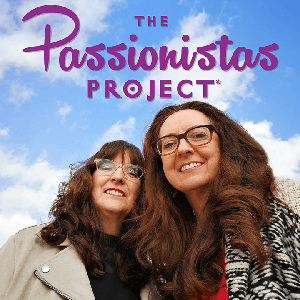


Marlo Meyer, a cultural anthropologist who is the Education Administrator for the Department of Pediatrics at the University of Virginia, is also co-owner of the Meyerhof Farm in Manton, California. The family owned, small farm specializes in organic practices and soil sustainability farming hops and herbs. She is currently fighting to open a local school for her farming community.
Read more about Marlo.
Read more about The Passionistas Project.
Hear more from Marlo in these added value clips:
Marlo Meyer on her proudest career achievement
Marlo Meyer on the influential female role models in her life
Marlo Meyer on her professional mentors
Marlo Meyer on her pop culture icon
Learn more about your ad choices. Visit megaphone.fm/adchoices
Nan Kohler is the owner of Grist & Toll, an urban flour mill in Pasadena, California. After spending years in the wine industry, Nan turned back to her first love, baking, and was inspired to become a pioneer of the local whole grain movement.
Read more about Grist and Toll.
Read more about The Passionistas Project.
Hear more from Nan in these bonus clips:
BONUS: Nan Kohler on the milling process at Grist and Toll
BONUS: Nan Kohler on the name Grist and Toll
BONUS: Nan Kohler on where she sources her grain
BONUS: Nan Kohler on how long does her flour lasts
BONUS: Nan Kohler on what she would be eating if she could be anywhere
BONUS: Nan Kohler on Passionista Clemence Gossett
BONUS: Nan Kohler on not having role models or mentors
BONUS: Nan Kohler on her pop culture icon
FULL TRANSCRIPT:
Passionistas: Hi and welcome to The Passionistas Project Podcast. We're Amy and Nancy Harrington. And today we're talking to Nan Kohler the owner of Grist and Toll, an urban flour mill in Pasadena, California. After spending years in the wine industry Nan started selling her baked goods at the Studio City Farmer's Market and working at the Sweet Butter Kitchen. But after seeing a video about a mill in Bath, England, Nan was inspired to open Grist and Toll and become a pioneer of the local grain movement. So please welcome to the show Nan Kohler.
Nan: Good morning. Thanks for having me.
Passionistas: Our pleasure. Thank you for being here. So, what are you most passionate about?
Nan: There are many things, so it's hard to narrow that down to something singular but they do all revolve around whole grain. And so I am definitely very, very passionate about changing everyone's perceptions of whole grain and what that means for baking. And on all different levels from an artisan sour dough loaf of bread to the fanciest type of French pastries.
Passionistas: So how does that translate into what you do for a living?
Nan: Well I am creating flour so it is just like making wine, roasting coffee beans, teas, everything hinges on the quality of that sourcing of ingredients. So it's really critical that I continue establishing long term relationships and collaborations with farmers and that we have a continuing dialogue on the types of grain and the diversity of grain that is being planted and how it's being grown. Because we're not used to thinking about flour as a flavorful ingredient. We're thinking of it as the body of what you're making. But all the different grains really do have dramatically different flavor, aroma, color, character, textures. So it's really quite complex. What you can do when you keep the integrity of that grain intact that's what gives you all of those different choices but everything depends on the quality of the grain to begin with.
Passionistas: So how did we become a country or a world where flour just became this bland ingredient?
Nan: Well we decided we wanted white bread. So that really everything about what is grown, how it is grown, how it is milled and processed and handled is all in service to basically creating that white sandwich loaf of bread at the grocery store at a very, very cheap price. So older grains, the stone milling process that I use, those are disadvantages to creating the white bread so they had to go away. And things had to radically change in order to give that to us.
Passionistas: So how did you get interested in all of this?
Nan: I don't know that there's an easy answer for that. I've been a lifelong baker, so looking at my ingredients and what I'm using to create cakes or cookies or pies that's always been very interesting to me. But we really have been trained not to think about flour. Right? Someone else tells you this is your bread flour. This is what pastry flour is about. But I'm a curious baker. And so when I was baking that Sweet Butter and even just at home I was integrating oat flour, rye flour, whole grain pastry flour, all sorts of different things. So I'm naturally kind of curious and inquisitive that way. And I really believe that my time in the wine industry is what brought a lot of this... It may not have brought it into focus as in 'Nan you're going to open a flour mill someday' but it definitely affected my palate and my awareness of flavors and textures which one hundred percent affected what I create as a baker. And so it was kind of being in the place thinking about creating something of my own, wanting it to definitely still engage all of those things that I love — restaurants, chefs, bakeries, pastries and cooking. And that's definitely what led me on the path, or at least made me open, to when I watched that television show thinking whoa the flour and they go to see the local mill. And here I am in Los Angeles with access to everything and the best of everything. And I have no idea what it means to put my hands in fresh flour.
Passionistas: How did you actually go about building your own company and building the mill?
Nan: That is still a work in progress. I've officially been open for five years and on the one hand as a sole entrepreneur and someone working the business every single day, five years feels like a significant amount of time. I definitely energy-wise feel I've put the work in but there's still so much of a learning curve that it literally still feels like five weeks to me because it never ends. All the things that I have to know about and educate myself on. It's just a constantly moving target. So it's very interesting. I've had these moments from time to time because if you read a lot of books and biographies of people who've started their own business, successful entrepreneurs, everything seems to happen in a very linear way and there are these big celebrated moments. And I thought well I'll have that too on the day that the mill shows up it's gonna be a party with champagne and this big thing. And in the end it really is just one day after the next kind of problem solving.
So the day the mill arrived from the port we were in the middle of troubleshooting things for the health department and permitting things. And it was really a moment of great. It's here. I hope it's not completely destroyed inside that box. Once we push past this problem we'll take a look at what's inside. There weren't these big, significant pauses or celebratory resting places along the way. So for me what is the most exciting about this is I don't think it will ever be static. That's also incredibly challenging because you don't ever get to just kind of rest on your laurels and take a beat. But it definitely keeps keeps me engaged.
So the beginning it was a hunt for equipment. If you want to mill on a smaller scale you can't go to the yellow pages and find 500 resources for that. Most of that equipment is made overseas. Because smaller or larger scale bakeries in Europe, it's still a pretty general practice that they buy grain and they mill for themselves. They do a lot more wholegrain baking so the stone milling component makes sense. So in the beginning it is sourcing.
Next it is OK you're going to do something definitely considered outside the box in the Los Angeles food world. Who is going to allow you to do it in their city? So the hunt for where to land the business took about a year and a half.
And then there's a lot of just fine tuning and tweaking and relentless education. And again I made comparisons earlier to the wine industry and the coffee industry. Any time you want to take something that is big and industrial and make it very small and personal you just fight the economies of scale all the time. So micro distillers, micro beer brewers, we all also have to become mechanics and repair people and source creatively for things that make sense for our process and our equipment. But is not a mill in a box or from that one place that helps all of the local regional stone millers put everything together. So you're building it kind of out of thin air.
Passionistas: We all have been taught for years that if you're going to eat healthy gluten products get whole grain. But what does that really mean and what is the nutritional value of these whole grains you are talking about?
Nan: Well it's significant. And we really have lost a lot of fiber in our diets by walking away from whole grain. I'm going to be really honest. One of the most frustrating things that I find in the marketplace right now is there's a lot of excitement about heirloom wheat, stone milling, whole grains, artisan bread baking, sour dough bread baking as Instagram is exploding right. But there's not a lot of transparency with those names and terms. I remember hearing from the baking community that whole wheat if you wanted to make a whole wheat bread it had to be 51 percent whole wheat. The term whole grain is not really regulated. And actually that expectation on whole wheat is not correct. But it took me almost two years to be connected with the right people at the whole grains council to actually look at the FDA rules and regulations so whole wheat means whole — whole wheat. There can't be any refined white flour in a product that wants to carry the label whole wheat.
Nan: So for us in the real world it just is obvious that they don't have the ability to enforce that on the street at all levels. They do with Sara Lee and Eggo waffles. If you go, because I did the experiment I said OK. Whole wheat means whole 100% whole wheat and I just started flipping over loaves of bread and boxes in the freezer section and sure enough they say whole wheat. If it says wheat flour that's sifted white flour. So there's a lot of smoke and mirrors out there and now whole grain is kind of being corrupted because it doesn't have that written policy attached to it. Consumers who are definitely interested in health now and transparency in the food system can find it very frustrating out there. And a lot of home bakers who come to see me will say I'm using your flour, I'm using your formula and my bread doesn't look like the Instagram photo. Except that the Instagram photo that says spelt bread is only 10 percent spelt.
So there's nothing kind of regulating our community right now. So that we're all on the same page with how we're being transparent and educating the marketplace. And it's a huge problem because we're already diluting a lot of the work that some of us in these regional movements are really busting our tails to do. So if it's an iron corn loaf of bread I expect it to be iron corn. And I've had a lot of conversations with bakers well what percentages and I said well my answer is if you're buying a cabernet sauvignon how much riesling do you want in that bottle? You don't. You're buying cabernet sauvignon. If you're buying Bordeaux. You understand it's a blend of the approved red grapes and things like that. So I think that ultimately we're going to have to get to some sort of real regulations on labelling. It's just a question of how. How long will it take to get there? But for me I'm the girl who started the #WholeMeansWhole. So if it says whole grain that means it's whole wheat but it might not be wheat. It might be spelt and therefore it's grain.
Passionistas: How do people learn to adjust recipes to do that... To go a hundred percent?
Nan: Well that is the million dollar question because there isn't a simple answer. There are definitely grains like spelt that I just mentioned that make it easier to do a one to one sub for all purpose flour. But they don't behave exactly the same. And so you can either look at that as an immovable obstacle for you as a baker or you can look at it as I do which is this is what makes it incredibly inspiring and fun. And at the end of the day it's a chocolate chip cookie, if I need to take out a little bit of flour in the next round because I felt it was a little thick or heavy. It's not the end of the world. So my best answer for you is they are different. It's not a one to one sub certainly not with bread flour and in bread recipes. That's where it can be the most challenging but for most home baking and for most all purpose recipes — cookie, scones, quick breads, muffins, waffles – we're pretty fearless here. And we do kind of our ripped from the headlines experiments where we'll just pull a recipe from a current issue of Food and Wine magazine or Bon Appetit, something that looks interesting. And we just pick our grain and we go all in one to one. And literally 95% of the time we don't have to change anything.
Nan: So you just have to go for it. And then, we do give advice for how to kind of tweak things. And normally what I tell people for all purpose baking is I use the flour as my control element. Meaning if a recipe calls for three cups of flour and I know that stone milled wholegrain flowers are thirstier, so they interact with being hydrated differently than a white all purpose flour does. That's the thing that's the most dramatic, color because they won't look as white but then also in application. And so it's pretty difficult to say you're going to need to bump up your hydration 10 to 12 percent. I can say that to a bread baker because that's a certain number of grams of water only. I can't tell that to someone who's going to make a blueberry muffin. Because the liquid is the sugar, the butter, the eggs, the sour cream or butter milk. And how do you adjust 12 percent on an egg? And something else is ridiculous.
But what I have found through practice is if the recipe calls for three cups of flour and I want to use heirloom sonora wheat, I simply the first time I make it will withhold about three tablespoons of flour. And leave all of my liquid ingredients the same. And usually that's all I need to do. If I look at that batter and it's just soup it is so much easier to sprinkle in a little more flour and fold it in again than to try to do the math calculations and adjust everything else.
Passionistas: How many people in the country are there like you that are doing this?
Nan: Well there is a lot of smaller scale regional stone milling happening. And it's happening on many different levels. Bakers are starting to mill for themselves. Farmers that are reintroducing wheat as part of their crop rotation. Some farmers are putting mills on their land and introduce flour there. As far as I know there is no other urban flour mill. So no one has really taken the soul craft of milling and dropped it in the middle of a big city.
Most of them are attached to farms or associated with one of their growers or are out in more rural environments, which I get. Because it's definitely, some of the difficulties can be removed. You can have you know, pay much less rent, have a much bigger space. But I still think the biggest obstacle to changing how we grow wheat and how we create flour is the public has to have access to it or they're not going to demand it. We have to create the marketplace and everything is a bit backwards. And we're actually very behind what the market wants right now. Customers would love it if I was open seven days a week. They'd love it if I had a second location in Santa Monica. Los Angeles is big and it's tough to get around. So it's a big deal that that many people drive out here and have found me It's pretty incredible and that says that the market is out there to support this even though there's a lot of projected what I call kind of extremist ideas that say we can never do this because the cost it's just too extreme. Between what we're used to and what we actually have to get to in order to create something sustainable.
Passionistas: What is your dream scenario for what this company is 10 years from now?
Nan: Well that's a great question because it is not the same as it was when I opened. I will tell you this I outgrew this space two years ago easily. So in ten years I won't be here. I can't be here. Because I can't sustain the growth in this space. I will absolutely be having very regular educational baking classes. I hope that at that time I also have a nice network of farmers. And we are planting seed diversity and saving seed and providing seed. And information for other regional hubs that want to develop. I hope that in 10 years I'm more of a tangible resource also for other people who would like to do this. I hope that I'd be able to collaborate on a larger baking scale with higher volume companies that want to integrate local wheat. So how do you find it? How do you put the pieces together for someone to mill it? And how do you then reformulate higher volume production needs to accommodate local wheat? Those are the things that have to have happen. I hope that won't all be on me but we'll see.
Passionistas: We're Amy and Nancy Harrington and you're listening to the Passionistas Project Podcast and our interview with Nan Kohler. To take your baking skills to the next level. Visit GristAndToll.com and shop their incredible line of wholegrain freshly milk products. Now here's more of our interview with Nan.
You're part of this local grain movement and you've really become a conduit between farmers and bakers and share information back and forth. So what changes have you seen on both ends of the process in the five years you've been doing this?
Nan: I've seen the noise level increasing. And so it's not as difficult to grab someone's attention and have a conversation either with a farmer or with a baker. I'm gonna be honest though and say I haven't felt great movement in action on the ground. So I feel tremendous excitement and movement and support from the home bakers. On the industrial side, on larger scale bakeries, it's much more difficult. It's going to take a long, long time for them to wrap their heads around the difference in price point, having to change formulas and practices on a higher scale. So obviously I get that. I understand that. But at the same time at a certain point, more people have to have to also jump and take that leap of faith or we don't get that change. Or we need more urban mills who can simply put it in a higher percentage of the home baking community because they are in. And they are looking for more people more collaborators. They would love it if they could come here and I could give them 20 bakeries that they could go to that are primarily using local wheat. They're ready to spend their money there. It's just really slow going getting those people on board and the difficulty with seeing big change in smaller regional farms is another topic that has come up a lot when I have conversations with other collaborators. And that is this idea of shared risk. We cannot continue to expect smaller farmers to bear all of the financial burden of putting all of this back into place.
Secure the organic land. Buy the really, really rare hard to get heirloom seed. Grow it out. Buy a new combine so that you can harvest yourself because you have a smaller plot of land and the big guys only do you know thousands of acres at a time, not tens, or hundreds of acres. Buy new seed cleaning equipment for tens of thousands of dollars. So there is still a tremendous disconnect between someone wanting a reasonably affordable bag of local flour in their hand versus the actual backbreaking costs of what it takes to get there.
And so I've begun having very real conversations with others saying we all have to pony up. Because it's also difficult for me. If I want more seed diversity I can go buy seed and I can pay a farmer to grow it for me. But when that harvest comes it's mine. And in this tiny facility I can't store all of it. So even for me the burden of the cost of cold storing that grain or having a satellite location where I will have to hold it for — depending on how big the harvest is — six months to a year. I don't really get that expense back when I charge even a very expensive price for one bag of flour. So bakers have to start committing to the volume right. We all have to contribute some funds upfront to take some of that burden off of the farmers so that we can really start seeing increases in volumes. Because my worst fear is that this will just perpetually be a cool little niche sort of a thing. And those of us who are in the trenches. That's the last thing we want. The farmers want to feed their communities. I want to feed my community. I want to feed creativity. And I don't want it to be for an elite circle of people who have X number of dollars a year in disposable income. I want everyone to have real food. And the flour and the process that is out there right now is not real. It's artificially stimulated and it's not good for us and it's got to change.
Passionistas: You've mentioned home bakers. How do you go about educating them so they know that they have choices beyond going to the supermarket and picking out the baking flour versus the all-purpose flour?
Nan: Well we just do it here as much as we can. So every person who works with me is a baker. And so we all take turns going out there and helping customers and answering questions. To the best of my ability we also are testing every week here at least a little bit. So that we can create recipe cards. So that when someone buys that Ronan the French wheat that I had grown. We have at least two or three things that we know works. And we have our own hands-on experience with it, to be able to tell them any little minor tweaks or adjustments we think they're going to make. The educational component is daunting not because it's difficult to talk about the grains but just one person amassing all of that information and trying to get it out into the marketplace is ridiculous. I can't do it on my own. So we still need more people working with this product. Also putting that information out there.
It's funny how as a small business owner, the challenges they just move as your business grows. In the beginning, it was that just that battle to get open and to put everything in place. And then it is, am I even going to find local wheat? And what does that look like and how do I pay for it and get things going? Will anyone show up at the front door when I put the open sign out? Now even though many of those challenges still exist I'm going to honestly say my number one challenge is that I really need to just be baking all day every day and creating that content. I should have videos on my website. Every weekend you should be able to come in here and taste a new fabulous baked good and walk out with that recipe card. I should be blogging. It doesn't end but that need is very clearly there and the interest is there. So it's really frustrating for me that I can't deliver in spades on all of that every single day. But the production volume is high enough now that I'm really I'm tied to the mill every single day.
Passionistas: So you said you feel like you don't have enough time in the day to do everything but what about those days when you just don't want to do anything? Like how do you keep yourself motivated?
Nan: Yeah those are tough. I'm not going to lie. They happen pretty regularly because I really haven't had a vacation and it's been intense in five years. And I will just tell you it's like everything else. There were, there have been moments where I thought it's just not gonna work. I'm never gonna be able to open the doors. That certain city people are not going to sign off. They just don't get it and are too afraid. I've had tremendous problems with grain arriving and being all over the bed of the truck instead of in the bags and things that have made it incredibly difficult. And honestly it is just that work ethic. You get up and you show up. And once I'm here it may be that I'm not in such a great mood and I have a lot of drama to deal with. But I just put my head down and one thing at a time. I try to attack what I can. I gave up on checking off the to do list at about week number two because every day my to do list grows by 10 pages and maybe I cross off three or four from the top. So it's, it's intense but I just had to start to be okay with showing up and doing what I can. And I still get stuff done even on those bad days. And also inevitably on one of those day, one retail customer comes in and says wow thank you for being here you changed my life, and that list of 10 pages is irrelevant.
Passionistas: So is there one lesson you've learned during your journey so far that really sticks with you?
Nan: I think it was just so worth it taking that leap of faith. If something horrible happened. If I found out I just can't do this anymore. If I did get to that point where things were just it was too hard to source the wheat and not enough income coming in for the business. I would have no regrets. Because taking that leap and just showing up and trying to do the work has taught me that really anything is possible. And even if you don't get your best outcome, it is magical along the way. Because there's so much more that empowers you and reaffirms why you believe what you do. Why we need to have courage. Why it's good to fight for change. And I never would have had that confidence in at least those resources within myself if I hadn't.
Passionistas: What's been your biggest professional challenge and how do you overcome it?
Nan: I don't think I've overcome my biggest professional challenge. My biggest professional challenge is this is much bigger than me and I don't think that's going to end anytime soon. So instead of just opening a flour mill I decided I wanted to change flour and changing flour is so much bigger than Nan Kohler. And it involves a lot of other people and a lot of other things that I have zero control of. Also putting out their best work and the chances of me getting that all day every day. In addition to my own tasks are pretty slim. So my biggest challenge is coping with the things that I have no control over and knowing that they're never gonna go away and I'm not super great at that. I am a person who is pretty self-sufficient and if I'm interested and I'm trying and engaged I can make things happen. But there is so much about changing wheat and flour that I absolutely have no chance of making happen on my own. That's the biggest challenge.
Passionistas: So what's the most rewarding part of your caree?
Nan: Every day I turn that mill on and the flour comes out. Every time I have the luxury of baking with it. It is never boring and it is never negative or intimidating even when there are failures. It simply opens up another perspective so I feel much more confident and much more in control. As a baker and you'd think it would be the opposite because my ingredient is shifting. But I find that empowering. And so again I wish I had more time to just bake. It's very therapeutic and every time I bake something with spelt I have ten more ideas of what I want to do with that or what I can and will hopefully try to do with it. And then the next harvest will come in and I'll be slightly different which is also cool and exciting.
Passionistas: So on your journey so far is there one decision you've made that you felt was like the most courageous and really changed the trajectory of your path?
Nan: I will say there are two, but one is definitely more important. The one decision to be in the city was critical and absolutely right. The second was I completely changed my perspective from the flour that I thought I was going to be milling and making. So my background as a baker is the same as everyone else's. The white all-purpose flour, the bread flour, the pastry flour. And so my business plan is full of notes and numbers calculated on sifting and creating refined flour but I was gonna be super fancy. I was gonna do like the type eighty five so I could have something like they have in France and that the pylon on bakery uses. And it didn't take me long to start milling that flour and baking with the single pass flour on the steel mills to know that I was going to completely reject that and go all in with whole grain.
So on many levels that has made my work much more difficult because I'm not only asking you to pay a higher price point for more transparency and for more diversity, but I'm basically telling you let's just forget the past two to three hundred years of the world's worst, unappealing wholegrain flour just conveniently forget that that's our history and fall madly in love with whole grain flour again. And that is a very substantial wall that I break down with every new baker who walks in because of course they come through the doors or I get inquiries from professional bakers hi can you provide us with Double O flour we'd like to start buying pallets of your locally milled Double O flour. So that first... I hate that most of the time my first conversation is starts with no I don't make that and that has changed everything. There's no turning back for me. I will not bake with refined flour again whether or not Grist and Toll exists 10 to 20 years from now. It is lifeless to me and my palate has changed. Everything about how I taste and eat and bake is radically different.
Passionistas: So when you were a little girl what lessons did your mother teach you about women's role in society?
Nan: Well my mother always worked. And she was a very big contributor to the household income. She was the household manager. And an incredible cook and baker. So her example was we work and we contribute. And we do really great stuff. And she just always instilled a lot of confidence and a lot of emotional support for me is hey you're a smart girl. You have a lot of talents and you need to feel good about that. And you need to do something with it. So there was a lot of pressure that I put on myself as a business owner I will hear those voices from home like you did return that email really. I expected more of you, that sort of thing. Responsibility and paying it forward. So those were definitely parts of my home education in a good way.
Passionistas: What's your secret to a rewarding life?
Nan: My secret is it's just always been understanding who I am. Trying to understand the limits of what I am and am not capable of on any given day. I just want to be able to go home and know that even if things didn't go my way, I gave it my best shot. And even on a bad day my best shot is pretty good. I know I'm going to try. I know I'm going to deliver my best work. I don't always win but I can live with that. As long as I'm still in the game.
Passionistas: Do you have a mantra that you live by?
Nan: Show up and care about what you're doing. And be curious. The biggest red flag for me, bakers, farmers, people from other parts, who come here and they don't have a question for me. They're not curious about what I'm doing or how I'm connecting with farmers or how I'm baking with my flours. I have no interest in people with a lack of curiosity. Asking those questions and not being afraid of being challenged is really, really important.
Passionistas: What's your definition of success?
Nan: I think it's along those same lines. Because even if I had to close Grist and Toll I would still consider this undeniably successful. I think the success is that I jumped and I went for it and it's still a work in progress but it's working. There's still so much more to do. So I don't feel successful except that I know that I'm having success because I haven't closed. It's still working. I don't think of it in terms like that. Again, it's just for now I'm showing up and I'm doing the work and things are still moving forward.
Passionistas: What advice would you give to a young woman that wants to start some kind of specialty business like this?
Nan: I say, always feel like you should go for it. But also you cannot walk into it being afraid of the work — physically and emotionally. The more you can do kind of centering yourself and thinking about, I'd like to think about the bigger picture goals more. It makes the smaller losses more bearable. If I find that still my overarching work is still moving to something that has purpose and meaning you know it's very interesting. I've always wanted to have my own business and I think people in my life always naturally assumed I would have my own business. But coming up with that one idea that's going to be the one I've seen many people who tried and had failures before they had kind of the money maker or the really successful one. I was just kind of simmering and not really putting everything together.
I think the advice I would say is listen to yourself. Grist and Toll was the idea where I literally said to myself if I don't do this, me personally, Nan Kohler. If I'm not the one to do this and five years from now I read an article in Food and Wine magazine about someone in San Francisco or someone and someone else I will be beside myself. I won't be able to live with myself. And so it was not a lightning strike. This is it. You know and the chorus is singing "Ahhh" in the background on the big speakers but I just knew it. And so listening to that inside yourself I think is really important because that is that point, when there are some people who will say that's just a crazy idea that you have to be able to ignore. And again just trying it is the win. So I'm in favor of going for it. We need more courage and we need more people taking leaps of faith. Otherwise we're just simmering like I was.
Passionistas: Thanks for listening to the Passionistas Project Podcast and our interview with Nan Kohler. To take your baking skills to the next level, visit Grist and Toll.com and shop their incredible line of whole grain freshly milled products. And be sure to subscribe to the Passionistas Project Podcast so you don't miss any of our upcoming inspiring guests.
Learn more about your ad choices. Visit megaphone.fm/adchoices
Madonna Cacciatore is the Executive Director of Christopher Street West/LA Pride. Prior to taking on this role, Madonna worked as Director of Special Events at the Los Angeles LGBT Center overseeing projects including their annual Vanguard Awards and the Simply DiVine event. She began her career in activism at AIDS Project Los Angeles after doing grassroots work in Washington for marriage equality and volunteering at The NAMES Project — The AIDS Memorial Quilt.
Read more about LAPride.
Read more about The Passionistas Project.
FULL TRANSCRIPT
Passionistas: Hi and welcome to the Passionistas Project Podcast. Today we're talking to Madonna Cacciatore, the Executive Director of Christopher Street West, the 501c3 non-profit that produces the annual L.A. Pride Festival and Parade. Prior to taking on this role Madonna worked as Director of Special Events at the Los Angeles LGBT Center overseeing projects including their annual Vanguard Awards and the Simply Divine Food and Wine event. She began her career in activism at AIDS Project L.A. after doing grassroots work in Washington for marriage equality and volunteering at the NAMES Project — The AIDS Memorial Quilt. So please welcome to the show Madonna Cacciatore.
Madonna: Thank you.
Passionistas: We're really glad to have you here. We're so excited to be doing this interview.
Madonna: I'm excited to be doing this interview as well.
Passionistas: What are you most passionate about?
Madonna: I think it's every living thing having a chance to thrive — every person, every animal, the planet, every tree. I cry for any time tree's cut down in L.A. which is pretty much all the time, so I'm always crying. I'm about to cry now. Yeah I just care about life.
Passionistas: So how does that translate into what you do for a living?
Madonna: It translates beautifully because I've been an activist for most of my life. I came out as a lesbian when I was 19 years old and I grew up in Texas so I had a lot of great friends and I had a lot to deal with. So ending up being here as the Executive Director of Christopher Street West L.A. Pride is kind of incredible. This isn't where I was headed. I thought perhaps it was in some alternate universe.
I came to L.A. to pursue my acting career and I was doing event production and I sort of stumbled into the nonprofit world that way. I was hired to do a event fundraiser a summer party at AIDS Project Los Angeles that was supposed to be a temp job to sort of pay the bills. And then we hit it off and then I just started working there. And then I produced more events. Meanwhile I kept my acting because that's my passion and my career my acting and theatre has been part of my life — dance and theater for my whole life. So I kept sort of all of my worlds going trying to believe that I could do all the things. I still believe I can do all the things.
But ending up with a trusted fantastic board of directors and Esther Von Montamayor who's our board president of L.A. Pride really putting his faith behind me and just sort of being a professional gay is pretty incredible. And being able to work with people who have like minds and like spirits and want to make change and want to have a place where people feel they can come out and be safe to do so. And not just come out is not even just LGBT, allies coming, out bisexual people coming out, and not being judged by our own community for who we are or by anyone for who we are. So I feel like I'm in a great position to be where I am. It fits with everything I've done in my life from lying down on the street in Washington D.C. yelling "Free Barbara's Bush" to you know being here today it's all pretty cool.
Passionistas: Tell us a little bit more about your childhood in Texas and what that was like.
Madonna: We ended up in Texas. My family's from New York but we ended up there my dad was in the military and that's where he met my mom. My grandfather had a restaurant called Dan's Venetian Club. My mom's side of the family is from Venice and Parma in Italy and my father's side was from Sicily. So they all argued about who spoke the right dialect. And they always drove into Italian when they were upset. So I know all the bad words. So my dad was in the restaurant business and my parents were you know we ate well throughout my life but I also worked really hard when I was young.
We all worked in the restaurant. You know I washed dishes, I served people my dad cussed at everybody who came in the door. He loved Italian food. I mean that was a specialty but he also cooked an amazing cheeseburger. And so somebody would come in what kind of mood is Salvadori in today can I order a cheeseburger? God damn son of a bitch you know yeah. All right whatever. Yep. How are you doing today John? You know I knew he would just he would go into a tirade and then he would be honored to fix them whatever they want. Of course I eat no meat anymore. Let's make that clear. But I grew up with everything. So I was raised by Italian Democrats in the middle of a red state. At the time though it was a little different. You know there were just the signs in the yards and people would pull people signs out of the yards for whatever politician which is very immature. But it's not like it is now. I feel like it's gotten way worse. So I still was able to just be who I was. Probably all our neighbors were Republicans. We were the only Democrats. We were the Kennedy Catholic Democrat Italians. I loved what all that stood for at the time because for me it was about being courageous and taking care of people. And so it was interesting growing up. But we always went back to New York. I have cousins and I'm actually rediscovering all my cousins that were either in Texas with me.
Interestingly enough there's a book called "The Road Back To Thurber" which is a little town called Thurber, Texas. And this pocket of Italians ended up there. And there are the Pontramolis, the Byzantines. And I'm finding them all again. And so the Cacciatoress and the Rafeals, which was my mom's side of the family. So I was very much influenced in the Italian culture. But we were in the middle of Texas. So it was sort of like not the Texas for me that I see represented sometimes. It was a different version of it. And it was pretty cool. I liked it.
Passionistas: Tell us about your acting and dancing career and what kind of projects you were involved with?
Madonna: When I was six years old my mom put me in ballet. And I was very incongruous my whole life. I was in ballet and then I was playing army with the boys. So you know I was always considered myself a tomboy. But I would also go do barre in ballet class and loved that equally as much. Because I feel like dancers are the most finely tuned athletes there are. I don't care who you are if you're a dancer you've got a grealy tuned body. And basically whenever I was dancing I started really digging like jazz and modern dance at the time — now it's contemporary. So throughout my life I always danced. I danced for about 42 years. I kind of I really still wish I'd feel like a fool right now I probably but I always feel like I have that as part of who I am and could go into a dance studio very easily.
But I moved to Chicago and did my first musical which was "Carousel." I play Louise and my best friend Gayle Beckman played Julie. We've been friends ever since. That was in 1981. I was also in dance companies but I transitioned into some musical theater and then I moved to D.C. and I became part of this like feminist Dance Troupe and we were doing this music festival called Sister Fire, which was a women's music festival. And there were people there like Tracy Chapman and Alice Walker. And it was really cool. You were just in groups of amazing women just creating art. And one of the pieces we did was about the Chinese foot binding. This woman Sandra Cameron directed this company and we basically she wrote about women's sort of history. So all of our dance was very powerful. We danced with sticks and we created the witch burnings and we did all these things but that was called "Yashin and the Golden Carp" and it was about Cinderella's feet being bound and she being the only one who didn't have the freedom to move about like her stepsisters. So it was just that story and sort of storytelling in that way was incredibly important to me. And then I transitioned from that when I moved to DC. I ended up studying at the Studio Theatre Acting Conservatory and the Shakespeare Theater. And took classes at the Folger the arena. The really cool places. DC has an amazing theater community. And so that just sort of propelled me. I stopped dancing as much and I went into theater.
And then I got this like under five rule on "The Fugitive" as the law co-star role. And it was the one with Tim Daly. It was that and I had a little teeny scene with Michelle Hurd who I still just think is one of the most wonderful people. And I was like that's it I'm moving to L.A. I got my own trailer I'd only ever done theater and extra work. So this is the first time they said oh we'll take you to your trailer and it's like I have a trailer? I thought I was going to have to stand in the rain and like wait for somebody to schlepp me somewhere. And so I moved to L.A. to pursue that.
And then I just you know I got on a few sets and I did a lot of training. I trained with Dee Wallace. Dee also one of my mentors and she taught me that I'm good enough to be here basically. I was in Dee's master class for three years with a group of people who are amazing and we're all still very, very much connected. Many are or you'll see on working you know a lot right now. So I felt very blessed in my path because I was surrounded by people always who were either creatives or who were very passionate about what they were doing in life. Whether it was entertainment or nonprofit work or just trying to feed the homeless you know. So I've been surrounded by great lights.
And then of course when I moved here I met Robin McWilliams who is everything to me. She's clearly the better half of me.
Passionistas: Let's circle back to Washington for a minute and just tell us a little bit about the work you did on The Names Project — AIDS Memorial Quilt.
Madonna: The first year of that quilt I believe was 1987 and I went with my brother's ex partner and my brother had just been diagnosed. And then there were 2000 panels unfurled. And that was the most... I mean I was sobbing I'm in. There's a book called "The Quilt." And there's a little picture of Jimmy and me and he's he's hugging me and we were just. We'd both been sobbing. And then unfortunately when it came back two years later my brother's panel was in it. I made a panel for him and it went from like 2000 to I think 20,000 to the last year I saw it unfurled it was 45,000 panels. It was stretched from the Capital almost to the Monument on the Mall. It was quite incredible. So I volunteered. And it was a way for me to sort of heal and see that other people were experiencing what I was experiencing. And sort of be in the Sisterhood and the Brotherhood in the eyes of everyone who was dealing with this crisis and this sort of crisis of government at the same time.
Our brothers mainly at the time many gay men were dying but you know it was transcending into all communities. And to see people care and to be in one place like that is really amazing. When your heart is completely just broken and astonished that a whole group of people who could be ignored or judged because they got a disease for being gay you know are condemned. You know there was a lot of condemnation going on. Like there is now. So for me being in spaces where I could make positive change. And we learned cool things at the Quilt. They taught us how to fold up the entire quilt in 60 seconds. You had volunteers on each corner and you go fold, fold, fold, fold, put them in plastic bags. If it was a downpour you could save the quilt in 60 seconds. I mean that was pretty cool.
Also I was learning about how activism turns into action. Lying down in the street felt this is good. But when you're able to do something that feels like I'm here and I'm making a difference and I can be standing here and educate people about people who died or were actually great people. We're gonna be missing a lot in our future because they're gone. Still gets me. So it was life changing for me because that was the first sort of crisis where people were dying. And I was going to memorials in New York constantly and in D.C. and sitting by people's bedsides and going to hospitals in New York with our brothers who were just you know they try to make you wear masks. And I felt like, I'm not wearing a mask. I'm going to hug him. And so it was going from that to sort of seeing them begin to find drugs and things that would help people live. And you know where we are now which is pretty amazing that people with HIV and AIDS can thrive. So that was a pivotal point and The Names Project was very important to me.
Passionistas: Was that the beginning of your decision to really become an activist? And what's your journey been in that capacity?
Madonna: I didn't think of myself that way. I didn't think of myself as an activist. I felt like doing what I needed to do to help people live at the time. But also to help other people. And you know I'm big animal activist. I do consider myself an animal activist. Any time I see an injustice or you know with social media we see it all too often where you see horrible things happening to animals I just like literally I almost can't take it. But I have to do something to save something you know. So I'm always just like what can I. You know we have five cats. I'm sorry but I'm a typical lesbian. And it's because well three of them their momma was taken by a coyote and we ended up with those three. And the other one ran into a florist on the corner of Wilshire and Western and we had to take that one. And then the last one was on the side of a highway. So we're done. But we rescue and we have friends. My friend Addy Daddio — peace out girl I love you. She's also a great Passionista, by the way. She has an organization called Love That Dog Hollywood. She rescues dogs. My friend Angie Rubin who's also a music editor rescues every cat in the world. I mean there are a lot of good people doing a lot of good work.
So my activism I guess was just me sort of progressing through life and seeing things that I wanted to adjust or make try to make better or try to stop pain for someone. I'm not used to talking about myself in that way. It's more about being around people who are just really good people. And we have a terrible homeless crisis in L.A. right now. It's everywhere. I mean we live in the Hollywood Dell, which is kind of uphill and there are encampments everywhere. And there's this desire to make things better and help homeless people get off the street. We were actually able to help a woman who set up in one of the tunnels there. We had to keep moving her because she got beaten up once. She had a big dog and a little cat and they all lived in this tent. We're able to get them into a place where she now is thriving. She's working. She's got her animals and she's in a place where she's actually getting herself back on her feet. But had it been left to some people in the community they would just get her out of here. She doesn't belong here. Well you know it is true that also there are aggressive, mentally ill, homeless people as well. And I have as much compassion for them as I do for anybody who is on the street. But it's like we've also had people break into our building. And so what's walking the line between safety and caring.
But it's so out of control right now. I don't think anybody really knows what to do. People are struggling with how to deal with it. And so we're all activists. We're all active on whatever we're doing. It's just that my activism and my life has led me toward. I think it stems from my parents. My parents were very caring people. They would feed the entire neighborhood lasagna. They would like feed the ducks lasagna. They fed everybody lasagna, but they also, they didn't judge. My dad had a reaction to my being gay but then he wanted to invite her over for dinner like one second later. So my mom was always that person is like Oh honey she's very soft spoken I just love everybody and I just love who you are. It doesn't matter. You just you know and she was just my best friend you know. So for me it's just been about carrying an open heart and love in the world. And sometimes that's incredibly painful to.
Passionistas: We're Amy and Nancy Harrington and you're listening to the Passionistas Project Podcast and our interview with Madonna Cacciatore. To learn more about all the exciting events at this year's L.A. Pride Festival from May 31st first to June 9th. Visit LAPride.org. Now here's more of our interview with Madonna.
Talk a little bit about your work at the LGBT center as the Director of Special Events.
Madonna: I went there right after AIDS Project Los Angeles. Position opened up I applied twice. I got in the second time I seen Lorrii Jean speak the CEO of the Center. She's one of my mentors in the world. Actually Lorri and I were probably circling each other at Sister Fire, the event I mentioned. Because we were both in D.C. at the time. So I went to work the Center. I finally got hired as an Event Manager and then promoted to Director. And we did seven or eight galas together maybe seven and Simply Divine Food and Wine event with another role model for me Susan Fenniger. I love that woman dearly. And David Bailey and Lloyd Denims. We did this LGBTQ Food & Wine event and we actually ended up bringing it the last year that I was there, which was two years ago to Hollywood Forever Cemetery. So having a food and wine event in a cemetery is really awesome. Especially Hollywood Forever because it's kind of iconic. And they do the movie screenings there. So it's a cemetery but it's also this celebration place. That's really this cool mix. So it was very successful there but we did many many great fundraising events together. An Evening with Women was one of my favorites. Linda Perry. Every time I say a name I'm like these people have influenced me so greatly. Linda gave, every year she would help us get artists like great artists like Pink and Christina Aguilera and Cei and Ozzy Osborne and every year we had this amazing lineup of music in honor of women. And Linda she produced it. She directed it. But I was just felt lucky to be in the room with a lot of these people.
In raising money, you know, when you get to announce at a gala that you raised $1.3 million dollars a night that's a great feeling. And you've raised it for an organization that's using it wisely. So the Center is one of the best. Their charity rating and their cost of fundraising is very low. They've always been really great at that. That's thanks to Lorri Jean and pretty much the entire development staff there that's helped facilitate that. I worked there for six years and I wasn't intending to leave. I was just gonna retire there and then I was approached to put my name in the hat for Christopher Street West which I did willingly.
Passionistas: They did an extensive search for the position that you now hold at L.A. Pride. So what do you think they saw in you and why did you ultimately decide you wanted to take the job?
Madonna: Well Estevan and I have been very candid with each other about that. And so have many of the board members. We had a few board members who were turned off in October but they're all amazing people. I've only been here since July. So it's not even a year, is just a few months. But Pride is an interesting concept. It started as a March. It started in reaction to Stonewall Riots. And so Pride is many things to many people. So it's very eclectic. It's very fluid like our community has become very fluid. It's not one thing and you can't try to make it one thing. Can't try to make it what this demographic wants or what... That you have to sort of look at it with big open mind and heart. And so Estevan has told me one of the things they liked about me is that I have a history and I have been an activist. But I also have an openness to our whole community. And I feel like there's a lot of value in our youth and our transgender community. And in the two spirits community I mean the Indigenous community has been probably one of the communities that's been stepped on by the white man, if I'm just being blunt, more than any of us. You know so I feel like there is an opportunity to look at things from a bird's eye view and sort of try to... I'll never get everything right for everybody. And I know that and I'm not going to try to do that. What I am going to try to do with this great board of directors is help make improvements, help make people feel included.
I went to two InterPride conferences one was in Canada. Tribal elders were there and there was a woman who spoke. I literally wept in her arms. I didn't see it coming. I went to tell her you know what she said was very relevant to me because the native community has always spoken to my heart. I did the 23andMe I was hoping there would be some but there wasn't and I was like damn it I'm all Italian I love that but I wish there was some native in there but they had an Elder Council basically talk. And one of the things one of the young people said was "We don't need inclusive space we need brave space we need space to come out we need space to be who we are unapologetically." And then she said, "I don't need to be in your canoe. You don't need me on my canoe. We are different people. We're riding in different canoes. We're having different journeys. What we do need to do is go down the river together and figure out the waters wherever they are. We have to do that together." That image is stuck out for me in my leadership at pride to make sure that I'm not trying to me in anybody's canoe. I don't even need to pretend that I understand that I know what you're going through. But I do need to be compassionate about what you're going through. And then my canoes next year and basically whatever I can do to help us get down here together. That's what I'm here to do.
So it's like throwing a festival is very tricky because you can only do so many things in one weekend. So what we're doing is trying to create Pride 365 here. Where we have different events for different demographics. We had a Trans Brunch last year. You're working on a new Trans program called Platform which is a policy and leadership training program for the Trans community. And we'll have some sort of graduation in June at Pride. So we're working on different programs and supporting other organizations. Because we don't have a health service organization but we are the umbrella. I feel like we should be sort of a leader. For other organizations and be giving back. So that's what we're going to be doing this year as well.
Passionistas: What do you think are the key skills that you bring to your job here?
Madonna: I think listening is a huge missed opportunity most of the time. I listen. Sometimes it results in me trying to take on too much admittedly but I'd rather try things and they not work out that way. But maybe we could try a different way than not try something at all. Also growing up where I did and with parents who dealt with their own struggles I learned to navigate personalities and energy and where somebody might be in the moment I guess is is a phrase I would use. Because I was always living in the moment. You know my parents were awesome but they also struggled with their own addictions so sometimes that resulted in different behaviors. So I would have to navigate those and I would also say that in any nonprofit we have a board of 15 people. Every one of those people have incredibly different ways of doing things and they're all valuable. So how do you navigate. I think it's one of my skills is like listening and focusing energy where it needs to go. Sometimes I need help focusing my own energy because I want to go do all the things all the time and I can't do that. But yeah I think listening and sort of trying to keep the flow going basically in a positive direction.
Passionistas: We read that you like to find projects that advance social justice through creativity and artistry. Why is that important to you and how do you do that?
Madonna: My creative self, my dancer self, my actor self, all those things have helped me. Creativity has helped me through any hard time I've ever had. And it's also helped me through the good times. Like I thrive when I'm on a stage. I thrive when I'm doing work that's impacting a whole bunch of people at the same time. I love doing theater. Theater has always been at my soul. You know I just love creating character and finding bits of myself. And observing life when creating character. It doesn't take you away from what's happening in the world but it helps find a positive focus for what's happening in the world. And some of the best artists are the ones who have been through the most difficult things in their lives. And so I see people take hard times and create art from them too and that's inspirational to me. I mean watching a great performance is just god, that's what inspires me. That's what I want to do. When you watch somebody just go to those nuances in themselves and take you on a journey that's everything. Any time I've ever done any thing — dance or theater or I got to do one episode of "How to Get Away With Murder" — you know being on a set with somebody like Viola Davis Oh my God I was very humbled and also very empowered by that experience.
And it doesn't matter. Robin and I just shot a very short film with a AFI Conservatory with these young filmmakers who were so inspirational. And they're so beautiful and they're so engaged. And you're just creating these moments and you watch them work and you go god I'm inspired by this person's life. Twenty three years old and they already have this beautiful skill that they're honing right now. I wish I'd done that when I was younger. I have no regrets about it but I wish my younger self I could have said you can do that and you'll be okay. So I love seeing people who believe in themselves like that.
Passionistas: Having a front row seat basically to the LGBTQ movement, what do you think is the most significant changes you've seen and what do you think still needs to be done?
Madonna: We made a lot of progress since 2008 when we were talking about Proposition 8. And you know since Ellen came out. You know I mean if you just think of when Ellen came out and the hell she went through to just come out. And it's much more acceptable to sort of come out today than it was when I was young or in anytime in between then. However, I think we made a lot of progress and marriage equality became the law of the land. And that we were able to say that we could get married. I can call my wife my wife. I couldn't have said that five years ago. Now of course I'd never thought of myself as a wife. I don't know what the word is. But like I always sort of related more masculine in my growing up and then like you know sort of like a butch lesbian when I was younger and so now I could do that my younger self. I had a... I did have a mullet. And remember Ellen's mullet, mine sort of look like hers. And then when I was younger people would actually call me Sir sometimes I go oh thank you sir because I had very short hair. And I had actually no boobs. And like because I was a dancer I had like no body fat at all. So I was kind of lean and mean at the time. Now you know still in spite of what's happening I still feel like... I love what President Obama said the arc of history is long. So I feel like even though we went to this great place and we all feel like oh man, and it feels like we're going backwards. We're not going backwards we're going forward but somebody is trying to pull us backwards. I guess is the way I look at it and we're not going there.
Yes they're trying to take more rights away but I can still be in a group of straight people and my you know I mentioned Gayle Beckman earlier. She and her husband Bill have been my friends all these years. They live in Vegas. We go there although you know as much as we can and we're in groups of their friends who are like so Madonna and Robi, when you were married. Let's see your wedding pictures. And they're talking to us in a way that we just want to be talked to like. We're just people who love each other and got married.
They're not talking to us about they're gay so or however people identify. They're really just interested in who we are. And I think that's what we have to keep doing. We have to keep just remembering who we are. Our brand for L.A. Pride last year was #JustBe. And basically I think that applies to anybody, anywhere, anytime. Just be who you are. If you're an asshole if you're going to hurt somebody else then you're not welcome in my world. And you're not welcome in this world. Because this is about respect, mutual respect, and love for one another .and that's basically all we're here to do.
You know I think we're certainly a long way from where we were and for the good. But we've been challenged again. So we have to step up and honestly I thought I was really done. I honestly thought that I wasn't gonna have to protest as much. I think a lot of us thought that and now here we are since 2016. My wife started drinking wine that woman never drink before. So I figured if we come home at night just like we have wine and I'm like Oh my god, who are you? Yes again. But yeah it's... It's just changed the way we have to step up right now.
Passionistas: What's been your biggest professional challenge and how did you overcome it?
Madonna: I'm probably having my biggest professional challenge because our community is so diverse and so passionate about how each person has gotten where they are today. And each person in our community has traveled through challenges. I actually very very fortunate and September I got to go to China with the Los Angeles LGBT Center. I was already here. But it was a trip we already had planned and we were going to visit LGBT young leaders in China. They've come over here and done. We've worked with them at the Center so different groups would come through and we would talk to them. The challenges here are looking at our community's diversity and figuring out how to create brave space for everybody and then going back to China. When I when I was we went to four different cities all around China. So they were I was seeing and hearing things that I was experiencing 20 years ago. But with people who were really actively making change in a very difficult situation. They can't even, they they can try to raise money but they can't talk about it on social media. They can't really invite, they invite people verbally. They can't you can have you know sort of organized events like that.
So basically it was interesting to me to see to be there and to be doing that work with Darrell Cummings an amazing group of people at the Center. And then come home and go wow my challenges feel really different right now. What I'm not trying to do is please every person in the world what I'm trying to do is understand how far our movements come and how we situate ourselves because it's always fluid and there's never a comfortable moment really so it's a where are we in this movement at this point. And that changes all the time. So you know my biggest challenge is right now and it's it's navigating everything I know with where I'm going to take my leadership with CSW and in what kind of a legacy I want to leave here. And also working with a lot of different people with a lot of different personalities and a lot of different opinions and a lot of anger and a lot of happiness. I mean we we run the gamut because we've all been through so much. So I feel like I'm really challenged right now and I might be like call on you guys and go help me. You know it's really just staying staying in your truth. That's it. You know. And that's what I, Robin helps me do that. Because if I come home and I'm like you know there's this happening in this she says, "Just do what you do." And that's what I just keep trying to remember just do what you do. Sometimes I just need to remind her about keeping myself true to myself.
Passionistas: What's the most rewarding part of your career?
Madonna: Teaching through love and kindness. Seeing people kiss. Seeing Transgender people feel safe in any environment. Seeing someone do something that they may not have felt safe to do. Many of us weren't doing the work we're doing. So yeah seeing somebody walking around with HIV that's perfectly healthy. There are many walking examples of things that are rewarding to me.
Passionistas: What advice would you give to a young woman who wants to be an advocate or just do good with her life?
Madonna: Just stay true to yourself. Stay true to the reason you started doing this. Don't let people throw you off. Listen to people. Don't listen to the negative voices but listen to the voices of people who you know are caring and who maybe have experience or who even are starting out. For example I was talking about that little film we did by watching the director and the cinematographer work. I was learning more about myself. I was learning more about who how can I. You know so always there's always a lesson for you somewhere and sometimes it's the lesson of how you want to move forward. And sometimes it's lesson of the voices you don't need to hear anymore. Because some of the voices are not helpful. Some of them are negative. There's a lot of hate spewing right now and people being beaten up. So whatever's happening you have to go back to your internal self, your true self and realize why you started doing this to begin with. And just sort of reconnect with that.
Passionistas: What's your definition of success?
Madonna: Success is happiness. Just being able to thrive. It's being able to live in a place where you can be yourself. And at that place whether it's a physical place or just an internal place just being able to live in a place where you're happy with who you are.
Passionistas: Thanks for listening to the Passionistas Project Podcast and our interview with Madonna Cacciatore. If you're in Los Angeles between now and June 9th, be sure to check out one of the many L.A. Pride Festival events including the Opening Ceremony on June 7th. The L.A. Pride Festival on June 8th and 9th with headliners Meghan Trainor and Years & Years and the L.A. Pride Parade in West Hollywood on June 9th. Visit LAPride.org to get all the details. And be sure to subscribe to the Passionistas Project Podcast. Do not miss any of our upcoming inspiring guests.
Learn more about your ad choices. Visit megaphone.fm/adchoices
Sophie Kim is a playwright, filmmaker, LGBTQ activist and the
Read more about Sophie.
Read more about The Passionistas Project.
FULL TRANSCRIPT
Passionistas: Hi and welcome to the Passionistas Project Podcast. We're Amy and Nancy Harrington and today we're talking to Sophie Kim a playwright, filmmaker, LGBTQ activist and the Los Angeles County Youth Poet Laureate. Sophie just finished her senior year at the Harvard-Westlake School in Southern California and will be attending Harvard University in the fall. So please welcome to the show. Sophie Kim.
Sophie Kim: Hello.
Passionistas: Thanks so much for being here. We're so excited to talk to you.
Sophie Kim: Thank you.
Passionistas: Sophie what are you most passionate about?
Sophie Kim: I mean I think I do a lot of different things like slam poetry I've really been interested in that. A lot of filmmaking documentary filmmaking, playwriting, poetry in films. But I think that I feel like all those things kind of bring together like using artist as activism. For example, I identify as queer and I came out in like eighth grade to my family and friends and from there I kind of realized, oh this is something that I really care about and that I feel like I can really talk about through art specifically. Because I think that like especially with some activists like topics sometimes it's hard to like engage people in conversation because it's like maybe talking about like harassment is really difficult or talking about your own experiences maybe you're still trying to figure your own your own identity out. And like you're not super like you're not ready to like kind of talk to a whole big group yet which is like cool. I think that with art it's really fun and kind of easier to bring people to the table. Plus it's just there's so much freedom. Like you don't have to limit yourself in any way because art is just there's so much diversity in it. So I think that that's something that I'm really interested in is like using art as a way to bring about change and just kind of have like conversations with other people.
Passionistas: And you obviously have not limited yourself. You do so many things. Let's start by talking about when you started writing poetry and why you were drawn to that form of expression.
Sophie Kim: I started out writing like short stories like as an elementary schooler. But I think I started really getting into poetry in middle school when I was reading and watching these slam poets and just written like poets that just write words to be read on the page. And I was kind of realizing that there's so much freedom and there's really no kind of limit to what you can say in poetry. I think I was kind of realizing like this is such a cool art form and you can say so much with it depending on your audience. And I think also one of the reasons why I got into slam poetry in particular was actually because I did 'Shades of Disclosure" which was like a show that was at the Scarlet Theater in Los Feliz. And it was essentially I'm in a writing group with other LGBTQ writers. So it was like a show that we created with our own monologues about like the AIDS crisis and LGBTQ history pretty much up until the 2016 presidential election and then beyond. So we were talking about like all these different issues. And it wasn't poetry it was like performed more theater monologues. But I think like doing that first and kind of being able to be on stage and performing for like complete strangers as opposed to like my friends also really got me into slam poetry because I realized like having an audience and being able to kind of speak like the stuff I was writing as opposed to just like giving it to someone on the page that was super exciting.
Passionistas: In June 2018 you won the title of the Los Angeles County Youth Poet Laureate for your civic engagement, writing and performance. So talk about what that means to you and what that actually means.
Sophie Kim: The Los Angeles County Youth Poet Laureate position. It's a program of Urban Word Los Angeles which is actually a branch of Urban Word in New York. And that's a that's a program for youth who are really interested in slam poetry and civic engagement. And it basically supports like youth who are interested in those things and a lot of other organizations I think like Beyond Baroque, the L.A. Public Library, a lot of different organizations. And the award is basically given for not just like writing and performance but also social justice activism. Yeah. And when I got received it in June I was like, "What? Sorry? Who?"
So part of it is doing performances like with organizations. But another big part of it is actually I'm going to have a book of my original poetry published in June, June twenty ninth. Is the official day. I'm very excited about that. So that was is really cool that I'm working on right now is kind of figuring out like how I'm gonna put together a book of poetry because I've never written a book of poetry. And something else I've really been able to do over the past few months is perform at different like, I performed for the L.A. County Commission on Human Relations which is they're working in Los Angeles specifically around human rights issues. And I was able to perform at an award ceremony when they were actually commemorating all these other L.A. activists. So I was kind of being like wow like you know role models. We're gonna celebrate them with a poem. That was really fun and kind of stuff like that. I think it's been really fun to do so far.
Passionistas: Are there common themes that run throughout your poems?
Sophie Kim: Well there's a lot about LGBTQ identity. A lot of the stuff that I write is kind of to make issues that I deal with as an LGBTQ person or as like my friends do a little bit more nuanced. For example, I wrote this poem called "Queerphobia: or, love, restricted," which I actually performed at the L.A. Los Angeles County as poet laureate ceremony. And that one is essentially about how like I is a person who identifies as queer was kind of feeling not just like judgment like from outside the LGBTQ community but also within it. And that was a situation that a lot of my friends found themselves in as well. Something I'm really interested in exploring is how there's not one way to be LGBTQ or like be received as whatever you identify as. And other stuff that I kind of write about I think is sort of like kind of this like uncertainty about the world or like what I like want to see in the world. So like for example, this poem that I wrote actually about gun violence. And it was kind of inspired by my feelings about what happened at the shooting at the Florida nightclub Pulse in June 2016. Which essentially like it was 50-some like people who were there were killed and there there's like 40-some others who were injured and that was like at a gay nightclub. But also it was there having something called Latin night. So it's like mostly like not just LGBTQ people but like LGBTQ people of color. When I heard that news and I read it like the news on my phone I was like Oh my God. Like this is really scary. And I think I wrote a poem sort of about how uncertain the future can seem and how it's seeming more uncertain sometimes because that poem that I wrote about gun violence and not just gun violence as it exists like oh stuff like this happens but the fact that stuff like this could happen in the future as well. I was kind of trying to explain this feeling of just not feeling safe anymore in concert venues or just like places that used to be places of community and comfort. So just kind of about like how fast the world is changing if that makes sense.
Passionistas: Will the book have a central theme? Is it new stuff old stuff?
Sophie Kim: It's definitely work in progress but I think that definitely I'm kind of finding that there's a lot of things that I'm super interested in exploring around like what's happening the world today. I think LGBTQ things are always something that I kind of come back to because there's always... I feel like there's always more to explore because I feel like the cool thing about identity is that it's not static. You know I think if you ask someone like what do you think you about today maybe you'll be maybe like me. For example if I asked myself that I'd be thinking about like oh how can we help LGBTQ homeless youth. Or like how can we push back against like really binary like notions of how people can present themselves like in their clothing and stuff. So I think a lot about identity is really interesting to me. I write stuff that's a lot of based on current events and stuff like a really like alarming news article or headline I'll be like Oh that scene that sounds like a poem. It sounds weird but I'm kind of looking forward to or kind of anticipating like this stuff that's going to go down in the next couple months in terms of like how our society is reacting to things and how different minority groups are kind of being treated and are fighting back for themselves. And I think that's really going to inspire my writing as well.
Passionistas: So you've also been inspired to work on a number of short films. So tell us about your first short "From AIDS to Advice: LGBTQ Plus Seniors Tell Their Stories."
Sophie Kim: So I made it as actually My Girl Scout Gold Award project over two summers. I essentially finished the final edits this year and I started showing it. Actually I had a showing at the L.A. LGBT Center recently which was super exciting. It's interview based. So like I interviewed like I think 25, 20-something LGBTQ senior citizens and 10 of their final stories kind of comprise the film. So it's very based on people's like actual stories and how they were kind of perceiving events. And at the showing that I had at the L.A. LGBT center some of the seniors who had been in the film were actually in attendance. And it was super exciting because we've got to do like a Q & A with them and it's kind of like continuing the legacy of that film and bringing the people to the stage. The reason why I kind of made the film in the first place and I chose LGBTQ senior citizens in particular was that I was doing a lot of LGBTQ activism kind of at school stuff like kind of having presentations about like LGBTQ history month or like poetry month for like LGBTQ poets. And I was kind of realizing that in school and kind of just generally I didn't know a lot about a LGBTQ history or like I'd learn about something like some historical figure in history class. I'd just kind of Google them and then be like wait they're gay. Why you didn't tell me that. They'll be exciting for me, of course. But also kind of disappointing cause you know maybe that person made a lot of contributions or something to LGBTQ history but that wasn't seen as relevant to the greater history which is you know something I was taught to fight back against. Or like I kind of talked about stuff like the AIDS crisis for example isn't really viewed through an LGBTQ history lens. It's viewed through more like a political lens. This is an effect of the Reagan administration not so much this as the experiences of like tons of people.
I think that was definitely something I want to talk about not just saying that like LGBTQ history isn't something that we learn but also that it's it's important. And that it doesn't just affect LGBTQ people. It's like history is history. And I wanted to have people kind of be able to speak for themselves. And LGBTQ seniors and senior citizens in general, I just feel like that wasn't a group that I really was hearing from even as a person who does a lot of activism. I feel like as a young person when I was making this I was in high school. And I was thinking you know I really don't, most of the people I'm talking about activism with are like my friends and like people who are pretty close in age with me. And I was like there's a whole there's all these other experiences being had by people that I really want to hear about and I think other people would want to hear about. So that's sort of why I chose the topic.
Passionistas: Is there something that you learned that was sort of the most profound thing that you learned while making the film?
Sophie Kim: I think I realized that something that's super important and that can sometimes be something that we lose sight of when we're trying to do things like end homophobia or like you know gain equal rights. These really big things that we're thinking about is just to kind of listen to individual people. There's such a great power in just listening to people. I mean it wasn't just about like making a film and be like Okay we're going to edit this and it's going to happen. It was really about processing our own traumas and our own kind of thoughts about our own identities and selves when we're doing those interviews. At least I kind of felt like that was happening. And I kind of realized trying to find me as like a younger LGBTQ person I'm trying to find my place in the LGBTQ activism movement and an activist movements in general. And I was kind of thinking you know as a young person there's so much that I can do to be a listener and just to kind of say well you know these are things that I can take and I can uplift these you know LGBTQ senior citizens and their stories. So I think just the value of just kind of listening and slowing down and realizing like there is a big movement and you're part of it or you can be part of it. But there's also like individual people in front of you and they're really important.
Passionistas: Tell us about your next film "Playas de Tijuana" and what it's about and what drew you to that subject.
Sophie Kim: So it's a short film that's actually a based on a poem that I wrote and performed in it. So I took a trip actually with this organization called Peace Works Travel. Essentially what they do is they have these digital storytelling trips. So like we traveled to the Mexico-U.S. border, we traveled to San Diego and then we traveled to Tijuana and the border while there. And we spent like I think it was like five days there just kind of interviewing people asking them what are your experiences like living here you know. Maybe some people have been deported. What was it over there expenses there? We talked to them in order to make these films and to kind of raise awareness of like you know these are people's voices because especially with all the kind of negative media about like oh like you know all this like anti-immigration stuff just kind of this news that was really very reductive and kind of talking about like all immigrants like there are like one thing or like all refugees like there are one thing. What we were really trying to do with those films was to kind of dispel that idea. And again like kind of what I say about my other film to kind of get people to slow down and really listen to people's stories and kind of think about when you talk about something like blocking people from entering the country or like wanting to you know detain people like a lot of them at once or something like that. You know you're talking about real people. What I did was I kind of went to these interviews and asked people these questions. And then what I did was write a poem. I was trying to like synthesize all this stuff that I've been thinking about and kind of my reactions and other people's reactions in our group.
And I think something that I really talked about that I was really interested in talking about because I was acknowledging that this is my voice that kind of dominates the whole thing. You know as opposed to other films that I made that are more other interviewees people's voices talking was that I was kind of speaking from a place where I was realizing that I was an outsider. And that I was kind of coming, I was coming in from like America and California kind of traveling there for like five days days and then leaving. And that's you know that's just how it was. And I was talking to people but at the end of the day I was going back to my own home where I didn't necessarily you know I wasn't suffering from these problems that these other people were dealing with everyday. And my poem kind of talks about that how you know exploring this idea of what kind of activist am I? And what am I really doing for this cause? It doesn't have answers. I actually I kind of I say you know "I'm leaving with the tourists goodbye." And that's something that I'm really interested in exploring. That I was really interested in talking about after this experience. Because we kind of talked about how there's a difference between being a traveling tourist. And I kind of felt like despite kind of our best efforts and despite my best efforts I knew that I was because of the shortness of the journey and kind of the fact that like you know I was only able to talk to all these incredible people for maybe like an hour half an hour. I was still kind of a tourist. I knew there was a lot that I still didn't know about these people stories and a lot I couldn't relate to. And that doesn't mean that you know for activism to act to do activism for other people you don't have to like be exactly like them. I mean we need allies. But I was really interested in exploring and kind of asking myself like what are you doing here. You know why are you here? And by extension kind of asking the people who would be watching the film who would be my classmates and my teachers and parents of them kind of asking us all collectively like you know what can we do for causes that we weren't born into. Like I feel like I've been born into the LGBTQ cause that I am LGBTQ. But other things you know that have not been part of my life. I'm trying to figure out how I can help those causes we're immune.
Passionistas: We're Amy and Nancy Harrington. And you're listening to the Passionistas Project Podcast and our interview with Sophie Kim. To watch a video of Sophie reciting her poem " Queerphobia: or, love, restricted " at the Los Angeles County Youth Poet Laureate awards ceremony go to PopCulture.Passionistas.com/Sophie Kim. And now here's more of her interview with Sophie.
What are the LGBTQ issues that are most important to you and maybe you and your friends?
Sophie Kim: I think that's something that I've actually been kind of exploring a lot through poetry and that I also wrote about in my poem " Queerphobia: or, love, restricted " was kind of this idea of Oppression Olympics. A lot of the stuff that I've been getting like for myself and from my friends other activists that I known, that I really love it can get exhausting when it seems like some as we're all fighting each other and saying you know I'm more oppressed than you essentially. And of course like we're not all of an on an even playing ground that's like what activism is like predicated upon. Is that like there's all these different levels and complexities and we're all not just like given an equal opportunity or viewed equally. That's just the truth.
But that's sort of what people who have more power would want us to do and like to self-destruct ourselves and kind of divide ourselves. Like you know we're doing that work by ourselves which is not good. Of course there's sort of this thing. I don't know if people really call it this now but it's called like Call Out Culture and basically it's where as activists and American as and myself as well can be very unforgiving when people we don't know might say something like insensitive or might not like know about every single issue that affects the group for which they're advocating at a given moment. That I think that kind of scares a lot of people away from activism you know and I've kind of felt to myself in some circles it's like it's a little bit like you know you have to be perfect activist all the time. And people are not perfect. So how can you be a perfect anything? Doesn't make any sense. But I think in activist circles I think that's something that I feel like we — and when I say me like me and my friends because you know that's who I know — are kind of still dealing with is this idea of being able to grow and change together. Of having trust. I think that's sort of the main thing because it's like we're talking about these ideas and we're talking about our issues and struggles and stuff and how we want to make the world a better place for ourselves and a better place for our friends and for people we don't know but that deserve to live and have a good time. And kind of talking about how trust and realizing that we're fighting for each other you know we're not fighting against each other at the end of the day kind of realizing how important that is to keep in mind. I think is something that at least I found that as an activist and LGBTQ activist and just an activist in general I really care about.
Passionistas: Is there something that we as podcasters, the media or just society in general. Is A question that we should be asking the LGBTQ community that we're not?
Sophie Kim: I think first of all something that I've really. And this is not just me this is comes from having a lot of friends who this is really important to in a lot of role models little mentors. But I think pronouns. And what I mean by that is she, he, a lot of people use this pronoun pronouns a lot of people use they or like other those are not the only three. There's like other pronouns that people use to identify themselves with. And I think that while sometimes in some spaces like you'll go and they'll have you write name tags I'll be like Oh put your pronouns here. Or like sometimes people will have like a little pronoun button that they like wear events and stuff. I think that in most places and especially places that are not really activist-focused which is where we mostly spend our lives. In most of those spaces where people aren't really thinking about stuff like that. They're kind of just wants to like other stuff asking for pronouns or acknowledging that people use other pronouns and you might assume they do based on their physical appearance is not at all seen as important. Talking to a lot of my friends about pronouns and stuff that it's important to them not just to kind of have is like oh you know like we want to be more diverse or we want to be more accepting not just kind of as a action to kind of you know appear more accepting or something but to actually acknowledge that people have experiences are different than your own and things that they parts of their identity are different from your own that you might not have realized.
Passionistas: So you've accomplished so much so far what's been the biggest challenge for you and how did you overcome it?
Sophie Kim: Knowing that I only speak for myself and I think my teachers you know who I trust to kind of talk about my writing with my friends are really good about this asking me like, "Is your writing speaking for you or are you trying to speak for something you don't necessarily totally understand? Is your writing assuming anything essentially?" For example, I write about gun violence. Like I wrote about a poem essentially where I imagined that I was in a gay nightclub and that there were shooters there and like kind of those last moments of what I would be feeling like. And how I feel thinking about how that could happen to me as it did happen for so many people at the Pulse nightclub and so many other people we don't hear about. But you know I was talking to my teacher and I was kind of thinking over to myself like but I've never been in that situation. Like I've never been to a gay nighclub, first of all. And I've also never been in a situation where people are shooting at me. You know that's just kind of. That's totally made up from what I imagine you know from movies and films I've seen, news articles I've read. And to an extent that's kind of you know that's that's fabricated. So kind of thinking about how I can write about these things and kind of get people to engage in talking about things like gun violence and how that affects the LGBTQ community specifically. But also also recognizing where I'm kind of less qualified or I kind of maybe should have more experience before writing about those things I think has kind of been challenged seriously to think about.
Well I think this is the biggest challenge that I've faced is kind of thinking about how to bring people in. And I think you know I think I kind of thought about that along with my film. Especially because that one is very it's very historical but I also wanted to kind of have it be dynamic and have it be a conversation. Not like I'm telling you stuff. But like you know this is interesting and you're listening to these people but you can also you can have your own opinions. You know you can kind of say well this what I think about that person. And having creating things that are not just accessible and relatable to the group that they're about. You know because when I write stuff it's like I'm not just perform for LGBTQ audiences. Like that's just not how it is. I want to like reach people who kind of have different ideas and different thoughts and might react to what I'm writing or creating differently. Just kind of a challenge that I've been really thinking about lately and that I always kind of think about what I'm creating stuff is how can I bring people into this issue that they might have not thought about? But not in like a condescending way and like a come here come here and we will have fun and learn and talk to each other kind of way. And not learn like I'm teaching you a thing like we're talking and like listening and absorbing and sitting there and feeling stuff.
Passionistas: What's been the most rewarding part of what you do?
Sophie Kim: I think for me personally I perform that poem that I keep talking about "Queerphobia: or, love, restricted." I perform at the classic slam which is the biggest use poetry classic festival in the world and that's put on by the Get Lit Players which is a program for youth. There is this huge audience and it was kind of like this this auditorium style where it's like it's almost like an amphitheater. It's kind of like things the rows stuck up really high and you're looking up and they're like all these people and you're like Oh my God. And I'd written this poem and it's a very accusatory poem. It's like you know this is what society has taught you to think. You know this is how society is wrong and we should maybe not do that. I performed the poem and it was it was scary. I didn't know how people would react to it. This is my first time performing it and it was also kind of scary because I didn't know if people would just kind of shut it out. You know it wouldn't really be anything new that people hadn't heard before. But I think at the end I heard from a lot of people and I kind of felt it when I was there. Was that people were like thank you for speaking to this because I relate to it. People my age have come up to me and said like oh you know like I have a friend who wants to come out to their parents were like you know their parents are kind of not really accepting. Can I get a copy of your film to show to them? And I'm just like crying now.
You know it's like that's what I that's what I want my work to do I want it to go beyond myself and to help people who aren't as privileged is me. Because I'm super privileged. It's kind of this feeling that you can kind of free yourself a little bit. I mean I think that we all have baggage that we just get it towed around everywhere. I think being able to write about that stuff and just kind of say it is just pretty liberating. And when you find other people that can kind of talk to you about it and say like I feel you. Like you know there's this weight that's been lifted off me and like in this room we're kind of created this place where we could all listen and just kind of feel a little closer for a little but even though we're strangers. I think that's really wonderful.
Passionistas: What advice would you give to a young girl that wants to be an activist and maybe even more specifically an artist activist?
Sophie Kim: So I guess only art part — something really weird about our society is that we kind of have this tendency to categorize stuff as like good or bad. And also furthermore to kind of categorize it as like more mainstream or more experimental. And like I know why people do it because there are standards of art that have like been accepted for centuries or generations. So like by definition something that doesn't fit into that you would put in experimental because you're just making other category for yourself. But I'm not a fan of categories. So I think that what I'd say if you want to be an artist and do activism is to not feel like you have to create art that fits a certain, fit certain parameters and not to create art that you're like this is good or like this is except or this is. This follows the tradition of art that's come before me. If that kind of means that you have to betray your vision and what you want to say. Because a lot of my friends who do a lot of visual art and do a lot of film that you wouldn't show at like the Arclight. They wouldn't be on the Oscars on the red carpet at the Oscars because their work doesn't fit into this narrow category that's being seen as acceptable mainstream. But their art is great. You know and it's it pushes, it pushes the boundaries of what we think. And it's you know it asks questions and it's very, it's very brave and it's making changes. And I think that as an artist I'd say don't feel like you have to conform to what others think is good. Don't feel like you have to compromise just because of what other people think. It's just like a good life thing. It's hard to do but you know just nothing.
And for being activist knowing that you have a support system. And that I'm say this from a place where I have a lot of support. So this is what I believe. But it might not be what everyone believes. But I think that what I've found is that there are always people who will support you or who will care and understand what you're going through. And even if they don't, they'll want to support you through it. Of course this is speaking from my perspective. What I found is that yeah. You know there are tons of there are literally thousands and millions of people who don't want people like me to exist. You know I know that's true. But I've been able to find people who do and who are you know maybe they're maybe they're like literal like my family members maybe their teachers or friends you know people that have kind of found. But that even with all the opposition, there are people who will love you for who you are. And I think that's really, I think that's really important to remember as an activist. It's easy to get burned out. It's easy to get discouraged and it's easy to feel like you know it doesn't matter but it does matter.
And I think for being girl what I'd say is that essentially that like this idea of what a proper woman or proper girl should do — and I'd like to think that we're a little bit past this and don't need this advice but I still kind of think it's relevant — is that standards for womanhood and for being and for like girlhood and being girl and acting like a girl will you know and your role and the sort of stories you should tell the kind of person and the kind of personality you can have and how you can go through the world and your path that you can take to the world. This idea that that's all based on gender like biological sex is just stupid. It's stupid. I said it. I still think that there is just so much stuff that's still ingrained in us about like how you should move through the world as a certain gender or assigned a certain gender. And I think that is really detrimental. Maybe this isn't the case for everyone. I really hope not. But I still think that you know societal attitudes are hard to dispel. So I'd just say like just be yourself and essentially just if you feel like you know limited by anything like people who are saying like oh you know you can't raise your voice or oh like you should be more polite or whatever just like don't do that if you don't want to. Why should you do that?
Passionistas: What's your secret to rewarding life?
Sophie Kim: I think remembering that just like people are good and that there's so much good in the world. I think that's why I think about a lot of times especially when I'm like read the news and be like oh my god like things are going really bad. You know that can be really depressing. And I think that especially social media and the fact that a lot of us are really like engaged and tapped into the world all the time. You know that kind of can build up. But I think that you know something that I really think is true is that while there is so much sadness and so many terrible things in the world and things that not just terrible terrible things but like things that you can't control as like your own person like you're just one person you're not like a nation. You're just living your life. I think that remembering that we can, we do have the power to make moments of like this community or this happiness, moments that we can empower ourselves and remind ourselves that like we matter. It's hard to remember sometimes that fact when there's so much stuff going on and so many big movements and protest marches that you know it's almost like you feel a little bit less like an individual a little less, less significant. Just remembering that they're poetry books or movies or you know cool music on the radio and just that there is good. You know it's sort of the thing we're like if you like someone's is one negative thing to you and you remember it for like a much longer time than if someone says like ten compliments to you, like we just focus on the negative sometimes. But remembering that the positives are there and the good stuff is there.
Passionistas: Thanks for listening to the Passionistas Project Podcast and our interview with Sophie Kim. Since we interviewed Sophie, she's finished her first book "Sing the Birds Home," available June 29. To preorder your copy visit her website at TheSophieKim.com. And be sure to subscribe to the Passionistas Project Podcast, so you don't miss any of our upcoming inspiring guests.
Learn more about your ad choices. Visit megaphone.fm/adchoices
Karen L. Arceneaux is a dancer, choreographer, personal trainer and fitness coach. Karen trained at the American Dance Festival in North Carolina, the Martha Graham School of Contemporary Dance and the Alvin Ailey School. Currently her Elite Physique 247 Fitness Class has taken Long Island by storm.
Read more about Karen.
Read more about The Passionistas Project.
Learn more about your ad choices. Visit megaphone.fm/adchoices
Pamela Skjolsvik is an author, book preservationist and activist. Pamela has been published in several literary journals and her book, Death Becomes Us, is a humorous memoir exploring how her journey talking to people about dying helped her learn to engage more fully with the living.
Read more about Pamela.
Read more about The Passionistas Project.
FULL TRANSCRIPT:
Passionistas: Hi. Welcome to the Passionistas Project Podcast. We're Amy and Nancy Harington and today we're talking to Pamela Skjolsvik — a writer, book preservationist and activist. Pamela has been published in several literary journals and her book "Death Becomes Us" is a humorous memoir of her journey talking to people about dying which helped her learn to engage more fully with living. So please welcome to the show Pamela Skjolsvik.
Pamela: Thanks for having me.
Passionistas: Thank you so much for being here. We really appreciate it.
Pamela what are you most passionate about?
Pamela: I have to say that I'm probably most passionate about books because books are integral to both my day job as well as my career aspirations — writing books, working in a library and also doing the book preservation.
Passionistas: Tell us how that relates to your career aspirations and your day job.
Pamela: I have two different jobs. I do book preservation for a man who collects rare books as well as art. And I work in a public library. So my day job involves kind of two different aspects of books. One is very solitary. I'm just dealing with a physical aspect of a book and preserving it, doing repairs on the paper or the spine, making boxes for these books to keep them preserved for future generations. And then at the library I'm working with the public, helping people find things that they're looking for. And that's probably my favorite part because I love talking to people about books or movies doing recommendations.
Passionistas: Talk a little bit about your path to becoming a writer.
Pamela: I really liked writing but it was kind of like a thing that I didn't feel. I could do in my family. Because I was kind of set up to be the responsible child and not do something creative. And I did that. But I love telling stories. And probably when I lived in Colorado about 2004, 2005, I joined the writing group. And I just had a lot of fun telling stories about myself, my family. And then I just tried to get that work out there and see if people were interested in reading it. And I got some early success with my writing so that spurred me to keep going.
Passionistas: What inspired your first book "Death Becomes Us"?
Pamela: I had a midlife crisis and I went to grad school. To become a writer. To have that validation like. To spend two years to study writing. And I didn't know what I was going to write about but we had to come up with the thesis. We had to figure it out. And I was with journalists and very serious types of writers. And I was like oh I really don't know what I wanted. You know I could write about my family or read about myself. And that's what I thought I was going to do. But then I was supposed to call my mentor and we were supposed to discuss my thesis and she didn't call me.
And I had my kids up stairs. They were young at the time and so I called her number. And instead of getting her I got a funeral home. Wrong number. What? So I kept calling and I kept getting it and then she finally called me and turns out that when she was on the phone, she had a landline, that calls would get directed to a funeral home, if she was on the phone. And that morning she was on the phone talking about the death of her favorite author David Foster Wallace. So she was talking about death. And then we started talking about funeral homes and people who worked in funeral homes. And I'm like, this is kind of weird. And she's like well why don't you go find up who works in funeral homes. And that kind of started the journey of discovering death professions.
Passionistas: Tell us a little bit about some of the people you talked to while you were researching the book.
Pamela: The first interview was with, I got sick stop with someone I worked with who said I know an embalmer who goes to the gym with me. Because I lived in a small town at the time and there was only one funeral home and they didn't want to talk to me. And he wouldn't return my phone calls. So this guy lived in New Mexico. I lived in Colorado time and we met and he actually was afraid of death and that's kind of what got him into becoming an embalmer. He had a friend who worked at the funeral home and he said that he drives up you can do pickups of the body and kind of get acquainted with what we do. And then he worked there a while and actually became an embalmer dealing with the bodies.
I didn't get to watch him do his work. And I thought oh that's interesting and. You know. I was done. But then things got a little more immersive and through my... I divorced my hairdresser which was very weird and uncomfortable. My new hairdresser it turns out that her son had died when he was 2 years old. He choked and his dad who was with him at the time felt horrible didn't know what he was supposed to do. And that kind of made him want to become an EMT. So when I went to get my haircut.
First time with her she said well you should talk to him. And what ended up happening is I ended up riding around with him and his crew for the summer. And for me that was probably the more difficult... probably the most difficult thing that I did during the research of that book. Because I realized that it's not necessarily death that I was afraid of it was other people's grief. I had a really difficult time being in the presence of someone who was grieving. And he lost his son. That was a pretty major loss. I felt like I had to fix it. You know. I think in American society we feel like we have to make people feel better. We have to fix their grief. And I think what I learned through the course of writing this book is there is no fix. People are going to grieve and it's going to take however long it's going to take and probably the best thing that you can do is to listen or to be present with that person and however they want to be with you at that moment.
Passionistas: The book uses humor in what's considered a pretty serious world. So how did you strike that tone when you were writing the book?
Pamela: Well I think that humor for me is kind of my natural defense mechanism. It's just how I deal with the world. And because it was such a heavy topic I often had to make light of it the humor in the book is pretty much all targeted at me and how ridiculous I am. Most of the time I'm not making fun of other people. It's like oh my gosh I am so inept in so many ways. I think humor comes naturally to me. And with this dark subject I think it needed it. Because nobody is like oh yeah I to read a book about death but if there's some humor in it and some relate ability it was like the spoon full of sugar to make the medicine go down.
Passionistas: Talk a little bit about what you learned personally on the journey writing this book.
Pamela: The first thing I learned was that it's not necessarily death that I'm afraid of. I think that's the easy part. My own death. It's other people's deaths and their grief. Is the more difficult aspect. I've learned that there's no quick fixes. There's no there's no three easy steps you know to get through grief or to help someone get through grief. That being present is very important. Food. You know giving people food is a big thing. And I've learned that I actually really enjoy talking to people about that because I get to have very deep conversations with people. Because I don't think a lot of people are like yeah I'll talk about that with you. It's just a conversation that doesn't happen that often people. And so I've got to have very intimate conversations and I still do.
I get sent articles at least once a week from people like oh I saw this thing about death or you know people feel like they can talk to me about it. It makes me feel good. That they feel like I'm a safe person. I'm not going there.
Passionistas: Has it helped you deal with your own personal loss differently?
Pamela: I don't know if it is necessarily made it easier. Because my dad died in August of last year. I don't know if it made it easier. But I didn't feel like I wanted him to have a good death. And wanted to have hospice involved. I wanted him be comfortable. I didn't feel like we needed to battle anything. I just wanted him to be comfortable and be present with him. My dad was kind of a loner and kind of a guy who, not a real social butterflyn so I figured that when he did pass he would probably be in the middle of the night when no one was around. That would have been the easy aay for him to go. So it was very surprising that he died in my presence. I felt honored that happened. But I don't know if the book made it any easier. Maybe just more awareness of what was going to happen. When it would look like.
Passionistas: While you were writing the book, you also were diagnosed with a social anxiety disorder. So talk about the cognitive behavioral therapy you did and how that helped you as a writer.
Pamela: It was a cognitive behavioral therapy through Southern Methodist University. It was a research study. I guess it was started out of Harvard. And I couldn't get a job when I first moved to Texas I could. I got accepted into this research study and there's probably eight of us when it began. And it was all exposure therapy. So basically they figured out, we had to tell him what we were afraid of, things that made us super uncomfortable. And rated them. And then each week we had to do these things. And they took us out in Dallas and made us do really, really weird stuff.
I mean like it started out to do introduce ourselves in front of each other. Which was really painful for a lot of us flushing an heart racing and you feel like you're going to get attacked and then it just got progressively more intense. I had to go out in a Starbucks and just stand up in a Starbucks and start reading for no reason. Just start reading and in front of the people at Starbucks. And it's basically to show yourself, that it's like a science experiment, that you're not going to die. You're going to do the craziest thing. You think it's just going to kill you if you do it, if you go through with that and then you realize oh that was uncomfortable but I didn't die.
And then I had to I had to go to an Ann Taylor store and I had to pick out clothes that did not fit me and put them on. And then come out into the store and ask people what they out of my outfit. Because I hate trying on clothes. That was one of my things that I didn't like to do. And I lived through that. And then I think the last thing I ended up having to do was approach a table full of men in a bar. And say hey I'm a writer and I'm doing a reading tomorrow night. Would you mind if I read three pages to you all as a practice? And I was like I can't believe I'm doing this. But they're like OK. And I did. And then they're like oh where are you on Facebook.
So, everything that I thought was just going to be horrible actually turned out to be not so bad. So, I guess what that taught me is to not be afraid to tr weird things. And to view a lot of what life throws at you as sort of an experiment. You know like. Look at myself as a test subject. OK I'm going to Starbucks. And I'm going to talk to a stranger. I'm going to be in the lineof the grocery store and talk to people. Because before I was like. Oh please don't talk to me I don't want, you know, I can't do it. But now it's like whatever.
Passionistas: Do you feel like doing that study helped me with the job at the library since the job at the library is all about talking to people?
Pamela: Yes. I mean I've done for my anxiety I've tried Klonopin and drugs to see if it'll help in the end they just make me want to sleep. So to say the cognitive behavioral therapy was the one thing that really helped me. And now I don't really get freaked out in social situations. I am not, you know, I'm not going to go to a party. You know I just know that that's part of my personality. It didn't make me a social butterfly but if I do find myself in a social situation I don't feel like I'm going to be attacked.
Passionistas: Is there some tool that you learned that you apply if you're in that kind of situation and you are starting to feel stressed out?
Pamela: For me it's looking at myself as the subject and talking to myself and saying you're okay. You can get through this. I mean before was that whole fight or flight thing would kick in and I'm like oh god I gotta get out of here. But now I'm like you're okay. You're in line at the Kroger. Yes they are a little close to you in the back with their heart. But you're going to be okay. And you're only going to be here for another 15 minutes.
Passionistas: What was the chronology with the Dallas Fort Worth Writers Club? Was that before or after the therapy ended. So did it help you with that, too.?
Pamela: That was part of the therapy. Week two or three they said you have to join a social group and you have to go meet people socially. So I'm like OK. I'll find a the writers group. So I joined the DFW writers group. And that is a read and critique group. So you go and you read your pages a bunch of people critique it and then you die a little inside. And then you go of. So the first time I did that I did want to... I wanted to die. But, I forced myself to keep coming back and then it just got easier and easier each week to do it. That's helped me immensely. Yeah I have an MFA in Creative Nonfiction but the actual going to a writers group and listening to all different types of genres and different levels of writers and giving instant feedback has been extremely helpful in my writing journey.
Passionistas: Do you think there's something specific that you've taken away from it?
Pamela: Well if you want to be a writer you have to write. You have to treat it as a business and show up and. It's kind of like you give back to what they give you. They're critiquing your work. You critique her work. Unfortunately I have been so busy with my two different jobs that I have not been able to attend the writers group probably in the past year but I do intend to get back to them probably this summer because I miss it.
Passionistas: And do you find time to write given that schedule?
Pamela: Well I did finish another book which is out on submission right now. And I started writing a second book in relation to that novel. But I am definitely not writing as much as I'd like to.
Passionistas: Can you tell us anything about the book you wrote thats out in submission?
Pamela: It is called "Forever 51." And it's.. I think I just have a habit of writing things that are kind of what the publishing world doesn't necessarily want at the time. It's about a vampire. It's about a menopausal vampire, eternally menopausal vampire on a quest to become mortal again. So basically she has to go out find the people that she has turned into vampires during her 100 years of life. So it's like a road trip. Then she's got a meth addicted sidekick. So it's a fun book but it explores death and also what it means to live in the form of a very cranky vampire.
Passionistas: We're Amy and Nancy Harrington and you're listening to the Passionistas Project Podcast and our interview with Pamela Skjolsvik. Find out more about Pamela and her book "Death Becomes Us" at PamelaSkjolsvik.com. And now here's more of our interview with Pamela.
Passionistas: Talk to us a little bit about the book preservation job that you do.
Pamela: The job in book preservation kind of fell into my lap. I was looking for a job when we moved to Texas and they need someone to catalog the collection was probably like 15000 books. So I did that and then they brought in a man from California who makes extremely beautiful boxes for these super expensive rare books. And he just showed me a few techniques to do paper repairs on dust jackets and how to do custom fit Mylar. And so I started doing that and I enjoyed it. And then I took a few classes to learn how to make boxes. And then I went out and I spent a couple of weeks with him one summer to learn how he makes the boxes. And so probably for the past couple of years I've made boxes. And I really enjoy it. I like working with my hands and it allows me to be creative. And I don't care what Marie Kondo says. I think books are awesome. I like to have lots of books. You know they don't bring me joy like jumping in a hoppy house maybe brings me joy like that's joyful. Reading a book like "The Road" by Cormac McCarthy. That book did not make me joyful but I loved that part because it made me feel something. So with this collection you know it's preserving these works for future generations and making sure that they don't deteriorate any further.
I really enjoy it and I'm glad that I got to do it. It's kind of a dying art because it is so expensive to get into it. You need a lot of equipment and they don't necessarily have as many programs that teach paper preservation or conservation in the US. So. I feel pretty lucky to have been able to deal with it done thus far.
Passionistas: You've also become activist in the last few years. So tell us about some of the causes that are important to you.
Pamela: My activism started with the death penalty. In the book "Death Becomes Us." I interviewed Christian Oliver who was on Texas' Death Row. And I went to meet him the day before he was executed and talked to him. About it not about why he was there but basically how he felt about knowing the exact day and time of his death. Because that's something that nobody knows. And just from that conversation it really got me interested in learning more about the death penalt. In Texas they execute a lot of people still. I've done a few marches. I befriended Christian's girlfriend who is still incarcerated at the Mountveiw unit in Gainesville which is the Women's Death Row uni in Texas. It makes me sad for these people. Because I just can't imagine what life would be like. And I think that you know there's evil out there and people do bad things. But I think all of us are capable of doing something horrible just takes the right circumstance. And then you find yourself in a six by nine foot cell. And then no one who will advocate for you on the outside. So in my small way I have tried to help Sonya get glasses. Or help her getting her medication. Or communicating with her daughter which is probably the biggest thing.
And then after 2016, I have become more involved in the Texas Democratic Women's Club which grew from like 30 people before 2016. Now I think we have more than 700 members. Tarrant County, where I live, is Red. But, Beto, ya'll heard of Beto? He turned Tarrrant County Blue. He actually beat Ted Cruz in Tarrant Couty. Ted Cruz ultimately won the Senate seat back. But, you know I'm working to help turn Texas Blue.
Passionistas: Looking back at your journey so far has there been one decision that you consider the most courageous thing you've done?
Pamela: I think embarking on the grad school and deciding to write about death. Because I was seriously afraid of doing it. I felt intimidated. I felt like a fraud I felt like. Why did they let me into this school? I had one published piece. It was pretty good but I really wanted to impress my teacher... I'm going to write this and I don't know what I'm doing but I'm just going to leap and hope that a net is going to appear here somewhere. And it did. I can't say that "Death Becomes Us" is like the greatest book ever written but I got so much out of doing. I've got a story. That's another thing I'm passionate about is story. I'd love to tell stories. And hear stories. And. I met a lot of amazing people. And I grew a lot. I grew up I think through writing that book.
Passionistas: And what's been the most rewarding part of what you've done so far?
Passionistas: I really love it when someone reaches out to me and says I read your book and it really made a difference to me. Eric has a friend. Who read the book and he's a volunteer firefighter. And then he loaned it to his mother who's in her 80's and she sent me a letter like a fan... It's like my only fan letter. And she's like just loved your book and I feel like we're friends. And I just wanted to let you know how much it meant to me and I was like. Oh and that meant a lot to me. Anybody who's an artist whether you write songs or read books or paint pictures you want to feel like what you created has helped someone or changed how they thought or impacted them in some ways. So, that's rewarding to me.
Passionistas: You mentioned earlier that you were supposed to be the one in your family that took the straight path and wasn't the creative one. But what lessons did you learn growing up from your mother about women's roles in society?
Pamela: When I was younger I mean my mother had never worked. In her life. My parents divorced in 1974. And she had five kids. And so she basically had to start her life from scratch when my dad left. With all these kids that were a little crazy. My mom turned a receptionist position at a car dealership into becoming the top sales woman for that dealership a couple of years later. I mean they had to change, like 1975 or 76. They had to change it from top sales MAN to top sales PERSON.
So I grew up thinking you know that women are pretty kick ass. I felt growing that that women could achieve. You know if you can dream it, you can achieve it. Because I saw that with my own mother. Yeah she struggled but she did achieve things even in a time when those types of things weren't being achieved by a lot of women.
Passionistas: And what are you teaching your daughter about women's roles?
Pamela: When I'm teaching or do not go into debt for your education because that is the mistake that I made. But to pursue her dream. She's an artist and although I like the say don't pursue a creative job. There's just you won't be able to pay the bills. I think you have to have something that fulfills you in your job. And that makes you excited to keep you going. Yeah you need a day job but you also need to have a passion. Her passion is art. And it's exciting to watch her grow as an artist.
Passionistas: Do you have a favorite book of all time and a favorite book that you read recently?
Pamela: Probably my favorite book of all time is "Catcher In The Rye." That's like a book that made a huge impact on me as a teenager and I don't know why. But I love that book. I love J.D. Salinger's voice. I love the character of Holden Caulfield and his observations about the world. Recently, I'll just name a couple. I like "Little Fires Everywhere." That was a really good one and I just read an American Marriage." And I like that. Did they make me feel joyful? No, but they left an impression on me. And I loved that about a book when it's like I will find someone else others is really good.
Passionistas: What advice would you give to a young woman that wants to be a writer?
Pamela: Probably join a writers group so that you can be around other writers which will help you to not be afraid to get your work out there. Not necessarily to like a publishing house but to start sharing your work and giving feedback because I think that's really important. And also just to sit down every day and write and not be afraid to write horribly. It's just putting in the time and eventually you may not have a novel in one day but you'll have you know you sit down you write for an hour every day you'll eventually get there. So, making the habit of writing. And meeting other people who are of the same kind of journey you to share your work.
Passionistas :What's your secret to rewarding life?
Pamela: Taking things, this is going to get real 12 steps here, but I think it has a lot to do with being in the present. Taking things one day at a time. Just dealing with what you have on your plate for today. Setting goals. And yeah I want to write a book. So each day I have to take a step towards that goal. So it's going for what I want. But taking it day by day. Instead of well I can't write a bestselling novel by tomorrow so I'm not even going to attemp it. Now I look at things more realistically and how can I achieve this by just doing it? Little pieces. Bit by bit.
Passionistas: Do you have a mantra that you live by?
Pamela: Not necessarily mantra, but my favorite quote is Henry Ford's "Whether do you think you can or think you can't. You're right. So, it's true. So it's better to fill your mind and do positive affirmations. Yes you can do that. And thinking it. I mean I'm a total believer in the mind. Whatever you think you can do, you can do. If you believe in yourself. I gave birth to a almost ten pound baby without drugs through hypnosis. I believe the mind can work miracles.
Passionistas: What's your definition of success?
Pamela: I can tell you what it's not. I mean I used to think that Oh once I get published my life would all work out. I think just having work, life, family balance. Just being satisfied with what I have being grateful. I think attitude of gratitude is really important for me. And feeling successful. Because yeah I'd love to be a bestselling author and that meant I might feel successful for a day. But that isn't going to sustain me forever. So for me success is the little things and being grateful for just this day that I have right now — food, I have my family, I have my adorable dog who loves me. I have a job that I get to go to. That spin. I used to say oh I've got to go to work now. I'm like I get to go to work. Success. It's not the big things. It's the little things.
Passionistas: Thanks for listening to The Passionistas Project Podcast and our interview with author Pamela Skjolsvik. Find out more about her book "Death Becomes Us" at PamelaSkjolsvik.com. And be sure to subscribe to The Passionistas Project Podcast so you don't miss any of our upcoming inspiring guests.
Learn more about your ad choices. Visit megaphone.fm/adchoices
Tess Cacciatore is CEO of Global Women's Empowerment Network, an organization dedicated advocacy and activism for human rights. Tess is an award-winning producer, director, writer and editor creating content that focuses on social impact. She covers important topics like human trafficking, early child marriage, domestic violence and clean water initiatives.
Read more about Gwen Global.
Read more about The Passionistas Project.
FULL TRANSCRIPT:
Amy and Nancy Harrington: Hi and welcome to the Passionistas Project Podcast. We're Amy and Nancy Harrington and today we're talking to Tess Cacciatore, co-founder of Global Women's Empowerment Network, which is dedicated to the advocacy and activism of human rights. Tess is an award winning producer, director, writer, and editor creating content that focuses on social impact. She covers important topics like human trafficking, early childhood marriage, domestic violence and clean water initiatives. So please welcome to the show Tess Cacciatore.
Tess Cacciatore: Hello. Thank you so much for having me on.
Amy and Nancy Harrington: Thank you so much for being here. We really appreciate it. What are you most passionate about?
Tess Cacciatore: Well that's a loaded question because it varies as we talked about earlier today. You know my book ranges from A to Z. But I think the most important message that I'm trying to get out there right now is about people to have the courage to share our stories. Everyone has a story to share and I think it's really important. We have a hash tag revealed the hill which is all about how can we get vulnerable and share stories. And through that turn of events I'm hoping to be able to inspire self-love. I think once we have that self-love we're going to make better decisions about who we bring into our life and bring better awareness of what's happening around us and hopefully do better in our lives.
Amy and Nancy Harrington: Talk a bit more about how you've translated that passion into what you do for a living.
Tess Cacciatore: Well Global Women's Empowerment Network started off as a 501 c3. I came back all the way up into the 90s where I had this vision of having an interactive multimedia platform of programming for social impact. But when you talked about virtual classroom and social impact inside of the entertainment industry back in the 90s people pretty much looked at me with my own like I had two heads. So I think the timing and the juncture of vision meets technology and the awareness that people have in the world is right now. So everything's been this small little building blocks these small stepping stones and some of them big leaps and some of them been drowning in water and coming back up around the cycles that we all have in life. But why I think it's really important about right now is because there is such turmoil going on in the world. National disasters what's happening in our world in many levels. And I think that it's really important to be able to be able to have that story to heal you know what is our individual stories how can we be compassionate for others how can we be compassionate towards ourselves.
In the ‘90s, you were working in the tech industry so what did you learn during that time that sort of bridged the cultures through technology.
Tess Cacciatore: So technology is really interesting I just moved to L.A. about five years previous to 1993 and a friend of mine Amy Simon said there there's this new industry that's happening and you're a great writer and a producer and maybe you can come and play in this wild wild west as we called it back then and there was very few women in industry. So I was really excited about seeing what was under the hood of what was going on what the worldwide web was what email was what all kinds of you know the inventions that were coming out.
And one of the side stories that I love to share is that I was with a group of friends and this one guy had this great vision and we became a board of directors and I got really close to getting US funding and the investors stepped away from the table and said ma I don't know if we want to really go down that path because I don't think anybody is going to really want to do an online auction and it ended up being this company that we called Rose Coie. And then about a year later eBay jumped onto the scene so I can fill up a whole hour of these near misses of what the vision was and how excited I was about technology.
But back in the ‘90s it was really cool because I thought this would be really wonderful to be able to bring good programming documentaries that could reach the corners of the world. I hadn't started really doing a lot of global traveling at that point but it was really an adventure to see where the imagination could open up and expand the horizon of where we can reach people and bridge cultures which I thought was going to be a really important thing for history because most of the time you know a lot of countries are westernized so when you go to Africa to Asia or to visit the tribes they're not they're wearing more western clothes.
And I thought this is so sad because what's beautiful is what sets us apart is that beautiful folklore and the legends and the stories that the ancestors passed down kind of like around the campfire where you get to teach each other what the generations have learned and that you learn from your ancestors. And I thought technology would be really important way to be able to bridge that. So through the 90s I worked on Web sites. There were big major corporations and we were teaching people how to be able to you know build the website and set up their email and it would be like Lotus U.K. or Sun Microsystems and I worked with a group of people we traveled all over the country and helped build this beautiful bridge to the world.
What I kind of love about the experience I had back then is it on my daily basis as a producer is really I have to get down and get really detailed in the backside because I had to work with the programmers on one side. I had to work with the creative team and I had to work with the customer and the client and the corporations and to be able to work in all of those worlds and be able to communicate and make a project go from A to Z and to be able to launch and to know the how to file things and how to organize things. I still find myself laughing every once in a while because the tools that I got back in those days of project managing and producing really stays true to me. So there's the technical side that I love from back in the 90s and then there's the more cultural side that technology is. We're on wireless and we're going pick up the phone and call around the world for free. And there's that deep touch connection that I think is really important.
Amy and Nancy Harrington: You started as an actress and a dancer and singer songwriter. So tell us about those experiences and what you learned during that time that inform what you're doing today.
Tess Cacciatore: When I was five years old I told my mom I wanted to go to New York and be a dancer. And so when I was seven she put me into a dance class and then I slowly kind of went into the theater world and if I think back about my childhood and who I was then and who I still am to a degree I have a very introverted shy side.
Believe it or not even though I speak before you know thousands and millions of people on any given day on broadcast or whatever and do public speaking there's still a homebody shy side to me you know in Des Moines Iowa Midwest girl great family life and good upbringing and all that but I just felt like that core of who I was still exists today. So the theatrical side really helped me expand. Even though I went to school for a BFA for music and theater and dance I moved to New York and I was an actress. I really felt that that helped me Blossom. It helped me be able to get the confidence to be able to talk in public and then I had to merge the other side of who I was and the passions and what I felt like I could do on the societal side but it all kind of links together in a very magical way.
Amy and Nancy Harrington: And so how did all of this lead into you doing video production.
Tess Cacciatore: I did a lot in front of the camera. But what I really loved back in my 20s was being able to be more part of the vision part of it all being a little bit more in control of my life. Because when you go to auditions as you know you're sitting in front of people that are making a decision about your life that you might not have the right color hair you might be too tall you might be too short. It might be to do that. And so it just came down to these molecular kind of decisions that were not in my control. And I felt like I want to be a little bit more in control my life and I'm really an advocate for that when I mentor a lot of people you know men and women younger people I say you have to really take control of what your destiny is. You have to create what you want to do. And I think with the way multimedia is now we have more power of that.
But that was pretty much my deciding factors that I really wanted to be able to have that creative vision I could see the whole picture. And I saw the whole vision and what the message was rather than just memorizing someone else's lines. I wanted to be able to create those lines so it gave me a broad Bactrim of how to be able to get more in control of my destiny. And then I had a lot of fun. I love directing I love producing. We're working on original scripted series right now where my producing partner and I are writing the scripts and we have complete control complete creative control of whatever we see and whatever we want to do. And that feels really good to have that. And I think we have more options at our fingertips now than we ever had before.
Amy and Nancy Harrington:What types of topics are you drawn to when you're creating a project or taking a project on social impact?
Tess Cacciatore: I have a slate of programs and projects right now that are going out. One's an original scripted feature film one's a foreign feature film once a music documentary once an original scripted series and the other one is the talk show that goes along with the original scripted series and that five Slate I just put the deck together in the last couple of weeks. It makes me feel so joyful because they're commercial driven. They really can make an impact within community and they have a special message that really helps lift up humanity gets people to talk about what's going on. It gets the dialogue going it gets the juices flowing and that's exciting to me to be able to get people to talk and get people to share.
Amy and Nancy Harrington:Why is that so exciting why do you want to focus on the humanitarian side of things?
Tess Cacciatore: I think it's just the way I've been wired. I believe that in my world that I want it to be something that has a result to give back something that has a result to inspire or to empower somebody someone that might be able to feel healed because they heard a story that I might share or one of the people that we're profiling on our series because it's all about that story sharing and healing. And I feel like there's the reality shows genres and there's the mainstream theatrical releases of beautiful films I've loved watching and experiencing it all but I felt like my niche was really about getting in there and really doing something that could make an impact or make a social message or inspire someone to go after a law for you know for instance you can get people to be inspired.
The fact that there are still children in our country in their states that still allow for young girls to be married at the age of 14 and we think that early child marriages in other countries but it's really right in our own backyard in the states that still have those rules and laws are surprising. It's not the states that you would think so to be able to let people know the statistics like there are still young girls that are being forced into marriage and this isn't like Romeo and Juliet or I'm in love with my boyfriend let's go run away and get married. These are older men in their 40s and 50s that are marrying young teenagers. And it's disgusting and it needs to stop. And they're forced into marriage because of whatever reason districts are atrocious.
There's also a statistic that I share which is 300,000 children are abducted on an annual basis out of the United States. People think that sex trafficking is again in another country but it's right here in our own backyard right here in California. San Bernardino is a very big trafficked place. I grew up in Des Moines Iowa. There's sex trafficking that goes through Interstate 80. A statistic that I talk about often on Super Bowl Sunday is that that's the highest domestic violence day and it's the highest sex trafficking day. Most of the sex trafficking happens when their spring training areas and a lot comes out of Vegas. But a lot of it comes you know from other states as well.
So I think through the programming we can bring awareness and let's say there's a group of people and I'll be there to charge with it to Washington or to our state capitals and figure out how can we change that law. Why are there still laws that allow for a 14 year old to get married and that kind of thing needs to change. So that's what I'm passionate about. I want to see that there's social change there's implications where people are being aware of what's happening in our own neighborhoods. You know we've watched the news all the time and we see these people going oh my god I didn't know who lived right next door to me. I didn't know that he had an arsenal of weapons in his basement or that he had three girls you know trapped in there for 10 years. It's really about bringing the awareness into what's going on in our own backyard and how can we help. How can we get resolution from different things that are happening.
Amy and Nancy Harrington: How do you choose which topics to focus on and how do you manage your resources and your energy to give the most to those topics?
Tess Cacciatore: I've found that in the last year or two I've had to really pinpoint and narrow down and it's really about social justice and human rights. You know equal rights social rights human rights social justice wherever you want to spin that. If it if it lands in that lane I'm right there I used to do a lot of work in the environment and animal rights. And even though I'm still passionate about that I'm really trying to narrow my focus in that and also through the platform that we're launching we're going to be able to give the ability for other people that have those passions to be able to fully explore what it is to save the elephant save the tigers save the penguins environmental greenhouse warming everything that can be happening.
I want to offer this platform where people can put their programming on it so they get to go fully diving deep into that issue. I don't have to necessarily take the focus off the eye off my ball but I give them a platform and I shine a light on what they're doing. And so I think that's one of my main wishes to shine a light on the people and the organizations that are making a difference whether it's in the nonprofit arena or through theatrical releases of documentaries or short stories or books or music. When are you launching that platform and getting the dates. By the time this airs it might already be out we're already on Roku but I'm really undercover right now.
We're going to be launching our programming on Amazon Fire, Roku, Samsung TV and Apple TV. And that's just the start. And through those four platforms alone we have access to 450 plus million subscribers. And that's potential subscribers then that big tap dance begins where you have to market them and how do you take the audience and bring them to your area and say Here we are. Because it's like grain of sand on a big beach. You know how do you how do you have that great of sandstone up above the rest because there's so much great content out there. So it's a big undertaking but I've been dreaming about it for a long time so I have a great team of people that work with me and we're going to make it happen.
Amy and Nancy Harrington: What's it called?
So Gwen Global is the incorporation and that has several silos below it. So there's the Gwen Studios which is our production house. Then we have Gwen Books so my book and other books that can go under that umbrella will be there and then we have Gwen Music and we have Gwen Tech and apps which I'll tell you about our app and then we have that when children's division.
So that all is one bubble of called Gwen Global and then Global Women's Empowerment Network is our umbrella and that's been in existence since 2012 and that's the one that does the advocacy the programs the workshops the community outreach which we're doing quite a bit of here in Los Angeles but we're about ready to embark on a 10 city tour and then we do work with sister organizations in Africa.
Amy and Nancy Harrington: We’re Amy and Nancy Harrington and you're listening to the Passionistas Project Podcast and our interview with Tess Cacciatore. Check out her inspiring memoir “Homeless to the White House,” her story of personal healing and transformation which is available on Amazon. Now here's more of our interview with Tess.
Amy and Nancy Harrington:When did you first get into doing philanthropic work? Was it in 1994, when you started the world trust Foundation was that kind of a pivotal moment?
Tess Cacciatore: I think that pivotal moment because I've been asked that question a lot was when I was in high school I went to Dowling high school and we had this outreach program where we were able to volunteer. So I volunteered each year for the Drake special Olympics and we did a lot of work with kids with special needs. And it really opened my eyes and my heart. And I've always had that compassion then in my 20s I did some volunteer work.
I performed in a couple places that Honduras for instance was a real eye opener for me it was my first trip to a developing country and to see the little kids it was right when Nicaragua was invading and see little kids running down the street with big huge rifles in their hands and people that were homeless and starving and all kinds of things. It was my first eye-opener. I've always had that passion but I didn't know how to put it into action until 1993 when I founded World trust Foundation. Talk a little bit about that. That was an interesting time a turning point. You can read more about it in the book but it was me coming out of entertaining I was traveling with the band as a singer dancer.
We did a tour through Asia and I made a bad choice and I was in a relationship that was not good for me and it took me a while to get that oxygen mask on myself which is kind of a repeated theme in my life. And I left the band and left L.A. never to return. And I went back to Des Moines it just happened to be when the floods were hitting the Midwest and there was no running water no electricity for a while. So it was God taking me down all the way to the basics where there was like I had had to begin square root all over the place and I just prayed. And I said what am I supposed to do with my life where am I going I definitely don't want to be back to L.A. and that's when you say never say never because I'm here. It was a very interesting time for me so I had these people that we did the rebuild project in South Central after the riots. And I met one other guy that was from outside of the community and we exchanged cards I didn't really think much about it. I really wanted to work with the rehabilitation of the community I worked a lot with the gangs in a workshop and just was so heartwarming to me because these kids were really in a lot of need of just love and hugs.
And I just started to crack me open a little bit more but this one guy that I met left a message on my voicemail here in L.A. and I was just getting ready to it down and shut off my service and this one message kind of open the door of a whole world because he wanted me to come and help him produce a music compilation for a coalition of nonprofit organizations. And we started talking on the phone. We started faxing because they didn't have you know e-mail and all that so we fax ideas back and forth and then before I knew it I was back in L.A. and world trust began. So it was a interesting journey. Once again as I say putting the oxygen mask on surviving through a relationship that you know was really horrific one for me.
And it actually created those scar tissue of things that you kind of have on your belt as you live through life and then when you get to the other side then you have a whole other world of challenges to come. But I had to take that that compilation of scars so to speak and turn it into something that meant life to me. And I had to look at see what was my purpose of being here. I just didn't want to be a bag of bones just breathing and taking up oxygen. I wanted to be somebody that was going to be able to bring meaning to someone's life. So those trials in my own life led me to be more compassionate for others.
And that's where world trust started and then that turned and took when eventually you very open in your book about your experiences with relationships and domestic violence.
Amy and Nancy Harrington:Why did you decide to share those incredibly personal stories in your book and what do you hope other people take away from those stories?
Tess Cacciatore: Yeah, it took me eight years to write that book. So I sometimes forget about how vulnerable and open I came I really literally just cut myself wide open and it was almost my own personal journey of healing through that process and the writing. And what I wanted to inspire is that if I can bear all and all I did hopefully other people would be able to share even with a sister like you two are so close or with a close friend or with a therapist someplace to get that scar tissue out and to be able to share it. I'm not encouraging everyone to put all their laundry so to speak in a book and put it out there because it was a very hard time to do that.
And I second and triple and quadruple thought oh my God I might be doing wrong a mistake. You know the day it was coming out it was too late it was already coming out on Amazon I kept thinking is there any way I can pull it back. So it was not an easy thing to do but I felt it was necessary for me to become vulnerable and exposed and cut myself wide open so that I could really complete that cycle of my own healing so that I can help reveal to heal with other people and that's what our workshops are really about is what are our blueprints what are our addictions to that chemical reaction that happens when we are in that consistent repetitive cycle of abuse. How can we change that. And that's what I hoped that the book would do.
Amy and Nancy Harrington:You've spoken regularly at the United Nations and talk about that experience speaking there.
Tess Cacciatore: My first time speaking at the U.N. was in 2000 and I went to Switzerland and it was with Melba Spaulding who had this youth empowerment summit and it was named as yes youth empowerment summit and I brought one of our young delegates that I met here in Los Angeles. Earth Day and that's when I was doing a lot of environmental work. I spoke back then which was really about how technology can bridge cultures and bridge peace. And so I've been talking about this topic for so long. Technology could be the virtual classroom that we can really empower one another and have a way to talk about our passions and inspire people to be able to do better in their life or to become who they want to be. So everything's always been just truncated back into that same message over and over again.
The United Nations to me I'm really excited when I'm on the campus whether it's in New York or I went to Africa several times for U.N. World Conferences and I still go to Geneva. I'm supposed to go to New York and march for the Commission on the status of women which is will be my 15th year attending. Why I love it because I'm able to meet these incredible people from around the world I get to learn about each other's cultures. I film most of the time that I'm there so I have a whole body of work of film and footage that are really speaking about the stories of these women that lived much more atrocious lives than I ever could imagine. So it always gets me to get outside of my own self and be able to share that story of another woman who might have been a survivor of genocide in Rwanda or a woman who'd been raped in the eastern Congo or a woman who escaped sex trafficking out of Asia. I get to meet the most richest amazing people. And those stories inspired me to keep going on what I'm doing.
Amy and Nancy Harrington:You've traveled to so many interesting incredible sometimes dangerous places. Is there one place you've gone or experienced that helped shape your mission?
Tess Cacciatore: I've gone from Sri Lanka when we built homes after the tsunami to visiting the orphanages anywhere from Cambodia to Thailand to Vietnam to South America to South Africa holding these children in my arms that was always just a daily reminder i see those faces in my head and in my prayers every day. And it drives me forward. So those are always the precious moments of my life. That kind of gives me that purpose that overall purpose. But one of the most magical places that I've traveled to and I want to go back and that was more because it was a very beautiful spiritual experience with Bali and it was so beautiful to be there. It was spiritual it was magical. And I look forward to having those kind of days because then you can really that down and let go and listen. And the thing part of the prayer which is part of meditation is listening to your higher self-listen to God listen to Angels whatever you believe in is taking that quiet moment to be able to just absorb the precious moments that make all of those memories of all those kids and people in lives that I feel have touched my life all the more and much more valuable. I think it's important to have that balance to really slow down and take a deep breath and be inside of ourselves.
Amy and Nancy Harrington:You mentioned a bit ago the ten city tour. Tell us a little bit about that.
Tess Cacciatore: Yes, I'm so excited. I know we're on the radio but for the camera portion of it this is a lantern that is manufactured by empowered they are out of Brooklyn and I went to a play one night. Robert Galinsky I went to see him play it was a one man play about being homeless and he was selling these after the show to give the money to the women's shelter downtown. And I do a lot of work with homeless because of my own experience in being homeless.
Skid row is the epicenter of the homelessness in Los Angeles and a light bulb pun intended went off and I went when lights up skid row would that be cool and I liked the title I shared it with my board is shared with some friends. I contacted the manufacturer and I said hey I want to do this. Lights up Skid Row. I called Justin Baldoni people. He's been on my radio show before he's a dear, dear, dear person and he has this thing called Carnival of Love every year. And that's where he blocks off all these streets around the union rescue mission which I do a lot of work with as well. And January 26 he does the carnival of love where he has all these boobs in there that gives out medical services haircuts clothes toys whatever you can imagine.
And I went last year as a volunteer so I called them up and I said I want to have a booth. I'm going to give out these solar powered lanterns and while we're there inside this barricaded place I want to get into the streets so I went with a couple of our volunteers and a couple of board members Christopher Mack who works down there in the skid row area. He came with me and we went up to the tents which is a very dangerous area and very dangerous thing to do. But we did it with love and respect and I had someone who was local that knew the temperature of the community down there and just asked them Would you like a solar powered lantern. And everyone received it with a lot of love.
You have a three level kind of light switch on there and then there's a blinking light you can hang it on the inside a tent you know a lot of times you see these at sporting goods stores because people buy them for camping but when empowered. Saw the results that we had in skid row they loved the idea because they do a lot of community work they do in natural disasters and disaster relief. They'll send some lanterns out for people for hurricanes or tornadoes or earthquakes but they never thought about the homeless side of it all. So we're in conversation right now and I targeted 10 cities around the country that are highest homeless outside living in tents in the streets.
And we are building the campaign right now. We're raising funds to be able to bring this to these other cities and to give a gift of light and people that want to donate 10 dollars you can give a light and sponsor light that goes to one of these people because there's so many people live on the streets and it ties into the mission of what we want to do with Quine with our workshops which is really dealing with the inner turmoil the inner story. I'm going to keep coming back to that reveal the real story because if you talk to these people that live on the streets in the towns they have a huge story to tell and there's a lot of instances that is mental health and that's another thing that I think in the States we really need to tackle. You know that's a whole other conversation but I feel like just by giving a gift of light we're able to.
Give some safety you know gives some comfort because inside their tent I mentioned. I mean if you just think about it you're down in an area where there's crime right outside your tent. You can't use the bathroom you can't go out and do anything because you can be raped or you can be killed you could be robbed. You could have anything happen to you and it's a very dangerous hierarchal situation. There's a whole system that goes on down there that I'm just starting to get to the depths of that we are writing about that in our original scripted story but this one might program. It's so powerful to me because it's such a simple thing and people are like wow how did you think about that.
It was just a download from God that was started by Robert's play and empowered has been really incredible with us and they're giving us huge discounts and they're donating some lights and so I'm really excited to be able to share more about that. But New York will be the next city we go to. We're going to do other parts of Los Angeles but New York just superseded Los Angeles as the number one homeless city in the States. And it's crazy what's going on. You know there's so many touchy topics when you deal with homelessness. You know people don't want to have homeless shelters in their communities because they think their property value might decrease and that's not true.
There's so many beautiful rehabilitation centers that are popping up everywhere in Los Angeles and we're doing a lot of work with Union Rescue Mission in Hope Gardens which is a transitional homeless center for women and children. We'll be doing our first workshop this spring. And that's really about diving into these women's lives and figuring out how they can you know they're almost on the way out there. Almost right there. And we just want to share the light and encourage them to start a business or whatever they want to do. So it all ties into this when lights up campaign.
Amy and Nancy Harrington:You talk in the book about your own personal experiences with homelessness. What's something that's commonly misunderstood about the homeless community or questions that people aren't asking that should be addressed?
Tess Cacciatore: It's situational. And I think that's the one thing that a lot of people don't realize that it is tied to mental health. It is tied to the situations that might happen that we don't have control over in that sense because if you're in an abusive relationship most of the time it starts off very subtly. No one's going to come up to you with a big sign on them and say guess what. I'm an abusive guy or girl you're going to discover it through the fact that almost sometimes those of us that have been in domestic violence relationships we feel like we have to sign up that says I can be abused. Because it's the very quagmired situation.
But it does tie into the homeless situation especially when you're on the streets if you have kids and you have to run away from a dangerous relationship. They don't have anywhere to go. They have probably been sequestered from their families and friends because that's one of the things that you want to watch out for. If you're in a relationship that's abusive. I'm just going to take a little pen and go in this little road for a minute because I think it's really important for people to understand the signs if you are in a relationship if the person loves you they're going to want you to flourish and shine to your highest ability and they're going to encourage that. And then that gives them breathing room for you to do the same in that relationship it's that perfect circle of being. If they start to sequester you if they start to insult you they start to out of the blue start to control where you go how you dress what you do where you speak who you go with.
Those are signs and a lot of times we are people pleasers like I was. We want to please our partners and the ones we love. So it's like oh OK well then I won't talk to that person. Are you all dressed more conservatively or whatever if you're not able to be truly who you are then there's something wrong. And I really want to talk more about that more often in public because I think if people understood those signs to watch out for you might be able to save yourself from going too far deep in their emotionally abusive relationship emotionally and verbal is very hard to be able to decipher because they do it so carefully and so meticulously that they don't even know that they're doing it sometimes themselves because they might be a cycle of abuse victim too. So that's where I want Gwen to be is that we understand what the underlying attributes are of someone who's abusive is because there's a cycle there somewhere that needs to be broken.
So going back to the homeless situation I think the most misunderstood part of it all is that they are people that are there are situationally and they're not all drug addicts they're not all criminal they're not all anything because no one is on anything. No sector in life no example you can ever give that you can give a blanket situation to those variables in every situation. And I feel compassionate to the ones that are living on the streets because they might not be on the proper medication if they have a mental problem they might not have the right resources to know that they can go into a shelter because there are shelters here in every city. Some of the shelters might be full so that's another situation.
How do we solve the problem? Oh, I don't know. I mean that's a loaded question. It's multilayered and there's so many things that we can do to help. That's all I want to do is just help in the smallest ways and see how we can change the trajectory of being homeless. Yes I was homeless. I moved about. I would say 15 times in about 17 months timeframe. I was never addicted to drugs. I wasn't on the streets I didn't live in a tent. I never had to sleep in my car. But I had a the stigma of not having a home which is really hard for me because I love being home. And I had a little bit of a blame and shame. No one in my life knew that I was not without a home.
I went and house sat and I was a family chef and help for people that were moving from one place to another or selling their states and getting them ready for market. I did everything I could. And I was that close to seeing people that live on the street. I'm one step away and it didn't feel really safe but it gave me such a raw experience that I'll never forget because I was that close to that that I don't have any fear of going up and talking to someone on the street that's homeless because I feel like I have that believability to them and I know a fraction of where they're at. I'm curious of the human spirit of what created that place and that reality that you're here and how can we help and how can we bring a light. How can we share our stories. It's so many layers.
Amy and Nancy Harrington:One of the other current projects you mentioned earlier is the app. Why don't you tell us a little bit about that?
Tess Cacciatore: So that goes hand in hand I'm really excited about that with the launch of the tensity tour back in 2000 and 12 when Gwen first began. I met Brad's who taught who is the app developer and he had an app for lost pets and it had a GPS tracker on it. And we started talking and I said What about if we were to use that for being able to target someone who might be an emotionally abusive situation or a near physical attack or especially with girls on campus and for young college girls are sexually assaulted and those are the ones that actually report it.
There's so many people I say people because there's a lot of men that get sexually abused as well that we don't talk about because there is even more shame and blame in not life too. But one in four young women are sexually assaulted on campuses. So we focused it pretty much back then on the college campus life and the domestic violence world you load up five people into your phone much out of your contact list so it could be your five closest family and friend members you want to choose someone that actually has their phone nearby them you know if it's on that you love but they're not really technically savvy and they don't want to have their phone nearby we don't encourage that person to be here when five you want to pick somebody that really has their phone with them at all times. And it's a silent alert. You push a button and it notifies the five people where you are in GPS latitude and longitude if you're in another country and guess if you're near Google Maps satellite. What was important back then for this whole program was to be able to have that safety app.
We built it really well Brad's team built it beautifully so it lasted on Google Play On iTunes For about three years and then when it started to kind of falter because their technology was taking off we pulled it off for safety purposes and I've been wanting to get a new version out there for three years now so we're finally in the process it's in production right now and by the time this airs it should be out by the end of March. And it has new features like voice activation and video component and Nine one by one. I'm really passionate about. I'm so excited Brad and I have been talking about it for three years.
So it's coming back out. So let me go on this ten city tour my goal is to be able to go into the community give the lights out go on local news talk about the lights talk about the homeless issue go to the universities have some workshops. You know do whatever we can within that community we're going to be giving out some awards to the local communities to shine a spotlight on them doing amazing work and to download it it's free. So we're really excited about that. I'm thrilled that it's back out. Version 2.
Amy and Nancy Harrington:What's your definition of success?
Tess Cacciatore: That can come in a lot of forms. I think just knowing that you're on your life purpose and your life plan and that you're doing what you're brought to the world to do that to me is success. I don't think it's anything about material goods because I know plenty of people that have millions and millions of dollars in the bank and they still say oh my god I'm so broken oh my god I don't have enough. It's so to me it's not the monetary thing at all. Even though I think that the money side does help them as I said I'm opening up myself to magnify the receiving end of that. But it's really about feeling good in your body and having the self-love and feeling like you're here you're doing what you're supposed to be doing and you keep on going.
Amy and Nancy Harrington: Thanks for listening to the passion project podcast and our interview with Tess Cacciatore. Visit her website Gwen.global. To learn more about the Global Women's Empowerment Network and go to pop culture Passionistas dot com. To seek one solar powered lanterns and donate to the program every ten dollars raised gives the gift of light to those in need and be sure to subscribe to the Passionistas Project Podcast. So you don't miss any of our upcoming inspiring guests.
Learn more about your ad choices. Visit megaphone.fm/adchoices
Tess Cacciatore is CEO of Global Women's Empowerment Network, an organization dedicated advocacy and activism for human rights. Tess is an award-winning producer, director, writer and editor creating content that focuses on social impact. She covers important topics like human trafficking, early child marriage, domestic violence and clean water initiatives.
Read more about Gwen Global.
Read more about The Passionistas Project.
FULL TRANSCRIPT:
Amy and Nancy Harrington: Hi and welcome to the Passionistas Project Podcast. We're Amy and Nancy Harrington and today we're talking to Tess Cacciatore, co-founder of Global Women's Empowerment Network, which is dedicated to the advocacy and activism of human rights. Tess is an award winning producer, director, writer, and editor creating content that focuses on social impact. She covers important topics like human trafficking, early childhood marriage, domestic violence and clean water initiatives. So please welcome to the show Tess Cacciatore.
Tess Cacciatore: Hello. Thank you so much for having me on.
Amy and Nancy Harrington: Thank you so much for being here. We really appreciate it. What are you most passionate about?
Tess Cacciatore: Well that's a loaded question because it varies as we talked about earlier today. You know my book ranges from A to Z. But I think the most important message that I'm trying to get out there right now is about people to have the courage to share our stories. Everyone has a story to share and I think it's really important. We have a hash tag revealed the hill which is all about how can we get vulnerable and share stories. And through that turn of events I'm hoping to be able to inspire self-love. I think once we have that self-love we're going to make better decisions about who we bring into our life and bring better awareness of what's happening around us and hopefully do better in our lives.
Amy and Nancy Harrington: Talk a bit more about how you've translated that passion into what you do for a living.
Tess Cacciatore: Well Global Women's Empowerment Network started off as a 501 c3. I came back all the way up into the 90s where I had this vision of having an interactive multimedia platform of programming for social impact. But when you talked about virtual classroom and social impact inside of the entertainment industry back in the 90s people pretty much looked at me with my own like I had two heads. So I think the timing and the juncture of vision meets technology and the awareness that people have in the world is right now. So everything's been this small little building blocks these small stepping stones and some of them big leaps and some of them been drowning in water and coming back up around the cycles that we all have in life. But why I think it's really important about right now is because there is such turmoil going on in the world. National disasters what's happening in our world in many levels. And I think that it's really important to be able to be able to have that story to heal you know what is our individual stories how can we be compassionate for others how can we be compassionate towards ourselves.
In the ‘90s, you were working in the tech industry so what did you learn during that time that sort of bridged the cultures through technology.
Tess Cacciatore: So technology is really interesting I just moved to L.A. about five years previous to 1993 and a friend of mine Amy Simon said there there's this new industry that's happening and you're a great writer and a producer and maybe you can come and play in this wild wild west as we called it back then and there was very few women in industry. So I was really excited about seeing what was under the hood of what was going on what the worldwide web was what email was what all kinds of you know the inventions that were coming out.
And one of the side stories that I love to share is that I was with a group of friends and this one guy had this great vision and we became a board of directors and I got really close to getting US funding and the investors stepped away from the table and said ma I don't know if we want to really go down that path because I don't think anybody is going to really want to do an online auction and it ended up being this company that we called Rose Coie. And then about a year later eBay jumped onto the scene so I can fill up a whole hour of these near misses of what the vision was and how excited I was about technology.
But back in the ‘90s it was really cool because I thought this would be really wonderful to be able to bring good programming documentaries that could reach the corners of the world. I hadn't started really doing a lot of global traveling at that point but it was really an adventure to see where the imagination could open up and expand the horizon of where we can reach people and bridge cultures which I thought was going to be a really important thing for history because most of the time you know a lot of countries are westernized so when you go to Africa to Asia or to visit the tribes they're not they're wearing more western clothes.
And I thought this is so sad because what's beautiful is what sets us apart is that beautiful folklore and the legends and the stories that the ancestors passed down kind of like around the campfire where you get to teach each other what the generations have learned and that you learn from your ancestors. And I thought technology would be really important way to be able to bridge that. So through the 90s I worked on Web sites. There were big major corporations and we were teaching people how to be able to you know build the website and set up their email and it would be like Lotus U.K. or Sun Microsystems and I worked with a group of people we traveled all over the country and helped build this beautiful bridge to the world.
What I kind of love about the experience I had back then is it on my daily basis as a producer is really I have to get down and get really detailed in the backside because I had to work with the programmers on one side. I had to work with the creative team and I had to work with the customer and the client and the corporations and to be able to work in all of those worlds and be able to communicate and make a project go from A to Z and to be able to launch and to know the how to file things and how to organize things. I still find myself laughing every once in a while because the tools that I got back in those days of project managing and producing really stays true to me. So there's the technical side that I love from back in the 90s and then there's the more cultural side that technology is. We're on wireless and we're going pick up the phone and call around the world for free. And there's that deep touch connection that I think is really important.
Amy and Nancy Harrington: You started as an actress and a dancer and singer songwriter. So tell us about those experiences and what you learned during that time that inform what you're doing today.
Tess Cacciatore: When I was five years old I told my mom I wanted to go to New York and be a dancer. And so when I was seven she put me into a dance class and then I slowly kind of went into the theater world and if I think back about my childhood and who I was then and who I still am to a degree I have a very introverted shy side.
Believe it or not even though I speak before you know thousands and millions of people on any given day on broadcast or whatever and do public speaking there's still a homebody shy side to me you know in Des Moines Iowa Midwest girl great family life and good upbringing and all that but I just felt like that core of who I was still exists today. So the theatrical side really helped me expand. Even though I went to school for a BFA for music and theater and dance I moved to New York and I was an actress. I really felt that that helped me Blossom. It helped me be able to get the confidence to be able to talk in public and then I had to merge the other side of who I was and the passions and what I felt like I could do on the societal side but it all kind of links together in a very magical way.
Amy and Nancy Harrington: And so how did all of this lead into you doing video production.
Tess Cacciatore: I did a lot in front of the camera. But what I really loved back in my 20s was being able to be more part of the vision part of it all being a little bit more in control of my life. Because when you go to auditions as you know you're sitting in front of people that are making a decision about your life that you might not have the right color hair you might be too tall you might be too short. It might be to do that. And so it just came down to these molecular kind of decisions that were not in my control. And I felt like I want to be a little bit more in control my life and I'm really an advocate for that when I mentor a lot of people you know men and women younger people I say you have to really take control of what your destiny is. You have to create what you want to do. And I think with the way multimedia is now we have more power of that.
But that was pretty much my deciding factors that I really wanted to be able to have that creative vision I could see the whole picture. And I saw the whole vision and what the message was rather than just memorizing someone else's lines. I wanted to be able to create those lines so it gave me a broad Bactrim of how to be able to get more in control of my destiny. And then I had a lot of fun. I love directing I love producing. We're working on original scripted series right now where my producing partner and I are writing the scripts and we have complete control complete creative control of whatever we see and whatever we want to do. And that feels really good to have that. And I think we have more options at our fingertips now than we ever had before.
Amy and Nancy Harrington:What types of topics are you drawn to when you're creating a project or taking a project on social impact?
Tess Cacciatore: I have a slate of programs and projects right now that are going out. One's an original scripted feature film one's a foreign feature film once a music documentary once an original scripted series and the other one is the talk show that goes along with the original scripted series and that five Slate I just put the deck together in the last couple of weeks. It makes me feel so joyful because they're commercial driven. They really can make an impact within community and they have a special message that really helps lift up humanity gets people to talk about what's going on. It gets the dialogue going it gets the juices flowing and that's exciting to me to be able to get people to talk and get people to share.
Amy and Nancy Harrington:Why is that so exciting why do you want to focus on the humanitarian side of things?
Tess Cacciatore: I think it's just the way I've been wired. I believe that in my world that I want it to be something that has a result to give back something that has a result to inspire or to empower somebody someone that might be able to feel healed because they heard a story that I might share or one of the people that we're profiling on our series because it's all about that story sharing and healing. And I feel like there's the reality shows genres and there's the mainstream theatrical releases of beautiful films I've loved watching and experiencing it all but I felt like my niche was really about getting in there and really doing something that could make an impact or make a social message or inspire someone to go after a law for you know for instance you can get people to be inspired.
The fact that there are still children in our country in their states that still allow for young girls to be married at the age of 14 and we think that early child marriages in other countries but it's really right in our own backyard in the states that still have those rules and laws are surprising. It's not the states that you would think so to be able to let people know the statistics like there are still young girls that are being forced into marriage and this isn't like Romeo and Juliet or I'm in love with my boyfriend let's go run away and get married. These are older men in their 40s and 50s that are marrying young teenagers. And it's disgusting and it needs to stop. And they're forced into marriage because of whatever reason districts are atrocious.
There's also a statistic that I share which is 300,000 children are abducted on an annual basis out of the United States. People think that sex trafficking is again in another country but it's right here in our own backyard right here in California. San Bernardino is a very big trafficked place. I grew up in Des Moines Iowa. There's sex trafficking that goes through Interstate 80. A statistic that I talk about often on Super Bowl Sunday is that that's the highest domestic violence day and it's the highest sex trafficking day. Most of the sex trafficking happens when their spring training areas and a lot comes out of Vegas. But a lot of it comes you know from other states as well.
So I think through the programming we can bring awareness and let's say there's a group of people and I'll be there to charge with it to Washington or to our state capitals and figure out how can we change that law. Why are there still laws that allow for a 14 year old to get married and that kind of thing needs to change. So that's what I'm passionate about. I want to see that there's social change there's implications where people are being aware of what's happening in our own neighborhoods. You know we've watched the news all the time and we see these people going oh my god I didn't know who lived right next door to me. I didn't know that he had an arsenal of weapons in his basement or that he had three girls you know trapped in there for 10 years. It's really about bringing the awareness into what's going on in our own backyard and how can we help. How can we get resolution from different things that are happening.
Amy and Nancy Harrington: How do you choose which topics to focus on and how do you manage your resources and your energy to give the most to those topics?
Tess Cacciatore: I've found that in the last year or two I've had to really pinpoint and narrow down and it's really about social justice and human rights. You know equal rights social rights human rights social justice wherever you want to spin that. If it if it lands in that lane I'm right there I used to do a lot of work in the environment and animal rights. And even though I'm still passionate about that I'm really trying to narrow my focus in that and also through the platform that we're launching we're going to be able to give the ability for other people that have those passions to be able to fully explore what it is to save the elephant save the tigers save the penguins environmental greenhouse warming everything that can be happening.
I want to offer this platform where people can put their programming on it so they get to go fully diving deep into that issue. I don't have to necessarily take the focus off the eye off my ball but I give them a platform and I shine a light on what they're doing. And so I think that's one of my main wishes to shine a light on the people and the organizations that are making a difference whether it's in the nonprofit arena or through theatrical releases of documentaries or short stories or books or music. When are you launching that platform and getting the dates. By the time this airs it might already be out we're already on Roku but I'm really undercover right now.
We're going to be launching our programming on Amazon Fire, Roku, Samsung TV and Apple TV. And that's just the start. And through those four platforms alone we have access to 450 plus million subscribers. And that's potential subscribers then that big tap dance begins where you have to market them and how do you take the audience and bring them to your area and say Here we are. Because it's like grain of sand on a big beach. You know how do you how do you have that great of sandstone up above the rest because there's so much great content out there. So it's a big undertaking but I've been dreaming about it for a long time so I have a great team of people that work with me and we're going to make it happen.
Amy and Nancy Harrington: What's it called?
So Gwen Global is the incorporation and that has several silos below it. So there's the Gwen Studios which is our production house. Then we have Gwen Books so my book and other books that can go under that umbrella will be there and then we have Gwen Music and we have Gwen Tech and apps which I'll tell you about our app and then we have that when children's division.
So that all is one bubble of called Gwen Global and then Global Women's Empowerment Network is our umbrella and that's been in existence since 2012 and that's the one that does the advocacy the programs the workshops the community outreach which we're doing quite a bit of here in Los Angeles but we're about ready to embark on a 10 city tour and then we do work with sister organizations in Africa.
Amy and Nancy Harrington: We’re Amy and Nancy Harrington and you're listening to the Passionistas Project Podcast and our interview with Tess Cacciatore. Check out her inspiring memoir “Homeless to the White House,” her story of personal healing and transformation which is available on Amazon. Now here's more of our interview with Tess.
Amy and Nancy Harrington:When did you first get into doing philanthropic work? Was it in 1994, when you started the world trust Foundation was that kind of a pivotal moment?
Tess Cacciatore: I think that pivotal moment because I've been asked that question a lot was when I was in high school I went to Dowling high school and we had this outreach program where we were able to volunteer. So I volunteered each year for the Drake special Olympics and we did a lot of work with kids with special needs. And it really opened my eyes and my heart. And I've always had that compassion then in my 20s I did some volunteer work.
I performed in a couple places that Honduras for instance was a real eye opener for me it was my first trip to a developing country and to see the little kids it was right when Nicaragua was invading and see little kids running down the street with big huge rifles in their hands and people that were homeless and starving and all kinds of things. It was my first eye-opener. I've always had that passion but I didn't know how to put it into action until 1993 when I founded World trust Foundation. Talk a little bit about that. That was an interesting time a turning point. You can read more about it in the book but it was me coming out of entertaining I was traveling with the band as a singer dancer.
We did a tour through Asia and I made a bad choice and I was in a relationship that was not good for me and it took me a while to get that oxygen mask on myself which is kind of a repeated theme in my life. And I left the band and left L.A. never to return. And I went back to Des Moines it just happened to be when the floods were hitting the Midwest and there was no running water no electricity for a while. So it was God taking me down all the way to the basics where there was like I had had to begin square root all over the place and I just prayed. And I said what am I supposed to do with my life where am I going I definitely don't want to be back to L.A. and that's when you say never say never because I'm here. It was a very interesting time for me so I had these people that we did the rebuild project in South Central after the riots. And I met one other guy that was from outside of the community and we exchanged cards I didn't really think much about it. I really wanted to work with the rehabilitation of the community I worked a lot with the gangs in a workshop and just was so heartwarming to me because these kids were really in a lot of need of just love and hugs.
And I just started to crack me open a little bit more but this one guy that I met left a message on my voicemail here in L.A. and I was just getting ready to it down and shut off my service and this one message kind of open the door of a whole world because he wanted me to come and help him produce a music compilation for a coalition of nonprofit organizations. And we started talking on the phone. We started faxing because they didn't have you know e-mail and all that so we fax ideas back and forth and then before I knew it I was back in L.A. and world trust began. So it was a interesting journey. Once again as I say putting the oxygen mask on surviving through a relationship that you know was really horrific one for me.
And it actually created those scar tissue of things that you kind of have on your belt as you live through life and then when you get to the other side then you have a whole other world of challenges to come. But I had to take that that compilation of scars so to speak and turn it into something that meant life to me. And I had to look at see what was my purpose of being here. I just didn't want to be a bag of bones just breathing and taking up oxygen. I wanted to be somebody that was going to be able to bring meaning to someone's life. So those trials in my own life led me to be more compassionate for others.
And that's where world trust started and then that turned and took when eventually you very open in your book about your experiences with relationships and domestic violence.
Amy and Nancy Harrington:Why did you decide to share those incredibly personal stories in your book and what do you hope other people take away from those stories?
Tess Cacciatore: Yeah, it took me eight years to write that book. So I sometimes forget about how vulnerable and open I came I really literally just cut myself wide open and it was almost my own personal journey of healing through that process and the writing. And what I wanted to inspire is that if I can bear all and all I did hopefully other people would be able to share even with a sister like you two are so close or with a close friend or with a therapist someplace to get that scar tissue out and to be able to share it. I'm not encouraging everyone to put all their laundry so to speak in a book and put it out there because it was a very hard time to do that.
And I second and triple and quadruple thought oh my God I might be doing wrong a mistake. You know the day it was coming out it was too late it was already coming out on Amazon I kept thinking is there any way I can pull it back. So it was not an easy thing to do but I felt it was necessary for me to become vulnerable and exposed and cut myself wide open so that I could really complete that cycle of my own healing so that I can help reveal to heal with other people and that's what our workshops are really about is what are our blueprints what are our addictions to that chemical reaction that happens when we are in that consistent repetitive cycle of abuse. How can we change that. And that's what I hoped that the book would do.
Amy and Nancy Harrington:You've spoken regularly at the United Nations and talk about that experience speaking there.
Tess Cacciatore: My first time speaking at the U.N. was in 2000 and I went to Switzerland and it was with Melba Spaulding who had this youth empowerment summit and it was named as yes youth empowerment summit and I brought one of our young delegates that I met here in Los Angeles. Earth Day and that's when I was doing a lot of environmental work. I spoke back then which was really about how technology can bridge cultures and bridge peace. And so I've been talking about this topic for so long. Technology could be the virtual classroom that we can really empower one another and have a way to talk about our passions and inspire people to be able to do better in their life or to become who they want to be. So everything's always been just truncated back into that same message over and over again.
The United Nations to me I'm really excited when I'm on the campus whether it's in New York or I went to Africa several times for U.N. World Conferences and I still go to Geneva. I'm supposed to go to New York and march for the Commission on the status of women which is will be my 15th year attending. Why I love it because I'm able to meet these incredible people from around the world I get to learn about each other's cultures. I film most of the time that I'm there so I have a whole body of work of film and footage that are really speaking about the stories of these women that lived much more atrocious lives than I ever could imagine. So it always gets me to get outside of my own self and be able to share that story of another woman who might have been a survivor of genocide in Rwanda or a woman who'd been raped in the eastern Congo or a woman who escaped sex trafficking out of Asia. I get to meet the most richest amazing people. And those stories inspired me to keep going on what I'm doing.
Amy and Nancy Harrington:You've traveled to so many interesting incredible sometimes dangerous places. Is there one place you've gone or experienced that helped shape your mission?
Tess Cacciatore: I've gone from Sri Lanka when we built homes after the tsunami to visiting the orphanages anywhere from Cambodia to Thailand to Vietnam to South America to South Africa holding these children in my arms that was always just a daily reminder i see those faces in my head and in my prayers every day. And it drives me forward. So those are always the precious moments of my life. That kind of gives me that purpose that overall purpose. But one of the most magical places that I've traveled to and I want to go back and that was more because it was a very beautiful spiritual experience with Bali and it was so beautiful to be there. It was spiritual it was magical. And I look forward to having those kind of days because then you can really that down and let go and listen. And the thing part of the prayer which is part of meditation is listening to your higher self-listen to God listen to Angels whatever you believe in is taking that quiet moment to be able to just absorb the precious moments that make all of those memories of all those kids and people in lives that I feel have touched my life all the more and much more valuable. I think it's important to have that balance to really slow down and take a deep breath and be inside of ourselves.
Amy and Nancy Harrington:You mentioned a bit ago the ten city tour. Tell us a little bit about that.
Tess Cacciatore: Yes, I'm so excited. I know we're on the radio but for the camera portion of it this is a lantern that is manufactured by empowered they are out of Brooklyn and I went to a play one night. Robert Galinsky I went to see him play it was a one man play about being homeless and he was selling these after the show to give the money to the women's shelter downtown. And I do a lot of work with homeless because of my own experience in being homeless.
Skid row is the epicenter of the homelessness in Los Angeles and a light bulb pun intended went off and I went when lights up skid row would that be cool and I liked the title I shared it with my board is shared with some friends. I contacted the manufacturer and I said hey I want to do this. Lights up Skid Row. I called Justin Baldoni people. He's been on my radio show before he's a dear, dear, dear person and he has this thing called Carnival of Love every year. And that's where he blocks off all these streets around the union rescue mission which I do a lot of work with as well. And January 26 he does the carnival of love where he has all these boobs in there that gives out medical services haircuts clothes toys whatever you can imagine.
And I went last year as a volunteer so I called them up and I said I want to have a booth. I'm going to give out these solar powered lanterns and while we're there inside this barricaded place I want to get into the streets so I went with a couple of our volunteers and a couple of board members Christopher Mack who works down there in the skid row area. He came with me and we went up to the tents which is a very dangerous area and very dangerous thing to do. But we did it with love and respect and I had someone who was local that knew the temperature of the community down there and just asked them Would you like a solar powered lantern. And everyone received it with a lot of love.
You have a three level kind of light switch on there and then there's a blinking light you can hang it on the inside a tent you know a lot of times you see these at sporting goods stores because people buy them for camping but when empowered. Saw the results that we had in skid row they loved the idea because they do a lot of community work they do in natural disasters and disaster relief. They'll send some lanterns out for people for hurricanes or tornadoes or earthquakes but they never thought about the homeless side of it all. So we're in conversation right now and I targeted 10 cities around the country that are highest homeless outside living in tents in the streets.
And we are building the campaign right now. We're raising funds to be able to bring this to these other cities and to give a gift of light and people that want to donate 10 dollars you can give a light and sponsor light that goes to one of these people because there's so many people live on the streets and it ties into the mission of what we want to do with Quine with our workshops which is really dealing with the inner turmoil the inner story. I'm going to keep coming back to that reveal the real story because if you talk to these people that live on the streets in the towns they have a huge story to tell and there's a lot of instances that is mental health and that's another thing that I think in the States we really need to tackle. You know that's a whole other conversation but I feel like just by giving a gift of light we're able to.
Give some safety you know gives some comfort because inside their tent I mentioned. I mean if you just think about it you're down in an area where there's crime right outside your tent. You can't use the bathroom you can't go out and do anything because you can be raped or you can be killed you could be robbed. You could have anything happen to you and it's a very dangerous hierarchal situation. There's a whole system that goes on down there that I'm just starting to get to the depths of that we are writing about that in our original scripted story but this one might program. It's so powerful to me because it's such a simple thing and people are like wow how did you think about that.
It was just a download from God that was started by Robert's play and empowered has been really incredible with us and they're giving us huge discounts and they're donating some lights and so I'm really excited to be able to share more about that. But New York will be the next city we go to. We're going to do other parts of Los Angeles but New York just superseded Los Angeles as the number one homeless city in the States. And it's crazy what's going on. You know there's so many touchy topics when you deal with homelessness. You know people don't want to have homeless shelters in their communities because they think their property value might decrease and that's not true.
There's so many beautiful rehabilitation centers that are popping up everywhere in Los Angeles and we're doing a lot of work with Union Rescue Mission in Hope Gardens which is a transitional homeless center for women and children. We'll be doing our first workshop this spring. And that's really about diving into these women's lives and figuring out how they can you know they're almost on the way out there. Almost right there. And we just want to share the light and encourage them to start a business or whatever they want to do. So it all ties into this when lights up campaign.
Amy and Nancy Harrington:You talk in the book about your own personal experiences with homelessness. What's something that's commonly misunderstood about the homeless community or questions that people aren't asking that should be addressed?
Tess Cacciatore: It's situational. And I think that's the one thing that a lot of people don't realize that it is tied to mental health. It is tied to the situations that might happen that we don't have control over in that sense because if you're in an abusive relationship most of the time it starts off very subtly. No one's going to come up to you with a big sign on them and say guess what. I'm an abusive guy or girl you're going to discover it through the fact that almost sometimes those of us that have been in domestic violence relationships we feel like we have to sign up that says I can be abused. Because it's the very quagmired situation.
But it does tie into the homeless situation especially when you're on the streets if you have kids and you have to run away from a dangerous relationship. They don't have anywhere to go. They have probably been sequestered from their families and friends because that's one of the things that you want to watch out for. If you're in a relationship that's abusive. I'm just going to take a little pen and go in this little road for a minute because I think it's really important for people to understand the signs if you are in a relationship if the person loves you they're going to want you to flourish and shine to your highest ability and they're going to encourage that. And then that gives them breathing room for you to do the same in that relationship it's that perfect circle of being. If they start to sequester you if they start to insult you they start to out of the blue start to control where you go how you dress what you do where you speak who you go with.
Those are signs and a lot of times we are people pleasers like I was. We want to please our partners and the ones we love. So it's like oh OK well then I won't talk to that person. Are you all dressed more conservatively or whatever if you're not able to be truly who you are then there's something wrong. And I really want to talk more about that more often in public because I think if people understood those signs to watch out for you might be able to save yourself from going too far deep in their emotionally abusive relationship emotionally and verbal is very hard to be able to decipher because they do it so carefully and so meticulously that they don't even know that they're doing it sometimes themselves because they might be a cycle of abuse victim too. So that's where I want Gwen to be is that we understand what the underlying attributes are of someone who's abusive is because there's a cycle there somewhere that needs to be broken.
So going back to the homeless situation I think the most misunderstood part of it all is that they are people that are there are situationally and they're not all drug addicts they're not all criminal they're not all anything because no one is on anything. No sector in life no example you can ever give that you can give a blanket situation to those variables in every situation. And I feel compassionate to the ones that are living on the streets because they might not be on the proper medication if they have a mental problem they might not have the right resources to know that they can go into a shelter because there are shelters here in every city. Some of the shelters might be full so that's another situation.
How do we solve the problem? Oh, I don't know. I mean that's a loaded question. It's multilayered and there's so many things that we can do to help. That's all I want to do is just help in the smallest ways and see how we can change the trajectory of being homeless. Yes I was homeless. I moved about. I would say 15 times in about 17 months timeframe. I was never addicted to drugs. I wasn't on the streets I didn't live in a tent. I never had to sleep in my car. But I had a the stigma of not having a home which is really hard for me because I love being home. And I had a little bit of a blame and shame. No one in my life knew that I was not without a home.
I went and house sat and I was a family chef and help for people that were moving from one place to another or selling their states and getting them ready for market. I did everything I could. And I was that close to seeing people that live on the street. I'm one step away and it didn't feel really safe but it gave me such a raw experience that I'll never forget because I was that close to that that I don't have any fear of going up and talking to someone on the street that's homeless because I feel like I have that believability to them and I know a fraction of where they're at. I'm curious of the human spirit of what created that place and that reality that you're here and how can we help and how can we bring a light. How can we share our stories. It's so many layers.
Amy and Nancy Harrington:One of the other current projects you mentioned earlier is the app. Why don't you tell us a little bit about that?
Tess Cacciatore: So that goes hand in hand I'm really excited about that with the launch of the tensity tour back in 2000 and 12 when Gwen first began. I met Brad's who taught who is the app developer and he had an app for lost pets and it had a GPS tracker on it. And we started talking and I said What about if we were to use that for being able to target someone who might be an emotionally abusive situation or a near physical attack or especially with girls on campus and for young college girls are sexually assaulted and those are the ones that actually report it.
There's so many people I say people because there's a lot of men that get sexually abused as well that we don't talk about because there is even more shame and blame in not life too. But one in four young women are sexually assaulted on campuses. So we focused it pretty much back then on the college campus life and the domestic violence world you load up five people into your phone much out of your contact list so it could be your five closest family and friend members you want to choose someone that actually has their phone nearby them you know if it's on that you love but they're not really technically savvy and they don't want to have their phone nearby we don't encourage that person to be here when five you want to pick somebody that really has their phone with them at all times. And it's a silent alert. You push a button and it notifies the five people where you are in GPS latitude and longitude if you're in another country and guess if you're near Google Maps satellite. What was important back then for this whole program was to be able to have that safety app.
We built it really well Brad's team built it beautifully so it lasted on Google Play On iTunes For about three years and then when it started to kind of falter because their technology was taking off we pulled it off for safety purposes and I've been wanting to get a new version out there for three years now so we're finally in the process it's in production right now and by the time this airs it should be out by the end of March. And it has new features like voice activation and video component and Nine one by one. I'm really passionate about. I'm so excited Brad and I have been talking about it for three years.
So it's coming back out. So let me go on this ten city tour my goal is to be able to go into the community give the lights out go on local news talk about the lights talk about the homeless issue go to the universities have some workshops. You know do whatever we can within that community we're going to be giving out some awards to the local communities to shine a spotlight on them doing amazing work and to download it it's free. So we're really excited about that. I'm thrilled that it's back out. Version 2.
Amy and Nancy Harrington:What's your definition of success?
Tess Cacciatore: That can come in a lot of forms. I think just knowing that you're on your life purpose and your life plan and that you're doing what you're brought to the world to do that to me is success. I don't think it's anything about material goods because I know plenty of people that have millions and millions of dollars in the bank and they still say oh my god I'm so broken oh my god I don't have enough. It's so to me it's not the monetary thing at all. Even though I think that the money side does help them as I said I'm opening up myself to magnify the receiving end of that. But it's really about feeling good in your body and having the self-love and feeling like you're here you're doing what you're supposed to be doing and you keep on going.
Amy and Nancy Harrington: Thanks for listening to the passion project podcast and our interview with Tess Cacciatore. Visit her website Gwen.global. To learn more about the Global Women's Empowerment Network and go to pop culture Passionistas dot com. To seek one solar powered lanterns and donate to the program every ten dollars raised gives the gift of light to those in need and be sure to subscribe to the Passionistas Project Podcast. So you don't miss any of our upcoming inspiring guests.
Lin Evola is a contemporary artist and creator of the Peace Angels Project. She is on a mission to bring peace to the world by melting down weaponry to create sculptures that inspire people to change their minds and their hearts.
For more information on The Peace Angels Project.
Read more about The Passionistas Project.
Hear More from Lin in these bonus clips:
BONUS: Lin Evola on the kinds of weapons metal she uses in her sculptures
Writer/producer Elle Johnson is currently an Executive Producer on the Amazon series Bosch. Previously she has worked on other TV series including CSI: Miami, Law & Order, Ghost Whisperer, Saving Grace and The Glades. Listen to this episode to find out how a New York City parole officer's daughter became a Los Angeles TV writer.
Watch episodes of Bosch.
Read more about The Passionistas Project.
----more----
FULL TRANSCRIPT:
Passionistas: [00:00:00] Hi and welcome to the Passionistas Project Podcast. We're Amy and Nancy Harrington and if you enjoy listening to the show, please consider becoming a patron. Just a small donation of one dollar a month can help us keep the project going and you'll get rewards like buttons, access to premium content and invites to Passionistas Project events.
Today we're talking to writer/producer Elle Johnson. In addition to her current role as Executive Producer on the Amazon series Bosch, Elle has worked on the TV series CSI: Miami, Law and Order, Ghost Whisperer, Saving Grace and The Glades. So please welcome to the show Elle Johnson.
Elle Johnson: Thank you it's really wonderful to be here.
Passionistas: What are you most passionate about?
Elle Johnson: [00:00:40] This is going to sound bizarrely selfish but I am most passionate about telling my stories. I have gotten to a point in my career, in my life, where I realized that the way I best communicate with the world and also the way I best process life is through telling stories. Writing them down. I came to writing late in life, or later I wasn't one of these people who started out as a kid and knew that I just wanted to be a writer. I had to discover that for myself. And once I discovered that that was the thing that made me happiest, I just wanted to learn how to be the best writer I could be and tell stories the best way that I could.
As I've written I've come to realized that I'm what I would refer to as a method writer in that I like to have an experience with something. So in order for me to write about something I feel like if I haven't already had a personal experience with it or some involvement with it, I like to go out and get that personal experience with it and kind of use that to inform my writing. And so that's enabled me to learn about everything and anything in the world that I want to and kind of insert myself into situations that I have no understanding of or no business being a part of. But suddenly I can learn about another part of the world. And to me that is I think the thing that drives me as a writer is being able to find stories that I can make my own and tell my stories.
Passionistas: [00:02:19] How do you translate that into what you do for a living?
Elle Johnson: [00:02:23] The great thing about being a television writer is so much of writing TV is exploring other worlds. And I primarily write cop shows. My dad was a parole officer in Manhattan for 30 years. My uncles were homicide detectives. I have a lot of law enforcement in my family and so I'm really comfortable with that world and also kind of with that character. It's a very particular personality who goes into law enforcement. I really feel like I understand that.
So while I generally have ended up working on cop show. And when you do a cop show, usually what happens is you have the detectives kind of walking in and out of different worlds. Whoever the victims are, whoever the suspects are you're usually entering their world. And that's what makes it fascinating for me because it makes it, I get to enter worlds. I get to decide OK this this week I want to discover what's going on in the world of fashion or in the world of anthropologists or just whatever it is. And then you get to do kind of a deep dive and really explore that.
And the best experience or one of the best experiences that I had in my career was working on a show called The Glades. And we had been approached about or asked by the network if we could find a way to do a story about NASCAR. And I said, "I'm a black girl from Queens. I don't know anything about NASCAR." But I started to do research and I realized it was this incredible world that in many ways was similar to being a writer or being in television in that they worked, most of the year. Like their season was I think you know 10 out of 12 months and the intensity of it and the passion with which they approached it I thought, "OK I kind of get what this world is." And I went to the Daytona 500 as part of my research and NASCAR opened their doors to me. They got me a hot pass. I was in the pits. I was meeting drivers. I was in the garages all of a sudden. And I just fell in love with this world and started going to races. And writing that episode I really had to kind of have my own experience with NASCAR and it ended up being a fantastic experience.
NASCAR gave us cars to put it in our show. They gave us the trucks. We shot at a Homestead in Miami. We had four drivers in our episode. And it just ended up taking over my life. But it was such a wonderful experience because I really got to do a deep dive and understand that world. So much so that they invited me at the end of the year to their championship dinner and put me on panels and flew me out to Las Vegas to participate. And it's just like I was included in this family and that's exactly the kind of experience I want to have as a writer where you say, "OK I don't know anything about this world but I'm going to find out about this world." And I really found out about a great.
Passionistas: [00:05:25] Tell us your path to becoming a writer/producer.
Elle Johnson: [00:05:27] I really didn't know what I want to do after college. And the smartest thing I did. Through all of the mistakes that I've made was saying to myself that I needed to take time to figure out what my passion was. Like what it was that I really wanted to do. So right after college I rode a bicycle across country with a group of students called the Ride for Life and we were raising money for Oxfam America and Save the Children. So it was during that bike ride where we biked back from San Francisco to Boston that I just kind of allowed myself to think about what do I want to do with my life? And being on the road on a bicycle, seeing the country thinking, seeing the country and meeting all kinds of different people and really just seeing how other people lived, helps me to understand that I had stories that I wanted to tell.
At the end of the ride, I ended up taking a job working at the American University in Cairo — an intern at the school. And I started my job was to write grant proposals for Egyptian students like soliciting American companies primarily like Raytheon. A lot of kind of defense contractors who were giving money to educate Egyptian students. And so I started, that was kind of my first quote unquote writing job writing those grants and proposals. And while I was in Egypt I just started writing stories about my life in the states like short stories.
When I got back to the states I got a job as a technical writer for a small company called Lutan Technologies that had created the computer program that allowed the Bank of Boston to track asset backed securities. I know this sounds crazy. It was that it was the computer program that allowed them to track their home mortgage loans or mortgage loans. And it was one of the first computer programs that did that and it was a startup company. I mean I didn't realize I was in a startup computer company but I was. And I was tasked with writing the technical manual to explain to the bankers how to use the system. I was a fine arts major. So this was not in my wheelhouse at all but I needed to use the system and figure out how to write it clearly so that people could understand. So I sort of started doing a little bit of technical writing and while I was doing technical writing I realized this was not the type of writing I wanted to do. I wanted to write stories and short stories.
So I applied for a Rotary scholarship to go to the University of East Anglia in England and learn creative writing. I did that for a year and started writing screenplays and while I was in England I was like, "Okay I've tried all these different types of writing. I want to try to get into film and television." So I went back to New York where I'm from and managed to get a job on a television show as a script coordinator, was my first job in television.
I did not know what a script coordinator was but they said don't worry about it will teach you what it is and it's basically using the computer program to generate the scripts that someone showed me how to do it. And all of a sudden I was surrounded by these professional television writers and working very closely with them and taking notes for them and working on the scripts and seeing how scripts come together and I was like, "Okay this is what I want to do." I want to write TV for the reason that I saw that there was so much that you could learn every day as you're trying to write your episode.
And also unlike film, television you have to produce a script. Like what you write is going to be produced because they need something for air. So something's going on the air whether it's good or bad and you're going to have something going on the air. And I thought this is great. This is a way to actually get your stuff made. And that was really my entree into writing for television.
And when I was writing on this show I met a writer by the name of Eric Overmeyer who became my mentor and has helped me throughout my career. He gave me my very first job in television and he's hired me on other shows including Bosch where he was the showrunner. He also hired me to work on Law and Order. He got me a job on a show called Street Time that was about parole officers and parolees which he knew was in my wheelhouse because my dad was a parole officer. So through that one job basically I found my mentor and kind of got my career.
Passionistas: [00:10:05] And what show was that?
Elle Johnson: [00:10:07] It was a show called The Cosby Mysteries staring Mr. Bill Cosby as a forensic expert in the NYPD. It was a very quirky show. His character had a housekeeper who had been a dancer and she was a very eccentric woman who never clean the house and she was played by Rita Moreno. He had a sidekick who was a young African-American kid who, the actor's name was Dante Beze and he left the show to become Mos Def. So it was just in terms of the people who were involved with it was kind of incredible. And on that show were a bunch of writers also who who worked on Law and Order. And it filmed in New York on Pier 62 which at that time, before it got built up into the pier that it is now, was kind of well known as a Mafia dumping ground for bodies. Just like abandoned pier situation that has since been refurbished and is now a place where a lot of television shows shoot. But it was kind of like the one hour drama ghetto. Law and Order was filming out of there and a show called Homicide was filming out of there. And Eric Overmeyer who was a writer on The Cosby Mysteries when that show got cancelled went to work on Homicide.
And I at that time was just trying to figure out how to actually become a working writer — make the jump from being a script coordinator to a working writer. So I'd moved out to L.A. and Eric Overmeyer and Tom Fontana were like, "Oh okay she's serious about becoming a writer because she actually moved out there." So Eric approached me about writing an episode of Homicide. And I was so grateful for the opportunity to do a freelance. He was doing something that at the time I didn't realize how incredible a gesture it was. He offered to split a script with me. Which I now realize is taking money out of his own pocket to give me an opportunity. But at that time Homicide was an NBC show and it was always on the bubble. They never knew if they were going to come back or not. So he offered me this with the caveat that they didn't know if they were going to have enough episodes or not.
And as it turned out they ended up saying you know we can't give you an episode because we have a writer on the show and her grandfather was a writer and he needed a credit to keep his health insurance which is a situation that happens all too frequently in this business. You know it's so hard to have a consistent career and sometimes you just need to do a freelance episode to keep your health insurance. And I totally understood that. So they were gonna give him the episode that was supposed to go to me. His name was Julius Epstein. And if you know anything about writing you know that he is one of the twins who wrote Casablanca. So if I had to be bumped by anybody needed health insurance I was like, that's totally fine go for it.
During the course of all of this happening Jerry Seinfeld decided that he was not going to continue with Seinfeld. So he told NBC. And NBC basically panicked and picked up all of their shows including Homicide. So all of a sudden they had more episodes so the guys say Homicide came back to me and said, "Oh we can give you an episode you can have one." I was like great. So I ended up writing the first part of a two parter. It was the ninety ninth episode. It was a big shoot out in the station. And they'd also said to me they wanted to do a story in the world of parole. And so they knew that I was a parole officer's daughter and that I would have a bunch of stories. So I went through my mental file of all the stories my dad had ever told me and came up with this story a very personal story to him that had really influenced him.
There was one of the few parole officers killed in the line of duty in New York. He was gunned down in the streets by his parolee. So I kind of knew a little bit of the inside story of who they thought it was and why it had happened. And so I basically just pitched them that story and that was the story that I ended up writing. My first episode of television. It was directed by Kathryn Bigelow. It was a great experience and a great way to get my feet wet in television.
Passionistas: [00:14:42] So then how do you make the transition from writer to producer?
Elle Johnson: [00:14:46] Making the transition from getting a freelance episode to staff writer is the first difficulty as well. So I was already in Los Angeles when I got this freelance episode. But I was working as a secretary at Sony Animation. And my boss was a lovely gentleman who understood that I wanted to be a writer and that this was kind of a day job for me. And that I was going to get out of there at 5 and go home and start writing. I had written this freelance episode and was in the process of just trying to get a staff job. The writer who helped me was a gentleman named Kevin Arkadine. A friend of my sister's who was in the industry got in touch with him and said, "Will you read this woman's samples and give her notes? She's trying to get into the business." And Kevin said to me later that he does this favor once a year for people. So I was once a year favor of reading my script.
He gave me notes. I didn't agree with all of the notes but I executed all of the notes because he'd spent the time to give me notes and I thought I want to show him that I can execute his notes. So he did his notes and gave him the script back and he was impressed. And when he got his own show he called me to come in and interview to be a writer. And that ended up being my first staff job on television. And he'd said to me because I had not only taken his notes but executed them, that he knew that I could do the job because I'd already kind of proven it to him.
So it was a show called Rescue 77. It was about firefighters and it was another great experience because we, I knew nothing about firefighters especially firefighters in L.A. So one of the first things that they had to do was go out on ride along with various fire departments. Sleep over in the station houses. I mean it was incredible in terms of doing research. And I went to a bunch of different station houses and rode with the paramedics and the firefighters. And they loved having people because according to them, it seemed busy to me, but according to the firefighters inevitably have when you have a ride along nothing happens. So it was like a superstition like great somebody in a station house so it's going to be quiet nothing's going to happen we'll be able to sit down and have dinner. It seemed busy to me but to them they're like others is the great we're not getting as many calls because you're here. But it was just kind of my entree into the power of being able to call someone up and say, "Hey I'm writing a television show. Can I come and do some research?" And then like the door gets opened and suddenly you're invited into all kinds of people's different worlds. And you can see how they do their jobs and how they live.
So that was my first staff writer job and I have been lucky enough to have worked every year since then. I've always had either a job on staff or have managed to sell a piece of development. That show Rescue 77, I think we only lasted five episodes. So this was at a time when it was primarily network television. We were on I think it was the UPN, like the Paramount Network, but there weren't too many choices in terms of television at that time.
So we're dealing with a network and it was my first experience of being on a set and feeling the panic when network executive shows up unannounced which I then learned means that you're going to be canceled. Like at first you think, "Oh how wonderful they're coming to check up on your show." And then all of the more seasoned people are like, oh no, this is what this means, because they don't ever come to check up after a certain point especially not like on the fifth episode. So we were canceled when the network executive showed up and everyone's like all right we're canceled. So after that you know I had an agent and my agent was great in terms of getting me onto my next gig.
Passionistas: [00:18:55] At what point did you make the step to be a producer as well?
Elle Johnson: [00:18:58] So on Rescue 77 I was a staff writer and then I went on another show. I think I was a staff writer again on a show called Ryan Caufield which is a show about a 21-year-old rookie police officer. And that was another show again that lasted I think I think we got canceled after maybe seven or eight episodes. At that point I was able to get on a show called Any Day Now, which was more a character driven show starred Annie Potts and Lorraine Toussant as friends, two women who had grown up together in Alabama during the Civil Rights Movement. And it kind of followed their lives when they were little girls and also adult women. And we cut back and forth between their lives and their stories and it was a great show. I was a story editor on that and I stayed on that show for two years and made it into the Co-Producer ranks before Annie Potts decided that she she wanted to stop acting for a while. I think that lasted for a year and then she did another show. But because that show went down. I kind of ended it as a Co-Producer.
And at that point Eric Overmeyer stepped back into my life. He'd met a gentleman who was doing a show about parole officers. The gentleman named Richard Stratton who had been like America's biggest pot smuggler had done 20 or was sentenced to 25 years in the federal pen for smuggling pot and he found a loophole in his sentencing and got out. And of course with that kind of background the only place that will take you was Hollywood. So he was able to sell his show about his experiences being a parolee and being a pot smuggler. And he'd met with Eric looking for writers. And Eric was like I have just the person for you about a show that includes a parole officer and his parolee. And so I met with Richard Stratton and he ended up hiring me to be on the show called Street Time which was a Showtime show that was like completely in my wheelhouse. It was so great we got to tell a lot of my dad's stories. You know a lot of kind of parole stories that I don't think I would have ever been able to put anywhere else because they were so specific.
And it was a really interesting experience for me as a young writer. It was a very small room. I think we had I think we had there were only four of us in total. And I was the only writer kind of in a lower level producer range everybody else was an EP or a Co-EP but very seasoned writers but they didn't have the same experience as I did having a parole officer for a father. And a lot of the show also dealt with the families of the parolee and the parole officers. So I know I had a ton of stories and kind of understood what it was like to be raised in a parole officer's house. And in terms of building confidence and navigating that experience I was interesting to be in the room with Richard and myself and then these kind of TV writers who were used to writing cop shows and they'd be like, OK well in this episode you know we had a storyline where one of the parole officers had to kill a parolee in the line of duty. And the other writers were talking about how, "Yeah we want to do a follow up episode where the parole officer is kind of wracked by guilt over having had to kill this parolee and how that affects him."
And I remember Richard and I looked at each other and started laughing and we're like, "That's not how the parole officer feels." And we were kind of just talking about from our experiences what we knew would have been going on and the parole officers had it's like it's him or me. This is part of the job. He's not racked with guilt. He did what he had to do. And so it was interesting to be in a situation where even though there's a lower level writer I kind of had experiences that could make the show more authentic.
And that was another show where I met met a writer, a wonderful writer named Clifton Campbell who then became definitely another mentor to me and has hired me on other jobs. He was the creator and showrunner of the show called The Glades. That he then hired me to work on because we had such a good experience working together on Street Time.
So a lot of it is relationships. A lot of it for me is getting into a room and doing the job and doing the job well with integrity knowing that you are mimicking somebody else's voice. You're there to make the showrunner job easier your job is as much as you want to infuse the stories with parts of yourself and tell your stories which I definitely want to do your main job is to execute the show and help the showrunner and get the voice of the show. So having learned that and having learned how to do that, that's always kind of kept me in good stead because I feel like people value that I'm going to come on a show and really try to give them what they need and what they want so that they're not constantly having to rewrite me. That they know that I'm going to try and hand in a script that's going to be as close to their voice as possible. As network ready as possible. And through that experience I kind of started to develop a set of rules for myself about how to how to be in a room what I wanted to be in terms of a writer. And I remember early on just through observation and how I interacted on a staff.
I came up with three rules that seemed to be the way that you had to comport yourself in a writers room. One was even if you didn't respect someone you always had to respectful because I want to be respected. But even if I don't agree with someone or I think you know always treat people with respect. The second thing was to do every note even if I don't agree with the note our I don't think it's going to work. I have to try it and prove it. Like execute the note. If it doesn't really work then at least you can say I didn't. It doesn't work. I tried it. I've really tried it but then it might work. Find a way to make it work. So execute every note.
And my last rule was more of a self-preservation one which was the money always wins. Which is you know we're artists we all want to we try to be good craftsmen you want to write something that's artful but at the end of the day you know the Medici is paying for them the Medici is the studio and the network and if they want something you have to give it to them because you'll get the note once and you might be like ah, I'm not going to. I'm not going to do that. And then you'll get the note again and you'll get the note and you'll get the note and you'll get the note until you execute the note or they fire you. So the money always wins. So you know we're there to not only execute the vision of a creator of a show but to provide a brand to provide something that the network is buying. And you have to find a way to maintain your integrity. Tell stories that you want to tell but also give the people who are buying it what they want.
Passionistas: [00:26:46] We're Amy Nancy Harrington and you're listening to the Passionistas Project Podcast and our interview with Elle Johnson. Check out Elle's work on the TV series Bosch on Amazon.com, Now here's more of our conversation with Elle.
What challenges do you feel like you've faced as a woman and as a black woman in Hollywood?
Elle Johnson: [00:27:04] My experience as a woman of color writing in Hollywood has been I am... The reason I get in the room is because they're looking for a woman of color. They are specifically looking to fill that quota. They either feel like they have, there's a female character in the show so they're like oh we need a woman's perspective. There's a minority character in the show that they feel like they need that perspective and I kind of click off a couple of boxes for them. That's the reason that I get the first job usually. But then the reason that I get hired again by the same people is because I'm good. Yes I feel like that in a weird way, it's you know it feels like okay, maybe I'm being hired for something that seems like well it's limiting. But once they get in the door it's like I realized that my responsibility is to prove that I can write the show and write it really well. And also bring a perspective that people might not have. I know some writers feel like oh you don't want to be that person in the room where you're always pitching the black story or their gender story. And I feel the opposite way I feel like that's my responsibility. It's my... because nobody else is going to tell those stories. People are not... and I understand that to a degree when you're in a room and it's predominantly white men. They're not thinking from that perspective. So I have to bring that perspective. And always point out, "Hey there's another way of looking at this situation." Or you know this character has no life.
I've been in rooms where you know you have kind of the black female character. She's usually a lieutenant. An interesting thing kind of happens where you're on a show and they're staffing a show and people will realize that they they're not representing women or they're not. You know they want to have a person of color. And that and usually that person is usually delegated to like the lieutenant or somebody who's not there on the periphery there. They're there in a high position.
But you don't end up having to tell a lot of stories about them because they're not the main focus. I remember hearing someone joking about how if you watch television you would think that every judge in America is a black woman because that's what they cast because it's like, "oh right we need to put a black woman in here" or "we need to put a person of color." So they stick them into a role that you really don't get to see the full life of that person. There are a mouthpiece. You know they have a position of power but it's in terms of the story it's not really ever the main focus of the story. So I've been in situations and shows where you have the lieutenants or you know that that one character where it's like you don't go home with them. They seem to have no life. It's almost as though they only exist in the gaze of the main lead character who's usually a white man. And I feel like my job is to try to fill that character out. Like what do they do when they go home.
I've been on shows where I've said, "If this character for our Christmas episode ends up having Christmas with the main character because they have no family or friends I'm going to slash my wrists." Like this is completely ridiculous. This person has loved ones. They have friends. They have a life outside of this office. Please do not make them show up at somebody else's Christmas. Let's give them a life. And let's make a bigger story for them. So I feel like that is part of my job. To fill out the world of these other characters and say you know there's more going on with them than just the job. Let's do for these characters as we do for all the other characters.
Passionistas: [00:30:54] Do you have a mantra that you live by?
Elle Johnson: [00:30:57] Over the years I have had several mantras. It's really interesting that you ask that because I I'm a person who likes to make New Year's resolutions. So I like I love the holidays. I love December because I start to close out the year mentally and reflect on what I've done and start to think about what I'm going to do next year. And project into the next year. And over the course of my career, particularly when I first started out, I would come up with these mantras that I'd be like okay this is the mantra for the year going forward. And I remember one of my earlier ones was "You know it you must do. It's inside of you for a reason. Don't deny yourself any longer." And I would say that to myself every day. Like I'd wake up and be like "OK. You know what you must do. It's Inside of you for a reason. Don't deny yourself any longer." And that's how I kind of got myself to be a writer.
And one of my other mantras was it had to do with... "There's magic in the ether. You can do whatever you want. And you're responsible for whatever you have or don't have." But I love the idea of you know sometimes you look at a situation you look at like how do I become a television writer? How do I do this? How do people do this? And for me it was there's magic in the ether. You just got to go for the magic. There's there's something out there, I don't know, I can't explain how it happens but I'm going to believe that there's magic in the ether. And I'm going to make it happen somehow.
Right now it's you know December I'm kind of trying to figure out what my mantra for the year going forward is. Two years ago my mantra was "This is the year that you're going to fail at everything. And I decided that I was just going to start swinging hard. I knew I was going to fail. This is the year that you can make mistakes. You're going to fail. You're going to fall on your face and it's OK. But you got to take those big swings, big risks for big rewards. So my mantra was "This is the year that you fail at everything." And I really approached it as just try to try and allow yourself to fail miserably and see what happens.
Passionistas: [00:33:18] How did it turn out?
Elle Johnson: [00:33:18] It was great. You know, that was a year when I believe I had started pitching pilots for the first time. And I sold a pilot like my first time out it was an amazing experience. But I was willing to fail. And that was also one of the things that someone had said to me early on in my career when I first moved out to Los Angeles from New York he said you have to gamble Vegas style. You've picked something that you know it's impossible. There's no reason why you should succeed at this. So you're already gambling. So if you're going to gamble don't do scratch off if you're going to gamble gamble all of it. All of it go all end. Gamble Vegas style. And I was like You're right that's how you do it just go all in. There's no plan B. This is working. I'm spending everything on the table and that mindset of like this has to work because what else I going to do that works.
Passionistas: [00:34:24] So the journey so far what do you consider the most courageous thing you did?
Elle Johnson: [00:34:29] Moving out to L.A. I know I was... I'm a born and bred New Yorker... Didn't learn to drive 'til I was 21. The idea of having to come to a city where I owned a car and car insurance that alone was like, "How do people do that? What is that? I don't understand that. There's no subway? How will I exist here?" So the decision to leave my life in New York which included a boyfriend who was a neurosurgeon and African-American. My mother wanted to kill me like that relationship. I ended that relationship because I realized I that wasn't my life. I had to try this. I had to come out to L.A. and my parents were not supportive at all. They like you're insane you're ruining your life. We're watching you ruin your life and getting on a plane and coming out to sleep on somebody's couch with no job. And I'm like I'm just going to get a day job and trying right.
Passionistas: [00:35:38] Worked out okay.
Elle Johnson: [00:35:38] Yeah it worked. It worked out. Yes.
Passionistas: [00:35:42] Have you ever thought of quitting?
Elle Johnson: [00:35:45] No. Once I started it was like I'm doing this. This is you know I tell people who young writers who are coming up like, "Don't get out of line. Once you're in line don't get out of line because the person behind you is going to take your spot. You're going to move up. Just stay in line and keep doing what you're doing. You only fail when you stop trying. So just don't stop trying. It's still trying. You're still you can still do it. Keep stay in line and keep doing what you're doing."
Passionistas: [00:36:16] What's your secret to a rewarding life?
Elle Johnson: [00:36:19] Secret to a rewarding life is finding a way somehow to do what I want to do which is write. Finding a way to tell my stories and within my career early on I realized that I had to learn craft to get on shows that would challenge me even if it wasn't exactly the type of show that I wanted to write. Finding a way to express myself and to learn craft and really write well. So that now, 20 years in, I'm at a place where I kind of look around and not that I can pick and choose but that I can be more selective in terms of the things that I do. So you know as I get older I just realizing you only had a limited time and what do you want to spend time doing taking shows that maybe have fewer episodes but you love the material.
This last year I've been an Executive Producer on Bosche which is a dream job. A show that I love. It's just writing about L.A. Writing about cops in L.A. Writing the Harry Bosch character. Getting to work with Michael Connelly who's in our room is an amazing experience. And working with Eric Overmeyer again who was the showrunner who brought me on. It just it was an incredible experience.
But I only did half a year this year so that I could work on another show... Helped develop another show about Madame C.J. Walker. Which is she was the first African American millionaire in the late 1800s early 1800s. And telling her story of how she created an empire of haircare products for black women. It's just such an amazing story and I had to do it. I've really wanted to work on this show. The only way I could do it was if I spent half of my time on Bosch and the other half working on this show.
So I was co-running it with a woman named Janine Sherman Barrois, who runs a show called Claws. We were both in our writers room she was on Claws. I was on Bosch during the day. At 5 o'clock, we meet and start a second writers room to break the Madam C.J. story. But we were both so passionate about this story and the woman who created it. Nicole Jefferson Asher was this incredible feature film independent film writer. So the three of us were kind of like working on other projects full time and then coming together in the evenings to break the story because we wanted to. It's like I want to do this and that's what makes me happy even though it was like you know you're working until 10:00 at night doing two shows at the same time. But we were so passionate about the material and that's what makes me happy. Being able to work on stories tell stories that I want to tell. And incredibly like it having no time at all somehow you figure out how to fit it all in because you just you have to tell these stories.
Passionistas: [00:39:23] What's your definition of success?
Elle Johnson: [00:39:25] My definition of success is being happy. Being happy doing what you're doing. Being satisfied and being able to pursue something that is of interest and value to you. That's my definition of success.
Passionistas: [00:39:42] Thanks for listening to the Passionistas Project Podcast and our interview with Elle Johnson. Check out Elle's work on the TV series Bosch on Amazon.com. And be sure to subscribe to the Passionistas Project Podcast so you don't miss any of our upcoming, inspiring guests.
Learn more about your ad choices. Visit megaphone.fm/adchoices
From the publisher's feed