
Sign up to save your podcasts
Or

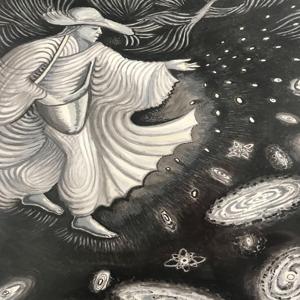


This is the start of a mini-series on the ecological catastrophe of the anthropocene. In the first episode the emphasis is on climate but subsequent ones will explore other components of this crisis, for example the great destruction of bio-diversity, otherwise known as the sixth extinction event.
The current ecological emergency is undeniable. But current policies to deal with it are inadequate.
Can the attack upon nature be characterised as evil since it is a prime example of the destruction of life and the good?
Can something of the magnitude of Business Civilization, the first example of a truly global civilization, reform itself to the extent required to avoid catastrophe?
Can a global leadership emerge that stops fighting and squabbling?
Will a global totalitarianism be required and will this lead to a world dystopia?
Can we rise to meet the scale of the challenge we face?
Do we realise that what is required is not just some new inventions leaving our standard of living and way of life intact but rather a vast paradigm shift and a change in our very thinking and way of life?
Episodes for the moment will continue to be released around the 15th of the month but will change to 1st of the month by the end of the year.
“La descristianización de nuestro mundo, el desarrollo luciferino de la ciencia y la tecnología, y la espantosa destrucción material y moral que dejó la Segunda Guerra Mundial han sido comparados más de una vez con los acontecimientos escatológicos narrados en el Nuevo Testamento.
Cristo es este mito viviente de nuestra cultura. Es nuestro héroe cultural que encarna el mito del hombre primordial divino ...La imagen de Cristo es el arquetipo del Self”. Sin embargo, el símbolo del Cristo celestial carece de totalidad en el sentido psicológico moderno, ya que no incluye al luciferino que está separado. El cristianismo era muy consciente de esto, pero lo llamó privatio boni. Significaba la ausencia del bien más que una realidad positiva por derecho propio. Lucifer corresponde al Anticristo, la mitad oscura de la totalidad divina y humana. En el concepto cristiano, el arquetipo de la totalidad se divide irremediablemente en dos mitades irreconciliables que conducen en última instancia a un dualismo metafísico: la separación final del reino de los cielos del mundo de los condenados". Jung: Christ a Symbol of the Self. Aion CW Part 2
Human nature is the integrated but at the same time conflicting combination of six parts of our development: animal inheritance, emotional structure, conscious ego intelligence, the unconscious, higher consciousness, and what Jungians call the Self. These have evolved over millions of years and many of them are a unity of conflicting parts. Despite their conflict there is also a transformational intelligence, the Self, within the psyche of mankind, which is capable of creating harmony within itself, diminishing repression and malevolence.
At the same time as the emergence of death awareness the higher self is simultaneously triggered into existence and this is closely related to love. Our higher self has many attributes such as higher intuition, illumination, revelation, music, art, poetry, and advanced forms of symbolic thought which are revolutionary in evolution. The level and range of our abstract symbolic understanding and expression are extraordinary.
The existence of the higher self in humans, we suggest, is a result of the inherent spirit in the cosmos, the anima mundi, an intelligence in nature and evolution. It cannot be really explained by a materialist view of evolution for it has little, if any survival value. It is grace, primal spirit, embodied in matter.
El Libro Tibetano De Los Muertos describe las experiencias de la conciencia en el intervalo entre la muerte y el renacimiento y se divide en tres bardos:
El Chikhai Bardo - "el momento de la muerte" que tiene la experiencia de la "luz clara de la realidad".
El Chonyid Bardo - "la experiencia de la realidad" que presenta la experiencia de las ilusiones cósmicas.
El Sidpa Bardo o "bardo del renacimiento", que es el resultado del karma y tiene imágenes típicamente de hombres y mujeres copulando que conducen al renacimiento.
En el proceso de la muerte hay una posibilidad de liberación, pero muy pronto comienzan las ilusiones que conducen a la reencarnación. Las luminarias se vuelven más débiles y la visión más aterradora.
Jung dice:
“Las instrucciones son tan detalladas y están tan completamente adaptadas a los cambios aparentes en la condición del hombre muerto que todo lector serio debe preguntarse si estos sabios y viejos lamas no podrían, después de todo, haber vislumbrado la cuarta dimensión y rasgado el velo del mayor de los secretos de la vida.”
Since mankind began to think morally the question of the origin of evil was a continual problem. We examine some examples. We begin with the Ancient Egyptians and the Judaic tradition. Special focus is on the myth of Osiris and Seth on the one hand and Cain and Abel on the other. The contribution of envy and malevolence to conflict and evil is noted.
Estamos encantados de continuar con los podcasts del Quest. Antes de continuar con la experiencia de Jung con la metafísica tibetana será útil cubrir algunos elementos básicos de la enseñanza budista, ya que el budismo es el fundamento de la espiritualidad tibetana.
“Si podemos reconocer las apariencias del bardo dharmata como la energía de sabiduría de nuestra propia mente, no hay diferencia entre el perceptor y lo percibido, y esta es una experiencia de no dualidad. Entrar completamente en esa experiencia es alcanzar la liberación que surge en ese momento en el estado posterior a la muerte cuando la conciencia puede darse cuenta de que sus experiencias no son más que la mente misma.”
This is the first in a miniseries on the origins of evil. Creative and destructive forces exist as universal principles and underpin life on earth as well as the consciousness of humanity. The essence of evil in the psyche is the destruction of the good. This is the "satanic", which is malevolently opposed to the life-giving and creative. A distinction is made to the "luciferian" which is a movement to consciousness and therefore while liberating is also the root of our alienation. Much of what we think of as bad, negative, egoistic in humans originates in our animal ancestry and has evolved. However when primate instincts, appetites and sexuality pass through the prism of human consciousness they are easily magnified and distorted.
The famous painting of the Tibetan wheel of life is in the grip of the Lord of Death. At its centre are two concentric circles: the outer shows the ascending and descending paths with souls in the death and rebirth cycle; the inner shows three animals, a pig, a snake, and a rooster which symbolise forces within human nature that perpetuate this cycle and are responsible for the suffering in life.
The pig represents ignorance, avidya, which is a basic misrepresentation of reality. The snake represents aggression which in the human species reaches a malignancy unprecedented in the rest of nature. The third is the rooster symbol – lust, desire and insatiable greed. These three are surely responsible for much of the darkness in the human species.
The Tibetan Book of the Dead can be used to guide the dying person through the experiences of consciousness after death, but it is also used during life by those who want to prepare for what will come after death. Liberation from the wheel of rebirth is actually possible in the after-death states or bardos.
Este episodio continúa una miniserie sobre las observaciones de Jung sobre textos orientales y explora sus comentarios sobre El Libro tibetano de la Gran Liberación, desconocido para Occidente hasta su primera publicación en 1954. El próximo episodio examinará sus comentarios sobre el Libro tibetano de los muertos.
Al igual que otros de sus comentarios, como los del I Ching y El Secreto de la Flor de Oro, aquí Jung pretende construir un puente desde el budismo tibetano a su escuela de Psicología Analítica. Por ejemplo escribe:
“… el inconsciente es la mente matriz con la cualidad de la creatividad adjunta, el lugar de nacimiento de todas las formas de pensamiento y similar a la Mente Universal de Oriente. Estas formas de pensamiento o arquetipos son omnipresentes y atemporales ... Por medio de la función trascendente no solo ganamos acceso a la Mente Universal sino que también llegamos a comprender porqué Oriente cree en la posibilidad de la autoliberación.”
This episode continues a miniseries on Jung’s observations on oriental texts exploring his comments on The Tibetan Book of the Great Liberation unknown to the West until its first publication in 1954. The next episode will examine his comments on the Tibetan Book of the Dead.
Like other of his commentaries, such as those of the I Ching and the Secret of the Golden Flower, Jung is here aiming at a building a bridge from an unfamiliar Eastern religion, in this case Tibetan Buddhism, to a Western psychology, namely his school of Analytical Psychology.
For example he writes:
“… the unconscious, for Analytical Psychology, is the matrix mind with the quality of creativity attached to it, the birthplace of all thought forms and akin to the Universal Mind of the Orient. These thought forms or archetypes are omnipresent and timeless ... By means of the transcendent function we not only gain access to the “One Mind” but also come to understand why the East believes in the possibility of self liberation. If, through introspection and the conscious realisation of unconscious compensations, it is possible to transform one’s mental conditions and thus arrive at a solution of people’s complex, one would seem entitled to speak of self liberation”.
From the publisher's feed
Season Two - The Quest. With special focus on the evolving crises of the 21st century.
Season One - Psychotherapy: Jungian approach to healing.
Season Three - En Español: la…
206 Listeners

26,238 Listeners
1,469 Listeners
1,030 Listeners

1,655 Listeners

16,026 Listeners