
Sign up to save your podcasts
Or

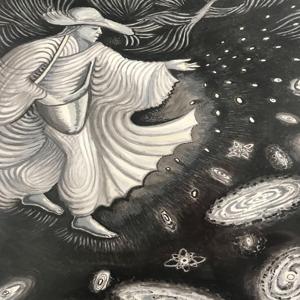


Answer to Job has 20 chapters that formed a complex unity in Jung’s mind. This episode will summarize the first 10 of these. Themes include:
Jung is indignant at the injustice done to Job. The unconscious creator needs conscious humanity so as to develop but, at the same time it opposes this. The incarnation of God into man through Christ is a world-shaking transformation or objectification of God. God needs to become a man. The incarnation is not to make reparation for mankind’s sins but to make up for Yahweh’s damage to Job (i.e. humanity). Yahweh lacks a feminine side – the lost Sophia. Christ embodies the hero myth. The incarnation of Christ is insufficient to deal with the problem of evil. The belief that God is all good is simply not credible. The God image is a mixture of opposites.
Jung había vivido las guerras del siglo XX y fue testigo del inmenso impacto de Hitler en las civilizaciónes alemana y europea. Se dio cuenta muy claramente, que con la realidad de la bomba nuclear, la humanidad ahora tenía los medios para la autodestrucción. Para él este era un escenario apocalíptico, el lado oscuro de Dios expresado a través de la psique humana. En última instancia, Dios no es un ser separado, sino que es la realidad misma y, por lo tanto, también es la humanidad.
Jung felt that God called on him personally to realise and experience God’s own dark side. And this was the only way that he could experience relief and grace – God’s blessing.
The inspiration for writing the book was as if he was composing the work of a Bach or Handel.
There are a number of different voices that Jung adopts. He switches between them in a spontaneous intuitive manner in the flow of the text. These include:
# The emotional Jung. # The therapist’s voice. # The theological perspective. # The mystical voice. # The esoteric voice. # The Jungian psychology perspective. # The voice of archetypal philosophy. # The historical voice.
Jung moves between such different voices with little warning. He is using multiple views and perspectives with great speed and the reader can be left confused Perhaps when one knows the different voices then matters are a little more comprehensible.
This is the start of miniseries within the Spiritual Crisis of our Time in which I examine Jung’s Answer to Job, one of his most enigmatic and fascinating books, written in 1952 and which was clearly of enormous personal importance to him.
This episode:
# explores Jung’s own psychology, especially in his childhood, as a background to this work.
# presents Jung’s account of his religious and theological struggles in his adolescence.
# gives a brief account of the story of Job as presented in the bible.
# presents the question that Jung felt he had to answer.
This series concerns a metaphysical exploration of nature of evil, the contradictions in the godhead, and the dangers to humanity in our own times.
Dios quiere entrar en la humanidad pero este es un proceso contradictorio porque trae consigo su lado oscuro a pesar de todos los esfuerzos de la humanidad por limpiar su imagen y convertirlo en el dios de la justicia y el amor.
Jung da más evidencia de un dios iracundo y destructivo de las visiones apocalípticas de Ezequiel, Daniel y Enoc del Antiguo Testamento, y el Libro de Revelaciones, el ultimo del Nuevo Testamento.
Las contradicciones de Yahweh son responsables no solo de la creación del mundo sino del destino de la humanidad que debe vivir estas contradicciones de la deidad.
This episode explores the Book of Genesis, in particular the story of Adam and Eve: their existence in the Garden, the temptation to eat the apple from the Tree of Knowledge, and their banishment. It is interpreted as the movement into consciousness which inevitably is also into an awareness of death. A Gnostic and Jungian interpretation of this foundational myth of Western civilization is given. Human consciousness has indeed taken the fruit from the Tree of Knowledge. However, if it is to reach the Tree of Life (the second tree in Eden that is forbidden), the human race in the 21st century will have to pass through the gates of death – either symbolically or literally.
En el ultimo episodio presentamos la experiencia de Jung en su juventud con el inconsciente, que más tarde lo predispuso a identificarse tan profundamente con Job. Experimentó el “otro lado de la psique”, el lado oscuro de Dios. Esto fue como un trauma infligido por Dios pero también fue la fuente de su gracia.
En este episodio cubrimos los primeros 10 capítulos de Respuesta a Job que incluye:
Primero: La naturaleza contradictoria de la personalidad de Yahvé.
Segundo: El tema de que Dios necesita el hombre.
Tercero: Lo que le falta a Yahweh es un lado femenino.
Cuarto: Jung busca la encarnación de Dios a través de Cristo, el dios-hombre. Esto resultó del daño hecho a Job por Yahweh. Cristo seriá perfecto. Satanás tendriá que dejar el cielo y ser arrojado a la tierra. Dios tendriá que entrar en la humanidad.
Quinto: El mal todavía prevalece en la tierra.
Sexto: La creencia de que Dios es todo bueno simplemente no es creíble.
Septimo: La imagen de Dios es una mezcla de opuestos.
This episode examines the Book of Genesis, the great Judaic creation myth which has been also been fundamental to Christianity. In particular the famous account of the fall and banishment of Adam and Eve from the Garden of Eden is presented. The Tree of Knowledge and the eating of apple is the movement into consciousness; the banishment from the garden is the expulsion from the primal unity (nature, pre-consciousness, pre-civilization, the unconscious). The Serpent, as Lucifer, is the bringer of the light - the meaning of this name in Latin. This is in accord with Gnostic and Jungian interpretations. Genesis is a myth of the birth of human consciousness.
Having looked at the benevolent and terrible aspects of the Great Mother, and located this duality in the history of our consciousness, I now wish to explore the transition from the Great Mother to the Patriarchy, understood symbolically and mythologically.
Three to six thousand years ago patriarchal religions replaced Great Mother worship. The masculine became opposed to nature, the realm of the feminine, mythologically portrayed in the dragon fight. This is a fundamental shift in human consciousness and prerequisite to the advancement of patriarchal civilization.
En opinión de Jung, Yahvé, a pesar de toda su superioridad, no es consciente de los opuestos en sí mismo, pero Job sí lo es. Yahvé está obligado a cambiar y desarrollarse como resultado de su confrontación con Job. Así, Dios o el inconsciente necesitan de la conciencia para realizarse. Esto le da a la conciencia humana una inmensa importancia en el gran esquema de las cosas. En Respuesta a Job, Jung adopta voces diferentes. Éstas incluyen: El Jung emocional; La voz del terapeuta - ¡Jung psicoanaliza a Yahvé!; La perspectiva teológica - especulaciones altamente metafísicas y teológicas; La voz mística- por ejemplo, que Dios necesite al hombre para hacerse más consciente; La voz esotérica - se mueve hacia las creencias esotéricas gnósticas y cabalísticas; La perspectiva de la psicología junguiana; La voz de la filosofía arquetípica; La voz histórica.
Jung se mueve entre las diversas voces con gran velocidad. Quizás si uno conociera las diferentes perspectivas, entonces este texto sería más comprensible.
From the publisher's feed
Season Two - The Quest. With special focus on the evolving crises of the 21st century.
Season One - Psychotherapy: Jungian approach to healing.
Season Three - En Español: la…

206 Listeners

26,238 Listeners

1,469 Listeners

1,030 Listeners

1,655 Listeners

16,026 Listeners