
Sign up to save your podcasts
Or

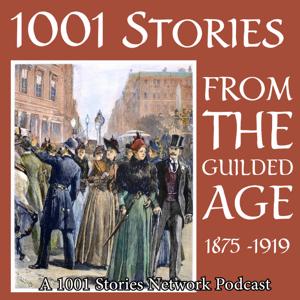

Originally published in Scribner's Magazine, October 1912
Edith Wharton's "The Quicksand" is a tightly drawn psychological drama that captures the emotional undercurrents of early‑20th‑century relationships — a time when social expectations were shifting, women's voices were rising, and the inner lives of characters were finally being explored with honesty and nuance.
First appearing in Scribner's Magazine in 1912, the story reflects Wharton's mastery of the short‑story form and her fascination with the quiet tensions that shape marriages, friendships, and personal identity. Like many Gilded Age writers, Wharton used the magazine medium to reach a wide audience hungry for sophisticated, character‑driven fiction — and she delivered.
⭐ What the Story Is About"The Quicksand" follows a woman caught between emotional loyalty and personal truth, navigating the subtle but powerful forces that pull her deeper into a situation she can neither fully control nor easily escape. Wharton's metaphor of "quicksand" becomes a lens through which we see the slow, sinking weight of unspoken expectations and the consequences of choices made too late.
It's a story about:
Emotional entanglement
Social pressure
The quiet dangers of indecision
And the cost of ignoring one's own instincts
Wharton's gift lies in how she reveals these tensions not through melodrama, but through the small gestures, silences, and realizations that define real human relationships.
⭐ Why It Matters in the Gilded AgeThis was the era when magazines were the center of American entertainment, and writers like Wharton were the rock stars of their day. Women were finding their voices — and their readership — in publications like Scribner's, Harper's, McCall's, and The Atlantic.
Stories like "The Quicksand" gave women a mirror: a place to see their own struggles, desires, and emotional truths reflected with intelligence and dignity.
⭐ About the AuthorEdith Wharton (1862–1937) was one of the most influential American writers of the Gilded Age and Progressive Era. Known for her sharp social insight and psychological depth, she remains a defining voice of the period.
⭐ Enjoy, Review & ShareIf you enjoy this episode, please take a moment to leave a kind review, share the show, and help us keep these remarkable stories alive. And for more Gilded Age fiction — novels and short stories, many written by and for women — explore our full library at 1001 Stories From the Gilded Age at www.bestof1001stories.com.
 View all episodes
 By Jon Hagadorn Podcast Host

4.8
142142 ratings
Originally published in Scribner's Magazine, October 1912
Edith Wharton's "The Quicksand" is a tightly drawn psychological drama that captures the emotional undercurrents of early‑20th‑century relationships — a time when social expectations were shifting, women's voices were rising, and the inner lives of characters were finally being explored with honesty and nuance.
First appearing in Scribner's Magazine in 1912, the story reflects Wharton's mastery of the short‑story form and her fascination with the quiet tensions that shape marriages, friendships, and personal identity. Like many Gilded Age writers, Wharton used the magazine medium to reach a wide audience hungry for sophisticated, character‑driven fiction — and she delivered.
⭐ What the Story Is About"The Quicksand" follows a woman caught between emotional loyalty and personal truth, navigating the subtle but powerful forces that pull her deeper into a situation she can neither fully control nor easily escape. Wharton's metaphor of "quicksand" becomes a lens through which we see the slow, sinking weight of unspoken expectations and the consequences of choices made too late.
It's a story about:
Emotional entanglement
Social pressure
The quiet dangers of indecision
And the cost of ignoring one's own instincts
Wharton's gift lies in how she reveals these tensions not through melodrama, but through the small gestures, silences, and realizations that define real human relationships.
⭐ Why It Matters in the Gilded AgeThis was the era when magazines were the center of American entertainment, and writers like Wharton were the rock stars of their day. Women were finding their voices — and their readership — in publications like Scribner's, Harper's, McCall's, and The Atlantic.
Stories like "The Quicksand" gave women a mirror: a place to see their own struggles, desires, and emotional truths reflected with intelligence and dignity.
⭐ About the AuthorEdith Wharton (1862–1937) was one of the most influential American writers of the Gilded Age and Progressive Era. Known for her sharp social insight and psychological depth, she remains a defining voice of the period.
⭐ Enjoy, Review & ShareIf you enjoy this episode, please take a moment to leave a kind review, share the show, and help us keep these remarkable stories alive. And for more Gilded Age fiction — novels and short stories, many written by and for women — explore our full library at 1001 Stories From the Gilded Age at www.bestof1001stories.com.

37,636 Listeners

2,501 Listeners

2,868 Listeners
1,940 Listeners

1,680 Listeners

1,107 Listeners

501 Listeners

6,230 Listeners

19,280 Listeners

19,168 Listeners

108 Listeners
415 Listeners

813 Listeners

182 Listeners
957 Listeners