
Sign up to save your podcasts
Or

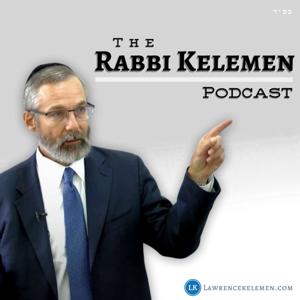


Most people who struggle with low self esteem are not comparing themselves to a standard they invented. They absorbed it from everyone around them: there is one ideal, and I am not it.
In this class, Rabbi Leib Kelemen traces that feeling back to its source and shows why it rests on a mistake that has been passed down since Adam: the belief that one is good and multiplicity is evil.
At Mount Sinai, that belief was publicly corrected. 22,000 angels descended, each carrying its own flag, each one unlike any other. The Jewish people saw it and were seized with a desire the sources call a taiva / lust for flags: the longing to finally be themselves.
What you will learn:
The core claim of this class is uncomfortable and freeing at the same time: closeness with God requires that He recognize you. If you look exactly like everyone else, there is no one there to be seen.
For more free lectures from Rabbi Kelemen, visit lawrencekelleman.com
#SelfEsteem #Torah #JewishThought #RabbiKelemen #MountSinai #Individuality #Mussar #OrthodoxJudaism
This Q&A tackles a hard question Jews are asking right now: stay in the diaspora… or build a serious plan for Israel.In this conversation, Rabbi Leib Kelemen addresses:- Can history repeat itself—and what feels “too familiar” today- How October 7th changed the global reality overnight- Why “no panic” matters—but “no plan” is dangerous- Israel safety vs diaspora safety (and what the numbers miss)- A Torah framework: the mitzvah of living in Eretz Yisrael + the complexity of real family life- How to think when different family members will be affected differently- Why there’s no one-size-fits-all answer—and how to make a responsible decisionThis is not a call to fear. It’s a call to clarity, wisdom, and preparation.Want more Q&A and free new material from Rabbi Kelemen?Go to https://www.lawrencekelemen.com/#Aliyah #EretzYisrael #Antisemitism #JewishLife #Torah #IsraelSafety #DiasporaJews
We all have moments when something small — a noise, a habit, a comment — triggers strong irritation or anger.
But what if those very moments were opportunities for growth?
In this profound and compassionate talk, Rabbi Lawrence Kelemen explores the Torah view of emotional triggers and self-mastery — revealing how even our most uncomfortable reactions can become a path to inner strength and spiritual greatness.
You’ll discover:
Why sensitivity and strong reactions aren’t “bad” — they’re tests with purpose
Where the Yetzer Hara (inner voice of resistance) really shows up in daily life
The Torah meaning of sovlanut (patience) as the strength to carry pain, not avoid it
A moving true story about facing discomfort with dignity and gratitude
How to transform frustration and anger into connection, growth, and closeness to Hashem
📖 “According to the pain is the reward.” — Pirkei Avos
🎧 Hear more transformative Q&As or submit your own at LawrenceKelemen.com
Have you ever been interrupted mid-sentence — and felt frustrated or deflated?
In this powerful clip, Rabbi Leib Kelemen explains what a truly wise person does when interrupted, drawing from Pirkei Avos (Ethics of the Fathers 5:7) and the Pesach Seder itself.
Discover:
Why a wise person doesn’t interrupt others
How the Haggadah reveals the secret to true communication
The difference between dialogue and monologue — and why it changes everything
How to respond when someone clearly isn’t ready to hear you
Rabbi Kelemen’s answer goes beyond etiquette — it’s about understanding the spiritual vessel (keli) of the other person, timing, and the humility of true wisdom.
📘 Listen till the end to hear how this connects to genuine closeness and emotional connection in relationships.
🎧 Listen to more profound Q&A sessions or submit your own question at LawrenceKelemen.com
We’ve spent ten days preparing for Yom Kippur, and now comes the moment of truth: can a person really change—permanently? Most people think it’s impossible. By middle age, after trying and failing so many times, we make peace with our flaws. But the Torah teaches there is another way. It’s a miracle—but it follows a clear formula.
In this shiur, we explore the Rambam’s five steps of teshuva, the Midrash on “Kol dodi dofek,” and the insights of Reb Yisrael Salanter and the Alter of Kelm. You’ll learn how even the smallest act of teshuva—the size of a needle—can open the gates for Hashem to do the heavy lifting, bringing about real, lasting transformation.
This is not about taking on huge commitments or impossible goals. It’s about choosing something tiny, something real, and letting Hashem turn that pinhole into a doorway wide enough for wagons.
Perfect listening before Yom Kippur—for clarity, focus, and hope. visit https://www.lawrencekelemen.com/ for more free lectures
Prepare for Rosh Hashanah with this inspiring shiur on the deep meaning of the shofar, the Day of Judgment, and your unique mission in the world.
We explore three core questions:
Are we judged as individuals or as a community on Rosh Hashanah?
Is the shofar blast a moment of strict din (judgment) or of Hashem’s rachamim (mercy)?
Should we focus on others, or is the world truly created just for me?
Drawing from the Gemara, Midrash, and the teachings of the Ramchal and Rav Wolbe, this shiur reveals how the shofar transforms judgment into mercy, why each soul has a one-of-a-kind mission, and how to enter the Jewish New Year with clarity, strength, and hope.
Perfect for anyone seeking a Torah perspective on Rosh Hashanah, Jewish New Year preparation, and the spiritual power of the shofar blasts.
visit https://lawrencekelemen.com/ for more free shiurim
What is the real purpose of Selichos? In this powerful shiur, Rabbi Kelemen uncovers the hidden roots of Selichos—going back to the aftermath of the Golden Calf when Hashem Himself acted as the first shliach tzibbur.
Discover:
🔹 Why the 13 Middos of Rachamim are the key to Divine mercy
🔹 The Midrashic and Kabbalistic secrets behind Hashem’s “white tallis”
🔹 Why just saying Selichos isn’t enough—you must do them
🔹 The Radbaz and Meiri’s guidance for preparing before Rosh Hashanah and Yom Kippur
🔹 Inspiring stories from Chazal that reveal how living with mercy brings Hashem’s forgiveness
If you’ve ever wondered how Selichos actually work—or how they can transform your Yamim Noraim—this shiur will change how you approach the holiest days of the year. click here for more free classes from Rabbi Kelemen
Mussar and Mental Health presentation by Rabbi Kelemen. Visit https://www.lawrencekelemen.com/ for more
Could you discuss the challenges of being a frum single woman in an Orthodox Jewish community? Family holds an incredibly significant place in our lives, and it’s often seen as the ultimate ideal. To illustrate this, your Inner Circle content currently features six series, two of which focus on marriage and parenting.
It is excruciatingly painful to be single, not just experiencing moments of loneliness like everyone does, but living life alone day after day, perhaps forever. It’s terrifying to think that some people are blessed with marriage and children while others are not—and that it’s possible marriage might not be in G-d’s plan for me.
From a young age, girls are raised to prepare for marriage, with the understanding that it’s the ultimate goal. So much of our lives revolve around “One day, when you’re a wife/mother…” It’s heartbreaking to witness others receive the beauty of a family, and even more painful when you’re one of those who does not.
I want to believe that G-d is kind, but then I look at my married friends, giving and receiving love, raising children, and I can’t help but feel a deep longing, at times bordering on jealousy. Marriage and family are so central to our lives, and it’s incredibly hard to accept that not everyone will receive this blessing.
On top of all this, dealing with the pain of being perceived as "less than" or immature because of being single makes this challenge feel even more isolating.
Can you share your perspective on how I can approach this in a Torah-true way—without assuming blame for my singleness or allowing bitterness to take root, so that I don’t grow to resent G-d?
For more, visit https://www.lawrencekelemen.com/
What’s the Torah perspective on health and putting in our hishtadlus to take care of our bodies and physical needs? Rabbi Kelemen often emphasizes the importance of getting sufficient sleep, exercising, and eating well. I would love a deep dive into Torah sources on this topic. I am personally drawn to a healthy lifestyle and know it is rooted in Torah values.
However, at our children’s Jewish schools and shul, it often feels as though taking care of our bodies is not considered important from a Torah perspective. Treats are given out constantly, and holiday programs are scheduled late at night. I’ve had to push for healthier snack options to be available at our shul. I also don’t allow my children to attend the Shabbos group, where the only food provided consists of processed cakes, doughnuts, and ice cream during shul time—before kiddush or lunch.
Although I’ve discussed my concerns with the rabbi and explained why I don’t want my children in that group, he was only willing to change the snacks in a different group. He believes that children will only attend the Shabbos group if they are served the most unhealthy, ultra-processed foods. click here to listen to more
From the publisher's feed
62 Listeners
1,986 Listeners
234 Listeners
231 Listeners
1,120 Listeners
7 Listeners
324 Listeners