
Sign up to save your podcasts
Or

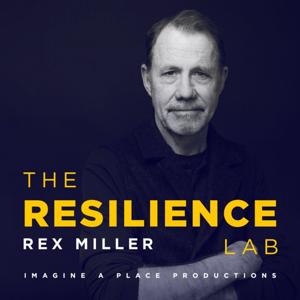


Recorded outside the Hilton during the Lean Construction Institute's Congress in Atlanta, Rex Miller sits down with Brent Darnell, who has spent 26 years teaching emotional intelligence to the construction industry. When Rex and Brent began focusing on the human side of projects, the industry dismissed it, and some rooms wouldn't allow it to be discussed at all. Today it sits at the center of the case studies, and the science of high-performing teams supports what builders always sensed: teams that work well together do better, and teams that don't, fail. Brent shares what he learned from his father, a detour into acting, the tools he uses to help leaders manage stress and emotional states, and how he's extending his work through online courses and an AI coach.
About Brent Darnell
Brent Darnell is a third-generation contractor and a Georgia Tech mechanical engineering graduate. He worked his way from MEP coordination into project management, including work on the 1996 Olympic Village in Atlanta. He later spent about three years as a full-time actor and playwright before returning to construction. He ran Skanska's international leadership program in 2000–2001 and launched his own firm in 2002. His programs cover emotional intelligence, people skills, and the physical side of performance: sleep, nutrition, exercise, stress, and human connection. Brent has practiced yoga and meditation since 1977 and is a certified yoga instructor.
What you'll hear
See Privacy Policy at https://art19.com/privacy and California Privacy Notice at https://art19.com/privacy#do-not-sell-my-info.
In 2016, I sent my WHOOP strap back because I was sure it was broken. It wasn't. I was.
I was a USPTA tennis pro who worked out and ate well, yet every morning the band said my recovery was in the red. Then came the 4 a.m. morning I felt wired and ready to take on the world, got on the elliptical, and was gassed within minutes. Feeling activated and being recovered are two very different things.
In Part 3 of our series with WHOOP's Kristen Holmes, I share what ten years of sleep and recovery data taught me, the habits that gave me my energy back, and why, at 71, my physical age measures more than eight years younger.
In this episode:
Try this: Pick one change for a week. Keep a consistent bedtime, turn off screens earlier, write tomorrow's list before bed, or take a short daytime reset. Then notice how you sleep and feel.
Featured book: Aligned: The Data-Driven Guide to Performance, Recovery, and Human Potential by Kristen Holmes, PhD
New here? Start with Parts 1 and 2 of the Kristen Holmes series. If this episode brought someone to mind, share it with them, and follow The Resilience Lab so you don't miss what's next.
Embrace resilience, stay curious, and lead with hope.
See Privacy Policy at https://art19.com/privacy and California Privacy Notice at https://art19.com/privacy#do-not-sell-my-info.
What if you’ve been running on empty for so long that exhaustion feels normal?
In part two of this three-part Resilience Lab series, Rex Miller sits down with Dr. Kristen Holmes of WHOOP to unpack the research behind sleep, recovery, and energy,
and what it means for your everyday life.
Kristen explains how wearable data can help us reconnect with our bodies, recognize the hidden cost of constant stress, and see how daily habits influence our capacity to think, lead, and perform.
Together, they explore:
Whether you’re leading a team, raising a family, or simply trying to finish the day with something left in the tank, this conversation offers practical ways to begin listening to your body.
Part one introduced Kristen and her journey. This episode explores the science. Next, Rex shares his own journey with sleep and energy, including the wake-up calls and habits that changed his life.
Learn more in Kristen’s book, Aligned: The Data-Driven Guide to Performance, Recovery, and Human Potential.
Follow The Resilience Lab, leave a review, and share this episode with someone who could use more energy and better rest.
Embrace resilience, stay curious.
See Privacy Policy at https://art19.com/privacy and California Privacy Notice at https://art19.com/privacy#do-not-sell-my-info.
What shapes the person who studies human potential?
Kristen Holmes’s journey begins far from a research lab, in the stands watching Pat Summitt coach. It moves through the demands of elite athletics, the responsibility of leading a team, and a growing curiosity about the connection between our minds, our bodies, and how we perform.
In this 13-minute conversation from a roundtable at River Rose Ranch, Kristen takes us inside that journey. We discover the influences that stayed with her, why coaching captured her imagination, and how those experiences laid the foundation for her work at WHOOP.
This is the opening chapter of a three-part Resilience Lab series:
Subscribe to follow the full series, from the story to the science to everyday practice.
Explore Kristen’s new book, Aligned: The Data-Driven Guide to Performance, Recovery, and Human Potential.
See Privacy Policy at https://art19.com/privacy and California Privacy Notice at https://art19.com/privacy#do-not-sell-my-info.
What if the most sustainable hospital was also better for the people inside it?
I recorded this conversation with architect Fabian Kremkus last October, shortly before The Resilience Lab went on pause.
Coming back to it now, I was struck by how current it still feels.
The pressures facing the built environment haven’t gone away. If anything, the questions have become more urgent: How do we reduce energy use and carbon without sacrificing performance? How do we control cost while improving human experience? And how do we design places that help people recover—not simply work harder?
Fabian takes us inside the thinking behind the University of California at Irvine’s new medical center, including its all-electric central plant, dramatically lower energy-use target, and design choices that bring daylight, nature, and caregiver recovery into the heart of the hospital experience.
But the deeper story is about how innovation actually happens.
Fabian and his team didn’t simply optimize the brief they were given. They challenged it, took meaningful risks, and brought architects, engineers, contractors, and the client together around a better possibility.
And perhaps the most memorable idea isn’t technological at all: small “lavender rooms” give caregivers a quiet place to step away, look toward nature, and recover from the emotional demands of their work.
This conversation is about more than healthcare design.
It’s about questioning assumptions, pursuing an ideal, and creating systems—buildings, organizations, and lives—that are resilient enough to sustain the people inside them.
That’s why I wanted to bring this conversation out of the archives now.
If you care about sustainable design, healthcare, leadership, or how better questions lead to better outcomes, listen in.
And if the conversation gives you something worth thinking about, subscribe to The Resilience Lab and share this episode with someone who should be part of the conversation.
See Privacy Policy at https://art19.com/privacy and California Privacy Notice at https://art19.com/privacy#do-not-sell-my-info.
What if we’ve made work too efficient?
I recorded this conversation with Brett Hautop last October at Worktech, on the Meta campus in Menlo Park.
At the time, Brett was experimenting with a question that felt provocative:
What if some of the friction we’re trying to remove from work is actually what helps us think, connect, and create?
I held onto this conversation when The Resilience Lab went on pause.
And coming back to it now, I was struck by how much more relevant it feels.
We’ve spent another year accelerating.
More AI. More automation. More pressure to move faster. More tools promising to save us time.
Which makes Brett’s question even more important:
Are we becoming more productive, or just moving faster?
At Work Shape Labs, Brett has been testing how people really behave when they work together.
And some of the results are counterintuitive.
Teams told to immediately brainstorm together produce more ideas.
But teams that first slow down, think individually, work in pairs, and then come together often produce deeper and more original ideas.
Brett also experiments with something he calls intentional friction.
Instead of grabbing a cup of coffee and rushing into the first meeting, people grind the beans, make a pour-over, and spend fifteen minutes simply being together.
Inefficient? Absolutely.
But in those fifteen minutes, something else happens.
People talk. They connect. They notice things. Sometimes they solve a problem before the workday officially begins.
That raises a bigger question:
In our pursuit of efficiency, what have we accidentally designed out of work?
Creativity? Connection? Reflection? Maybe even joy?
I’m bringing this conversation out now because Brett is entering a new chapter, and because the way he thinks about human behavior, work, and experience may matter even more in an AI-accelerated world.
This isn’t really a conversation about office design.
It’s about human performance, and designing work around how people actually function.
Listen to the latest episode of The Resilience Lab.
If it makes you rethink how your team works, subscribe so you don’t miss what’s next.
And please share it with one person who is trying to create a better way of working.
Sometimes the next breakthrough doesn’t come from speeding up.
It comes from knowing when to slow down.
#FutureOfWork #WorkplaceStrategy #Leadership #HumanPerformance #Resilience
See Privacy Policy at https://art19.com/privacy and California Privacy Notice at https://art19.com/privacy#do-not-sell-my-info.
What if empty office buildings are not a crisis, but an opportunity?
I recorded this conversation with urbanist and Field States founder Matthew Claudel at Worktech last October, shortly before The Resilience Lab went on pause.
At the time, much of the workplace conversation was still stuck on one question:
How do we get people back to the office?
While the podcast was quiet, that question began giving way to a harder one.
What happens to the buildings, and the downtowns built around them, when the old patterns of work don’t fully return?
That’s why I wanted to pull this conversation from the archives.
Matthew was already looking beyond return-to-office and asking what comes next.
Drawing on his MIT research, architecture, urbanism, and thinkers like Rem Koolhaas and Marshall McLuhan, he challenges us to see vacant buildings not simply as stranded assets, but as raw material for the next version of our cities.
What should our cities become now?
We explore converting underused offices into advanced manufacturing, education, childcare, and other new uses. We talk about why proximity still matters for collaboration, why traditional zoning may be holding back experimentation, and how cities can pilot their way toward a different future.
This is a conversation about more than real estate.
It’s about adaptive reuse in the broadest sense—not just adapting buildings, but adapting our assumptions about what those buildings are for.
Resilience isn’t restoring the city we had.
It’s discovering new value in what we already built, and having the imagination to create what comes next.
If you care about the future of work, cities, architecture, or how disruption can become raw material for reinvention, this conversation is for you.
Subscribe to The Resilience Lab, and share this episode with someone who should be part of the conversation about what our cities become next.
See Privacy Policy at https://art19.com/privacy and California Privacy Notice at https://art19.com/privacy#do-not-sell-my-info.
Yes, it's been a while. I'll explain at the end.
First, the conversation.
Last October I sat down on a patio at Meta's headquarters in Menlo Park, California, mid-conference, no studio, with David Dewane. David is an architect out of Chicago, best known as the mind behind the Eudaimonia Machine, the theoretical building designed entirely around deep work that Cal Newport made famous.
He has since gone and built one. It's called The Ferris, it sits at Monroe and State in the Loop, and it's a members club and workspace for founders building with AI, a eudaimonia machine with a business model attached.
Which makes this conversation land differently nearly a year later.
David's opening claim: the workforce isn't burned out. It's languishing, the clinical middle ground where you're not sick and you're not thriving, just surviving the day. He said that last October. Gallup's 2026 report landed this spring with global engagement at 20%, the second straight annual decline, and managers falling from 27% to 22%.
His second claim is the one I can't shake. The scarcest resource in a modern workplace isn't talent or capital. It's attention. Set that next to a year in which most of us are supervising a fleet of AI agents, and the bottleneck in knowledge work has quietly moved from doing the task to having enough uninterrupted mind to direct it.
In this episode:
Now the explanation. The Resilience Lab has been offline since February, not because I ran out of people worth talking to, but because the format stopped fitting the conversations and I wanted a better home for them. That work isn't finished. But I have a shelf of recordings too good to leave in a folder, and I'd rather put them out than keep polishing the container.
So here's my ask. Tell me what would make this show worth your time, and where you'd actually want to watch or listen. It will shape what comes next.
Find David on LinkedIn, he checks it about five times a day, his words, and find The Ferris at ferrischicago.com. If you're near Monroe and State, go see it and tell me what you think. I'm doing exactly that when I'm in Chicago for CoreNet in October.
Recorded October 9, 2025 at WORKTECH25 San Francisco, hosted at Meta's MPK21 campus in Menlo Park. Yes, that's a patio. Two people wander in near the end; we left it in.
Stay curious, build resilience, and lead with hope.
See Privacy Policy at https://art19.com/privacy and California Privacy Notice at https://art19.com/privacy#do-not-sell-my-info.
In this episode of The Resilience Lab, recorded live at the Workspaces Conference in Napa, Rex Miller sits down with Sara Escobar and Corrine Murray, co-authors of the new book Work Then Place: a bold reframing of how organizations should think about work, leadership, and the workplace.
With decades of experience spanning Hulu, Netflix, Riot Games, CBRE, WeWork, and American Express, Sara and Corrine bring rare, hard-earned insight into why so many workplace strategies fail…and what actually works.
This conversation goes beyond office design and hybrid policy debates to tackle the real issues holding organizations back:
If you’re a leader, manager, workplace strategist, HR professional, or anyone navigating the future of work, this episode offers practical insight, grounded frameworks, and a clear call to rethink how work actually gets done.
This isn’t about perks, ping-pong tables, or mandates.
It’s about making work suck less…on purpose.
Subscribe to The Resilience Lab for conversations on resilience, leadership, workplace strategy, and the human side of performance, and share this episode with someone who’s wrestling with how work is changing.
See Privacy Policy at https://art19.com/privacy and California Privacy Notice at https://art19.com/privacy#do-not-sell-my-info.
By the 1990s, Patrick MacLeamy had seen enough.
Projects were slipping. RFIs were exploding. Clients were frustrated. And as Virtual Design and Construction (VDC) entered the industry, it exposed a hard truth: the problem wasn’t talent, it was the system.
In Part 2 of this conversation, Patrick MacLeamy explains why he refused to accept “that’s construction” as an answer—and how one uncomfortable question led him into a small, unlikely collaboration that helped lay the foundation for modern project delivery.
This episode traces the origin of:
* Open standards and object-based coordination
* The early thinking behind BIM and interoperability
* A leadership mindset focused on fixing systems, not blaming people
But this isn’t history for history’s sake.
Thirty years later, the same forces, complexity, fragmentation, and outdated assumptions, are pressing on our industry again. This episode is for anyone working in architecture, construction, or workplace strategy who feels we’re stuck and wonders what it takes to change course.
If you’ve ever looked at the way we work and thought, this isn’t good enough, this conversation is for you.
See Privacy Policy at https://art19.com/privacy and California Privacy Notice at https://art19.com/privacy#do-not-sell-my-info.
From the publisher's feed
Hosted by researcher and author, Rex Miller, The Resilience Lab explores how we can integrate resilience into our work and our lives through the journey and stories of others. In a time when change…

4,350 Listeners

112,271 Listeners

18,924 Listeners
7 Listeners
10 Listeners