
Sign up to save your podcasts
Or



What did you think of this episode?
We're exploring some Appalachian Christmas traditions in this episode from The Christmas poke, or treat bag, to the term "Hard Candy Christmas," made popular in a Dolly Parton song. We'll also talk about Old Christmas, its origins, and why people still recognize January 6th as the one true Christmas Day.
Support the show
*Subscribe wherever you get your podcasts and review the podcast (if you like it)!
*Support the show by sharing links to episodes on social
*Subscribe to support the podcast on the Facebook Talking Appalachian page, or here at our Patreon page to get bonus content:
Talking Appalachian Podcast | Covering the Appalachian Region from North to South | Patreon
*Follow and message me on IG, FB, YouTube: @talkingappalachian
*To sponsor an episode or collaborate: [email protected] or message me at the link here or on social.
Unless another artist is featured, acoustic music on most episodes: "Freight Train" written by Elizabeth Cotten and performed by Landon Spain
What did you think of this episode?
In this places and spaces episode that starts in the northern reaches of the Appalachian plateau, we travel from quaint Sleepy Hollow, New York to the serene sands of Sunset Beach, North Carolina, uncovering stories of history, literature, and connection (in a special little mailbox) along the way.
This adventure begins in the Hudson Valley, where we explore the legacy of Washington Irving, the author behind The Legend of Sleepy Hollow. From the Old Dutch Church to the unmarked grave of the mysterious Hulda of Bohemia, we delve into the folklore that inspired one of America's most enduring ghost stories.
Next, we travel to Connecticut, where we uncover fascinating facts about Mark Twain at his Victorian mansion in Hartford. The home where Twain wrote The Adventures of Tom Sawyer and Adventures of Huckleberry Finn offers a glimpse into his creative genius, as well as the personal struggles that shaped his work.
Finally, we head south to the peaceful shores of Sunset Beach, where we discover the Kindred Spirit Mailbox. Nestled in the dunes, this unassuming mailbox has served as a place of solace for visitors for over 45 years. Join us as we reflect on the power of words and the beauty of a simple mailbox that connects strangers through shared stories. Listen in as I talk with one of the mailbox Keepers.
Whether you're a fan of ghost stories, literary history, or heartfelt reflections, this episode has something for you. Tune in for a journey of connection, inspiration, and the spirit of Appalachia.
Links:
Support the show
*Subscribe wherever you get your podcasts and review the podcast (if you like it)!
*Support the show by sharing links to episodes on social
*Subscribe to support the podcast on the Facebook Talking Appalachian page, or here at our Patreon page to get bonus content:
Talking Appalachian Podcast | Covering the Appalachian Region from North to South | Patreon
*Follow and message me on IG, FB, YouTube: @talkingappalachian
*To sponsor an episode or collaborate: [email protected] or message me at the link here or on social.
Unless another artist is featured, acoustic music on most episodes: "Freight Train" written by Elizabeth Cotten and performed by Landon Spain
What did you think of this episode?
This episode is about a word and a phrase that are still commonly used in the Appalachian region. First, I'll offer a little refresher on what makes up a dialect and how these words fit in. We'll talk about "directly" as in "I'll be there directly" and the phrase needs + a participle (like washed.) Who uses them and where? What's the history behind them? And how should teachers treat words and phrases like this if they appear in their students' writing?
Sources for this episode: The Yale Grammatical Diversity Project, the Dictionary of American Regional English, and Talking Appalachian: Voice, Identity, and Community (Eds. Clark and Hayward, 2014).
Support the show
*Subscribe wherever you get your podcasts and review the podcast (if you like it)!
*Support the show by sharing links to episodes on social
*Subscribe to support the podcast on the Facebook Talking Appalachian page, or here at our Patreon page to get bonus content:
Talking Appalachian Podcast | Covering the Appalachian Region from North to South | Patreon
*Follow and message me on IG, FB, YouTube: @talkingappalachian
*To sponsor an episode or collaborate: [email protected] or message me at the link here or on social.
Unless another artist is featured, acoustic music on most episodes: "Freight Train" written by Elizabeth Cotten and performed by Landon Spain
What did you think of this episode?
In this "Places and Spaces" episode, we'll mark the October anniversary of Edgar Allen Poe's mysterious death with a visit to Poe's house in Baltimore and the cemetery where he is buried.
Then, listen to a haunting reading of "The Raven" (with audio by Brock Davidson.)
Special thanks to Brock Davidson for lending his voice to The Raven. Contact: [email protected].
Support the show
*Subscribe wherever you get your podcasts and review the podcast (if you like it)!
*Support the show by sharing links to episodes on social
*Subscribe to support the podcast on the Facebook Talking Appalachian page, or here at our Patreon page to get bonus content:
Talking Appalachian Podcast | Covering the Appalachian Region from North to South | Patreon
*Follow and message me on IG, FB, YouTube: @talkingappalachian
*To sponsor an episode or collaborate: [email protected] or message me at the link here or on social.
Unless another artist is featured, acoustic music on most episodes: "Freight Train" written by Elizabeth Cotten and performed by Landon Spain
What did you think of this episode?
In this chilling episode (just in time for spooky week), SWVA Museum Education Specialist Burke Greear joins me to talk about pre-funeral industry Appalachian customs and superstitions surrounding premonitions, death and burial. We'll explore the roots of terms like "death watch," "sitting up with the dead," "pallbearer," "kick the bucket," "living room" and "funeral parlor." Later, we'll talk about memorialization in death photography, memory pieces made of the hair of the deceased, and gravestones. We'll cover the do's and don'ts of death lore involving entering and exiting a house, covering mirrors, stopping clocks, and heeding the warning of a bird flying into the house (many people still live by these). And there's more: I'll share with you an excerpt of my favorite short story, "The Corpse Bird" by Ron Rash (set on Halloween). Trust me, if you've never read it, you'll want to after hearing the first part!
Special thanks to Burke Greear and the Southwest Virginia Museum and Historical State Park for the research and interview material.
"Corpse Bird" excerpt is from the short story collection Burning Bright by Ron Rash
Support the show
*Subscribe wherever you get your podcasts and review the podcast (if you like it)!
*Support the show by sharing links to episodes on social
*Subscribe to support the podcast on the Facebook Talking Appalachian page, or here at our Patreon page to get bonus content:
Talking Appalachian Podcast | Covering the Appalachian Region from North to South | Patreon
*Follow and message me on IG, FB, YouTube: @talkingappalachian
*To sponsor an episode or collaborate: [email protected] or message me at the link here or on social.
Unless another artist is featured, acoustic music on most episodes: "Freight Train" written by Elizabeth Cotten and performed by Landon Spain
What did you think of this episode?
The co-editors of Appalachian Reckoning: a Region Responds to Hillbilly Elegy and the author of Hillbilly: a Cultural History of an American Icon join me to talk about the region's literary response to J.D. Vance's book, the layered meanings of "hillbilly," and why reclaiming accent matters to so many of us. We'll also talk about Hurricane Helene and its impact (not just economic, but psychological) on the region.
Support the show
*Subscribe wherever you get your podcasts and review the podcast (if you like it)!
*Support the show by sharing links to episodes on social
*Subscribe to support the podcast on the Facebook Talking Appalachian page, or here at our Patreon page to get bonus content:
Talking Appalachian Podcast | Covering the Appalachian Region from North to South | Patreon
*Follow and message me on IG, FB, YouTube: @talkingappalachian
*To sponsor an episode or collaborate: [email protected] or message me at the link here or on social.
Unless another artist is featured, acoustic music on most episodes: "Freight Train" written by Elizabeth Cotten and performed by Landon Spain
What did you think of this episode?
Appalshop was founded in eastern Kentucky in 1969, providing "space for Appalachians to tell their own stories in their own words." Its founding followed the War on Poverty, when Appalachia was put on display for the rest of the world in a way that cemented stereotypical thinking about the region. Since then, it has grown to include not only filmmaking but oral history projects, a radio station, a record label, a reading series, theatre programs, and a priceless archive of film, photography, and artifacts.
I'm talking with Communications Director Rachel Rosolina and Visual Communications Manager Aaron Asbury about Appalshop's role in giving Appalachians a voice to tell their own stories, recovery and mediating archives since the flood of 2022, and who can benefit from their resources and programs.
Check out their web site here: Appalshop
Appalshop's Archives: Appalshop Archive
Featured music: "Lonesome Pine" from the album Fields Where We Once Played by The Payroll Boys (1983) courtesy of Appalshop and June Appal Recordings
Support the show
*Subscribe wherever you get your podcasts and review the podcast (if you like it)!
*Support the show by sharing links to episodes on social
*Subscribe to support the podcast on the Facebook Talking Appalachian page, or here at our Patreon page to get bonus content:
Talking Appalachian Podcast | Covering the Appalachian Region from North to South | Patreon
*Follow and message me on IG, FB, YouTube: @talkingappalachian
*To sponsor an episode or collaborate: [email protected] or message me at the link here or on social.
Unless another artist is featured, acoustic music on most episodes: "Freight Train" written by Elizabeth Cotten and performed by Landon Spain
What did you think of this episode?
Adri and I sit down at the Library of Virginia to catch up and talk about writing, The Origin Project, her podcast (You Are What You Read), and ten years since the release of her hometown movie Big Stone Gap.
Beloved by millions of readers around the world for her “dazzling” novels, (USA Today) Adriana Trigiani is The New York Times bestselling author of twenty books in fiction and nonfiction (she just finished her 21st manuscript). She has been published in 38 countries around the world. The New York Times calls her “a comedy writer with a heart of gold,” her books “tiramisu for the soul.” She wrote the blockbuster The Shoemaker’s Wife, the Big Stone Gap series, the Valentine trilogy and Lucia, Lucia. Trigiani’s themes of love and work, emphasis upon craftsmanship and family life have brought her legions of fans around the world. Their devotion has made Adriana one of “the reigning queens of women’s fiction” (USA Today).
Adriana is host of the hit podcast, You Are What You Read, sponsored by Book of the Month. Adriana interviews the luminaries of our time about the books that built their souls. Episodes feature Sarah Jessica Parker, Kristin Hannah, David Baldacci, Whoopi Goldberg, Rainn Wilson, Amor Towles, Fannie Flagg, Katie Couric, Mitch Albom, Jhumpa Lahiri, Craig Ferguson and many more.
In 2013, Adriana co-founded The Origin Project with the late Nancy Bolmeier Fisher, who served as Executive Director of the program for over a decade. The Origin Project is an in-school writing program that brings professional authors into the classroom to work with students on their creative writing skills – specifically, stories inspired by their own family history. The project culminates with a published anthology of student work at the end of the school year. Since The Origin Project’s launch in 2013, the program has expanded to include many more schools, now serving over 1,700 students grades 2-12 in the Appalachian mountains of Virginia.
Support the show
*Subscribe wherever you get your podcasts and review the podcast (if you like it)!
*Support the show by sharing links to episodes on social
*Subscribe to support the podcast on the Facebook Talking Appalachian page, or here at our Patreon page to get bonus content:
Talking Appalachian Podcast | Covering the Appalachian Region from North to South | Patreon
*Follow and message me on IG, FB, YouTube: @talkingappalachian
*To sponsor an episode or collaborate: [email protected] or message me at the link here or on social.
Unless another artist is featured, acoustic music on most episodes: "Freight Train" written by Elizabeth Cotten and performed by Landon Spain
What did you think of this episode?
Poet Jane Hicks is the author of three award-winning poetry collections: Blood and Bone Remember, Driving with the Dead, and recently, The Safety of Small Things (University Press of Kentucky/Fireside Imprint). She also wrote the essay "A Matter of Perception" for Talking Appalachian (the book.) In our conversation, we talk about our speech patterns as a "political choice" (of course), the healing inspiration for her latest collection, and why we look for glimmers (the opposite of triggers) in the darkest days.
You can contact Jane for workshops and readings via email: [email protected]
Opening poem: "Longing" by Jane Hicks from The Safety of Small Things
Music: "When You Go" written and performed by Tiffany Williams
Support the show
*Subscribe wherever you get your podcasts and review the podcast (if you like it)!
*Support the show by sharing links to episodes on social
*Subscribe to support the podcast on the Facebook Talking Appalachian page, or here at our Patreon page to get bonus content:
Talking Appalachian Podcast | Covering the Appalachian Region from North to South | Patreon
*Follow and message me on IG, FB, YouTube: @talkingappalachian
*To sponsor an episode or collaborate: [email protected] or message me at the link here or on social.
Unless another artist is featured, acoustic music on most episodes: "Freight Train" written by Elizabeth Cotten and performed by Landon Spain
What did you think of this episode?
In this episode, I explore the word "hillbilly" with native Kentuckian and documentary filmmaker Ashley York, who co-directed the award-winning film by the same name in 2018. I talk about the history of the word first, and then Ashley and I discuss what it was like to return to central Appalachia to interview family, friends, and "heroes" as she unpacked this complicated word against the backdrop of the 2016 election. We also talk about her interview and friendship with Billy Redden, who played the banjo-pickin' boy in the 1972 film Deliverance. We discuss what "Hillbilly" means in a new election season, and her plans for a follow-up film.
Watch the Hillbilly documentary here on Vimeo for just 2.99 and support the creators
Support the show
*Subscribe wherever you get your podcasts and review the podcast (if you like it)!
*Support the show by sharing links to episodes on social
*Subscribe to support the podcast on the Facebook Talking Appalachian page, or here at our Patreon page to get bonus content:
Talking Appalachian Podcast | Covering the Appalachian Region from North to South | Patreon
*Follow and message me on IG, FB, YouTube: @talkingappalachian
*To sponsor an episode or collaborate: [email protected] or message me at the link here or on social.
Unless another artist is featured, acoustic music on most episodes: "Freight Train" written by Elizabeth Cotten and performed by Landon Spain
From the publisher's feed
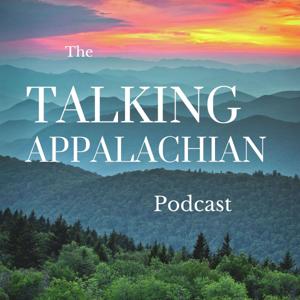
Talking Appalachian is a podcast about the Appalachian Mountain region's language or "voiceplaces," cultures, and communities. The podcast is hosted by Dr. Amy Clark, a Professor of…

91,018 Listeners
78,398 Listeners

43,827 Listeners

38,012 Listeners
6,743 Listeners

37,641 Listeners

43,362 Listeners
8,433 Listeners
7,997 Listeners

111,865 Listeners
2,392 Listeners
13,558 Listeners

15,904 Listeners
319 Listeners
664 Listeners