
Sign up to save your podcasts
Or



People talk about creativity being fun and playful, where we can express our childlike selves, like with this poem, but putting our creativity out into the world can be vulnerable and leave us filled with self doubt. Will people like it? Will people get it? Will I appear silly? Does it even matter in a world that seems to be hell bent on making money - whatever the cost elsewhere?
Someone I have been following for a while is Caro Gomez. Caro seems to emanate creativity from every pore and is a real advocate for creating, but her story has been one of things not turning out as planned, which, in truth, is part of anyone’s creative journey. It’s just that not many people seem to talk about it.
She uses her roots from El Salvador to inspire her creative work and now creates powerful vulva adorned clothes. I can’t possibly encapsulate everything that she is, so listen in!
Show notes:
You can find out more about Caro Gomez at www.carogomez.com and her Facebook group can be found here
Support the showClick here to go to my Substack page.
Click here to buy my book
Click here to buy my a coffee and show your support
Listener support: I love making The Therapeutic Poet podcast, but it does cost time and money. If you have enjoyed it, been informed by it or found it helpful then I would greatly appreciate your financial support. You can do this by:
Taking a paid subscription on my Substack - a weekly newsletter helping people have 'Permission to feel'. You'll receive tips on how to navigate our human tricky things, recorded poems and other goodies.
Buying my book ‘Stop the world I want to get off’
Or buy me a coffee 🤗.
We all feel shame. Shame in and of itself can have a healthy function, to alert us to the threat of disconnection with others.* When a small child gets told off for a mild social indiscretion they will feel some shame, it’s how social norms are created. An attuned parent will follow up the correction with a repair, a reconnection, a ‘you’re ok, it’s just that behaviour is not ok’.
When this doesn’t happen though, shame can build up. Toxic shame is a result of repeated rejection, scorn or empathic failure which can mean that the last thing we want to do is share how we are feeling or what we need**.
Where shame resides vulnerability hides.
So in this episode we bring it out in the open and I can think of no one better to do that with than my guest today, Marc Pimsler. Marc is an award winning therapist, certified as a national master addictions counselor, clinical supervisor, and yoga and meditation teacher, and co-host with Courtney Leak of The Magic Well podcast. To be honest, that’s just a small selection of his CV.
I met him as a tutor at Onsite workshops when he trained me in experiential therapy. Marc is passionate about recovery, both his own as well as his clients’, believing that sometimes all we need is a helping hand and a fresh perspective. Grounded in the belief system that everyone has the capacity to recover, Marc brings humour, spirituality, and creativity to everything he is involved in.
In this episode I started with my poem ‘I hulp’, a poem I wrote about shame. Marc and I both shared different stories that we had about when our shame was triggered. Marc described how the only way to receive empathy, which can help us through our shame, is through exposure; exposing those parts of ourselves that we would rather deny or hide in order to try and belong.
Marc shared his 3 stage process to recovering from shame:
Stage 1 is recovery, owning our self and our story wholly, removing medicators so that we can feel in order to heal.
Stage 2 - the uncovering of ourselves from our story, identifying those experiences which gave us limiting messages and how those messages inform our behaviour today
And finally stage 3 - discovering who we’ve been all along. Because ultimately, we are all lanterns who need to be clean and clear so that our own individual, unique light can shine.
There were so many gems in this conversation, I think its probably worth listening to a couple of times. You can find out more about Marc at www.marcpimsler.com vp-consulting.net www.onsiteworkshops.com or on Instagram where his handle is @mpimsler.
In this podcast Marc mentions Patricia De-Young's definition of shame and we also touch upon the work of shame and vulnerability researcher Brené Brown.
Click here to go to my Substack page.
Click here to buy my book
Click here to buy my a coffee and show your support
Listener support: I love making The Therapeutic Poet podcast, but it does cost time and money. If you have enjoyed it, been informed by it or found it helpful then I would greatly appreciate your financial support. You can do this by:
Taking a paid subscription on my Substack - a weekly newsletter helping people have 'Permission to feel'. You'll receive tips on how to navigate our human tricky things, recorded poems and other goodies.
Buying my book ‘Stop the world I want to get off’
Or buy me a coffee 🤗.
The 'Ditch the Label' Annual Survey into bullying in 2020 reported that bullying had increased by 25% year on year.
Many factors are said to contribute to this from the way in which our politicians behave towards one another to the prevalence of social media.
Whilst we are more connected than ever in practical terms, levels of loneliness have gone through the roof.
30% of children bullied at school are bullied at least once a week.
Bullying has lasting impact on anyone, well into adulthood.
People feel anxious, depressed and can have suicidal thoughts or self harm as a result of bullying.
Joining me on The Therapeutic Poet podcast today is Jenny Alexander.
Jenny is a prolific author and some of the books that she has written about tackle the subject of bullying. Some of these are for children, like her book '70 ways to bully proof yourself’, and others for adults, such as ‘When you child is bullied: an essential guide for parents’.
Jenny explains why she wrote a book about bullying, the impacts of psychological (as well as physical) bullying and what can be done to build resilience, even when bullying is going on.
You can find out more about Jenny at www.jennyalexander.com. Jenny is a member of Lapidus, the writing for wellbeing community.
Click here to go to my Substack page.
Click here to buy my book
Click here to buy my a coffee and show your support
Listener support: I love making The Therapeutic Poet podcast, but it does cost time and money. If you have enjoyed it, been informed by it or found it helpful then I would greatly appreciate your financial support. You can do this by:
Taking a paid subscription on my Substack - a weekly newsletter helping people have 'Permission to feel'. You'll receive tips on how to navigate our human tricky things, recorded poems and other goodies.
Buying my book ‘Stop the world I want to get off’
Or buy me a coffee 🤗.
Today on The Therapeutic Poet podcast I am joined by neuroscientist, science communicator and storyteller Dr. Paula Croxson. Paula is also an open water swimmer regularly swimming marathons, a flautist with the band Marlowe Grey, senior producer of the science based storytelling platform Storycollider and, she is also my cousin!
We started with my poem ‘As I stood on the shore of my memories.’ We spoke about how memory are changes that happen in our brains based on our experiences. Paula explained how memory can be explicit and implicit, supported by different parts of the brain, but all parts of the brain are interconnected.
Memories go through a complex process to be formed and reformed. I think it’s a fascinating area to understand as it clearly influences our daily behaviour, whether we are aware of it or not. Paula also shared how memory is malleable and can be changed through storytelling. You can find out more about Paula at www.paulacroxson or at www.storycollider.org
Click here to go to my Substack page.
Click here to buy my book
Click here to buy my a coffee and show your support
Listener support: I love making The Therapeutic Poet podcast, but it does cost time and money. If you have enjoyed it, been informed by it or found it helpful then I would greatly appreciate your financial support. You can do this by:
Taking a paid subscription on my Substack - a weekly newsletter helping people have 'Permission to feel'. You'll receive tips on how to navigate our human tricky things, recorded poems and other goodies.
Buying my book ‘Stop the world I want to get off’
Or buy me a coffee 🤗.
None of us want to feel pain, and yet it is a core part of the human experience. We can distract ourselves in many ways to try and avoid it, but in this podcast with therapist Susan McGrath we explore the possibility of staying with the pain. Susan describes suffering as a two part process: the original cause of pain and then the resistance to the pain, which can show up as the ‘Why me?’ and ‘I don’t deserve this’ thoughts.
Within this podcast Susan offers two practical short exercises that can help you suffer more skilfully. She also explains how this may open up the opportunity for emotional and spiritual growth.
Susan has written a book on Skilful Suffering which will be out in 2022.
The first was a surrender practice in which one welcomes all of the feelings and experiences that one is going through. The second was a Tonglen practice. Tonglen is a Tibetan Buddhist meditation practice. On the inhale, you take in the pain and suffering of yourself and others and on the exhale you give space, compassion and healing to yourself and others. As Susan mentioned, please be mindful of when you take on these practices.
I also mentioned Eckhart Tolle and you can read more about his perspective in his book ‘Stillness speaks.’
For more information about Susan, please visit her website www.susanmcgraththerapy.com
Support the showClick here to go to my Substack page.
Click here to buy my book
Click here to buy my a coffee and show your support
Listener support: I love making The Therapeutic Poet podcast, but it does cost time and money. If you have enjoyed it, been informed by it or found it helpful then I would greatly appreciate your financial support. You can do this by:
Taking a paid subscription on my Substack - a weekly newsletter helping people have 'Permission to feel'. You'll receive tips on how to navigate our human tricky things, recorded poems and other goodies.
Buying my book ‘Stop the world I want to get off’
Or buy me a coffee 🤗.
In this episode we began with my poem ‘An iron bar sits on her chest.’
I spoke with Megan Febuary, founder of For Women who Roar and Your Book Year.
Megan recalls how writing a poem to reconcile her silence of rage and grief created a movement to help other women tell their stories. We spoke of the importance of the healing process through writing, rather than focussing on the finished piece; how we can let our writing write us and shedding our defences to get to the truth, which is a complicated disorganised process.
We touched on how the secret to transition is acceptance of what is and not abandoning our voice and our story.
We spoke about why sharing our story is so healing; but how we may have to break through our own shame to get there, but the antidote to that is our curiosity.
Show notes:
We refer to a few books in this episode:
Big Magic by Elizabeth Gilbert
Dare to Lead by Brené Brown
Bird by Bird by Anne Lammot
The Year of Magical Thinking by Joan Didion
Support the showClick here to go to my Substack page.
Click here to buy my book
Click here to buy my a coffee and show your support
Listener support: I love making The Therapeutic Poet podcast, but it does cost time and money. If you have enjoyed it, been informed by it or found it helpful then I would greatly appreciate your financial support. You can do this by:
Taking a paid subscription on my Substack - a weekly newsletter helping people have 'Permission to feel'. You'll receive tips on how to navigate our human tricky things, recorded poems and other goodies.
Buying my book ‘Stop the world I want to get off’
Or buy me a coffee 🤗.
In this podcast I chatted with author and yoga teacher Kari Kwinn about her book ‘Better Boundaries: You don’t have to be broken to be better.’ We begin with my poem ‘Postively Negative’. We discussed the many tools that Kari introduces in her book that could be helpful to any of us when it comes to boundaries.
I like Kari’s perspective on this, that our yes can help us with our boundaries more than our no’s; that knowing what we want and being able to communicate that can lead to improved intimacy. Although we didn’t really get into it, this book is interlaced with Kari’s own personal examples. I think that makes boundaries all the more digestible, hearing how someone else has struggled and dealt with them; on the subject of digestion, don’t mention sushi!
You can find out more about Kari Kwinn and her book Better Boundaries at www.karikwinn.com
You can find out more about Kari and her book Better Boundaries at www.karikwinn.com
Click here to go to my Substack page.
Click here to buy my book
Click here to buy my a coffee and show your support
Listener support: I love making The Therapeutic Poet podcast, but it does cost time and money. If you have enjoyed it, been informed by it or found it helpful then I would greatly appreciate your financial support. You can do this by:
Taking a paid subscription on my Substack - a weekly newsletter helping people have 'Permission to feel'. You'll receive tips on how to navigate our human tricky things, recorded poems and other goodies.
Buying my book ‘Stop the world I want to get off’
Or buy me a coffee 🤗.
Today I am joined by Susan Earlam. Susan has been a very successful blogger in the past and her short fiction has appeared in publications and anthologies including Pure Slush, Feminist Surrealism Journal, The Debutante, Mslexia, Reflex Function and Cabinet of Heed.
This year she released her debut novel Earthly Bodies, a dystopian eco horror story that spans the ages, where strangers reveal their contribution to an extraordinary act of survival.
‘Joy as an act of resistance’, as mentioned by Susan, is a quote from the poet Toi Deritcotte. You can read more about her here: https://www.poetryfoundation.org/poets/toi-derricotte
The artist that I mentioned is on Instagram is Shamsia Hassani and you can see more about her here: https://www.shamsiahassani.net/
Support the showClick here to go to my Substack page.
Click here to buy my book
Click here to buy my a coffee and show your support
Listener support: I love making The Therapeutic Poet podcast, but it does cost time and money. If you have enjoyed it, been informed by it or found it helpful then I would greatly appreciate your financial support. You can do this by:
Taking a paid subscription on my Substack - a weekly newsletter helping people have 'Permission to feel'. You'll receive tips on how to navigate our human tricky things, recorded poems and other goodies.
Buying my book ‘Stop the world I want to get off’
Or buy me a coffee 🤗.
In this episode we talk about what trauma is. Rather than it being as the result of a particular event it is a nervous system response that gets held in the body, rather than being discharged.
This helps us to reframe mental health and understand that if we work in relationship with others to discharge our nervous system then a more consistently regulated state is possible.
Lou’s work with Trauma thrivers is to not only help people regulate themselves after trauma, but to get to a place of thriving through affordable approaches.
Show notes:
We covered a lot of terms in this episode.
You can buy Lou’s 50 solutions to trauma here: https://www.amazon.co.uk/SOLUTIONS-TRAUMA-Methods-Heal-Trauma/dp/B08XLGFFR1. Or sign up on her website for a free download Check her out at www.traumathrivers.com or the Facebook community at https://www.facebook.com/groups/1221929004660869/
Lou referred to the ‘Trauma Egg’, a tool for treating emotional trauma by Marilyn Murray. You can find out more about that here: https://gentlepathmeadows.com/the-murray-method-trauma-eggs-and-the-30-task-model/
Deb Dana and the story of protection and disconnection was mentioned by Lou and you can find out more here:https://www.rhythmofregulation.com/
Details of Professor Stephen Porges, who created the Polyvagal theory can be found here: https://www.stephenporges.com/
Support the showClick here to go to my Substack page.
Click here to buy my book
Click here to buy my a coffee and show your support
Listener support: I love making The Therapeutic Poet podcast, but it does cost time and money. If you have enjoyed it, been informed by it or found it helpful then I would greatly appreciate your financial support. You can do this by:
Taking a paid subscription on my Substack - a weekly newsletter helping people have 'Permission to feel'. You'll receive tips on how to navigate our human tricky things, recorded poems and other goodies.
Buying my book ‘Stop the world I want to get off’
Or buy me a coffee 🤗.
From the publisher's feed
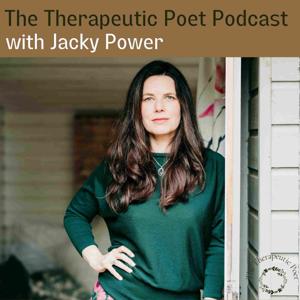
I’m Jacky Power, addiction psychologist and poet and host of The Therapeutic Poet. Each week I use a poem I have written to introduce a therapeutic theme as I talk with my guests about the…