
Sign up to save your podcasts
Or

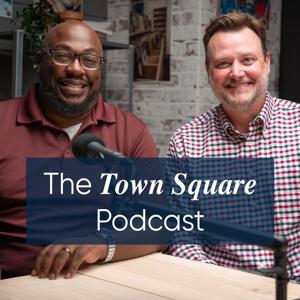


In Episode 85 of The Town Square Podcast, Trey Bailey and Gabriel Stovall continue their Candidate Conversations series with Ryan Millsap, Republican candidate for U.S. Congress in Georgia’s 10th District. The seat is currently held by Congressman Mike Collins, and with voters preparing for another important election cycle, this conversation was designed to help listeners better understand one of the candidates asking for their vote.
As always, the goal of The Town Square Podcast is not to create uniformity, but to create understanding. In that spirit, this episode gives Ryan Millsap room to tell his story, explain his worldview, and make his case directly to the people of District 10.
What follows is a candidate who is anything but conventional.
A Candidate with an Unusual Backstory
At first glance, some listeners may assume they know who Ryan Millsap is based on campaign rhetoric, short clips online, or the forceful style he brings to a room. But this conversation quickly revealed a far more layered personal story.
Millsap was born in southern Missouri, where his father’s family had deep roots going back generations. His mother grew up on a cattle ranch in northern Nebraska, and that upbringing — wide open land, hard work, and a culture of toughness and independence — clearly shaped the values Millsap still talks about today.
His father was a recon Marine in Vietnam, a Purple Heart recipient and Bronze Star honoree who returned home carrying the scars of war, including PTSD. Millsap described growing up in a home shaped by both discipline and intensity, with a tom-boy mother who loved college football and a family environment that felt more like a locker room than a quiet suburban home.
The family later moved to Phoenix, Arizona, and then to central California, where Millsap says he spent his teenage years in a deeply conservative farming community. That blend of Midwestern roots, Southwestern grit, and West Coast business exposure became an unusual but formative mix.
More Depth Than Expected
One of the most surprising turns in the episode was hearing how academically layered Millsap’s background really is.
He attended Biola University, where he studied philosophy, and later studied at Oxford, focusing on issues related to time, eternity, and divine omniscience. He also played American football at Oxford and rowed there — experiences that Trey clearly did not expect to come up in what he assumed would be a more conventional campaign interview.
After Oxford, Millsap pursued graduate studies at USC in real estate development. From there, he began doing real estate deals at a young age and eventually built a substantial career in apartment acquisitions, development strategy, and complex deal-making.
For several years, he even taught real estate at USC as a professor, developing course material designed to teach students what real-world entrepreneurship actually looks like. That detail added another layer to Millsap’s profile: not just businessman, but teacher and thinker as well.
Building Wealth, Business, and Opportunity
Millsap described himself repeatedly as an entrepreneur — and in the conversation, that seems to be the identity he values most.
He explained how he partnered with investors after the 2008 financial collapse to acquire thousands of apartment units across the South at a time when the economy was in chaos. He said he saw that moment as one of the greatest buying opportunities of a generation and used it to build a massive real estate portfolio in Atlanta and surrounding Southern cities.
Eventually, that business success brought him to Georgia full time. He moved here in 2014, drawn by both the economics of the region and the opportunities he saw in a growing Southern market.
Then came one of the more unexpected chapters of his story: film studios.
After recognizing what he believed was an overlooked real estate opportunity in Georgia’s booming movie industry, Millsap built an 850,000-square-foot movie studio inside the perimeter of Atlanta. He later leased that studio to major entertainment companies including Disney, Sony, Warner Brothers, HBO, and Netflix. Films such as Jungle Cruise,Jumanji, Venom, Godzilla, andnTomorrow War were among the projects made on the property.
It was a reminder that Millsap did not enter politics from political circles, legislative offices, or advocacy groups. He came from business, development, and entrepreneurship.
Why Politics? Why Now?
That is where the conversation took a more urgent turn.
Millsap said plainly that he never expected to run for office. In fact, he claimed he had little real interest in politics until a long-running conflict involving land he owned in DeKalb County changed the course of his life.
He recounted a years-long land swap deal with DeKalb County that eventually left him in possession of property next to the area now associated with Atlanta’s police training center, often referred to by critics as “Cop City.” According to Millsap, activists later moved onto his property, used it as a staging ground, and occupied the land for an extended period while local authorities failed to act.
He described the ordeal as a five-year war with Antifa, involving litigation, vandalism, threats, public attacks, and government inaction. Whether listeners agree with every part of his interpretation or not, there was no mistaking the intensity with which he told the story. In Millsap’s telling, this experience exposed what he sees as the weakness of government institutions, the danger of ideological extremism, and the unwillingness of career politicians to confront the deeper problems facing the country.
That, he says, is what pulled him into the race.
An Outsider’s Case for Congress
Throughout the interview, Millsap returned again and again to the same core idea: America needs fewer career politicians and more proven outsiders.
He argued that many people in Washington are detached from real American life and have never built anything, risked anything, or had to navigate the pressures of the private sector. In contrast, he sees his own story — raising a family, building businesses, hiring people, managing risk, and absorbing loss — as the kind of preparation voters should value.
He said politics has become a place where the wrong people accumulate power, and he wants to challenge that culture by bringing entrepreneurial thinking into public office.
Whether one agrees with his tone or not, Millsap was clear about how he views the race: not as a gradual climb into political life, but as a disruption of a system he believes is already broken.
The Constitution, Americanism, and Representation
Millsap spoke often and passionately about the Constitution, which he described not just as a legal framework, but as a moral document and the bedrock of American life.
He argued that many Americans misunderstand the country as a pure democracy when, in his view, the United States was intentionally founded as a constitutional republic designed to protect liberty against mob rule. He repeatedly framed his worldview around “Americanism,” which for him means individual liberty, constitutional limits, strong local communities, and a resistance to collectivist thinking.
That constitutional lens shaped nearly every policy topic discussed in the interview. It was central to how he talked about free speech, the Second Amendment, federal overreach, taxation, and civic education.
In his words, even representing a large and diverse district means first representing the Constitution itself.
His Vision for Georgia’s 10th District
District 10 is a massive congressional territory, covering all or parts of numerous counties across east and central Georgia, including Newton County. Millsap repeatedly emphasized that the district should be more organized, more connected, and more self-aware.
He argued that many voters do not even realize they live in the 10th District, let alone understand what shared values connect the region. As congressman, he said he would want to provide not just a vote in Washington, but visible, local leadership back home — helping residents think of themselves as part of a distinctly American, strongly constitutional district.
It was one of the more interesting themes in the episode: Millsap seems to view the office not only as legislative representation, but as a platform for cultural and civic organizing across the district.
Economy and the “Flywheel of Fraud”
Another major theme of the episode was what Millsap called the “flywheel of fraud.”
He argued that federal programs, bureaucracy, illegal immigration, and government-aligned organizations often form self-reinforcing systems that expand political power while wasting taxpayer money. In his view, many of the country’s financial struggles stem not just from bad policy, but from entrenched networks of public spending, political protection, and institutional corruption.
He linked that critique to his support for efforts like DOGE and his admiration for Elon Musk’s willingness to challenge bloated systems. Millsap said he wants to bring a similar entrepreneurial and confrontational energy to Congress, with the goal of shutting down sources of waste and redirecting money back into what he described as the real economy.
His language was often sharp, but the principle was consistent: government should be smaller, more accountable, and far less dependent on permanent bureaucratic structures.
A Strongly Local View of Charity and Community
One of the more unexpected and thoughtful turns in the episode came during a discussion about poverty, charity, and safety-net programs.
Despite his hard criticism of federal welfare structures, Millsap did not argue for indifference to the poor. Instead, he made the case that care works best locally — through churches, families, and communities that actually know the people they are helping.
He contrasted impersonal federal systems with relational, accountable support systems rooted in neighborhoods and congregations. His argument was not that suffering should be ignored, but that help is most transformative when it is personal, communal, and tied to accountability rather than bureaucracy.
That section of the interview revealed something that came up several times: beneath all the forceful rhetoric, Millsap sees many national problems as the result of local structures being hollowed out or replaced.
Faith, Church History, and Surprise Depth
Near the end of the conversation, another side of Millsap emerged.
He spoke openly about his Christian faith, his transition from evangelical Protestantism into Greek Orthodoxy, and his deep interest in church history and theology. He referenced the Nicene Creed, the early councils of the church, and the importance of preserving mystery rather than over-systematizing every theological idea.
It was, frankly, not the direction the hosts expected the conversation to go — and they said as much. But it added a level of depth that likely would not be obvious to many listeners based only on campaign appearances or short-form media clips.
It also helped explain why Millsap so often speaks in terms not only of politics, but of morality, order, inheritance, and foundations.
Final Impressions
Ryan Millsap is not running as a polished institutional candidate. He is running as a forceful outsider with a businessman’s résumé, a storyteller’s instincts, a fighter’s tone, and a deep conviction that the country is in a moment of real danger and real opportunity.
Listeners will have their own reactions to his style, his language, and his policy framework. Some will find his urgency compelling. Others may find it intense. But either way, this episode delivers exactly what the Candidate Conversations series is supposed to provide: a long-form, substantive opportunity for voters to hear directly from a candidate in his own words.
For the people of Georgia’s 10th District, this conversation offers a much fuller introduction to Ryan Millsap than a debate clip, social media reel, or campaign mailer ever could.
And in a season where voters are being asked to make important decisions, that kind of deeper understanding is exactly the point.
Links Discussed
Ryan Millsap Campaign Website:
ryanmillsapforcongress.com
Ryan Millsap Social Media:
Millsap4America
Episode Sponsors
All Air
When it comes to heating, cooling, and healthy air in Covington and the greater Atlanta area, All Air is a trusted local name known for doing things the right way. From repair and maintenance to full HVAC system installation, their team provides reliable, professional service with free replacement estimates, free second opinions, flexible financing options, and special discounts for veterans and senior citizens. Mention The Town Square Podcast for $25 off your next repair service.
Contact All Air:
Phone: 770-761-9914
Website: allairservices.com
Luther Rice College & Seminary
Luther Rice College & Seminary is a fully online, biblically grounded, accredited institution designed to help students pursue their calling from a Christian worldview. Whether you are a high school student seeking dual enrollment, an adult learner deepening your biblical knowledge, or a working professional looking to grow in leadership and purpose, Luther Rice offers affordable and accessible options ranging from certificates to doctoral-level study.
Contact Luther Rice College & Seminary:
Website: lutherrice.edu
There are some interviews where you can feel within the first two minutes that the conversation is going to be different.
That was this one.
In Episode 84 of The Town Square Podcast, Trey Bailey welcomed Richard Wright, Democratic candidate for Lieutenant Governor of Georgia, into the studio for a conversation that was funny, thoughtful, policy-heavy, personal, and refreshingly unpolished in the best possible way. Wright’s campaign describes him as a financial professional and community-minded leader running to bring “common sense leadership” to Georgia. By the end of the episode, listeners got a strong sense of what that means in his own words.
This episode is part of The Town Square Podcast’s ongoing Candidate Conversations series — a public-service effort to help voters hear directly from candidates in a long-form, less combative setting. Rather than sound bites, gotchas, or rehearsed talking points, the format invites candidates to explain who they are, what shaped them, and how they think.
Richard Wright did exactly that.
A statewide race with a very personal story
The office of lieutenant governor is a big one in Georgia. The position presides over the State Senate and helps shape the flow of legislation in a meaningful way. As Trey noted early in the episode, this is one of those offices that most citizens know is important, but many couldn’t fully describe day to day. Wright’s candidacy is for a statewide seat, and that alone made this conversation significant for your audience in Newton County, Rockdale, DeKalb, Jasper, Morgan, and beyond. Georgia voters will choose their next lieutenant governor in the 2026 cycle, with the primary scheduled for May 19, 2026.
But Wright didn’t begin by trying to impress listeners with credentials.
He began with a story.
And it is a story.
He told Trey that he moved to Atlanta from North Carolina in 1997 with no real career plan beyond trying to make it in music. He came to the city hoping to become a rapper and, if that failed, maybe walk on at Georgia Tech. It already sounds like an unusual opening chapter for someone now running for lieutenant governor, but the story got even more memorable as Wright explained how he injured his ankle playing basketball just before moving, arriving in Atlanta not as a rising star, but as what Trey jokingly called “the limping rapper.”
The humor worked because Wright embraced it. He laughed at himself, talked about his old rap names, and let listeners hear the messiness of the journey before the success.
That matters.
In a political environment where too many candidates sound polished to the point of lifelessness, Wright came across as someone who actually remembers where he came from.
From dropped out student to CPA
One of the strongest parts of the episode was hearing the arc of Wright’s educational story. He openly said he dropped out of high school. He also described the jobs he worked, the instability of those early years, and the influence of his mother, whose prayers and persistence clearly helped redirect his life. Eventually, he went to college, earned an undergraduate degree, later earned an MBA, became a CPA, and also attended Georgetown Law School, all details that line up with how his campaign presents him publicly as an experienced financial professional rather than a career politician.
And that’s one of the central contrasts he seems to want voters to notice.
Richard Wright is not running on the claim that he has spent years climbing a partisan political ladder. He is running on the idea that his life experience, financial background, and ability to talk to ordinary people give him a different kind of credibility.
That theme surfaced again and again throughout the episode.
He framed his CPA background not merely as a résumé line but as preparation for governing. He talked about budgets, tax structures, incentives, and return on investment in a way that felt natural. Whether listeners agreed with every proposal or not, there was no mistaking that this is a candidate who enjoys thinking through how money moves and how policy affects real people.
A “moderate Democrat” in the messy middle
At several points, Trey and Wright locked in on one of the themes that has become central to both The Town Square Podcast and this campaign: the political middle.
Wright describes himself as a moderate Democrat. His website makes the same case — that Georgia needs leadership centered on “common-sense solutions,” collaboration, and helping working families rather than feeding the loudest extremes.
That opened the door to one of the best stretches of the interview.
Trey, who often speaks from that “messy middle” perspective himself, noted that many people on both the left and the right would hear the phrase “moderate Democrat” and wonder if such a thing even exists anymore. Wright leaned into that tension. He argued that the far right and far left often dominate attention, fundraising, and headlines, but that most Georgians are more practical than ideological. In his framing, the loudest people may get the microphones, but they do not necessarily represent the majority of people trying to raise families, pay bills, and live responsibly.
That idea clearly resonated with the tone of the show.
Wright repeatedly emphasized that people want effective schools, reasonable taxes, economic opportunity, and practical leadership. He argued that the middle is not weak or confused; it is just underrepresented and often drowned out.
That is exactly the kind of conversation Candidate Conversations was built to host.
Civility as a governing strategy
One of Wright’s clearest arguments for why he should be the Democratic nominee centered on civility.
Georgia’s lieutenant governor presides over the State Senate. In the current political environment, that means leading in a chamber where partisan tension is real and often public. Wright acknowledged the challenge directly. He said a Democrat walking into a Republican-controlled Senate must have emotional intelligence, self-awareness, and the ability to build consensus.
He argued that his experience as an outsider to the legislature could actually be an advantage. In his telling, existing relationships between some candidates and current lawmakers may already be damaged or hardened by partisan history. He suggested that he could enter the chamber with a different tone — not surrendering principles, but also not defining success as constant combat.
That doesn’t mean he presented himself as soft.
It means he presented himself as strategic.
He said he would always listen, even if he did not always agree. He described himself as someone willing to work with Republicans when the policy helped people and willing to push back when it didn’t. In a race where many candidates may define themselves by how fiercely they fight, Wright is trying to distinguish himself by how effectively he can govern.
Healthcare, Medicaid, and rural Georgia
If there was one policy area Wright kept circling back to, it was healthcare.
He believes Georgia must do more, especially on Medicaid expansion, rural hospital support, and healthcare access for working families. His campaign platform likewise includes healthcare-related priorities and positions expanding Medicaid as part of helping Georgia’s economy and families.
In the interview, Wright tried to break the issue down in practical terms. He talked about how reimbursement delays can hurt hospitals and providers, especially in rural communities where cash flow is already tight. He argued that state government should think more creatively and proactively about keeping rural hospitals open, not simply because healthcare is morally important, but because healthy communities are also economically viable communities.
That was one of his recurring strengths in the conversation: he linked issues together.
For Wright, healthcare is not just about compassion. It is also about workforce development, business recruitment, rural stability, and long-term economic growth. If a region has poor healthcare access, employers notice. Families notice. Doctors notice. Young professionals notice.
In his view, Georgia cannot claim to be one of the best states for business while underperforming on the health side of the equation.
He also spoke at length about how existing income thresholds and program structures can discourage marriage or leave working families stuck in a gap where they earn too much for one program but not enough to comfortably afford the alternatives. That part of the conversation was especially detailed and reflected the kind of numeric thinking Trey kept drawing out of him.
Rural hospitals and the “Georgia Jobs Act” idea
Wright also introduced a broader idea he called a Georgia Jobs Act, tying job creation and healthcare access together. He argued that helping hospitals stay open, especially in rural areas, is essential not only for current residents but also for future economic recruitment.
Again, he connected the dots:
If rural hospitals close, communities become less attractive for new business.
If communities are less attractive for new business, population and investment lag.
If population and investment lag, the tax base stays weak.
If the tax base stays weak, public services struggle.
Whether one sees that as a sweeping vision or an ambitious political stretch, it was undeniably a coherent one.
He wants voters to see public policy not as disconnected line items, but as an ecosystem.
Housing affordability and private equity
Another standout moment in the episode came when Trey asked Wright about affordability and housing.
Rather than stay at the surface level, Wright launched into a detailed explanation of private equity, carried interest, tax incentives, and how large-scale institutional ownership can reshape the housing market. He argued that private equity has become a major factor in housing affordability, especially in metro Atlanta and surrounding communities, by concentrating ownership and driving up prices.
For listeners who may not have expected a lieutenant governor candidate to spend that much time explaining tax treatment and investment mechanics, it was one of the more revealing parts of the interview. Wright clearly wanted to show that he has done the homework and understands the forces behind the issue, not just the slogans around it.
Trey played that segment well, helping translate and slow down the complexity for everyday listeners.
And that is probably one of the strongest values of this episode overall: it did not oversimplify Wright, but it did help humanize and interpret him.
Transportation and “One Georgia”
At one point the conversation turned toward transportation, and Wright laid out one of his most ambitious ideas of the interview: a more connected Georgia through expanded transit, including the possibility of heavier rail connections across major corridors.
He framed this as part of a “One Georgia” mindset — not just metro Atlanta versus everyone else, not urban versus rural, but a more connected state. He tied transportation to job creation, insurance costs, development, and regional accessibility.
This was not presented as a simple or immediate promise. It was more aspirational than near-term. But it fit a broader theme in Wright’s campaign: he wants to think beyond partisan talking points and ask what Georgia could become if leaders pursued long-range, integrated planning.
Listeners may differ on whether such projects are realistic, affordable, or politically achievable. But the interview gave them enough of Wright’s reasoning to evaluate the vision for themselves.
Farmers, rural voters, and a broader Democratic challenge
One of the most politically interesting parts of the episode came when Wright talked about farmers and rural voters.
He argued that Democrats often fail not simply because rural Georgians reject them on principle, but because too many Democratic candidates do not know enough about rural pain points to speak credibly to them. He mentioned farming, overhead, tariffs, labor concerns, and local economics as examples of issues that deserve more direct attention.
This was one of the more candid moments in the interview because Wright was not just criticizing Republicans. He was criticizing his own party’s habits too.
That theme came up multiple times: Democrats, in his view, must stop relying only on outrage, cultural conflict, or anti-Republican energy and start offering grounded, persuasive, useful ideas to people who may never have voted for them before.
That’s a hard message to deliver in a primary. But it also may be what makes his candidacy distinct.
A candidate who wants to explain, not inflame
If there is one sentence that might summarize Richard Wright’s interview style, it could be this:
He wants to explain things.
Not merely condemn, not merely campaign, not merely provoke.
Explain.
That does not mean he lacks sharp opinions. He clearly has them. But throughout the episode he kept returning to the idea that public life gets worse when leaders emotionalize people without educating them. He argued that fear is often easier to use than reason, but that fear rarely produces durable solutions.
That was one of the deeper philosophical threads of the conversation.
He wants voters to know what the lieutenant governor actually does. He wants them to understand what tax credits are, how policy tradeoffs work, why cash flow matters to doctors and hospitals, and why structural issues cannot be solved by slogans.
In other words, he wants politics to feel a little more grown up.
For The Town Square Podcast, that is fertile ground.
Final thoughts
Episode 84 is one of the more distinctive entries in the Candidate Conversations series so far because Richard Wright does not sound like a traditional candidate. He sounds at times like a teacher, at times like a tax advisor, at times like a preacher’s son with a testimony, and at times like a guy who still can’t quite believe his own life story.
That mix made for a compelling conversation.
Listeners will come away with a clear sense that Wright sees himself as a bridge candidate: someone trying to occupy the center, lower the temperature, and make the case that Georgia politics does not have to be held hostage by the loudest factions.
Whether that message breaks through in a statewide race remains to be seen. But as a podcast guest, he gave your audience something worthwhile — substance, story, humor, and a vision that is different enough to be memorable.
And in a season full of campaign scripts and partisan noise, memorable counts.
Links Discussed
Richard Wright for Georgia 2026
Wright’s official campaign website: wrightforgeorgia2026.com. The site includes his biography, platform, campaign updates, and donation page. His campaign message emphasizes common-sense leadership, collaboration, and opportunity for Georgians.
Episode Sponsors
All Air
When it comes to heating, cooling, and healthy air in Covington and the greater Atlanta area, All Air is a trusted local name. They provide repairs, maintenance, and full system installations, and they’re known for walking customers through their options with professionalism and care. They offer free estimates on replacements, free second opinions, flexible financing, and 10% off for military, veterans, and senior citizens. Mention this podcast for $25 off your next repair service.
Phone: 770-761-9914
Website: allairservices.com
SCB Construction Group
SCB Construction Group is a locally owned, community-driven commercial contractor serving projects across Georgia and beyond. An Engineering News-Record Top 100 Southeast contractor and repeated Best of Newton winner, SCB specializes in turnkey design-build, design-bid, and commercial contracting services for manufacturing facilities, distribution centers, churches, sports complexes, office spaces, and retail projects. Trey also notes Eastridge partnered with SCB on a 12,000-square-foot building project now known as Life Now Church.
Website: SCBCG.com
In Episode 83 of The Town Square Podcast, Trey Bailey and Gabriel Stovall continue their Candidate Conversations series with Alan Fowler, Republican candidate for the Newton County Board of Education District 5 seat. With current board chair Abigail Coggin retiring from the position, Fowler will appear on the November ballot, and this episode gives listeners an opportunity to hear directly from him about his background, philosophy, and vision for public education in Newton County.
For many in the community, Alan Fowler is already a familiar face. After all, he spent 26 years at Eastside High School, where he served as band director and helped shape generations of students. But this conversation goes much deeper than résumé lines or campaign language. It offers a look at the heart of a longtime educator, husband, father, music leader, and community member who believes deeply in public schools and the people they serve.
The episode begins with Fowler sharing the personal foundation of his life: his family. He describes himself first as the father of two daughters and the husband of his wife, Susan. That opening set the tone for the rest of the discussion. Before Alan Fowler is a candidate, he is a family man whose life in Newton County has been built over decades of service, relationships, and roots.
Fowler and his wife moved to Newton County in 1995 after graduate school. He took a job at Salem High School, while Susan began teaching at Livingston Elementary. Not long after, the band director position at Eastside High School opened, and Fowler moved there the following year. That transition would become one of the defining turns in his life and career. What started as a professional opportunity became a long-term commitment not only to one school, but to an entire community.
One of the more charming stories from the interview involved the couple’s first introduction to Newton County. While looking for a house, they picked up a copy of The Covington News and read about a July 4th concert by the community band on the Square. Fowler recalled that one of their earliest experiences in the county was attending that celebration, meeting local people, and seeing the community gather around music. Looking back, it feels fitting that his introduction to Newton County came through the arts and public life—two things that would define his years here.
Listeners also got a fuller picture of Fowler’s background before Newton County. He was born at South Fulton Hospital, spent part of his childhood in Delaware, graduated from North Clayton High School, and later attended the University of Georgia. Both he and Susan were involved in the Redcoat Marching Band, though they somehow never met until their senior year despite overlapping in the same organization for three years. Their eventual connection, sparked by a key to a storage room and followed by a whirlwind early romance, made for one of the most memorable and warmest parts of the conversation.
As the conversation shifted toward education, Fowler offered a thoughtful reflection on what he learned over more than three decades in the classroom. He described three major lessons that shaped him.
The first was that leadership is not about the individual—it is about the team. He traced that lesson all the way back to his early days at Eastside, when he was tasked with building a marching band program from the ground up, with students who had never marched before and without much funding. He quickly realized that success would require teamwork from students, staff, helpers, graduates, and the broader community. That mindset clearly still guides him today.
The second lesson came through fatherhood. Fowler spoke candidly about how becoming a parent made him a better educator. When his oldest daughter was born, he said he immediately understood with greater clarity that he was teaching other people’s children—their “little babies”—and that realization carried a new weight of responsibility. Later, when his daughter moved through the school system and eventually joined the band program, the work became even more personal. His students were no longer just young people he was helping along their journey; they became part of his own journey too.
The third lesson may have been the most philosophical and perhaps the most revealing. Fowler shared how deeply he had been influenced by the statement often heard from Principal Jeff Cher at Eastside High School: “There’s no such thing as an unimportant person or an unimportant day.” Over time, he came to believe that the statement was even more powerful without the limiting phrase “at Eastside High School.” In his view, there is no unimportant person or unimportant day anywhere—not at Eastside, not at Newton, not at Alcovy, and not in any school or community. That belief seemed to capture the heart of his public service philosophy: people matter, every day matters, and every school matters.
When asked how those lessons inform his decision to run for elected office, Fowler’s answer was straightforward. The same values that shaped him as a teacher and statewide education leader are the values he would bring to the Board of Education. In his current role as Executive Director of the Georgia Music Educators Association, he leads an organization with approximately 3,500 members. He spoke about the importance of supporting educators, staying connected to students, and making sure people feel heard. It is clear that he does not see school board service as a place to impose himself, but as a place to collaborate, listen, and help lead responsibly.
That idea came into clearer focus when the hosts asked about the actual responsibilities of a school board member. Fowler identified four key areas: fiscal responsibility, policymaking, climate management, and strategic planning. He emphasized that no single board member arrives and changes everything alone. Instead, school board work is team-based work. It requires relationships, consensus-building, and a willingness to move the group forward together.
Because of his years in education and his current statewide work, Fowler brings a broad view to local issues. He has visited 216 schools in the last three and a half years, keeping himself closely connected to what is happening on the ground in Georgia schools. That exposure has given him both appreciation for what Newton County does well and awareness of where improvement may be possible.
On the positive side, Fowler said Newton County Schools compares favorably when it comes to school safety protocols. He noted that not all school systems have the same level of controlled access and security procedures, and he was direct in saying Newton County is doing well in that area. That kind of comparative perspective is particularly valuable because it comes not from theory, but from firsthand observation.
He also pointed to areas where other systems may have advantages. One was stronger support for fine arts professional development and staffing, particularly in districts that have dedicated fine arts supervisors. Another was the idea of direct feeder patterns from elementary to middle to high school. Fowler said there is great value in systems where students grow up with a strong sense of where they are headed—academically, athletically, artistically, and socially. He acknowledged the complexity of Newton County’s current structure but clearly sees feeder alignment as an idea worth considering.
The conversation turned next to major challenges facing students and school systems. Fowler framed the issue in two connected parts: the challenges facing schools and the challenges facing students are deeply related. One major challenge, he said, is financial pressure—doing more with less in a time when the cost of everything continues to rise. He did not pretend that these issues are easy or avoidable. Rather, he spoke about them as real and pressing.
That perspective is informed by his own leadership experience. When Fowler took over at the Georgia Music Educators Association, the organization had run deficits for seven consecutive years. He shared that they are now about to report a fourth straight year in the black. Again, he was quick not to make it about himself alone, but the experience clearly gives him credibility when it comes to watching budgets, asking hard questions, and helping organizations regain financial stability.
He also addressed another modern challenge: technology and screens in schools. Fowler was careful not to demonize technology outright, but he did express concern that schools across the country may have leaned too heavily into screens after COVID. He talked about the need to “rein that in” and preserve forms of teaching and learning that involve real interaction, discussion, movement, and presence. It was a nuanced answer—one that recognized the usefulness of technology while still asking whether too much screen-based learning can come at the expense of human development.
Teacher support and retention were another major topic, and Fowler’s answer there was one of the clearest and strongest in the episode. He said teachers are professionals and should be treated like professionals. He also stressed that they need to be heard. That line resonated in the conversation because it reflected both respect and practical wisdom. Supporting teachers is not just about compensation, though pay matters. It is also about listening, honoring expertise, and building a system where educators feel valued.
Fowler also praised the district’s efforts to recognize support staff, particularly through recent Hero Awards that honored people such as custodians and school nutrition employees. He clearly sees schools as whole communities, where success depends on far more than classroom instruction alone.
One of the most memorable sections of the conversation came when Fowler articulated his philosophy of education in the simplest possible terms: the purpose of the school system is to develop great citizens. For him, that is the central mission. Anything else that does not support that mission should be secondary. He spoke about the need for students to leave school prepared not just for tests or credentials, but for life—for jobs, hobbies, hope, civic engagement, and contribution to the community.
That philosophy shaped his comments on workforce development and student readiness. Fowler reflected on a time when schools seemed to push nearly every student toward college, even when that was not necessarily the right fit. In his view, that kind of one-size-fits-all thinking misses the reality that students are different, gifted differently, and headed toward different futures. Some may pursue university degrees. Others may thrive in technical programs, coding, welding, animation, agriculture, or other trades and professions. The role of the school system, as he sees it, is not to funnel everyone through the same narrow definition of success, but to prepare each student for the future that best fits them.
That belief was illustrated through his own daughters, who have very different interests and goals. Fowler used their stories to underscore a broader truth: children are not cookie-cutter versions of each other, and schools should not treat them that way.
Late in the episode, Trey Bailey asked Fowler how he stays grounded amid so many responsibilities. The answer came back where the conversation began: family. But Fowler also connected that answer to why he is running in the first place. In a moving story, he described taking up running in 2017 after seeing a challenge online. What began as an unlikely experiment became a lasting discipline. He said he is now thousands of miles into that journey, and it all began because he wanted to be healthy and present for his younger daughter.
That same instinct—to be present, to invest, to show up for children—seems to animate his candidacy. He said plainly that he is running because he wants the best for his own children and for the children across the county. He wants the best for the kids down the street, in every neighborhood, in every school. It is hard to hear that part of the conversation and not recognize how deeply personal public education is to him.
Fowler also shared that he had opportunities in past years to leave Newton County for other jobs. In one especially powerful story, he recounted taking a job elsewhere in 2006, writing a resignation letter, and then realizing—through a mix of grief, conviction, and physical unease—that leaving would be a mistake. He backed out. Another opportunity came later, and again he stayed. His conclusion was simple: he and his wife are who they are because they stayed. Newton County became home, and staying shaped their identity and service.
That story gave emotional weight to the campaign message. Fowler is not running as an outsider stepping in with theories. He is running as someone who has built his life here, stayed here intentionally, worked here, raised children here, and believes this community is worth continued investment.
As the episode closed, the hosts asked how listeners could support the campaign. Fowler pointed people to his website, email, and Facebook presence and acknowledged that like every local campaign, help is needed—from signs to donations to general support.
More than anything, though, this episode did what Candidate Conversations is designed to do: help the community hear the person behind the campaign. Alan Fowler came across as thoughtful, warm, experienced, and deeply committed to the formation of young people. Whether listeners know him from Eastside High School, the music world, or are hearing from him for the first time, Episode 83 offers a meaningful introduction to both the candidate and his convictions.
In the end, one of the best summaries of Fowler’s vision came in a simple phrase he used near the close of the conversation. He wants young people to have jobs, hobbies, and hope. That line, like much of the interview, reflects a belief that education is not merely about achievement metrics. It is about building lives, strengthening communities, and helping students become the kind of citizens who will carry Newton County forward.
Alan Fowler Contact Information
Campaign Website: FowlerForNewton.com
Campaign Email: [email protected]
Facebook: Fowler For Newton
Episode Sponsors
All Air
When it comes to heating, cooling, and healthy air in Covington and the greater Atlanta area, All Air is committed to doing things the right way. Locally owned and professionally operated, All Air provides repairs, maintenance, and full system installations with reliable service and highly trained technicians who take time to walk customers through their options. They offer free estimates on replacements, free second opinions, flexible financing options, and 10% off for military, veterans, and senior citizens. Mention The Town Square Podcast for $25 off your next repair service.
Phone: 770-761-9914
Website: allairservices.com
Relevant IT Services
Relevant IT Services partners with businesses and nonprofits to improve productivity and cybersecurity through customized technology solutions that actually fit each client’s needs. From computers, networks, printers, and phone systems to cybersecurity training and support for remote or multi-location teams, Relevant IT helps organizations stay secure and run smoothly behind the scenes. Town Square Podcast listeners can mention the show to receive 25% off onboarding, and businesses can schedule a free assessment through their website or by phone.
Phone: 470-864-4037
Website: RelevantSvcs.com
Offer: 25% off onboarding for Town Square Podcast listeners
In Episode 82 of The Town Square Podcast, Trey Bailey and Gabriel Stovall continue their Candidate Conversations series with Georgia House District 113 candidate Hon. Alana Sanders. Representing a district that now covers only Newton County, Sanders joined the show to talk about her story, her preparation for state office, and the issues she believes matter most to local families.
As with the best Town Square conversations, this one was not just about policy. It was about purpose, pain, perseverance, and public service. Sanders shared a deeply personal story of loss, a strong vision for Newton County, and a clear message to voters: she believes this role is not a place to learn on the job, but a place to arrive prepared and ready to work.
A story shaped by family, education, and loss
Sanders begins by sharing her roots. Originally from Louisiana, she moved to Georgia in 1999 and to Newton County in 2007. She comes from a family of educators. Her father was a history teacher and band director, and her mother taught economics and social studies. Education, she said, was never optional in her household.
That foundation shaped the course of her life, but so did tragedy. Sanders lost both of her parents when she was still very young—her mother around the time of her high school graduation, and her father about a year and a half later. She described a frightening head-on collision the night of graduation, the emotional weight of her mother’s terminal diagnosis, and the painful reality of walking through those seasons while still trying to become an adult.
Those experiences, she explained, forced her to grow up quickly. They also deepened her sense of purpose. Rather than becoming defined by grief, Sanders chose to carry forward her parents’ legacy of service, advocacy, and investment in young people.
Why Newton County became home
Though she first purchased a home in Henry County, Sanders said a friend introduced her to Newton County in the early 2000s. After visiting and seeing the area for herself, she made the move and has now spent years raising her daughter and serving the community here.
That long local connection has shaped the way she sees public service. Over the years, residents have known Sanders in a variety of roles: commissioner, professor, lobbyist, organizer, and community advocate. Throughout the conversation, that wide range of experience came through clearly. She did not speak like someone new to public life. She spoke like someone who has spent years learning how systems work and how decisions affect everyday people.
A leader built in many rooms
One of the most interesting parts of the interview was hearing Sanders describe how her different roles have prepared her for higher office. Before serving locally, she worked behind the scenes in political organizing and on campaigns for state representatives. As a lobbyist, she has spent time at the Capitol fighting for issues, navigating legislation, and building relationships. As a professor and trainer, she has taught and presented on policy, technology, and leadership.
She said all of those experiences have prepared her for what would be a different level of public service in the Georgia House. Unlike county government, where a commissioner works with a small board, the legislature requires navigating far more personalities, more competing interests, and broader coalitions. Sanders argued that because she has already been in those rooms and already worked on legislation, the transition would not be a dramatic learning curve.
That readiness became one of the recurring themes of the episode.
People over politics
Again and again, Sanders returned to a phrase that captures her political philosophy: people over politics.
For her, the biggest issues facing families are not truly partisan issues. Housing affordability, mental health, Medicare, education, and property taxes are not just Democratic or Republican talking points, she argued. They are people issues.
That framework fit neatly with the spirit of The Town Square Podcast, where Trey and Gabriel often talk about the messy middle—the place where disagreement does not have to destroy relationships and where public conversation can still be civil. Sanders echoed that same posture, saying that elected officials should be able to fight hard for their districts and still sit down together afterward. Politics should not be personal. It should be purposeful.
What success would look like in the Georgia House
When asked what the most important responsibilities of the job would be, Sanders focused first on communication and accountability.
She said state legislators should host pre-session and post-session town halls so constituents understand what their representatives are supporting, how they are voting, and what actually happened during the legislative session. In her view, representation is not just about casting votes in Atlanta. It is about keeping residents informed, educated, and engaged.
She also emphasized that civic responsibility goes both ways. Elected officials must create spaces for accountability, but residents must show up. In one of the strongest parts of the conversation, she challenged voters not to complain about public decisions while also refusing to participate in the public process.
That two-way relationship—between elected officials and the people they serve—was central to her vision of representative government.
Housing affordability and property tax pressure
If one issue came up more than any other, it was affordability.
Sanders spoke at length about the housing crisis, rising rental costs, and the pressure many homeowners—especially seniors—feel from increasing property tax bills. She argued that the American dream of homeownership has become much harder to reach and much harder to sustain.
One example she shared was especially powerful: seniors who have paid off their homes but still need loans or part-time work just to keep up with property taxes. In her view, that signals that something is fundamentally wrong with the way home values are being assessed and taxed.
She also challenged the current system of assessments in Georgia, saying “the math is not mathing.” For Sanders, this is not simply a local complaint. It is a statewide policy problem that calls for legislative attention and reform.
Public education and school funding
Another major section of the interview focused on public education. Sanders made clear that she supports giving families options, but not at the expense of underfunding the schools most families rely on.
She defended public education as essential not just academically, but socially. Schools provide mentoring, meals, stability, and support for young people whose needs go far beyond a classroom lesson. For many students, school is one of the only consistent places where caring adults are present in their lives.
That perspective connected with Trey’s own role on the school board, and the conversation turned toward how the state could better support local systems. Sanders argued that school funding and property tax strain are deeply connected and that state leaders need to understand the practical consequences their choices create for districts like Newton County.
Infrastructure: planning before growth
Infrastructure readiness was another major campaign issue Sanders discussed.
She argued that Newton County has often approached development backwards—allowing large-scale housing growth and then scrambling afterward to widen roads, build schools, and address public safety needs. In other words, the county has often been reactive instead of proactive.
As a potential state representative, Sanders said part of her role would be helping bring the right funding to the county while also working more closely with local officials, the school system, law enforcement, fire services, businesses, and cities. One of her sharpest observations was that too many public bodies operate in silos. They are not talking enough before major decisions are made.
For a fast-growing county, she sees that lack of coordination as a major problem.
Data centers: not against them, but against the current approach
The podcast also turned to one of Newton County’s hottest topics: data centers.
Sanders made an important distinction. She said she is not anti-data center. She understands that AI, cloud computing, and digital infrastructure are not going away. In fact, given her background in education and technology, she has taught others how to incorporate AI tools into their work.
Her concern is not the existence of data centers. It is the lack of regulation and the way they are being placed and approved.
She praised local officials for taking steps like moratoriums to slow the process down and create space for better research and regulation. She argued that local governments need clearer rules, especially around water use, proximity to neighborhoods, and long-term environmental and infrastructure impacts.
Her position was one of the more nuanced moments of the episode: acknowledging technological reality while insisting that growth must be handled responsibly.
Transparency and truth-telling
Another defining theme of the conversation was transparency.
Sanders described herself as someone who tells the truth plainly, even when it rubs people the wrong way. She said transparency is not optional for healthy public trust. Residents deserve to know what is happening in their county and why public officials are making the decisions they make.
That led to one of the most memorable lines of the episode: the difference between a public servant and a politician. In Sanders’ telling, public servants serve the community; politicians serve themselves.
That framing sums up how she wants to be seen—and how she wants to govern.
Youth programming and recreation
When asked what issue does not get enough attention in Newton County, Sanders pointed immediately to youth programming and recreation.
This part of the interview felt especially passionate. She described hearing directly from young people and families who feel there is simply not enough for kids to do in Newton County. She argued that the county has often talked about doing more for youth without actually following through in the right way.
One of her strongest criticisms was that adults too often design youth programs without actually asking youth what they want. She described visiting schools, listening to students, and learning that what many of them wanted was not a traditional boys and girls club model, but something more modern, creative, and practical—technology spaces, gaming rooms, study-friendly café environments, green screen tools, and access to multiple support services in one place.
She shared a vision of a youth innovation center that could include wraparound supports, nonprofit partners, commercial components to help fund operations, and programming designed around what today’s students actually need and want.
It was one of the clearest examples in the interview of Sanders moving beyond general rhetoric and speaking in concrete terms.
Economic development on the western side of Newton County
Sanders also addressed the issue of sales tax leakage—how many Newton County residents, particularly on the western side, spend their money in Rockdale County because that is where more of the desired retail and restaurant options are located.
She argued that better economic development in Newton County could help keep that money local and eventually offset some of the tax burden residents feel elsewhere. For her, this is not just about attracting random growth. It is about being strategic and bringing in the kinds of businesses residents actually want and will support.
This part of the conversation connected economic development to quality of life, affordability, and long-term county sustainability.
Staying grounded in faith and accountability
Toward the end of the interview, Trey asked Sanders how she stays grounded while wearing so many hats and carrying so much of other people’s pain and frustration.
Her answer was simple and revealing: faith, accountability, and purpose.
She said politics can drive a person crazy if they do not have the right people around them—people who are not just yes-men, but people who tell the truth, offer support, and help keep perspective. She also said public service must be rooted in genuine calling. If someone enters politics just for the title, they will not last. But if the work is truly purpose-driven, there is strength to keep going even through criticism and challenge.
The closing message to voters
The episode closed with Gabriel's notorious “magic bullhorn” question: why should people vote for Alana Sanders?
Her answer pulled together nearly everything discussed in the interview. She said voters should support her because she has already done the work. She has written bills, worked at the Capitol, fought for local needs, built relationships, and learned how the process operates. In her view, the Georgia House is not a place where Newton County can afford to send someone who needs extensive on-the-job training.
Because House terms are only two years, she argued that the district needs someone who can be effective immediately.
That closing message fit the title of this episode perfectly: Ready on Day One.
Final thoughts
This was a strong episode in the Candidate Conversations series because it gave listeners more than campaign language. It gave them context. Sanders came across as deeply rooted in service, shaped by hardship, experienced in government, and focused on practical issues that matter in Newton County right now.
Whether listeners agree with every position she holds or not, the conversation offered a meaningful look at how she thinks, what she values, and how she would approach the role if elected.
And that is exactly what this series is supposed to do.
Contact Information for Hon. Alana Sanders:
Website: repsanders.com
Phone: 404-374-3677
Social Media: Search “State Representative Alana Sanders”
Episode Sponsors
Luther Rice College & Seminary
Luther Rice College & Seminary equips students for Christian leadership through flexible, fully online undergraduate, graduate, and seminary programs rooted in biblical truth. Whether you are pursuing ministry, theology, or higher education with a Christian foundation, Luther Rice offers trusted academic training designed to fit real life.
Website: lutherrice.edu
Phone: 770-484-1204
Relevant IT Services
Relevant IT Services helps businesses stay secure, connected, and productive with reliable IT support, cybersecurity solutions, and tailored technology services. If your organization needs a trusted partner to manage the tech side of business, Relevant IT Services brings practical expertise and responsive support.
Website: relevantitservices.com
Subscribe, like, and share to help more people in Newton County stay informed.
The Candidate Conversations series continues on The Town Square Podcast with a conversation that widens the lens beyond local races and into the national arena. In Episode 81, Trey Bailey sits down with Everton Blair, a Democratic candidate for the United States House of Representatives in Georgia’s 13th Congressional District.
For listeners in Newton County and across the district, this conversation offers something the modern political cycle rarely provides: time. Time to hear a candidate explain not just what he believes, but why he believes it. Time to hear the story behind the résumé. Time to move beyond campaign signs, social media posts, and party talking points into a fuller picture of a person asking to represent hundreds of thousands of people in Congress.
Blair enters the race with a background that combines public education, local governance, and community-rooted leadership. He is not new to public service, and he is not unfamiliar with the pressures that come with leadership during turbulent times. In fact, some of the most compelling moments in the episode come when he reflects on serving on the Gwinnett County Board of Education during the pandemic and how those years shaped his perspective on what it means to lead during uncertainty.
A Homegrown Story Rooted in Family and Community
One of the first things listeners learn is that Everton Blair’s story is deeply rooted in metro Atlanta. Born and raised in the Snellville and Stone Mountain area, Blair is the son of Jamaican immigrants who made their home in Gwinnett County during a very different era in the county’s history. As he describes it, he grew up watching a community change and diversify around him.
That experience clearly shaped his identity.
He attended Shiloh Elementary, Middle, and High School and describes himself as both a high-achieving student and a student leader. He was the kind of kid teachers noticed — the kind of student whose path was made possible in part because educators believed in him, challenged him, and opened doors for him.
That early support mattered. It gave him both opportunity and perspective.
From there, Blair went to Harvard, an experience that widened his exposure to ambition, talent, and influence. But instead of following many of his peers into finance or consulting, he chose a different route. He came back home and became a high school math teacher at KIPP Atlanta Collegiate. In the episode, he describes that work as both his most difficult and his most rewarding job.
That detail matters, because it reinforces something listeners hear throughout the conversation: Blair’s public identity is not built primarily around political ambition. It is built around service, systems, and a desire to make institutions work better for ordinary people.
From Public Education to Public Leadership
Blair’s background in education is central to the conversation. Trey, as a fellow public education advocate and school board member, is able to engage him in a way that opens up some of the most substantive moments in the interview.
Blair explains that he was first elected to the Gwinnett County Board of Education in 2018, a historic moment in several ways. He became the youngest person ever elected to the board, its first person of color, and its first openly gay member. He was not just entering office; he was entering as a symbol of change in one of the largest and most diverse school districts in the state.
But as he notes, being first is not always easy. The “first” can quickly become “the only,” and being the only often comes with pressure, scrutiny, and weight that others do not have to carry.
Still, he stepped into the role.
And then, just a few years later, he found himself in one of the most difficult leadership contexts imaginable: chairing the board during the COVID-19 pandemic.
For listeners who served in public leadership during those years — especially in education — this part of the conversation will resonate. Trey reflects on his own experience during that same period, and both men acknowledge something many in the public still may not fully appreciate: just how difficult those decisions were.
School boards were making choices that affected children, families, teachers, budgets, safety, and the emotional well-being of entire communities. In Gwinnett’s case, that meant making decisions for roughly 185,000 students. Blair talks about the pressure, the uncertainty, and the importance of using federal relief funds to provide hotspots, laptops, meals, and flexibility for families and staff.
He also expresses confidence in the decisions he and the board made, even when those decisions were unpopular. That willingness to stand by difficult choices is part of the leadership profile he brings into this congressional race.
Why Congress? Why Now?
One of the clearest themes in the interview is Blair’s argument that Congress needs generational change.
He does not dance around that point.
He argues that too many elected officials stay in office too long, become disconnected from the realities of daily life, and fail to respond to the speed at which society, technology, and the economy are changing. In his view, that disconnect is especially dangerous right now, as the nation navigates rising costs, technological disruption, public frustration, and deep political division.
For Blair, this race is not simply about party alignment. It is about whether Georgia’s 13th District will be represented by someone who is present, responsive, and able to communicate clearly with the people he serves.
He describes the district as both diverse and dynamic — the kind of place that needs a representative who understands its complexity and is willing to do the work of staying connected to it. That includes Rockdale County, parts of Newton County including Covington, Porterdale, and Oxford, and portions of Henry, Clayton, and Gwinnett.
It is a large district, a diverse district, and in Blair’s view, a district ready for fresh leadership.
The Primary Matters
Another important thread in the episode is the role of the Democratic primary.
Trey and Blair both emphasize that in a district like Georgia’s 13th — one where the Democratic nominee will likely have a major advantage in the general election — the primary is where the real choice happens for many voters.
That means the election date matters.
It means early voting matters.
And it means voters need to do the work of learning about the candidates before November.
That emphasis fits perfectly with what your Candidate Conversations series is trying to accomplish. The podcast is becoming a resource for local voters who want more than slogans and mailers. In that sense, this episode serves not just as an interview, but as part of a broader civic education effort.
Term Limits and Accountability
One notable portion of the conversation centers on term limits.
Blair says plainly that he supports them. He argues that if the Constitution sets a minimum age for office, it makes sense to also have some limit on how long someone should remain there. In his view, a reasonable cap would be around 12 years, enough time for someone to do the work while still ensuring regular opportunities for renewal and accountability.
This part of the conversation ties into one of his larger concerns: incumbency can create passivity. When officeholders remain in place for decades, voters may assume they are still active and effective simply because they continue to see their names on the ballot. Meanwhile, Blair argues, communities can be changing rapidly while their representation remains stagnant.
Whether listeners agree with him or not, this section offers insight into how he thinks about leadership — not as possession, but as stewardship.
A Foundation in Servant Leadership
When Trey asks where Blair’s servant-leader mentality comes from, the answer is deeply personal.
Blair describes himself as a “church boy,” raised in a family where faith, service, profession, and education were closely intertwined. His mother is both a pediatrician and a minister. His grandfather is a Pentecostal bishop who had also worked as a carpenter. That example — of vocation and calling working together — clearly shaped his view of life and leadership.
He recalls hearing throughout childhood that the two most important things you could have were a good salvation and a good education.
That line stands out because it gives listeners a window into the moral and cultural framework beneath his politics. It also helps explain why education and public service remain so central to the way he understands his role in the world.
“People Before Profit”
Perhaps the biggest policy theme in the episode is Blair’s emphasis on affordability and his phrase “people before profit.”
This is where the conversation becomes especially substantive.
Blair argues that many of the systems shaping daily life in America — the tax code, labor conditions, housing markets, healthcare access, and even food systems — increasingly serve the wealthy few rather than working families. He pushes back against traditional economic indicators like the Dow and unemployment rate as incomplete measures of prosperity, arguing that they often fail to reflect what life actually feels like for people trying to pay bills, buy groceries, raise children, and maintain stable housing.
In his view, the real questions are more practical:
Can one full-time job support a family?
Can a person afford a doctor visit?
Can a young adult buy a home?
Can a family build wealth across generations?
These are the questions, he suggests, that should define economic policy.
Blair supports raising the minimum wage, expanding child tax credits, and shifting the tax burden more heavily onto billionaires and large corporations. His core argument is simple: ordinary families are already paying enough, while the wealthiest institutions and individuals are not contributing proportionately.
Housing and the Middle Class
One of the strongest policy exchanges in the episode concerns housing.
Blair argues that homeownership remains one of the clearest pathways into the middle class and one of the most important tools for building generational wealth. But he says that path is being blocked by a mix of corporate behavior, inadequate supply, and political neglect.
He points to private equity firms and large corporations buying up homes in growing communities and converting them into rental properties, reducing the available stock for individual buyers. He notes that the median age of a first-time homebuyer is now 42, a striking figure that underscores how difficult homeownership has become for younger adults.
In the Newton-Henry-Rockdale-Gwinnett corridor, that issue is not theoretical. It is deeply practical.
Listeners in fast-growing communities will likely connect with this section, because many have seen the same trend up close: homes bought quickly, neighborhoods shifting, rental portfolios expanding, and affordability slipping out of reach.
Blair’s proposed response is to create incentives that favor actual homeownership and discourage speculative accumulation by large firms. He also argues that leaders need to confront the long shadow of the 2008 housing crisis, saying the country has never fully recovered in ways that matter to ordinary buyers.
Public Education: A Core Calling
It is no surprise that the conversation returns in depth to public education.
Blair is passionate about it, and Trey knows how to ask the right questions to let that passion come through.
Blair talks about the danger of weakening the U.S. Department of Education and warns that the schools most likely to suffer are Title I schools and communities already facing resource gaps. He frames public education not only as an institution worth defending, but as a foundational pillar of opportunity.
Two education priorities stand out in particular:
Early Literacy
Blair argues that it is unacceptable for the country to still struggle so severely with reading outcomes. He calls for stronger investments in pre-K, Head Start, early literacy, and better compensation for paraprofessionals and early childhood workers.
Career and Technical Education
He also argues that the education system may have pushed too far in the direction of “college for all” without preserving enough dignity and opportunity around trades and technical careers. He supports stronger career pathways, more industry credentials in high school, and a more intentional connection between education and the workforce.
This part of the interview is especially strong because it connects education directly to economics. Blair is not merely arguing for more school funding. He is arguing for a system that prepares students for a changing labor market and offers real opportunity at different entry points.
Healthcare and Human Need
Healthcare is another central issue in the conversation.
Blair supports expanding Medicaid and is a proponent of Medicare for All, arguing that healthcare should be treated as a public good rather than a privilege tied primarily to employment or income. He acknowledges that universal coverage would cost more upfront, but says it would also create long-term savings by improving health outcomes, reducing instability, and removing employer dependency from the system.
Just as importantly, he frames healthcare as both a moral issue and an economic one.
A country that spends heavily but produces poor health outcomes, he argues, needs to rethink its priorities. He links this to broader concerns about insurance, pharmaceutical interests, food systems, and the incentives embedded in the current system.
Whether or not listeners agree with every policy proposal, the coherence of his worldview is clear: people should not be made sicker, poorer, or more vulnerable because systems are designed primarily to protect profit.
Immigration, Humanity, and the Courts
The episode also touches on immigration, and Blair approaches it from the standpoint of both order and dignity.
He argues that law-abiding, tax-paying undocumented residents who are already part of the fabric of community life should have a pathway to citizenship. He also calls for stronger funding of immigration courts so that people can actually have their cases heard in a timely way.
Rather than treating immigration as a fear-driven security issue alone, Blair argues that the current system is deeply backlogged, punitive, and dehumanizing. He warns that political narratives often distract from practical reforms that could create a more just and efficient process.
This section fits with one of the larger philosophical themes of the episode: Blair believes many divisive national issues are used to keep ordinary people distracted while more powerful interests continue to consolidate wealth and influence.
Bridge Building and Political Reality
Despite taking strong positions, Blair also emphasizes his belief in bridge building.
He says he has conservative friends, worked with people across ideological differences, and understands that effective representation requires finding common ground when possible. He does not present himself as naive about polarization, but he does present himself as committed to conversation.
That balance is one of the more interesting parts of the episode.
On one hand, he is willing to criticize systems, institutions, and political figures directly. On the other hand, he insists that he wants to represent people, not caricatures. For voters tired of both outrage and vagueness, that combination may prove compelling.
Staying Grounded
As the interview winds down, Trey asks Blair how he stays grounded in the middle of an ambitious congressional campaign.
The answer returns to family, community, and place.
Blair says this district is the only home he has really known. His family is here. His memories are here. His foundation is here. The people who shaped him are still around him. That rootedness, he says, helps him stay clear about the purpose of the campaign.
He also says something that lands especially well near the end of the episode: “Democracy is a group project.”
That line captures much of what he has been trying to say the whole time. He is not presenting himself as a savior. He is presenting himself as a representative — someone who wants to do the work with the people, not simply in front of them.
Final Thoughts
Episode 81 is one of the more substantive entries in your Candidate Conversations series so far because it combines biography, philosophy, and policy in a way that feels rooted rather than rehearsed.
Listeners will come away with a much clearer understanding of who Everton Blair is:
Whether voters agree with all of his ideas or not, the conversation gives them something increasingly rare in politics: the chance to hear a candidate think out loud, explain his values, and make the case in his own words.
And in a primary season where many races will be decided long before November, that kind of access matters.
How to Contact Everton Blair
For listeners who want to learn more about Everton Blair or support his campaign:
Website: evertonblair.com
Social Media: @evertonblair or @evertonblairjr
Primary Election Day Mentioned in Episode
May 19
Early Voting Mentioned in Episode
Begins April 27
Sponsors / Advertisers
SCB Construction Group / SteelCo Buildings
A strong building starts with the right materials, and SteelCo Buildings has been supplying top-quality steel solutions for more than 24 years nationwide. From warehouses and workshops to agricultural, commercial, and retail buildings, they provide pre-engineered metal buildings and components tailored to each project. Their team also helps guide customers through design and permitting with honesty and efficiency.
Website: SCB Group
Main Street Land and Properties
Main Street Land and Properties is a trusted local partner for commercial and residential property management, brokerage services, real estate development, and construction management. Whether buying, selling, investing, or managing property, Main Street offers a one-stop destination focused on building stronger communities and long-term partnerships.
Address: 2141 Emory Street NW, Covington, GA
Website: Main Street Land & Properties
The Candidate Conversations series continues on The Town Square Podcast with Brett Mauldin, Republican candidate for Georgia House District 114. Covering Morgan County and parts of Newton and Walton counties, House District 114 includes communities that are deeply shaped by agriculture, small-town identity, conservative values, and growing concerns about development, taxation, and the future of local control.
For many listeners in Newton County, this episode may have served as their first introduction to Mauldin. Trey Bailey and Gabriel Stovall opened the conversation by helping listeners understand exactly who he is, where he comes from, and what motivates him to run for office. What followed was a candid, often personal conversation about family, faith, business, public service, and the kind of government Mauldin believes Georgia needs.
A Small-Town Background Rooted in Family
Mauldin described himself as a “small town guy,” someone who grew up around Greene, Putnam, and Morgan counties and who still identifies deeply with the country mindset and rural values of the region. He comes from a small-business family and says those experiences shaped the way he sees money, responsibility, and leadership.
He also spoke warmly about his family. He and his wife, Candice, recently celebrated 20 years of marriage. They have three children, and throughout the conversation Mauldin returned again and again to the importance of family life, raising children well, and creating a future worth passing on to the next generation.
His story included a year of football at the University of West Georgia, time at Lee University near Chattanooga, and a few laughs about his rugby days. But beneath the humor was a clear theme: his life has been shaped by discipline, teamwork, faith, and a willingness to work hard.
Leadership Shaped by Listening
One of the more interesting parts of the conversation came when Mauldin reflected on how different perspectives have shaped him. He spoke about the influence of his wife, noting that she came from a different socioeconomic background than he did. That experience taught him that leadership requires openness, humility, and a willingness to listen.
He shared a line from a mentor that captured his philosophy well: “Minds are like parachutes. The only time they work is when they’re open.”
That outlook has informed both his personal leadership style and the way he runs his business. Rather than surrounding himself with “yes men,” Mauldin said he values challenge, input, and honest disagreement. In his words, if all he wanted was agreement, he could just buy a parrot.
That idea carried throughout the episode. Even while articulating strong convictions, Mauldin presented himself as someone who believes leadership is strongest when it is accountable, participatory, and rooted in listening to others.
Business Experience and Decentralized Leadership
Mauldin currently leads his family’s cabinets and countertops business, which travels throughout the Southeast. He discussed the company’s journey, including the hardships of the Great Recession and the lessons learned through navigating both challenge and growth.
The company was recently recognized as a Family-Owned Small Business of the Year, but Mauldin was quick to redirect praise to his team. He described his leadership style as “decentralized command,” emphasizing that not every decision should run through one person. Instead, he believes strong organizations invite participation, encourage buy-in, and empower others to lead.
That same principle showed up repeatedly in the conversation as he described how he thinks government should work. In business and in government, Mauldin believes the closer power is kept to the people affected by it, the better the results will be.
Why He’s Running
Mauldin said the opening of the House District 114 seat created an opportunity for someone new to step forward and serve. But for him, running is about more than filling a vacancy. He believes good people must be willing to step into public life, especially when politics feels frustrating, divisive, or dirty.
He argued that one reason many good people avoid politics is because they do not want to deal with the messiness of it all. But in his view, that is exactly why strong, grounded men and women should be willing to step up. He believes public service should not be left only to the ambitious or the loudest voices, but should include people with real-world experience, strong values, and a desire to serve.
Throughout the episode, Mauldin emphasized that disagreement is not the problem. In fact, he sees disagreement as healthy. What matters is whether leaders are willing to challenge ideas honestly while still working toward the common good.
Protecting the Vulnerable
One of the strongest recurring themes in the interview was Mauldin’s belief that a just society protects its most vulnerable people. He connected this conviction both to his Christian faith and to his broader political philosophy.
He spoke emotionally about children in particular, arguing that society has a moral duty to defend those who cannot defend themselves. He referenced a friend who worked to rescue children from sex trafficking and said those realities deeply affect how he thinks about leadership and responsibility.
He also used an illustration about archaeologists discovering healed bones in ancient civilizations. For him, those healed bones reflect a society willing to care for those who could not survive on their own. In Mauldin’s view, civilization is measured in part by how it treats the weak, the elderly, children, and the vulnerable.
That theme surfaced in several policy areas he mentioned, including human trafficking, drug trafficking, support for law enforcement, and his views on unborn children.
Property Taxes, Fixed Incomes, and Staying in Your Home
When the conversation turned to issues facing District 114, Mauldin quickly raised concern about property taxes. He made the case that rising property values are putting serious pressure on people who have lived in their homes for decades, especially seniors and those on fixed incomes.
Even when millage rates remain the same, he noted, rising assessments can create a growing tax burden that many families simply cannot absorb. He argued that older residents who spent years contributing to schools and communities should not be forced out of their homes because taxes continue to rise faster than their income.
Rather than framing the issue in abstract budget terms, Mauldin spoke about the emotional and generational cost: losing not only a house, but a lifetime of memories.
Trey added his own perspective from the public education side, noting the tension between providing property tax relief and fully funding schools. Their exchange created one of the more substantive parts of the episode, as both acknowledged the need for thoughtful reform that protects taxpayers without undercutting education.
Government Efficiency and the Cost of Red Tape
Another major focus for Mauldin was government inefficiency and bureaucratic red tape. He spoke bluntly about frustrating state processes that slow down business and create unnecessary burdens for citizens.
One example he shared involved dealing with the Secretary of State’s office over a paperwork issue involving capitalization in a business name. Another involved identity verification questions so strange they became laughable. His broader point was that government processes often waste time and money in ways that frustrate ordinary citizens and business owners alike.
Mauldin said he wants to reduce those burdens and make state government more efficient. He argued that taxpayers deserve a government that serves them well, not one that creates obstacles for the sake of procedure.
He also floated ideas around incentivizing better stewardship inside government agencies. Rather than simply cutting budgets with a blunt instrument, he suggested looking for ways to reward efficiency and redirect savings toward priorities like employee compensation or taxpayer relief.
Growth, Development, and Preserving Rural Character
One of the most important parts of the conversation centered on growth. District 114 includes places experiencing change, pressure from metro expansion, and concern over what development may do to local culture and land use patterns.
Mauldin made clear that he is deeply proud of the district’s agricultural heritage. He spoke about Mansfield, Newborn, Morgan County, and the Social Circle portion of Walton County as places shaped by farming, land stewardship, and a way of life worth protecting.
He expressed concern that too often “the only thing growing is concrete,” and he pushed back on development philosophies that prioritize dense residential and industrial expansion without enough regard for the communities already there.
At the same time, he did not present himself as someone trying to impose a one-size-fits-all answer. Instead, he returned to the principle of local control. In his view, local communities, mayors, city councils, county commissioners, and other local officials are best positioned to decide what kind of growth fits their area.
That means his role as a state representative, as he sees it, would not be to dictate local outcomes, but to help facilitate what local communities actually want.
Local Control as a Governing Philosophy
If there was one phrase that tied the whole interview together, it was this: keep power closer to the people.
Mauldin repeatedly returned to the idea that authority should move downward whenever possible. Powers unnecessarily concentrated in Washington should be brought back to the state. Powers unnecessarily concentrated at the state level should be returned to local governments.
He believes the more local the decision-making, the more accountable government becomes. People can more easily meet with city council members, county commissioners, sheriffs, and school leaders than with state or federal officials. Because of that, he sees local engagement as one of the most important responsibilities citizens have.
This philosophy shaped how he answered questions about growth, schools, taxation, and governance. It also influenced how he discussed his own role. He said the office is not really “his seat” at all, but something temporarily rented in service to the district. If done well, he said, people should remember the district more than the person who occupied the office.
Top Priorities at the Gold Dome
When asked what he would most like to accomplish if elected, Mauldin identified three broad priorities.
First, he wants to reduce the tax burden on citizens and help Georgians keep more money in their pockets.
Second, he wants to reduce government red tape and unnecessary regulation that complicates life for businesses and ordinary people.
Third, he wants to resist what he sees as ideological agendas being pushed onto children and families.
Even when discussing these priorities, Mauldin framed them less as political slogans and more as reflections of his underlying values. He told listeners that if people understand his core beliefs and character, they should have a pretty good sense of how he would vote and govern.
Staying Connected to the District
One of the standardized candidate questions in this series asked how he would stay connected to the people of District 114 once in office. Mauldin said he wants to remain accessible through town halls, phone calls, meetings with local elected leaders, and ongoing presence in the community.
He acknowledged that no representative can personally connect with every constituent all the time, but he said accountability matters. Returning calls, listening carefully, and staying in regular communication with mayors, county commissioners, city council members, and sheriffs would all be part of how he intends to stay informed.
At the same time, he showed awareness of a real leadership challenge: the loudest voice is not always the most representative voice. He said elected officials must use discernment to distinguish between individual agendas and the broader concerns of the people they serve.
Working with People Who Disagree
Another standardized question asked how he would work alongside people who strongly disagree with him. Mauldin answered by returning to perspective-taking and common sense.
Drawing on his work in the builders’ association, he described times when people from very different viewpoints arrived at similar conclusions for different reasons. In those situations, he said, the key is not necessarily whether everyone shares the same worldview, but whether they can find genuine common ground around a policy outcome.
He made clear that some issues are non-negotiable for him, especially those involving the Second Amendment, unborn children, and the role of government in personal life. But on many other issues, he believes there is room for practical problem-solving, so long as leaders are not driven by ego or self-interest.
Faith as the Foundation
Faith was not just a sidebar in this interview. It was central.
Mauldin spoke openly about his relationship with Christ and the ways his faith shapes his values, his sense of accountability, and his understanding of public service. He referenced Matthew 5:16 as a life verse and said he believes people should live in a way that points others not to themselves, but to God.
When Gabriel asked whether compromise in public life ever creates tension with his faith, Mauldin answered that if someone is truly grounded in God, that faith should permeate every part of life. He said his deepest accountability is not to public opinion, but to God Himself.
That answer gave listeners one of the clearest windows into how Mauldin thinks about integrity. For him, character is not just about public reputation. It is about who you are when no one else is looking.
Final Message to Voters
At the close of the episode, Mauldin was asked the now-familiar Town Square “bullhorn” question: if he had one message to broadcast to the whole district at once, what would it be?
His answer was direct and simple. He said people want to be left alone, they want more money in their pockets, and they want less government in their lives. He framed his campaign around service, not self-promotion, and said that reducing government burdens and helping people keep more of what they earn is what voters deserve.
That closing answer summed up the episode well. Whether listeners agree with every position or not, they got a clear sense of who Brett Mauldin is, what he believes, and how he would approach public office.
Final Thoughts
This episode is exactly what your Candidate Conversations series is supposed to do. It gives voters the chance to hear directly from a candidate in a long-form setting, beyond slogans and yard signs. Mauldin came across as grounded, values-driven, strongly conservative, and deeply committed to local control, family, and faith.
For voters in House District 114, this conversation offers a meaningful look at the man behind the campaign and the ideas driving his candidacy.
How to Connect with Brett Mauldin
Website: votebrettmauldin.com
Email: [email protected]
Facebook: Brett Mauldin for Georgia
Personal Facebook: Brett Mauldin
Phone: 706-717-0307
Sponsors / Advertisers
Appalachia Group Insurance
When it comes to protecting your family, home, car, or business, Appalachia Group Insurance offers independent coverage options designed to work for you. Bobby Stevens and Matt McLean are licensed in Georgia and Tennessee and bring a combined 36 years of insurance experience. Because they are independent, they can shop multiple carriers to help find the best coverage at the best price.
Phone: 770-728-1880
Email: [email protected]
Luther Rice College and Seminary
Luther Rice College and Seminary offers biblical, affordable, accredited, and 100% online education for students at many stages of life. From dual enrollment and undergraduate degrees to certificate programs and doctorate-level study, Luther Rice equips students to serve the church, the marketplace, and the world from a Christian worldview.
Website: LutherRice.edu
The Town Square Podcast continued its Candidate Conversations series with Karla Hooper, candidate for Georgia House of Representatives District 113. As Trey Bailey and Gabriel Stovall explained at the top of the show, the goal of this series is not to create more political noise, but to give voters a fair, thoughtful way to hear directly from the people asking to represent them. In a climate where partisanship often drowns out substance, this episode aimed for something different: a calm, honest conversation about background, motivation, policy, and public service.
That framing fit Hooper’s tone well. Throughout the episode, she presented herself not as a career politician chasing office, but as a longtime community advocate who sees this campaign as an extension of work she has already been doing for years.
Hooper began by sharing a little of her story. Born in Arkadelphia, Arkansas, she moved to Georgia in 1992 as a student at Emory University and eventually decided this was where she wanted to build her life. She has now lived in Newton County for more than 24 years, longer than she lived in her hometown in Arkansas. Her daughters were born and raised here, and she made clear that Newton County is not just where she lives, but home in the fullest sense.
Her entry into community involvement came from a very local frustration. After returning from a trip, she noticed a cell tower had appeared near her subdivision and wanted to know why and how that had happened. That curiosity led her to attend a Board of Commissioners meeting, which opened the door to understanding how decisions are made in local government. What started as one concern in her own neighborhood eventually grew into a broader commitment to civic engagement and public advocacy.
One of the most memorable parts of the episode came when Hooper discussed her father’s role in the Civil Rights Movement. She shared that he was among a small group of men from Arkansas who traveled to Alabama to march in Selma. In an especially moving story, she explained that seven years ago, on the Martin Luther King Jr. holiday, reporters were looking to interview her father because he was believed to be the last surviving member of that group. Remarkably, he passed away the very day they were trying to reach him.
Hooper said she did not even know about his role in Selma until she was in middle school and interviewing him for a school project. She recalled him telling her that when Dr. King spoke, it felt as though even the leaves stood still to listen. But she also explained that he and others were pulled over and jailed on the way back from Alabama, and that much of what followed was likely wrapped in trauma he never fully unpacked with his children. That family history clearly shaped her understanding of justice, advocacy, and public responsibility.
She connected that legacy to her own path. Hooper described herself as someone who has long felt drawn to leadership and service, whether in school, work, church, or the broader community. She mentioned being the first Black student government president and first valedictorian in her hometown, and later working for Bill Clinton’s presidential campaign in 1992. Rather than treating public service like a new interest, she framed it as part of a lifelong throughline.
Professionally, Hooper serves as Executive Director of the Diabetes Association of Atlanta, where she has worked for more than 18 years. That work gave depth to much of what she said later in the conversation about healthcare, working families, and affordability. She talked about seeing firsthand how many people do what society tells them to do — work hard, support their families, and check all the expected boxes — yet still cannot afford the medications, supplies, or insurance coverage they need. She described this reality as one that keeps her grounded and connected to the struggles of ordinary people.
That theme of groundedness came up repeatedly. Hooper pushed back on the idea of being seen mainly as a politician, saying she identifies more with being a public servant. She described her candidacy as something that came through prayer, reflection, and a sense of calling. In one striking moment, she said that when something burdens you so deeply it moves you to tears, you have to respond. She gave the example of calling a developer about another proposed gas station in an area already saturated with them. As she spoke to him about what the community needed, she became emotional — not because of political theater, but because of genuine concern for the people who live there.
When asked why she is running again after a previous campaign, Hooper said this moment feels different because Newton County needs healing. That word became one of the episode’s anchors. She spoke candidly about the tension, disappointment, and frustration many residents feel after years of conflict, rapid change, and difficult public debates. In her view, the next chapter of leadership in Newton County has to include bridge-building and unity, not just partisanship or slogans.
Importantly, Hooper did not describe unity as pretending differences do not exist. Instead, she said it begins with listening to understand rather than listening to respond. She shared a story from canvassing in which an African-American woman told her she had once voted Democrat but now supported Donald Trump. Hooper admitted that, for many Democrats, that could have become a moment to shut down the conversation. Instead, she listened. By the end of the exchange, the woman said she was considering pulling a Democratic ballot this time. Hooper’s point was not that persuasion is easy, but that real listening creates opportunities to find shared concerns.
That same instinct shaped how she talked about governing. In the standard candidate questions segment, Hooper said that if elected, one of the first things she wants to do is listen and learn. She does not want to arrive at the Gold Dome acting as though she already knows everything. At the same time, she said she is already building relationships and expects to continue working not only with Democrats, but with Republicans as well. She understands that if she wants to accomplish anything in a Republican-led legislature, bridge-building will not be optional.
When the conversation turned to policy, Hooper identified several issues that are clearly central to her campaign.
First was mental health. She said that as she has talked with residents, one of the concerns she hears more than expected is the need for better mental health resources, especially for families with young adult children who are struggling. She linked that issue not only to families in crisis, but also to broader challenges like homelessness and lack of treatment capacity.
Second was affordability, which she described as the big umbrella issue covering much of what people are dealing with right now. She spoke about the strain of property taxes, especially on seniors, and said she is researching legislation and examples from elsewhere that might help relieve some of that burden. She also discussed housing affordability and the barriers facing first-time homebuyers. She contrasted today’s realities with her own experience buying a home at a young age through assistance programs that gave people a foothold. In her view, younger generations need that kind of pathway again.
Third was healthcare. Because of her nonprofit work, Hooper spoke with conviction about Georgia’s ongoing struggles around access and cost. She expressed support for Medicaid expansion and emphasized that many people who appear financially stable on paper are still one medical crisis away from serious hardship.
The conversation also spent time on public education, a subject especially important to Trey Bailey. Hooper said education remains close to her heart because she once planned to become a teacher and even completed student teaching before her path shifted. She praised educators and acknowledged the tension between senior concerns over property taxes and the local reliance on those taxes to fund public schools. Rather than offering easy answers, she said she wants to understand why the state continues to fall short in this area and how stronger state support could help close those gaps.
On economic development and growth, Hooper struck a balanced tone. She did not reject growth outright, but argued that residents must have meaningful opportunities to be heard. In her view, when people are allowed to speak but feel ignored, frustration grows and misinformation spreads more easily. She said public input has to feel real, even when government cannot grant every request. She also emphasized that companies and industries coming into Newton County should be investing in the community through workforce development, internships, training, and opportunities for local students.
On communication and transparency, Hooper said she wants to stay accessible long after the campaign ends. She has already begun hosting gatherings she calls Coffee, Community, and Conversations, and said she plans to continue that model if elected. She also mentioned a future newsletter and regular community engagement as ways to keep constituents informed about legislation and local concerns. She defined accountability not only as telling the truth and avoiding overpromising, but also as showing up, voting, doing the work, and being honest when something cannot be accomplished.
As the episode wound down, Hooper delivered perhaps her clearest message to voters. She said she wants people to know: I see you. I hear you. I feel what you are feeling. Whether the issue is medication costs, grocery prices, property taxes, or mental health concerns, she wants residents to know she is paying attention. She argued that her life, work, and previous community involvement have prepared her for this role, and that her campaign is rooted in integrity and real representation.
It was a strong ending to an episode that stayed thoughtful from beginning to end. More than anything, this conversation gave listeners a clearer sense of Karla Hooper’s heart, priorities, and style of leadership. For voters in District 113, this episode offers a helpful long-form introduction to a candidate who says she is ready not just to campaign, but to listen, connect, and serve.
How to contact Karla Hooper
Campaign website: Elect Karla D. Hooper
Website: https://electkarladhooper.com/
Facebook: Karla Daniels Hooper for Georgia State House District 113
Instagram/X: @KarlaForNewton
Email: [email protected]
Phone: 404-368-0775
Links mentioned in the show
Georgia My Voter Page: mvp.sos.ga.gov
Use this to verify registration, find your district, confirm your ballot, and check voting information.
Sponsors / Advertisers
Relevant IT Services
Relevant IT partners with businesses and nonprofits to improve productivity and cybersecurity with technology tailored to each client. They support computers, networks, printers, phone systems, remote workers, and cybersecurity training. The official website is relevantsvcs.com, and their current published phone number is (470) 864-4037. Mention The Town Square Podcast for 25% off onboarding.
In Episode 78 of The Town Square Podcast, Trey Bailey sits down with newly elected Covington City Councilman Dwayne Turner. With Gabriel Stovall away on assignment, Trey leads a one-on-one conversation designed to help listeners get to know one of Covington’s newest public servants, understand what drives him, and hear how he is thinking through some of the city’s most debated issues.
Turner is still early in his first term, but he is already stepping into the kind of tough, public-facing decisions that come with city leadership. In this conversation, he talks about his background in public service, what led him to run for office, how his experience in law enforcement shapes his perspective, and why he keeps coming back to a few key themes: transparency, representing the people, protecting Covington’s traditions, and making sure growth doesn’t outpace infrastructure.
From Pennsylvania to Covington
Turner shares that he is not originally from Newton County. He was born in a small town in Pennsylvania south of Pittsburgh, later lived in New York, and then joined the Army. After 11 years of military service and living in different places, he eventually landed in Covington, where he decided to put down roots.
That journey matters because it helps explain how he views public service. Turner comes from a family deeply connected to service-oriented professions. His father served in the military and law enforcement. His mother and grandmother worked in nursing. Other family members served in transportation and public-facing roles. For Turner, service was not some abstract idea. It was modeled for him throughout his life.
That background ultimately led him into law enforcement, which he still describes as his dream job. Today, he works in investigations with the Rockdale County Sheriff’s Office, a role he says he genuinely loves.
A Neighborhood Mindset That Became a Citywide Campaign
One of the more interesting parts of the conversation is how Turner explains the leap from local neighborhood involvement to elected office. Before serving on city council, he was involved in HOA leadership, where he learned firsthand how quickly neighborhood concerns can pile up. What starts as a few complaints about trash, lawns, or rules can quickly become a full-time exercise in listening, explaining, and solving problems.
Turner sees that experience as meaningful preparation for city government. In both spaces, people want to be heard. They want communication. They want follow-through. And often, they are frustrated not just by the issue itself, but by the feeling that no one is talking to them clearly.
That theme of communication came up repeatedly in the episode. Turner says one of the most surprising things he heard on the campaign trail was that many residents did not even know who represented them. That realization helped sharpen his approach. If he was going to serve, he wanted people to know who he was, how to reach him, and how he was thinking through major votes.
“It’s About People, Not Politics”
One of Turner’s central campaign ideas was that public service should be about people, not politics. In the interview, he unpacks what he means by that phrase.
For him, politics can become about holding a seat, protecting status, or building influence. People-first leadership, by contrast, means listening to the residents who put you in office and trying to act on their behalf. It means not silencing their voices, not hiding behind vague language, and not pretending controversial decisions are easy.
Again and again, Turner describes himself as a representative. He says his role is not to impose his will, but to carry the concerns of the people who elected him. Whether the issue is fireworks, growth, a special use permit, or city fees, he insists that his first obligation is to the residents he serves.
That representative mindset is one of the clearest themes in the conversation.
Transparency as a Core Value
If there was one word that surfaced throughout the episode more than any other, it was transparency.
Turner acknowledges that transparency can sound like a buzzword, but he believes the reason it gets repeated so often is because the public is hungry for it. People want to know what government is doing, why decisions are being made, and what elected leaders actually believe.
He says that desire for openness shaped his campaign and continues to shape his service. That is why he posts updates online. That is why he explains votes publicly. That is why he says he wants people to contact him directly if they have concerns.
In Turner’s view, transparency is not just about releasing information after the fact. It is about bringing people into the process, listening before the vote, and being honest afterward.
Growth, Development, and Infrastructure
Turner also spends significant time discussing one of the biggest issues facing Covington: growth.
He is clear that he is not opposed to development in principle. He understands that growth and economic activity matter. But he is concerned about infrastructure failing to keep pace with the speed of new residential and commercial expansion.
He points specifically to traffic bottlenecks and roads that are already strained, especially in areas where apartment growth and neighborhood expansion are putting pressure on two-lane corridors. He describes situations where residents struggle to get out of their subdivisions because traffic has become so heavy.
For Turner, “smart growth” means slowing down enough for infrastructure to catch up. It means asking whether the roads, intersections, and surrounding systems can actually support the projects being approved. It also means protecting what residents love most about Covington, especially the traditional character centered around the square.
He repeatedly returns to the idea that Covington’s identity is tied to its traditions, and that those traditions should not be sacrificed carelessly in pursuit of rapid expansion.
Preserving the Small-Town Feel
Turner knows Covington is growing and that Newton County is not the same place it was years ago. Still, he says residents continue to value the “small-town charm” of Covington, especially the sense of tradition anchored around downtown.
He does not define that charm simply as a lack of growth. Instead, he describes it more as a culture and a feel — a set of traditions and a way of community life that people do not want to lose.
That is why the square matters so much in his view. It is the symbolic and practical center of Covington. When residents talk about preserving what they love, they are often talking about the experience and identity rooted there.
Stormwater Fees, Taxes, and City Revenue
Another major topic in the episode is Turner’s campaign promise to fight for relief on stormwater fees and taxes.
He explains that one of his core ideas during the campaign was that new city revenue — especially revenue tied to major developments already in motion — should be used to reduce the financial burden on residents where possible. He points specifically to the Amazon data center as a potential revenue source that could help the city rethink how it funds certain services.
Turner’s argument is not that infrastructure costs disappear. His point is that when a city gains a significant new stream of revenue, leaders should ask whether some of that money can be used to eliminate or reduce fees that residents strongly dislike.
He frames this as both a financial and moral question. If the city is going to accept major development that many residents do not necessarily want, then city leaders should work hard to ensure the community meaningfully benefits from it.
He also expresses strong sympathy for seniors and long-time residents who feel increasingly squeezed by taxes and rising costs. In his view, part of leadership is finding creative ways to preserve affordability for the people who helped build the community in the first place.
The Fireworks Debate
One of the most interesting parts of the episode is Turner’s discussion of Covington’s controversial fireworks decision.
Turner makes clear that he values tradition and would prefer to preserve major community events where possible. At the same time, as someone with a law-enforcement background, he also takes public safety seriously.
His perspective is that the issue should not be framed too simply. Rather than assuming the event could not be done safely, he believes the city should consider whether better planning, more experienced event support, or stronger coordination could help improve outcomes. He compares large public gatherings in Covington with major venues that also handle crowd control and safety concerns.
Turner is careful not to dismiss the city’s safety concerns. But he does suggest that if the will exists, leaders should keep searching for solutions before abandoning a long-standing tradition entirely.
That balance — tradition on one hand, public safety on the other — is exactly the kind of messy local issue this podcast is built to explore.
The Tattoo Shop Vote
Another local issue discussed at length is the debated special use permit for a tattoo and piercing studio on the square.
Turner’s comments here reveal the tension that often comes with representative government. He openly admits that his personal view was not strongly opposed to the business itself. He says he does not have a broad philosophical problem with someone opening that kind of business.
But when it came time to vote, he says he felt compelled to follow the wishes expressed by the residents who contacted him. In other words, even though his personal opinion may have leaned one way, he believed his duty as a councilman required him to vote the other way.
That is a revealing moment in the episode. Turner describes it as a real internal struggle. He says he could not vote for himself in that moment; he had to vote for the people he represents.
Whether listeners agree with that vote or not, the conversation offers a rare look at how an elected official thinks through competing pressures: personal opinion, constituent feedback, business opportunity, and community identity.
Law Enforcement and City Leadership
Turner’s law-enforcement background adds an important dimension to the conversation.
He notes that his professional experience gives him a different lens on public safety issues than some other council members may have. Whether discussing ordinances, large events, or city decision-making, he brings a perspective shaped by investigation, accountability, and on-the-ground public service.
At the same time, he pushes back against broad negative narratives about law enforcement. He emphasizes the community-oriented and preventative side of the work, not just the crisis-response side. He also speaks positively about how Newton County residents have treated him as a law-enforcement officer and public servant.
That part of the episode helps listeners understand that Turner is not arriving on council from nowhere. He is bringing a professional framework with him — one built around order, service, and public responsibility.
One Newton
Near the end of the episode, Turner talks about something larger than city politics: the idea of One Newton.
Though he is a city councilman, he says he does not want to treat the city and county like enemies or isolated camps. In his view, Covington matters, but so do Oxford, Porterdale, Mansfield, Newborn, and the rest of the county. He believes local leaders should still think broadly about Newton County as a shared community.
That perspective fits well with the larger mission of The Town Square Podcast. It also gives listeners a better sense of how Turner sees his role — not just as a city official, but as part of the wider civic life of Newton County.
Final Thoughts
In this episode, Councilman Dwayne Turner comes across as energetic, direct, and deeply committed to constituent representation. He is still new to office, but he is clearly thinking hard about the responsibilities of public service.
He emphasizes transparency. He values tradition. He wants infrastructure to catch up with growth. He is looking for ways to ease burdens on residents. And he is trying, in his words and actions, to vote with the people he represents in mind.
Whether listeners agree with him on every issue or not, this conversation gives them something valuable: a chance to hear how one of Covington’s newest elected officials thinks, serves, and wrestles with the real tensions of local leadership.
⸻
How to Contact Councilman Dwayne Turner
Councilman Dwayne Turner invited residents to reach out directly.
Facebook: Councilman Dwayne Turner
Email: [email protected]
Phone: 516-439-1018
⸻
Sponsors / Advertisers Featured in This Episode
SCB Construction Group
SCB Construction Group is a locally connected, community-driven contractor serving commercial clients across Georgia and beyond. Their work includes turnkey design-build, design-bid, and commercial contracting services for manufacturing facilities, distribution centers, church buildings, sports complexes, office spaces, and retail spaces.
Website: scbcg.com
Luther Rice College & Seminary
Luther Rice College & Seminary offers biblically based, fully online educational programs for dual enrollment students, undergraduates, adult learners, ministry leaders, and doctoral students. Their programs are designed to help students pursue their calling from a Christian worldview.
Website: lutherrice.edu
In this special edition of The Town Square Podcast, hosts Trey Bailey and Gabriel Stovall begin a new series designed to help voters better understand the individuals seeking to serve Newton County in public office. The goal is simple: create a space where candidates can share their stories, explain their priorities, and connect with the community in a meaningful way.
Dr. Adam Phyall, a longtime educator and former Director of Technology and Media Services for Newton County Schools, joins the show as the first guest in the Candidate Conversations series. Now running for the District 5 seat on the Newton County Board of Education, Dr. Phyall brings decades of classroom, district, and national education experience to the conversation.
But before discussing policy or campaign platforms, the conversation begins where it always does on The Town Square Podcast — with story.
From Tutoring Classmates to Teaching Students
Dr. Phyall didn’t originally set out to become a teacher.
While attending Tuskegee University, he began tutoring fellow students in math. What started as a simple act of helping others quickly revealed something deeper.
He discovered joy.
Not the kind of satisfaction that comes from personal achievement, but the fulfillment that comes from watching someone else succeed.
That moment changed everything.
Instead of pursuing occupational therapy, he shifted his focus to education — eventually earning a degree in general science education and beginning his teaching career in 2002.
That decision would shape the rest of his professional life.
Finding a Home in Newton County
After several years teaching in Clayton County, Dr. Phyall and his wife began searching for a place to raise their family.
They found it in Covington.
He described the community as a “Hallmark town” — the kind of place where families could grow roots, build relationships, and invest in the future.
In 2006, he joined the staff at Alcovy High School, where he taught biology, chemistry, and other science courses.
His favorite students?
Juniors.
Not because they were easier to teach, but because they were beginning to understand life.
That transitional moment — when students start thinking seriously about their future — became one of the most rewarding parts of his work.
The Moment Technology Changed Everything
One of the most powerful stories in the episode centers on a laptop.
While in college, Dr. Phyall received a scholarship from the United Negro College Fund. Along with financial support, the scholarship included something that would alter the trajectory of his career:
A computer.
At the time, his mother was battling breast cancer. That laptop allowed him to stay connected with her, research medical information, and communicate in ways that hadn’t previously been possible.
It wasn’t just technology.
It was connection.
That experience shaped his understanding of what technology could do — not as a replacement for teaching, but as a tool to make learning more meaningful and accessible.
Innovation in the Classroom
Years before podcasting became mainstream, Dr. Phyall was already experimenting with new ways to engage students.
In the early 2000s, he introduced podcasting into his classroom — encouraging students to create audio content explaining biology concepts.
The project quickly became a success.
One student discovered that listeners from Ireland had downloaded their podcast.
That single moment changed the way students saw themselves.
Their voices mattered.
Their work reached beyond the classroom.
And their learning suddenly felt real.
Leading the One-to-One Technology Initiative
As his career progressed, Dr. Phyall transitioned into district leadership roles, eventually becoming Director of Technology and Media Services for Newton County Schools.
One of his most significant contributions during that time was helping lead the district’s transition to a one-to-one technology model — providing every student with access to a digital device.
The decision wasn’t easy.
It required careful planning, financial discipline, and long-term vision.
But the result was transformative.
Students gained access to resources that had previously been limited to computer labs or libraries.
Teachers gained new tools for instruction.
And the district built a foundation for future innovation.
A National Perspective on Education
After years serving Newton County Schools, Dr. Phyall accepted a position with Future Ready Schools, part of the national education organization All4Ed.
In this role, he works with school systems across the country — helping districts improve technology integration, expand access to resources, and prepare students for the workforce of the future.
Despite working at the national level, he remains deeply connected to Newton County.
He still collaborates with district staff, shares best practices, and advocates for opportunities that benefit local students.
Why Run for the Board of Education?
For years, Dr. Phyall had considered serving on the Board of Education.
But it wasn’t until recently that the opportunity aligned with his sense of timing and purpose.
He described the decision as deeply personal — shaped in part by a cancer diagnosis that forced him to reevaluate his priorities.
Rather than waiting for the future, he chose to act.
In his words:
“We’re the ones we’ve been waiting for.”
His Platform: The Three A’s
Throughout the conversation, Dr. Phyall repeatedly returned to a simple framework that defines his campaign:
Access
Accountability
Action
These three principles guide his vision for the district.
Access
Ensuring every student has the resources and opportunities needed to succeed — regardless of background.
Accountability
Maintaining transparency in budgeting and decision-making.
Action
Identifying what works, eliminating what doesn’t, and continuously improving.
Supporting Teachers and Staff
One of the most consistent themes in the conversation was the importance of people.
Dr. Phyall emphasized that student success ultimately depends on the adults who serve them.
Teachers.
Bus drivers.
Custodians.
Support staff.
Creating a culture where employees feel valued and supported, he said, is essential for improving retention and performance.
Technology and the Future of Learning
The conversation also explored one of the most pressing questions facing education today:
How should schools balance technology use with traditional learning?
Dr. Phyall believes the answer lies in intentional use.
Technology should enhance learning — not replace it.
He stressed that devices are tools, not solutions.
Real progress comes from strong instruction, engaged teachers, and supportive communities.
Artificial Intelligence and Education
Artificial intelligence was another major topic.
Rather than viewing AI as a threat, Dr. Phyall sees it as an opportunity — provided students learn how to use it responsibly.
He encouraged families and educators to focus on critical thinking and curiosity.
Not just asking questions.
But asking better questions.
A Vision for Newton County Schools
Ultimately, Dr. Phyall’s vision is simple:
Make Newton County Schools the best place for students to learn and families to live.
He wants the district to become known for:
And he believes that vision starts with collaboration.
Final Thoughts
This episode marks the beginning of the Candidate Conversations series — an effort to give voters direct access to the people seeking to serve their community.
Whether listeners agree or disagree with a candidate’s positions, the goal remains the same:
Create space for thoughtful dialogue.
Encourage informed decisions.
And strengthen the community through conversation.
Because at the end of the day, public service isn’t about politics.
It’s about people.
Episode Sponsors:
Relevant IT
Website: https://relevantsvcs.com
Appalachia Insurance Group
At its best, a community invests in the next generation. In Newton County, few organizations embody that idea more clearly than Building Strong Futures (BSF).
On Episode 76 of The Town Square Podcast, hosts Trey Bailey and Gabriel Stovall sit down with Michelle Norrington and Monica Banks, the co-founders and executive directors of Building Strong Futures. The conversation explores how a small idea that began in church nearly 25 years ago grew into a transformative nonprofit organization helping young people prepare for leadership, careers, and college.
Recently named 2026 Organization of the Year by the Newton County Chamber of Commerce, BSF continues to expand its impact through leadership workshops, career development opportunities, and life-changing college tours.
But behind the programs and recognition is a simple mission: expose young people to possibilities they may never have imagined for themselves.
From Church Program to Community Movement
Like many meaningful initiatives, Building Strong Futures began with a simple observation.
Michelle Norrington was watching her teenage daughter and noticing something many parents eventually recognize: teenagers often reach the end of high school without truly understanding what comes next.
They may not know how to prepare for college, how to present themselves professionally, or even basic etiquette and leadership skills.
Michelle brought the idea to her friend Monica Banks.
Together, they launched a small program at their church called Building Strong Women.
Their goal was straightforward: teach young women leadership, confidence, etiquette, and life preparation through classes and mentorship.
The program quickly gained traction.
What began with a few girls at church grew into something much larger.
Soon other churches and families across Newton County began asking to participate.
Before long, they were organizing leadership classes, etiquette workshops, and an annual cotillion to celebrate the growth and development of the students involved.
The response was immediate.
And the mission began expanding.
Why the Program Expanded to Include Young Men
By 2015, Michelle and Monica noticed something important.
Parents of boys began asking a simple question:
“When are you going to include our sons?”
At the same time, the founders saw a growing need across the community—not just for etiquette training but for college exposure, leadership development, and career guidance for both boys and girls.
So the organization evolved.
Building Strong Women became Building Strong Futures, opening its programs to all students and expanding its mission to focus on broader youth development.
The name change reflected a deeper vision.
They weren’t just mentoring individuals.
They were building futures—plural.
And they were doing it one student at a time.
What Building Strong Futures Actually Does
Today, Building Strong Futures operates as a 501(c)(3) nonprofit organization serving students across Newton County and the broader metro Atlanta region.
The organization focuses on three core experiences:
Leadership Workshops
Each year begins with a series of workshops designed to prepare students for adulthood.
Topics include:
Local professionals volunteer their time to speak with students, offering real-world insight into careers and life beyond high school.
For many students, it’s the first time they hear directly from professionals about what different career paths actually look like.
Career Development
The program intentionally exposes students to a wide range of careers.
Not every student will go to college—and the founders acknowledge that openly.
Students may pursue:
The key message is simple:
“Find something you love and pursue it.”
By introducing students to professionals from many industries, the program helps them imagine futures they may never have considered.
The Annual College Tour
Perhaps the most powerful component of Building Strong Futures is the annual college tour.
Each year, students travel to visit multiple universities, experiencing campus life firsthand.
These trips include visits to both:
This intentional exposure helps students explore different academic environments and determine which setting might best fit their goals.
Recent tours have included visits to schools such as:
For many students, these trips are their first time flying on a plane.
Sometimes it’s their first time leaving Georgia.
And occasionally, it’s the first time they’ve ever stepped onto a college campus.
Exposure Changes Everything
One of the most powerful themes throughout the episode is the idea of exposure.
Many students simply don’t know what options exist.
Michelle describes how some participants begin the program unsure whether college is even possible.
But once they step onto a campus—seeing the size, the resources, and the possibilities—their perspective begins to shift.
One student who once had no plans for college now attends Ole Miss studying pharmacy.
Another student discovered a welding program at Georgia Southern University and enrolled there after the tour.
These moments are what keep the founders motivated.
They see students realize something profound:
Their future can be bigger than they imagined.
Building Leaders Who Give Back
One of the most encouraging aspects of Building Strong Futures is what happens after students complete the program.
Many return to help guide the next generation.
In fact, three current board members are former students who went through the original program.
They now help lead the organization and mentor new participants.
Students also return to speak during workshops, sharing their experiences and advice with younger participants.
This cycle of mentorship is intentional.
The founders want students not only to succeed—but to help others succeed as well.
Overcoming the Biggest Barrier: Cost
Despite the program’s success, one of the greatest challenges facing students today is financial access.
College is expensive.
Travel is expensive.
And many families simply cannot afford opportunities like college tours.
That’s why donations are so critical to the organization’s mission.
Every dollar raised goes directly back into the program—helping lower costs for families.
Michelle and Monica emphasize that no one on the board takes a salary.
Everything they do is driven by passion for the community and the students they serve.
Because of generous donations in past years, the organization was able to take 35 students to New York for just $250 per student, covering flights, lodging, and even some meals.
Without funding support, that simply wouldn’t be possible.
A Well-Deserved Honor
This year, the Newton County Chamber of Commerce named Building Strong Futures its 2026 Organization of the Year.
Among more than 700 Chamber-member businesses and organizations, BSF stood out for its long-term commitment to developing young people.
For Michelle and Monica, the award was both surprising and deeply meaningful.
When they started the program at church two decades ago, they never imagined it would grow into something recognized across the entire community.
But the recognition reflects what many families already know:
Building Strong Futures is changing lives.
Looking Toward the Futur
As the organization approaches its 25th anniversary, the founders are thinking carefully about what comes next.
Their hope is that future leaders—especially former students—will continue the work.
The vision is not centered on one generation.
It’s about creating something that outlives them.
Michelle describes it this way:
“We want someone who went through the program to one day lead the tour and carry it forward.”
If that happens, Building Strong Futures will have achieved exactly what its name promises.
Not just strong students.
But strong futures for generations to come.
How You Can Support Building Strong Futures
Building Strong Futures welcomes community support in several ways.
Financial Donations
Donations help reduce costs for students participating in workshops and college tours.
Professional Mentorship
Local professionals are invited to volunteer their expertise by speaking during workshops.
Event Participation
Community members can support the organization by attending fundraising events.
Upcoming Events
BSF Annual Golf Tournament
📍 Cherokee Run Golf Club
📅 May 22
💲 $400 per team | $125 individual
BSF Annual Gala
📍 Georgia Piedmont Technical College
📅 September 19
🎟 Dress-to-impress fundraising event recognizing community partners and supporters
Links Mentioned in the Episode
Building Strong Futures Website
https://www.build3strongfutures.org
Building Strong Futures Facebook
(Search: Building Strong Futures)
Building Strong Futures Instagram
(Search: Building Strong Futures)
Sponsors
The Town Square Podcast is made possible thanks to the support of our sponsors.
Luther Rice College and Seminary
Website: https://www.lutherrice.edu
What they do: Accredited, biblically grounded Christian education—100% online—including dual enrollment, undergraduate degrees, certificate programs, and doctorate-level study. Built for students and working adults who want education shaped by a Christian worldview.
Whether you’re a student exploring dual enrollment, an adult learner deepening biblical knowledge, or a professional seeking leadership development—Luther Rice offers flexible, fully-online programs designed for your calling. Visit lutherrice.edu.
Main Street Land & Properties
Helping individuals and families navigate land and property investments with integrity and expertise.
Website: https://www.mslap.com
From the publisher's feed
Not just another podcast, but a place to meet in the messy middle and have difficult discussions with transparency and diplomacy where the outcome is unity, not uniformity.
The primary topics…