
Sign up to save your podcasts
Or

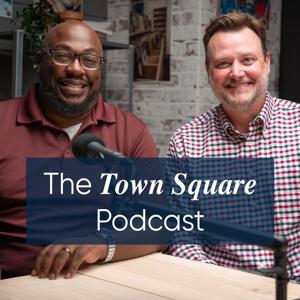


As 2025 winds toward Thanksgiving and the holiday season settles over Newton County, something feels especially meaningful about this particular episode of The Town Square Podcast. For the first time in months, it’s just the two of us — Trey and Gabriel — back at the table, returning to the roots of what launched this show in the first place: storytelling, tough conversations, humility, grace, and a deep belief that our community is better when we choose unity over uniformity.
This wasn’t just another episode.
It was a pause.
A breath.
A moment to reflect on 65 candid, sometimes messy, always meaningful conversations with leaders, influencers, contrarians, thinkers, servants, and everyday Newtonians who give their best to this place we love.
This episode is our Thanksgiving table — a long, heartfelt conversation filled with gratitude, honesty, humor, reflection, and even some tears. It’s a celebration of how far we’ve come, how much we’ve learned, and how much we still want to accomplish together.
What follows is a full exploration of the themes, stories, and heart behind Episode 65.
Back to Day One: Why We Started This Podcast
Before the first microphone was plugged in, before the first episode aired, before the first guest sat across from us, we had a simple question:
“How do we create a space where people in Newton County can disagree without disrespect?”
This began because we watched neighbors talk past each other online.
We watched conversations break down into insults rather than ideas.
We watched people assume the worst about people they’d never even spoken to.
And we knew there had to be a better way.
The messy middle — the space between extremes — is where most people actually live. It’s where complexity lives. It’s where the truth usually lives. But it’s also the space our culture avoids, because the middle requires humility. It requires letting go of absolute certainty. It requires listening long enough to learn something new.
This podcast started as an experiment:
Could we create a platform where real conversations — nuanced, layered, human conversations — were possible?
Sixty-five episodes later, the answer is yes… and then some.
Humbling Growth: A Community That Was Ready for This
We didn’t expect the response.
Not the thousands of downloads.
Not the messages.
Not the people who stop us in the grocery store.
Not the guests who walk in nervous and walk out relieved.
Newton County was hungry for civil discourse, hungry for depth, hungry for context, hungry for a reprieve from the algorithm-driven extremes that dominate our feeds.
As Gabriel said in this episode:
“It’s humbling to watch people finally feel like there’s a place to have these conversations — a place where people can humanize politics again.”
Long-form conversations make room for nuance.
Nuance makes room for empathy.
Empathy makes room for connection.
Connection makes room for solutions.
That’s the heartbeat of the show.
Why the Messy Middle Matters
The messy middle is not comfortable.
It’s not neat.
It’s not easy.
Being in the middle means you have to acknowledge that your side — your comfort zone — might have blind spots. It means recognizing that someone else, someone raised differently, someone shaped by a different neighborhood or childhood or church or trauma, may see the world differently… and may still have something true to say.
In Episode 65, we reflected on what we’ve seen:
The messy middle isn’t the absence of conflict — it’s the transformation of conflict into conversation.
Episode Highlights: Conversations That Defined Who We Are
We spent a good portion of this episode looking back at some of the most quintessential Town Square conversations — the ones that best represent what we long to do.
Here are some of the standouts we discussed:
Stephanie Lindsey — Courage in the Heat of Controversy
When Newton County’s political climate hit a boiling point, Attorney Stephanie Lindsey walked into our studio with indictments swirling around her name. She sat down, face-to-face, and said:
“Here’s my perspective. Here’s my experience. Here’s my truth.”
No filters.
No rehearsed lines.
No political posturing.
That’s the messy middle. And it took guts.
Marshall McCart — A Different Lens, Same Community
Marshall brought a completely different worldview — politically, culturally, journalistically — and shared it with calmness, self-awareness, and curiosity.
Two very different guests.
Two very different perspectives.
Same table.
Same willingness to talk.
Same messy middle.
Serra Hall — Cutting Through Economic Development Myths
People often assume economic development leaders only want “more chicken restaurants” or fast food chains. Serra clarified misconceptions, explained markets, and shared metrics that most residents have never heard.
That episode helped people understand governance instead of assuming conspiracy.
CEO JaNice Van Ness — Switching Parties and Standing Firm
Few political decisions generate shockwaves like switching parties. The moment JaNice changed her affiliation, the comment sections erupted.
Her episode let people hear why — not the rumor version, but the real version.
Information replaced misinformation.
Understanding replaced speculation.
DEI Episode — Listening Beyond Labels
One of the most formative episodes for Trey personally was our DEI discussion. Gabriel shared what DEI feels like from the inside — not as a political talking point, but as lived experience formed by family history, community dynamics, and racial realities Trey had never personally navigated.
It didn’t change every opinion.
It didn’t erase every disagreement.
But it changed the lens.
And that’s the power of empathy.
DA Randy McGinley & Attorney Kamau Mason — Partners in Solving Youth Gun Violence
Opposite sides of the courtroom.
Opposite life experiences.
Opposite professional roles.
And yet, they came to us together to say:
“There is a problem. We need to talk about it.”
It was raw, honest, and deeply important.
Why Avoiding Hard Topics Hurt Us — And Why We Won’t Do It
We grew up hearing:
“Don’t talk about religion or politics.”
Worst advice ever.
Avoidance doesn’t create harmony — it creates ignorance.
Avoidance doesn’t protect relationships — it erodes trust.
Avoidance doesn’t maintain peace — it builds pressure until it explodes.
The messy middle is our antidote to avoidance.
It’s where:
Why Misinformation Is Our Enemy
As Gabriel said:
“You’ll think everything is a conspiracy when you don’t know how things work.”
We’re not here to tell people what to believe.
We’re here to help them understand how things work so they can believe responsibly.
Every time someone listens and says,
“I had no idea — that really helps,”
we win.
Every time a narrative shifts from rumors to reality,
we win.
Every time someone says,
“I don’t agree with them, but now I understand them,”
we win.
The Power of Story: Race, Upbringing, and Seeing Each Other Clearly
Some of the most moving parts of Episode 65 were the personal stories — moments where Trey and Gabriel reflected on how their upbringings shaped them differently.
Gabriel grew up in North Omaha — a historically Black community — surrounded by stories shaped by Jim Crow, racial injustice, and generational trauma.
Trey grew up in rural Newton County, shaped by a different world entirely.
Neither experience is universal.
Neither experience is complete by itself.
But together, they create understanding.
This is what the messy middle does:
It forces us to see that our worldviews are shaped by worlds we didn’t choose.
Empathy is born the moment we say,
“I hadn’t lived that — but I’m willing to listen.”
Gratitude: The Unexpected Theme of Episode 65
Because this episode airs the week before Thanksgiving, we leaned into gratitude. Deep, honest gratitude.
And here are the things we named:
1. We’re thankful for Newton County.
This community listens, engages, critiques, celebrates, and cares.
It’s why this show exists.
2. We’re thankful for our guests.
From elected officials to nonprofit leaders, pastors to police chiefs, activists to influencers — they have trusted us with their stories, even when the topics were emotional or controversial.
3. We’re thankful for our listeners.
Thousands of Newtonians who genuinely want our county to thrive — and who seek understanding instead of outrage.
4. We’re thankful for our sponsors.
People who don’t just write checks, but say:
“We believe in what you’re doing — how can we support you?”
5. We’re thankful for our families.
Because behind every community leader are spouses, children, and loved ones who sacrifice time, energy, and privacy so we can serve publicly.
From Trey’s daughter in the U.S. Marine Corps, to twins about to graduate, to a milestone marriage… to Gabe’s journey through spiritual warfare, near-death health scares, emotional survival, and God’s sustaining grace — this episode held nothing back.
Gabe’s Story: Gratitude for Survival
One of the most powerful parts of Episode 65 came when Gabriel reflected on the past year — a year marked by ambulance rides, heart attack scares, emotional trauma, spiritual attacks, and relentless challenges.
His honesty wasn’t dramatic.
It was pastoral.
Human.
Real.
Sitting in the back of an ambulance the day after his 45th birthday, texting his family goodbye “just in case,” he realized how fragile and precious life is — and how thankful he is simply to still be here.
As Trey reminded him, transparency is ministry.
And his survival is a testimony.
The Bond Between Hosts: Brothers in the Middle
One of the most moving parts of this episode was the acknowledgment of the brotherhood formed between Trey and Gabriel.
Behind the scenes — in parking lots, over late-night calls, through hard seasons, during moments of doubt or exhaustion — this friendship became a lifeline.
This podcast is stronger because the friendship behind it is stronger.
Looking Ahead: The Next Era of Messy Middle Conversations
We’re just getting started.
In Episode 65, we dreamed aloud about what’s next:
The messy middle is evolving — and we’re committed to remain right there in the thick of it.
Referenced Episodes You May Want to Revisit
Here are the episodes we directly referenced or discussed:
🎙️ Randy McGinley & Kamu Mason – Teen Gun Violence Conversation
A rare, powerful conversation between a prosecutor and defense attorney.
https://www.thetownsquarepodcast.com/episodes/e48-randy-mcginley-kamau-mason-teen-gun-violence
🎙️ Attorney Stephanie Lindsey – On Indictments & Perspective
A bold, messy, courageous conversation about truth and narrative.
https://www.thetownsquarepodcast.com/episodes/e32-stephanie-lindsey-newton-boc-district-3
🎙️ Marshall McCart – Piedmont Chronicles and Another Viewpoint
A viewpoint from the opposite side of the political spectrum.
https://www.thetownsquarepodcast.com/episodes/e55-marshall-mccart-the-piedmont-chronicles
🎙️ Serra Hall – Newton County Industrial Development Authority
Clearing rumors and explaining how local economic development really works.
https://www.thetownsquarepodcast.com/episodes/e11-serra-hall-newton-ida
🎙️ CEO JaNice Van Ness – Why She Switched Parties
A transparent look at a controversial political decision.
https://www.thetownsquarepodcast.com/episodes/e62-janice-vanness-rockdale-county-commissioner-peachtree
🎙️ DEI Conversation – Trey & Gabriel
A vulnerable, deeply personal discussion about race, empathy, and experience.
https://www.thetownsquarepodcast.com/episodes/e28-the-dei-debate
Advertisers Featured in Episode 65
Luther Rice College & Seminary
Affordable, flexible theological education founded on Scripture.
Website: www.LutherRice.edu
RE/MAX Around Atlanta – LeAnne Long
Expert real estate service with deep Newton County knowledge.
Website: www.leanne-long.com
Appalachia Group Insurance
Local, trusted insurance agency serving families and businesses.
Email [email protected]
Final Thoughts: Gratitude for the Journey
As Episode 65 closes, Trey and Gabriel wrap up with pure, unfiltered gratitude.
Gratitude for each other.
Gratitude for their families.
Gratitude for their faith.
Gratitude for their community.
Gratitude for the chance to sit at this table, week after week, inviting Newton County into the messy middle.
This podcast isn’t perfect — and it shouldn’t be.
It’s human.
It’s honest.
It’s messy.
It’s real.
And that’s exactly what makes it powerful.
Happy Thanksgiving, Newton County.
From the Town Square Podcast — we are grateful for you.
A Mansfield Native, Marine Captain, and Mission-Driven Attorney Steps Forward to Serve
On this special Veterans Day edition of The Town Square Podcast, host Trey Bailey sits down with Captain Bret Dunn, a Newton County native whose life story reads like a roadmap of service, faith, and conviction. Dunn grew up between Oak Hill and Mansfield, graduated from Alcovy High School in 2013, earned his law degree from Mercer University, and went on to serve as a U.S. Marine Corps officer—eventually becoming a defense counsel at Parris Island.
Now a partner at Strauss & Dunn Law Firm and the Republican candidate for Georgia Senate District 42, Capt. Dunn brings his military discipline, courtroom experience, and faith-driven values into a new kind of battlefield: public service.
In this hour-long conversation, Trey and Bret explore his journey from Mansfield to Quantico, from defending Marines to defending Georgians, and from carrying a rifle to carrying a calling. The uniform may be off, but as he says, “the mission is still the same.”
Growing Up Southern Strong
Bret Dunn’s story begins in Mansfield, Georgia—a “Mayberry-style” small town where neighbors wave, manners matter, and your reputation follows you through every front porch.
Raised between his mother’s home in Mansfield and his father’s house in the Oak Hill area, Bret learned discipline early. His father, Jackie Dunn, served as a Marine before spending 37 years as a police captain in Conyers. The Eagle, Globe, and Anchor symbol was a constant presence in their home, as was the sound of “Yes sir” and “No ma’am.”
“Those little things—manners, respect, accountability—laid the foundation for something much bigger,” Bret recalls. “You didn’t say yeah or nah in my house. You said yes sir or no sir.”
A proud product of the Newton County School System, Bret attended Oak Hill Elementary, Veterans Middle, and graduated from Alcovy High School’s Class of 2013. His formative years in Newton County shaped his work ethic and small-town values—qualities he says have never left him, even as his path took him into some of the world’s toughest environments.
Answering the Call: From Mercer to the Marines
Like many who grow up under the shadow of the American flag, Bret knew service was in his future—but he wasn’t always sure how.
After earning his undergraduate degree from Georgia State University, he felt a tug toward military service. Yet when he first tried to enter the Marine Corps in 2015, the timing wasn’t right. Fitness and recruitment standards were high amid federal budget cuts, and Bret found himself temporarily shut out.
But as he says, “Every time I tried to do something that God didn’t want me to do, I failed at it.”
Instead, a Marine Corps officer encouraged him to consider law. That conversation changed everything. Bret enrolled at Mercer University’s School of Law in Macon, joining a long line of “Bears” who have shaped Georgia’s judiciary—including Judge Sammy Ozburn, Judge John Ott, and former Governor Nathan Deal.
Between his second and third year of law school, Bret entered Officer Candidate School at Marine Corps Base Quantico. On June 1, 2019, he stepped onto the famous yellow footprints that have tested generations of Marines. Ten weeks later, he earned his commission as a Second Lieutenant.
“I came home from Quantico on a Saturday,” he remembers, “and by Monday morning, I was back in evidence class at Mercer. One day I’m doing pushups in the Virginia humidity; two days later I’m highlighting case law.”
After passing the Georgia Bar Exam on his first try, Bret received orders to Marine Corps Recruit Depot Parris Island, where he would serve as a Defense Counsel—representing Marines in courts-martial, administrative hearings, and boards of inquiry. Over time, he rose to the rank of Captain, blending his love of justice with the Marine ethos of “Semper Fidelis”—Always Faithful.
Veterans Day: Honoring Service and Sacrifice
It’s fitting that Episode 64 airs on Veterans Day, a holiday that carries deep meaning for Capt. Dunn.
“Memorial Day is for those who gave their lives,” he says. “Veterans Day is for those who served and came home. The best thing anyone can do for a veteran is to simply say thank you—and to pray for them.”
Bret speaks candidly about the invisible wounds of war, about the friends who came home from Iraq and Afghanistan only to struggle with loss and disillusionment.
“There are folks right here in our community who are still hurting,” he says. “A simple thank you might be what keeps them going another day.”
From Court Martial to Courtroom: A Calling to Defend
Today, Capt. Dunn wears a different kind of uniform: a suit and tie. But his mission remains the same.
At Strauss & Dunn Law Firm, he represents clients in criminal and civil cases throughout Georgia—and still defends service members when called upon.
“When King Nebuchadnezzar looked into the fiery furnace and saw a fourth man, that’s how I see my job,” Bret says. “When someone’s in trouble, I’m that fourth man standing beside them.”
For Dunn, law isn’t just a career; it’s a calling.
“My goal is always to return someone to society better than I found them. Sometimes I represent people who are innocent, and that’s terrifying. Other times they’ve made mistakes and need redemption. Either way, my duty is the same—to defend, to guide, and to point them toward Christ.”
Faith and Humility: The Foundation for Leadership
When Trey asks how his Marine Corps experience and faith intersect with politics, Bret answers without hesitation: “The greatest leader who ever lived was Jesus Christ.”
He tells the story of Christ washing the disciples’ feet in the upper room—a picture of servant leadership that shaped his understanding of public service.
“Jesus wasn’t about titles; He was about towels,” Bret says. “If you want to lead, you have to serve first.”
The Marine Corps taught him humility—a trait he calls his “secret weapon.” He’s learned to let opponents underestimate him and to rely on grace rather than ego.
“I don’t need to be called ‘Senator’ or ‘Captain,’” he laughs. “Just call me Bret.”
District 42: A Cross-Section of Georgia
Georgia’s Senate District 42 covers most of Newton County, all of Morgan County, and portions of Walton and Henry counties—including Mansfield, Covington, Social Circle, and the Ola-McDonough corridor.
It’s a district that mirrors the state’s mix of rural values and suburban growth—what Bret calls “a real cross-section of Georgia.”
He’s quick to note that while the new district leans conservative, his campaign is about serving everyone, not just Republicans.
“I’m here to serve God’s people,” he says. “Those folks aren’t all Republican—and that’s fine. I’ll listen to anyone who loves this community and wants to make it better.”
Bret envisions bringing together law-enforcement leaders from each county—Democrat and Republican alike—to strengthen public safety and share resources.
“Safety isn’t partisan,” he insists. “Everybody deserves to live in a place that’s safe.”
Back the Blue – and Lead with Courage
With a father who spent nearly four decades in law enforcement, Bret’s respect for police officers runs deep. He still wears a Back the Blue bracelet every day—not for show, but as a reminder of his mission.
“I wear it so I never forget who I’m fighting for,” he says. “These men and women go to work every day not knowing if they’ll come home. The least we can do is have their back.”
He points to Georgia Senator Brian Strickland’s pending bill to expand workers’-comp benefits for officers injured in the line of duty, calling it “the kind of common-sense legislation we need more of.”
“An officer like Matt Cooper shouldn’t have to fight through red tape after being shot in the line of duty,” Bret says. “Government should take care of those who take care of us.”
Faith in the Public Square
Throughout the conversation, Bret returns repeatedly to one theme: faith belongs in the public square.
“For too long, the church sat on the sidelines,” he says. “When Christians stepped back, culture filled the void. It’s time for believers to engage again—with grace, conviction, and courage.”
He quotes the Georgia Constitution’s preamble, which acknowledges “the providence of Almighty God,” and argues that America’s strength has always been rooted in Judeo-Christian values.
“Dads should be priests in their homes,” he says. “If fathers lead with faith, families get stronger—and when families get stronger, communities thrive.”
Family First: Raising Jack in a Better World
Bret and his wife Kennedy recently welcomed their first child, Jack—a life-changing blessing that gives new urgency to his sense of mission.
“People always tell you your life will change when you have a kid,” he smiles. “But until you hold that baby, you can’t understand it. Now I wake up every day thinking, ‘What kind of world am I leaving for Jack?’”
That question fuels his campaign. For Dunn, the fight for faith, family, and freedom isn’t abstract—it’s personal.
“We can’t just focus on the next life,” he says. “God gave us dominion here, too. We’re called to make this world better.”
Standing for Life, Family, and Freedom
As the conversation deepens, Bret doesn’t shy away from controversial issues. His convictions are clear:
These aren’t talking points; they’re convictions forged through experience—in uniform, in courtrooms, and in prayer.
“Before I cast any vote,” he promises, “I’ll consult with God Almighty first.”
Hope and Revival in District 42
Despite his concerns about moral decay and political division, Capt. Dunn sees reason for hope.
“Since September 10th, when Charlie Kirk was murdered, I’ve seen more young men coming back to church than ever before,” he says. “There’s a revival sweeping this country.”
He points to a new generation of civic and spiritual leaders in the region—sheriffs like Keith Brooks in Walton County and Tyler Hooks in Morgan County, and commissioners like LeAnne Long and Stan Edwards in Newton County—who, he says, “have the backbone to stand up for what’s right.”
He applauds Newton County’s data-center oversight and praises the Newton County School System for its new Workforce Development Framework, which introduces career readiness as early as kindergarten.
“Not everybody needs college,” he notes. “We need welders, electricians, and truck drivers. Teaching real-world skills is the halftime adjustment Georgia needed.”
A Campaign Rooted in Gratitude
As endorsements pour in from veterans, sheriffs, and district attorneys, Bret remains grounded.
“I don’t like to use the word ‘proud,’” he says. “I’m thankful. Every relationship is a blessing, and every door God opens is one I want to walk through faithfully.”
He references his ever-present “Bret’s Maxims” notebook, filled with lessons and quotes collected along the way. One entry sums up his philosophy:
“The principles you live by will determine the world you live in.”
When he took off the Marine uniform in 2024, Bret wondered what came next. But as he prayed, he says God made it clear: this was his next mission.
“When God shuts a door, don’t crawl through a window,” he laughs. “He opened this one, and I’m walking through it.”
The Mission Continues
As the conversation closes, Trey Bailey thanks Bret for his service—both military and civic—and for the way his faith guides his leadership.
“You can tell your values just bleed out of you,” Trey says. “They’re impossible to hide.”
Bret smiles. “The uniform came off,” he says, “but the mission is the same—to glorify God, serve people, and leave this community better than I found it.”
For listeners across Newton County and beyond, it’s a reminder that true leadership doesn’t begin in the Capitol—it begins at home, with humility, conviction, and a servant’s heart.
Where to Learn More and Connect
To learn more about Capt. Bret Dunn’s campaign for Georgia Senate District 42, visit
👉 DunnForGeorgia.com
Follow him on social media:
And listen to the full episode of The Town Square Podcast on
🎧 TheTownSquarePodcast.com | Apple Podcasts | Spotify | YouTube
Sponsors & Community Partners
This episode of The Town Square Podcast is brought to you by three incredible partners who share our mission to build a better Newton County:
Closing Thought
Capt. Bret Dunn embodies the very ideals The Town Square Podcast seeks to highlight—faithful service, moral courage, and love of community. From the courtroom to the campaign trail, his life testifies that honor, humility, and hope still matter.
This Veterans Day, and every day, may we remember that leadership isn’t about titles; it’s about towels. And for Capt. Bret Dunn, both in uniform and out, the towel of service is still in his hands.
Every community has those moments when social media explodes and rumors outpace reality. For Covington, Georgia, that moment came when the city council voted to purchase property from Cinelease/Three Ring Studios—a move that set keyboards ablaze across Newton County. Many residents wondered: Was the city bailing out the studio? Was this another taxpayer burden?
So this week on The Town Square Podcast, host Trey Bailey sat down with Travis Moore, East Ward Post 2 Councilman, to get the story straight from the source. Moore is known for his transparency, his calm on social media, and his willingness to explain city decisions in plain language.
This conversation also dove into another hot-button issue: the new ordinance banning for-profit cemetery tours in Covington. After a video went viral, emotions ran high, accusations flew, and Moore once again found himself clarifying facts online—and ultimately casting the council’s lone “no” vote.
In true Town Square fashion, Trey and Travis unpacked both stories in the “messy middle,” where nuance replaces outrage and facts matter more than Facebook.
Before tackling controversy, Trey opened with appreciation. In an era when public officials often hide behind press releases, Moore has built a reputation for directly communicating with citizens after each council meeting.
“You’re setting the bar for how we should communicate as public servants,” Trey told him.Moore laughed, modestly noting that he just likes to “be out there with the folks.” Whether it’s concerts, movie nights, or ribbon cuttings, he’s visible—and online, he’s transparent. After every meeting, he posts the highlights, summarizes the votes, and explains his reasoning.
It’s the kind of grassroots accountability residents say they want—and the kind that probably explains why his Facebook posts often calm storms before they turn into political hurricanes.
At the heart of the Cinelease story wasn’t Hollywood drama—it was logistics.
Covington’s utility departments were scattered all over town: electric trucks here, gas meters rented from a warehouse off Cook Road, poles and transformers stored elsewhere. It was inefficient, costly, and frustrating.
“We needed to consolidate,” Moore explained. “Get all our materials, trucks, and departments in one place.”So the city put out a Request for Proposals (RFP) to find property suitable for a centralized utilities complex. Several options surfaced, but the Cinelease/Three Ring property—roughly 20 acres with two 36,000-square-foot buildings—offered the most space for the same price as smaller alternatives.
The agreed purchase price hovered around $15 to $16 million. As soon as that figure hit the local paper, the Facebook comment sections caught fire. The narrative? The city was using tax dollars to bail out a struggling studio it once helped attract.
“I could see the tar being heated up,” Moore said with a grin. “We needed to cool the temperature down.”So he jumped online and clarified the facts.
The purchase did not use property-tax funds or utility-rate hikes. Instead, it was financed through MEAG Power—the Municipal Electric Authority of Georgia—and the Municipal Competitive Trust, commonly called the MCT fund.
Here’s the short version:
That trust can only be used for utility-related projects, such as infrastructure or debt service. In this case, the purchase perfectly fit that criteria.
The new complex will:
Construction and relocation are slated to wrap by April or May 2026, saving taxpayers money while improving service delivery.
“It just makes things more efficient,” Moore said. “You’ll see faster repairs, fewer delays, and less wasted time.”That’s the kind of behind-the-scenes decision that rarely trends online—but makes a real difference when the lights go out during a storm.
Then came controversy #2—the cemetery tour ban.
A short video surfaced showing a local ghost tour group walking through Covington’s historic cemetery at night. The clip, though brief, ignited outrage among residents who felt the deceased were being disrespected. The comments grew heated; rumors spread that tourists were trampling graves or filming horror scenes among headstones.
Soon, the City Council drafted an ordinance:
The ordinance passed 5-to-1. Moore was the one “no” vote.
He described how guides instructed participants to stay on the paths, avoid touching headstones, and treat the grounds with reverence. The tours, he emphasized, have been operating for years, long before the current administration, often sharing stories of local history more than ghost lore.
When the viral video hit, Moore watched as rhetoric escalated online—and then spilled offline. The business owner behind the tours even had to hire private security after receiving threats.
“That’s just unfortunate,” Moore said. “Even if you don’t agree with a local business, they’re still our neighbors.”Trey pointed out that cities like Savannah thrive on historic and ghost tours. Those excursions blend entertainment with education—“edutainment,” as Trey put it. Moore agreed, noting that Covington’s cemetery holds deep historical significance dating back generations—including his own family’s graves.
“As a seventh-generation Covington resident,” he said, “I’ve got family buried there. And I’ve never seen those tours be anything but respectful.”Moore saw the ordinance as reactionary—born more from outrage than evidence.
“The rhetoric was blaming the tours,” he said. “But they weren’t breaking any laws. And meanwhile, thousands of visitors still walk through the cemetery every year.”He pointed out the inconsistency: casual visitors can still stroll the cemetery, take pictures, and explore history—but one licensed, small business can’t guide people through for profit.
“It felt one-sided,” Moore said. “And it sends a message that Covington might not be welcoming.”That perception matters. Many downtown merchants have told Moore that visitor spending is what keeps their doors open. If Covington gains a reputation as unfriendly to tourists, small businesses—restaurants, boutiques, galleries—will feel the pinch.
“We’re a destination city,” Moore reminded listeners. “Tourism is vital. Let’s not lose sight of that.”Moore’s advocacy for small business isn’t theoretical. He leads the Downtown Development Authority (DDA), regularly hosting “Travis Around Town” visits to highlight local shops and entrepreneurs.
From Your Pie to Roots Boutique, he believes in championing the people who make downtown vibrant.
“Small businesses are the lifeblood of the community,” he said. “If it weren’t for our visitors, many wouldn’t survive.”He listed new projects in motion:
Add to that the long-anticipated Target development near Covington Town Center and upcoming infrastructure upgrades to the Square—way-finding signs, landscaping, underground utilities—and the city’s momentum is undeniable.
Trey steered the conversation toward governance itself—specifically, the role of communication in building public trust.
“The worst thing you can do is be silent,” Moore replied.After each council meeting, he sits down, types up a digestible summary, and posts it online. He doesn’t include every line item (“If we approved a bucket truck, that’s great for the electric department, but not headline news,” he joked). Instead, he focuses on big-picture votes—rezonings, ordinances, developments—and, crucially, he tells residents how he voted and why.
That approach often earns him respect even from those who disagree.
“Some folks tell me, ‘I don’t agree with your vote, but I appreciate you explaining it,’” he said. “That means a lot.”Trey agreed, noting how that transparency diffuses misinformation before it festers.
“It goes a long way,” he said. “Just being open builds trust.”For residents wanting to stay informed, Moore offered simple advice: watch meetings online, read council summaries, and reach out directly. He answers Facebook messages, texts, and calls.
“Accessibility is intentional,” he said. “I want people to be able to reach me anytime.”Asked about his hopes for the future, Moore’s priorities were clear:
He’d like to see more variety in retail, to balance the “Vampire Diaries” nostalgia with everyday local commerce. And he’s optimistic that new anchors like Target will reduce “retail leakage” to neighboring counties.
“When I grew up, downtown shut down at 5 o’clock,” he reminisced. “Now it’s alive. I’d rather have this problem than empty storefronts.”As the episode wrapped, Trey thanked Moore for showing up quickly—literally dropping everything to bring clarity to two stories dominating local conversation.
“That’s what this show’s about,” Trey said. “We don’t live on the extremes. We talk it out in the messy middle.”Moore smiled, happy to have had the chance to clear the air.
“Hopefully this wasn’t clear as mud,” he joked.But it wasn’t. It was Covington, clarified.
Support the local businesses that make The Town Square Podcast possible:
Rapid Tax Services – Fast, affordable tax prep with integrity. Call 678-658-8601 or visit TaxPrepRTS.com
Main Street Land & Properties – Your trusted partner for residential and commercial real estate. Stop by 2141 Emory Street NW in Covington or visit MSLAP.com
Bizzy Bee Exterminators – Locally owned and operated, keeping Newton County bug-free for over 20 years. Call 770-787-3718 or visit BizzyBeeExterminators.com
In Episode 62 of The Town Square Podcast, Trey Bailey and Gabriel Stovall venture beyond Newton County to highlight the incredible story of a neighboring leader: JaNice Van Ness, Chair and CEO of the Rockdale County Board of Commissioners. A seasoned public servant, former Georgia State Senator, and founder of Peachtree Academy, JaNice brings a rare blend of faith, fiscal responsibility, and unapologetic pragmatism to the often-polarized world of politics. This conversation touches on everything from her surprising political shift, her entrepreneurial roots, and the economic and spiritual heartbeat of Rockdale County.
With a degree in Political Science and International Relations from Auburn University, JaNice’s story began far from Rockdale—on Capitol Hill in Washington, D.C., where she interned and later worked for U.S. Senators Alan Dixon and Howell Heflin. That experience lit a spark for service but also revealed that calling didn’t always come with a sustainable paycheck. Returning home to Georgia, JaNice entered the world of education and business, which eventually led to her founding Peachtree Academy—a Christian school now serving families from pre-K through 12th grade with multiple campuses.
Her public service career began with a Rockdale County Commission seat in 2005, followed by a successful election to the Georgia State Senate (District 43), representing Rockdale, Newton, and DeKalb counties. A deeply relational campaigner, she prioritized meeting people where they were—often at grocery stores and community events.
In one of the podcast’s most candid moments, JaNice shares her reasoning behind switching political parties—moving from Republican to Democrat—and how that move wasn’t about ideology, but community impact. She explains:
“A pothole is a pothole—there’s no Republican or Democrat version of that.”
Her campaign slogan, “Clean Up the Mess, Vote Van Ness,” reflects her centrist approach. She doesn’t fit neatly into a partisan box, and she prefers it that way. Her focus is simple: responsible budgeting, lower taxes, public safety, and community well-being.
Rockdale County’s budget nearly doubled in 10 years—from $58 million in 2014 to $123 million today. As a business owner and former finance committee member, JaNice brings a fiscal discipline that’s often missing in politics.
She led efforts to: - Roll back the county’s millage rate from 18.68 to 18.282 - Conduct deep internal reviews of vehicle fleet spending - Empower citizens via a Financial Oversight Committee - Increase pay for first responders and public safety staff
Van Ness sees herself as a steward of the community’s tax dollars—focused on outcomes, not just programs. “Some government jobs feel more like employment programs,” she quips, “but we’ve got to stay outcome-focused.”
JaNice’s business, Peachtree Academy, began as a passion for quality Christian education. Over time, it grew into a multi-campus private school and early childhood center. But she’s quick to say that her mission isn’t elitism—it’s service.
“We’re not in an elitist environment. We’re a community of families who prioritize education.”
Peachtree Academy is also a launching ground for local churches, with seven church plants launched from its campuses over the years. JaNice sees spiritual and educational growth as intertwined and believes the local church is a crucial part of any healthy community.
With Rockdale and Newton Counties often sharing economic, educational, and cultural challenges, JaNice emphasizes the importance of regional collaboration. Whether it’s economic development (like supplier growth from the Rivian project), local churches, nonprofits, or shared infrastructure concerns, she believes the future is about “good neighbors across county lines.”
Her leadership story is grounded in real-life service. She began volunteering as a candy striper at Rockdale Hospital and shelving books at Nancy Guinn Library. That foundation led to her now holding one of the highest offices in the county—Chair and CEO of Rockdale County. She’s now passionate about grooming the next generation of servant leaders, launching new citizen advisory boards and dreaming of a “So You Want to Serve?” forum for aspiring civic leaders.
“Don’t just win. Serve.”
When she’s not leading commission meetings or mentoring community leaders, JaNice recharges on the pickleball court. The county is even expanding pickleball facilities to keep up with demand—a small but powerful example of her community-centered leadership style.
· 📧 County Email: [email protected]
· 🏢 County Website: rockdalecountyga.gov
Peachtree Academy
- 📈 peachtreeacademy.com
Personal Website:
- 👥 janicevanness.com
· Rockdale Board of Commissioners Info: rockdalecountyga.gov
· Learn about Peachtree Academy: peachtreeacademy.com
· JaNice’s leadership journey: janicevanness.com
⚡ Appalachia Group Insurance
Independent agents. Local service. Insurance that works for you.
Contact Bobby Stephens: 770-728-1880
Email: [email protected]
🏢 Main Street Land and Properties
Your trusted partner for real estate, development, and community growth.
https://mslap.com
🐜 Bizzy Bee Exterminators
Locally owned. Trusted for decades. No bugs, no stress.
https://www.bizzybeeexterminators.com/
🔗 Listen or Watch the Full Episode:
YouTube: @TheTownSquarePodcast
Apple Podcasts & Spotify: The Town Square Podcast
#TownSquarePodcast #JaNiceVanNess #RockdaleCounty #GeorgiaPolitics #MessyMiddle #PeachtreeAcademy #ServantLeadership #FiscalResponsibility #LocalGovernment #BetterTogether
In Episode 61 of The Town Square Podcast, Superintendent Dr. Duke Bradley III returns for a record third appearance to introduce one of the most ambitious and promising initiatives Newton County Schools has ever undertaken: a Workforce Development Framework that connects students from kindergarten through graduation to the world of work. But this isn’t just about jobs—it’s about dreams, relevance, and preparing students for success in a rapidly changing world.
Following Dr. Bradley in the second half of the episode are two of the framework’s architects—Dr. Shannon Buff, Executive Director of School Leadership, and Dr. Tim Schmitt, Director of CTAE and Workforce Innovation. Together, they unpack how this framework is being woven into the DNA of Newton County Schools, in partnership with local industry, the Chamber of Commerce, and the Industrial Development Authority.
Dr. Bradley opens the episode with a simple but profound question: What does it mean for a public school system to truly prepare students for life after high school? For him, the answer lies in creating a “launchpad of opportunity”—not a one-size-fits-all pathway, but a flexible and personalized framework that gives students a head start on their future. Whether a student wants to be a welder, a nurse, an accountant, or an engineer, they should be able to start exploring those paths long before graduation.
This isn’t theoretical. The framework is already in motion. And it’s not just about workforce training—Bradley emphasizes that it’s about clarity, access, exposure, and achievement. It’s about helping students discover their gifts and guiding them toward a career that excites them.
The Workforce Development Framework is organized into three progressive stages:
What makes Newton County’s approach stand out is its start-early, dream-big philosophy. Instead of waiting until high school to begin thinking about careers, the system introduces students to real-life jobs starting in kindergarten. From learning soft skills like communication and teamwork to exploring emerging industries like aviation tech and biotech, students are gaining the exposure and confidence they need to make informed choices.
And this isn’t just about “alternatives” to college. As Dr. Buff explains, “This isn’t college or career—it’s college and career.” Whether a student wants to head to a university, enroll in technical school, or jump into the workforce, they’ll be ready with a plan.
To institutionalize this shift, the district is introducing a Workforce-Ready School Designation—a recognition for schools that successfully embed workforce preparation into their culture, instruction, and partnerships. The designation includes six areas:
From robotics competitions to industry field trips, from soft skill certification in 3rd grade to engineering dual enrollment in 11th, schools will be recognized for doing the deep work of preparing students for life beyond graduation.
This isn’t just talk. The framework includes clear goals and metrics—and it’s already drawing attention across the state. Georgia State Superintendent Richard Woods, Commissioner Greg Dozier of the Technical College System of Georgia, and Georgia Chamber CEO Chris Clark have all praised Newton County’s efforts.
Dr. Bradley notes that enhancing the work done in the past, the school system is now being seen as a critical partner in economic development—not just producing diplomas, but producing skilled, motivated, and competitive graduates ready for Georgia’s top industries.
The passion behind this framework is rooted in stories: the student who never thought college was possible until they passed a dual enrollment English class in their home high school… the 3rd grader who shook a visitor’s hand and proudly declared their dream to be a mechanical engineer… the senior who found their calling not in a textbook, but on a field trip to Takeda’s bioscience lab.
Dr. Buff and Dr. Schmitt share that one of their goals is to eliminate the “I don’t know” answer when students are asked what’s next. Instead, they want every student to leave Newton County Schools with a clear, confident plan—backed by real experiences, real exposure, and real opportunities.
In closing, the guests emphasize this is not a trend—it’s a transformation. And it’s being built to last. Through professional development for educators, deep integration with academic curriculum, and authentic community partnerships, the framework is designed to evolve with the needs of the modern world.
As Dr. Bradley says, “If you can create that kind of environment from kindergarten through 12th grade, you change a school system—and a community.”
Whether you’re a parent, a business leader, a nonprofit director, or a community member—there’s a place for you in this vision. Newton County Schools is actively seeking new industry partners, mentors, and career exploration opportunities for students.
If you’re interested in learning more, volunteering, or seeing the full framework document, reach out to the district office or contact the Career, Technical, and Agricultural Education (CTAE) team.
🎙️ This episode is made possible by our partners:
🎧 Listen to Episode 61 now on:
👉 Apple Podcasts
👉 Spotify
👉 YouTube
📲 And don’t forget to subscribe, rate, and share with your community!
Local unity with boots on the ground. In this week’s episode of The Town Square Podcast, Trey and Gabriel sit down with Claudia Minge of Covington First United Methodist Church and Margaret McDonald, Executive Director of Giving Hands Food Pantry. Together, they unpack one of the most joy-filled, service-driven traditions in our community: Change The World Day—coming Saturday, October 25, 2025, 11:00 AM–2:00 PM, on the Covington First UMC campus (Conyers St., near the Square).
If you’ve never been, think massive community service fair + fall festival + resource clinic + free food + gifts of grace—all in one place, all in one afternoon, all free. It’s the perfect picture of our podcast’s heartbeat: unity, not uniformity—the messy middle made practical.
Episode Snapshot
“Change the World” started as a challenge—now it’s a Newton County tradition
Seventeen years ago, an email landed in Claudia’s inbox—a United Methodist challenge inspired by pastor/author Mike Slaughter’s book Change the World: “Take ministry outside the walls for one day.” Covington First UMC grabbed the baton, learned from year one, and moved the event to Fall to better serve our local rhythm.
From there, it grew—on purpose. Instead of one project, Claudia and a small team imagined a multi-faceted serve daythat could meet real needs, showcase local help, and spark partnerships that last all year. Today, churches, civic groups, nonprofits, schools, health providers, and local businesses flood the campus—each bringing a piece of the puzzle. As Claudia says, “We’re better together.”
What you’ll experience on Oct 25
Easy parking & shuttles. Volunteer golf-cart drivers scoop up guests from surrounding parking areas and drop you right at the action.
Front Campus: Community Service Fair + Fall Fun
Back Campus: “Gifts of Grace”
“It’s the happiest day—smiles, hugs, conversations everywhere. You see community.” —Claudia
Why this day unifies Newton County
Change The World Day dissolves the usual lines—denominational, organizational, even “who hosts what.” Claudia is crystal-clear: Covington First UMC simply hosts because the campus can handle the footprint; the entire communitymakes the day work. Groups wear their own swag—you’ll see a sea of shirts from dozens of churches, clubs, teams, schools, and nonprofits. It’s visual unity—one campus, many colors, one mission.
Part of the secret sauce? Networking. For many leaders, CTWD is the one day they’re all in the same place, forging new connections that become co-ops, referrals, and joint projects for the other 364 days.
The year-round engine: Giving Hands Food Pantry
Change The World Day amplifies the daily work of Giving Hands Food Pantry—and Margaret’s team is humming:
“People leave with dignity—and good food. Volunteers go home tired in the best way.” —Margaret
Get involved: givinghandsfoodpantry.org
Sign up to volunteer, donate, or join the newsletter. (They also list opportunities via Hands On Atlanta.)
How to plug in (before, during, and after)
Right now (before Oct 25):
Day-of (Oct 25):
After the day:
A story that says it all
One year, a dad tapped Claudia’s arm, coats draped over his shoulders.
“My family comes every year for warm coats.”
That’s the whole point: meet real needs, preserve dignity, and make sure people leave better than they came—body, mind, and soul.
Important Links
Please Like, Subscribe & SHARE
If this episode inspires you, share it on your socials and tag a friend you want beside you on Oct 25. Ratings and reviews on Apple Podcasts and Spotify help more neighbors find the show.
The Town Square Podcast runs on community gifts. If our “messy middle” conversations help strengthen Newton County, consider a one-time gift or a small $2 or $5 monthly donation to keep this local storytelling going:
👉 thetownsquarepodcast.com/donate
Thank You to Our Sponsors
LeAnne Long, RE/MAX Around Atlanta East (Covington)
Buying or selling? Trust 37+ years of experience and a can-do closer.
Phone: 770-851-0380
Web: leeannlong.com
Busy Bee Exterminators
Local, reliable pest & mosquito control for homes and businesses.
Phone: 770-787-3718
Web: busybeexterminators.com
Luther Rice College & Seminary
Biblical, affordable, accredited, 100% online programs for every stage.
Web: lutherrice.edu
Ready to roll up your sleeves? We’ll see you October 25th, 11–2, at Covington First UMC. It will change your world—and ours.
The story behind “the church that disappeared overnight”
If you’ve driven the Covington Square lately and wondered, “Where did that historic white-columned church go?”—this episode is for you. Dr. Cody McNutt, Senior Pastor of First Baptist Church, Covington, sits down with Trey to walk us—calmly and carefully—through the why, the how, and the what’s-next of FBC’s decision to demolish its 120-year-old sanctuary and rebuild on the same block.
This is more than a construction update. It’s an honest conversation about history, stewardship, theology, hospitality, accessibility, and unity—and why the FBC leadership concluded that the best way to honor a 200-year presence in Newton County was to create space to grow together for the next 100.
“Church buildings come and go and are almost like garments cast off in their season when they no longer suit the congregation.” — Covington News, c.1910, quoted by Dr. McNutt
Not a 200-year-old building—a 200-year-old church
First Baptist Covington (founded in 1823) is nearly as old as Covington itself. Over two centuries, the congregation has worshipped at multiple locations around the Square, eventually purchasing the corner of Floyd & Elm in the early 1900s. The sanctuary we all remember opened around 1910. And like most long-lived churches, the facility went through several significant alterations:
Put simply, the sanctuary many of us loved was the building’s third or fourth iteration. What it symbolized was historic; what it provided—capacity, accessibility, and unity—no longer matched the church’s mission.
The long road to a hard decision
This wasn’t sudden. According to Dr. McNutt, FBC voted more than 25 years ago to remain downtown rather than relocate, precisely because they wanted to be “in the city for the city.” When Cody arrived, the church was worshiping in three services (traditional and contemporary) in order to accommodate growth. It “worked,” but it also siloed one congregation into multiple congregations, robbing FBC of the spiritual chemistry that comes from singing, praying, baptizing, and taking the Lord’s Supper together.
Beginning in 2019, the church engaged in prayer, teaching, and planning that came to focus on four convictions:
FBC engaged architects who specialize in historic, landlocked churches. Could they keep the sanctuary and still achieve those aims? They explored it. The math—on capacity, structure, compliance, and circulation—wouldn’t work. Preserving the mission meant replacing the building.
“We didn’t wake up wanting to tear down a historic structure. I love history. But our call is to shepherd people—not protect paint.” — Dr. McNutt
The congregation discussed, prayed, and voted (FBC is congregationally governed). The decision was overwhelminglyin favor—not unanimous, but decisive. Tellingly, many of the longtime members who said, “It will hurt to see it go,”were first to give financially to the new project. They knew their children and grandchildren need a church that’s spiritually alive and structurally ready for the next century.
Rebuilding the past to serve the future
If you’ve seen renderings and thought, “No steeple? Looks like a courthouse?”—a few clarifications:
A theology of space: why unity shaped the blueprint
What pushed this past “we need more seats” into “we must rethink the room” was theology, not just practicality. FBC’s leadership concluded that Scripture presents a compelling vision of one body gathered—intergenerational and, by God’s grace, increasingly multiethnic—sitting under the same Word, singing with the same voice, witnessing the same baptisms, and sharing the same Table. The building had stopped supporting that biblical aspiration. The new one is designed to enable it.
A simple and beautiful side effect: grandparents and grandchildren now sing both the deep hymns of the faith and the best modern songs of today—together. It’s not aesthetic compromise; it’s spiritual formation—rooted, rich, and shared.
“We hear you”: responding to community concern
Dr. McNutt’s message to the broader community is gracious and direct:
Sunday services: 8:30 & 11:00 AM. Everyone’s welcome.
Beyond bricks: rooted, reaching, replicating
Midway through the conversation, Trey invites Cody to step back from blueprints and talk about the moment we’re living in—polarization, culture fights, confusion about truth—and how a local church should respond.
Dr. McNutt’s answer is both classic and urgent:
He’s careful to distinguish the gospel (“God is our Maker; sin our failure; Christ our Savior; repentance and faith our answer; new life our pleasure”) from social action. The church must do good works—Scripture commands it—but works flow from the gospel; they are not the gospel. That distinction keeps the church clear-eyed and courageous in a confusing age.
“Politics will not save us. Programs will not save us. The gospel of Jesus Christ—proclaimed by a faithful local church—changes people, families, and towns.” — Dr. McNutt
SHARE: If you share this episode with a neighbor who’s been asking, “Why did they do that?”—you’ll be doing Covington a favor.
Important links mentioned
Enjoying the Town Square? Help us keep it going.
If this conversation helped you understand your town—and your neighbors—just a bit more, please:
👉 Give here: https://www.thetownsquarepodcast.com/donate
Your support helps Trey and Gabriel bring people together for unity—not uniformity.
Sponsor Thank-Yous
We’re grateful for partners who invest in thoughtful local dialogue.
Luther Rice College & Seminary
Biblical. Affordable. Accredited. 100% Online.
Dual enrollment • Undergraduate • Graduate • Doctoral
Learn more: https://www.LutherRice.edu
The Appalachia Group Insurance
Independent insurance advisors—they shop carriers for the best coverage & price.
Interested in sponsoring The Town Square Podcast? Reach out—we’d love to highlight organizations that strengthen Newton County. Click HERE to get more advertising information.
About The Town Square Podcast
Local advocates for a better Newton County bring their different perspectives to the messy middle—because our aim is unity, not uniformity. Subscribe on YouTube, Apple Podcasts, Spotify, or wherever you listen, and explore past episodes at thetownsquarepodcast.com.
Listener note: The views and opinions expressed by our guests are their own and do not necessarily reflect those of the hosts, advertisers, or sponsors. We strive to provide a platform for open and respectful dialogue on community issues. Listener discretion advised.
A Teacher of the Year Who Never Planned to Teach
“All right, well, welcome to the Town Square Podcast today. We are joined by the 2024–2025 Newton County Schools Teacher of the Year, Ms. Taylor Moody.” From that first line, it’s clear this conversation was going to be special. Co-hosts Gabriel Stovall and Trey Bailey welcomed a guest whose story has already inspired students, teachers and families across Newton County—and whose influence is now being felt statewide.
Ms. Moody holds a rare combination of humility and momentum. In just six years in the classroom, she was named NCS Teacher of the Year and advanced to the Top 10 finalists for Georgia Teacher of the Year. She also serves on district and state advisory groups to help shape the future of ELA standards and teacher voice in Georgia. Yet, as she told us, none of this was part of her original plan.
“I’m a first-generation college graduate. I equated success with money, so I started at UGA as a math major and thought I’d be a real estate lawyer.”
Then life happened.
The Detour That Became a Calling
In college, Taylor experienced a sudden health crisis—fluid building behind her eyes that led to vision loss and migraines. The treatments slowed everything down. Reading and writing felt different. Processing emotions was harder. She needed tutoring, leaned into creative writing, and published poems born out of that season.
“I began to see the power of literacy. I wanted to be on the other side of it—helping students who feel the way I felt: unable, stuck, uncertain—discover what reading and writing can do to heal, express, and empower.”
She switched majors to English Education and then faced an unthinkable early-career hardship—losing two students to suicide within two weeks.
“College prepared me to teach English. It did not prepare me for that. My mom said, ‘You have to decide—this is beyond grading and lesson plans.’ That’s when teaching became my ministry.”
From that moment forward, Ms. Moody wasn’t just teaching ELA standards; she was teaching human beings.
From Math Brain to ELA Heart—Why That Combo Works
Most people either love math or English. Taylor is fluent in both. That makes her especially effective with STEM-minded students who doubt they’ll ever love literature.
“I tell them I started as a math major. It gives me credibility with the STEM kids. But I needed a classroom where 25 different answers could be right if you can support your thinking. I wanted students to experience learning that’s adventurous, expressive, opinionated, and deeply human.”
Her math background also brings structure and systems thinking to the way she designs projects. Which leads us to…
Project-Based Learning That Solves Real Problems
Taylor is a champion of project-based learning (PBL) that merges ELA standards with real-world outcomes. Students don’t just analyze texts or write essays—they design solutions with measurable community impact, collaborate with engineering and healthcare pathways, and present their work to real experts.
“Quick Save CPR” — Student Innovation Takes the Stage
In Samsung’s Solve for Tomorrow competition, one of her student teams designed Quick Save CPR, a guided mat that lays over a patient and prompts the rescuer through correct compressions. It lights up to show hand placement, provides rhythm cues (think “Stayin’ Alive”), and changes color feedback if you’re pushing too hard or not hard enough—solving a common failure point in community CPR response.
They connected their innovation to a local problem—ambulance delays and community response anxiety—and worked with engineering instructors to code and prototype the device.
“People think they know CPR until the moment they need it. Anxiety spikes, technique fades. The mat coaches you in real time.”
The team earned state-level recognition and was named Youth of the Year in Newton County.
A Migraine Patch—And a State Win
The next year, her class identified overuse of OTC pain meds as a community issue—especially the risks of ibuprofen/acetaminophen reliance. A new team designed a headache patch concept to stimulate a nerve pathway behind the neck to relieve migraines—like a targeted neuromodulation approach.
They earned State Winner honors and invited Piedmont’s Chief Medical Officer to mentor their work. He offered this simple advice: if they can fully realize the mechanism and conduct validation, file a patent.
“These are 17-year-olds building solutions with professionals. That’s the promise of public education when it’s done right.”
Why PBL Fits ELA
Ms. Moody weaves reading, writing, rhetoric, research, and communication skills into every stage—proposal writing, literature reviews, technical writing, multimodal presentations, and reflective argumentation. Along the way, students learn feedback cycles, iteration, resilience, and audience awareness—all core ELA outcomes with authentic stakes.
It’s one thing to ace a quiz. It’s another to build something a hospital might want on the shelf.
Teaching Through a Pandemic: Black Boxes, Open Hearts
Taylor’s entry into professional teaching intersected with the pandemic. She finished her student teaching on Zoom. Her first year? Half remote, half in person—with black screens, muted mics, and students struggling far beyond academics.
So, she did what great teachers do—she adapted.
“Mental health became impossible to ignore. The learning mattered, but the relationships mattered most.”
She even got observed by an admin during a show-and-tell. Rather than panic, she leaned in. If anything, it proved what evaluators most hope to see: a teacher building trust so learning can happen.
“You Don’t Have to Be Perfect to Be Powerful.”
That’s the line Ms. Moody carries into every talk and training. As Teacher of the Year, she spoke to new teachers across Newton County, discovering that she loves public speaking and has more to share than she imagined.
“Veteran teachers cried, hugged me, and told me my words mattered. They still text for advice during a tough week. You don’t have to be perfect to be powerful—and we need that truth in education.”
She now serves:
Her message to teachers and leaders is consistent: teacher voice matters—locally and statewide.
The Power—and Limits—of Public Education
When she advanced to the state Top 10, finalists had to deliver a three-minute elevator pitch on the power of public education. As a proud product of public schools and a first-gen college graduate, Ms. Moody didn’t have to manufacture passion.
She told stories: of students who were dismissed as average or worse, who are now engineers or Naval aviation grads; of a 2021 note that still hangs in her room—“Thank you for believing in me when no one else did.”
“Public education is a launchpad. Not every student has access to the same resources. But school can be where access begins.”
The Challenges We Can’t Ignore
Even so, Taylor doesn’t sugarcoat the obstacles:
She believes the system designed long before smartphones—and even before many modern careers—is overdue for re-imagination. And while teacher pensions remain a powerful long-term benefit, we can’t expect people to endure 30 years in unsustainable conditions.
“We need to rethink the system and fund the people doing the work. We can’t add pathways without the humans to teach them.”
Culture, Care, and Classroom Craft
If you visit Ms. Moody’s room at the Newton College & Career Academy, you’ll notice a few things right away.
“Not everyone will be an English teacher. But everyone will need to read, write, speak, and think in public. That’s our job.”
Advice for Newton’s New Teacher of the Year (and Every Teacher)
Asked what she’d say to Dr. Quinita Morrow, Newton County’s newly named Teacher of the Year, Taylor’s counsel was both warm and weighty:
And for new teachers, her day-one advice is simple and profound: save every note and remember why you’re here. In her room, one message—“Thank you for believing in me when nobody else did”—still leads the way.
How Parents and the Community Can Help (Right Now)
Taylor’s heart for partnership is on full display. She works across pathways and invites the broader community into her classroom regularly.
Here’s what she says parents and community partners can do today:
If you’re in Newton (or nearby) and want to collaborate on a community-based project, Taylor is all in.
“Invite us in. Let my students see your world. They’ll surprise you with what they build.”
Connect with Ms. Moody:
Conversation Highlights (Great for Skimming & Sharing)
Listen, Share, and Support the Show
If you love conversations that live in the messy middle—where Newton County neighbors swap perspectives with humility and hope—this episode is for you. Please:
The Town Square Podcast is powered by donations and gifts from our community. If you believe in building unity (not uniformity) here in Newton County, please consider a one-time gift or a small $2 or $5 monthly recurring donation to keep local conversations coming:
👉 Donate: https://www.thetownsquarepodcast.com/donate
Every share, rating, and dollar makes a difference. Thank you!
Important Links Mentioned
Sponsor Spotlight (Thank You for Supporting Local!)
Bizzy Bee Exterminators (Locally Owned & Operated)
LeAnne Long — RE/MAX Around Atlanta East (Covington)
Support the businesses that support local storytelling in Newton County.
The Town Square Podcast is leveling up! Episode 57 is not only a meaningful conversation with community leader Scotty Scoggins—it’s also our first-ever video podcast, now streaming on YouTube. Hosts Gabriel Stovall and Trey Bailey sat down with Scotty to talk about his community involvement, the growth of the Vampire Run 5K, his campaign for Covington City Council West Ward, and his philosophy of leadership that fits squarely in our podcast’s mission: creating unity, not uniformity.
Whether you’re watching on YouTube or listening on Spotify and Apple Podcasts, this episode delivers insight, laughter, and the kind of “messy middle” conversation that makes The Town Square Podcast a vital space for Newton County and beyond.
Meet Scotty Scoggins: A Life Shaped by Service
Scotty’s story begins in Chamblee, Georgia, where his father coached Pop Warner football for nearly three decades. His dad wasn’t just a coach—he was a mentor, a volunteer, and even recognized as Ronald Reagan’s Volunteer of the Year for the Southeast. Scotty grew up on the sidelines of championship teams, learning that life is about doing a few things really well, paying attention to details, and serving others.
Those lessons carried him into adulthood, where he’s worn many hats: accountant, community volunteer, school board candidate, library board member, and most recently, founder of The Vampire Run 5K and now Covington City Council candidate.
The Vampire Run: Putting the Fun in Fundraising
Scotty’s passion project, the Vampire Run 5K, was born out of personal tragedy. In 2014, his mother passed away from acute myeloid leukemia (AML). To honor her memory and support the Leukemia & Lymphoma Society (LLS), Scotty laced up his running shoes. What started as a personal fitness journey quickly grew into a movement.
In 2020, with traditional races canceled during the pandemic, Scotty launched the first Vampire Run. The theme was simple but brilliant: blood cancer sucks, and vampires suck blood. Set in Covington—the filming home of The Vampire Diaries—the run merged fitness, fandom, and fundraising.
The race is unlike any other. Runners and walkers alike enjoy photo stops at Vampire Diaries filming locations, appearances by Freddy Krueger and Michael Myers along the route, costume contests, and a Founders Day parade float restored by volunteers. It’s less about finish times and more about fun, community, and fundraising.
To date, the Vampire Run has raised tens of thousands of dollars for LLS. As Scotty says, “We put the fun in fundraising.”
From Gwinnett to Covington: Lessons in Politics and Community
This isn’t Scotty’s first foray into public service. In the 1990s, he ran for Gwinnett County School Board, narrowly missing a runoff. That campaign led to an appointment to the library board, where his advocacy for parental oversight of materials sparked countywide debates and even appearances on talk radio shows.
Scotty admits he’s not afraid to stir the pot when necessary. But over time, his approach has shifted from partisan politics to practical problem-solving. “Local politics isn’t about politics,” he told Trey and Gabriel. “If you can’t pay your water bill, it doesn’t matter if you’re a Democrat or Republican—you still can’t pay your water bill. The question is: how do we fix that?”
Running for Covington City Council: The West Ward Campaign
Scotty first ran for Covington City Council (West Ward) in a previous election, earning an impressive 43% of the vote—much higher than typical for newcomers in that race. He attributes that to one simple strategy: knocking on doors, listening to people, and showing up.
His platform focuses on four key priorities:
Scotty emphasizes that being a good neighbor is at the core of his campaign. “We should be helping each other out,” he says. “Those with means should be helping those without. That’s what community is.”
The Messy Middle Philosophy
What makes Scotty a perfect guest for The Town Square Podcast is his messy middle mindset. He resists political labels, embraces conversation across divides, and believes the truth is often found somewhere between extremes.
He recalls his days in college organizing bipartisan “Political Awareness Society” meetups in pubs, where students from both parties put topics in a jar and debated them over food and drinks. Today, he still carries that spirit.
“The answer is always in the middle,” Scotty says. “Some issues lean left, some lean right, but the extremes aren’t where most of us live. The middle is where community happens.”
Why This Episode Matters
This conversation with Scotty is more than just an interview—it’s a snapshot of what it means to live, work, and serve in Covington. From his moving story of loss that inspired the Vampire Run to his grassroots campaign for City Council, Scotty represents the kind of everyday leadership that makes small towns strong.
And for The Town Square Podcast, this episode is a milestone: our first video podcast. You can now watch full episodes on our YouTube channel. Don’t worry—audio versions remain on Spotify and Apple Podcasts for listeners on the go.
Important Links from the Episode
Support The Town Square Podcast
If you enjoyed this episode, please:
👉 Donate here
Thank You to Our Sponsor
This episode is brought to you by:
United Bank Wealth Management – Angel Pitts
📍 Covington & Madison, GA
📞 770-412-4932
🌐 United Bank Wealth Management
(Click the “Meet Your Team” tab to learn more about Angel)
Building relationships that go beyond investments.
Final Thoughts
Scotty Scoggins is more than a candidate—he’s a neighbor who believes in listening first, serving second, and stirring things up only when it’s necessary for the community’s good. Whether you’re signing up for the Vampire Run or following the Covington City Council race, this is a conversation you don’t want to miss.
🎧 Listen on Apple Podcasts
🎧 Listen on Spotify
📺 Watch on YouTube
On Episode 56 of The Town Square Podcast, host Trey Bailey welcomes back Georgia House Representative Tim Fleming (District 114) for an in-depth conversation about government, elections, and the road ahead for Georgia.
Representative Fleming has lived his entire life in Newton County, raised a family here, and built small businesses alongside his wife, Lacey. After years of public service—including time as Chief of Staff in the Georgia Secretary of State’s Office under Brian Kemp—Fleming is now serving his fourth year in the Georgia House of Representatives.
In this wide-ranging conversation, Fleming opens up about his roots in Newton County, his time navigating the Great Recession as a young County Commissioner, and his unique perspective on how the Georgia General Assembly works. Most importantly, he shares his vision as he announces his candidacy for Georgia Secretary of State.
This episode is part civics lesson, part local history, and part look forward to the 2026 elections. If you’ve ever wondered how laws are made under the Gold Dome, or why election integrity and professional licensing are central to Georgia’s future, this episode will keep you glued in.
Who Is Tim Fleming? Newton County Roots
Fleming grew up on the west side of Newton County, where his parents ran a small independent grocery store on Brown Bridge Road and Highway 212. Those small-town roots—and the values of hard work and community service he learned early—continue to shape his political philosophy today.
At age 25, Fleming was elected to the Newton County Board of Commissioners, making him one of the youngest commissioners in Georgia at the time. But his first four years in office came during the Great Recession, a trial by fire that forced him to make tough budget decisions, including painful staff layoffs.
Fleming recalls walking into meetings knowing that hundreds of thousands of dollars had to be cut. “We cut the fat, and then we had to start cutting to the bone,” he said. These decisions were personal, affecting friends and neighbors he would still see at the grocery store or church.
From County Commissioner to the Gold Dome
After four years on the County Commission, Fleming joined then–Secretary of State Brian Kemp’s team, first as campaign manager, then as Assistant Director of Elections, Deputy Secretary of State, and later Chief of Staff.
He helped manage the Secretary of State’s $35 million budget and 250 employees, overseeing everything from elections to corporate filings to professional licensing. Later, when Kemp ran for Governor in 2018, Fleming again managed the campaign—one of the toughest and most closely watched races in recent Georgia history.
Following Kemp’s victory, Fleming served as his first Chief of Staff in the Governor’s Office, helping to set the tone for a new administration.
Returning to Politics
In 2021, Representative Dave Belton of Morgan County announced he would not seek re-election. With Newton County at the heart of the redrawn district, Fleming was encouraged to run. He did—and won with over 64% of the primary vote and nearly 80% of the general election vote.
Now in his second term (fourth year) under the Gold Dome, Fleming represents a district that includes East Newton County, South Walton County, and all of Morgan County.
Why Secretary of State?
Fleming says his decision to run for Secretary of State in 2026 is rooted in both experience and passion. Having spent nearly eight years in the office already, he knows firsthand how it operates and where improvements are needed.
When most people think of the Secretary of State’s Office, two things come to mind:
Both areas, Fleming argues, need urgent attention.
Elections: Secure, Honest, Trusted
Georgia’s elections have drawn national attention since 2020, but Fleming insists on keeping the focus clear: “We must have fair, secure, honest, and trusted elections. If people lose faith in the system, they stop participating.”
As chair of the House Blue Ribbon Study Committee on Elections Procedures, Fleming has traveled across Georgia hearing directly from local election superintendents, staff, and citizens. His committee is examining:
Fleming emphasizes that solutions must work on the ground at the county level, not just in Atlanta. “If it doesn’t work for local election officials, it doesn’t work,” he said.
Professional Licensing: Getting Government Out of the Way
The Secretary of State’s Office also oversees licensing for hundreds of thousands of professionals—from nurses and electricians to hair stylists and general contractors. Fleming says this system is currently bogged down, with delays hurting workers and small businesses.
“When I left the office in 2019, new licenses were turned around in five days and renewals were automatic,” Fleming explained. “If you’ve met the criteria, passed the checks, and paid the fee, you should get your license. Government shouldn’t be the barrier.”
This issue is personal for Fleming, who grew up in a family that ran a small business in Newton County.
Inside the Georgia General Assembly: A Civics Lesson
One of the most fascinating parts of this interview is Fleming’s deep dive into how the Georgia legislative process really works. For listeners who love civics, this was pure gold.
From drafting a bill, to committee hearings, to the Rules Committee, to floor debate, to the Governor’s desk, Fleming lays out the step-by-step process that shapes Georgia’s laws.
“It’s a team sport,” he explained. “Even a one-page bill involves countless hours of work, revisions, and input from legislators, staff, and the public.”
The 2026 Elections: A Big Year for Georgia
Fleming also previewed what promises to be one of the most consequential election years in Georgia history:
Fleming is quick to stress that while he is focused on his own race, voters should expect a flood of mailers, commercials, and debates as 2026 approaches.
A Vision for Newton County
Despite his statewide ambitions, Fleming remains grounded in Newton County. He still lives in downtown Covington and wants to preserve the county’s small-town charm while preparing for growth.
“This is a special place,” he said. “I want us to keep that small-town feel while continuing to improve education and create opportunities for families.”
Important Links Mentioned in This Episode
Support the Show
If you enjoy these conversations from the messy middle, please:
✅ Like
✅ Subscribe
✅ Most importantly—SHARE this episode on your social media pages.
We also rely on community donations to keep this local content going. Please consider making a one-time gift or setting up a $2 or $5 monthly donation here:
👉 https://www.thetownsquarepodcast.com/donate
Thank You to Our Sponsor
United Bank Wealth Management – Angel Pitts
Your trusted community bank can also help you plan for the future. Angel Pitts, United Bank’s Wealth Management Advisor in Covington and Madison, specializes in long-term investing, diversification, and personalized planning.
📞 Phone: 770-412-4932
🌐 Website: https://www.accessunited.com/wealth-management
👉 Click the “Meet Your Team” tab for Angel’s full profile and contact info.
United Bank Wealth Management Services: Building relationships that go beyond investments.
From the publisher's feed
Not just another podcast, but a place to meet in the messy middle and have difficult discussions with transparency and diplomacy where the outcome is unity, not uniformity.
The primary topics…