
Sign up to save your podcasts
Or



In the early 18th century, a legendary African pirate who operated off the coast of Florida. They called him Black Caesar. According to folklore, he was once an African chieftain who was captured by slavers but escaped after a shipwreck near the Florida Keys. He and his crew turned to piracy, using the remote islands and hidden coves as a base for raiding passing ships around what is now Biscayan National Park.
Known for his cunning and strength, Black Caesar ambushed merchant vessels, using the treacherous waters to his advantage. Some stories suggest he partnered with the infamous pirate Blackbeard, serving as a trusted lieutenant aboard Queen Anne’s Revenge.
During the decline of piracy in the early 1700s, Black Caesar was captured after Blackbeard’s defeat in 1718. He was taken to Virginia, where he was tried and executed. Today in Floria his legend endures as a symbol of resistance, freedom, and defiance against oppression.
The Joy Trip Project celebrates Black History Month.
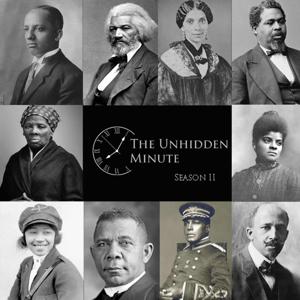
The Unhidden Minute is part of the Unhidden Podcast Project supported through a National Geographic Explorer Grant from the National Geographic Society, with the cooperation of the National Park Service. This series aims to elevate the untold stories of Black American history.
#unhiddenblackhistory #NationalParkService #yourparkstory #NationalGeographic #unhiddenminute
Become a paid subscriber to the Unhidden Minute Podcast for one year and receive a copy The Adventure Gap: Changing the Face of the Outdoors 10th Anniversary Edition by James Edward Mills.
Joseph Savary was a Haitian military leader who played a significant role in the War of 1812. He commanded the 2nd Battalion of Free Men of Color under General Andrew Jackson at the Battle of New Orleans. Born of African descent, in Saint Dominque Savary was a skilled officer who had experience from the Haitian Revolution. He and his troops, composed of free Black and mixed-race soldiers, fought alongside U.S. forces against the British. They assured a decisive American victory on January 8, 1815. For his leadership and bravery, Savary was promoted to the rank of major. But Jackson ordered him and his men to leave New Orleans so as not to destabilize the institution of slavery and incite an insurrection. The soldiers left the United States to fight in the Mexican Revolution against Spain. Savary march his men out of the city in a victory parade so that residents would know who had fought bled and died for their freedom.
The Joy Trip Project celebrates the enduring legacy of Black American History. The Unhidden Minute is part of the Unhidden Podcast Project supported through a National Geographic Explorer Grant from the National Geographic Society, with the cooperation of the National Park Service. This series elevates the untold stories of Black American historical figures, events and cultural contributions.
#unhiddenblackhistory #NationalParkService #yourparkstory #NationalGeographic #unhiddenminute
Illustration by Nate Taylor
Become a paid subscriber to the Unhidden Minute Podcast for one year and receive a copy The Adventure Gap: Changing the Face of the Outdoors 10th Anniversary Edition by James Edward Mills.
Toussaint Louverture was a leader of the Haitian Revolution, which led to the first independent Black republic in 1804. Born enslaved in the French colony of Saint-Domingue (now Haiti) around 1743, Louverture gained his freedom and became a skilled military strategist. When the French Revolution ignited calls for liberty, he led enslaved Africans in a successful rebellion against French, Spanish, and British forces. His leadership helped abolish slavery in the colony by 1793, and by 1801, he had established a constitution granting autonomy to Saint-Domingue. However, in 1802, Napoleon Bonaparte sent forces to reclaim the colony. Louverture was captured, deported to France, and imprisoned, where he died in 1803. Despite his death, his vision endured, as his successor, Jean-Jacques Dessalines carried forward the fight, declaring Haiti’s independence in 1804.
The Joy Trip Project celebrates the enduring legacy of Black American History. The Unhidden Minute is part of the Unhidden Podcast Project supported through a National Geographic Explorer Grant from the National Geographic Society, with the cooperation of the National Park Service. This series elevates the untold stories of Black American historical figures, events and cultural contributions.
#unhiddenblackhistory #NationalParkService #yourparkstory #NationalGeographic #unhiddenminute
Become a paid subscriber to the Unhidden Minute Podcast for one year and receive a copy The Adventure Gap: Changing the Face of the Outdoors 10th Anniversary Edition by James Edward Mills.
Sally Hemings was an enslaved woman of mixed race owned by Thomas Jefferson, the third President of the United States. Born in 1773 in Virginia, she was the half-sister of Jefferson’s wife, Martha, sharing the same father, John Wayles. Hemings accompanied Jefferson’s family to Paris in the 1780s, where she could have claimed her freedom but instead negotiated better treatment for herself and her future children before returning to Jefferson’s home Monticello.
Historical evidence strongly indicates that Hemings and Jefferson had a decades-long relationship, resulting in at least six children, four of whom survived to adulthood. These children were granted unofficial freedom and eventually integrated into white society. Though Hemings was never officially freed, she was informally allowed to live as a free woman after Jefferson’s death. Her story sheds light on the complex realities of slavery and race in early America, shaping ongoing discussions about Jefferson’s legacy and American history.
The Joy Trip Project celebrates the enduring legacy of Black American History. The Unhidden Minute is part of the Unhidden Podcast Project supported through a National Geographic Explorer Grant from the National Geographic Society, with the cooperation of the National Park Service. This series elevates the untold stories of Black American historical figures, events and cultural contributions.
#unhiddenblackhistory #NationalParkService #yourparkstory #NationalGeographic #unhiddenminute
Peter Salem was a Black American soldier who played a crucial role in the American Revolution. Born into slavery in Massachusetts in 1750, he was later freed by his owner to enlist in the Continental Army. Salem is best known for his bravery at the Battle of Bunker Hill on June 17, 1775, where he is credited with shooting and killing British Major John Pitcairn, a key officer leading the attack.
Salem fought in several other major battles, including those at Saratoga and Stony Point. His contributions exemplify the courage of Black patriots who fought for American independence despite enduring racial discrimination. After the war, he lived in poverty and died in 1816. Today, his legacy is honored as a symbol of Black American contributions to the nation’s founding, reminding us of the overlooked sacrifices made by soldiers of color in the fight for liberty.
The Joy Trip Project celebrates the enduring legacy of Black American History. The Unhidden Minute is part of the Unhidden Podcast Project supported through a National Geographic Explorer Grant from the National Geographic Society, with the cooperation of the National Park Service. This series elevates the untold stories of Black American historical figures, events and cultural contributions.
#unhiddenblackhistory #NationalParkService #yourparkstory #NationalGeographic #unhiddenminute
Barzillai Lew was an Black American soldier and musician who played a significant role in the American Revolution. Born free in Massachusetts in 1743, he was a skilled fifer and drummer. He first served in the French and Indian War before enlisting in the Continental Army during the Revolutionary War. Lew fought in key battles, including the Battle of Bunker Hill and the Battle of Saratoga, where his musical talents boosted the morale of American troops.
Despite racial discrimination, Lew’s contributions to the fight for independence were invaluable. After the war, he settled in Massachusetts, where he became a respected landowner and community leader. His legacy continued through his descendants, many of whom became prominent musicians and abolitionists. Lew’s service highlights the vital role of Black patriots in the Revolutionary War and their enduring impact on American history.
The Joy Trip Project celebrates the enduring legacy of Black American History. The Unhidden Minute is part of the Unhidden Podcast Project supported through a National Geographic Explorer Grant from the National Geographic Society, with the cooperation of the National Park Service. This series elevates the untold stories of Black American historical figures, events and cultural contributions.
#unhiddenblackhistory #NationalParkService #yourparkstory #NationalGeographic #unhiddenminute
Become a paid subscriber to the Unhidden Minute Podcast for one year and receive a copy The Adventure Gap: Changing the Face of the Outdoors 10th Anniversary Edition by James Edward Mills.
The Stono Rebellion of 1739 was the largest slave uprising in colonial British America. It occurred on September 9 in South Carolina, near the Stono River. Led by an enslaved man named Jemmy, a group of about 20 enslaved Africans seized weapons from a store, killed several white settlers, and marched south toward Spanish Florida, where freedom was promised to escapees. Their numbers grew to around 100, but colonial militia quickly intercepted them. A violent battle ensued, leaving dozens of rebels and settlers dead. Survivors were captured and executed, while others were sold into slavery in the West Indies. In response, authorities enacted the Negro Act of 1740, further restricting enslaved people's rights, banning their education, and limiting their movement. The rebellion heightened fears of future uprisings, influencing stricter slave codes throughout the colonies. But the defiant spirit of Black Americans would continue to demand their freedom.
The Joy Trip Project celebrates the enduring legacy of Black American History. The Unhidden Minute is part of the Unhidden Podcast Project supported through a National Geographic Explorer Grant from the National Geographic Society, with the cooperation of the National Park Service. This series elevates the untold stories of Black American historical figures, events and cultural contributions.
#unhiddenblackhistory #NationalParkService #yourparkstory #NationalGeographic #unhiddenminute
Become a paid subscriber to the Unhidden Minute Podcast for one year and receive a copy The Adventure Gap: Changing the Face of the Outdoors 10th Anniversary Edition by James Edward Mills.
Fort Mosé, established in 1738 in Spanish Florida, was the first legally sanctioned free Black settlement in what is now the United States. Located near St. Augustine, it was founded by formerly enslaved Africans who had escaped British colonies and sought refuge under Spanish rule. In exchange for freedom, they converted to Catholicism and pledged loyalty to Spain. Led by Captain Francisco Menéndez, a formerly enslaved man from South Carolina, Fort Mosé became a military outpost defending Spanish Florida against British attacks.
The settlement was a haven for freedom seekers and played a crucial role in the early Underground Railroad. In 1740, British forces under James Oglethorpe destroyed the fort, but it was rebuilt in 1752. In 1763, Spain ceded Florida to Britain, forcing many residents to flee to Cuba. Fort Mosé remains a symbol of Black resistance and resilience. Today, it is a National Historic Landmark that commemorates the early fight for Black freedom in America.
The Joy Trip Project celebrates the enduring legacy of Black American History. The Unhidden Minute is part of the Unhidden Podcast Project supported through a National Geographic Explorer Grant from the National Geographic Society, with the cooperation of the National Park Service. This series elevates the untold stories of Black American historical figures, events and cultural contributions.
#unhiddenblackhistory #NationalParkService #yourparkstory #NationalGeographic #unhiddenminute
In 1619 a woman was kidnapped from her home in the Kingdom of Ndongo, part of modern-day Angola Africa and brought to the continent of North America. She was given the name Angela. Among a group of approximately 20 captives taken from a Portuguese slave ship commandeered by English pirates, Angela is believed to be the first African woman enslaved in the colony of Jamestown. Transported aboard a ship called the White Lion, she was brought to Point Comfort, today known as Fort Monroe in Hampton, Virginia. In 1624, records place Angela in Jamestown, living in the household of Captain William Peirce, a wealthy merchant and planter. Her presence is noted in the 1625 Virginia Muster, one of the few official documents mentioning her. While little is known about her life beyond this, Angela represents the earliest presence of Africans in what would become the United States and the beginnings of racial slavery in North America. Her story is a crucial part of American history.
The Joy Trip Project celebrates the enduring legacy of Black American History. The Unhidden Minute is part of the Unhidden Podcast Project supported through a National Geographic Explorer Grant from the National Geographic Society, with the cooperation of the National Park Service. This series elevates the untold stories of Black American historical figures, events and cultural contributions.
#unhiddenblackhistory #NationalParkService #yourparkstory #NationalGeographic #unhiddenminute
Nzinga Ana de Sousa Mbande (1583–1663) was a formidable queen of Ndongo and Matamba, in present-day Angola. A skilled diplomat and military strategist, she resisted Portuguese colonial expansion for decades. Nzinga first gained prominence in 1624 when she became ruler after her brother’s death. Facing Portuguese aggression and the impact of the slave trade, she forged alliances with European powers, including with the Dutch, and led a guerrilla war against the Portuguese.
Nzinga relocated her kingdom to Matamba, transforming it into a powerful trade and military hub. She adopted diplomatic tactics, converting to Christianity to gain European favor while maintaining traditional Mbundu leadership customs. Even in old age, she continued to resist colonial rule, securing Matamba’s independence. Nzinga’s legacy endures as a symbol of resilience and anti-colonial resistance. Her leadership and defiance against European domination have made her an enduring figure in the struggle against imperialism.
The Joy Trip Project celebrates the enduring legacy of Black American History. The Unhidden Minute is part of the Unhidden Podcast Project supported through a National Geographic Explorer Grant from the National Geographic Society, with the cooperation of the National Park Service. This series elevates the untold stories of Black American historical figures, events and cultural contributions.
#unhiddenblackhistory #NationalParkService #yourparkstory #NationalGeographic #unhiddenminute
From the publisher's feed