
Sign up to save your podcasts
Or



Mildred Hemmons Carter (1913–2011) was a pioneering Black American aviator who defied racial and gender barriers to pursue her passion for flying. Born in Alabama, Carter faced discrimination and limited opportunities due to segregation and sexism. Despite these challenges, she became the first known Black American woman in Alabama to earn a pilot's license in 1941.
Carter's love for aviation led her to work in support of the Tuskegee Airmen, a group of Black American military pilots who served during World War II. Although she was not allowed to fly combat missions due to her gender, Carter aided the Tuskegee Airmen's mission as a civilian. In addition to administrative work, she rigged parachutes and operated a bulldozer to clear airstrips.
After the war, Carter continued to advocate for civil rights and worked as an educator, inspiring future generations of Black American fliers. At the age of 90 in 2011 she was honorarily inducted as member of the Women Airforce Service Pilots the WASPs.
The Joy Trip Project celebrates the enduring legacy of Black American History. The Unhidden Minute is part of the Unhidden Podcast Project supported through a National Geographic Explorer Grant from the National Geographic Society, with the cooperation of the National Park Service. This series elevates the untold stories of Black American historical figures, events and cultural contributions.
#unhiddenblackhistory #NationalParkService #yourparkstory #NationalGeographic #unhiddenminute
Delilah Leontium Beasley was a pioneering historian and journalist. Born in Cincinnati, Ohio, in 1867, Beasley began her writing career in 1883 with the Cleveland Gazette, focusing on church and social events. After moving to Oakland, California, in 1910, she immersed herself in documenting the contributions of Black Americans to the history of the West. Her extensive research culminated in the 1919 publication of "The Negro Trail-Blazers of California," a seminal work highlighting the achievements of Black pioneers in the state.
Beasley's dedication led her to become the first Black American woman to write regularly for a major metropolitan newspaper, the Oakland Tribune.
Beyond journalism, Beasley was active in civic organizations, including the NAACP and the Alameda County League of Women Voters. Her unwavering commitment to preserving Black history and advocating for civil rights has left an enduring legacy.
The Joy Trip Project celebrates the enduring legacy of Black American History. The Unhidden Minute is part of the Unhidden Podcast Project supported through a National Geographic Explorer Grant from the National Geographic Society, with the cooperation of the National Park Service. This series elevates the untold stories of Black American historical figures, events and cultural contributions.
#unhiddenblackhistory #NationalParkService #yourparkstory #NationalGeographic #unhiddenminute
Become a paid subscriber to the Unhidden Minute Podcast for one year and receive a copy The Adventure Gap: Changing the Face of the Outdoors 10th Anniversary Edition by James Edward Mills.
Black History Month originated as Negro History Week in 1926. Founded by historian Carter G. Woodson and the Association for the Study of Negro Life and History, the observance is a celebration of the contributions of Black Americans to our culture and way of life. Woodson, often called the “Father of Black History,” First chose the second week of February to coincide with the birthdays of Abraham Lincoln and Frederick Douglass, both significant figures in Black history.
For almost a century, schools and communities across the United States have expanded the observance to include the study lesser-known historical figures of African descent. In 1976, during the U.S. Bicentennial, President Gerald Fordofficially recognized February as Black History Month.
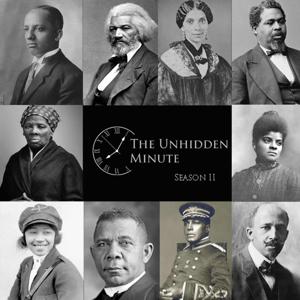
Since then, it has become an essential time to reflect on Black resilience, culture, and accomplishments, while also acknowledging the ongoing fight for racial justice. In the spirit of sharing these remarkable stories, The Joy Trip Project is proud to introduce Season 2 of The Unhidden Minute.
The Joy Trip Project celebrates the enduring legacy of Black American History. The Unhidden Minute is part of the Unhidden Podcast Project supported through a National Geographic Explorer Grant from the National Geographic Society, with the cooperation of the National Park Service. This series elevates the untold stories of Black American historical figures, events and cultural contributions.
#unhiddenblackhistory #NationalParkService #yourparkstory #NationalGeographic #unhiddenminute
On October 16, 1859, John Brown, an ardent abolitionist, led a group of 21 men, including both Black and white supporters, in an attempt to seize the federal armory at Harpers Ferry, Virginia (now West Virginia). His goal was to incite a large-scale slave rebellion by arming enslaved people with weapons from the arsenal. Although the group initially succeeded in taking the armory, local militia and federal troops, under the command of Colonel Robert E. Lee, quickly suppressed the rebellion. Brown and several of his men were captured, while others were killed.
Brown was later tried for treason, murder, and inciting an insurrection. His trial garnered national attention, and he was found guilty and hanged on December 2, 1859. While the raid itself was a failure in achieving its immediate goal, it deepened the divisions between the North and South over the issue of slavery, significantly intensifying tensions that would lead to the outbreak of the Civil War in 1861.
Learn more through the National Park Service
https://www.nps.gov/hafe/index.htm
The Joy Trip Project celebrates the enduring legacy of Black American History. The Unhidden Minute is part of the Unhidden Podcast Project supported through a National Geographic Explorer Grant from the National Geographic Society, with the cooperation of the National Park Service. This series elevates the untold stories of Black American historical figures, events and cultural contributions.
#unhiddenblackhistory #NationalParkService #yourparkstory #NationalGeographic #unhiddenminute
Become a paid subscriber to the Unhidden Minute Podcast for one year and receive a copy of The Adventure Gap: Changing the Face of the Outdoors 10th Anniversary Edition by James Edward Mills.
Thurgood Marshall was a pioneering civil rights lawyer and the first Black American Supreme Court Justice. Born in 1908, he played a crucial role in challenging racial segregation, most notably through the landmark case Brown v. Board of Education in 1954, which declared segregated public schools unconstitutional. As chief counsel for the NAACP, Marshall argued numerous cases before the Supreme Court, becoming a symbol of justice and equality.
Marshall was appointed to the U.S. Supreme Court on August 30, 1967 by President Lyndon B. Johnson. As a justice, Marshall was known for his strong support of individual rights, particularly for minorities and the poor. His legal philosophy was deeply rooted in his commitment to equality and justice for all Americans, regardless of race, economic status, or social standing. Marshall's tenure on the Court, which lasted until his retirement in 1991, was marked by his dedication to ensuring that the Constitution's promises were fulfilled for all U.S. citizens.
Learn more through the National Park Service
https://www.nps.gov/people/thurgood-marshall.htm
The Joy Trip Project celebrates the enduring legacy of Black American History. The Unhidden Minute is part of the Unhidden Podcast Project supported through a National Geographic Explorer Grant from the National Geographic Society, with the cooperation of the National Park Service. This series elevates the untold stories of Black American historical figures, events and cultural contributions.
#unhiddenblackhistory #NationalParkService #yourparkstory #NationalGeographic #unhiddenminute
Become a paid subscriber to the Unhidden Minute Podcast for one year and receive a copy of The Adventure Gap: Changing the Face of the Outdoors 10th Anniversary Edition by James Edward Mills.
The first recorded instance of a Black person voting in a U.S. presidential election occurred on November 3, 1872. Thomas Mundy Peterson had already gained recognition for being the first Black American to vote under the 15th Amendment to the Constitution in a local election in Perth Amboy, New Jersey, on March 31, 1870. Peterson's courageous act of voting symbolized the beginning of Black American political participation in the United States. This historic moment came shortly after the end of the Civil War and during the Reconstruction era, a time of significant social and political change. That year Republican Ulysses S. Grant, who had championed civil rights for the newly emancipated was re-elected as president. The votes Black men across the country, including Peterson, and those of many others during this election, symbolized the newfound political power of Black Americans and marked a crucial step in the long struggle for civil rights and racial equality in the United States.
The Joy Trip Project celebrates the enduring legacy of Black American History. The Unhidden Minute is part of the Unhidden Podcast Project supported through a National Geographic Explorer Grant from the National Geographic Society, with the cooperation of the National Park Service. This series elevates the untold stories of Black American historical figures, events and cultural contributions.
#unhiddenblackhistory #NationalParkService #yourparkstory #NationalGeographic #unhiddenminute
Become a paid subscriber to the Unhidden Minute Podcast for one year and receive a copy of The Adventure Gap: Changing the Face of the Outdoors 10th Anniversary Edition by James Edward Mills.
Marsha P. Johnson, a Black transgender woman, played a crucial role in the Stonewall Uprising on June 28, 1969, in New York City's Greenwich Village. Known for her vibrant personality and activism, Johnson was a prominent figure in the LGBTQ+ community. The uprising began as a response to a police raid at the Stonewall Inn, a popular gay bar, and quickly escalated into a series of protests and clashes with law enforcement.
Johnson's involvement in the Stonewall Uprising marked her as a key leader in the fight for LGBTQ+ rights. She was one of the first to resist the police, helping to ignite the protests that became a symbol of resistance against systemic oppression. Following Stonewall, Johnson co-founded the Gay Liberation Front and the Street Transvestite Action Revolutionaries or (STAR) alongside Sylvia Rivera. STAR provided support for homeless transgender youth and advocated for their rights.
Marsha P. Johnson's courage and activism were instrumental in advancing the LGBTQ+ movement, highlighting the critical intersection of race, gender, and sexuality in the fight for equality and justice.
Learn more through the National Park Service
https://www.nps.gov/ston/index.htm
The Joy Trip Project celebrates the enduring legacy of Black American History. The Unhidden Minute is part of the Unhidden Podcast Project supported through a National Geographic Explorer Grant from the National Geographic Society, with the cooperation of the National Park Service. This series elevates the untold stories of Black American historical figures, events and cultural contributions.
#unhiddenblackhistory #NationalParkService #yourparkstory #NationalGeographic #unhiddenminute
Bronzeville, a neighborhood near the shores of Lake Michigan in Chicago, has a deep and rich history, significantly shaped by its Black LGBTQ+ community. Among its notable figures is Ma Rainey, often hailed as the "Mother of the Blues." Born Gertrude Pridgett in 1886, Rainey was one of the earliest Black American professional blues singers and an influential figure in the development of the genre.
Ma Rainey was known not only for her powerful voice and commanding stage presence but also for her boldness in addressing themes of love and sexuality, including same-sex relationships. Her song "Prove It On Me Blues" is famously suggestive of her bisexuality, making her a pioneering figure in queer history.
Her influence extended beyond music. Her legacy in Bronzeville, also known as the Black Metropolis, is part of a broader tapestry of cultural innovation and social progressivism, illustrating the intersection of race, sexuality, and artistic expression in shaping the area's dynamic history.
Learn more through the National Park Service
https://www.nps.gov/articles/chicago-s-black-metropolis-understanding-history-through-a-historic-place-teaching-with-historic-places.htm
The Joy Trip Project celebrates the enduring legacy of Black American History. The Unhidden Minute is part of the Unhidden Podcast Project supported through a National Geographic Explorer Grant from the National Geographic Society, with the cooperation of the National Park Service. This series elevates the untold stories of Black American historical figures, events and cultural contributions.
#unhiddenblackhistory #NationalParkService #yourparkstory #NationalGeographic #unhiddenminute
On June 19th, 1865, Union General Gordon Granger arrived in Galveston, Texas, and announced that all enslaved people in United States were free. In accordance with the Emancipation Proclamation issued by President Abraham Lincoln on January 1, 1863, this moment formally recognized the liberation of Black Americans. This announcement came more than two years after the proclamation, making Texas the last Confederate state where slavery was effectively abolished.
Today called Juneteenth, also known as Emancipation Day or Freedom Day, the holiday is celebrated with parades, cultural events, and family gatherings. It recognizes the freedom of all Americans, while promoting and cultivating knowledge and appreciation of Black history and culture.
In recent years, Juneteenth has gained broader recognition, and on June 17, 2021, it was formally declared a federal holiday in the United States. The day serves as a reminder of the long and ongoing struggle for civil rights and the equality of all American citizens.
The Joy Trip Project celebrates the enduring legacy of Black American History. The Unhidden Minute is part of the Unhidden Podcast Project supported through a National Geographic Explorer Grant from the National Geographic Society, with the cooperation of the National Park Service. This series elevates the untold stories of Black American historical figures, events and cultural contributions.
#unhiddenblackhistory #NationalParkService #yourparkstory #NationalGeographic #unhiddenminute
Decided on June 12, 1967, Loving v. Virginia, a landmark civil rights decision by the U.S. Supreme Court, invalidated laws prohibiting interracial marriage. The case centered on Richard Loving, a white man, and Mildred Jeter, a Black woman, who married in Washington, D.C., and then returned to Virginia, where interracial marriage was illegal. Arrested and sentenced to a year in prison, the Lovings were given a suspended sentence on the condition they leave Virginia.
The Lovings challenged their conviction, ultimately reaching the Supreme Court. The Court, in a unanimous decision, ruled that Virginia's anti-miscegenation laws violated the Equal Protection and Due Process Clauses of the Fourteenth Amendment. Chief Justice Earl Warren wrote the opinion, asserting that marriage is a fundamental right, and the state's law had no legitimate purpose "independent of invidious racial discrimination."
Loving v. Virginia was a significant victory for the Civil Rights Movement, ensuring that marriage could not be restricted by racial boundaries and affirming the principle of equality under the law.
The Joy Trip Project celebrates the enduring legacy of Black American History. The Unhidden Minute is part of the Unhidden Podcast Project supported through a National Geographic Explorer Grant from the National Geographic Society, with the cooperation of the National Park Service. This series elevates the untold stories of Black American historical figures, events and cultural contributions.
#unhiddenblackhistory #NationalParkService #yourparkstory #NationalGeographic #unhiddenminute
From the publisher's feed