
Sign up to save your podcasts
Or

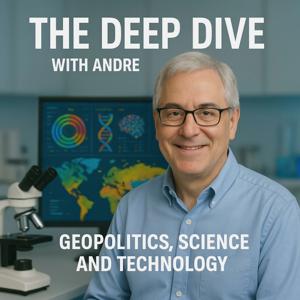

The provided text explores the Quantum Memory Matrix (QMM) hypothesis, a radical new theory proposing that spacetime is fundamentally a discrete, information-storing system at the Planck scale. This theory aims to resolve long-standing conflicts in modern physics, particularly the black hole information paradox, by suggesting that information is locally imprinted and unitarily retrieved from these "memory cells" within the bulk of spacetime, preserving the smooth event horizon. Beyond this, QMM offers a unified framework for all four fundamental forces, reinterpreting dark matter as the gravitational effect of stored information, and making several testable predictions for cosmological observations and quantum computer simulations. The text distinguishes QMM from other quantum gravity theories like Loop Quantum Gravity, the Holographic Principle, and the Firewall hypothesis, highlighting its unique information-centric approach and its potential to recast reality as a computational entity.
Research done with the help of artificial intelligence, and presented by two AI-generated hosts.
 View all episodes
 By Andre Paquette


3.7
33 ratings
The provided text explores the Quantum Memory Matrix (QMM) hypothesis, a radical new theory proposing that spacetime is fundamentally a discrete, information-storing system at the Planck scale. This theory aims to resolve long-standing conflicts in modern physics, particularly the black hole information paradox, by suggesting that information is locally imprinted and unitarily retrieved from these "memory cells" within the bulk of spacetime, preserving the smooth event horizon. Beyond this, QMM offers a unified framework for all four fundamental forces, reinterpreting dark matter as the gravitational effect of stored information, and making several testable predictions for cosmological observations and quantum computer simulations. The text distinguishes QMM from other quantum gravity theories like Loop Quantum Gravity, the Holographic Principle, and the Firewall hypothesis, highlighting its unique information-centric approach and its potential to recast reality as a computational entity.
Research done with the help of artificial intelligence, and presented by two AI-generated hosts.
14,395 Listeners

5,537 Listeners
12,232 Listeners
4,187 Listeners
1,625 Listeners

22 Listeners

16,321 Listeners