
Sign up to save your podcasts
Or


If you’ve ever wondered, “Is it too late for me to...” the answer’s NO—and The Uplifters are about to show you why. This space is for purpose-driven women who want to do big, brave things in the second half of their lives. I’m your host, Aransas Savas, and I’ve spent the last 20 years at the intersection of behavior change research and coaching.
This month for the new year, we're exploring new beginnings with award-winning author Sahar Delijani, Dawn Veselka who co-founded Cards2Warriors (sending over 48,000 cards of hope to people battling chronic illness), perimenopause expert Karissa Pfeffer, and comedian-filmmaker Mandy Fabian. Welcome to the Uplifters!
Listen to this episode if...
* You’re carrying stories that feel too big, too painful, or too important to keep inside
* You’ve felt paralyzed by the question “who am I to write this/say this/share this?”
* You’re looking for courage to do something big and brave this year
Most of us will never face the kind of capital C Courage that Sahar Delijani writes about, even though lately it doesn’t feel far off. The kind where speaking your beliefs can cost you your freedom, your family, your life.
I’ve spent years studying courage, coaching women through their biggest transitions, and interviewing hundreds of people doing brave things. But this conversation taught me so much about the ways great big acts of courage inform the little daily ones, and vice-versa.
Sahar writes about people who faced imprisonment, execution, and systematic persecution. But telling their stories? That took a different kind of courage entirely. The daily kind. The kind that shows up when you’re sitting at your laptop, terrified, wondering who gave you permission to tell these stories. The kind that requires you to keep going when every voice in your head says you’re not ready, you’re betraying secrets, you don’t have the right.
That’s the courage most of us actually need to learn: how to do the thing we feel called to do even when we’re scared, how to tell the truth even when we were taught to keep it hidden, how to take up space with our voices, our stories, our work, especially in midlife when so much of the world tells us our time has passed.
So when Sahar Delijani, whose debut novel Children of the Jacaranda Tree has been translated into 32 languages and published in more than 75 countries, agreed to talk with me, I wanted to understand: How does witnessing extraordinary Courage inform the ordinary courage we need every day? How do you build the stamina to keep doing brave things when the work requires revisiting trauma again and again? And what can those of us doing “smaller” brave things (career changes, creative pursuits, truth-telling in our own lives) learn from someone who’s documenting capital-C Courage?
Turns out: everything.
Her Story
Sahar grew up in the aftermath of the 1979 Iranian revolution, in the shadow of her family’s activism and imprisonment. Her parents were among thousands arrested in 1983 for their political beliefs. Her mother was pregnant at the time. Sahar was born in Evin prison, Tehran’s notorious political prison, and spent her first month there before her grandparents raised her alongside her brother and cousin (also born in prison).
The 1988 mass executions took her uncle’s life while her parents, fortunately, had already been released. But the trauma didn’t end when her parents came home. It lived in the silence, in the things they couldn’t talk about, in the ways their imprisonment shaped every aspect of their lives even after their release.
For years, Sahar didn’t talk about any of it either. Moving to California at age 12 meant geographic distance from Iran, but it also meant the stories stayed locked away. It wasn’t until she decided to write Children of the Jacaranda Tree that she began to unlock those stories, not just for herself, but for others who lived through similar experiences around the world.
The book chronicles the lives of families affected by political imprisonment in Iran, weaving together stories of life inside prison walls and the ripple effects on everyone outside them. It follows children born into this tragedy, including those born in prison like Sahar, as they grow up and decide what to do with the legacy of their parents’ courage and sacrifice. Writing it meant breaking decades of silence, meant asking her parents to revisit their most painful memories, and making private family trauma public.
In this episode, we talk about what it takes to keep going when your work requires you to revisit the hardest parts of your life again and again, how she rebuilds her courage between projects, how she processes the weight of speaking for others, how she maintains boundaries while staying open to her own feelings, and how she remembers why these stories matter when the cost of telling them feels too high.
5 Ways Sahar Delijani Shows Us How to Build Our Courage Capital:
* She reconnects to purpose when doubt creeps in. When Sahar questions whether she has the right to tell these stories, she comes back to a simple truth: these stories need to be told, and she’s the one with the passion, knowledge, and proximity to tell them. That clarity of knowing why the work matters beyond her own fear keeps her moving forward. (You can do this too: write down why your brave thing matters. Keep that visible. Come back to it when you forget.)
* She builds community to sustain the hard work. Sahar doesn’t try to write about trauma in isolation. She surrounds herself with friends, family, and fellow artists who understand what she’s carrying. They give her energy when her own runs low, remind her why the work matters, and help her process the weight of it all. (Your turn: identify 2-3 people who can hold space for your brave work. Tell them what you’re doing and ask them to check in with you.)
* She gives herself permission to feel everything. Rather than pushing through difficult emotions to stay “productive,” Sahar lets herself feel desperate, tired, lazy, or whatever shows up. She trusts that living through feelings honestly is how they move through and make space for the next thing. (Try this: when hard feelings come up, ask yourself “what am I really feeling right now?” and let yourself have that feeling without judgment.)
* She takes breaks without guilt. Between writing projects, Sahar steps away from the work entirely. She reads, cooks, travels, swims, spends time with loved ones, all without beating herself up for not being “productive.” She’s learned that rest isn’t procrastination; it’s how we build the reserves to do the next hard thing. (What would it look like for you to schedule guilt-free breaks into your brave work?)
* She reframes whose story this is. When the weight of speaking for others felt too heavy, Sahar shifted perspective: yes, these are her family’s stories, but she’s the medium connecting them to people who need to hear them. She’s not the hero or the villain of this story, but the translator, the bridge, the person willing to do the hard work of making private pain into public wisdom. (Where can you reframe your role from “I must get this perfect” to “I’m here to connect and translate”?)
Lift Her Up
Sahar’s second novel, For Every Person You Kill, arrives in spring 2027. In the meantime, pick up Children of the Jacaranda Tree wherever books are sold—it’s one of those rare books you’ll want to reread immediately just to savor the language and sit with the characters a little longer.
If you loved this story...
Did you know that every woman on the Uplifters podcast is nominated by someone she inspires? This means you and I get to chat with the most inspiring women -- the ones who inspire the women who inspire us!
Our current thread:
Susan Jaramillo→Kate Tellers from The Moth→Cleyvis Natera→ Deesha Philyaw → Mo Browne – Djeli Said → Hala Alyan → Sahar Delijani who nominates Yeldā Ali as her Uplifter: “Artist, activist, innovator, community organizer, Yeldā is a true uplifter!”
Let’s Chat!
What story have you been afraid to tell? What would it take to start telling it this week, even just to yourself, even just in a journal? Share in the comments, your courage might be exactly what another person needs to hear.
0:00 - Introduction
2:15 - The story behind "Children of the Jacaranda Tree"
9:30 - Growing up with secrets: Being born in prison and learning not to tell
14:00 - The courage to write the first book
24:00 - The trauma of writing about trauma—discovering what you did after the book was published
30:00 - Building community to sustain difficult work
34:30 - Honoring all your feelings, even the difficult ones
36:45 - Connecting to purpose when doubt shows up
Key Takeaways:"I always think like my parents were the ones who did such courageous things. Like they were out there, they went to prison for their ideals, and I was safe, I was safe in my room writing those stories. So it's, it's like interesting to think about courage in that way." — Sahar Delijani
Resources & Links:Sahar Delijani is an award-winning novelist, essayist, and professor. Her debut novel, "Children of the...
Get full access to The Uplifters at www.theuplifterspodcast.com/subscribe
In an era of unprecedented social isolation and loneliness, one Philadelphia engineer is combating disconnection one compliment at a time. Celine McGee, who works in corporate telecommunications by day, has spent over a decade approaching strangers with genuine compliments and cards that say "pass it on"—creating what she calls the Compliment Squad.
What started with a single compliment during a neighborhood walk has evolved into a grassroots movement challenging our collective fear of talking to strangers. Celine shares how she overcomes the vulnerability of approaching people she's never met, why creating connection matters more than perfection, and how small acts of courage can create butterfly effects of kindness.
In this conversation, we explore the crisis of loneliness affecting our communities, practical strategies for overcoming social anxiety, and why sometimes the bravest thing we can do is simply tell someone their shoes look cool. Whether you're an introvert wanting to connect more or someone who believes we need more human interaction in our increasingly digital world, this episode offers both inspiration and practical tools for building courage through everyday connection.
What You'll Learn:0:00 - Introduction 4:30 - The origin story of the Compliment Squad 11:45 - Overcoming the vulnerability of approaching strangers 18:20 - How compliments can bridge social divisions 24:15 - Katie's wisdom: "If you haven't been punched in the face, you're fine" 28:45 - Enlisting amplifiers to grow the movement 33:00 - Courage practices for connection
Key Takeaways:"If you haven't been punched in the face so far, you're fine. So my point is like I compliment a lot of people I've never seen before or spoken to, and it's fine. So people shouldn't be scared just to give a compliment in any setting." — Celine McGee (quoting her friend Katie)
Resources & Links:What if the key to building your midlife business isn't having all the answers but knowing how to ask the right questions? In this episode, we meet Gita Vellanki, founder of Neeshi, who left a successful career in high tech to create functional foods for women navigating menstruation, perimenopause, and menopause. After watching her daughter struggle with debilitating periods and experiencing her own perimenopausal chaos, Gita drew on her grandmother's wisdom about food as medicine and created a line of chocolate spreads designed to help women feel better without sacrificing pleasure.
But Gita's journey from corporate executive to midlife founder wasn't about having the perfect credentials. With zero background in CPG or marketing, she had to learn how to leverage the resources she did have, get specific about her gaps, and become her own loudest advocate. This is a masterclass in starting over at 40, asking for help without apologizing, and building courage capital one brave choice at a time.
Whether you're considering a perimenopause career change, wondering about starting a business during menopause, or simply trying to figure out how to take the leap when you don't feel ready, Gita's story offers practical wisdom for women over 40 starting businesses and reclaiming their power in the midlife transition women experience.
What You'll Learn:0:00 - Introduction
2:15 - How Neeshi was born from watching her daughter suffer
6:30 - Gita's own perimenopause journey and discovering the power of functional food
10:00 - The pivot from frozen products to chocolate spreads
13:15 - Leveraging your existing resources even when they feel irrelevant
16:45 - The marketing challenge and learning new skills at 40+
20:00 - Why asking for help became her superpower
23:00 - Trading stress for timeline: letting go of artificial urgency
26:45 - Supporting Neeshi and connecting with Gita
Key Takeaways:What happens when health challenges in your 40s become the catalyst for a complete career reinvention? In this episode, Kimberle Lau shares her journey from 20-year beauty industry executive to founder of Bake Me Healthy, an allergen-free, plant-based baking company. After pregnancy-induced food intolerances and a breast cancer risk diagnosis, Kimberle left corporate America at 44 to build a mission-driven business serving people with food allergies and intolerances.
She opens up about being a self-described "risk-averse" founder, discovering that the average founder age is actually 45 (not 25), and learning to focus on "the next three steps" instead of needing the entire roadmap mapped out. We talk about balancing business building with raising teenagers approaching college age, why she tracks sleep like a KPI, and how "micro-wins" serve as signals to keep going when progress feels slow.
This is an honest conversation about midlife entrepreneurship women over 40, starting a business during perimenopause, women changing careers in their 40s, and building something meaningful when everyone's asking "but when will you break even?"
What You'll Learn:0:00 - Introduction
4:00 - From beauty industry executive to food entrepreneur—the health crisis that changed everything
12:00 - "Am I too risk-averse to be a founder?" and discovering the average founder age is 45
18:30 - Managing the anxiety of building a business as a mom with college tuition looming
24:00 - The "next three steps" approach: why you don't need the full roadmap to start
28:00 - Listening to micro-wins as signals to keep going
33:00 - The sleep habit tracker: treating self-care like a business KPI
39:00 - Building a family business: working with her mother and involving her kids
Key Takeaways:Starting over during perimenopause and midlife doesn't always mean changing careers—sometimes it means creating entirely new solutions the world desperately needs. In this episode, meet Tara Miko Ballentine, founder of Bright Littles, who transformed her experience of childhood sexual assault into a company helping parents have crucial conversations with kids about consent, boundaries, safety, and diversity.
For women over 40 navigating midlife reinvention, Tara's story offers powerful proof that your second act can combine personal healing with public purpose. She launched Bright Littles during the pandemic while parenting full-time, and four years later continues building without breaking even—side hustling, pivoting constantly, and facing the unique challenges female founders encounter when seeking funding.
This conversation offers practical wisdom for midlife women pursuing dreams that matter: how to start before you feel ready, how to find courage capital when everyone questions your path, and how to build something meaningful while managing all the other responsibilities of life after 40.
0:00 - Introduction
2:15 - The pandemic moment that sparked Bright Littles
6:30 - Crossing personal and business life for the first time
10:00 - The "am I ready?" questions every founder asks
13:00 - Why 95% of childhood sexual abuse is preventable
18:15 - How to start conversations before problems happen
22:00 - Pivoting from physical products to digital during tariffs
26:00 - The "Periods and Polish" event and online backlash
31:00 - How to support Bright Littles' mission
Key Takeaways:"I feel so passionate about what I am doing. I think most people probably would've quit. I've not financially broke even in four years. That is not for everybody. But I feel like when I started this...
Get full access to The Uplifters at www.theuplifterspodcast.com/subscribe
Producer Rachel (Rachel Giordano) spent nearly 30 years climbing the entertainment industry ladder—from Barbara Walters and The View to Disney Feature Animation to iHeart Media. But at 47, she realized the traditional path wasn't letting her be fully herself. Now she runs a boutique production company, hosts The Producer Rachel Show, wrote and self-published a children's book (Santa's Secret Wishing Coin), and is helping other midlife women embrace their creative superpowers—ADHD and all.
In this conversation, Rachel shares her radical "creator not consumer" mindset shift, why she refuses to "niche down" despite what every algorithm tells her, and how she's building a creative empire by doing things messy, posting for pleasure instead of obligation, and embracing every weird part of herself. If you've ever felt like you had to boil yourself down to one thing to be "marketable," this episode will give you permission to be the umbrella.
00:00 - Welcome & Rachel's background in entertainment
03:15 - The creator vs. consumer mindset shift
06:50 - How behavior change works: focus on what you're gaining, not giving up
08:30 - Posting for pleasure vs. obligation
13:30 - Comparison as the thief of joy (and creativity)
16:55 - "Everyone has ideas. Only entrepreneurs act on them."
18:00 - The magic of consistent, small actions
19:57 - Why your unique perspective is irreplaceable (even in the age of AI)
23:00 - The "network umbrella" approach to personal branding
25:00 - Being the brand instead of picking one niche
27:00 - Investing in yourself: hiring the VA, the cleaning service, the meal prep
29:00 - Why Gen X is the most resourceful generation
30:45 - Ageism and why we're going to team up and do our own things
31:12 - Getting out of toxic hustle culture and respecting your own boundaries
33:30 - The origin story of Santa's Secret Wishing Coin
37:00 - Teaching kids about believing, giving, and manifestation
38:30 - Becoming your own publisher and what that takes
40:00 - "Nobody cares... until they do"
42:00 - Growing community before you launch
43:00 - Rachel nominates Dr. Rhonda Vaughn
44:30 - Support small creators: it's free and changes lives
Key Takeaways✨ Shift from consumer to creator: Do a time audit. You probably have more creative time than you think—you're just spending it scrolling.
✨ Perfect is too late. Do it messy: Start before you're ready. Go live to test ideas. Edit later...
Get full access to The Uplifters at www.theuplifterspodcast.com/subscribe
Discover how women over 40 are leading systemic change and tackling audacious goals. In this episode, 42-year-old Kiersten Barnet, Executive Director of the NYC Jobs CEO Council, shares how she's coordinating Fortune 100 CEOs to hire 100,000 low-income New Yorkers—and they're already more than halfway there.
If you've ever wondered "is it too late to take on something impossibly big?" this conversation proves the answer is absolutely not. Kiersten reveals her practical strategies for breaking down overwhelming problems, asking better questions, and building the kind of authentic leadership that creates space for everyone behind you. From her annual "letter from the future" practice to her philosophy of "strategic neglect," she offers a masterclass in midlife ambition that's both grounded in research and beautifully human.
Career Change & Midlife Reinvention:
Perimenopause & Menopause Era Leadership:
Practical Midlife Success Strategies:
Women 40+ in Leadership:
Systemic Change & Social Impact:
[00:00] Introduction to Kiersten Barnet and the NYC Jobs CEO Council's audacious goal
[02:45] "I don't think I knew any of the jobs I've had existed until basically just before I had them"
[04:15] How priorities shift in your 40s: from straight paths to what's right for right now
[06:00] Measuring success in the second half of life
[07:00] Why growth mindset peaks in your 40s
[08:00] The importance of questions and curiosity in leadership
[10:00]...
Get full access to The Uplifters at www.theuplifterspodcast.com/subscribe
Former Dance/NYC co-executive director Candace Thompson-Zachery shares her journey from 20 years in arts advocacy to launching a menopause and wellness coaching practice at age 40. This episode explores career transitions in midlife, building courage capital through curiosity, and why women's growth mindset peaks in their 40s. Candace discusses her path from founding Dance Caribbean COLLECTIVE on a $20K budget to getting six certifications in two years, including menopause coach, wellness coach, and Clifton Strengths coach. Learn how she developed "yearning" for her work, why she views her gray hair as earned badges of honor, and practical strategies for pivoting careers without having all the answers first.
What You'll Learn00:00 - Introduction & Nutrafol sponsorship message
01:00 - Nomination from Charisma J
02:00 - Welcome & intro to Candace Thompson-Zachery
04:15 - 20 years in NYC's dance and arts ecosystem
05:30 - Evolution from dancer to arts advocate
06:45 - Founding her own dance collective on $20K
08:00 - Navigating doubt vs. curiosity in career evolution
10:15 - Motherhood as a catalyst for new confidence
11:30 - Reframing time and readiness at 40
13:30 - Career coaching and six certifications journey
14:15 - Becoming a menopause coach
15:00 - Community support during transitions
16:30 - Network as insurance and resource inventory
18:00 - Starting without all the data
19:15 - Developing "yearning" for the work
21:30 - Analysis paralysis vs. energizing vision
23:30 - Lowering the perfectionist voice through doing
24:30 - Hustle as insurance
25:30 - Beliefs about aging from first to second half of life
27:30 - Gray hair as earned authority
29:00 - Feeling groundedness and calm at 40
30:15 - Advantages of doing brave things as we age
31:45 - Diminished self-consciousness about others' perceptions
33:00 - When did you think you'd feel like an adult?
34:00 - "It's never too late" - reframing possibilities
35:30 - Finding the essence beneath the dream
36:30 - What yearning feels like in daily work
38:00 - Who inspires you: Sydney Mosley
39:00 - How to support Candace's work
40:30 - Executive wellness and menopause specialization
41:30 - Closing thoughts
Key TakeawaysOn Career Pivots:
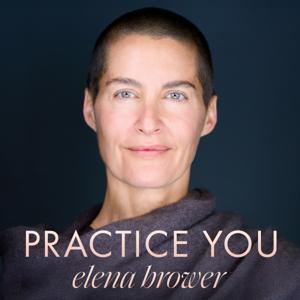
Burnout recovery starts with slowing down. Yoga teacher Elena Brower shares how women over 40 can reduce brain fog, protect energy, and build sustainable courage.
Episode DescriptionBurnout recovery isn't about doing more—it's about carrying less. In this episode of The Uplifters, legendary yoga teacher, author, and artist Elena Brower shares her journey from New York City's achievement-driven yoga world to Santa Fe's spacious creative life, offering a roadmap for women over 40 ready to trade exhaustion for sustainable energy.
If you're experiencing brain fog, sleep disruptions from stress, or the physical toll of decades of overcommitment, Elena's story offers practical wisdom. She reveals how thriving in midlife means deliberately slowing down—not losing capacity, but gaining longer, richer days and protecting your nervous system from chronic overwhelm.
The Hidden Cost of Burnout After 40Many women over 40 attribute fatigue, brain fog, and mood changes solely to perimenopause, but chronic stress and burnout compound these symptoms. Elena's journey demonstrates how addressing the root causes—endless commitments, external validation seeking, and poor boundaries—can improve both mental clarity and physical wellbeing.
What You'll LearnBurnout Recovery Strategies:
Building Your Midlife Mindset:
Sustainable Courage Practices:
The midlife mindset shift Elena describes isn't about opting out—it's about opting in to sustainability. For women over 40 navigating leadership, career transitions, or simply trying to maintain performance while managing physical changes, her approach offers an alternative to pushing through exhaustion.
Key TakeawaysSlower Creates Longer: Moving more slowly through your days paradoxically gives you the feeling of longer, richer days and reduces the cortisol response that worsens perimenopause symptoms.
Self-Empathy Reduces Physical Stress: The four-step NVC process (observe, name feelings, identify needs, self-compassion) helps regulate your nervous system before attempting to communicate with others.
Ambition and Mistrust Are Linked: The unconscious drive for external validation stems from internal mistrust. Building internal trust through practices like Zen meditation creates sustainable energy instead of burnout cycles.
Nobody Owes You Anything: Releasing the belief that people owe you attention or acknowledgment is one of the most freeing acts for reducing resentment and its physical...
Get full access to The Uplifters at www.theuplifterspodcast.com/subscribe
From the publisher's feed

27,988 Listeners
402 Listeners

3,054 Listeners

95 Listeners