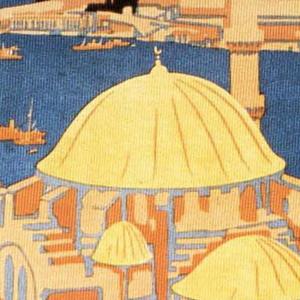
The Visual Past

The Visual Past

By Ottoman History Podcast
Download on the App Store

The Visual Past episodes

  • I. Selim imgesi ve 17. yüzyılda Osmanlı şehirlilerinin tarih algısı
    Tülün Değirmenci Günümüzde tarihin nasıl algılandığı, yeniden üretildiği, sembolize ve politize edildiği tartışılırken, geçmiş toplumların kendi geçmişlerini nasıl algıladıkları sıklıkla gözden kaçmaktadır. Bu podcastımızda Yard. Doç. Dr. Tülün Değirmenci resimli el yazmalarındaki I. Selim (1512-1520) imgesi üzerinden 17. yüzyıl Osmanlı şehirlilerinin tarih algısını  inceliyor. Siyaset, popüler algı ve tarihyazımı arasındaki ilişkiyi gözler önüne sermekle kalmıyor, ikonografi, kitap üretimi ve okuma kültürü gibi Osmanlı entellektüel tarihinin önemli mevzularını da mercek altına alıyor. In spite of lively debate regarding how history is reconstructed today, historians have paid less attention to how past societies perceived their own past. In this episode, based on a seventeenth-century illustrated manuscript, Tülün Değirmenci explores how 17th century Ottoman city-dwellers perceived the controversial figure of Sultan Selim I (note: this episode is in Turkish). iTunes Osmanlı Sanat Tarihi, Resimli Kitaplar ve Okuma Kültürü üzerine eserler veren Yard. Doç. Dr. Tülün Değirmenci Pamukkale Üniversitesi Sanat Tarihi Bölümü'nde ders vermekte ve Koç Üniversitesi Anadolu Medeniyetleri Araştırma Merkezi'nde Senior Fellow olarak araştırma yapmaktadır. (see academia.edu). Yeniçağ Akdeniz ve Osmanlı İmparatorluğu üzerine uzmanlaşan Dr. Emrah Safa Gürkan Bahçeşehir Üniversitesi Tarih Bölümü'nde ders vermektedir. (see academia.edu) Citation: "I. Selim imgesi ve 17. yüzyılda Osmanlı şehirlilerinin tarih algısı," Tülün Değirmenci, Emrah Safa Gürkan, and Chris Gratien, Ottoman History Podcast, No. 89 (January 19, 2013) http://www.ottomanhistorypodcast.com/2013/01/sultan-selim-image-art.html. SEÇME KAYNAKÇA Selahattin Tansel, Yavuz Sultan Selim, Ankara: Milli Eğitim Bakanlığı Yay. 1969.  Feridun M. Emecen, Yavuz Sultan Selim, İstanbul: Yitik Hazine Yayınları, 2010  Şehabeddin Tekindağ, “Selim-Nâmeler,” İstanbul Üniversitesi Edebiyat Fakültesi Tarih Enstitüsü Dergisi, 1 (Ekim 1970),… Ahmet Uğur, “Selim-Nâmeler,” Ankara Üniversitesi İlâhiyat Fakültesi Dergisi, XXII, (1978): 367-379 Tülün Değirmenci, “Bir kitabı kaç kişi okur? Osmanlı’da Okurlar ve Okuma Biçimleri Üzerine Bazı Gözlemler,” Tarih ve Toplum: Yeni Yaklaşımlar, 13 (Aralık 2011): 7-43. Tülün Değirmenci, “Şah İsmail’in Gözdesi Tâclı Hanım’ın Tasviri,” Toplumsal Tarih, 211 (Temmuz 2011): 42-45. Bağcı, Serpil, Filiz Çağman, Günsel Renda ve Zeren Tanındı. Osmanlı Resim Sanatı, (İstanbul: Kültür Bakanlığı Yayınları, 2006). Images Bayezid II fighting his son Selim at Uğraşdere (Selīm-nāme, TSMK, H. 1597-8, f. 44a)Selim I fighting his brother Ahmed (Selīm-nāme, TSMK, H. 1597-8, f. 83b)Bayezid II's Funeral (Selīm-nāme, TSMK, H. 1597-8, f. 62a)Battle of Chaldiran (Selīm-nāme, TSMK, H. 1597-8)Selim I on his deathbed (Selīm-nāme, TSMK, H. 1597-8, f. 267a) Music: Golden Horn Ensemble - Tanbur Taksimi

    33 min
  • The Journey of an Ottoman Painting
    with Emily Neumeier hosted by Chris Gratien Osman Hamdi Bey is recognized today as the foremost artist of the late-Ottoman period. Yet, in his time, it was his unique access to the ancient past as the head of Istanbul's archaeology museum that drew the interest of his Western contemporaries. In this episode, Emily Neumeier retraces the story of a rare Osman Hamdi Bey painting (At the Mosque Door, 1890 - click for high res image) that turned up in the Penn archaeology museum and explains what it tells us about art, artifacts, and diplomacy during the late-Ottoman era. Emily Neumeier is a PhD student of Ottoman art history at the University of PennsylvaniaChris Gratien is a PhD candidate studying the history of the modern Middle East at Georgetown University (see academia.edu) Citation: "Lost and Found: Art, Diplomacy, and the Journey of a Nineteenth-Century Ottoman Painting," Emily Neumeier and Chris Gratien, Ottoman History Podcast, No. 81 (November 24, 2012) http://www.ottomanhistorypodcast.com/2012/11/art-history-osman-hamdi-bey-archaeology.html Enjoy these images associated with the podcast: 1. Osman Hamdi Bey (1842-1910)2. Unknown Photographer, Osman Hamdi Bey in his Atelier, circa 1900.3. Pascal Sébah, Peasant Clothing from Bursa Region, from Ethnographic Photograph Collection at Vienna Exposition, 1873 (Library of Congress)4. Osman Hamdi Bey, The Tortoise Trainer, Pera Museum (click for high-res)5. Osman Hamdi Bey, Dervish in the Children’s Tomb (Çocuklar Türbesinde Derviş or Şehzadeler Türbesinde Derviş), 1908 Oil on canvas, 124 x 93 cm, Mimar Sinan Resim ve Heykel Muzesi6. Osman Hamdi Bey, Mihrap or Genesis7. Osman Hamdi Bey, At the Mosque Door, 1891, Oil on canvas, 203 x 123.5 cm, University of Pennsylvania Museum of  Archaeology and Anthropology. (click for high-res)8. At the Mosque Door at the Chicago Columbian Exposition in HH Bancroft, The Book of the Fair (1893), p. 905.9. Osman Hamdi Bey, Excavations at Nippur, 1903 Oil on canvas, 190.7 x 143.8 cm University of Pennsylvania Museum of Archaeology and Anthropology. (click for high-res)10. Jean Léone Gérôme, The Snake Charmer (1870),  Sterling and Francine Clark Art Institute Link to the Osman Hamdi Bey and the Americans exhibition at Pera Gallery Link to the SALT Galata exhibition Scramble for the Past Select Bibliography: Archaeologists and Travelers in Ottoman Lands. On-line exhibition catalogue. Philadelphia:  University of Pennsylvania Museum of Archaeology and Anthropology.  www.ottomanlands.com. Eldem, Edhem. 2010. Osman Hamdi Bey Sözlüǧü. Ankara: Kültür ve Turizm BakanlıǧıYayınları. ---. 2004.  “An Ottoman Archaeologist Caught Between Two Worlds: Osman Hamdi Bey (1842-1910).”In Archaeology Anthropology and Heritage in the Balkans and Anatolia: The Life and Times of F.W. Hasluck, 1878-1920, edited by David Shankland, vol. 1, 121-49. Istanbul: Isis. Makdisi, Ussama. 2002. “Ottoman Orientalism.” The American Historical Art Review 107 (3): 768-96. Osman Hamdi Bey & Amerikalılar: Arkeoloji, Diplomasi, Sanat = Osman Hamdi Bey & the  Americans: Archaeology, Diplomacy, Art. Edited by Renata Holod and Robert Ousterhout. Exhibition Catalogue. Istanbul : Pera Müzesi, 2011. Shaw, Wendy. 1996. Possessors and Possessed: Museums, Archaeology, and the  Visualization of History in the Late Ottoman Empire. Berkeley: University of California Press.
    44 min
  • Hat Sanatı
    Irvin Cemil Schick Many have attributed the richness of the Islamic calligraphic tradition to a prohibition on the use of human images; however, this interpretation is based on many false assumptions about history and culture in the Islamic world as well as the normativity of the Western cultural experience. In this episode, Irvin Cemil Schick dismantles some of the usual cliches about art in Muslim societies and considers calligraphy (hat sanatı) as a symbolic art form in its own right. Birçok araştırmacı zengin ve köklü bir geleneğe sahip olan İslam hat sanatının ortaya çıkışını İslam dininin insan suretinin resmedilmesini yasaklaması ile açıklamaya çalışmıştır. Ancak, bu yorum İslam dünyasının kültür ve tarihi hakkında bir takım yanlış çıkarsamalara olduğu kadar, Batının tarihi ve kültürel gelişimini normatif olarak kabul eden modası geçmiş bir tarihsel metodolojiye de dayanmaktadır. Bu bölümde Irvin Cemil Schick İslam toplumlarında sanat hakkındaki klişeleri yeniden gözden geçirirken, hat sanatını kendine özgü ve bağımsız bir sembolik sanat formu olarak değerlendirmektedir. Note: the podcast is in Turkish This podcast relies on a collection of images available here: Yrd. Doç. Dr. Irvin Cemil Schick Istanbul Şehir Üniversitesi'nde matematik ve tarih üzerine dersler vermektedir. Yeniçağ Akdeniz ve Osmanlı Imparatorluğu Tarihi üzerine uzmanlaşan Dr. Emrah Safa Gürkan Bahçeşehir Üniversitesi Tarih Bölümü'nde ders vermektedir (academia.edu) Select Bibliography Calligraphy in Islamic Architecture: Space, Form, and Function, eds. Mohammad Gharipour and İrvin Cemil Schick (Edinburgh: Edinburgh University Press, forthcoming in 2013). M. Uğur Derman, Letters in Gold: Ottoman Calligraphy from the Sakıp Sabancı Collection, Istanbul, trans. Mohamed Zakariya (New York: The Metropolitan Museum of Art, 1998). Malik Aksel, Türklerde Dinî Resimler: Yazı-Resim (İstanbul: Elif Yayınları, 1967).
    50 min
  • Gaze
    with Daniel Pontillo and Chris Gratien Human beings live their lives under a state of constant observation that is both perceived and real. Widespread folk traditions such as the notion of the "evil eye" (Turkish: nazar) reflect a belief in the profound power of the mere act of looking, which psychoanalysts such as Lacan have developed into theories of gaze (French: le regard) and the gaze effect that have gained resonance within the humanities and the social sciences. In this episode, Dan Pontillo joins us to discuss the gaze from the perspectives of psychoanalysis, the social sciences, and the scientific approaches of vision study and eye tracking. Daniel Pontillo is a doctoral student at University of Rochester studying brain and cognitive sciences (Linkedin)Chris Gratien is a doctoral candidate at Georgetown University researching the social and environmental history of the Ottoman Empire and the modern Middle East. (see academia.edu) Episode No. 40 Release date: 31 December 2011 This is a thematic discussion and not a piece of original research. In addition to the authors and publications mentioned in the podcast, we recommend the following list for further reading. Select Bibliography Lacan, Jacques. The Four Fundamental Concepts of Psycho-Analysis. New York: W.W. Norton, 1998. Foucault, Michel. Discipline and Punish: The Birth of the Prison. New York: Vintage Books, 1995. Derrida, Jacques, Marie-Louise Mallet, and David Wills. The Animal That Therefore I Am. New York: Fordham University Press, 2008. Scott, James C. Seeing Like a State: How Certain Schemes to Improve the Human Condition Have Failed. New Haven: Yale University Press, 1998.Said, Edward W. Orientalism. New York: Pantheon Books, 1978. Najmabadi, Afsaneh. Women with Mustaches and Men Without Beards: Gender and Sexual Anxieties of Iranian Modernity. Berkeley: University of California Press, 2005. Memmi, Albert. The Colonizer and the Colonized. New York: Orion Press, 1965.
    24 min

About The Visual Past

From the publisher's feed

"The Visual Past” showcases the latest research by scholars who explore the visual, spatial, and material culture that shaped the Ottoman world. The series will address not only objects, images, and…