
Sign up to save your podcasts
Or

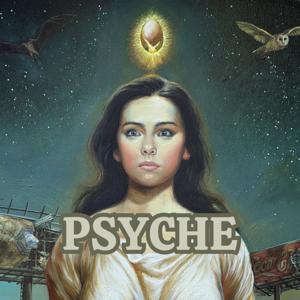

In this episode, I continue my series on Slavoj Žižek’s Quantum History: A New Materialist Philosophy, turning to Chapter 2, “Why Quantum Mechanics Needs Hegel.”
Building on the first episode’s focus on Žižek’s claim that collapse comes first, this chapter asks the question from the other direction: not only why a Hegelian might be drawn to quantum mechanics, but why quantum mechanics may need something like Hegel if we are going to think through its deeper philosophical consequences.
I explore Žižek’s attempt to avoid both a flat, common-sense realism and a vague spiritual reading of quantum physics. Instead of saying that consciousness creates reality, or that reality is simply sitting there fully formed before us, Žižek pushes us toward a stranger kind of materialism — one shaped by contradiction, observation, retroactivity, and the absence of any final God’s-eye view.
This episode reflects on the observer, the void, the impossibility of a complete perspective, and the idea that reality may not be held together by a final guarantee, but by the very gaps and collapses that prevent it from becoming a closed whole.
 View all episodes
 By Quique Autrey
5
1515 ratings
In this episode, I continue my series on Slavoj Žižek’s Quantum History: A New Materialist Philosophy, turning to Chapter 2, “Why Quantum Mechanics Needs Hegel.”
Building on the first episode’s focus on Žižek’s claim that collapse comes first, this chapter asks the question from the other direction: not only why a Hegelian might be drawn to quantum mechanics, but why quantum mechanics may need something like Hegel if we are going to think through its deeper philosophical consequences.
I explore Žižek’s attempt to avoid both a flat, common-sense realism and a vague spiritual reading of quantum physics. Instead of saying that consciousness creates reality, or that reality is simply sitting there fully formed before us, Žižek pushes us toward a stranger kind of materialism — one shaped by contradiction, observation, retroactivity, and the absence of any final God’s-eye view.
This episode reflects on the observer, the void, the impossibility of a complete perspective, and the idea that reality may not be held together by a final guarantee, but by the very gaps and collapses that prevent it from becoming a closed whole.

90,994 Listeners
15,251 Listeners
2,117 Listeners

1,461 Listeners

135 Listeners
313 Listeners
512 Listeners
583 Listeners
593 Listeners

354 Listeners

3,590 Listeners

59 Listeners
202 Listeners
287 Listeners
233 Listeners