
Sign up to save your podcasts
Or



Based on Podcast App listening data
What if the surest way to protect every right you love is to start with the front door on its hinges and the deed in your drawer? We dig into the founders’ most overlooked insight: secure property is the spine of liberty. Tim Barton walks through original sources—Adams, Madison, Dickinson, Lee—and shows how they linked private ownership to freedom, moral order, and social trust. Then we test those principles against today’s realities: swelling assessments, layered taxes, and seniors losing fully paid-off homes. The question isn’t whether taxation can exist; it’s how to keep ownership from becoming a revocable privilege.
We contrast the founders’ consent-based, purpose-tied approach with modern practice. Daniel Webster’s case for funding education from property was narrow and civic-minded, not a blank check. John Marshall acknowledged the taxing power while pointing to constitutional structure as our only safeguard against abuse. Joseph Story’s warning feels prophetic now: when laws make the enjoyment of property precarious, liberty erodes whether the decree comes from a despot or an eager legislature. That’s more than rhetoric when families watch generational homes slip away for want of taxes their budgets can’t meet.
We also ground the conversation in Scripture. Chronicles, Proverbs, and Ezekiel present land and inheritance as gifts to be stewarded and defended from unjust seizure. Those texts don’t write a tax code, but they draw moral lines: rulers must not use power to evict people from their inheritance or frustrate parents and grandparents who provide for the next generations. When policy crosses those lines, patriotism wanes, trust collapses, and communities fracture.
Together we sketch a path forward: tighter assessment caps, strong homestead protections, transparent consent, targeted relief for fixed-income owners, and a reset toward simple, restrained, voter-accountable funding. If property truly guards every other right, then safeguarding ownership is not a niche cause—it is the practical defense of liberty itself. If this resonates, share the episode, subscribe for more constitutional deep dives, and leave a review with your best idea for fair, freedom-respecting reform.
Support the show
Start with a simple question: what happens to freedom when property fades? We dive into that pressure point with a story that runs from Genesis to Philadelphia, tracing how stewardship, ownership, and consent form the backbone of a free society. Tim Barton walks through the biblical roots of private property—creation, cultivation, and commands that forbid stealing and coveting—then highlights the stark warning of 1 Samuel 8, where centralized power “takes” until liberty shrivels. That ancient caution feels modern when set against ideologies that dream of abolishing ownership and replacing personal responsibility with administrative control.
We connect those roots to America’s founding mind. John Locke’s case for government as a trust to preserve property shaped the Revolution and the Constitution. Samuel Adams named life, liberty, and property as natural rights with the authority to defend them “in the best manner” possible. We unpack why Jefferson wrote “pursuit of happiness” instead of “property,” guided by George Mason’s influence and a refusal to sanctify slavery. Happiness here means human flourishing—virtue, family, work—sustained by the right to acquire and keep the fruits of one’s labor. John Dickinson’s crisp test frames our present: if others may by right take what is yours without consent, neither property nor freedom is secure.
The conversation lands with practical stakes for legislators and citizens: guard against regulatory takings, tighten eminent domain to true public use with just compensation, and restore transparency so consent is real, not assumed. Teach the next generation why property is not greed but the space where responsibility lives. If you care about religious liberty, family stability, entrepreneurship, and fair elections, start by securing the ground beneath them—private property.
If this resonates, share it with a friend who sees it differently and ask them to test the claims. Subscribe for more constitutional, historical, and biblical insights, leave a review to help others find the show, and pass this along to someone in public office who needs clear, principled footing.
Support the show
The headlines move fast, but America’s core ideas move the needle. We open with a surprising deep dive into the Monroe Doctrine—penned by John Quincy Adams and issued by President James Monroe—and connect it to modern policy choices around Venezuela and hemispheric security. When you judge action by founding-era principles instead of social media noise, foreign policy looks less like a personality contest and more like constitutional muscle memory at work.
From there, we head west to a major shift in the Ninth Circuit. A two-to-one ruling leaned on the Supreme Court’s Bruin decision to strike down California’s open carry restrictions in large counties, arguing that firearm regulations must align with the nation’s historical tradition. The state claimed citizens could apply for licenses, yet admitted none had been issued. That gap between policy on paper and rights in practice is exactly what the new Second Amendment framework is designed to expose, and it marks a notable change in a circuit once nicknamed the “Ninth Circus.”
Then we pivot to the First Circuit, where a three-judge panel affirmed Congress’s authority to defund abortion providers, including Planned Parenthood, through clear appropriations language. The kicker: all three judges were appointed by President Biden. Beyond the culture-war headlines, the ruling reinforces a fundamental constitutional truth—the power of the purse belongs to the legislature. When Congress speaks plainly, courts should not invent spending mandates.
Across these stories, one pattern emerges: history, text, and institutional roles still decide outcomes. Whether it’s the Monroe Doctrine guiding regional boundaries, Bruin reshaping Second Amendment litigation, or Article I controlling federal dollars, the system works best when we remember how it’s built. If you’re tired of hot takes and ready for substance, you’ll find a straightforward playbook here: measure policies against founding principles and let that standard do the sorting.
If this resonates, follow the show, share it with a friend who loves history with teeth, and leave a quick review so more listeners can find us. Your take: which precedent should guide today’s leaders the most?
Support the show
What if the most powerful myths about America’s origins collapse under the weight of the Founders’ own words? We open the door to a wider, evidence-rich view of faith, freedom, and law—starting with God-given rights in the Declaration and Franklin’s call to prayer when the Constitutional Convention hit a wall. Instead of arguing about what professors or pundits say, we walk through primary sources and show how to challenge bad history—and even your favorite AI—by requiring original documents.
From there, we pivot to the numbers shaping the future. Western fertility has fallen below replacement, changing how nations sustain workforces, culture, and political coalitions. We unpack why the U.S. sits near 1.8 children per woman, how Europe trends even lower, and what happens when immigration meets automation. Israel’s story is more complex: Jewish and Arab birthrates are closer than many assume, with local variations that matter. Over time, immigrant fertility converges toward host-country norms, but the gap still moves maps. The thread through all of this is clear: demographics aren’t destiny, but they’re a powerful signal about the health and direction of a society.
Finally, we take on a creative listener proposal: could states blunt big-city dominance by adopting an Electoral College-style system for representation? We explain the constitutional guardrails—one person, one vote—and why county-equal models can’t govern legislative districts. Still, there’s room for smarter fixes: independent redistricting, clear transparency, compactness standards, and maps that respect communities of interest. Across every segment, our aim is the same: pair moral clarity with constitutional craftsmanship, and let facts lead. If you’re ready for a candid, source-driven tour through America’s foundations, shifting demographics, and the mechanics of fair representation, you’ll feel right at home.
If this resonated, follow the show, share it with a friend who loves thoughtful debate, and leave a review so more people can find conversations grounded in principles and primary sources.
Support the show
Headlines moved fast this week, but the through-line is simple: when truth meets sunlight, systems change. We open with the Minnesota scandal where a young investigator’s iPhone clips sparked serious questions about charity and daycare programs funded with federal dollars. As audits spread to other states, we dig into what real accountability looks like, why some outlets fixate on edge cases, and how a love of truth—not team loyalty—should guide the conversation. From there, we step into voter roll transparency, lawsuits against states refusing disclosure, and the practical steps that make elections cleaner long before ballots are cast.
The second half shifts to Venezuela and the global stakes you might not see at first glance. We unpack years of nationalization, collapsing oil output, and alleged narco-terror networks tied to Nicolás Maduro, alongside successive U.S. bounties and sealed indictments. Then we analyze the reported operation that bypassed Russian air defenses and Chinese drones, the deterrent message it sent, and why energy markets could feel the impact if American firms rebuild shuttered capacity. Safer borders, cheaper fuel, and fewer dollars flowing to adversaries aren’t abstract talking points—they’re the measurable outcomes that follow strategic clarity.
Throughout, we connect policy to principle: decentralize programs that Washington can’t police well, publish audits and recipient lists, standardize voter roll maintenance, and insist on transparency that survives partisan spin. Courage is contagious, whether it starts with a citizen journalist or a community demanding records. If you’re ready to trade noise for facts and narrative for receipts, press play, share with a friend, and tell us where accountability should go next. Subscribe for Foundations of Freedom Thursday and don’t miss our Friday good news roundup.
Support the show
What if the entire arc of American freedom hinges on where we say rights come from? We take you inside a spirited, timely conversation that ties together the founders’ reliance on prayer, the moral sequence of life before liberty, and the hard economics of why voluntary exchange creates wealth while coercion destroys it. This isn’t a history lecture; it’s a practical roadmap for evaluating candidates, policies, and institutions by a clear standard of truth.
We unpack the core fork in the road: man as the measure versus God as the source. From that single choice flow wildly different outcomes on speech, taxes, education, borders, and defense. You’ll hear why “group‑granted rights” inevitably drift into socialism, why identity blocs replace individual dignity, and how compelled speech corrodes public trust. We share vivid examples—from campus showdowns over truth to crumbling output under redistribution—alongside a simple test: does a policy protect innocent life and expand ordered liberty, or does it reward power and punish productivity?
Then we zoom out to strategy and statecraft. Innovation requires honest rules and abundant energy, so we dig into rare earth supply chains, nuclear approvals, and the power needed to fuel AI. Strong defense, limited government, and low taxes are not contradictions; they’re complementary shields for freedom. Pair that with a culture that prizes contribution over category and you get a nation that attracts builders, aligns allies, and regains confidence. If you care about how faith informs policy, how truth stabilizes markets, and how prosperity actually happens, this conversation will sharpen your lens and strengthen your voice.
If this resonates, follow the show, share it with a friend, and leave a rating to help more listeners find thoughtful, good‑faith conversations about faith, history, and the Constitution.
Support the show
If you care about why some nations flourish while others stall, this conversation puts real substance behind the answer. We dig into the ideas that anchor a free people—rights that don’t come from a vote, limits that bind power, and a moral center that turns law into trust. With former Congressman Bob McEwen, we connect those foundations to the everyday things we take for granted: GPS in your pocket, safe sea lanes for global trade, contracts that hold, and an innovation engine that keeps producing breakthroughs.
We walk through the often-muddled difference between a democracy and a constitutional republic and show why it matters for people who want to build, invest, and raise families. If your rights depend on a majority, they can be erased; if your rights come from God and are secured by law, your risk falls and your future gets bigger. That’s the soil where patents grow, startups launch, and generosity flows outward—whether it’s a clean water pump deep in Africa or a consistent rule at the Panama Canal. Bob’s stories—from policy fights to world events—reveal how leadership is spiritual at its core, changing confidence and outcomes long before anything physical moves.
We also challenge common myths about poverty and wealth creation, reframing the conversation around incentives, property rights, and the character needed to keep promises over time. Add in the global stakes—China’s push in the South China Sea, the cost of wavering leadership—and the message becomes urgent: protecting liberty’s architecture is not nostalgia, it’s strategy. As we mark a milestone year for the American experiment, we’re inviting you to revisit first principles and put them to work in your community.
If this resonated, share it with a friend, subscribe for more, and leave a review. Your voice helps more people discover conversations that strengthen freedom, leadership, and hope.
Support the show
A governor’s Christmas proclamation that actually says what Christmas is about. A president joking with kids about cookies while thanking service members. Federal agencies quietly restoring room for faith at work and school. The start of 2026 comes packed with moments that reveal where conviction and culture meet—and why it matters.
We open with Arkansas Governor Sarah Huckabee Sanders’ proclamation naming Jesus and closing state offices so families can celebrate together, followed by the Freedom From Religion Foundation’s objection and a forceful reply that re-centers Christmas on Christ. From there, we jump to the NORAD Santa Tracker’s quirky origin and a holiday call-in where the president mixes humor, nostalgia, and a clear salute to the military, including an end-of-year bonus that put help into real households.
The conversation deepens as we explore the USDA’s move to protect religious expression—touching school lunch policies and even meatpacking plant break rooms—reminding listeners that rights don’t stop at the factory floor. We widen the lens to Nigeria, where U.S. strikes targeted ISIS-linked terrorists amid persistent attacks on Christians and dissenting Muslims. The question is sobering: when should power be used to restrain evil, and what does moral clarity look like on the world stage?
We also unpack a rare bipartisan push: 42 attorneys general pressing AI companies to curb misleading, “tell-me-what-I-want-to-hear” outputs for kids, signaling a cultural return to verifiable truth over algorithmic flattery. Finally, we turn to the Smithsonian, where the White House is demanding documentation and accountability for historical narratives as America approaches its 250th anniversary. Artifacts deserve honest framing, and audiences deserve transparent standards.
If you care about faith in public life, religious liberty, truthful storytelling, national security, and the health of our information ecosystem, this conversation connects the dots. Subscribe, share with a friend who loves history and policy, and leave a review telling us which moment gave you the most hope.
Links to good news stories:
https://www.theepochtimes.com/us/trump-tells-children-santa-on-his-way-thanks-service-members- 5962799
https://www.theepochtimes.com/us/us-strikes-isis-in-nigeria-trump-5962963
https://www.theepochtimes.com/us/white-house-warns-it-might-withhold-smithsonian-funds- pending-content-review-5961110
https://www.theepochtimes.com/tech/tech-companies-should-curb-sycophantic-and-delusional-ai-outputs-attorneys-general-say-5956734
https://www.usda.gov/sites/default/files/documents/sm-1078-019.pdf?utm_medium=email&utm_source=govdelivery
https://governor.arkansas.gov/news_post/sanders-closes-state-offices-on-friday-december-26-in-celebration-of-christmas/
Support the show
New year, new habit: let’s make this the year we actually learn how freedom works. We kick things off by swapping stale timelines for stories that stick—showing why kids (and adults) fall in love with history when they meet real people first and fit the dates around character and consequence. From Abigail Adams to George Washington Carver, narrative turns rote facts into insight, and it gives families a simple, joyful way to teach virtue, context, and courage.
We also tackle a thorny headline phrase: “threat to our democracy.” The founders didn’t build a pure democracy; they designed a constitutional republic to restrain passions with law. We walk through the seven articles every citizen should know—legislative, executive, judicial, state relations and a republican form of government, amendments, supremacy, and ratification—and explain why Article IV’s guarantee matters for rule of law, due process, and the everyday rights you rely on. Clear language leads to clear thinking, and clear thinking protects liberty when slogans start to blur the lines.
If travel isn’t in the budget, you can still bring history to life. We share practical tools: biography‑driven reading lists, reality‑style history videos, and virtual tours that place your family in Yorktown and Vicksburg without leaving home. We add a friendly warning about modern spin at some sites and show how to cross‑check with primary sources so your kids learn to love truth, not just tales. By the end, you’ll have a step‑by‑step plan to build a weekly story seminar at home, map current events to the Constitution, and turn curiosity into civic confidence.
Ready to start? Subscribe, share this episode with a friend who teaches kids, and leave a review telling us which founder’s story you’ll read first. Your feedback helps more families find practical, principled civics they can use all year.
Link to children's biographies:
https://shop.wallbuilders.com/product-category/all/books/biographies/
Support the show
Giants don’t only live on battlefields. They show up in our homes, our timelines, and our headlines—and that’s why this new animated musical about David is landing like a thunderclap for families. We sit down with Brian Stivale, the voice of Samuel, to explore how a film can be both wildly entertaining and spiritually grounding without pretending to be a verse-by-verse commentary.
We share why the orchestration soars, the animation feels “classic,” and the storytelling bridges 1 and 2 Samuel with heart and clarity for kids and adults alike. Brian opens up about his calling as an ordained pastor, his ties to Israel, and the creative team’s vision to craft a love letter to the land, the people, and the biblical narrative itself. We address the loudest critiques head-on—what the film chooses to symbolize, what it compresses, and why those decisions matter when your first goal is to inspire children to open the Bible. From Saul’s complexity to Jonathan’s noble heart to David’s steady courage, we talk character, craft, and the moments that made our kids sing the soundtrack on repeat.
This conversation also touches the cultural moment. The story’s arc to Ziklag and its anthem of “I will not be afraid” resonates against a backdrop of fear and fragmentation, offering a timely reminder that scattered people can still find strength together. With box office momentum and word-of-mouth heat, “David” signals a hunger for quality, family-friendly films that respect the audience and lift the spirit. If you’ve been waiting for a project with the ambition of “Prince of Egypt” and the accessibility of modern animation, this is your cue.
Stream now, then tell us your take: Which character landed most for you, and what conversation did it spark at home? If this episode helps, follow, share with a friend who needs hope, and leave a quick review so more families can find us.
Support the show
From the publisher's feed
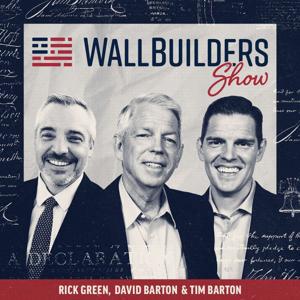
The WallBuilders Show is a daily journey to examine today's issues from a Biblical, Historical and Constitutional perspective. Featured guests include elected officials, experts, activists,…
Ranked by our users in the last 21 days
1,402 Listeners

2,561 Listeners
25,986 Listeners

165 Listeners

1,022 Listeners
5,422 Listeners

2,177 Listeners

65,453 Listeners

1,564 Listeners
1,549 Listeners

2,441 Listeners

691 Listeners
385 Listeners
13,157 Listeners
892 Listeners