
Sign up to save your podcasts
Or



Based on Podcast App listening data
Power you can count on changes everything—health, safety, jobs, and whether a storm becomes a headline or a hardship. We sit down with energy expert and former Texas legislator Jason Isaac to unpack why so many grids feel fragile despite record spending, and how policy signals have steered capital into intermittent capacity that often fails when demand spikes. From Texas’ post‑Uri reality to Europe’s price shocks, we connect real‑world outcomes to the engineering underneath the buzzwords.
Jason walks us through how subsidies per megawatt‑hour shape the buildout of wind, solar, and batteries, and why installed capacity is not the same as dependable generation. We cover land use tradeoffs, the true cost of storage, and the rising urgency for firm power sources such as advanced thermal and nuclear. Along the way, we examine Germany’s industrial retrenchment, the high price of electricity for households, and what happens when companies move production to countries with looser environmental and labor standards. Energy policy is not a spreadsheet exercise; it’s an industrial strategy that touches every family budget.
The conversation turns to human stakes often left out of climate debates. Cold kills more than heat when bills soar and homes can’t stay warm. In the developing world, energy poverty keeps children like Aisha walking for water instead of learning after school—proof that access to affordable, reliable electricity is a human rights issue. We challenge popular narratives, ask hard questions about “net zero” pledges, and argue for a path that values reliability, cost, and environmental stewardship together. If you care about keeping the lights on and lifting people out of poverty, this one’s for you.
Enjoy the episode? Follow, share with a friend, and leave a review to help more listeners find fact‑driven conversations about energy, policy, and freedom.
Support the show
Want a clean, honest look at energy that starts with truth and ends with action? We open with our core lens—biblical, historical, and constitutional—and then sit down with former Texas legislator Jason Isaac to examine how policies shape lives on the ground. The result is a clear, human-centered tour through ESG pressures, energy poverty, reliability, and the global tradeoffs we rarely see on headlines.
Jason shares how financial tools are being used to choke off insurance and capital for traditional energy and agriculture, driving up costs for families who can least afford them. We test popular assumptions against real data—like why Austin’s air quality didn’t meaningfully improve even with far fewer cars on the road—and discuss how American emissions controls outperform most of the world. We also pull back the curtain on imported pollution and the moral costs of battery minerals, including child labor in cobalt mines, showing how feel-good goals can hide real human harm.
The conversation moves from slogans to standards. Rather than defaulting to all of the above, we ask tougher questions: Is the power affordable? Is it reliable? Does it reduce poverty and preserve human dignity? We explore why rising utility rates increase eviction risk and homelessness, why subsidies can distort markets and undermine grid stability, and how prosperity often enables better stewardship. Along the way, we point to practical steps—sharing credible information, hosting local Constitution classes, and pressing for policies that secure dependable energy while elevating the most vulnerable.
If you’re ready for a perspective that respects faith, follows evidence, and fights for people, this is your next listen. Subscribe, share with a friend who cares about energy and freedom, and leave a review telling us the one policy change you’d make first.
Support the show
A breakthrough in safety, a hard line on security, and a surprising plea for civility—this episode brings three big themes into sharp focus. We start with the long-overdue debut of a female-specific crash test dummy and why that matters for real-world outcomes. With higher injury and fatality rates for women in identical collisions, better biomechanical models mean better seats, belts, and airbags—design decisions that can finally reflect how female bodies experience force in a crash. It’s a case study in what happens when engineering catches up to the data.
We then tackle a charged policy shift: Texas designating the Muslim Brotherhood and CAIR as foreign terrorist and transnational criminal organizations, along with updates on federal actions. We dig into why state and national security frameworks are tightening, how property and legal standing could be affected, and what this signals for border enforcement and counterterror efforts. The thread running through it all is sovereignty and prudence—how a free society balances civil liberties with its duty to protect citizens from groups committed to undermining it.
From there, we pivot to the culture in our airports. A simple request—skip pajamas and slippers at the gate—opens a larger conversation about manners, presentation, and how dress can nudge behavior. Unruly incidents spiked during the pandemic and never returned to prior lows. Reclaiming a baseline of respect, like the founders’ emphasis on civility, isn’t performative—it’s practical. Finally, we unpack a pro-life courtroom win: a judge dismissed the Satanic Temple’s argument that abortion is a protected religious ritual, reaffirming that free exercise ends where harm begins and the right to life takes precedence.
If you value conversations that connect facts to first principles, this one’s for you. Subscribe, share with a friend who loves policy and culture, and leave a review to help others find the show. What norm would you bring back to raise the bar on safety and civility?
Support the show
What if the most meaningful Thanksgiving starts with only five kernels of corn? We revisit the holiday’s unvarnished origins and follow a line of gratitude that runs through blizzards, barracks, and battlefields. The Pilgrims faced disease, hunger, and loss, yet learned to give thanks for small mercies: a buried kettle of corn, new allies, enough wood for the fire, and the hope that the next winter might not claim them all. That stubborn gratitude didn’t ignore suffering; it taught people how to endure it, rebuild after it, and turn scarcity into wisdom.
We connect those early lessons to moments when America needed backbone, not platitudes. Abraham Lincoln’s 1863 proclamation barely mentions the Civil War and instead points the nation toward God’s character and providence. The Continental Congress and FDR did likewise, calling citizens to read Scripture, to reflect, and to anchor hope beyond turmoil. These proclamations remind us that gratitude is not a luxury emotion reserved for easy times. It’s a civic and spiritual discipline that cools outrage, tempers envy, and restores perspective when public life grows harsh.
Along the way, we unpack how the Pilgrims’ biblical principles shaped durable institutions: moving from communal sharing to household responsibility and free exchange, insisting on consent and fair purchase of land, and building common schools so boys and girls could read for themselves. These choices fueled productivity, dignity, and self-government under the Mayflower Compact. If today’s climate feels brittle and angry, there’s a path back: practice gratitude on purpose. Read a historic proclamation at dinner. Place five kernels on each plate to remember scarcity before abundance. Name one hard thing you’re thankful for. Then share this conversation with someone who needs a lift, subscribe for more history with purpose, and leave a review to help others find the show.
Support the show
Persecution, closed doors, and shipboard vows—our journey starts where power tried to silence conscience and ends with a small band drafting a covenant that rewired how authority works. We sit down with Bill Federer to map the Pilgrims’ path from England’s star chamber to the rocky shore where consent became the basis for order. Along the way, we explore how the Reformation, censorship laws, and the flight to Holland set the stage for a bold experiment that would echo through New England town meetings and, eventually, into the American idea.
What unfolds is a grounded, vivid look at the Mayflower Compact as more than a paragraph in a textbook. It was a civic translation of church covenant—neighbors choosing obligation, accountability, and shared rule. We unpack why Romans 13 reads differently under a king than under a republic, and why citizens must see themselves as co-sovereigns with duties as real as their rights. We also take on Thanksgiving myths with the fuller story of Squanto—kidnapped to Europe, freed by monks, fluent in English—whose help, along with Massasoit’s alliance, anchored a decades-long peace. The first Thanksgiving looks less like legend and more like gratitude under pressure, with prayer, games, and shared meat binding two communities.
We go deeper into Bradford’s pivot from failing communal rules to private property, the leap in harvests that followed, and the way pastors helped found cities where worship and civic life overlapped. There’s drama too: trade seized by corsairs, risky diplomacy, and marriages that put Pilgrim leaders at odds with crown law. Through it all runs a clear theme—freedom of conscience, consent of the governed, and the steady work of self-government. If you care about the real roots of Thanksgiving, religious liberty, and how citizens become the “kings” in a republic, this conversation will sharpen your view and strengthen your gratitude.
Enjoyed the conversation? Follow the show, share it with a friend, and leave a review with your favorite insight so more listeners can find it.
Support the show
Tired of hearing America is beyond repair? We make a grounded case for renewal—rooted in first principles, legal clarity, and a fuller telling of our national story. With Mike Berry from First Liberty, we unpack how recent Supreme Court victories have reopened space for faith and conscience in public life, including schools, and why that matters for culture as much as law. When rights are secured in the real world—teachers protected, students free to express belief, communities able to build moral formation—confidence rises and civic duty starts to make sense again.
We also confront a hard question: how do you recruit young people to defend a country they’re taught to hate? The answer isn’t spin or nostalgia. It’s honest history—the good, the bad, and the ugly—paired with the founders’ radical design that places sovereignty with the people and limits government power. That framework doesn’t make us perfect, but it uniquely equips us to correct course through peaceful means. Think Declaration of Independence, constitutional processes, separation of powers, and real elections that let us alter what’s broken and abolish what never worked.
From classrooms to chaplaincy to family tables, there’s a hunger for truth over ideology. We talk about practical steps for rebuilding civic memory, compare free societies with closed regimes, and apply a simple test—are people trying to get in or out?—to cut through noise. The takeaway is clear: teach the full story, protect liberty, and invite the next generation to serve something worthy. That’s how you restore faith in America and keep the American spirit alive.
If this conversation resonates, follow the show, share it with a friend who cares about the future, and leave a review to help more people find it. Your voice helps restore what works.
Support the show
What happens when people fill pews but drift on first principles? We sit down with researcher George Barna to unpack a new survey of frequent churchgoers that reveals only 11 percent hold a biblical worldview, a third prefer socialism to capitalism, and support for Israel rarely moves beyond prayer. It’s sobering, but it’s also a roadmap. If we can see clearly where formation has failed, we can rebuild how we teach, mentor, and live the faith in public.
We dig into why worldview isn’t an academic word—it’s the lens behind every decision you make. From voting and stewardship to generosity and courage, belief drives behavior. We explore how moral relativism sneaks in when churches avoid hard topics, and how kindness without conviction becomes a substitute for obedience. On economics, we separate personal charity from state control and connect Jesus’ teaching on stewardship, diligence, and envy to today’s policy debates. On Israel, we outline a layered approach: pray, learn the history, understand the covenant thread, and support allies with wisdom and care.
Most importantly, we talk solutions. Doing the same programs harder won’t change outcomes. We share practical steps for pastors and families to raise biblical literacy, measure spiritual growth, and bring scripture to bear on contested cultural issues. You’ll hear where to find the full report from the Cultural Research Center and Family Research Council, how to start a worldview series in your church, and why this moment is a “checkup” the American church can’t ignore. If you’re ready to move from sentiment to conviction to action, this conversation will help you chart the way.
If this resonates, subscribe, share with a friend, and leave a review. Then grab the report, bring it to your pastor, and tell us how you’ll start building a stronger worldview in your home and church.
Support the show
Forty million people live in slavery today, yet many pulpits are quiet where they were once loudest. We revisit a forgotten tradition of courageous preaching that confronted unjust laws, trained citizens to think biblically about public life, and helped turn spiritual conviction into cultural reform. From biblical prohibitions against “man stealing” to the explosive pushback against the 1850 Fugitive Slave Law, we explore why past pastors urged civil disobedience when policy defied conscience—and why that courage matters now.
We walk through the practical legacy of the Pilgrims—elective government, purchased property instead of seizure, early education statutes, and due process reforms that shortened witch trials—showing how Scripture can shape fair, durable policy. Then we widen the lens to Genesis’s three institutions: family, civil government, and congregational worship. If laws shape culture more than programs do, a private faith that never engages public life leaves families, schools, and communities exposed. That’s how you get revivals without reform and inspired hearts swimming in hostile waters.
History gives a roadmap. George Whitefield’s “Father Abraham” sermon cut through tribal labels and helped the First Continental Congress choose unity over sectarian rivalry, opening the door to joint prayer and shared purpose. Charles Finney later insisted that politics is part of religion in a self-governing nation and called believers to oppose evil laws in tangible ways, not just with words. We bring those lessons forward for pastors, legislators, and citizens: choose a great awakening over a momentary revival, translate conviction into policy, and build a culture that guards human dignity, strengthens families, and restrains injustice.
If this conversation sparks you to act, subscribe for more, share the episode with a friend, and leave a review to help others find it. Then tell us: where will you take courageous, constructive action this week?
Support the show
If spiritual fireworks don’t change the neighborhood by Monday, what are we missing? We take a hard look at a century of American revivals that stirred the heart but barely nudged the culture, and then we trace a different path: how revivals become awakenings when believers are discipled and Scripture is applied to daily life. Not just belief, but apprenticeship. Not just emotion, but formation that shapes families, work, and public decisions.
We dig into the Great Commission’s overlooked command to “teach them to observe all things” and connect it to concrete civic questions. What does Jesus’ teaching on stewardship say about rewarding productivity? How does the vineyard wage story illuminate voluntary contracts? Why does “Where are your accusers?” echo through America’s due process rights to confront accusers and compel witnesses? Along the way, we surface sobering data on the behavior gap between professing Christians and the wider culture, making the case that conversion without discipleship leaves public ethics unchanged.
History shows a better model. Early American pulpits spoke directly to the issues of the day—earthquakes, fires, education, deployment and just war, taxation, commercial crisis, health codes, addiction, and the injustice of slavery. Sermons didn’t dodge the news; they discipled people to think biblically about it. That habit formed moral reflexes that influenced law, economics, and community life. We invite you to recover that tradition: teach “all things,” support those serving in public office, and let Scripture inform both private character and public action.
If you’re ready for faith that moves from pews to policy and from zeal to wisdom, press play, share this conversation, and join us next time. Subscribe, leave a review, and tell a friend who serves in your state legislature so they can be part of the ProFamily Legislators Conference next year.
Support the show
A billion people watched a memorial defined by bold forgiveness, and something shifted. Church attendance spiked, Bible sales soared, and campus arenas from Ohio State to Florida State filled with students lining up for baptism. We take that momentum seriously and ask the harder question history demands: when hearts change, do cultures follow?
We walk through the evidence: record Easter services, mass beach baptisms, and stadium crusades drawing thousands. Then we hold it against the long arc of American revivals. The First and Second Great Awakenings shaped ideals of liberty and fueled abolition, yet later waves overlapped with the Progressive Era, when eugenics spread through state laws and media reframed faith as anti-science. The Scopes trial’s legal reality lost to a narrative that still echoes. Meanwhile, the Frankfurt School’s critical theory crossed the Atlantic, took root in elite universities, and helped redirect the formation of generations.
Our aim is clarity and responsibility. Renewal is real when it transforms not only private lives but public life—schools, laws, media, and the habits of a free people. That means pairing conviction with craft: teaching doctrine and civic duty, mentoring Gen Z leaders, building durable local institutions, and telling true stories about human dignity, science, and freedom. If we steward this moment, today’s surge can mature into a culture that protects conscience and nurtures virtue.
If this conversation sharpens your thinking, share it with a friend, subscribe for the next installments, and leave a review with one action you plan to take this week. Your voice helps turn momentum into a movement.
Support the show
From the publisher's feed
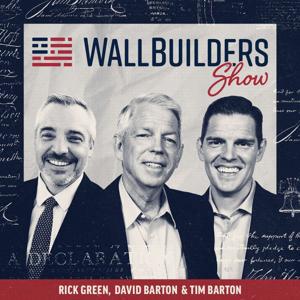
The WallBuilders Show is a daily journey to examine today's issues from a Biblical, Historical and Constitutional perspective. Featured guests include elected officials, experts, activists,…
Ranked by our users in the last 21 days
1,402 Listeners

2,561 Listeners
25,986 Listeners

165 Listeners

1,022 Listeners
5,422 Listeners

2,177 Listeners

65,453 Listeners

1,564 Listeners
1,549 Listeners

2,441 Listeners
691 Listeners
385 Listeners
13,157 Listeners
892 Listeners