
Sign up to save your podcasts
Or

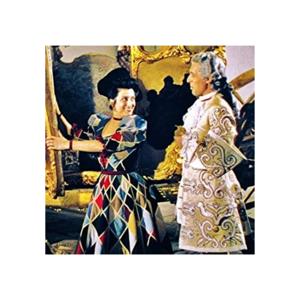


In this Lilli Palmer Acteurist Oeuvre-view episode, we discuss Palmer's first two Hollywood films, Fritz Lang's anti-fascist spy drama, Cloak and Dagger (1946), and Robert Rossen's socially critical boxing noir, Body and Soul (1947). We dig into the social context of these films, asking why these progressive writers and directors wanted to tell these stories at this moment, and how their political sympathies shaped the stories. We also talk about the persona emerging from Lilli Palmer's wartime British and American films, and her character in Body and Soul as representing the filmmakers' perspective on John Garfield's protagonist. And in Fear and Moviegoing in Toronto, our attendance of the Lubitsch retrospective at the TIFF Cinematheque continues with Trouble in Paradise and a Christmas Eve viewing of The Shop Around the Corner, which prompt us to a brief consideration of the underlying (and sometimes overt) social criticism of Lubitsch's Depression-era films.
Time Codes:
0h 00m 45s: CLOAK AND DAGGER (1946) [dir. Fritz Lang]
0h 26m 45s: BODY AND SOUL (1947) [dir. Robert Rossen]
0h 58m 51s: Fear and Moviegoing in Toronto – Ernst Lubitsch's Trouble in Paradise (1932) and The Shop Around the Corner (1939)
+++
* Listen to our guest episode on The Criterion Project – a discussion of Late Spring
* Marvel at our meticulously ridiculous Complete Viewing Schedule for the 2020s
* Intro Song: "Sunday" by Jean Goldkette Orchestra with the Keller Sisters (courtesy of The Internet Archive)
* Read Elise's piece on Gangs of New York – "Making America Strange Again"
* Check out Dave's Robert Benchley blog – an attempt to annotate and reflect upon as many of the master humorist's 2000+ pieces as he can locate – Benchley Data: A Wayward Annotation Project!
Follow us on Twitter at @therebuggy
Write to us at [email protected]
We now have a Discord server - just drop us a line if you'd like to join!
For our December 2023 Special Subject, we're having ourselves a Monty Woolley Christmas! We look at three Christmas-adjacent movies from the 1940s featuring the anti-Santa in roles big and small: The Man Who Came to Dinner, in which he stars as waspish radio personality Sheridan Whiteside, who takes over the home of a bourgeois Middle American couple; Life Begins at Eight-Thirty, in which he plays a great actor who's been broken by alcoholism; and The Bishop's Wife, in which he adds some New York Bohemian intellectual colour to the holiday classic. We discuss the cultural and political implications of The Man Who Came to Dinner and the uncanniness of Cary Grant and debate the appeal of alcoholism. Then in Fear and Moviegoing in Toronto, we briefly discuss Ernst Lubitsch's Cluny Brown (fully discussed in our Jennifer Jones series) and a new release, a Christmas movie even darker than our Monty Woolleys, William Oldroyd's Eileen, starring Thomasin McKenzie and Anne Hathaway (a rare spoiler-free exchange of impressions from us). And as a bonus, we become possessed by the spirit of Monty Woolley and rant about how much we hate contemporary movie trailers. (No analysis, just invective.)
Happy Holidays!
Time Codes:
0h 00m 45s: Extremely brief Introduction to Monty Woolley
0h 04m 38s: THE MAN WHO CAME TO DINNER (1942) [William Keighley]
0h 31m 24s: LIFE BEGINS AT EIGHT-THIRTY (1942) [Irving Pichel]
0h 42m 47s: THE BISHOP'S WIFE (1947) [Henry Koster]
0h 54m 37s: Fear and Moviegoing in Toronto – Ernst Lubitsch's Cluny Brown (1946) and William Oldroyd's Eileen (2023)
+++
* Listen to our guest episode on The Criterion Project – a discussion of Late Spring
* Marvel at our meticulously ridiculous Complete Viewing Schedule for the 2020s
* Intro Song: "Sunday" by Jean Goldkette Orchestra with the Keller Sisters (courtesy of The Internet Archive)
* Read Elise's piece on Gangs of New York – "Making America Strange Again"
* Check out Dave's Robert Benchley blog – an attempt to annotate and reflect upon as many of the master humorist's 2000+ pieces as he can locate – Benchley Data: A Wayward Annotation Project!
Follow us on Twitter at @therebuggy
Write to us at [email protected]
We now have a Discord server - just drop us a line if you'd like to join!
In this week's MGM 1945 episode, a Vincente Minnelli double feature: The Clock, a wartime romantic drama with two very intense stars, Judy Garland and Robert Walker, that doubles as a love poem to New York City; and a Technicolor musical fantasy about, in Dave's words (more or less), "A woman who wants to bleep an angel," starring Lucille Bremer as the woman and Fred Astaire as the angel. And in Fear and Moviegoing in Toronto, four Lubitsch movies over two weekends: To Be or Not to Be, The Love Parade, Heaven Can Wait, and Ninotchka. Play "Masterpiece or Meh?" with Elise with these six movies, and hear Dave defend two "mehs" as "masterpieces"! (Or "meh-sterpieces"?) (No, "masterpieces"!)
Time Codes:
0h 00m 45s: MGM/Hollywood Overview, 1945
0h 04m 27s: THE CLOCK [dir. Vincente Minnelli]
0h 40m 20s: YOLANDA & THE THIEF [dir. Vincente Minnelli]
0h 56m 00s: Fear and Moviegoing in Toronto – Ernst Lubitsch Retrospective at TIFF Cinémathèque, Part I: To Be Or Not To Be, The Love Parade, Heaven Can Wait, and Ninotchka
Studio Film Capsules provided by The MGM Story by John Douglas Eames
Additional studio information from: The Hollywood Story by Joel W. Finler
+++
* Marvel at our meticulously ridiculous Complete Viewing Schedule for the 2020s
* Intro Song: "Sunday" by Jean Goldkette Orchestra with the Keller Sisters (courtesy of The Internet Archive)
* Read Elise's latest film piece on Preston Sturges, Unfaithfully Yours, and the Narrative role of comedic scapegoating.
* Check out Dave's new Robert Benchley blog – an attempt to annotate and reflect upon as many of the master humorist's 2000+ pieces as he can locate – Benchley Data: A Wayward Annotation Project!
Follow us on Twitter at @therebuggy
Write to us at [email protected]
We now have a Discord server - just drop us a line if you'd like to join!
In this Lilli Palmer Acteurist Oeuvre-view episode we take a look at a Lilli Palmer who's (mostly) new to us, Lilli the victim: the victim of self-destructive womanizer Rex Harrison (Palmer's real-life husband) in Launder and Gilliat's enigmatic social satire The Rake's Progress (1945), and the self-destructive paralysis victim of Beware of Pity (1946), based on the Stefan Zweig novel. Which of these adversaries is harder to contend with? Listen to find out!
Time Codes:
0h 00m 45s: THE RAKE'S PROGRESS (1945) [dir. Sidney Gilliat]
0h 42m 03s: BEWARE OF PITY (1946) [dir. Maurice Elvey]
+++
Bibliography:
Babington, Bruce, Launder and Gilliat, Manchester University Press, 2013.
+++
* Listen to our guest episode on The Criterion Project – a discussion of Late Spring
* Marvel at our meticulously ridiculous Complete Viewing Schedule for the 2020s
* Intro Song: "Sunday" by Jean Goldkette Orchestra with the Keller Sisters (courtesy of The Internet Archive)
* Read Elise's piece on Gangs of New York – "Making America Strange Again"
* Check out Dave's Robert Benchley blog – an attempt to annotate and reflect upon as many of the master humorist's 2000+ pieces as he can locate – Benchley Data: A Wayward Annotation Project!
Follow us on Twitter at @therebuggy
Write to us at [email protected]
We now have a Discord server - just drop us a line if you'd like to join!
For this Paramount 1945 episode, we look at a couple of male melodramas: The Man in Half Moon Street, a Gothic B-movie starring Nils Asther, "the most beautiful man who ever lived," according to Elise, as a scientist who becomes unscrupulous in his pursuit of eternal youth, and Salty O'Rourke, a Raoul Walsh-directed hit starring Alan Ladd as a racetrack gambler who manipulates an unruly young jockey. The movies also boast fairly substantial love interest parts for Helen Walker as a socialite who sympathizes with Asther's Ubermensch impulses and Gail Russell as a schoolteacher who's caught up in Ladd's schemes. We dive into the question of how to create audience sympathy for a villain-protagonist and the curious nature of the Ladd phenomenon.
Time Codes:
0h 00m 45s: THE MAN IN HALF MOON STREET [dir. Ralph Murphy]
0h 31m 53s: SALTY O'ROURKE [dir. Raoul Walsh]
Studio Film Capsules provided by The Paramount Story by John Douglas Eames
Additional studio information from: The Hollywood Story by Joel W. Finler
+++
* Marvel at our meticulously ridiculous Complete Viewing Schedule for the 2020s
* Intro Song: "Sunday" by Jean Goldkette Orchestra with the Keller Sisters (courtesy of The Internet Archive)
* Read Elise's latest film piece on Preston Sturges, Unfaithfully Yours, and the Narrative role of comedic scapegoating.
* Check out Dave's new Robert Benchley blog – an attempt to annotate and reflect upon as many of the master humorist's 2000+ pieces as he can locate – Benchley Data: A Wayward Annotation Project!
Follow us on Twitter at @therebuggy
Write to us at [email protected]
We now have a Discord server - just drop us a line if you'd like to join!
For our Ozu Noir-vember Special Subject, we look at three silent films by Yasujirō Ozu, Walk Cheerfully (1930), That Night's Wife (1930), and Dragnet Girl (1933), that not only bear a fascinating relationship to each other but also seemingly inaugurate the gangster film in Japan and anticipate (we argue) American film noir more closely even than French poetic realism, as well as the Nouvelle Vague. Join us as we marvel at Ozu's rapid evolution as a stylist and storyteller in the space of three years, and stick around to listen to our Fear and Moviegoing in Toronto segment on Scorsese's Killers of the Flower Moon.
Time Codes:
0h 00m 45s: WALK CHEERFULLY (1930) [dir. Yasujiro Ozu]
0h 23m 49s: THAT NIGHT'S WIFE (1930) [dir. Yasujiro Ozu]
0h 37m 54s: DRAGNET GIRL (1934) [dir. Yasujiro Ozu]
1h 01m 53s: Fear & Moviegoing in Toronto – Martin Scorsese's Killers of the Flower Moon (2023)
+++
* Listen to our guest episode on The Criterion Project – a discussion of Late Spring
* Marvel at our meticulously ridiculous Complete Viewing Schedule for the 2020s
* Intro Song: "Sunday" by Jean Goldkette Orchestra with the Keller Sisters (courtesy of The Internet Archive)
* Read Elise's piece on Gangs of New York – "Making America Strange Again"
* Check out Dave's Robert Benchley blog – an attempt to annotate and reflect upon as many of the master humorist's 2000+ pieces as he can locate – Benchley Data: A Wayward Annotation Project!
Follow us on Twitter at @therebuggy
Write to us at [email protected]
We now have a Discord server - just drop us a line if you'd like to join!
We dig into some substantial British cinema offerings in a Lilli Palmer Acteurist Oeuvre-view episode that's heavy on wartime themes: Thunder Rock (1942), a philosophical examination of the disillusionment of a leftist; dramatically illustrated in a surprising way; The Gentle Sex (1943), Leslie Howard's eccentric and affecting semi-documentary about women in the British Army; and English Without Tears (1944), Terence Rattigan and Anatole de Grunwald's examination of the transformations taking place in British society as the result of the war in the form of a romantic comedy with a slightly kinky outlook (but don't tell Aunt Edna). Lilli Palmer contributes her comedic and dramatic talents and the gravitas of her personal history to these wonderful ensemble casts.
Time Codes:
0h 00m 45s: THUNDER ROCK (1942) [dirs. Roy & John Boulting]
0h 46m 08s: THE GENTLE SEX (1943) [dir. Leslie Howard]
0h 59m 38s: ENGLISH WITHOUT TEARS (1944) [dir. Harold French]
+++
Reading on THUNDER ROCK from Halliwell's Harvest by Leslie Halliwell
+++
* Listen to our guest episode on The Criterion Project – a discussion of Late Spring
* Marvel at our meticulously ridiculous Complete Viewing Schedule for the 2020s
* Intro Song: "Sunday" by Jean Goldkette Orchestra with the Keller Sisters (courtesy of The Internet Archive)
* Read Elise's piece on Gangs of New York – "Making America Strange Again"
* Check out Dave's Robert Benchley blog – an attempt to annotate and reflect upon as many of the master humorist's 2000+ pieces as he can locate – Benchley Data: A Wayward Annotation Project!
Follow us on Twitter at @therebuggy
Write to us at [email protected]
We now have a Discord server - just drop us a line if you'd like to join!
We weren't sure what to expect with our Universal 1944 "scary woman"-themed episode, but Cobra Woman, starring the riveting Maria Montez, delivered, and the completely unknown Weird Woman, starring the less-than-riveting Lon Chaney Jr., was a surprise gem that seems to be nodding to Val Lewton's work at RKO. This episode causes us to ask such questions as: what is acting? Can anyone in these movies "act"? Does it matter? When are B-movies inherently sophisticated, and when are they deliberately sophisticated? Does that difference matter? To hear the answers to these questions (or, let's face it, probably just more questions), just press play and enter the Inner Sanctum of our pulsating flesh! (Our mind, what did you think I meant?)
Time Codes:
0h 00m 45s: WEIRD WOMAN [dir. Reginald Le Borg]
0h 40m 20s: COBRA WOMAN [dir. Robert Siodmak]
Studio Film Capsules provided by The Universal Story by Clive Hirschhorn
Additional studio information from: The Hollywood Story by Joel W. Finler
+++
* Marvel at our meticulously ridiculous Complete Viewing Schedule for the 2020s
* Intro Song: "Sunday" by Jean Goldkette Orchestra with the Keller Sisters (courtesy of The Internet Archive)
* Read Elise's latest film piece on Preston Sturges, Unfaithfully Yours, and the Narrative role of comedic scapegoating.
* Check out Dave's new Robert Benchley blog – an attempt to annotate and reflect upon as many of the master humorist's 2000+ pieces as he can locate – Benchley Data: A Wayward Annotation Project!
Follow us on Twitter at @therebuggy
Write to us at [email protected]
We now have a Discord server - just drop us a line if you'd like to join!
This week's Acteurist-Oeuvre-view shows us two sides of Lilli Palmer: Bad Lilli in a comic supporting role, brawling with fellow chorus girl Renée Houston and competing with a demure Margaret Lockwood over wealthy patrons in Carol Reed's A Girl Must Live (1939); and Good Lilli assuming the lead in B-mystery The Door with Seven Locks (1940), seeking adventure with comic sidekick Gina Malo. It ain't Noël Coward, but we had fun.
Time Codes:
0h 00m 45s: A GIRL MUST LIVE (1939) [dir. Carol Reed]
0h 24m 30s: THE DOOR WITH SEVEN LOCKS (1940) [dir. Norman Lee]
0h 42m 57s: Listener mail from Richard
+++
* Listen to our guest episode on The Criterion Project – a discussion of Late Spring
* Marvel at our meticulously ridiculous Complete Viewing Schedule for the 2020s
* Intro Song: "Sunday" by Jean Goldkette Orchestra with the Keller Sisters (courtesy of The Internet Archive)
* Read Elise's piece on Gangs of New York – "Making America Strange Again"
* Check out Dave's Robert Benchley blog – an attempt to annotate and reflect upon as many of the master humorist's 2000+ pieces as he can locate – Benchley Data: A Wayward Annotation Project!
Follow us on Twitter at @therebuggy
Write to us at [email protected]
We now have a Discord server - just drop us a line if you'd like to join!
For our Halloween 2023 episode, we take you on a tour of Peyton Place—the 1956 novel by Grace Metalious, 1957 Fox movie starring Lana Turner, and the mid-late-60s TV series starring Dorothy Malone and Mia Farrow (among many others) that reinvented television. We discuss the strange journey of Metalious's scabrous and scathing vision from satire to soap opera, in the course of which the story of shack-dweller Selena Cross's violation by her stepfather becomes the story of lower-middle-class Betty Anderson's resentful ambition, while ostensible protagonist Allison MacKenzie goes from being a bit of a jerk to being a nightmare of willfulness. But which versions of the story influenced David Lynch the most? We give our surmises.
Time Codes:
0h 00m 45s: Peyton Place by Grace Metalious
0h 42 m 52s: PEYTON PLACE (1957) [dir. Mark Robson]
1h 02m 26s: PEYTON PLACE – TV SERIES (1964 to 1969)
+++
* Listen to our guest episode on The Criterion Project – a discussion of Late Spring
* Marvel at our meticulously ridiculous Complete Viewing Schedule for the 2020s
* Intro Song: "Sunday" by Jean Goldkette Orchestra with the Keller Sisters (courtesy of The Internet Archive)
* Read Elise's piece on Gangs of New York – "Making America Strange Again"
* Check out Dave's Robert Benchley blog – an attempt to annotate and reflect upon as many of the master humorist's 2000+ pieces as he can locate – Benchley Data: A Wayward Annotation Project!
Follow us on Twitter at @therebuggy
Write to us at [email protected]
We now have a Discord server - just drop us a line if you'd like to join!
From the publisher's feed

1,536 Listeners
1,077 Listeners

273 Listeners